
From Corporate Pressure to Inner Peace (Without Leaving Real Life) with Govinda Ishaya — Data Analyst, Programmer & Meditation Teacher
Listen to the entire episode
Episode Summary
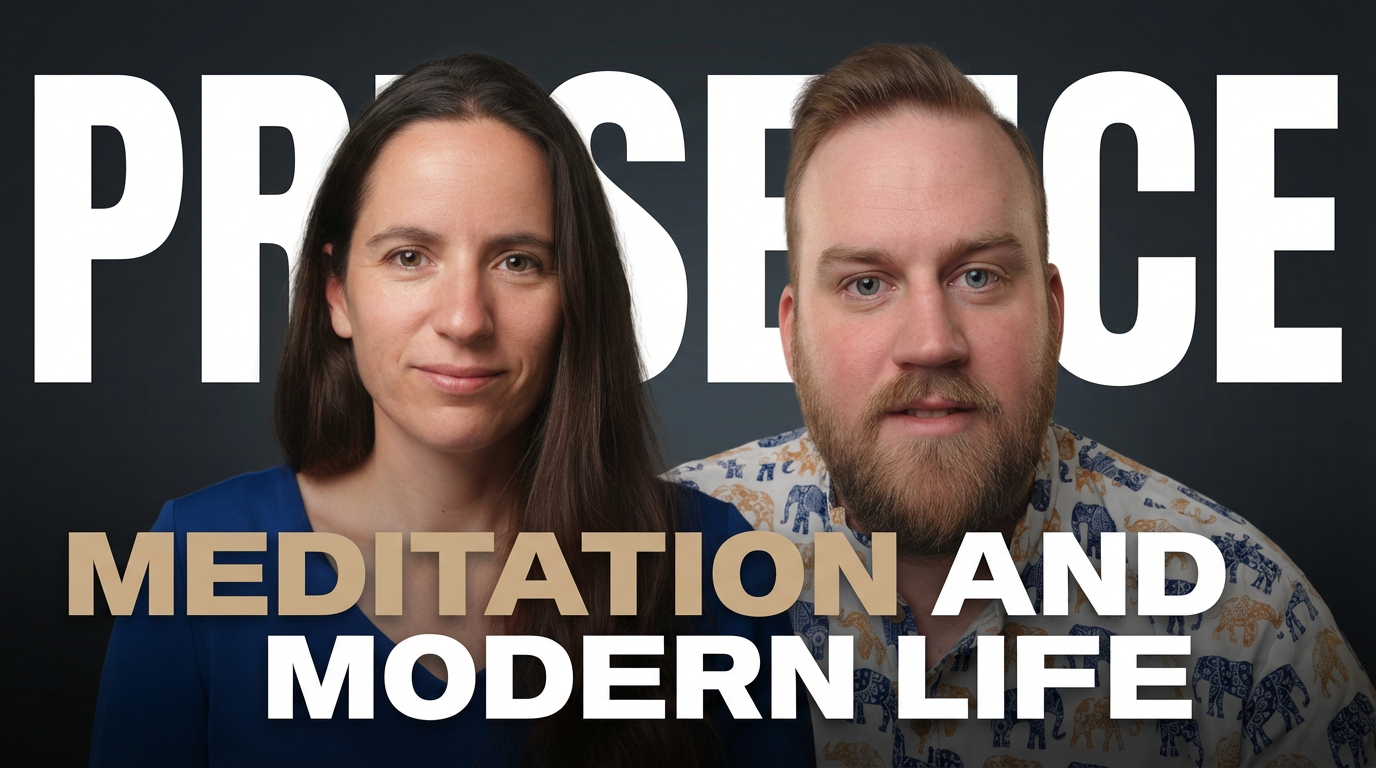
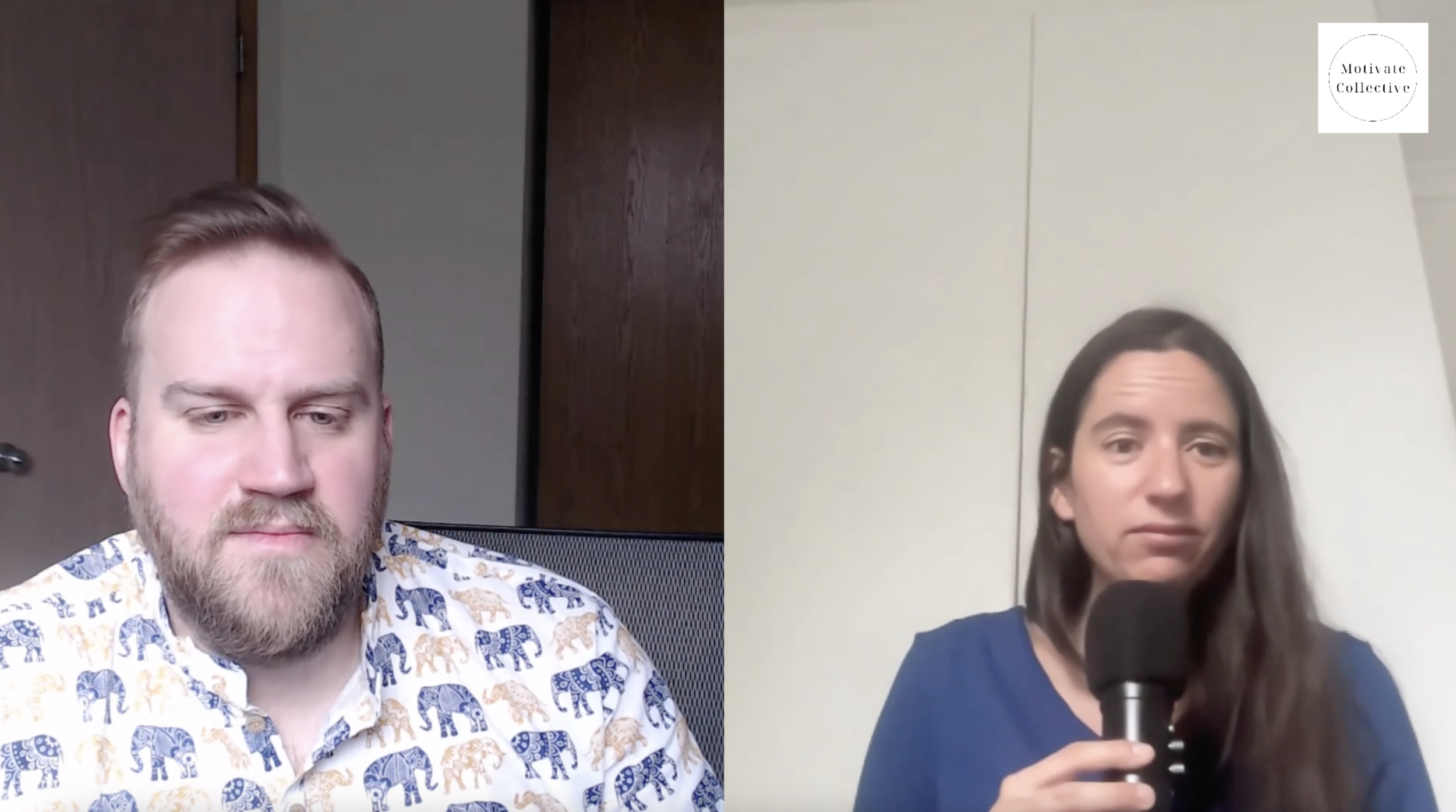
In this episode, Melanie Suzanne Wilson talks with Govinda Ishaya—a meditation teacher who also works as a data analyst — to explore the bridge between logic and intuition. Govinda shares how deep meditation helped him return to a more “fluid, childlike” mind, making it easier to learn new skills (including languages) and navigate work without the same pressure, anxiety, or identity attachment.
Together, they unpack the difference between external coping tools and lasting inner peace, how spiritual practice can coexist with mainstream work, and why many awakenings begin with a “dark night of the soul.” Govinda also offers gentle guidance for people who feel unsure about meditation, including practical entry points like body scanning and contemplative prayer.
Guest: Govinda Ishaya — Data Analyst, Programmer & Meditation Teacher
Host: Melanie Suzanne Wilson
---
Key Takeaways
* **Logic and intuition can work together**—and meditation can help integrate both, rather than choosing one identity.
* **Meditation can rebuild mental flexibility**, making it easier to learn new skills and adapt (even after long breaks).
* **Peace is harder to find externally**—but nature, small pauses, and internal practice can interrupt the noise.
* **Not all meditation is the same**—if one method doesn’t work, try another (body scanning, somatic methods, mantra-based practices, etc.).
* **Spiritual practice may soften rigid beliefs**, not necessarily “destroy” them—often it changes interpretation and reduces fear/conditioning.
* **You can be spiritual and still work a 9–5** (the “householder” path): practice doesn’t require withdrawing from life forever.
* **Pressure to perform is often internalised conditioning**—meditation can release the sense that every task is life-or-death.
---
Chapters / Timestamps
00:02 — Welcome + meet Govinda
00:15 — “Woo-woo” meets data: energy healing, tea ceremonies, health economics work
01:34 — Balancing logic and intuition (and how they overlap)
02:34 — Using intuition in data work: “following breadcrumbs”
03:23 — Meditation and learning languages faster (returning to a childlike mind)
05:37 — Govinda’s background: Minnesota, travel, Southern Africa, India
07:16 — Confidence, safety, and why skills “emerge” rather than forcing memory
10:41 — Flexibility, identity, and how rigidity increases suffering
11:43 — Finding peace when the external world is intense
13:15 — “Try different meditations”: body scanning + practical explanation
15:33 — Spine-based practice + “Ascension Meditation” (effortless mantra)
17:30 — Early spiritual roots + seeking peace from childhood
19:03 — Existential questions: “What’s the point of it all?”
21:21 — Appreciation returns when the question fades
23:27 — Living ideals in a flawed world: following the heart without perfectionism
25:51 — The freedom of not being in control (and less pressure to “achieve”)
27:01 — Being a “householder”: practice alongside work, family, life
29:32 — Returning to work after a gap: less attachment to image and performance
32:41 — Releasing self-worth ties to productivity and success
36:30 — Job dissatisfaction, spiritual shifts, and nervous system stress
39:39 — External fixes vs inner practice: searching “out there” until it stops working
41:30 — The “dark night of the soul” as a catalyst for awakening
44:22 — Meditation alongside religion + “contemplative prayer”
48:00 — Meditation may change beliefs—but can increase peace
53:17 — Meditating with eyes open: integrating practice into daily action
54:45 — Stress stories: medical scribe work, youth pastor years, and health insurance analytics
57:09 — Govinda’s 3 suggestions for listeners
---
Memorable Quotes
* “Spirituality actually connects both sides of ourselves—the intuitive and the logical.”
* “It’s almost emergent… You don’t have to go through the files in the library of the head.”
* “The question faded… life is meant to be lived.”
* “Meditation helps release the pressure of having to be and do something.”
* “You keep looking externally until you aren’t satisfied… then you turn internally.”
* “I can’t promise you’ll stay the same… but I think you might be happier.”
---
Guest Spotlight: Govinda Ishaya
Govinda Ishaya is a meditation teacher who also works as a data analyst. He supports people through meditation, energy healing, and tea ceremonies, and he’s passionate about making spiritual practice practical and accessible—especially for people navigating modern work, identity pressure, and constant change.
---
Topics Covered
* Meditation for busy professionals
* Intuition in analytics, programming, and problem-solving
* Nervous system regulation and stress recovery
* Spiritual identity vs work identity
* Religion, contemplative prayer, and meditation stigma
* “Householder” spirituality (practice inside everyday life)
* Adaptability in tech and uncertain economies
---
Suggested Episode Title Options
1. **Data, Intuition & Meditation: Finding Calm in a Fast-Changing World**
2. **From Corporate Pressure to Inner Peace (Without Leaving Real Life)**
3. **The Logical Mind & The Spiritual Path: How Govinda Blends Both**
---
Keywords / SEO Phrases
meditation for professionals, intuition and logic, data analyst meditation, nervous system regulation, contemplative prayer, spiritual practice and work, adapting to change, mindfulness alternatives, body scanning meditation, mantra meditation, spiritual awakening, dark night of the soul, identity and success pressure
---
Call to Action
If this conversation supported you, share the episode with someone who’s feeling overwhelmed or stuck in “what’s the point?” mode—and consider trying just one new meditation approach this week (even 5–10 minutes).
Follow/subscribe to The Motivate Collective Podcast for more conversations on wellness, meaning, and sustainable success.
-
About Govinda: https://theeffortlessway.life/about-govinda
Transcript
Melanie Wilson (00:02)
Hi, welcome to the show.
Govinda (00:06)
Thank you.
Melanie Wilson (00:09)
Now, for those who don't know, who exactly are you and what exactly do you do?
Govinda (00:15)
Yeah, well, my name is Govinda, and I am a meditation teacher, and I do some I do some woo-woo stuff, you know, but I try to keep it less woo-woo for for those who, you for most people. But I do energy healing, and I also like to host tea ceremonies. I do also work as like a data analyst and programmer and work with health economists. So my brain can go in all the different directions and do whatever it needs to. But yeah, that's a little bit about what I do for my day-to-day.
Melanie Wilson (00:58)
was wondering about that. was wondering what else you did aside from the woo woo. Now I have seen so many spiritual leaders from various different schools of thought, different traditions, who are also quite mathematical. So how does that work for you? Let's start with that flicking between the mathematical things, the data and the spiritual side. Is there anything that overlaps, or how does that all work out?
Govinda (01:34)
Yeah, well, I think a whole spirituality actually connects both the sides of ourselves, that's more like woo woo and more intuitive and the one that's more logical. So I think for me, my life was very logical for a long time. And then some experiences broke me open in ways that I almost became illogical for a while.
And then I had to balance those two things out a little bit. So I guess in a way, I have to use more of my logical brain doing data analytics and programming, but sometimes I honestly like, I don't even have to think that much anymore. It's just intuition comes through, and I'm able to do stuff without having to really, really dig into focus like I used to.
Melanie Wilson (02:31)
In the data work, are you using your intuition in that?
Govinda (02:34)
Yeah, yeah, definitely. So I've spent months never having to think very hard because of you, just like follow the breadcrumbs of kind of what comes up in the work. But if I have to learn like a new language, I can change things. I've a new programming language.
Melanie Wilson (02:56)
Yes. Any new language. I can relate to that. I pivoted slightly from yoga to Matt Pilates, and they have different words for the same things. And I bet with data, there'd be totally different languages, and it's a whole different thing that your brain has to do. A lot of people say that it's easier to learn a new language when you're younger. I don't know if that's true.
Govinda (03:23)
for sure. Yeah. And what the weird thing is, the years of meditation I did, because I took three, four years off of working at all and meditated for three, four hours a day, plus some long retreats of more meditation. And when I came back to the role, I thought I wasn't going to know anything because a lot had changed. And all of a sudden stuff just popped up, you know?
And I was able to learn new languages a lot easier. It's the meditation that I learned kind of returns one back to this innocent childlike state, where the brain is much more fluid. And even, oh yeah, so I don't really know other languages too much. I'm American, know, like we didn't learn that many languages, and I grew up in a small town. So I just learned a few semesters of Spanish, and I never really was good at it. You know, I wasn't speaking to anyone. We're just kind of doing exercises on paper and for tests, and I was pretty bad at conversation. But then one time I met, let's see, it was like last year. I hadn't practised Spanish in seven to 10 years, and I met a Spanish person online, and we got together, and I just started speaking Spanish.
I was like, within an hour, we were conversing, and I was able to understand what they were saying. And it was, I very much think that deep meditation can help someone work back into that, that brain that is more childlike, and it's more fluid. And of course, learning languages is like that because most people struggle because they want to be a little bit perfectionist, but.
Melanie Wilson (05:01)
Yeah.
Govinda (05:17)
No child is a perfectionist about speaking. just want to be, they're very,
I mean, if it works, you know, then let's just say it that way until someone corrects them,
Melanie Wilson (05:28)
Yes, there's so much in that. I wanted to start with the easy, simple question. You mentioned you grew up in a small town. Which part of America are you from?
Govinda (05:37)
Yeah, I'm from Minnesota. I grew up in a town about an hour and a half west of Minneapolis.
Melanie Wilson (05:48)
Okay, so small place. And were you always around there? Did you end up somewhere else?
Govinda (05:56)
I did a lot of travelling. I went to college nearby. I wanted to get out, but it was a better deal to stay around. And then I did some travelling while I was in college and lived in different places. But afterwards, I did like a gap year type thing. I lived in Southern Africa and Swaziland at the time for a year. And then I came back to the state of Minnesota, hung out for a while, then eventually went to India for six months.
Melanie Wilson (06:34)
Amazing. And we'll get to that. I wanted to know more about your journey that led you to meditation, but you mentioned that thing the brain does, where you just remember how to do something after a long time. And I'm curious, how exactly did you find that meditation helped you to tap into what you already knew? What were you doing? Were you? Was this after a long retreat or?
Are you doing a simple, short morning practice every day? What exactly happened for you to then feel confident and remember things that you knew?
Govinda (07:16)
Yeah, well, part of the confidence comes from just being feeling safe no matter what, you know, feeling in whatever situation. So I'm just feeling comfortable. And I think
Yeah, so with meditation, it wouldn't necessarily be instant, but after all the practice I did, kind of it developed a very well, well grooved way back to this innocent place that I could return to at any moment. So, yes, yes, both long retreats that helped kind of teach me this groove and daily practice as well, because I just enjoy it so much that I still enjoy practising. And then, you know, even when a task or something comes up, you can kind of refocus in a way. And then it's almost emergent. It's almost like you don't have to go try to go through the files in the library of the head, something like that. It's not really like that. It's more like it kind of emerges and comes up as needed.
Melanie Wilson (08:36)
It just comes to you kind of like how some musicians have talked about how a song just came to them out of the blue, or a writer says that a story just arrived to them. It's like that external creative genius that Liz Gilbert talks about in a way.
Govinda (08:48)
Sure.
Yeah, maybe a little different in the case of if it's a skill I had already learned in the past, you know, rather than a truly like, you know, original. Yeah, a little bit, you know, but, you know, there are, I guess, programmers would know that creative genius comes out as well while you're programming because there's new ways of doing things you'd never thought of or never heard of or never been taught that might come to you while you're doing that.
Melanie Wilson (08:59)
Yes. External, it's an internal thing.
Okay, that's really important in this economy and this era of tech, because I think that everybody is wondering, well, with AI, what's going to happen, and how can we pivot our skills? I think that tech is now something that everybody has to evolve with. And there's sometimes an assumption that there'll be a set way to do things. So I've mainly watched the marketing path, and what I see in some spaces is people will be married to a particular platform. Someone identifies as a Pinterest marketer, a LinkedIn marketer. And to me, that's the same as saying I only want to use this form of programming. I mean, I knew years ago, app developers who just thought it would be so much more effort to create for Apple instead of only Android. People, wherever they are from, I think, they get stuck in one direction. So it sounds like a big thing that you are doing is staying creatively open to changing how you do what you do.
Govinda (10:41)
Yeah, I mean, this is kind of the way to not suffer so much in general in life, you know, is to stay open to what's gonna come and change. I mean, I don't know how anyone in this day and age is gonna be able to survive very well with such a rigid ⁓ self, a rigid identity even, because things are changing, I mean, especially since we have access to world news.
Everyone kind of sees what's happening, and you know it's very difficult if you continue to stay rigid on everything. I mean, I don't know, it would be very tough, I think.
Melanie Wilson (11:19)
There's a point, frankly, so much has happened in the news lately that we could talk all day about that. And at least the one thing I try to look for without trying to understand everything that's going on right now is, at least, how can we find literally some peace in all of this?
Govinda (11:43)
Yeah, well, it might be difficult to find it in the external world, to be honest. And if you have some nature around you, something that just gives you 10 minutes to go walk around in or see if that's possible. Even if you have a place, there are usually birds gathered even in the urban areas somewhere, you'll find some birds, know, some, those types of things can help. But of course, like I asked the same question in my life, even when things weren't as tough, I guess. And eventually it led to meditation, and kind of for me meditation, you know, a of people claim the other things help them too. Of course, yoga as well.
But yeah.
Melanie Wilson (12:30)
I know that some people will say they believe or perceive that they can't handle meditation. I personally think that everybody can find some form of meditation. I grew up with a tradition that I won't completely identify with right now, but it had the phrase be still and know, and even that
Govinda (12:39)
Hmm.
Melanie Wilson (12:57)
pause, I think everybody has a version of, let's just stop for a moment. And so I'm wondering, what advice do you have to people who are sort of on the fence and wondering if they can meditate and if it's going to work for them?
Govinda (13:15)
Well, I think they should find a meditation practice that does work for them. So if there is one that they've been trying and it's not really doing anything, well, they could switch. I found out pretty quickly that there's many types of meditation. This is a, and in terms of marketing, guess meditation is almost seen as one thing, know, sitting.
Melanie Wilson (13:37)
All right.
Govinda (13:42)
letting thoughts come in and just like watching them go by. Yeah, getting a mudra going. I like mudras, but you don't really need them. But yeah, mudras. Yeah, of course. like, found eventually, eventually I started doing like somatic practices that helped me. I meditated through that, you know, eventually body scanning is always a good thing. But trying different ones, body scanning is
Melanie Wilson (13:47)
You
What's that? For those who don't know.
Govinda (14:11)
Body scanning is simply like finding a comfortable position, know, could even be lying down. And then you start in a particular part of your body, usually at one end or the other, know, either top of the head or bottom of the feet. And then you just think through those spots very easily, not with a lot of effort and just see what comes up when you think through these spots, basically, and kind of
scan through your body to see if there's any sort of, I don't know, hiccups, I guess, along the way. So that's body scanning.
Melanie Wilson (14:52)
It sounds a little bit like yoga nidra because I know in some forms of that people focus the attention on the tip of the finger and then the knuckle, and so on. Is it kind of like that?
Govinda (15:06)
I suppose. I didn't do it too much longer after I discovered some other ones. So I'm no expert at body scanning. think maybe, yeah, well, you know, I went really woo woo, and I went and learned a pre-channelling meditation. So like a meditation to set myself up to like do channelling, which
Melanie Wilson (15:15)
Okay, which ones?
Govinda (15:33)
Honestly, I think it’s just setting yourself up to find the source or to find the meditative state anyway. But that practice involved some chanting and then some scanning up through the spine, basically, like going from the bottom of the spine up to the top. And I found that those kinds of meditations can be really powerful.
Like even if you were to start, usually I would have someone kind of start in the heart and then they would drop down, you know, through their body slowly as they need to until they get to the bottom of their spine and then start going out like into the foundation of their home or wherever the building they're in is and then going into like the earth. And then we come back up from there and go back through the spine and out to the top.
That's a very simple meditation that can be effective. I found very effective and set me up for a lot of clear time to process what was going on in my life and in the world. But eventually I had to move on from that, too. I found a different one that ended up led the bulk of all my practice. It's got a fun name called Ascension Meditation.
It could even be called decent meditation. It really helps someone fall deeply into their body. And it's an effortless practice. So it's an effortless mantra meditation.
Melanie Wilson (17:17)
Effortless. You mentioned that your personal life led you to need meditation. What can you share about what happened?
Govinda (17:30)
Yeah. Well, you know, I guess it started, weirdly enough, it started when I was five. I was at this conservative Christian, like evangelical event, where I was invited to as a kid, you know, five-year-old, and I was invited to invite Jesus into my heart. And I was like, well, you know, why not? All these people are doing that. me see. And so I did that little.
Melanie Wilson (17:58)
And we'll keep in mind, hold on, we'll keep in mind some listeners might still be into that, and we'll respect wherever people are, but we'll follow your journey.
Govinda (18:06)
yeah.
Yeah, well, definitely, because at that time, I got an overflowing sense of peace washing over me. And so I was extremely like dedicated to Christianity from that moment until I was 20-something. And yeah, I was like, you know, reading the Bible and all the time and
I was praying all the time, and eventually I kind of had to analyse for myself whether that was really the right path for me. And eventually I found it was just a little too constricting. So I started to, I actually went like secular almost for a few months in my life, which I, pardon my.
Melanie Wilson (19:03)
few months.
A whole few months!
Govinda (19:04)
Yeah, for a few months.
For like six months, I'd stopped thinking about God. Yeah, I don't know. My whole life was thinking about God. Like, I had this thought when I was 13. I remember walking out into the street of my neighborhood and going, why, if eternity is something, like if this is, if there exists eternity in this world, like if there's this much time, you know, there's millions and millions of years.
What is the 70-odd years of this life? What am I supposed to do here? Is it just random? Yeah. And at that moment, the answer was related to Christianity. But it did also have, at that moment, had some depression in there, which kind of asked, why would I even go on with?
Melanie Wilson (19:38)
What's the point of it all?
Govinda (19:57)
50 more, I was like 13 years old, like 50 more, you know, whatever, don't know, 80 more years in this life if eternity is waiting. And why would I do that?
So I was like, oh, know, like heaven is coming up after. So yeah, I guess what I found in meditation was a release from that experience of feeling separate from all things. And that felt like drinking water on a long desert hike for the first time. And so that's eventually when I said, yeah, go ahead.
Melanie Wilson (20:38)
Okay.
So basically, you were focused so much on life after this one that you were wondering what's the point in anything now. It sounds like your core question was what's the point of this life, and meditating, was it bringing you back to the meaning and purpose of now? Was it connecting you with the gratitude for the
wider universe and environment around you? What perception shifted exactly?
Govinda (21:21)
The question faded once I, when I experienced what I experienced on meditation. It was like inherently obvious that like life is meant to be lived, and there's just like a deep appreciation, gratitude and some sort of inherent love in existence in and of itself.
that I was experiencing. And then over time, I wouldn't experience that. So then I would meditate more, kind of thing.
Melanie Wilson (21:57)
Right, okay.
So you just sort of found some appreciation for everything. And I'm really curious. This kind of leads to then with all the gratitude and integrating with the world, and just easing up on the question of what's the point of everything. I'm wondering, what can you say to people who are perhaps delving deep into a spiritual path? I'd say it happens quite a lot these days.
Someone might have a trip to India like you had, someone might just delve deeply into a school of thought, but then they still need to live in the world and do a nine-to-five or grow a business, whatever it might be. And there could be this tug, right? There's this tug between our purpose-driven existence and everything else. And for me, I had the tug between living sustainably and realising that the environment that I'm in doesn't always support that. It was, so I think that everybody has this negotiation between being completely focused entirely on these higher ideals and then existing in a flawed world. I'm wondering, how did you, how do you balance all of that?
Govinda (23:27)
Yeah, I mean, it's difficult to balance with a kind of logical mindset around it. Eventually, I think I find myself in the context of the world and somehow, the heart knows what it wants to do in every moment. And so it might not be the most sustainable action every single time.
I might need to go drive somewhere and do something, you know, right? But for some reason, there might be some inexplicable reason for me to go do something that the heart is wanting to tell me to do. You know, might end up saying something to someone along the way that helps change their day. So I think for me, meditation, it helped release the pressure of having to be and do something that I thought I needed to be or do basically releases a lot of conditioning of the society and of the family and of what someone has built up over time.
Melanie Wilson (24:42)
Right. It releases the conditioning of society and family. That is very crucial these days. I think that is because a lot of people are raised to become something in particular, not everybody, but maybe people's parents expect them to be something or even culturally
I'd say these days there's a bit more flexibility. A lot of people my age drop thinking, do a nine-to-five and that's it. And there's a big mindset shift going on now, for example, where a lot of people believe they need to do something to support themselves beyond a nine-to-five. So there are all these identity shifts. And it sounds like what you're saying is that meditation can help us to get freedom from the expected identities that other people, be it individuals or the culture we live in, it can free us up from those identities to figure out what actually feels right for us.
Govinda (25:51)
Yeah, and even to feel the pressure of having to succeed or achieve something. You know, at some level, I'm talking that there's an order of the universe that's happening without you being able to control it. And so meditation can help you tap into such an order where you start to see that I'm not really in control as much as I thought I was.
And that actually is a lot of freedom. It's a lot of release of like that need to do something. But of course we're talking also people need to make money. you know, but I'm not saying someone just becomes some sort of a lazy bomb. You know, it's more like you can literally watch the whole thing at play. You know, don't have to like, like you might even.
Just say the perfect thing, and all of a sudden you're in some sort of business meeting, and you're making a deal, you know, it's that kind of thing that can happen.
Melanie Wilson (26:58)
You can say the perfect thing.
Govinda (27:01)
But you wouldn't even know what it was. You wouldn't even be planning the perfect thing. But yeah, it's, I think one can be in a nine-to-five and still be spiritual and still be connected. Now they might need a few years of break, rest or something like I had. And that might be why they feel tugged to get out. But it doesn't mean they have to be fully gone from that life, you know, forever. So, or maybe they can kind of walk the line and do it both. There are good practices out there where we call it being a householder. And a householder is someone who's got a meditative practice or a spiritual practice, you know, sometimes we call them sadhanas. And they can be doing this and be working and having kids and having a family or doing whatever that stuff you know that kind of thing.
Melanie Wilson (28:07)
Yes, the break, the few years off, I feel very reassured hearing that you had that because I had a bit of a gap from doing mainstream forms of work. And I think it did seem very counter-cultural, and you hear some people online saying that they worried if they took a break, it would ruin their careers, things like that.
And although, although a lot of people read Eat, Pray, Love, that person, Liz Gilbert was, I know I've referenced that twice, but I feel like the whole pilgrimage thing applies here. I'd say she was still paid to ride in that time. So it's very different. And, and so.
I think, I think the thing I'm really wondering is how did you find that, um, how did you find that you could still integrate back and where are you feeling like a better professional? You mentioned you were finding your confidence after a break, but how did you get to that reassurance returning to what you do after a gap?
Govinda (29:32)
Well, yeah, it really depends on the gap, I suppose. But for my gap, it set me up to not have a stake in the game as much, which gave a lot more freedom to be more whole at work, even, and not have to worry about my image or anything like that, which
It didn't mean I was an asshole or anything, but it just meant that I didn't limit myself in ways that I would have in the past. You can write emails a lot more freely. It doesn't take an hour to figure out what to say. The work is a lot more free. I suppose it depends if you're on your... Ideally, this three-year gap would help you find your free-flowing path.
That is set up for your soul, and then things tend to flow a lot better. And so yeah, I would say you could, if you're going to go back to your old career, then things off for me were just fine and even better. was sitting in the office in a, know, sit in deep silence, even though it's an office and I'm doing work, you know, at the same time.
Melanie Wilson (30:59)
You could find the silence within.
And the self-image, did you, did you feel a pressure or an expectation before the break to do the, I don't know, the sort of mad men self-image or some sort of version of being what you were looking a particular way and becoming something instead of just, I'm doing work. I'm a part of something that's a machine, I'm contributing value, but I'm not depending on my identity on it. Was it that sort of shift?
Govinda (31:39)
Yeah, yeah, definitely. Before going on this kind of deeper journey, you know, every assignment, every thing that I would do kind of felt like it was being judged a little bit, you know, at least not by someone else necessarily. But like, you know, there's always a little bit of a feeling that I need to perform well all the time. And over time, I realised, you know, it's of course I want to perform well, but it's not going to affect my anxiety or something that would affect my life outside of work.
Melanie Wilson (32:21)
Do you think sometimes when we get high pressure or work, there's a primitive part of us that senses or assumes that things are almost life or death, even though they are not, we have that sort of dependence on what we're doing?
Govinda (32:41)
I think if you browse the internet enough and social media, you'll see tons of accounts of people feeling that way. know, feeling that every little thing they do is a little bit, is going to like ruin their life or not. And so that kind of subtle programming that I didn't realise I was operating under, released a lot throughout those years of break from that. That was probably
Yeah, the first like year of meditating without any work, you know, I just had a lot of thoughts went by around self-worth related to work. And, you know, am I doing the right thing in society and all these things that just kind of learned as almost subliminally up until up until my mid 20s. Those things came through very hard.
I mean, just imagine you go from like, I was one of these straight A students, you know, I was trying to get pre-med, was trying to go to med school, that kind of thing. And going from that to like, just sitting around every single day, you know, like, like not doing anything, like, it was a big shift. And it was wonderful, too, you know, so much rest and, and eventually, it was because I was meditating while I was working, you know, doing the regular kind of three times a day practice and that each session was getting so blissful and so wonderful that I wanted to go longer. And so I couldn't because I had to work. And so I eventually was like, well, I'll just quit work so I can just meditate longer. You know, I don't want to have any limits on my, I don't want to put an alarm on. I don't want to do any of that.
So, yeah.
Melanie Wilson (34:39)
Okay. So part of this was you needed to get out and be in environments beyond the office. I would say a lot of people want that these days, and people have been searching for a version of that goodness the last decade or two. There were schools of thought like the four-hour work week, which is more of a figure of speech than literally what people should be doing, but there were all these versions of, you know, fire, I forgot what that stands for, the freedom to do something financially independent. Yes.
Govinda (35:15)
Yeah, that's something about retiring early. Financial independence, retire early.
Melanie Wilson (35:20)
So there are all these versions, so many, whether it's that or the traditional gap year, there's this longing for people to get beyond the fluorescent lights and the office. So it sounds like for you, a change of environment did help you to just look beyond the corporate and just look within basically not being distracted by that for a bit of time. Do you think, have you known some people who have achieved that return to a fresh perspective without taking a whole few years?
Govinda (36:09)
I don't know if I know anyone that's done that. But yeah, you know, my generation, I think, also kind of sees some of the bullshit of corporate life. And, you know, so it's not necessarily the people around me are more similar to what I did than the other way around. I wouldn't necessarily, so some people don't necessarily need to leave their jobs because they're already happy in them. So it's different. If you're talking to someone that's deeply unsatisfied with their job, then they want to switch and take a break. I tried the hardest. I had stuff happening when I started my job, that's when a lot of spiritual awakening started happening. It was only in my second month of my first job after my master's degree. I like, I mean, I had taken a small dose of magic mushrooms and, and like, yeah, not at my job, but with my friends. And ⁓
Melanie Wilson (37:09)
Wow.
Govinda (37:24)
I like left the universe on that. And then I came back, and then it just persisted for weeks. And I was going into the office looking like just hanging out and experiencing deep bliss, like looking at the cubicle walls and just experiencing bliss off the walls. So.
I've like walked to the break room, and I look outside and see the sun peering over the trees, and I would just start crying. You know, this happened for many weeks in a row, and eventually it faded. Yeah, so I eventually it faded, and I'm like, well, and everything was working perfectly the whole time I could work.
When I needed to, I mean, I didn't have that much work at that time, so I was able to kind of relax. But when I needed to do some analysis, I was just able to do it and then present it. It wasn't like I was incapable of working. But eventually, for me, was like, OK, I got to find a way to have this without some sort of... Yeah, because I did do those for almost a year.
Melanie Wilson (38:33)
Mushroom.
Govinda (38:38)
Every few months, it was tough on the nervous system over time. But eventually, I found a meditative practice that provided the very same environment without the harshness on the nervous system.
Melanie Wilson (38:56)
Interesting that opening up a whole can of lamps, because most people at some point will turn to something external. And yes, those who are not pursuing an enlightened path might have a few drinks, whatever. But also, I had moments of I'm so stressed, maybe a whole lot of essential oil will distract me from how I'm feeling or whatever it might be. Do you think people do look for those external things, and I'm wondering, does it help a bit, but to some extent, is it just icing on the cake? All those bells and whistles.
Govinda (39:39)
Every person has to look for the external things until they aren't satisfied with them. That's how that's part of the path is continuing to look externally until you finally decide, nothing out there is helping.
Like nothing, even the most promised land of you know of s#$ basically even like that's gotta be like the most promised land of all the things you know like even then you're like this isn't really doing it you know and so eventually turning internally unless for some reason some people are already on a deep path without having to do that
Maybe I don't know what happened, but sometimes they're already living some sort of life that is evoking a deep sense of peace for them.
Melanie Wilson (40:27)
you
I'm glad you said that because I wanted to very respectfully reference the religious followers that I saw very early on in life, who are doing something meaningful, and it's all good, but the thing that I struggled with very early on was that so many people felt rescued, and although some things had been stressful or traumatic within my personal life to some extent, I was just wondering, I'm in the suburbs, what am I getting rescued from? I think it seems like some people need the great epiphany to find the spiritual meaning. You think that it really does, do you think that the spiritual awakening really does come to some people after a bit of an identity crisis or some sort of other pivotal moment later on?
Govinda (41:30)
absolutely. Yeah, I mean, this would be the dark night of the soul, right? This is a, this is that deep sense of existential angst for life. It drives one to search. And so, yeah, not everyone actually is going through that, and that's okay. But those who are, you know, eventually they're gonna have to find out that like, the external world is not offering that in general. Yeah, and of course, like, I also found a lot of satisfaction through religion. And that's why I stayed, you know, that I just eventually found that the experience of, of God isn't isn't it isn't bound within one of the religions. It doesn't really make sense that the infinite, like some sort of ultimate, all omnipotent, omnipresent being would be bound within one thought system on the planet. And one of the things I always was interested in was like, if most humans don't switch religions based like from what they were born into. And so if most aren't, you know, switching, then then only the one you're born into, if that's the right one, then you got kind of lucky some level. And it just doesn't make that much sense to me. But someone's experience on being a Christian or being a Buddhist or being a Muslim or something, if they have experiences that are inexplicable experiences, those are totally true. That's not wrong at all.
Melanie Wilson (43:29)
No, no, it really, it works for people wherever they are. And I think that I've found a lot more of peace with knowing, okay, every tradition serves its purpose for its people. And I'm curious, did you see that within various religious traditions? There is some form of believing the divine is within you. And I'm wondering, with meditation, is it a way to tap into that divine, whatever people may call it, the divine within, instead of looking for those external things like what we talked about. So in that sense, meditation surely could overlap with all of these other traditions.
Govinda (44:22)
Yeah, it's really nice to have meditation alongside any other tradition. Yeah, and I think like contemplative prayer for Christians is a very positive form of meditation. I mean, the issue we're running into a little bit here is I grew up in conservative American Christianity, which has a very knee-jerk reaction to the word meditation. So that's what, yeah.
Melanie Wilson (44:49)
Really?
Govinda (44:52)
They're so anti. They put out these teachings that anything from the East is basically the devil. So you get all these people that get so afraid. And I guess if you have any listeners like that, just say you don't have to worry about it. You just got to try things. And this is why contemplative prayer is a good way to call it, because I would
Melanie Wilson (44:52)
What happened?
Govinda (45:20)
Personally say that's also meditation, but you know when you have these kind of conditionings knee-jerk reactions to words, then got to be careful. But yeah Contemplative prayer and that is good. I think Muslims do their five-day five prayers a day thing, which is pretty cool, too
Melanie Wilson (45:42)
Five would be, it's very disciplined. Yes. Applying the core intention to anything contemplative, it's a way to translate all of this. And I'm very reassured hearing that from you because I think the thing I heard from some of these traditions is they were reluctant about yoga, which overlaps a bit with meditation in some ways.
But when I finally actually visited yoga and stuck with it, the focus was on the breath and just how the one flow of air that's all around us goes through us, and it goes through all of us. And that wasn't worshipping some other gods, although some people do that. And I also found online a Christian yoga teacher. There is an overlap because people were able to apply those universal concepts of, okay, there's something that's all around us. Let's connect with that by slowing down. And I'm very concerned that it seems like some people out there in America, wherever it might be dismissing some forms of practice, not realising it could actually support their beliefs because slowing down, I know some religious people go to Pilates because they think it will avoid the wrong spiritual things more than if they did yoga, but then I've seen both of those and only one of these two things will really slow you down and make you focus on the spiritual side of whatever you believe in. I'm wondering, do you have any other advice beyond contemplative prayer to the people who believe in any traditions and are a bit reluctant? Do you think there is a way they can meditate without being worried that it could threaten their beliefs?
Govinda (48:00)
Well, you know, in a way, the beliefs could change. I have to be honest. I don't know if the beliefs would necessarily stay if you were doing meditation. mean, I was I was doing prayer, a lot of prayer. Right. I mean, as a kid and I started with some prayer called the joy. Joy prayer.
And it was started, was like, you pray thinking Jesus, J, J-O-Y. And then you pray for others, and then you pray for yourself, J-O-Y, joy prayer. And that's where I started. I was like, okay, it's an interesting prayer. And then eventually I started asking, what is good, what is the good of me praying to an all-powerful being and asking them to change something?
And then eventually I started realising, well, what it was doing was it was changing my heart around things. And it wasn't necessarily changing the reality of like some situation, or it wasn't changing all the things that were happening, but it was changing my view on things and changing, making me softer towards things. And eventually I started realising like, what am I even doing praying for hours and hours, you know, if nothing's coming up.
If nothing's coming up. And eventually, just like sitting in silence. I just started being like, well, I guess I just gotta sit here. Just wait, like pose one question and then just sit here. And so eventually, like for me, the prayer life led to meditation, right? Sitting in silence. And so...
I think like a lot of some sort of internal practice, it's gonna, it's gonna change beliefs. I don't know how it couldn't as in an honest way. You know, if it's not really changing anything in that, because we're talking about even the tradition should probably should help you, like, find God,
Melanie Wilson (49:56)
Okay. you
Govinda (50:14)
You know, even these traditions should help you find God. And I think most of the time, it's the conditioning on the person that is blocking that. And so, yeah, I guess, I don't know if it's gonna like root out the core of your belief, but maybe some of the side ones that you think were important might go away. Yeah, I can't promise that you're gonna stay the same if you start a contemplative practice, but I think you might be happier.
Melanie Wilson (50:36)
Some of the... Okay.
Right, you can find more happiness when you pause and contemplate, and I'm going to interpret that, at a minimum, some of the interpretations of our beliefs, the ways in which we assume our beliefs need to be lived out, could evolve.
Govinda (51:13)
Yeah, yeah, and I think, I mean, if you find a practice that you enjoy, and you do it every day, and you enjoy it very much, that's a lot of value. There's a lot of value in that. There's a lot of people that don't enjoy any part of their lives. And so if you're doing something that you're loving every day, you know, that's pretty valuable.
And so I guess if someone finds a practice they enjoy a lot, then it'll help coincide with their beliefs, and it'll be okay.
Melanie Wilson (51:50)
Awesome. And going back to work, because one of the main goals of this show is to look at how we can look after ourselves when we're doing work. I'm curious, people look at gratitude and various journaling or gratitude practices of various sorts for work and also manifestation. So I think that is getting into the mainstream, and you mentioned wondering how a particular practice in, in your story, was your phase of prayer and wondering, questioning whatever practices we have, how can we make sure we are taking action and actually moving ourselves in the direction that we need to go in, instead of only sitting in contemplation? Have you seen in your life?
Have you seen in your life that progressing from your years of contemplation to then acting on things and integrating yourself into your professional career, have you found that taking action without getting dependent on these forms of work for your identity? Have you found that that's as important at times as just meditating?
Govinda (53:17)
Yeah, well, you know, those years of meditating helped me be able to meditate eyes open as well. You know, the practice that I learned, it actually has both a closed-eyed and open-eyed component. So, you know, I guess you don't really there isn't a difference in action at some level. You're just like, I'm able to go out and do all the things that I would do, but I'm also meditating at the same time. And so... like I said before, the few years were kind of to help my nervous system calm down from all the stress of the 25 years or so of building stress, you know. And so eventually that just allowed a much more clear sense of the meditative state, even while working or programming or going to meetings or doing creative work, of course, that's much easier even. But yeah. So yeah, mean, yeah, 25.
Melanie Wilson (54:26)
25 years.
I'm just checking for a second. Was going to ask earlier, you did your master’s. So, how many years were you at college? Was it a long time of stress at college before then even doing work?
Govinda (54:45)
I took some years in between my uni and my grad school. So actually, the most stressful year or something of my life was working as a medical scribe in a clinic where they were doing pain medicine. So every patient was going through a lot of pain and I was having to do like 20 or 20 appointments a day, like typing all the notes.
That was probably the most stressful thing. And that was in between uni and grad school. I didn't go straight through school and then go to my first job. It was just my first job after grad school, which was a much more chill job. It was an office job, you know, rather than like I had worked retail, and I was actually a youth pastor and doing like scribe work. And then I went into grad school and then.
Melanie Wilson (55:23)
Yes.
Govinda (55:44)
And then I started working as like an analyst at a health insurance company.
Melanie Wilson (55:50)
You were a youth pastor as well. Did you do a qualification for that?
Govinda (55:53)
Yeah.
No, I didn't do a qualification for that. My qualification was being a Christian, I guess, and doing the year abroad in Swaziland. They liked that.
Melanie Wilson (56:10)
Right, right. That would have given you lot of perspective being in another country for that long.
Govinda (56:18)
Yeah, I was in the rural part too, as well.
Melanie Wilson (56:18)
So.
That's a whole story in itself, but getting back to everything, it sounds like it was very much as a grad when you're sitting in an office quietly wondering, okay, what's now? What now? What's the word of wisdom that you can share? What are three things? I love to wind up these chats with three things that everybody can do. Maybe they are new in their careers, or maybe they have been working for a long time but wondering, okay what's the point of everything, or they're just trying to figure out who else can I be anything like that? What do you suggest to everybody?
Govinda (57:09)
Yeah, well, I would spend a little bit of time getting to know yourself if you haven't done that. know, getting to know what makes you a little different than other people. And then that'll help kind of evoke a path that fits you better. You know, if you're feeling somewhat disenfranchised or if you're feeling unhappy about your work, then getting to know yourself will help lead you to what you want to do, what you might want to do differently. And not necessarily, you might even want to go deeper than like Myers Briggs, and you might want to go a little deeper than that, you know. You could get into Enneagram, you could get into other things as well, but
Melanie Wilson (57:45)
You
Govinda (58:01)
Yeah, I would say do that and then also a little time, like figuring out what your heart really wants in life and then going and doing that even if it's a little bit scary. Of course it's going to be scary, right? This is kind of hand in hand with change. yeah, figuring out what your heart wants and even if you, you know, I know I didn't know what that meant for a long time at the
I needed advice from others, but I didn't want to take advice from just anyone because not everyone is that wise. I went to, you know, spent time figuring out who were good people to listen to and what advice they would have.
Melanie Wilson (58:47)
So look for advice from people and also look within. Govinda, thank you so much for chatting and exploring your experience and your insights about finding a spiritual journey and some meaning within when we are also working in mainstream careers. This has been very insightful. Thank you.
Govinda (59:14)
Thank you for having me, Monty. It's been a lot of fun. I enjoy it very much.
Melanie Wilson (59:19)
Thanks.