Kym Coco — Grief, Resilience, Yoga, Nervous System Regulation & Finding Balance in Life
Listen to the entire episode
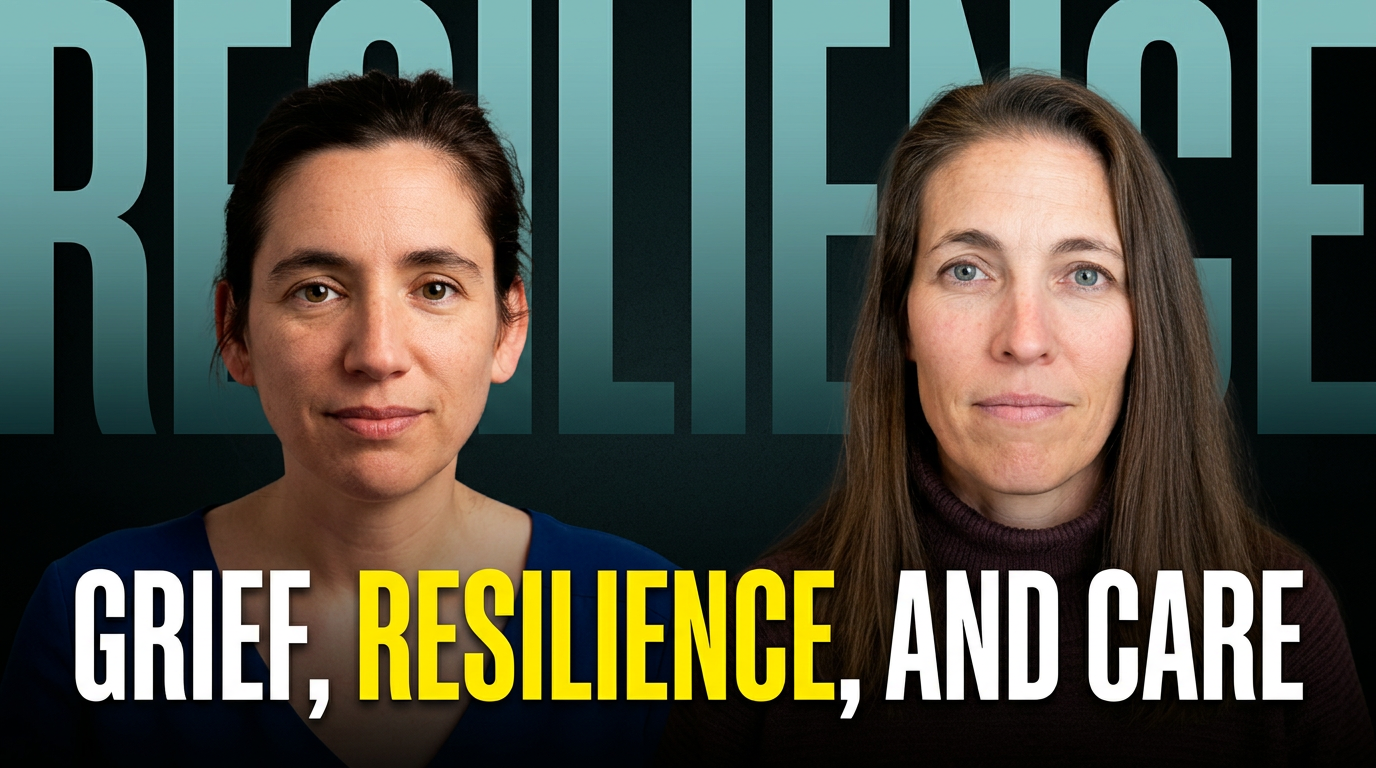
See this episode on YouTube
About This Episode
In this episode of The Motivate Collective Podcast, Melanie Suzanne Wilson speaks with Kym Coco — author, yoga teacher, kinesiology specialist, and founder of Swagtail.
Kym’s work blends sports kinesiology, yoga, behavioural science, nervous system regulation, and energy medicine to help people remove mental and emotional roadblocks so they can move forward with clarity and confidence.
The conversation moves through both professional insight and deeply personal reflection. Kym shares how her experience as a caregiver and the loss of her husband reshaped her understanding of resilience, community, and purpose.
We explore how tools like movement, journaling, gratitude, nature, and intentional pauses can help us regulate our nervous system and reconnect with ourselves during life transitions.
If you are navigating change, rebuilding after loss, or trying to create a healthier relationship with work and wellbeing, this episode offers thoughtful and practical perspective.
---
# In This Episode
Melanie and Kym explore:
• What kinesiology really means and how it connects with movement and performance
• How Kym supports both wellness professionals and female golfers
• Why golf became a structure for rebuilding life after grief
• The emotional realities of caregiving and losing a partner
• The connection between the conscious and subconscious mind
• Reprogramming emotional responses and nervous system safety
• Why balance is a moving target rather than a fixed destination
• The power of small pauses during busy work days
• Yoga as a tool for awareness, not just flexibility
• Learning to tolerate discomfort in both life and work
• The science behind gratitude and journaling
• Why voice notes can be just as powerful as writing
• Scheduling around your real energy levels
• How play and curiosity support resilience
---
# Key Takeaways
• Balance is constantly shifting — learning to adapt is part of wellbeing
• Small habits like breathing, pausing, or stepping outside can reset the nervous system
• Journaling helps process emotions and create clarity
• Emotional triggers often come from subconscious memory stored in the body
• Gratitude has measurable effects on the nervous system
• Wellness requires attention to physical, emotional, social, and spiritual aspects of life
• Working with your natural energy levels can improve productivity and wellbeing
• Playfulness and curiosity are powerful tools for resilience
---
# Memorable Quotes
“Balance is a moving target.”
“The pause is so powerful.”
“If you can’t change the external, you can still change the internal.”
“I do my best and my best is good enough.”
“Add play into your life.”
---
# About Kym Coco
Kym Coco is an author, yoga teacher, kinesiology specialist, and founder of Swagtail. With a Master’s degree in Sports Kinesiology and decades of experience studying mind-body wellbeing, she integrates neurobiology, yoga, and energy medicine to help people build resilience, reduce stress, and improve overall wellbeing.
Her work supports individuals in regulating their nervous system, strengthening emotional awareness, and creating sustainable personal transformation.
---
# Episode Timestamps
00:01 – Introduction to Kym Coco
01:20 – What kinesiology means
03:55 – Golf, grief, and rebuilding life
06:56 – Community and navigating loss
10:13 – Conscious vs subconscious mind
17:27 – Micro habits and balance
22:08 – Discovering yoga
29:10 – Discomfort and personal growth
31:24 – Gratitude and journaling
35:05 – Writing *Miracle on the Mountainside*
38:35 – Caregiving and staying connected to yourself
47:42 – Habits and energy management
53:25 – Three lessons everyone should learn
More Info From Kym Coco:
Transcript
Kym Coco Transcript
Melanie Wilson (00:01)
Hello Kim, welcome to the show.
Kym (00:04)
Thank you so much for having me, it's a pleasure to be here today!
Melanie Wilson (00:08)
For those who don't know who you are, what you do, how do you explain what exactly you do?
Kym (00:16)
Well, I'm Kim Coco, and I run a peak performance business serving two main niches. I actually work with wellness professionals, and I also work with female golfers. So in both cases, we remove mental and emotional roadblocks. We start to fine-tune those beliefs, emotional states, strategies and action plans to move forward toward their goals with success.
And it's fun because I get to blend my background in sports kinesiology. And I got my master's almost two decades ago now, which is hard to believe. And then for the past 20 years, I've taught yoga. I've used these traditional educational tools, but studied energy medicine and yoga and, and neuro-linguistic programming and all of these behavioural sciences. So putting them together in a way that fine-tunes progress, but progress in a way that's fun and enjoyable and really cohesive and better for your system overall.
Melanie Wilson (01:20)
There is so much to explore in all of this. Firstly, I want to check what exactly kinesiology is for those who don't know what that is.
Kym (01:31)
Great question. Kinesiology is a really fancy term for human movement.
Melanie Wilson (01:38)
Okay, so when you mention things like yoga, kinesiology will tie in with that and with the golf, everything.
Kym (01:46)
Yes, completely. And what's fantastic is we all have these meat suits, we have these bodies we're operating in every day. And it's fun that we all are unique based on our experiences and structure. And so to fine-tune not just the physical, but the behind-the-scenes hardware, mental, emotional as well, that are kind of helping us move forward.
Melanie Wilson (02:07)
Behind the scenes. So what made you focus on golf?
Kym (02:12)
What's very interesting is I started out in team sports growing up, and that was all I was really exposed to until I got to college and was able to explore more individual sports. And my husband, or my late husband, he said, I think you would really like golf. Now I must tell you, my mom doesn't even consider it a sport. And so this was not even something on my radar, but he said, you're focused.
It requires precision and a sense of feel, but also power, coordination and flexibility. So, and you're in these beautiful environments as well. So, he said, try this out. And I didn't stick to it initially. was, okay, this is fun. But then a couple of years later, I tried it again. I had more time in my schedule, and it really resonated with me. I met some good friends. I got a coach cause I like to learn sequentially and build a good foundation. think that really helps in anything we do. And so if I fast forward, then say 10 years when Steve was really sick, and he said, you're gonna need structure when I'm gone. And I thought, okay, but what does that look like?
And so I decided to say, okay, I'm going to use golf as my structure to get back into life and meet people again, because for a lot of years it was a good way to get out for us together and be in nature and really enjoy just a game, but also a camaraderie. And so for the last year, year and a half, I've been out gallivanting the U S playing golf courses, meeting new people and kind of using that game as a playground to craft my new life forward.
Melanie Wilson (03:55)
It became a space to meet people, and you mentioned the late husband just briefly, so we have some context what happened.
Kym (04:06)
Yeah, it was a really sudden thing in 2021. He wasn't feeling well for a couple of weeks, and we had a couple of doctor’s visits, and they couldn't figure it out. And he went into the hospital just before Christmas that year. And we didn't think he'd make it through the weekend. And they were able to send him home 30 pounds lighter, but we knew there was a very time-limited contract at that point. I know we all have that, just don't necessarily dwell on it. But when you kind of see that near, like a close proximity to that transition, you go, okay, what matters? And so for, we thankfully had two years together after that time, but we simplified our lives and started to write books together. One of which is his memoir that I just finished last year, and several more that will come, but it was a way to connect and have purpose, and his pituitary tumour just caused a lot of imbalance in the body, something that was really just too much to overcome.
Melanie Wilson (05:06)
Wow, so there was a tumour and then he just really wasn't well, that's... How did you, how did you feel? I mean, you seem so vibrant, but that would have been a shock.
Kym (05:13)
Yeah.
A total shock. You know, it's very interesting is I'm really thankful for the tools I had. One, because I've been studying the mind-body connection for a lot of years. And at the same time, when you become a full-time caregiver, and you put your business on the side, and you have to shift a lot of your relationships and ditch a lot of your identities, it was stressful, and there was a lot of uncertainty. And thankfully, Steve had been a grief and loss counsellor. We were kind of met it about the whole thing. We talked about it. We had a sense of peace and an understanding of maybe our bigger picture and this soul connection. And so it was definitely a process. I think when I wrote his memoir, there were days I would write sections, and then I would just stay in my van and cry for a couple of days because you would miss him. They're part of your life. They're such an integral part of your life. And what I'm thankful for now is the time we've had together, the inspiration he's given me through his life. And it really helps you focus on connecting in meaningful ways and doing your best and using your energy in a way that's supportive to you and those around you. And so I would say, yes, there are emotions that come up, but I think generally speaking, I've been able to walk through the other side and say, this has been such a gift, and I love this person so much, and they loved me, and now both of us would want to choose love still.
Melanie Wilson (06:56)
Does that make an extra desire to connect with community after that loss?
Kym (06:55)
It's okay.
It's very interesting that you ask it in that way because...
I find that in a transformational period, it could be a divorce, it could be a move, it could be an injury. And if you're taken out of everything familiar, it's disorienting, and it's engaging on all levels. And so what I found for myself was that a lot of the familiar triggered memories of the past and actually made me miss him more.
And so part of my golf adventure was choosing new, choosing new places that we hadn't travelled before, meeting new people and hearing their stories. That helped in the interim, prevent those emotional landmines that could trigger me back into a really deep sense of sadness. Now I can go back to those familiar places and think a little more fondly about them. I mean, I think the first time I went into our grocery store with a smell and all the things.
I cried, I was unexpected. was like, wow, I miss shopping with you, as silly as that sounds. But it's funny how I had to step away from a lot of community I knew physically. We still stayed in touch. People were very supportive, sending emails or texts or phone calls to make sure I was okay. And I started an album on my phone that people could watch and see where I was at and make sure I was okay. And so the community shifted, and it's still...
I felt like was in a snow globe where you just toss it up, and all the, you know, all of the little pieces have to fall down back to some kind of border. And the relationships are all part of that. And it's just a learning experience.
Melanie Wilson (08:50)
Definitely, definitely. The smallest things can remind us of someone. It could be the person's favourite food. It could be a place, anything.
Kym (09:02)
Yes, and it's okay to let those emotions wash over you. I think one time I was getting a shampoo and a haircut, and just the loving scalp massage just sent me over the edge. And I had to just say, you know, give me a second, please. Just let me cry it out. Give me a couple minutes, and I'll be fine. But you have to let it emote so it doesn't get stuffed down and, you know, amplified later in a way maybe you don't want.
Melanie Wilson (09:27)
I’m wondering if that sort of logic comes into your coaching or your guidance as well. And I'd love to dig into that because the parallel that I can think of is years ago, I went to the dentist, and I ended up crying so much because it reminded me of going through surgeries. And I'm wondering if other people have those moments where something just reminds you years later of something, and if we are trying to do great work and get ourselves on track, but still be in touch with our feelings, as stereotypical as that sounds, but basically not switch off the emotional part of the brain. How do you suggest that anyone navigate that?
Kym (10:13)
That's a great question as well. The navigation is a learned experience, and I think there are two answers I have for that. So the first that comes to mind is this idea that there is a balance. think we talk about balance and flexibility, and so there are times where you have the emotions come up, and you can sit with them, and you can process them. There are a lot of different tools, but let's just say you have the time and space to work through them or let them flow through you. And then there are times where maybe you want to avoid it because it's not the time and place. You might be aware of something coming up and go, okay, but for me to move forward, it's time to put that on the back burner and keep moving forward. So kind of understanding that nuance that avoidance isn't always bad, and diving in isn't always bad. It's kind of learning when to go to which approach. So that's the first thing that comes to mind. And then the second thing that comes to mind is that we have this conscious mind, which is really just our 5 % logical, help us sort out our life, one to three events at a time, mental processing, which is helpful. And we have this 95 % subconscious mind, body, cellular memory. So if there's a surgery or trauma or stress or any negative emotions, we can be moving forward toward a goal, and yet something will pop up unexpectedly because we weren't thinking about it, but it was stored there. And what's really helpful about that is I think of that as information. It can seem traumatic in the moment, or sometimes it happens at inopportune moments, and it's okay to let it come up and go, okay, but now I can pay attention. Now I know there's something else below the surface. It doesn't have to be a big issue. It could just be something like a mild discomfort or anxiety or concern, but it also can be on the intense end.
I actually had an incident where I choked recently that had never happened in my life. And that was a very stressful event. So we had to start reprogramming the subconscious to say, it's safe to eat. You're gonna be fine. Bring the logic and the emotional mind back into harmony because you need food to survive. So let's start to balance that back out to the subconscious is supporting your conscious mind and your goals, so that you can move forward without feeling like it's a really rough ride, you're going to be ambushed unexpectedly.
Melanie Wilson (12:37)
Reprogramming, apart from this, is reminding ourselves of what's really safe and what's really a risk because, of course, we can confuse those things.
Kym (12:49)
Totally. And I think it's interesting how the beliefs that we have can make us feel safe or unsafe. It's a risk, or it's not a risk. And so we can start to shift the lens of our perception with how we start to rewrite the beliefs and change the stories and then connect the mind and the body so they're feeling more safe and feeling like what I'm doing isn't risky anymore because I have more knowns or I have a sense of confidence or a sense of inner peace as I move forward into that new arena.
And so a lot of it step by step, moment by moment and creating a toolbox that can help you in the moment with the best avenue to move forward, the best tool to use to move forward.
Melanie Wilson (13:32)
Right, right. You mentioned that you guide wellness as well as guiding golf women specifically. So I'm curious, how do you explore wellness? Are you applying a broad spectrum of your perspective? Are you focusing on people who are in wellness? And I'm curious what other things I wanted to know about the yoga. I'm wondering what part does food play in your life? What's the bigger picture for that?
for you.
Kym (14:03)
If I was to step back and zoom out, and you can see if this answers your question, I actually think of our hand as one of the best guides. And I think of this element of it helps us make the decisions that support us on a lot of different levels. So we have our physical self, and that's the movement that's fuelling ourselves well with great food. It's resting and recovery, and it's utilising the physical body and nourishing it so that we can have this long, thriving life. And then we have the intellectual self, where our creativity, what interests us, how we start to put ideas together. It's, we have our emotional self, right? The feeling good, the not feeling good. It's all information. But if we can start to tune in to train the emotional body to ride the waves of the nervous system and use the emotion to come back into balance to help our physiology, then the emotional state can be really beneficial. And it's really great to feel good, I think. We have our social self, that's our connectivity. We are meant to be together. We are so interwoven, and this idea of giving and receiving love and having these meaningful, in-depth relationships is so important. And then what I love about this model is this: I think of the thumb as your spiritual self. So whatever you wanna call that, whether that's, I think of it the values that you hold.
We could call it liquid love, looking for places to flow. could be a spiritual essence bigger than the body. However, you want to define that. But I feel like that is the underlying element that reaches out and influences every other area. So I'm not sure if that answers your question, but I think when we look at wellness, if you're going from a strategic perspective with individuals, you're customising how to find balance with them, pulling on those different levers and finding which is going to be most beneficial to help them reach their individual goals. It's so unique.
Melanie Wilson (16:04)
So different people need different levers. And I'm so keen to ask, as we all have the different levers and the different health aspects that need more attention for one of us, and a different thing will need more attention for someone else. And now I'm going to ask a sticky question because people say there's no balance when you're doing great work, that it will be hard to be totally in a work-life balance, essentially. So I'm curious, we have all of these things that we need. And I'll admit my worst one right now is rest. And everybody wants something. Its rest is the tricky one. And then some people will be really struggling to remind themselves of how they can access sensible foods when they are working a lot. Have you seen people trying to find at least tick the boxes even if life doesn't feel balanced?
Kym (17:10)
Are you asking if balance is possible?
Melanie Wilson (17:14)
Yeah, I mean, I'm wondering, okay, I'm wondering if the people you work with have been actually, how have they actually looked after themselves when work is a lot?
Kym (17:27)
Yes. So that's a great question. So I think there, I think of it this way. One balance is a moving target. So it's not stationary. It's constantly moving, and how we interact with that sense of balance for ourselves is always changing too. So I think of it also in this sense of, if we're going to approach this idea of balance for ourselves, it has to be really incremental. And so it's not, I'm going to carve out a day to myself, or I'm going to, it's starting to.
I'm not gonna go grocery shopping and food prep all my food now. Cause sometimes that seems too overwhelming, and then it's gonna tax your system, and then we're gonna fail. We're setting ourselves up for failure. So sometimes it's as simple as, what is one simple step I can move forward with? 1 % better in the area of eating. Well, maybe I've packed my lunch. Maybe it's something I can put a couple of things together, and I can bring my lunch to the office. Or maybe it's something where instead of chatting with others on my lunch break, I go and take that time for myself. Or maybe I don't stack meetings back-to-back to back. I try to create a five-minute gap, and in that five minutes, I can close my eyes. Maybe it's something really small. So stepping back because the really small basics add momentum as you start to feel success in them. And so it's really those micro adjustments and those really small things that we are able to do over and over and over again, and then start to build that memory in us where, okay, I don't feel as overwhelmed. I have glimpses of what rest looks like, or glimpses of feeling cohesive going into the next meeting or a little more together when I pick my kids up from school, or I think it really is the small steps. Does that make sense?
Melanie Wilson (19:12)
So it's okay.
Yes, yes, it's okay to add the gaps in between things.
Kym (19:20)
I highly recommend that. The pause is so powerful. It doesn't have to be long either.
Melanie Wilson (19:21)
I'm saying it's time to go out.
Has that made a difference for you when you're working?
Kym (19:33)
100%, 100%. And many times I'll switch between something interactive in technology with something very physical. And so my eyes can get a break so that my body can get up and move. And many times it's, mean, if I still have back-to-back meetings, I can get up and stretch for two minutes. I'll close my eyes and set my timer for two minutes, and I'll practice some rhythmic breathing. I'll feel my feet on the floor, but they're booking in those pauses are just so I think essential for our long-term energy maintenance, so that we don't burn out. And it's not a perfect system, especially when I was caregiving, there were unpredictable days, unpredictable weeks. You might have a puppy or a newborn or the things in life, and it gets harder, harder, more intense, maybe the fire gets turned up. But again, if you can take the two minutes, the small breaks at the stoplight or while you're waiting in the doctor's office or waiting for your kids to come out or waiting for the next person to hop on the Zoom call, it can start to be really beneficial.
Melanie Wilson (20:38)
Give yourself the moment. And I like how sometimes there's a trend with some of my guests because another guest recently said that catching your breath or just letting go, stopping, that's crucial. And the things you were describing, the getting grounded, it's bringing us back to the things that make us human. And that's another trend that has been coming up a lot.
I know I have to be careful because I have so many podcast recordings and I love it, but we're looking at a screen, and even if it was in person, it's still in a room, whatever. Are you, are you saying that, especially from your kinesiology background, all of that, are you saying that people need to really basically get out more?
Kym (21:31)
I think it's super helpful. It's moving the body is one way to just rejuvenate the system. But also, I think of nature as one of the best gifts. It's harmony at its finest. Even what we think of as barren, at least here in our winter season, we're watching things come into springtime and watching things come back to life. And so if we can get out and breathe some fresh air and touch the earth, touch something that's far bigger than us and has this beautiful organisation, it reminds us to go, okay.
Things are working out, it's gonna be okay. It gives that broader perspective, which can refresh the mind too, as well as the body.
Melanie Wilson (22:08)
It can refresh the mind, absolutely. You mentioned yoga. Let's look at that a bit more. What have you been doing in yoga?
Kym (22:17)
Okay, ask that question again if you don't mind. What do you want to know specifically? There's a lot; it's a big topic.
Melanie Wilson (22:21)
Okay.
Yeah, anything. Okay. Well, to zoom in. So you are teaching yoga. Are you still doing that now? Did you do that a while ago?
Kym (22:31)
So what's interesting is I started yoga about the same time I was finishing my master's degree. And what was interesting as I was really fit, and I was strong and I was athletic. And yet I was relatively inflexible. Hours and hours of sport, with like a tiny period of stretching, didn't quite create the balance I was looking for. Not to mention I had some angst and anxiety, and I couldn't get my mind to calm down. So a friend introduced me to yoga at that time.
And the first one I tried was too slow. It was boring. I'd much rather run around and kick a ball and do something fast. But then I tried a different kind, which was a little faster paced, vinyasa style, and it matched my intensity, but it also invited me to step back and look at my thoughts and be still, but also be challenged. And it was a great blend of the body and the mind and the emotions in a way my program didn't address. So, it was a great resource, and I started teaching right away. I know a lot of teacher programs start at the 200-hour level, and it helps with anatomy and physiology and starting to understand basics, but I had six years of training in this. So that was a piece of cake for me. So I started teaching at my university, and with clients and mostly athletes at the time, going to university. And then I taught while I lived in the area for about a decade.
And I started Swagtail as a blog for other yoga teachers, for resources, for sequences. And again, the physical practice is only one small picture of yoga. You have the moral values, the principles that you want to live by. Three of the eight elements of yoga, three of the eight in the eight-limb path, are about the mind, how we focus. So it wasn't just moving the body or breathing, but it's how we're approaching it from an observational standpoint and really training how our attention is used for greater benefit. And so now I actually teach more teachers, and I provide resources in that wellness space. Although I still practice every day. It's my lunch break. That's what I do. I get on my mat.
Melanie Wilson (24:47)
Your lunch break. You teach teachers. That's fascinating. Let's look at that. Are you teaching teachers anywhere in the world or mainly locally?
Kym (24:48)
Yeah.
I have teachers on my community. They're all over, actually. And many of them, cause I do provide resources for teaching quotes, sequences, mental and emotional aspects, so that they can bring those tools to their students as well. And other books, a lot of resources. So a go to plethora to address the whole self, because I know when students come to your mat, they might be starting there physically, but there are a lot of layers, and so we can start to pay attention and fine-tune those for better living as well.
Melanie Wilson (25:36)
think this is really important for everybody to hear for a moment because I've seen some classes where people are really exploring the emotion and the life questions, all of those things as they are moving on the mat. And then there is some people who prefer, because it works for them, they prefer to just go through the movement and maybe mention the breath once or twice, but I personally find that the reflection and the contemplation that's really crucial. The point of focus is a lot, but even being aware of our breath, we're not just moving and rushing. So many other forms of movement do have that rush. I tried mad pilates only recently and there's the, there's the temptation to get a bit more rushed or hyped. So there is that harm in yoga, and I'm wondering what can you say to people who are considering starting following yoga for the first time and need a bit of convincing that they need to think about more than just rushing around and moving? What do people need to know?
Kym (26:55)
I think that it's helpful to think of yoga as a buffet. So try different teachers, try different styles. We're constantly changing. Our bodies are changing, and our perspective on the world does too. So, if we can think of it as what might be the match for me right now? One, you want to find something because the physical benefits are fantastic. If we stopped there, if they were just going for the movement, and you start to move your spine forward and backward and twisting and inverting, the benefits and the way that Prana, the energy, moves into the system. We're seeing so much research now that that's, that's true. They knew this thousands of years ago, but we get the benefits. So I wouldn't fault somebody for saying, I want to get on the mat. I'm willing to try it. And it's a lot harder than it looks. And unless you're extremely flexible, and even then, there's challenge points in the practice. So try different styles. I guarantee try different teachers. You can find something that works for you and appreciate the physical benefits. And then it's very helpful to say, okay, well, what's beyond this? How am I thinking about myself differently? It's that observational mind, that nonjudgmental mind. What am I noticing in the content of my thoughts, the quality of my thoughts? That reflection starts to come especially when you have the space. Sometimes, if the body or the mind is already so anxious and full, maybe the physical practice just starts to open the door for reflection to be possible. Maybe it gives you that parasympathetic response so that that calm can creep in, and you might be able to see something new, experience something new. And so I highly value that observational perspective, or being aware of being aware, and that helps us in all areas of our life. And so that can just be amplified on the yoga mat in a variety of practices. So find something that works for you and then be open to that door of what else is there for you once you get on the mat.
Melanie Wilson (29:10)
Be aware of being aware. I love that. And one of the lessons that I think everybody learns pretty quickly in some form is accepting some discomfort, whether it's, okay, I'm going to just nudge and bend a little bit more, or perhaps it's, okay, I don't feel emotionally amazing trying to balance and focus and not fall over and whatever it might be, there's a physical or emotional discomfort that's not going to hurt us. And that seems to be one of the quickest lessons that we are all reminded of that we need to remember in work and life. That can bring us back to the work topic so much because I bet you there would be so many professionals, be it wellness leaders, anyone else who's just feeling like
Work is just feeling uncomfortable, maybe an overwhelm with choice or whatever it might be. Have you found that one of the things people need to keep in mind is just coping with discomfort?
Kym (30:22)
Completely. What's interesting is our first tendency is to want to remove the discomfort. And that seems like an easy situation. When we can do that? I think yoga and other practices teach us that we can change the way we're perceiving our situation. So we're not as uncomfortable, and we take back the power of choice versus feeling a victim to the surroundings. And I think that alone can be just a huge shift to say, okay, well, I'm participating in this, how can I do better? Or how can I be better in this? Or how might I approach this differently so I feel better? But this idea of how can I shift my inner landscape if I can't change my surroundings, that gives us so much more autonomy, so much more empowerment. And that way we can, we might not have to put things down in our life. We might not even be able to put down things in our life just because we're at that phase.
If you can't change the external, it becomes very important to say, I can change the internal and make a difference that way.
Melanie Wilson (31:24)
Change yourself first and it sounds from this it sounds like the gratitude can help to ease that feeling of being a victim.
Kym (31:34)
100%. I think appreciation and gratitude is one of the best things. think I keep a journal. I know I do. shouldn't say I think I keep a journal every night, and it's by my bed. says, thank you, on the front that I wrote. And I just, at the end of every day, I write down things I appreciated. And that could be literally two minutes before I go to bed. It could be just to list three things because I'm so tired. My eyes can barely stay open, but I want that to be the last thing I think about before I go to bed. Appreciating the day, appreciating the experience, appreciating the new that I'm becoming because of those experiences. And then I want to appreciate what I can learn as the new situations arise.
Melanie Wilson (32:14)
Yes, and gratitude could help us to see the opportunities perhaps, do think so?
Kym (32:20)
I definitely think so. Yeah, it's putting on the lens. It's what camera lens are you going to look through? could, you could look at two; you and I could look at the same thing and see something different. But I think both of us would benefit if we looked at that thing through a lens of appreciation.
Melanie Wilson (32:35)
Gratitude journal. I've been hearing about those for so many years, and I'm now realising this isn't optional. I've learned the hard way. I don't think it's just a nice extra. It sounds like such a light self-care, do a bubble bath and get a gratitude journal lighter candle, but I think it's bigger than that. I'm starting to wonder if the gratitude really does shape our opportunities a lot more than some of those bells and whistles.
Kym (33:12)
I would say yes. And I think research is starting to see that too, because the way our heart functions, when we have a level of appreciation, we can actually test the heart rate variability and see that the waves become really smooth instead of more jagged, like a readout from an earthquake. And in that smooth pattern in the heart and elevated emotion, even something as simple as appreciation, it doesn't have to be over-the-moon bliss, ecstasy, just satisfaction, appreciation seeing something that makes you smile, that changes how our brain functions side to side in all different elements, the brain and the heart communicate better, and then our nervous system has a better response. And so I think that once we have that clear sense of mind and an elevated emotion, I have to say, I like the idea of a bubble bath in the journal and the candles. That sounds wonderful, but it's also easy to say, I put it by my bed because
I'm going there every night. It's worked into my routine. So I don't have to think about it. It literally is there. I have my pen, and I can write a couple things. Like I said, it could be 30 seconds. It could be a little bit longer if I'm feeling inspired, but it's woven in in a way that just starts to become part of me and part of you. And I think then the heart benefits, our whole body benefits. And like you said, I think it becomes the gateway to opportunities as well.
Melanie Wilson (34:35)
Weave something into a routine. Is that a strategy you use for a lot of life hacks or routines?
Kym (34:46)
100%. It's hard to start something new. It requires so much more energy. So if you can streamline what you're already doing with something new or streamline something new into the momentum you've already got going, there's a higher probability you're gonna stick with it.
Melanie Wilson (35:05)
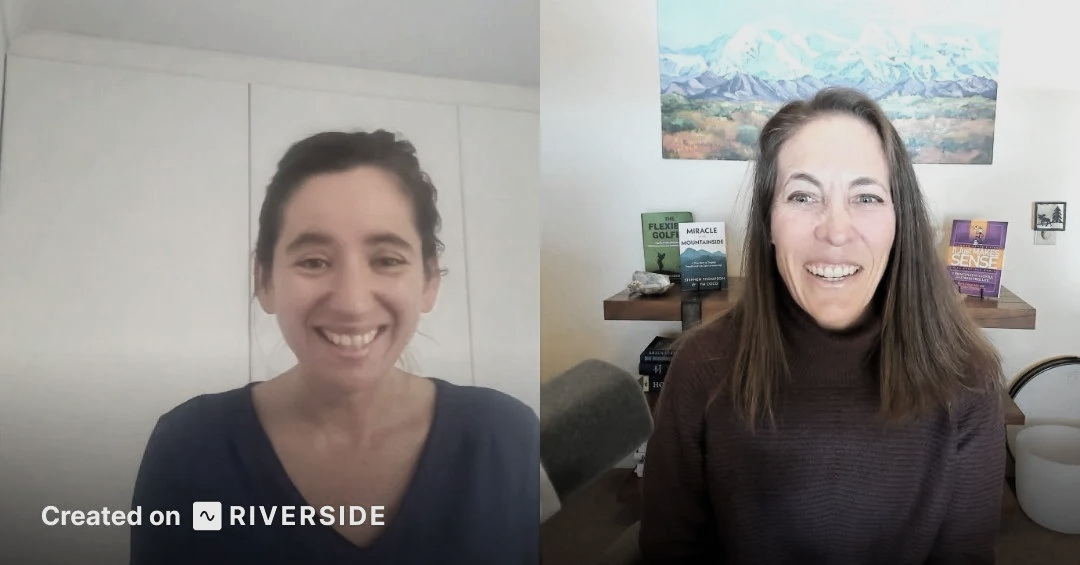
Okay. And I'm so keen to ask more about how you actually work because you are guiding people and you have books. Your books are conveniently right behind you. There's one that mentions a miracle. Let's cleanse it that for a second.
Kym (35:22)
Yes, that's Miracle on the Mountainside. So that's the book I wrote last year in honour of Steve. So I can give you a snippet. He had a very fascinating life. Before I met him, he was in a motorcycle accident. He hit shale, his bike slid, he went over a cliff, had a near-death experience, left his body, got in touch with the divine, whatever your beliefs are about that, but it changed his perspective. He had a miracle rescue. And once he came back into his body, he had 28 reconstructive surgeries. It took him three years in a hospital bed and then three more to learn how to walk. So you talk about a life transformation and a pause, like literally everything on pause. And it gave him the space to say, what's working in my life? What's not working?
Do I need these other people to help heal me, or can I be part of my healing process? And he had to come to some real truths about being afraid to start over, being scared to tell his wife, I don't want to go back to the family business we had. I want to start over. I want to help people with the tools that I'm learning to get well. And this is a very beautiful book. They're all short stories of how he reflected on his past, abuse from a father, a really controlling mother, some really interesting experiences, fun, light-hearted, some might make you cry, this forgiveness with his dad, and then all of these really amazing stories that happened after his accident that helped him get well and create a new life that was really intuitive and peaceful, but also very human, all the way up to where he was saying to my friends and family, I know I'm going to die and I'm at peace about it. And so it's just a really beautiful book.
Melanie Wilson (37:19)
That would have been quite a feeling knowing that the end was coming.
Kym (37:23)
Yeah, I was so thankful that we could put our life on pause in a lot of ways, and I could be present with him. And I know a lot of people want help caregiving, and I did have to ask for help in a lot of ways, but walking somebody to that point in their life, and that makes me tear up. Cause it's, think that's one of the best gifts I could have ever given anybody to be there for them in that way. Yeah.
Melanie Wilson (37:48)
Yeah, it's worth acknowledging the caregiving so much, and I personally think that no one can understand your individual experience with caregiving because they have not walked in those shoes. I know that some people say they have done caregiving in a different way, so they know what it's like. No, every single experience is different.
Kym (37:52)
Yes.
I agree. But I think if you're choosing love and you love this person and you love yourself and you, I mean, I grew in ways I couldn't have imagined by showing up and being there and loving in that way. So there was a lot of gifts for all of us.
Melanie Wilson (38:35)
How did you stay connected with yourself when you were giving so much to someone else?
Kym (38:43)
Great question. feel like that's the number one question caregivers get asked because you are on call, and you, they come first. What, like a new parent, the baby's needs are placed ahead of your own so many times. So, in the caregiving element, there were a couple things I did. One, I did meditation that was breathing, closing my eyes, taking a break. And that was not structured as much as I would love to say I'm getting up at 6 a.m. I'm gonna sit in my seat and meditate and then do yoga. A schedule went out the window for a couple of years. So it was finding the cracks in the day where I could close my eyes and breathe. If Steve took a nap, I could get on mine and meditate or move. So, committing to those pockets of self-care, even if it didn't have a routine.
I couldn't do 60 minutes of yoga many times, so if I could sneak in 20, I was excited. Resetting the expectations of things I liked to still keep them in my life, even if they couldn't be that full expression, that helped a lot. The second thing is I kept a journal. So the fears I had, the upset, the annoyance at the doctors who thought he was just trying to get medication because he was a pain pill popper, and I'm thinking he's not. He's been through a lot. I promise you he has a high pain tolerance, but he, he would say things he wanted to die. There were times where I was so upset because I didn't have answers, and we didn't know what to do next. And so the journal gave me that safe space to write it all out without necessarily having to say it to anybody. That helped a lot.
And then third, I had to restructure my relationships. So I asked my family, please send me pictures. Please send me texts. Please let me know you're thinking about me. And then forgive me that I can't be there in the same way. So it felt that I wasn't alone because I didn't want to talk about what I was going through. A lot of it was just sad, or it was uncomfortable, and it was stressful. And so instead of me having to repeat that, just getting the pictures, feeling the love, and then being able to send back a little note when I felt like it or could, it made me feel like I was less alone and still valued in my relationships, even though they had changed so much.
Melanie Wilson (41:11)
Definitely, definitely. You needed to remind people that you needed flexibility.
Kym (41:23)
Yes. And after Steve was gone, that was still the case, too. And so I think we can develop communication tools throughout our life, but the more we're able to acknowledge what I can do and what I can't do, and then give ourselves forgiveness when we can't do something that we maybe did in the past, just because it's changed. That was a, that was a relief for me too, to say put it down, Kim.
I can't do that anymore. Don't carry that. It's okay. Yeah, that's helpful.
Melanie Wilson (41:56)
Life changes, and sometimes the chapter we are living in presents a different set of options than what we had before, and we have to accept, okay, maybe I can do a bit of what sustains me, but I can't do as much, or I need to do it in a different way.
Kym (42:16)
Agreed. Yes. We do the best we can. I think I, one of the phrases I use often is I do my best and my best is good enough because that best does change.
Melanie Wilson (42:28)
One thing you listed, the journaling. I honestly, I wish I could have had this conversation years ago because I am saying now that life would be so different if I would have kept a journal. And I know, far too long ago, someone seriously more than a decade ago, someone said, keep a journal to remember that moment.
And I think sometimes if people consider writing an autobiography memoir, then they think about journaling. But what I'm hearing in what you said is that the journaling really does bring you back to your reality. And it helps you to process, also take note of, on, this is what's really going on, because no one else will see the version of the reality that you see. So, I'm very much inspired by what you said to say if anyone is doing caregiving or if anyone is what else going through an experience losing someone, anything journal it.
Kym (43:41)
Yes. And we have this technology now, which is wonderful. You can do little audio notes on your phone. Maybe it's not pen to paper, but maybe it's your driving home, and you have those 30 seconds, and you can put an idea down. think of it. My sister and my brother both have kids, and the kids say the funniest things, and they have these moments that are also equally as funny. And I said, just, did you record that? Did you, did you tell that story? Because sometimes those are just wonderful memories.
And so even if sitting down and writing is too much of an energetic hurdle to clear, maybe it is just a quick audio note. And thanks to AI, it'll transcribe it for you.
Melanie Wilson (44:21)
I love the transcribing, and okay, I need to say some people worry about the accuracy of transcription. I run my transcripts, that's the word. I run my transcripts through Grammarly. I'm not affiliated with them, but that cleans it up. If you ever need that, get it cleaned up. Don't worry if one platform isn't doing it perfectly, but the voice note, look, okay.
I feel like it's better late than never hearing this from you because the voice note, I know that my version was, I thought I was doing the right thing, having phone calls with people or conversations with people, but then someone else will only remember a part of things or they will attach their opinion to it and categorise things. This thing was personal. This thing was business. This was that instead of just, I think this is, I think everybody should do what you've suggested, which is do loads of voice notes, just really reflecting on the tangible reality.
Kym (45:32)
There's a great study. It's coming out of the University of Michigan. I want to say where they talked about the different strategies that help you long-term to manage emotions. Journaling was the one constant, and it was the least used because it takes attention. It takes your energy. takes time. And yet, so if you know that it's valuable, that might be the extra spark you need to go, okay, I might start that.
Melanie Wilson (45:48)
Wow.
Kym (46:01)
And again, it could be an audio note, or it could be physical writing, it could be typing it out. But I think just the idea that it's unfiltered, you may or may not go back to it. But the idea that you can get something objectively out of you so that it doesn't stay in here. Oftentimes, if we have something we're thinking about, it'll stay there until we do something with it. So the journaling can help in that way, too. So if something's weighing you down, maybe that just lightens the load a little bit as well.
Melanie Wilson (46:30)
Yes, get it out there and pick the format that is right for you. It's great to acknowledge that some people love handwriting, and I know that some research over the years, apparently from what I heard it hinted that handwriting processed differently in the brain. However, for me personally, for my comparison, I type faster than people talk. I type so fast, but a lot of people are now loving the voice option, even talk to the AI, whatever. And I love to talk, yes, but I think, sure, if typing works for you, I personally hope that years and decades from now, we will still have keyboards as an option for those who want them.
Everybody is saying we'll end up just talking to the robots all the time, but I like the old-fashioned keyboard. But whatever the point is, to pick whatever you are into and what works for the individual, right?
Kym (47:37)
I think that is a step in the right direction, yes.
Melanie Wilson (47:42)
Definitely. So which habits are specifically making your work easier? Did you reconsider things like your schedule as you are doing so many different things with the writing and the guidance? What habits are improving your work?
Kym (48:03)
That's a really great question. And that's something that is an ongoing adjustment. Things I've found that have worked for me lately include blocking off chunks of time for activities. So I try to book my podcasts at certain days and chunks of time. I get up early, and I do my creative work first. So I'm writing a book about this golf adventure I was on because it's fantastic. It was a way for me to process life. And there's so many funny stories.
But that's what sparks me the most. I love writing and telling stories. So that goes first, and then creating a little blocks of time. When I have blocks out for creative activities or podcasts or meetings, so I know kind of when I'm going to do well. This might sound kind of crazy, but as a female, you might get this throughout the month. We have a 30-day cycle. I actually have on my calendar colour-coded like the seasons. So I don't know, I'm going to say this on the air, which is kind of crazy, but when you're menstruating, that's low energy. That's blue on my calendar. And then I have spring, green, summer, yellow, fall, red. So I try to book some of the more important high-energy activities or events in the spring and summer, because that's really helpful for me. Now I can't do that all the time. And we do have energy fluxes, even in that period of a month.
But knowing that generally speaking, have far more energy, two out of the four weeks each month, I do that. So that helps too. I know that sounds kind of crazy. I can't believe I said that out loud. That's helpful.
Melanie Wilson (49:44)
Okay, hold on, hold on. I need to get someone onto the show who is an expert in hormones because, quite seriously, you live that way. I've only learned in my thirties, this reality that I know some weeks I have more energy than other weeks, and I reflect back on my life and there were moments when I just could not switch my energy on and it wasn't happening and we convince ourselves that there's something broken within us when really it's obvious that we are built that way, and for the men who are judging this okay men must apparently I've heard that men have more energy at sometimes in the day compared to other times of the day and for those who are wishing that we could just be completely consistent, here's the thing. When we do have those ultra-high energy weeks, I think that energy is so much more powerful than a consistent line.
Kym (50:57)
Then why not capitalise on that? When I know I have more energy, I can book more. I often do less, or I'll do more introverted work. I know that when my brain is a little foggy at the end of the day, it's easier to do some more routine rote tasks. That's okay. And so trying to, again, kind of understand the energy levels that we have, and you know yourself better. I mean, if you're a night owl, then your schedule is going to look really different. You're not up at 430 like me. That's okay.
But once we know our energy levels, it's helpful to help us thrive in our jobs and then in our relationships all around.
Melanie Wilson (51:35)
Know your energy levels, and the cup of coffee will only go so far, right?
Kym (51:40)
Yes, even though it tastes so good.
Melanie Wilson (51:43)
It really does. So as an expert in movement and all sorts of things, you're okay with bit of caffeine.
Kym (51:52)
Yes. I don't do it in the afternoons. I know there are times where I go without it because I can tell my heart rate changes. can tell I do better on T, and I acknowledge that, but I'm also a realist. like the sensational life we get to live. So unless it, like I had to give up, I shouldn't say I had to; I chose to cut alcohol out of my life because that was seriously affecting my sleep patterns and my ability to focus, and my heart rate would just go crazy. But I find that if you're paying attention to your body, it's harder to have like black and white life is fluid. So why not pay attention to how you're doing and try it, see how it does? And I found that as I've aged and as I move through life, the needs change, what I crave changes. And yeah, my friend just brought us some Kona coffee from Hawaii, and it's just stunning. It's so smooth and beautiful. couldn't imagine life without a cup occasionally, you know?
Melanie Wilson (52:53)
Definitely.
It sounds like one of the key takeaways we have developed here is to adapt to the seasons both internally and externally. The seasons within, be it energy levels in a day, week or month and also externally, someone will need your care, or work will have a moment, something will happen. So let yourself adapt and be flexible.
Kym (53:20)
Resilience at its finest. That's a great trait to have.
Melanie Wilson (53:25)
It is so winding up the hour. What are three lessons that you believe everybody needs to learn and take action on?
Kym (53:35)
So, three lessons, this is a great question. I'd say first, we are more powerful than we think. And so when we can step back and go, wow, acknowledging that is one. Two, learning the tools to further add to that empowerment is great. So that could be something as just saying, wow, I'm learning how to pay attention. What a superpower.
I can pause another superpower, take a deep breath, a third superpower. So starting to incorporate, are a lot of different aspects that we can incorporate, but they don't have to be huge. So tapping into some of these superpowers to make change and own our ideas and our power are really beneficial. So I think that counts as two. The third, I would say, is: add play into your life.
I think this gets overlooked as adults, unless you have kids around you, but this attitude of playfulness, that's what helped me so much in getting through the really taxing time with Steve and afterwards. Play is what reminds us to be present and creative and interact in a really generous way with those around us. think playful is spontaneous and it, makes me smile bigger just thinking about it. So if you can weave in elements of play.
It's going to help out just not our mood, but this overall perspective we have in enjoyment in life. And so I think if we can learn to play and, and use that as a tool more often, it's a good deal.
Melanie Wilson (55:17)
Amazing. Kim, thank you so much for talking on the show.
Kym (55:22)
Thank you for having me, Melanie. It's been a great pleasure. Thank you, listener, for joining us today. And I wish you the best. Thank you so much.
Melanie Wilson (55:31)
Yes, thanks. I wanted to express so much gratitude. You explored so much personal truth and professional wisdom, and it has been amazing. Thanks.
Kym (55:40)
Thank you.