
Dr Shanae Jefferies on Sociology, Community, AI & Human Connection
Listen to the entire episode
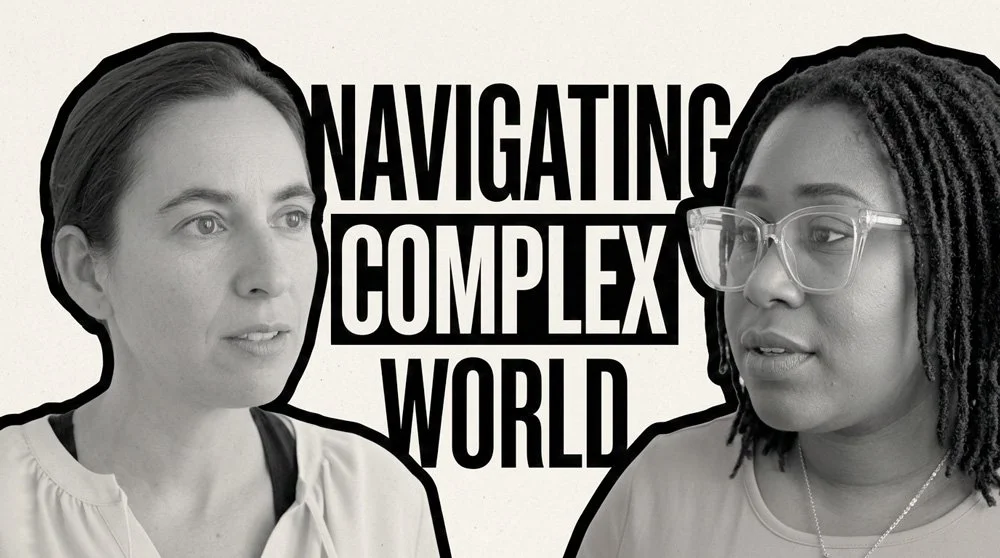
## The Motivate Collective Podcast
### Dr Shanae Jefferies on sociology, community, technology, identity, and understanding the systems shaping our lives
In this episode of **The Motivate Collective Podcast**, Melanie Suzanne Wilson speaks with **Dr Shanae Jefferies** — a doctorate-trained sociologist, applied research leader, educator, and voice-of-customer strategist whose work spans healthcare, corporate insights, workforce development, and academia.
Dr Shanae brings a powerful sociological lens to the conversation, exploring how institutions, systems, technology, and culture shape the way we live, relate, work, and understand ourselves. From political division and community-building to AI, privacy, self-image, and social media, this episode looks at what happens when human needs collide with rapidly changing structures.
Melanie and Dr Shanae also reflect on how people are finding belonging in online spaces, why sociology deserves more recognition in everyday conversations, and why human connection still matters in a world increasingly shaped by algorithms, automation, and digital dependence.
This is a thoughtful, wide-ranging conversation about collective life, identity, trust, and what it means to stay human while everything around us keeps changing.
---
# In This Episode
Melanie and Dr Shanae explore:
• Why sociology deserves more visibility and respect in public conversations
• The difference between psychology and sociology
• How institutions, systems, and global structures shape everyday life
• Political division, public distrust, and the question of whose needs get met
• Why community becomes essential when broader systems feel unreliable
• How people are building connection online through platforms like Threads
• Groupthink, conformity, and the courage it takes to step outside dominant narratives
• What honest leadership could look like in divided times
• AI, privacy, personal data, and growing dependence on technology
• Why most people are more focused on themselves than judging others
• Women, self-image, identity, and socialisation
• How storytelling creates belonging online
• Why in-person connection still matters alongside digital connection
• What COVID revealed about isolation, purpose, and the human need for community
• How focusing on your own task can create a more peaceful society
---
# Key Takeaways
• Sociology helps us understand how human behaviour is shaped by systems, institutions, and culture
• Community often becomes stronger when trust in traditional structures weakens
• Online spaces can create genuine connection, but they do not fully replace human presence
• AI can be useful, but it cannot replace trust, touch, and mutual care
• Most people are far more focused on themselves than on judging us
• Socialisation deeply shapes identity, especially around body image, gender, and belonging
• Human interaction remains essential for wellbeing, purpose, and resilience
• Leadership needs honesty, clarity, and a real understanding of what people actually need
• Focusing on your own task while treating others with humanity can reduce unnecessary conflict
---
# Memorable Quotes
“Sociology is studying society and its people.”
“Community is coming out of this.”
“We’re finding community online.”
“Nobody’s thinking about you. They’re thinking about themselves.”
“You cannot hug AI.”
“Culture has no choice but to change.”
“Focus on your own task.”
---
# About Dr Shanae Jefferies
Dr Shanae Jefferies is a doctorate-trained sociologist and applied research leader with experience across healthcare, corporate insights, workforce development, and higher education.
Her work combines sociology, mixed-methods research, user experience thinking, and executive strategy to help leaders better understand people, systems, and organisational change. She has led voice-of-customer transformations, enterprise learning research, workforce development initiatives, and higher education teaching across research methods, stratification, inequality, and social theory.
Dr Shanae is passionate about making sociological insight more visible in everyday life and helping people think more critically about the systems shaping identity, opportunity, community, and culture.
---
# Episode Timestamps
00:01 – Introduction to Dr Shanae Jefferies
00:20 – Why sociology matters
01:09 – Psychology versus sociology
02:05 – Political division and public trust
05:39 – Whose needs get met in society?
07:36 – Community as a response to uncertainty
08:16 – Finding community online
10:06 – Groupthink, conformity, and courage
13:49 – What people want from leadership
15:06 – Honesty, priorities, and collective needs
19:05 – Institutions, media, and political influence
21:17 – AI, trust, and digital dependence
23:07 – Privacy, data, and public identity
30:01 – Why most people are focused on themselves
31:20 – Self-image, identity, and social comparison
35:56 – Sociology, gender, and socialisation
39:22 – How perspective shapes community
43:20 – Threads, storytelling, and online humanity
49:41 – Why offline connection still matters
53:05 – COVID, tech, and the loss of social interaction
57:18 – Small human moments that shift perspective
1:00:39 – AI as a tool versus people as connection
1:03:19 – Cultural change and collective thinking
1:07:07 – One key lesson for a more peaceful future
Transcript
Dr Shanae Jefferies - transcript
Melanie Suzanne Wilson (00:01)
Shanae, welcome to the show.
Dr Shanae Jefferies (00:04)
Thank you for having me.
Melanie Suzanne Wilson (00:06)
This is such a joy, and you are such an expert. have so much to share. What do you want people to know first about what you do and what you teach everybody?
Dr Shanae Jefferies (00:20)
Okay, so I do this thing called sociology of the week on my TikTok. And I really like the big part of this is that I love sociology, and I want sociological research to be respected in kind of the way that psychological research is. Because it's about how society is forming around us and how that impacts our person. So I feel like that we should say more about this and in more conversations that are just like, research is only science. Research is also studying society and its people. So yes.
Melanie Suzanne Wilson (00:57)
It really is. So is the difference that psychology tends to focus on the individual, and does sociology look at the broader collective and what we're all doing as a trend?
Dr Shanae Jefferies (01:09)
Kind of. It's in there. Sociology is looking at the processes of societies like the infrastructures and the institutions that are shaping us, like are shaping around us, but also in a global atmosphere, like what are we doing in one country that affects another country? As first-world or first-class or whatever countries, what are we doing that actually is degrading others in a non-like super tense way, but just like affecting other nations to keep them under our foot or in this stronghold. So I think like just seeing like what how the nations come into play, how the institutions within one nation. And of course, I'm from the US, so all of this feels like, my goodness, please help us. But like...
Melanie Suzanne Wilson (02:05)
Okay, on that note, how are you feeling in the US right now? I saw some headlines in the news. What's your main feeling and impression of your nation and the world right now?
Dr Shanae Jefferies (02:20)
Embarrassment. I think the rest of the world kind of knows that this is not the unified American foot that is being put forth now. I hope that they do. But right now, we kind of just have to sit and watch what happens because we're not in control. So embarrassed is the big one. I'm going to say embarrassed.
Melanie Suzanne Wilson (02:48)
I feel so much compassion for that. I know that Americans can feel very patriotic, and the impression I get from the outside is that there's clearly division and has been for a long time. I think in some ways, other countries are having feelings like that as well. Over here in Australia, the thing that really sunk in deeply for me, did you hear about what happened in Bondi?
Dr Shanae Jefferies (02:54)
Yeah.
Yeah.
I did not.
Melanie Suzanne Wilson (03:20)
So basically, there was an attack on Jews in Bondi. Yeah.
Dr Shanae Jefferies (03:27)
Where is Bondi?
Melanie Suzanne Wilson:
So, it's basically, it's a beach area in Sydney. So that made headlines everywhere. mean, you know, politicians in other countries were commenting on it. It was it was huge. And I think that Aussies aren't always feeling divided. Mean, I have talked with a few Americans on the show to get the impression that there's this intense division, especially when there's the ‘conservative and opposite’. But I think that what I'm sensing over here, at least in my impression, is that there's something underlying going on and people are losing faith in politics and
Dr Shanae Jefferies (03:59)
Yeah, yeah.
Melanie Suzanne Wilson (04:17)
I have to be so careful in how I word this. I don't want to say people are losing faith in government; I think that people don't know who they can trust at the moment. Is that the sort of feeling you're getting?
Dr Shanae Jefferies (04:23)
Yeah.
I think it's so much deeper than that. I'll speak as a Black woman, but knowing how the government and systemically we've been treated, we knew better than to have any faith or hope into the government system. So like after the election, we weren't surprised, we were disappointed, but we weren't surprised. So I think now it's coming to where other racial groups, ethnicities, other class groups are starting to feel some pressure about who they are and their freedom or their privileges in the US. And that's what's having people say, like, we're more divided than ever before. Or like, I didn't know it was this bad. We used to be a better America. And so as a Black person and as a Black woman, I don't think I know a better America. It feels like they're doing to other people what they've done to us. And still, not everybody is affected by this. So it's still like, who knows how much longer this could go on before people have had enough and are ready to do something.
Melanie Suzanne Wilson (05:39)
I want to find a way to express a lot of love and care towards the people who are feeling like or experiencing that their needs aren't being met while also trying to be loving towards people who perhaps have been socially connected with some of these spaces that turned into something they don't expect and
Dr Shanae Jefferies (06:04)
Mm-hmm.
Melanie Suzanne Wilson (06:07)
The thing that's becoming a parallel on what you're saying is that more and more groups are wondering how their needs can be met in this era. I mean, over here, the special needs people are, that has been a flag that's getting waved these days. I'd say maybe a decade ago or, more recently, the rainbow flags were getting waved a bit more with an effort change. And what I'm saying, though, is that we've lived in a lot of change post-COVID, things like that. And do you think that everybody is wondering, okay, how can everybody have what they need? But also, I also need to ask this feeling of feeling like, I'll rephrase that, this feeling of our collective needs as a group were never met. I can see that as being manifest in perhaps the Indigenous communities over here and in other spaces. So what do you think is the next step for people who are having that experience and need to find a next way forward relating to everybody.
Dr Shanae Jefferies (07:36)
I think that those people are finding community. And so that's something really special. Under the circumstances, we wish that they were better. But people are finding community, and they're finding support in that, in places where previously they might have used their own resources or used the government. So community is coming out of this.
Melanie Suzanne Wilson (08:00)
That's really powerful. Do you think that historically, community was a way for everybody to cope decades or centuries ago? Do you think that's something we need to return to?
Dr Shanae Jefferies (08:16)
Yeah, I think it looks different now, which is why people are like, no, let's not do it or they don't recognise it. So even like the threads community, like we're talking because I responded to a post you made on threads, you know? So we're finding community in social places, or sorry, we're finding community in, what is the word? Internet? Online.
Melanie Suzanne Wilson (08:39)
Yeah, online.
Dr Shanae Jefferies (08:41)
Thank you. We're finding community online within different groups, and we're finding some commonalities. We still, this is what I wanted to say to your previous question. I don't know how tense it is in other nations or other countries, but it did feel particularly like a stomp in the face going to work the day after election day that we had, like the day after the presidential election day, because you know for a fact that the people around you have voted against your best interests completely, you know? And then you go to work, and we're one big happy community, and we help each other and yay, yay, yay. And it's like, we can't ignore this, you know? So even finding community within the workplace is something like, okay, now we're siloed over here because we're not the majority. Like the majority, I live in Texas, so red flag waving state very conservative. And so you find your pocket of liberals, and you're just like, I'm so glad to have found you, you know? Like it's not common that you see them in the workplace because the state is so heavily populated with conservatives in like these bigger places, these bigger cities and the smaller ones as well. You know.
Melanie Suzanne Wilson (10:06)
I have a couple of responses to that. Firstly, I'm going to be very vague in sharing that I knew someone in politics relatively recently who didn't actually fully believe or align with some of the statements that person was making. And so I wonder if there's a sense of conformity from some of those groups that you're
Dr Shanae Jefferies (10:09)
Yeah.
Melanie Suzanne Wilson (10:35)
not aligning with, it's possible. I'm wondering if a bunch of them feel like they have to toe the line everybody else is towing.
Dr Shanae Jefferies (10:46)
I think so. think it's groupthink, it's group conformity. When the people who are doing well are saying one thing, you want to be in that group. And so I think they find whatever unites them with that group, and they hold that line. It takes a lot of courage, I think, to step over the line, because the line is so bold. So yeah, I think. Yeah, I'll say that. Yeah.
Melanie Suzanne Wilson (11:13)
Absolutely, absolutely. It takes courage to do something that contradicts the standards that you're surrounded with.
Dr Shanae Jefferies (11:23)
Yeah, yeah, I can say, and this feels like, I don't know how politically deep we're going to get, but we just have the, okay, we just have the primaries in America. And that's when we pick.
Melanie Suzanne Wilson (11:31)
Well, we'll go anyway.
What's that?
Dr Shanae Jefferies (11:40)
Who is going to be on the ballot in November? So this isn't the presidential election. It's like the state, like, who do we want in the House of Representatives? Who do we want in the Senate? Who do we want to be the governor of our state? Things like that. And so you have one person from the, no, one person from the Democratic party, one person from the Republican party. And so maybe somebody from an independent party as well. But there are like, I think this year there may have been like governor eight potential governor candidates that we had to vote for. And so whoever is on that majority is then who runs against the majority Republican governor candidate, which is the same governor that we've had for years and years. And I really hope that we change, but that's who's going to be opposing them. And so now we concentrate all of our like power, our voting power against that or with, sorry, we concentrate all of our voting power with that person who aligns with our party.
And that way it's like, it's, yeah, yeah, it's focused. Like it's what you're going for, one candidate or the other. It's not a confusion. And so now I think because of how conservative the right has been, and by, I don't just mean like conservative values. I mean, like blatant lies. Like we know that Trump has set like blatant lies, and we're sitting there fact-checking, and there's no.
There's no accountability, there's no repercussions. So things like that are making some of the people on the conservative side get just a tad bit more liberal. It's not all of them. It probably isn't the majority of them. But that is where we get to see people toeing the line like, OK, that's the last straw. We famously had an ice blizzard a few years ago, and our governor was in Mexico on vacation.
He didn't care. You know, things like that have people on the conservative side, like maybe we should see what this other guy's talking about.
Melanie Suzanne Wilson (13:49)
What people need is to see signs and actions indicating that the person representing them really cares and will show up when there are crises and when they need something. This isn't just… and I think this is probably happening in a lot of countries. People don't want someone to just sit in a parliament and talk about things for them. People want someone who is going to show up when it's needed.
Dr Shanae Jefferies (14:51)
Yeah.
Yes, absolutely.
Melanie Suzanne Wilson (14:58)
What do you think the next leaders need to do to show that for everybody?
Dr Shanae Jefferies (15:06)
Gosh. I personally would appreciate if they were honest.
You know, like not the, you know, we're here for citizens, and I've always believed in us, and hey, it's looking a bit bleak outside. And so we've got to get it together. Like these, these communities that you formed are great, but we need to band together as a bigger society. And so we can do these specific things that he's willing to change. It's two men. So, yeah. But the specific things that these people in power are willing to do, I think they need to say them and stand on them while also being honest. If you don't plan to unite Texas, don't say that you do. There's a lot of propaganda. There's a lot of bread-crumbing people to hopefully get their vote or to have them at least feel like they're misaligned with the other side. So if they're not going to vote for you, at least they won't vote for the other person. They're just not going to vote because they don't feel an allegiance to any side. And so I've seen that happen a few times, where people just don't turn out to the polls because they disagree with one candidate but can agree with the other side.
So I think things like that, if we're being honest, if we're calling a thing a thing and being direct about what we're going to change and how we're going to help and possibly what we may have to wait for help, you know, like we can't, we can't change everything as soon as the two years start. But to say that these are my priorities and then I want to work on this, you know, if I, if we have more space, if we have more room in the budget, we can work on these secondary things, but primarily this is what is most important and it's what actually like affects the people, the majority of the people, not just what affects you and the people who want to identify with you as a politician.
Melanie Suzanne Wilson (17:07)
What aligns with what the majority of the people need. Do you think part of the way to even identify that collective need is to find a common thread as human beings? There must be some things that we all need regardless of where we are in the political spectrum. Or do you think that the solutions to those problems are contrasting so much because people's values are so contrasting.
Dr Shanae Jefferies (17:38)
I think it's the latter. think we're past being one America. They'll tell you that the most united the United States was on 9-11.
Melanie Suzanne Wilson (17:40)
Sure.
Dr Shanae Jefferies (17:49)
That's when we were like, oh, America is under attack. But any other time we're fighting within ourselves. Like it's, you know, we're fighting different, we're fighting racial groups, we're fighting ableism, we're fighting sexism, like all of these, all of the isms, we are actively fighting against each other. So that was the one day that we were like, wait a minute, America has been attacked. Not my home. But after that, we immediately went back to fighting each other. So I think...
Melanie Suzanne Wilson (18:17)
Instantly.
Dr Shanae Jefferies (18:20)
Yeah, it's like racism hasn't ended because 9-11 happened. You still had people with their prejudices on the campgrounds of 9-11. You know, like they need help, but they still are, they still have the values that they have. So, yeah, it's pretty, I don't mean to be so bleak about the US. There's other great things, you know? But this is, I think, this is the state of our the atmosphere, like the atmosphere that the government has created and has just kind of been propelled. And we know that there is fault within us for propelling the system, but not all of us. Didn't all do this. So it's like we're suffering because other people have voted this way.
Melanie Suzanne Wilson (19:05)
Juicy question, and I really hope I'm not going to frustrate too many people in politics and media who might notice we're having this conversation. But I'm so curious, do you think that other bureaucracies or other institutions are supporting and fuelling what's going on with these government issues? The obvious one to list is
Dr Shanae Jefferies (19:09)
No.
Melanie Wilson (19:33)
The media, or perhaps there are some social groups. know in a few countries there'll be a social group that's kind of nudging the government behind the scenes. Do you think that's going on?
Dr Shanae Jefferies (19:44)
Absolutely. There's no doubt. They come out and say that directly. So, most recently, is the story how I heard it or how I read it. Claude AI and another AI company were contacted to be part of President Trump's backing. He wanted their money to fuel what he's doing now.
And so notably, this is why we know about it. They said, no, no, we won't. We don't agree with what you're doing. We don't want to stand behind it. We don't want to be aligned with it at all. So ChatGPT comes and says, wait, we've got money. What do you need us to do?
And so now we're seeing it's an uptick, but there's like a boycott or removal from ChatGPT to these other companies that are either less aligned or not aligned with the current administration. So it's up. Yeah, they're not hiding it.
Melanie Suzanne Wilson (20:49)
Okay, that is giant. Because whichever side of politics we are on, we have that question of do we want the AI companies that we are, frankly, at this point, depending on for so much of our everyday life, do we want them financially contributing to political efforts and potential political outcomes?
Dr Shanae Jefferies (21:08)
Yes.
Yeah.
Melanie Suzanne Wilson (21:17)
That's a giant question. And it also shows this is where someone in politics knew there would be money, and this is where someone was turning. There are lots of places to find money, and this is where they were looking for funds. That is giant. And the understanding I have of using AI is that
Dr Shanae Jefferies (21:26)
Mm-hmm.
Yeah.
Melanie Suzanne Wilson (21:43)
If you have been using GPT for quite a while, it will have an understanding of this context within it of the individual of you, of me, and what we need, our tendencies, our habits. And then a lot of people are feeling like they are starting from scratch with Claude and others. And so we need to then rebuild.
Dr Shanae Jefferies (21:58)
Nope.
Yeah, I, so this is what I did personally. I asked Chat, what does another AI bot need to know about me to continue our conversations? And he made a list, you know, there were bullet points, there were things I like, things I don't like. And so you upload that file to Claude or whoever else. And now it's in there, you know, it's in there.
Melanie Suzanne Wilson (22:20)
Nice.
Dr Shanae Jefferies (22:33)
And so, like creating GPTs like the different bots within ChatGPT, like you would drop a file for like background knowledge, so I assume helping that you can do the same thing with quad where, like, if you drop the file that the other chat made It will continue those conversations. I don't know that everything is transferred, you know, but it has a basic running knowledge of who you are, what you do, how your tendencies are, what you're searching, why you're searching, all of that.
Melanie Suzanne Wilson (23:07)
We have so much trust in those AI platforms even now. And I don't know if we are always thinking about how much information we are giving to those companies.
Dr Shanae Jefferies (23:12)
Mm-hmm.
Yeah, no, no. At this point, I think that there have been so many data breaches that it just, at this point, I should just give you my information, you know? Because, yeah, like, who are we kidding? You get it from different companies that collect my data. So let me just tell you it all so you can help me in the best way possible. It's kind of the approach that some people are taking, me being.
Melanie Suzanne Wilson (23:32)
Just hand it over.
That's really interesting because a few years ago, I was doing some writing when I was hired by a company, I was doing some writing about cybersecurity, and there were so many efforts to try to prevent breaches, and it's good to prevent things. Sure. I mean, you want to make yourself safe, just like you're going to lock a door or whatever, but it feels like there are so many ways for this to happen. I saw some conversations that other people had online about how someone can hack your phone, and you wouldn't even realise. So it seems like the technology is at the point where we don't expect privacy.
Dr Shanae Jefferies (24:23)
Mm-hmm.
Right. It's a risk that you know you have to take. And we also have companies that capitalize off that. You know, like, if your information is somehow hacked, if you pay our subscription each month or each year, we're going to tell you immediately, and we'll help you fight it. You know, everywhere somebody has made like a capitalistic ploy. So, yeah, it's I don't know that we assume that our information is private anymore.
Yeah. Yeah.
Melanie Suzanne Wilson (25:01)
Pretty much the moment you email someone, even, I wonder, even having audio calls, sometimes Facebook Messenger, right? You can call someone on Messenger, and I don't really know. I'm just guessing I don't know how much privacy is in that because it is going through an app.
Dr Shanae Jefferies (25:10)
Yeah.
Yeah. And also this, I'm pretty sure Facebook backs the current administration. Like they are funding the current administration. And so again, we're giving our input here. Like, there's no other way for us to protect it. I think within reasonable thought. So either you are not on the internet at all, or you know that your data, your information, your tendencies, whatever you value, wherever you go to work, all of that is free information so that they can market to you. But also so that something else might happen. We don't know what, but I don't know what else they would be using information for. They say it's for marketing, but you have a lot of information on us. You know, it can't all be marketing. Yeah.
Melanie Suzanne Wilson (26:18)
I knew someone, and I'll be so vague here, I knew someone in government who, many years ago, said to me that these days people make their personal information publicly available anyway. It's not even a difficult task to find personal info. Look at how much we put on our public profiles readily available.
Dr Shanae Jefferies (26:48)
Right.
Melanie Suzanne Wilson (26:49)
Someone actually asked me, do I think that someone could have been, now, of course this wasn't happening, but someone asked me if someone could have been stalking me through my social media. And I said, well, I don't typically tell social media, this is the precise location I'm in right now. Do you remember the days when we would check into a location on Facebook? I'm at this cafe right now. I don't think we all think that's a good idea anymore.
Dr Shanae Jefferies (27:08)
Okay.
I thought that was so weird. You know, when it's like, these seven people have been to this airport before. And you're like, why would you? You wouldn't just say you're going on a vacation. Like, why would you check into the airport? Do we need to know if something happened? We do. Do y'all have the alerts of like, if a natural disaster just happened, it'll alert the social circle of that person that you're marked safe from that natural disaster?
Melanie Suzanne Wilson (27:46)
I got the understanding that there's a button people can click if they want to. I mean, look, the computers and the apps privately know all of this stuff because the location tracking is probably constant. But in terms of what someone can publicly Google, that's a bit different.
Dr Shanae Jefferies (28:04)
Yeah. I think, so I try not to do this, but even like posting like photos of where you are, it's gotten to the point where a lot of influencers do not post until they are in another location, you know, just so that nobody is tracking them, because stalking is prone to happen for people like they, they become obsessed, they become super fans. And so they're looking for you now in real life, because they think that they know you.
Melanie Suzanne Wilson (28:32)
I actually take a bit of comfort in doing the opposite. I might say, people are hanging out at this place. I just want to be a bit quiet somewhere else. And so I know everybody's over there. I'll go over here to just have some peace. No, no, but I mean, other people do. And look, actually, a friend said to me that there's no privacy in life anyway. So what difference does it make?
Dr Shanae Jefferies (28:48)
Do you post it?
Melanie Suzanne Wilson (29:02)
I mean, you don't have to be very precise. No, I don't. It's so funny. I'm saying this in a recording. Okay. I don't normally say precisely where I am. It got to the point where some people close to me wondered which area I'm in. I would say city, but some areas are smaller than that. But I mean, the world doesn't need to know everything about you.
Dr Shanae Jefferies (29:35)
Yeah, what are they gonna do with that information? You know, like, I don't know. Some people, I won't say that stalking doesn't happen, I guess. But yeah, I just think you put the things out there in hopes that people will not go searching for it because it's so readily available. So yeah, I think.
Melanie Suzanne Wilson (30:01)
Oh, and it's worth comforting ourselves, right? And we do not need to get paranoid. And this is where perhaps your expertise and our personal experience can be drawn upon to say, okay, we're not going to get paranoid. I had a moment of wondering, oh, why are some people so fussed over what I'm putting online, blah, blah, blah. And I needed to pull myself in and say, people are thinking about themselves. And I think when there's
Dr Shanae Jefferies (30:24)
Mm-hmm.
Yes.
Melanie Suzanne Wilson (30:31)
That precaution of don't give the opportunity for something silly to happen, that's more like just a precaution. Like, don't leave your phone unattended in a public park, whatever. You don't do something silly. But we have to keep in mind, and just let me know if you agree, most people are in their own worlds.
Dr Shanae Jefferies (30:46)
Yeah.
Yeah, yeah, they are. I've been doing a lot of self-development and stuff, and so that's one of the things - nobody's thinking about you. They're not. I read The Courage to Be Disliked, and that book game changer. But yeah, was like, nobody's thinking about you. They're not. When you, so like, I'll say.
Melanie Suzanne Wilson (31:05)
Yes!
Dr Shanae Jefferies (31:20)
I guess the stereotype is that girls do this more. I don't know about guys doing it, but you know how, like some girls will take a picture and they look at it and they immediately go to their flaws. Like, can you see that? Like my hair is out of place, or you know, stuff like that. And so we think, like, my God, that's an awful picture. Everybody's going to notice everybody else is looking for themselves in that picture if they were there, you know?
Melanie Suzanne Wilson (31:35)
Yes.
Dr Shanae Jefferies (31:45)
Like they're not looking at you specifically. They're looking at who else was in the group. Where is my face? Because the other girls in the group are going to say, my God, my hair. My God, my belly. My God, my shirt, something. And so it's just like we're not; nobody is focused on you. And once you get past that, it makes it a little easier to go about the world because you know that they're focused on themselves. They're not looking at what you're doing or what you're not doing. So I think it's a good and a bad, you know, because they're not conscious, but also, you're not conscious of my flaws, and that's what I appreciate.
Melanie Suzanne Wilson (32:20)
I totally agree, and we all do it. We all have something we feel self-conscious of. My thing lately was that I don't like the shape of my arms, even though I dropped the weight, the pounds, kilos, whatever you're into, and yet my arms are just not what I want them to be. And then, and the tummy as well, but
Dr Shanae Jefferies (32:28)
Yeah.
Melanie Suzanne Wilson (32:48)
Everybody will have something, and I think a lot of women can relate to that, but I think a lot of men probably can relate to that as well. There's an ideal they want to look like, and the reassurance. I hope you've had this experience as well, that normally people accept you and actually like how unique you are, a lot more than we realise.
Dr Shanae Jefferies (32:50)
Yeah.
Yeah, that's I'll take a picture, and I'll be like, my God, delete that. And they're like, no, you look stunning. And it's just like my collar was turned up here, you know, like it's one little thing. I'm like, I throw the picture away, and they're like, no, this is we all look great. Let's keep this one. So in group settings, of course. But yeah, even like.
And I hope I'm not taking this off on a tangent. But even doing selfies and things like that, women, I guess, are more open about how they attack themselves when they see that picture. Not to say that men don't also have their flaws that they look at. It's just not, what's the word? It's not the common etiquette for men to say, my gosh, look at my beard. my, look at my hairline. Look at blah, blah. Like they just say it, they acknowledge it, and they keep going. And I think it's another part of everybody not paying attention to you. They're paying attention to themselves. So yeah.
Melanie Suzanne Wilson (34:17)
Interesting.
I wonder, maybe the men are not thinking about it as much. Maybe they are not talking about it as much. Or I think women have been a collective support group for each other for a long time because a lot of us women grew up with the magazines, the TV advertisements, and then it's going to be safe to assume that in some forms, the ideal images on social media probably were growing, possibly more for us at some point than for men. I know that's a bit of a generalisation, but you know, I think that it had to be females taking up the filtering apps, all of those things. And, but either way, I think because a lot of us grew up with, especially the nineties, thin ideal things like that, we've had to emotionally cope with that inner battle for quite a while. I mean, my filter that I have is I was actually too thin in my early teens, and I felt, I felt personally embarrassed because there was that stereotype that you had to have an eating disorder if you were thin, and then I was too big, going too far in the other direction. And do you think women always either feel too thin, too big. Do you think we don't know how to just be satisfied with how we are?
Dr Shanae Jefferies (35:56)
I think so, we're socialised this way. So this is the sociology coming back into it. So when we are young children, girls or females tend to be socialised in groups. Like you are looking for your community friend group. On the other hand, males or boys, they are socialised to like competition. know, like, I'm better at this than you. Or girls are like, let's play in a collective group. You know, let's hold hands. And guys are like, no holding hands, and I'm racing you, and I'm going to beat you. So I think like the socialisation of how we grow up, of course, that changes us and our projections of like how we see ourselves in our identity as we grow up and as we're adults. But also, I think that we see a lot more focus on like women and their body weight or their appearance in the media. And so that also socialises us. Like you said, like, if you're too thin, people are going to assume that I have an eating disorder or maybe that I don't have enough money at home or something like that. And you're just like, no, so I have to self-correct so that people don't think this thing about me. And again, people aren't thinking about you; they're thinking about themselves. I know it's a bit different in like high school and stuff, but once you get to adulthood, people are thinking about themselves. The things that we were socialised to care about in high school are no longer concepts for us. And you just, that's that transition period to move through it.
Melanie Suzanne Wilson (37:22)
That's the reassurance for everybody. That's what we can come back to for a lot of this, partly because we are simply thinking about ourselves, because that's how we are wired. And also, people are probably too busy as well to fuss over everybody else.
Dr Shanae Jefferies (37:38)
Yes, yes, that's something I remind myself of. Like, even when I'm busy and just like straight shot to where I'm going and where I'm going and where I'm going, I'll see other people, and I'll think like, my gosh, what a cute skirt.
And so I'll tell the lady, you know, and that like, I love when people do that to me because a compliment. Thank you so much. But also, you'll see people who are just as busy in their day. And it reminds me like there are people who have young children that need to go to the store and come back, you know, like it's not, it's not about me trying to make my way through Costco with the least amount of attention or conversation. There are also people here who had to bring their children because maybe they could not put them in childcare or something, or like maybe they are out of work, and so they are now babysitting. You know, like there's so many other factors in life that we even see that helps us be like that person is not worried about me, and so as we apply that to other people, we're more like we know that people are self-absorbed. We may try ourselves not to be as self-absorbed, but still we know that nobody is going around looking like, ⁓ my gosh, Melanie, what are you wearing today? I've been waiting for this all morning. You know, like nobody's saying that. It's not a problem.
So, we do have other problems, of course, but it's really about the identity that you have within yourself and how you've evolved that with the different roles and the different statuses that you've held. And you become into the person that you are right now, because that person might be different tomorrow based on the circumstances of today.
Melanie Suzanne Wilson (39:22)
This is leading perfectly to the question I was keen to ask, which is how we can use that mindset to then connect more with communities online and offline. I'm asking that because the thing I'm inspired by within what you are saying is to use the podcast as an example. I learned to think about the individual who is coming onto the show and it's not just, I think early on I just thought, okay, this person has this listed on their LinkedIn, but the context that I need to keep in mind and I say that, gosh, I had a four shot coffee before this, so I'll catch a breath, but the thing that I need to keep in mind is someone might have set aside an hour within a really busy day. Someone needs to get to their kids after, or a client might be waiting, or someone could have had a really long day, and it's their dinner time, and they're just so keen to eat afterwards. And that's one of the things I love about speaking, and it really translates after having talked to in-person audiences. It's not just what do I want people to hear; it's okay, where is their mindset, and what do they need in this moment, along with beyond today, and I think that communities would evolve so much if everybody could have that mindset, whether they are at a microphone or just having a chat within a group. Do you think so?
Dr Shanae Jefferies (40:53)
Mm-hmm.
I believe so, yeah. I think again, like the way that we're building community, I love threads for that.
And it's mostly honesty, you know, like that's what you don't have to tear people down. You don't have to do all the things. It's just like, hey, I just had this experience. Isn't this funny? And you add a gift, you add whatever, you add a picture, and now we're all cackling, and we have 7.6K likes, you know? Like that's, it's not a personal attack on anybody. It's a reflection of what you wanted to share with the world, and you leave it there.
Of course, they're all trolls and people who just want to be negative online, but a lot of what I've seen, and again, I really enjoy threads these days, is that they don't pay it any mind. Like they don't.
You now have like a trolling comment, and it has zero likes and zero comments. So nobody's saying, hey, you, no, that's not right. You have to do blah, blah. We can govern ourselves. I don't need to govern you. You're not actually part of my community. So it's not a problem, you know? And so I think that's the thing with social media because it seems like other platforms, i.e. were...
It was great at the beginning, you know, like it was a great conversation starter. We were building community with people across the world. And then it got to be, this is about likes and comments and clicks and followers. And so let me just say the most absurd thing that I can think of, so that people like it or they interact because they know that it's wrong or against it. And so.
You know, there's two sides to every coin. So I don't know that we'll fix something without having a major problem on the other side. But that part of community of being able to share your actual day-to-day interactions, just what you feel, what your perspective is on it and leave it there. It's not bashing somebody else. You're not flowering it up. You're telling the truth, your truth, and it may be hilarious. And so we want to laugh.
It's a shared thought there, yeah.
Melanie Suzanne Wilson (43:20)
What I've seen is we found a current platform, and I think the ideal platform or the option is different in any other moment, but we found a platform for human storytelling. And there was probably a moment when Twitter was a space to say this happened in this moment, and then that happened in that moment, and it could have evolved into see this story on this link, whatever, but we also know that Twitter got filled, or at least infiltrated with bots, fake profiles, some sort of automated, I don't understand all of the tech, I like to be, look, I grew up around tech a little bit, a tiny bit, and I like to be the one who simplifies it to say, okay, something automated was going on, to be able to get a robot to say things or write things on Twitter. So it wasn't even all human. It's, I think it's a mix, let me know if you agree. think it's a mix of the robots and the humans who are trying to stir things up too much, and even Substack. had issues with Substack. So I think this is where your expertise comes in. It seems like the conflict just eventually comes into whichever space, and then people end up wondering, okay, where can I go to just have some common thread? Pardon the pun. We want that common thread because I've been talking with people from any countries, like what I was saying to you before we recorded, a lot of my guests are from anywhere and
Dr Shanae Jefferies (45:01)
Yes.
Melanie Suzanne Wilson (45:13)
We all have very similar experiences, needs, and that's why years ago I was able to even connect in person.
Years ago, years ago, I was able to connect socially with people from seriously polar opposite ends of the political spectrum, which is controversial and confusing to some and comforting to others because I just saw we all have different ideas of what we need or not, we all have the same core needs and different ways that we think that can be addressed like what we said earlier in our conversation. We all want to feel seen, we all want to make sure we can put food on the table, we all want to feel connected with human beings, all of those things. But we have different ideas about how that can happen, or even the word freedom gets interpreted in so many different ways these days. So the thing that's going on in threads is we're just all at the moment finding people who want to tell a story without judging, and I never want to be married to a platform, though. I want to emphasise that. Never marry a platform. Do you agree?
Dr Shanae Jefferies (46:39)
Yeah.
Threads has a spot in my heart right now. Like it's my go-to social media app because my TikTok, I think it got like bot-heavy. Like I posted a video of me in South Africa, and then it was like, my gosh, you're in South Africa. We love you. And then it was like, go back home. Why are you here? Yeah. Go back home. When Do You Leave was one of the...
Melanie Suzanne Wilson (46:59)
What? Seriously, go back home? What? I don't even understand what happened.
Dr Shanae Jefferies (47:08)
One of the responses. So yeah, it's just like, I don't know if that's a person. I don't know if that's a bot, but that it breathes hate because now there are people like, she said that she was leaving on this day. You can't read, or you can't listen. And now we're bickering back and forth, you know? So it's that one seed of negativity that kind of blossoms even in a wave of positivity. So
Melanie Suzanne Wilson (47:22)
My god!
Dr Shanae Jefferies (47:36)
Yeah, I think that I would agree. It is it's funny how things are evolving because of course they're made to evolve, but we resist change so much. So the way that Facebook evolved to Instagram evolved into Twitter evolved into what was in the middle of that.
I think we have Blue Sky for a second, and Threads and Spill and all these other platforms. It's people searching for community. And unfortunately, sometimes that community that they're looking for can be hate. And sometimes the community that some people find themselves in are program bots. It's something that you would run into. But I'm sorry, I think I'm rambling. What was your question?
Melanie Suzanne Wilson (48:23)
No, no,
I think the tangents take us to the road less travelled.
Dr Shanae Jefferies (48:29)
Yeah.
Melanie Suzanne Wilson (48:31)
And the bots, look, I think AI is super useful when, for example, you want to buy something, and you're just stuck with a step in the process, whatever, some of those things, the AI is handy for that, but people still want human interaction. And I know that the online platforms have been a way to find people, but the live human conversations are, I think, more valuable than ever, and it's awesome chatting with people online. It's great knowing, okay, this is so real, and I think one of the things that can make us more human is our unpredictability. AI, from what I understand, relies on predicting based on a past thing. However, I do believe personally I think that in person community matters as well. What you're saying is people are finding an online, we're wanting to find community online. So do you agree we need a way to essentially maintain the humanity and the peace?
Dr Shanae Jefferies (49:41)
Mm-hmm.
I do, and I think that this is something that we, I'll say we as in whatever conscious thread space of America that I am in that shares it. If the Wi-Fi gets cut off, we don't know our neighbours. We don't know people in the city. We don't know how to get around. We don't know a lot of stuff that could save our lives. And so that...
Reliance is scary because again, if we and we're I don't know if we're on the brink of war, if we're actually in war, but in that case, that would be a… that's a great tactic. know, the people we can't mobilise, we can't stand against, we don't do these things because we sit in our households, and we've created such communities, beautiful communities online, but that lessens the social interaction that we have human to human. I'm reading this book called The Five. Gosh, now I forgot it.
It's something about the five wealths, the five sources of wealths or something like that. And social wealth is one of them. And it says that someone who does not have that social richness with like at least a few people that they can get deep with, they're going to be void of joy because that's something that brings you actual past happiness. You know that this person knows you, and you know where to find that person, and you know that they care about you. And so that intent, or that yeah, that intention of making that connection and keeping that connection is kind of what makes your days go by. It's what brings you what is the word?
Purpose. It's part of what brings you purpose. Yeah.
Melanie Suzanne Wilson (51:46)
Yes. And survival by the sounds.
Dr Shanae Jefferies (51:50)
Yes, yeah, we you need that interaction. Those who we talk about in sociology, we talk about like socialisation and like nature and nurture. And then we talk about people that have grown up feral. And so it's just like the ways that they come back, or if they want to come back to the community. But they are missing that thing. In a lot of cases, the children or the people who have grown up feral have likened themselves or put themselves into another animal group. So even outside of the context of humanity, most animals grow up in a pack, or they have a pack and know about it. And so we see that these feral humans, I don't know if there's a better or more appropriate way to say that, but if it is just, that's what I meant.
They are looking for some sort of community, even if it's not human. You'll see people who may live alone, but they'll have a bunch of cats, they'll have a bunch of dogs, they have animals. That's what gives them purpose. They now have something to feed, something to play with, all of these things that you need social interaction for. So they find it in other places.
Melanie Suzanne Wilson (53:05)
are joining so much because we all disconnected from human interaction in COVID. I still walk around and see a few signs. I think around the transport, somewhere there were a few signs saying, keep as much distance from other people as possible. A sign is telling me that there is no reason for me to keep as much distance from other people as possible. That's the opposite of what we evolved to do. And if you are saying that people look for something else to connect with when they didn't or can't connect with humans, I would say the thing we gravitate to is the tech.
Dr Shanae Jefferies (53:58)
Yeah.
Melanie Suzanne Wilson (53:58)
And
It's a tool, but it's not a person.
Dr Shanae Jefferies (54:02)
It's not a person, and people they have. There are people who do treat it like a person. There are people who want to get married to their GPT bot and things like that. So they really like again, I think it's been this is something I notice where some questions that I might have, like asked a friend for advice. I now type into GPT, and I'm like, hey, what do you think about this? And so.
Theoretically, we are asking the joint cloud of what has been put into AI, like the human processes and the human, all of that components and logic that humans have put into AI. Theoretically, we're asking a bunch of people, what is the average opinion? But now we've forgotten to ask.
Melanie Suzanne Wilson (54:52)
Yes.
Dr Shanae Jefferies (54:56)
The average person. You know, like we don't ask the person next to us that we need help. We put into chat, what are the steps to do? And it creates like an individuality that is just you and tech alone. It's like I can conquer the world with tech because it answers all my questions. It does everything that I need it to do. So I don't need people. And even like the automation and like grocery stores and things like that, we lose a lot of that social interaction and connection. And that's what gets people out of bed in the morning.
If you see somebody like going through the transition of retirement and they lose their title, they lose their status, they tend to retreat back to a silo. know, like they whatever job they had each day to go into or even if they had it online, you have people that you have to talk to, you know, like you, you say hello to your coworker, you go get coffee, you warm up your breakfast, you all of that is points for social connection that they now do not have access to anymore. And so in situations like that, you see them retreat into themselves. And for a lot of us, we saw other people doing that with COVID. If you don't have a reason to speak to people, if it's not customary to greet people anymore, we see less and less interactions, and we get less and less conversation.
Melanie Suzanne Wilson (56:21)
I saw that in such a profound way during the pandemic, it had a clear impact on young people who didn't really understand what was happening or how long it would go on. And they couldn't understand this social disconnection, getting away from the people who had provided a tribe for them. But now in this moment, I would say there are efficiencies. If you are really in a hurry, you know, I know there are benefits to the quick way to go shopping, but the anecdote I can give about this morning is I went to buy some oranges very quickly at the grocery store before this recording. And I was mentally adjusting to the sudden 8 a.m. start.
Dr Shanae Jefferies (56:57)
Right. Yeah.
Melanie Suzanne Wilson (57:18)
And by the way, I love having a great morning where I can talk to someone, but I said to the person at the register, 8 am start. And that person said something like, that's not a great start to the day. And I realised it was my attitude. And it was that conversation with someone just selling oranges to me. I think leadership and therapy can come from any space because after hearing that interpretation from that person, I said, oh no, I can have joy for the opportunity to have this 8 am start! It was a real train as I was buying fruit.
Dr Shanae Jefferies (57:50)
You got an early start.
Yes, yes. And I don't know if Chat [GPT] is going to tell you that, you know? But that is the thing. That person also had an early start to their morning. And instead of being like, crap, I'm here, they're like, productivity, I have the rest of my day to do what I need to do. You know, it's that human perspective that changes things and don't get me wrong, chat can be very encouraging, technology can be very encouraging when it's talking back to you, but to know that somebody else had that impact on your day is also helpful to them.
They saw your attitude, they saw your perspective change, and they know that they've said something that landed. So it's a two-fold straight. Chat does not care that you thought they had a good idea.
Melanie Suzanne Wilson (58:44)
I feel so grateful that I did grow up with people who saw the very early evolution of computers in some form. And I learned this simple logic that a computer will give you something based on what you put into it. And so, I have that interpretation of AI. I can tell you AI has been great for making the post-production of this podcast go a lot faster, and it's easier.
AI can help us to create things. The human connection is something that can't be replicated, or it's something that we evolved to need, and computers can be a tool. We are lucky that the computers can now draw upon the collective consciousness. Like what you were saying, it's referencing a collective, but that's different to two individuals having the trust. I think part of it is the trust because it's like what you were saying before about how if the WIFI went down, who would be there for you?
Dr Shanae Jefferies (1:00:39)
Yeah, yeah. If we do not have that internet or something and it's so. What is the word? It's so…
It's so easily destroyed. You know, like it's so vulnerable. That's the word. Wi-Fi and our connection to technology it makes us so vulnerable.
And so, yes, if we don't, we're not prioritising the human connection because the technology connection is so much easier to foster. I say anything to the computer, it gives me its response back. There's no emotion tied in. If I give emotions to the AI, the AI knows to say, there, there, it's gonna be all right and tell me whatever the next solution is. But you cannot hug AI human connection, human touch, some sort of body to body connection is necessary for the dopamine in our brain. Like you need it to be a happy human being. And so, cutting that out, again, there are good reasons for it, but there are reasons against it. And I think that we can cohesively use AI and like human and social networks and interactions.
We just have to be intentional about it. Like, we need to let people know that this is why you still need human interaction, not to force it on them so that they resist, but to say that this is helpful for you and me. Just, you know, it's mutually beneficial.
Melanie Suzanne Wilson (1:02:19)
You can have both. I follow some people online, and they were using AI and other tech to distribute their ideas to thousands or millions of people. I was just one of the viewers, but then seeing those people in person locally, the word energy was used. There was an energy. It was just totally different.
Dr Shanae Jefferies (1:02:21)
You can't have them.
Mm-hmm.
Melanie Suzanne Wilson (1:02:47)
So even for a moment having that, it made a difference. But the thing I was keen to ask you about is, I'm wondering if part of the solution as we wind up is, I know, I feel like some of these needs to go through three hours. But I'm wondering, do you think we do need to think about other people more? And do you think that cultural change is possible.
Dr Shanae Jefferies (1:03:19)
Absolutely, we should think about other people more because again, we're all focused on ourselves, and Culture has no choice but to change. It has to change. So we see the evolution We see the metamorphosis, whether we want to see it coming or not. There were people who fought tech tooth and nail, you know. There were people who didn't want to use a typewriter because hand script would go away, and now people's handwriting is either deteriorating or obsolete because we all use computers. Yes, things have changed, and we've lost certain things, but we've also gained other things. So that change is inevitable. No matter how you fight it, it just puts you on the later side of coming into that change. And so I think that is, I don't know that we can label it good or bad. I think it's just a thing. It's a process that has to happen; fighting it only delays the inevitable, and embracing it gives you an advantage. You know, did that answer your question?
Melanie Suzanne Wilson (1:04:27)
Kind of. I was thinking more about how we've been in an individualistic society, and we just, like we were saying before, we need to connect with community, and that means looking beyond ourselves, surely. Do you think so?
Dr Shanae Jefferies (1:04:32)
Yeah.
Say the last part you said that we something ourselves.
Melanie Suzanne Wilson (1:04:45)
I'll slow down. It's early. So I'm wondering if since we both know that we need to connect with community, do you think we need to remind ourselves to think beyond our personal individual selves and remind ourselves to think about other people more?
Dr Shanae Jefferies (1:04:48)
Thank
Mm-hmm.
Absolutely. I think that I don't know if we could sum it up, and so that's the problem, but I think that is a huge majority of the problem that we have in our different nations and as a people in general. We're thinking a lot about ourselves. And then there's that I can't believe I forgot it. There is a word, is it? My gosh.
Words are escaping me, and it's not even 8 a.m. for me. There's something that means sameness. There's a word that means sameness. And so...
Melanie Suzanne Wilson (1:05:40)
The common thread. So basically the things we all have in common.
Dr Shanae Jefferies (1:05:49)
Not that, I'm thinking of groups of people tend to populate around people who are very similar to them. Yeah. Yeah. So we have, we'll have these pockets of community, and they'll just, yeah, yeah, you're talking to yourself. That's who you're around.
Melanie Suzanne Wilson (1:05:57)
Right, yes, we do.
Segmented and you know what the marketing, sorry to dive, in the marketing textbooks taught us, appeal to this segment, that segment it was well segmented separately.
Dr. Shanae (1:06:16)
Yep.
Yeah, as if we don't have similar needs. Yeah. Yeah. If you phrase it this way, then this group is going to pay attention. And of course, it spreads within that group because one person has it. They tell their friends who have the similar problem as them. But this group over here has the same problem. They just call it something different. And now they'll never know the solution because these groups don't talk. So yeah, I do get a bit gung ho in there and yeah. So.
Melanie Suzanne Wilson (1:06:48)
Winding up, what is one key lesson that you think everybody needs to learn and act on so we can have a more peaceful future?
Dr Shanae Jefferies (1:07:07)
Just one thing.
Melanie Suzanne Wilson (1:07:08)
Or can make it three if needed. I normally ask three.
Dr Shanae Jefferies (1:07:11)
Okay, one thing is what stuck for me, and I know there's a lot of good points from the book, so I don't want to undersell it, but I did. I just finished, maybe like a week or two ago, The Courage to be Disliked, and it had such an impact on me. Focus on your own task.
I think is the thing. Like we get to the point, and this may sound like hypocritical, but we get to the point where we start trying to police other people's lives, that we lose what's going on in our own.
So you're losing the script on reality because this person doesn't do something the same way that you did it. And so if you focus on your own task, you'll know that you need human connection. You need food, water, shelter, clothing, you know, like these are your basic needs. And so if you work on that, you create a community within itself. You're going to have to talk to the person at the grocery store. And it's not your problem to complain or sorry, it's not your task to complain about other things or to be hateful for other people. You focus on what you're doing. You have that human interaction with somebody else without judgment because it does not matter. It's not your task. And you keep it moving. So we think at some points we're forced to be in community. But also, some points you don't need community. We do not need a mob of hatred. We don't. We don't. So it just.
Sometimes those are the ones that are quickest to form. But also, I think...
That so that one is like coupled in with the let them theory. Let them do whatever they're going to do, and let me focus on. Yes, yes.
Melanie Suzanne Wilson (1:08:58)
Praise from Mill Robbins,
Dr Shanae Jefferies (1:09:01)
Yes, let them do what they're going to do and let me focus on what I'm going to do. Let me focus on what's important for me. So I think that if we, if everyone were to focus on their own task and solving those problems, we would probably get a lot further in a society because we have people jumping in this issue over here while they're leaving this issue to not…
So yeah, think that that's one big thing. I'll do two. I think that the other thing that we...
No, I think it sums it up in that one. Everything I have to say is in that, like you focus individually, you focus on healing yourself, and that makes for a better society because then you are able to interact with other people without bringing out hatred or derogatory remarks or anything like that. Once you are healed within yourself, you know you can go this far, and then you don't need to stretch anymore, and that gives the next person room to do their job so that you're not trying to do both.
Melanie Suzanne Wilson (1:10:08)
Amazing. Shanae, thank you so much for bantering, for talking, and I think we've had a great chat.
Dr Shanae Jefferies (1:10:12)
Yes!
I've loved it. Yeah. Yeah. This has been great for me. Thank you for having me as a guest. This is amazing. Also, sorry about that 8 a.m. call time.
Melanie Suzanne Wilson (1:10:27)
I think this was the best way to start a Saturday.
Dr Shanae Jefferies (1:10:31)
Awesome! And it's a, are you off on the weekends? Do you do, do y'all do?
Melanie Suzanne Wilson (1:10:35)
This is the only one for this weekend.
Dr Shanae Jefferies (1:10:39)
Okay, well, yeah, enjoy the rest of your weekend.
Melanie Suzanne Wilson (1:10:42)
Yes, you too!