Podcast Episode: Dr Denise THINKS on Food Psychology — Better Habits for Health and Success
Listen to the entire conversation episode on Spotify, Apple Podcasts, or most major podcast apps.
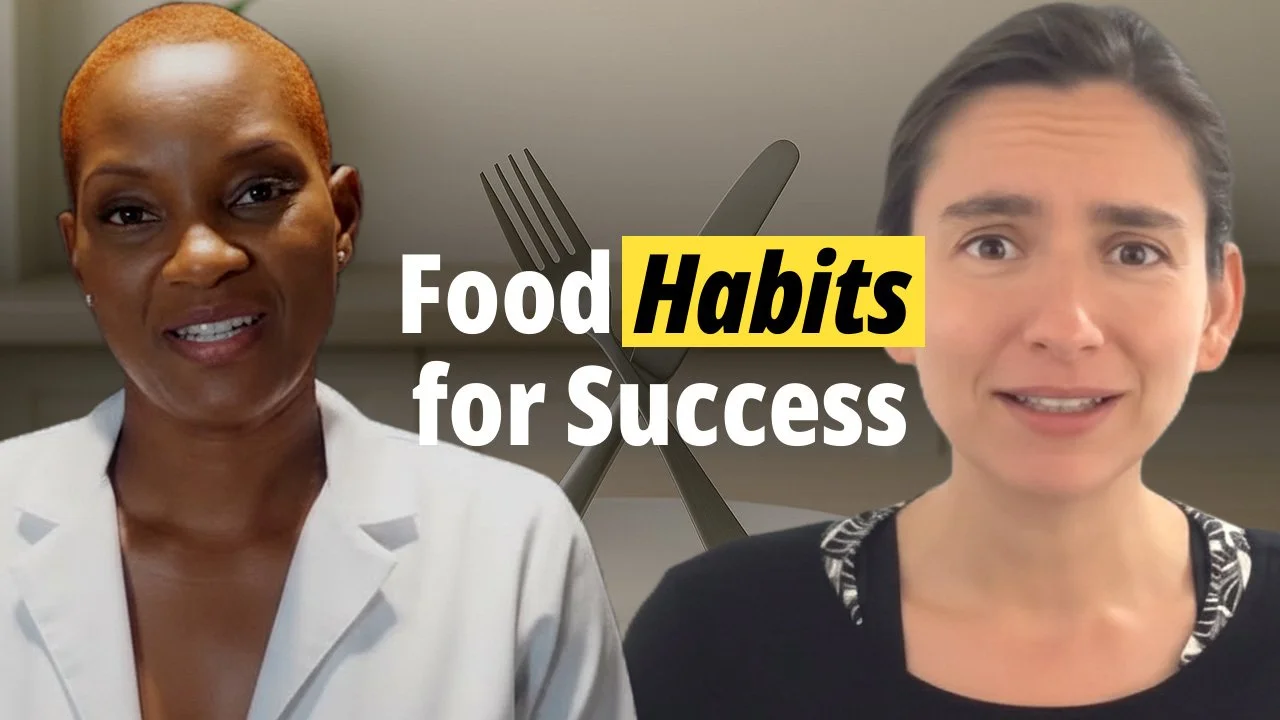
The Motivate Collective Podcast — Show Notes
Episode: The Psychology of Eating — Breaking the Habits That Keep You Stuck
Guest: Dr Denise THINKS Host: Melanie Suzanne Wilson
Episode Summary
Dr Denise THINKS — a food psychology expert with a PhD in educational psychology — joins Melanie to unpack the hidden patterns, conditioning, and emotional loops driving our eating behaviours. From the neuroscience of autopilot eating to the role of Big Food in engineering addiction, this conversation is equal parts eye-opening and immediately actionable. Dr Denise shares how she reversed her own health challenges — fibroids, adult acne, deteriorating vision, and joint pain — through changing what she ate, and why awareness (not willpower) is always the first step.
Guest Bio
Dr Denise THINKS is a food psychology educator, researcher, and speaker based in the United States. Holding a PhD in educational psychology, she specialises in helping individuals break unconscious eating patterns and reconnect with food as a tool for health and vitality. She runs a 13-week step-by-step program and regularly speaks on stage and in community settings. Her work sits at the intersection of behavioural science, nutrition awareness, and personal transformation.
Key Topics Covered
The psychology of eating and mindless habits. What food psychology actually means — and how the food industry has spent decades pairing foods with activities (movies + popcorn, commutes + fast food) to create automatic behaviours we barely notice.
Breaking autopilot with tiny disruptions. Inspired by Dr Brian Wansink's research, Dr Denise explains why doing small things differently — getting out of bed on the opposite side, brushing teeth with your non-dominant hand, taking a new route to work — can rewire your brain's defaults and interrupt unhealthy food loops.
Sugar as addiction. Research suggests that sugar is more addictive than cocaine. Dr Denise explains how food scientists deliberately engineer products to hit the addiction threshold without tasting overtly sweet — and how corporate-funded studies have historically obscured this.
The screen time–eating connection. The average person spends four hours a day scrolling. Dr Denise connects digital overconsumption with distracted eating, discussing James Clear's Atomic Habits framework on environment design and why the couch faces the TV — always.
Food, fibroids, and reversing disease. Dr Denise shares her personal story: fibroids the size of tennis balls, adult acne, buckling knees at 29, worsening vision — all traced back to diet. After shifting to a plant-based lifestyle, she reports reversal of arthritis symptoms, clearing skin, and improved eyesight without glasses.
The emotional root of cravings: Why reaching for a doughnut is rarely about hunger. Dr Denise unpacks the emotional drivers behind cravings and why food can never permanently fill a psychological void.
Cooking at home and reclaiming flavour from oyster mushrooms as fried chicken substitutes to the tamari and maple syrup combo Melanie swears by, this episode gets practical about how to make whole, plant-based food genuinely delicious.
Belief, desire, and expectancy. Dr Denise closes with her framework for any goal — not just food. You need to believe you can reach it, desire it deeply enough to stay consistent, and expect that you deserve the outcome.
Timestamps
TimeTopic00:00Introduction — what is food psychology?00:54Mindless eating and conditioned food habits02:05How to break autopilot patterns at home05:32Free food, workplace habits, and saying no07:10Consuming content vs. taking action08:41Average screen time — four hours a day09:13Phone addiction by design10:11Sugar vs. caffeine vs. alcohol — which is most addictive?11:32Hidden sugar in savoury foods13:15Cooking demonstration — the oil absorption experiment16:16Dr. Denise's personal health journey and plant-based shift17:23Fibroids, weight gain, and the decision to go deeper20:17What is a fibroid?21:47The problem with "just cut it out" medicine23:45The flavour comes from the plants — mushroom and tofu cooking tips26:03When professionals say "just eat anything"29:35Who funds nutrition research?32:12Charity fundraising and the food culture contradiction35:03Working with children and community groups36:29What Dr. Denise teaches first on stage — awareness over swaps38:35Popcorn, movie theatres, and distracted eating (the Wansink study)40:16James Clear, Atomic Habits, and environment design41:45Tiny changes that make healthy habits hard to fail43:56Dr. Denise's path into food psychology51:55Tapping into internal joy rather than external stimulation55:33Three closing lessons: belief, desire, expectancy
Guest Mentions & Resources
Dr Brian Wansink — Food lab at Cornell University; research on distracted eating and the five-day-old popcorn study
James Clear — Atomic Habits; environment design and habit stacking
Google Scholar — Recommended starting point for peer-reviewed, unsponsored nutrition research
Dr Denise's 13-week step-by-step program — Available via Dr Denise's platform (link in bio)
Quotable Moments
"The food scientists know just exactly how much sugar to put in a product to make you addicted to it, but not make it sweet at the same time." — Dr Denise
"Your body keeps record. It's going to tell you straight up, black and white." — Dr Denise
"If you have to get something from outside of yourself to enjoy life, that's the wrong kind of mentality." — Dr Denise
"I want you to enjoy your life instead of just consuming enjoyable things." — Melanie
"I don't even bring up food for a while. There's so many other things outside of us that drives our behaviour toward food."— Dr Denise
Key Takeaways
Awareness is the foundation of change — not willpower, not a new diet plan.
Your environment is programming your habits. Redesign it intentionally.
Sugar functions like a drug in the body and is hidden in foods you'd never expect.
Emotional and psychological patterns drive cravings more than hunger does.
Small, almost-impossible-to-fail changes compound into lasting transformation.
Belief, desire, and expectancy are the internal architecture of every sustainable goal.
Connect with Dr Denise
[Insert Dr Denise's website, Instagram, and program links here]
Connect with The Motivate Collective
🎙️ Listen and subscribe: www.motivatecollective.com 🌿 Join the community for conversations, events, and resources built around growth, wellness, and conscious living: www.motivatecollective.com
#TheMotivateCollective #FoodPsychology #WellnessPodcast #ConsciousLiving #MindsetShift #PersonalDevelopment #HealthAndWellness #PlantBased #HabitChange #AtomicHabits #SugarAddiction #EatingPsychology #GrowthMindset #WomenWellness #ConsciousLeadership
Transcript
Melanie Suzanne Wilson (00:00)
Dr Denise, welcome to the podcast.
Dr Denise THINKS (00:03)
Thank you so much for having me. I appreciate it.
Melanie Suzanne Wilson (00:05)
It's such a privilege. You are a food psychologist. What does that involve?
Dr Denise THINKS (00:11)
All right, well, let me clarify something. I'm not a psychologist because that means license basically, but I do have my PhD in educational psychology and research, and I have a focus on the psychology of eating. And so basically what that means is I help people think outside of the box when it comes to their food and how we look at food, because we do a lot of mindless eating, right?
So I help kind of interrupt those patterns that no longer serve people.
Melanie Suzanne Wilson (00:44)
patterns, right? What sorts of patterns are getting in our way with the gap between what we know we should be doing and what we are doing?
Dr Denise THINKS (00:54)
That's a great question. It's really interesting, with this work that I do. So I look, I like to look at things that are things that just the world has shown us what goes together. So when I think about, you know, watching TV or a movie, what goes with that snacking and eating popcorn, right? Just things that the industry, the food industry, has taught us to kind of marry together, and we just automatically just kind of go down that rabbit hole and be like, okay, that's normal. It may be normal, but it's not necessarily okay, but it can get us into trouble, right?
Melanie Suzanne Wilson (01:33)
Right, so it sounds like the foods have been paired with other habits in our lives or other activities, and what do you do to normally overcome that? Do you recommend that people attribute or combine a different food or a different habit with these activities, like going to the movies?
Dr Denise THINKS (01:58)
Yeah, so I mean, just if anyone notices that they want to feel better, for one, obviously, it's typically linked to food and the different patterns that they are probably doing without even realising it. There's a great book by Dr Brian Wansink, I think, W-A-N-S-I-N-K. He has a food lab at Cornell University, and he just kind of basically breaks it down to where you want to think about doing things opposite, because we have gotten to a space where we do things on autopilot. We get out of bed the same way. We may go right to the bathroom, and then most people go to the kitchen to drink coffee. Well, as far as me and my studies, and I'm trying to break someone's pattern, I'm just saying, okay, do everything opposite. All right.
Get out of bed on the other side of the bed. Even if you have someone lying with you, just say, excuse me, I'm running an experiment. Let me just get out of autopilot for a second. Let me get my brain neurons just kind of firing for a little bit. If you go right to the bathroom, that's fine. Do what you got to do. We're not saying hold it and do something else. But if you're brushing your teeth, I say brush your teeth with your opposite or non-dominant hand.
And what that actually does, it actually kind of makes you pay attention because if you are brushing your teeth, for me, my non-dominant hand is my left hand. And if you kind of hit the curves a little bit wrong, it's going to hurt. So you got to pay attention. And that's the point of it. It's going to be uncomfortable. And that's going to make you actually pay attention to what you're doing instead of just the same old grass or groundhog day, like, okay, I'm brushing my teeth. I'm getting ready to do this next. So it's just all about interrupting any kind of normal routine that you normally do. Even if it's healthy for you. One more thing is like, you know, for a person that has a nine-to-five job and they go to work Monday through Friday, take a different route to work because you're seeing the same billboards every single time, and that's just more marketing and advertising. You're passing the same restaurants that you may go to after work because you need that little quick little snack, that little burger and fries or something like that before dinner time. So things of that nature just helps you get out of that typical routine is what I help do with the autopilot thinking.
Melanie Suzanne Wilson (04:29)
It sounds like changing the rest of the routine will change the food habits. That is joining so many dots for me. And I'm sure anyone who's listening can think of examples in their own lives, right? Where some things become automatic. I found myself going for a roll of sushi every single time I went to the gym, and I had to ask myself, this is becoming so consistent, but years ago, the unhealthy habits, there are some places where someone would get something a bit more fast food style. And I was going into the city where every place had pastries, a lot of pastries. And I bet you some people would be grabbing a pastry on the way to every single workday. Do you see people getting into those unhealthy habits where especially on the go when they're in a rush, they just grab something and they're not thinking about the calories or the impact. They just do it because it's there.
Dr Denise THINKS (05:32)
Yeah, like you just said, because it's there, right? A lot of times, like how many times can we say no at work maybe and it's a, you know, a three o'clock meeting and they're passing out donuts and you're not even full or you're, you're full and you're satisfied and then, but it comes by you and you're like, well, it's free. So I have to have one. We do those things so often, and most people, like you said, don't realise it. So.
Yeah, it's all about just waking up and paying attention. And I know there's things out there like food diaries and journals and things of that nature. ⁓ But there are some other creative ways that I kind of like to bring about the awareness and whatnot.
Melanie Suzanne Wilson (06:15)
Do you find that taking action is going to create more momentum than just writing about a change in a diary or a journal?
Dr Denise THINKS (06:26)
I mean, I would say still writing about it is still a good start. It's taken some kind of action toward the direction of where you want to go for sure. Because a lot of times we can get caught up into consuming information instead of doing. And that's one of the challenges that I find with a lot of people that may follow me on social media. And some people even think just watching my videos, they're doing something truly beneficial for their bodies. And I'm like, well.
In a way, yes, knowledge is great. However, you got to pair that with motion. know, anything people can do to go in that direction where they're actually doing the action of it, definitely a good start for sure. Yeah.
Melanie Suzanne Wilson (07:10)
Going to trust that approach could help us in all sorts of changes in our lives. Because a lot of people now, for example, are looking at videos about work, or videos about how to help ourselves with all sorts of things. And have you seen essentially a gap at times where people are consuming a lot of content about what they should be doing, and you know, they need to be taking more action?
Dr Denise THINKS (07:38)
Yeah, it's, mean, we all can kind of get caught up in scrolling, right? So I actually just kind of released a challenge to where I'm walking people step by step on how to get started and where to begin. And somewhere in the middle of it, you know, is around where people are saying to me, well, I just don't have the time. I've got...
Family drama, I've got kids, I've got work, I'm trying to start my business and then trying to eat healthy, da da da. And I'm like, okay, no problem. Let's pause for a second, open up your phone to this particular area, and let's just see how much you're spending on scrolling through social media. And what do you think the average amount of time is for the average person to scroll?
Melanie Suzanne Wilson (08:24)
I could only guess the numbers because I haven't looked at mine in a while, and I don't know the average, but we can get accurate info because the phones do tell us the screen time. What did you find people are doing on their phones in a day? How much time?
Dr Denise THINKS (08:41)
Four hours.
Melanie Suzanne Wilson (08:42)
Four hours on the phone.
Dr Denise THINKS (08:44)
Yes, four hours, yes, between all of the naps.
Melanie Suzanne Wilson (08:48)
Is that between everything? And we should admit that some of this screen time could be things like this, recording a podcast, but we have to really check how much of it, and it's really easy to say, okay, was there an appointment and the rest of the time, what's going on on the phone? Is it just flicking through content? That's it's so much time in our lives. Do you think people really are addicted?
Dr Denise THINKS (09:13)
For sure. And it's created that way on purpose. Absolutely. Yeah, just like, you know, any other kind of drugs, smoking, which, actually, they say smoking is not an addiction. It's just a neuropath type something. can't remember what the name is. It's not an addiction. It's actually, I can't remember the terminology, but no, it's not an addiction because, and...
Melanie Suzanne Wilson (09:30)
It's not an addiction.
Dr Denise THINKS (09:39)
The reason why they say it's not an addiction is because once a person stops smoking, there is no symptoms that happen. You don't get headaches, and you don't get any other kind of issues that happen when you get off of drinking alcohol or something like that. By terminology, it's not an addiction, but obviously it is addictive, right?
Melanie Suzanne Wilson (10:01)
Okay, addictions.
Have you looked at what other things are addictions? You mentioned alcohol, and I'm curious about coffee as well.
Dr Denise THINKS (10:11)
Yes, coffee. That's definitely an addiction by term because when most people stop drinking coffee, they do get a whole lot of headaches and things of that nature. But I think a big part of it, and the number one addiction that I understand, is sugar. And in research, sugar is more addictive than cocaine, which, to me, when I found that out, I think is astounding.
I think if we were looking at sugar, maybe 30 or 40 years ago, in research and maybe the food and drug regulation, we're kind of categorising it as a food. I don't think it would be able to be called a food because it truly is a drug. But the fact that FDA is in the same administration, that's also kind of interesting too. But yes, but sugar is.
Melanie Suzanne Wilson (11:03)
Okay, there's our clickbait.
Sugar is a drug. And I can tell you that a few people, at least one, talked on the show a while ago about how sugar is hidden in so many foods we wouldn't expect. And I was grateful to receive a lemon pepper seasoning, a sort of powder seasoning. And I looked up the ingredients, and from what I remember, I think there was sugar added to that.
Dr Denise THINKS (11:06)
Yes, right.
Melanie Suzanne Wilson (11:32)
And so I might use that a little bit, but I have to be mindful that, okay, I need to really stick with what I know, which is making things from scratch. So I know what goes into it. Two questions stem from this. Firstly, do you find that when people make their own food, or if they know what someone else is putting into their food, making it from scratch, do you find that they have less hidden ingredients that they don't want?
And the other question tied in with sugar is, did you find that some other sweet ingredients like maple syrup might be a bit more okay than using added sugars?
Dr Denise THINKS (12:09)
Great questions. I love those. Definitely people are definitely way more aware when they're cooking at home. So we've got to figure out a way to get back to that. And that is something that I do talk about in my 13-week step-by-step program. Because, like you said, sugar is in everything or almost everything and things that are not even meant to be sweet. The food scientists know just exactly how much to put in a product to make you addicted to it, but not make it sweet at the same time. So that alone just kind of tells you what's going on. So for sure, if someone is cooking, like I know one of my things that I became more cognizant about was I was trying not to eat as much oil. And so, but I love fried foods. I'm plant-based, I'm 100 % plant based. So I fry mushrooms now.
And it's like, that took me off a wave of them fried chicken, right? And so the first time I fried some mushrooms, you know, we got the oil in the pan. of fact, this is my office back here.
Melanie Suzanne Wilson (13:15)
You can show for those watching the video, we can show the pan if you want to, and then we can just explain it for those who are listening on audio. So, is that a proper pot-shaped pan behind you? What do you use? You can bring it over to the camera if you want to. Why not?
Dr Denise THINKS (13:34)
So.
Let's see, let's see, let's see. All right.
Melanie Suzanne Wilson (13:38)
We see like those demonstration shows. like this. I love those pans. So that's your frying pan. That's nonstick.
Dr Denise THINKS (13:47)
This is my Brian Pamplemore,
Yeah, for sure.
Melanie Suzanne Wilson (13:50)
So it's deep for those who can't see, it's deep, what an inch or two maybe, so you can fit a lot of food in there.
Dr Denise THINKS (13:57)
Yes, for sure. Yes. And so, you know, when you're frying something, you pretty much want to have it covered from bottom to top. And when I took the five mushrooms out, I was like, what happened to all the oil that I poured in here? Yeah, yes. And I'm like, that's a lot of oil to ingest. And yes, there are better oils out there than canola and vegetable, which are the worst too.
Melanie Suzanne Wilson (14:12)
It's all soaked in like a sponge.
Dr Denise THINKS (14:24)
But even if it's avocado oil or grape seed oil or anything, that's still a lot of oil to put in your body. So just from that knowledge alone and actually seeing that connected with the emotion to it, that's what made me pull back a lot on a lot of my favourite foods. yeah. So definitely when people can see what's going on versus just ordering, yeah, they'll definitely be more aware.
Melanie Suzanne Wilson (14:43)
Yes.
Dr Denise THINKS (14:51)
able to stop.
Melanie Suzanne Wilson (14:53)
So much is coming out from this. I can tell you that my first step towards wellness was food, and I'm resonating with what you are saying so much. I discovered whole plant diets before the pandemic in the year or two before it. And I don't mind what everybody else will eat. We're all different. We all have our preferences. I'm not trying to convert the whole world, but I know what can work. And, and the thing about eating whole plants is you then end up exploring different ways to, for example, use the oils. Some people get a reusable spray to just have a little bit of oil on. I try to, if I'm frying something, I don't mind having a bit of oil just shallow in the pan and not completely letting something swim in oil. However, there are now the the air fryers. So then there's oven baking, but then how much oil are you pouring onto something before it goes into the oven, right? So we have all these habits. There are so many questions out of this. Did you find that switching to some sort of habits with the oil helped to
Do you aim for moderation now? How do you handle that?
Dr Denise THINKS (16:16)
Man, that's a great question. I'm pretty, so I've been playing around with the whole plant-based lifestyle for almost 10 years now, I guess. So just a little bit of context. For me, I was raised on chitlins, pig feet, everything on the pig from the rooty to the tootie, right?
If you guys could see her face right now, it's hilarious.
Melanie Suzanne Wilson (16:46)
Well, I'm not a TV presenter. I have too much expression. Okay, so you were raised eating basically the entire pig, nearly.
Dr Denise THINKS (16:55)
Absolutely. So when it comes to people thinking I'm judging them for not being vegan or plant-based, whatever, listen, I have no heaven or hell to put you in because I get it. I was addicted to all of those foods, and I thought it was normal, you know, until I, you know, came into some health challenges. I was like, it's connected to these foods. OK, but I still can't stop eating them. So.
Melanie Suzanne Wilson (17:19)
What was it for you? Was it weight? Was it something else?
Dr Denise THINKS (17:23)
Yeah, I was definitely gaining weight for sure. It was fibroids growing inside of me. had two of them the size of tennis balls. And so, yeah, I just couldn't understand why my stomach wouldn't go down and just bloating was easily for me and all these kinds of things. And, you know, the solution was to just cut them out. But I was like, let's go deeper and understand why they're there, how they got there, all that kind of stuff.
And it's basically what we're consuming every day. Yeah, so to go from, and I'm sorry, I'm not even sure if I remember your original question.
Melanie Suzanne Wilson (18:00)
I think the question was, the original question was around habits, I think, but when you said you had health issues, look, this is my thing. I feel like this is so special because I can tell you the first time I was a guest on a podcast, I accidentally stumbled into talking about my health journey out of the blue. And I took it for granted. I think people need to hear about this. And I wanted to emphasise - some people feel like there are best selves on diets other than this one, and I'm not going to try to influence that, but you're saying that you had these fibroids. want to understand what a fibroid is, and to really get the common ground here, I can share with you that I very accidentally dropped what became 20 kilograms, and now it's more like 25, and it just happened. I didn't
You know, people join programs, people track point, people do all these things. I just dropped weight accidentally by eating foods that was not well, foods that was real food and not junk. So I'm so curious about your health experience, partly with plants, but also just with eating real food and getting sensible with your habits. I'm guessing you would have been consuming other things aside from the entire pig being in you're in America, right? So you would have been surrounded by the junk foods, the fast food, all that was playing a part?
Dr Denise THINKS (19:28)
Correct, yes. A huge part, huge part. I mean, I played basketball in college. So, you know, I was in pretty good physical shape. And so I have the mentality that I can eat whatever I want to because I'll just work it off. And that's actually where more of the problems even started because, you know, doing the physicals in college, learning that I was anemic, and then we were trying to figure out why I'm anemic. And then it finally, finally traced back to the five words because I was
bleeding so excessively and just like, all right, this is not my cycle. It went from one week to two weeks to three weeks and one month, and didn't even stop. So it was like, what's happening?
Melanie Suzanne Wilson (20:17)
Gosh, that's nearly biblical, and the fibroid is that. Does that feel a bit like a tumour? Is it like a lump? What is that
Dr Denise THINKS (20:26)
Sorry, yes, so fibroids are tumours, and they're, quote unquote, almost always benign, almost, which is a good thing, but it's still a tumour. And the way that it's treated by most people in the medical profession here is that it's just no problem, it's no big deal. mean, my doctor just kind of shrugged his shoulders, and I was asking all these questions and.
15 minutes in of me asking questions, he seemed to get a little bit irritated, and he was just like, just cut them out. And I was like, well, will they come back? And he was like, probably, it happens a lot, especially in Black women. So just come back, and we'll cut them out again. I'm just like, no, that does not sound right. That does not sound okay.
Melanie Suzanne Wilson (21:04)
I'm not!
This is why some medical people hate me because it's controversial to want to... I'm getting wound up and passionate here. It's controversial to want to prevent something instead of literally just waiting until you have to cut out the tumour. It's controversial to want to prevent the habits that lead to reaching that point.
And it's controversial to not just end up at the same place you were in again.
Dr Denise THINKS (21:43)
Exactly. Yes, that part. That part.
Melanie Suzanne Wilson (21:47)
That's what the doctor said
to you, just you'll end up cutting out more tumours later.
Dr Denise THINKS (21:51)
Pretty much. And I actually get a lot of clients that come to me that have been down that road. One of my most challenging, I guess, clients had 16 tumours several years ago. Then, well, she wasn't my client then, but several years ago, she told me she had 16 tumours. And then multiple years later, she had 32. So they doubled, obviously.
And, you know, and I was just telling her, know I had her write down everything that she ate for like two weeks. And I saw it in plain, in black and white. Like, this is the reason, this is part of it. And she didn't want to believe it. She had family members or one or two family members that went through the same thing, female cousins, and they were trying to tell her, as well as I was trying to tell her. But, you know, we, food is love.
Food is how we express ourselves. Food is, it's cultural. Food is like almost everything to everybody. You know, it's the one thing that we all have in common, no matter where we live, no matter where we're from, no matter what we look like. Food is what we all have in common, right? Whether you can afford to eat or not. So she was just really, really tied to certain foods. And it's no secret why she keeps going in and out of the hospital.
Well, fast forward later, and I was able to help her retrain her brain to look at food for what it is. It's either life or it's death. So now I've taught her to actually, there's a substitute for everything. Just like I said, I had a love for chicken, but I know what chicken does for me from an animal. So I just fry some oyster mushrooms. They're the same texture, same look, same crunch, same flavour.
The flavour comes from the plants. So when people are like, no, I can never give up my meat. I'm like, listen, the flavour comes from these seasonings. know, it's not the meat itself. If you just ate the meat, it would be disgusting. All right. Like, no. So that's it.
Melanie Suzanne Wilson (23:45)
Yes.
It's plain. Okay, flavour.
I'm so keen to add for those who have not tried, whether you are eating plant-based or not, you have to try this. Everybody get a tamari soya sauce, which is, I think, gluten-free from memory. Do you think it is as well? So, a gluten-free tamari soya sauce and maple syrup, those two ingredients together will change your life. That's a step one. Do you think so?
Dr Denise THINKS (24:05)
Yeah, it is.
Wow. What kind of flavour does it give?
Melanie Suzanne Wilson (24:17)
It's like a teriyaki. And both of those ingredients, I think, burn pretty fast. So it will just have that sort of sweet umami teriyaki kind of quick-cook barbecue feel really quickly.
Dr Denise THINKS (24:19)
Okay, gotcha, okay.
Wow.
Wow, that seems amazing. And that just reminds me, it's like that's part of food psychology. We get so addicted to things because we remember how it tasted the last time. And just hearing you describe that was like, what can I make with that tonight? Like, you know?
Melanie Suzanne Wilson (24:53)
Okay. It is so easy. The quickest thing you can do is get a block of tofu. And if it's a firm tofu, do really thin strips and maybe heat those in the pan with a bit of oil or without oil and toss on those flavours. It will, a lot of people use that for a bacon feel without the bacon. But also you can, you can put that onto the mushrooms.
So the other trick I saw for mushrooms is you have the mushrooms in a pan. My gosh, this is becoming a cooking show for a second. You have the mushrooms in a pan, and then they're frying for a bit. And then you put another pan on top to squish them, and then they improve the texture. Then I would, once you put the sauce on, it's going to cook really fast. So you want something to be pretty much cooked and ready to just heat and flavour and then toss it on the plate.
Dr Denise THINKS (25:28)
No!
Yes, yes, yes, that's an amazing method. A lot of people use that to make a steak-like texture. So yeah, I was never a steak person, so I never really tried it. But yeah, that sounds really good though.
Melanie Suzanne Wilson (26:03)
But okay, so we could talk about the food methods all day. But I think we should pivot a little bit. One of the things that came to mind is that some people have the attitude, and I've seen this in some health professionals, some people have the attitude that eating anything is okay, or enough, sufficient. And although
Eating anything is better than not eating. The concern I've had is more recently, some people from other fields who don't focus on food, they are saying just eat anything and back years ago, a fancy doctor was telling me eat whatever you want. That's a long time before I lost weight, I can tell you that. It was after I stopped eating just whatever I wanted. Skip the pies and cake.
Dr Denise THINKS (26:55)
Yeah.
Melanie Suzanne Wilson (26:56)
And then changes happened. But the point is that I'm a little bit worried that professionals and experts are saying just eat anything, and that even translates to the processed foods. Some people are still choosing food from a packet that has added sugars, salt, and other ingredients. I'm wondering how do you approach the regular mainstream individuals and also the experts who are saying that attitude when we know from our personal experiences that after we changed our habits, our bodies changed.
Dr Denise THINKS (27:36)
Wow. Well, I mean, I would just have them look; the proof is always there. The numbers don't lie. How you feel doesn't lie. How you look doesn't lie either, you know? So I would just have them do some real, true soul searching and just say, how do you feel? And if you're questioning certain things, usually that's your intuition telling you that doesn't sound right.
You know, and again, I shouldn't be so exhausted. Yes, if I have a family, if I have a job, if I have this and that, it's still not normal for your body to be so fatigued. And so your body keeps record, and it's going to tell you straight up, black and white, like if that's okay to keep eating X, Y, and Z, you know, it's just the proof is there. I'm a researcher. And so I look at the facts.
And it's always, it always tells the story, right? So.
Melanie Suzanne Wilson (28:31)
Look at the facts. It's that simple.
Look at the facts.
Dr Denise THINKS (28:35)
Yeah, yeah, wow, that's concerning.
Melanie Suzanne Wilson (28:39)
It is. Are there any go-to resources from yourself or from anyone else? Do you recommend any resources for people who need guidance for the first step essentials?
Dr Denise THINKS (28:53)
Um, sure. So, you know, if you want, if you're the type of person that can do your own research, um, I would just say, you know, cause I know this is the world of AI now. Um, and information is just some of it. It's not the greatest, as we just got through talking about. So if you're going to do your own research, make sure you know, maybe start at Google Scholar.com and look at the research that is peer-reviewed, unbiased and non-sponsored. Because if you remember, maybe 10 to 15 years ago, when a study came out and said, sugar is healthy. OK, what do you think? Who made that research? What do you think? Exactly, right?
Melanie Suzanne Wilson (29:35)
Who paid for it? You
know, I need to find out later. I'll look it up. I'm so keen to know who paid for that.
Dr Denise THINKS (29:43)
I mean, you can just think of the top beverage companies in the world. So yeah, you know, it was from, yeah.
Melanie Suzanne Wilson (29:51)
Wow, normally the step one don't have the soda, it's the easiest thing.
Dr Denise THINKS (29:57)
You know what, when we're so addicted, just think of a crack addict or a heroin addict. You know, they're looking for any kind of, you know, excuse to just continue on with the habits. And so if you love chocolate for one, for example, and there's a study that says, you know, chocolate is good for your heart, you're going to keep on eating it because you're like, wow, I love chocolate, and I'm doing something for my heart. So why not? You know, no, that's just everything is just taken out of context. And again, you have to look at who is benefiting from telling you this information, you know? One of my most interesting stints in college was my marketing professor. And he, this was 30 years ago, 30 plus, but he was one of the first people to have me aware of certain like food marketing and how it works. And so there was one company, I can't remember what it was, but it was an orange juice company, and they're pretty much all the same now. But this orange company had like on the carton, said, you know, heart healthy or good for your heart or something like that. Right. Now, obviously, the average person is going to think, OK, if I drink this juice, I'm doing something good for my heart. We'll know. Did it have what?
Melanie Suzanne Wilson (31:10)
So then have lots of it.
So did people then drink lots of it, like have extra?
Dr Denise THINKS (31:17)
It was the number one orange juice company in the world for multiple years. So yes, in the world.
Melanie Suzanne Wilson (31:21)
in the world? Not
in the world. Okay, let me guess. Was there sugar in the juice?
Dr Denise THINKS (31:27)
Of course, there was. I mean, you're not going to have something that tastes good and looks good and is the number one in the world if it doesn't have the addictive substance that we're talking about, right? So, plenty of added sugar, plenty, plenty. And so...
Melanie Suzanne Wilson (31:40)
I did sugars.
I'm sorry,
I will stop face-palming because I'm just stunned by what these people have been doing.
Dr Denise THINKS (31:51)
Yeah, and so the interesting part about the whole thing that this is heart-healthy, it was basically some of the proceeds from your purchase go toward heart research.
Melanie Suzanne Wilson (32:01)
It had nothing to do with the ingredients.
Dr Denise THINKS (32:04)
Nothing at all. If anything, it made you worse just from drinking it. So yeah, sneaky stuff.
Melanie Suzanne Wilson (32:12)
That's why I'm so sceptical.
People have good intentions. This has taken us in a very interesting direction because it's a slippery slope. Firstly, there are fundraising companies, charities, NFPs, not-for-profits that are trying to prevent some diseases, cancer, diseases, that sort of thing, where they might have a fun celebratory
say morning tea fundraising program that they get everybody to do, do your own morning tea, that sort of thing. And on the surface, it might seem fine. And I think one cupcake in your year is no big deal, but they are not changing the food culture in doing that. It's just using the current food habits.
then raise money to try to fix something that some of these foods are contributing to. And again, it's okay to eat a birthday cake, you know, we're not, we're still living life. But I wonder to what extent those programs are even talking about food. Have you seen sometimes very good-intentioned people who want to make a change? They have the opportunity to address the food factor a bit more.
Dr Denise THINKS (33:33)
Yeah, for sure. mean, yeah, I think a lot of people do have good intentions. And then, of course, there's also a lot of people that are not even thinking about it because they're in the same loop and cycle and trapped as everyone else. So it's just like, it's a birthday. OK, let's have cake. Let's have ice cream. Let's have all these other traditional things that we're used to. And so, yeah, I think that, you know, not everybody's evil or anything like that. But there are definitely some people that get paid a pretty good salary to trick us and all those kinds of things. So yeah. Good.
Melanie Suzanne Wilson (34:09)
So do you think money
is a part of it?
Dr Denise THINKS (34:11)
Do I think what?
Melanie Suzanne Wilson (34:11)
Sorry, I apologise. Do you think money is a part of it?
Dr Denise THINKS (34:15)
Oh my gosh. Oh my goodness. I unfortunately, yes. Yeah. That's a big part of it. It's not the only thing, but it's a big part for sure.
Melanie Suzanne Wilson (34:23)
Okay, so the money is a factor in what people are telling us about what we eat.
Dr Denise THINKS (34:31)
Absolutely. mean, again, going back to the sugar study, know, it's like sugar is healthy for us. Once again, who benefits from that? Because it's going to be so many people. like, OK, great. I can do this and that. You know, you know, deep down you shouldn't want to, but you're looking for any sign to help encourage your so-called bad habits, you know? So, yeah.
Melanie Suzanne Wilson (34:53)
I'll ask another controversial question. Do you deal with families and children, and the food habits around learning from a young age?
Dr Denise THINKS (35:03)
Definitely. I don't do children one-on-one, but I have done group workshops for classes, community centres, and things of that nature. And of course, I love working with kids because they're so green and they're just so happy to learn and all these other things that the world has not gotten to them yet. They're so excited about it.
And it reminds me of when I was a kid and I was trying to get my mom desperately to stop smoking. I wouldn't do anything. I would break her cigarettes. And of course she break my backside. I didn't care because I was like, I want you to stop smoking. It's so bad for you. But of course, you know, 30 years later, she's 30, 40, almost 50 years later, still smoking. But yeah, kids have the greatest intentions.
So yeah, I pretty much work with anyone, group setting, small, large, on stage, doesn't matter, as long as I get to teach.
Melanie Suzanne Wilson (36:04)
That's amazing. When you have a larger audience and you are on stage, you have a set amount of time to change how they act, how they live their lives. What's normally the top thing they need to do first to get their habits back on track? And what's the first myth you normally need to bust? Is it the sugar or something else?
Dr Denise THINKS (36:29)
So I get them to just become more aware. You know, I spend a lot of time in my step-by-step program on becoming aware and how to become aware. It's just one thing to say, you need to pay attention to this. No, but there's creative ways that you can have someone become more aware of what they're doing, what they're eating, what it even tastes like. You know, earlier when we were talking about, popcorn and movies, there was a study done by the Dr. Wansink that I was talking about where he did a study where he rented out a movie theater and he offered a free movie and free popcorn to the guests. And those guests had just finished eating dinner or lunch. I can't remember what time of day it was, but they had just finished eating, and the free popcorn was five days old.
And so he was watching them the whole entire time, pick up the popcorn, eat a little bit, and then they'd make this face, and they'd put it back down. Well, within minutes, movie is going, they pick up the popcorn again and start eating it again. Their faces are like, this is disgusting, but they're still eating it, even though it's disgusting, because again, because of the comparing. And so a lot of times we're distracted by watching TV or movies.
gulping food because of whatever is going on, the music or all kinds of different cues that are just making us eat, eat, eat, and we're not paying attention. And our brains are telling us, hey, we're full stop, you know, but that's why we have a lot of digestive issues. So just helping them walk through that is takes a lot of time and a lot of work, but it's definitely foundational to what we're building. And so those are the
One of the first few things that I'm teaching people is to how to become aware and step by step, just keeping things really, really simple, nothing too elaborate over the head, just one, two, three, keep it really simple. yeah.
Melanie Suzanne Wilson (38:35)
What I'm seeing in that example is a step further than what I expected, which is awesome because lots of people talk about swapping food, and I had phases of enjoying popcorn at home. I would make it in a pan or a popcorn maker and not add anything. No salt, no dairy-free butters or
No oils, nothing, but chances are. Okay, so a little drizzle of something is nice. know, look, I'm weird, but people can, okay. Some people add nutritional yeast. I don't eat that a lot. It sort of relates to my tummy a bit strangely, but it's the thing people can do. Or I have occasionally added a
Dr Denise THINKS (39:05)
It feels like some foam.
Melanie Suzanne Wilson (39:28)
Slight drizzle of olive oil, but either way it didn't have all of the stuff that's on the popcorn you see in the movie cinemas. But you're going beyond the swap because what I'm seeing and what you revealed is that people are not even thinking about their eating, and it's the default of if I'm looking at a screen, I am eating something as
I'm looking at a screen and considering people's screen time became four hours in a day on average, that's an average. So it could be more on some days. Are some of those people then defaulting to grabbing at food just because they are looking at something?
Dr Denise THINKS (40:16)
For sure. mean, so there's another author that I enjoy reading his book, James Clear. And he's the author of Atomic Habits. And so he does a lot of teaching and research on how our environments are designed. So if you walk into any house, I bet at least nine and a half out of 10 times you walk in someone's house.
Where's the couch going to be faced? It's going to be faced toward the TV, right? So why does that have to be? Like it's a place to sit down and relax. Why can't it be facing the window or facing the wall or facing some art? You know what I mean? But we have gravitated to where it's our design, to where it faces the TV. So that alone just kind of tells you how we've been conditioned to think about relaxation time or
Melanie Suzanne Wilson (40:46)
The TV.
Dr Denise THINKS (41:11)
Food in general and all these different pairings. So it's so interesting when you like take a step back and really pay attention to what's going on. So yeah.
Melanie Suzanne Wilson (41:21)
In times in my life when the living room or my switch-off space did not have a TV, I was more focused on doing other things. And I'm not saying that we should all not have a TV, but are you, are you suggesting we could rearrange our surroundings in our homes to change our habits?
Dr. Denise THINKS (41:45)
Absolutely. mean, there, so when I, think to go back to your earlier question about, you know, when I'm talking to large groups of people, what am I really teaching them and what am I trying to have them leave home with or leave, you know, that place with to take home is tiny little patterns that we can make adjustments around our environment to make it where it's so small, it's almost hard to fail. So the, redesigning your couch and your living space, that could be a big deal for some people. But one example that James gave was he wanted to start flossing more. And a lot of people don't typically floss because usually I'm gonna ask you, where do you keep your floss in your home? Or do you have?
Melanie Suzanne Wilson (42:32)
I keep my floss and my toothbrush in my tote bag that's essentially like a handbag, which is a bit controversial. I should probably keep them somewhere more visible.
Dr Denise THINKS (42:45)
Exactly, yes. So that was kind of the point. So I myself, I have a little cup where I keep my toothbrush in. And then, you know, if you want to start flossing more, get a little bowl and put your little, the string or however it comes designed right next to your toothbrush, because most people like myself, the floss is in the drawer, and it's not seen. So little small, tiny patterns like that to improve your habits that you want to gravitate toward.
Little things that almost make it hard to fail if you redesign and make some simple changes for yourself. yeah. If you want another one, I can tell you another one.
Melanie Suzanne Wilson (43:25)
I have another one and then I have another question after this.
Okay, the next question I should really ask. Did anything else aside from your health struggles lead you to fully work in this space? Did something tell you people need more guidance? I know you had a few different professions or a few different things you explored. You studied marketing. What made you say people need to prioritise this as a thing they need to learn?
Dr Denise THINKS (43:56)
That is a great question because I've been in multiple different areas within the health and wellness space. So, of course, my own, you know, growing up, I always played basketball since I can remember. So obviously, that's automatically a lot of exercise, but on the food side, it didn't become more important because again, I could eat whatever I wanted to. I thought, and it didn't start,
I didn't start paying more attention to that until maybe almost 30 years old. And so I remember getting off the couch, and my knees just almost buckled. And I think I was 29. Yeah, I wasn't even 30 yet. And I was just like, man, it's my time to get arthritis. Almost everybody in my family has arthritis, and I have a pretty big family. And so I was like, well, it's just my time to get arthritis. And then I started to get acne, you know, within a year. And I was like, I didn't have acne as a teenager when most people get it. What is really going on? So it's just growing more and more and more. And I could probably smack you with my acne from here to where you are. Cause it was just so bad.
Melanie Suzanne Wilson (44:54)
Really?
It so it was visible. It was distinct, visible acne around age 30.
Dr Denise THINKS (45:15)
Absolutely, yes. I would barely want to leave the house and if I did, I packed on makeup just to try to hide it. But of course, it's protruding from my face, so it's tough to hide. And so that was one of the things where I start reading a little bit. It's like, okay, why do I have adult acne? Why do people get it? And the most consistent research that I found was dairy.
And I was like, Dairy, no, I can't let go of my milk and cheese. So that can't be it. Let's look for some other stuff, right? Cause we try to make excuses for certain things. And once, you know, I think I left dairy or milk alone for about two weeks, huge difference already. And I was just like, wow, okay. What if I stopped eating cheese? What's going to happen? Cause every lot of people in my family have glaucoma, and what's the other one?
With the eyes, glaucoma, and it starts with a C.
Melanie Suzanne Wilson (46:07)
I don't know, what's glaucoma?
Dr Denise THINKS (46:09)
So it's basically a disease in the eyes to where it begins to a point to where you are, you can become legally blind, essentially. So yeah, so from what I understand with ⁓ dairy, it just becomes built up so much in your body and your system that it just covers everything, and you get to a point where you can't even see anymore. multiple family members in my on my mother's side to where they have glaucoma. And I can't remember the other one. It starts with a C. Anyway, pretty much the same issues. And I was just like, I don't want to go down that road. So I want to pay attention to what's going on in my family. Let me do the opposite of what they're doing. And let's just see what happens. That's when I started running experiments on myself. And so was like, OK, I am losing a lot of weight unintentionally.
It's just happening because I'm watching what I'm eating. I used to I've worn glasses since I was in the sixth grade, even though I needed them well before then. Vision was terrible. Now I'm getting older, and I don't need my glasses anymore. Skin is clearing up. My knees are no longer hurting, no arthritis anymore. What's happened? Like this is like I'm aging backwards through literally.
And I'm just like, what's happening? And I found out that the top nine of 10 diseases are all caused by food. And so that's when I went down rabbit holes of just research of more and more, like what's going on. So that's how I got there.
Melanie Suzanne Wilson (47:43)
I want to emphasise to anyone who is on the fence that even if there is some chance, some people use this logic for other beliefs as well. If there is any chance food could help, you're not exactly going to get more sick having a few more chunks of broccoli. You may as well do what you can. Why not? You know, what do you have to lose by eating better food?
Dr Denise THINKS (48:08)
Right, definitely, right? You can always spit it out if you don't like it. But again, if you season your meat, season your veggies so they can taste just as good. For some reason, they are left bland, and I don't understand why. Put some seasoning on these.
Melanie Suzanne Wilson (48:24)
goodness. You are tapping
into something that is so prompted from my childhood because I grew up with the chunk of meat and then peas and carrots, maybe a broccoli, something like that on the side, right? I think this was in a few countries. Were you basically the same? The peas and carrots, something like that, on the side of a plain chunk of meat? And let me know if you did the same, because this is what I was doing as a kid. How do you make it have flavour at all? What you would call ketchup, I would call tomato sauce. I have no idea how much sugar I was pouring onto my vegetables every day. No idea, but there was more of a chance that I would eat it because I knew nothing about how to create flavours. So, do you think that one of the best solutions we have is to reconnect with flavour?
Dr Denise THINKS (48:58)
Wow, got you.
Oh my gosh, absolutely. Like, I'm actually encouraging a friend of mine to help people understand how to season things because if he's, and he's a chef, and so he's like, no, this needs more cardamom. And I'm like, I don't even know what cardamom tastes like. You know what I mean? So, how do we kind of help people with that? You know, but it is definitely interesting for sure. But start with what you know.
Melanie Suzanne Wilson (49:46)
I would love to collab with some of the cooking shows. I considered making a cooking show, but I think that I would have needed a whole set-up for that. And initially, no, you don't need a whole set-up.
Dr Denise THINKS (50:02)
We try to make we try to complicate things way too much. No, I know so many people that have a large following, and they live in a box. You know, so no use what you have if you are good at what you're doing and it can explain it. That's all people really care about, so start…
Melanie Suzanne Wilson (50:21)
I think you are influencing this. can tell you more than 60 people have talked on this show. And the thing that's evolving is food is playing such a part. We need other things as well. We need to look after our mental health. But food influences the mind, the emotions, it influences your energy, your clarity, of course, your appearance, and it's not shaming. We're not shaming someone who is a particular shape. So to be honest, I'm an Aussie size 12 right now, which is gosh, I think that your 10 is out 14 from memory. So for sizes, so I'm not tiny. It's like I'm not a size two or four or anything like that. We're not telling everybody to be a thin size. It's not about that, but it's about feeling okay and feeling well. Do you agree? It's not, it's not simply about fitting into a shape, but it's about feeling okay. And the role that food plays in that is so significant. But what you are reminding me of is that the simple habits, I think I took it for granted because I learned these habits and they became my new normal. And you're telling me other people have yet to learn the magic of the combo of tamari and maple syrup or other things. So there's a room for people to make a few simple steps and then really not just eat in a way that helps them, but also have fun.
Dr Denise THINKS (51:55)
Right. Yeah, for sure. You know, again, it's kind of like tapping back into the innocence and the fun that we had as kids, you know, whether, you know, and this example that I'm going to give, I'm not shaming anyone either, because I've had my own challenges, right? And still do, because it's not about perfection either. But when people tell me that they go to sporting events and they like to drink a lot of beer, and the alcohol is what makes it fun, it's like,
No, when we were kids, we could play with a box and had fun. You know what I mean? It's not the alcohol, it's not anything outside of you was what makes it fun. It's internal, you know? So if you can just reach from within to figure out what you actually enjoy, I think that's one of the bigger problems. We're not doing things that we enjoy anymore. We're just going through the motions, and just like doing it because we have to, you know? So.
Yeah, if you have to get something from outside of yourself to enjoy life or enjoy a moment, that's the wrong kind of mentality. So yeah, we got to figure out to be kids again, you know?
Melanie Suzanne Wilson (53:05)
You need to enjoy your life instead of just consuming enjoyable things.
Dr. Denise THINKS (53:12)
Absolutely, yeah. That's one of the first things I talk about as well in my program is I don't even bring up food for a while. Like, it's so many other things that's outside of us that makes us, that drives our behavior toward food. And it's the stress, it's the emotions, the ups and downs that make us drive toward a particular food. And if you can stop yourself in the middle of that and be like, okay, why do I specifically want a donut right now. It's something else that's emotional that's going on. So when you were talking about, you know, not putting anything on your popcorn, most people, including myself, were like, wait a minute, that tastes like styrofoam. So what do you mean you don't put anything on your popcorn? But if you want a sweet popcorn or a savory type of popcorn, that tells a story on what's going on that your body is really truly asking for. So, um,
Really dialing back and figuring out, okay, am I happy in my life? If not, what's gonna make me happy? What is making me feel the way that I am? Is it because I feel like I just went through a breakup in a relationship, so I'm missing that person now? Well, the toppings that you would put on your popcorn or the way that you gravitate toward a donut or a cookie or chips, that all tells a story on what's going on the inside.
And so you have to pay attention and actually address that. If not, you're going to keep reaching toward those things outside of you and trying to fill a void. And guess what? You're never going to fill that void because food does not serve that purpose. It may feel like it does for temporary reasons, but after 10 minutes, 30 minutes, you're going to be back in the same loop again. And so, yeah.
Melanie Suzanne Wilson (54:55)
What fills the void for you? Is it a purpose? Is it something else?
Dr Denise THINKS (55:01)
I’m just being talking to you and talking to people like this, doing these workshops. I absolutely love it. And not, you know, for them and for myself, it's reminders for myself too, because again, I'm not perfect. This is not about perfection. There's no such thing, but there are certain things I'll think about when a client comes to me, and they ask me certain things, and I'm like, yeah, let me tell you about this X, Y, Z. And it's a great reminder for myself.
This is my playground. So yeah, I absolutely love it.
Melanie Suzanne Wilson (55:33)
I want you to, I want you to be on this playground as well. I want to wind up with three lessons that everybody should do or remember because I love having three of something, and it can be a wind-up of a call to action for everybody who's listening.
Dr Denise THINKS (55:54)
Okay. So I kind of gave away some of my nuggets already, as far as I know, waking up, doing things opposite. No, no, no, it's all right. I'll give you some new ones. This comes from research as well. So belief, desire and expectancy. You have to, and I don't want to sound like an afterschool commercial, but you do have to have belief in yourself. Okay.
Melanie Suzanne Wilson (55:59)
And you can read up.
Dr Denise THINKS (56:20)
You do have to have belief into whatever it is that you're an aspiring or aspiring to do, whatever goals that you want to reach. You have to actually believe that you can reach it. If not, we need to scale back on that goal before we just, you know, a lot of us just try to bite off too much, and the brain is going to say danger, danger. That's way too much. Let's just go back and sit on the couch because that's safe.
Our brain is doing exactly what it's supposed to do when we try to bite off way too much at one time. So if you have a goal and you don't actually believe that you can get to that goal, you're exactly right. So we need to scale back and figure out what some smaller steps to get to that bigger goal. And then from there is the desire. In order to believe that you can get to a goal, you actually have to desire it. You actually have to figure out some kind of way where you can link it to where this is what I want to do. I want to find my own playground and whatnot. So I have to have that desirability in order to keep going and be consistent. And then from there is the expectancy theory. It's like, I expect myself to get there, and I believe that I deserve to get X, Y, and Z from these particular goals. So belief, desire, and expectancy that open up a world of doors for you.
Melanie Suzanne Wilson (57:43)
Dr Denise, thank you so much for your time, your conversation, your wisdom and your personal insights as well. Thank you so much for being on the show.
Dr Denise THINKS (57:54)
No, thank you so much again for having me, and let me know when you want to come back. I'd love to come back again.
Melanie Suzanne Wilson (58:00)
Awesome! Will do!
Dr. Denise THINKS (58:01)
All right, you have a good one.