Burnout, Breathing, and the Nervous System: What Leaders Need to Know
A conversation with Dr Jimmy Fay — nervous system expert, chiropractor, and corporate wellness facilitator
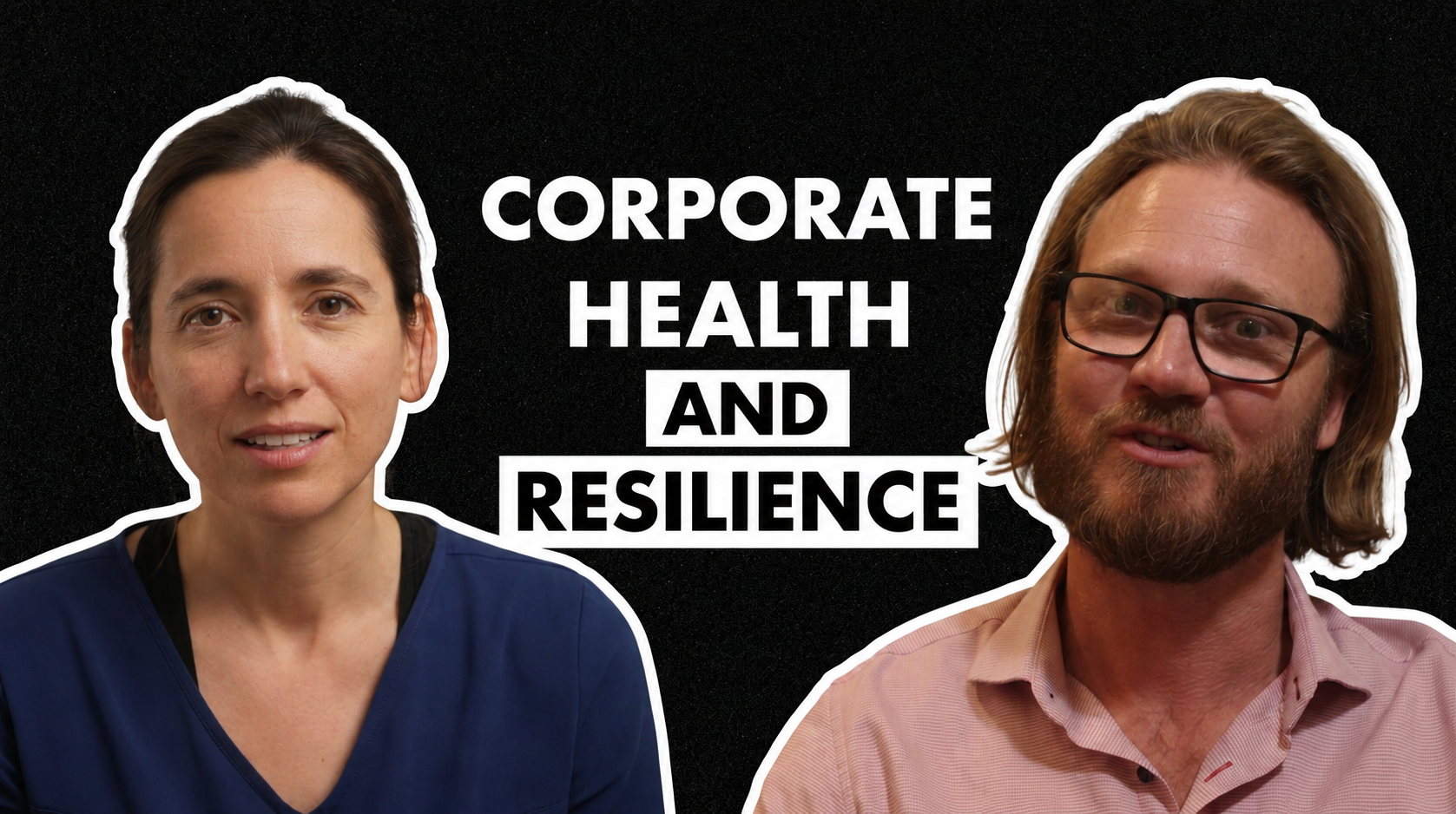
Listen to the entire episode here, on Spotify, on Apple Podcasts, or through most major platforms.
What if the reason you can't switch off isn't a personal failing — but a physiological one?
In this episode of The Motivate Collective Podcast, host Melanie Suzanne Wilson talks with Dr Jimmy Fay for a conversation that cuts through the noise around workplace wellness and gets to the real mechanics of why driven, high-performing people burn out — and what it actually takes to change that.
Dr Jimmy began his career as a chiropractor, spending over a decade watching stress accumulate in people's bodies long before they were ready to acknowledge it in their minds. Today, he delivers tailored nervous system and performance workshops for leadership teams, founders, and organisations — from one-hour sessions through to extended corporate partnerships and international retreats.
What makes this conversation different is that Dr Jimmy doesn't just teach these tools. He's lived the other side of them. He shares openly about grief, destructive coping mechanisms, and the personal turning point that brought him to this work — and why true change only happens when values shift, not just habits.
What you'll take away from this episode:
Why internal stress — the beliefs we carry about what we need to achieve, become, or prove — is often more damaging than external pressure
How the brain's threat response operates the same way whether you're facing a tiger or a quarterly deadline
What the early warning signs of nervous system overload actually look and feel like — and why high achievers normalise them instead of heeding them
The basics that always get dropped first under pressure: movement, natural light, hydration, breath
How to begin diaphragmatic breathing, box breathing, and other accessible breathwork practices — including on a plane or long commute
Why leaders model the wellness culture of their team, whether they intend to or not — and what it looks like when that becomes intentional
The single most important mindset shift for anyone who says they don't have time to look after themselves
Why small, daily habits will always outperform the annual retreat or the one-off wellness day
Whether you lead a team of three or manage a department of hundreds, this conversation is relevant. It starts, as Dr Jimmy consistently reminds us, with the individual.
About Dr Jimmy Fay:
Dr Jimmy Fay is a Newcastle-based chiropractor turned nervous system and performance specialist. He works with HR leaders, People & Culture teams, founders, and leadership groups to address burnout at the source — not with surface-level fixes, but with practical, science-backed tools people can use from the very next working day. His offering spans lunch and learn workshops, leadership and team sessions, corporate retreats, and selective one-to-one executive guidance.
Connect with Dr Jimmy: linkedin.com/in/dr-jimmy-fay-wellness
Enjoyed this episode? Join The Motivate Collective community for more conversations, events, and resources built around growth, wellness, and conscious living: www.motivatecollective.com
Trigger Warning: This episode contains open discussion of suicide, grief, alcoholism, physical assault, substance use, and destructive coping mechanisms. If any of these topics are sensitive for you right now, please take care of yourself while listening.
If you need support, please reach out to a crisis service in your country. In Australia: Lifeline 13 11 14 or Beyond Blue 1300 22 4636. In the US: 988 Suicide & Crisis Lifeline (call or text 988). In the UK: Samaritans 116 123. For all other countries, the International Association for Suicide Prevention maintains a directory of crisis centres worldwide at https://www.iasp.info/resources/Crisis_Centres/
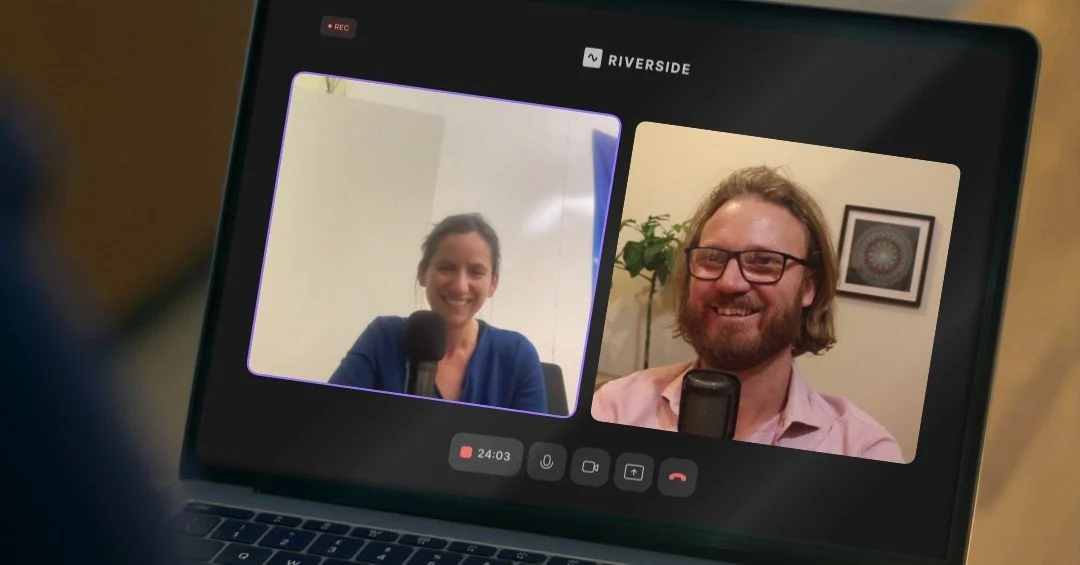
Transcript
Melanie Suzanne Wilson (00:00)
Dr Jimmy Fay, welcome to the Motivate Collective podcast.
Jimmy Fay (00:05)
Thank you so much for having me. I'm looking forward to having you, HM.
Melanie Suzanne Wilson (00:09)
For those who don't know, you have been a specialist, health specialist for a while, for a long time, but you also now look at the whole variety of reducing stress. How do you explain to people what you do these days?
Jimmy Fay (00:26)
It's a really good question because it's a little bit of everything in a way. So when I go to business meetings and do the elevator pitch, it's ever-changing to be honest. But at the moment, the main focus is trying to help individuals and businesses reduce stress, produce people out and overwhelm and allowing people to perform at their best, and what that looks like for everybody is different.
You know, some people are entrepreneurs, and then you really want to come and get things off the ground. Other people are working in very high-stress environments with like, you know, multi-million dollar companies and portfolios, and then everything in between, you know, like the stress and overwhelm can overflow into family life and daily life and being a mom or, you know, whatever it might be. So stress, burnout and overwhelm are the main focuses. Then, where that gets implemented will really look like and what strategies I use along.
Melanie Suzanne Wilson (01:24)
Let's unpack that from the get-go because there are so many types of stress, overwhelm and burnout. And I totally agree. Everybody has a different experience of it, but I'm guessing you would have seen some trends or some things that keep popping up. There's the burnout where people become either workaholics or they think they need to do too much. But then there's also the other overwhelm where people feel pressure to become something, to achieve extra, and so then there's the stress of feeling like nothing is enough. There are so many angles here. What types of all of these things have you been seeing the most?
Jimmy Fay (02:05)
You're right. There's two broad categories of, um, when it comes to that sort of stress. There's the internal stresses where we have these beliefs, um, that we need to be doing something or achieving something or being someone in order to be successful and in order to be fulfilled in life. And then there can be external stresses as well. You know, you've got your boss or you've got the family or people depending on you. And that creates a certain level of stress as well. And then most people.
I could go in with one or the other. I see a lot of people come with internal stress that is driven through. If I don't do this, then it means this. If these are just stories and beliefs that have been picked up along the way, hopefully or otherwise, that creates a certain level of stress.
Now, internally our brain doesn't know the difference between the tiger chasing us in clear, straight times and the mental stress and overload that we put on ourselves. So biologically, physiologically, it has a similar effect. It's not exactly the same, but you get those high levels of cortisol and stress hormones. And then you get, know, adrenal fatigue and burnout. And so the burnout is quite similar; the things that lead into it can be so multifaceted.
The way that we're always trying to work with people is to try and help them from where they're at. Where are they coming from? Where are they on their journey? What are they doing to help themselves or not? And so it's hard to give genetic and widespread advice because everyone's so individual in their approach. And a business and a corporation is its own sort of being, if you will, it's its own entity it's own internal stresses as well, stunning people that are there also. I don't know if that amounts to a good question.
Melanie Suzanne Wilson (04:00)
The organisations, you see there's a collective stress at times in organisations. Perhaps everybody could be worried about something in particular, like when some wars were emerging, I was chatting with the travel industry, and they were all collectively anxious about things that impacted their industry. Or perhaps you might have a leader who is
just impacting the emotions of everybody around them, do you see these collective emotions that people then flock into like a herd of sheep?
Jimmy Fay (04:37)
Hmm,
Definitely. Yeah. It's depending on the size of the corporation or the business, the startup, or whatever it might be. The smaller the team, the more the individual stresses will ripple out and influence the people around them. So if you've got a brilliant person in their mind and they've got all of these ideas and they're trying to get everything done quickly and there's a lot on the line but it pulls out very quickly to a small startup team you know and long nights and being affected by lack of sleep and high levels of stress and anxiety very quickly creates that sort of sense of overwhelm. When you're talking on some medium-sized businesses, the shift is different because there's usually multi levels of hierarchy and different avenues and people responding to different people. So the individual stresses become less obvious, but it becomes your own, that more collective, like we have to breach this, can't be like this, we have to get to this certain point. And if we don't, then we're going to feel the repercussions of that. And then when you go into like, big corporations, multinational sort of stuff, when I work with directors, their level of stress is a very different kind of stress because it's so consistent and so repetitive that it actually becomes the norm for their day-to-day living, which is not necessarily the best way to live as far as I understand. But when something becomes so normalised in your nervous system, you don't even really see the forest in the trees. You're getting so burnt out and overwhelmed, but everyone around you is doing the exact same thing.
And you don't want to be the one that's holding up the boat. You don't want to be the one that's holding down the team then as they're reaching all these goals. it's, yeah, it changes depending on the level of complexity of the business.
Melanie Suzanne Wilson (06:28)
Absolutely. You mentioned the basic needs, like people needing to get more sleep, people might lose sleep when they are getting anxious, and these trends are happening. And then once people get to that leadership point, you're spot on the amount of stress when people are in leadership, that clearly has to change because especially from what we're seeing in the economy these days, it seems like more and more founders are going to emerge. So many more new businesses potentially look, I don't have a crystal ball, but we could say that almost everybody or most people will need to create a business as technology is evolving. So in some way, this is going to affect more and more people, but even for those who are managing hundreds of thousands of people, I'm wondering what they can do to keep their feet on the ground. Because I have seen some leaders who lose perspective, think they are drowning when actually they are finding solutions, or they think they need to isolate themselves to fit the role and fit the image of that title, end up isolating themselves. What do you say to people in leadership who need to maintain their own humanity and support their basic needs?
Jimmy Fay (07:55)
Hmm, that's a really good question. Guess having a deliberate set of times for self-care and self care again looks different for everybody. But like whatever it is for that individual for that person, it's like, what do they need in order to recharge themselves as a human being, not as a boss or a firm, or CEO or any of those characters, just as a human being wanting to make additional things that they need to turn to.
For most people, it's things like sleep, connecting with nature, just breathing. It sounds strange, but I'm just taking some deep breaths. You know, not being on their phone and emails until like the moment before they put their head on the pillow. These are the, I know they sound so basic, and they are, but they're the things that tend to get overlooked, especially when there's a big goal to be achieved.
So yeah, the self-care, whatever that looks like. And some people don't know what it looks like. So they kind of have to go on that journey of discovery, what it looks like for them. Even journaling, you know, just writing and getting the stuff out of here, down into the world. Whatever you do with that, some people have to boom and just to let it go. Like, synchronically and physically to let that stuff out of their head.
But yeah, not to close down, not to clear them up, not to withdraw from the world around them and often their family around them as well. So it's just making sure that that time is set out strategically, just like the meetings, just like the investor meetings and just like what you do each week or each month, whatever it might be, you're doing that deliberately and purposefully every day or at least every week.
Melanie Suzanne Wilson (09:34)
Absolutely. We all have different ways to look after ourselves. And one thing we should all have in common is that we all breathe, if not, something is really wrong. The breath. I'm curious about what you would say for people who are in an intensely stressful moment or just starting to perceive things as stressful. Of course, people can feel that tiger fear, whatever, whether it's actually that scary or not. And then we enter a completely different state, and sometimes we're even blind to how we are ending up. So it would be great if you're interested in refreshing for everybody some of the basics with breathing because we take it for granted. You're involved with people who teach mindfulness. I've followed those teachers a lot, but there are some out there who'll just, you know, gasp for air or people. Even today I saw someone teaching, take
Big breath in, big breath out. And I was thinking, hang on a sec, can we all slow down? So what do you say to people who literally need to catch a breath for a second?
Jimmy Fay (10:42)
Yeah, it's a tough one. Like, cause as you see, most people won't even realise that they haven't breathed, they're not breathing well, you know, everyone, there's no proper way to breathe. You breathe the way that your body is needing at the moment. But you know, it's one of those things that think the first thing is just awareness and just being aware that you can actually breathe differently to what is the automatic process that might be going on. So step one is just going, wait a minute. Okay. I can do something different here.
The next step is then trying to do it when you're not going to stress start. So just getting used to the fact of when things are calm and okay, and you might have five minutes in the morning or at lunchtime or in the evening, or ideally all three, where you can just go, okay, I'm just going to practice this for a minute or five minutes, whatever it might be. But then as you know, you're going to step into the stressful environment, into that moving or that phone call that you know is going to be a bit sticky. It's like, great, I'm going to practice this more before.
I know that this is going to happen. And then it starts to trickle and ripple into the moments of, wait, I have this control here. think it can get to people like, okay, you look stressed, you should just breathe. And they've never done it before. It doesn't really start there. I feel like that's almost the only place that you're going to implement it automatically or deliberately. So you start with the times where it's easiest, and then you work towards the times that are most difficult.
Melanie Suzanne Wilson (12:07)
Practice when things are okay. It's like a preparation. Don't wait until you're really needing this. Prepare.
And it's the same with anything like my approach to most everything is productivity. So you exercise when you can see, like you eat healthy when you can see you, don't wait until things are falling apart before you start to do something. You can still do it. It just takes a little longer and is a lot more difficult and challenging than your body's used to nervous systems used to doing certain things. So it's way harder once you've already kind of pressed that path or that bridge to go back. It's not impossible; it's like proactivity is where we're at now. That's where we promote constantly with the individuals, the corporations, the businesses, everything that we do, it's all proactivity getting proactive and bringing it back to the corporations. I was keen to ask about how people can literally get space and some quiet. I've been in the city for a bunch of days, and honestly, I can imagine it would be in some ways more difficult for people to get the clarity and avoid overwhelm when there's so much around them. It's a big shift for those who've been on the coast for a bit, suddenly.
Elsewhere, you're around advertisements everywhere. You're around just all of the things. And in corporate spaces, there's the added element where the leaders can choose how the environment is set up to some extent. But of course, people either have distractions or not. I know these days some people want headphones, whatever it might be. But the question is,
Jimmy Fay (13:46)
Hmm.
Melanie Suzanne Wilson (13:57)
When organisations are setting up a physical environment or even just setting up a standard for their team, maybe they're going to say, I'm not going to pressure everybody to work through lunch and I'm going to let everybody have five or 10 minutes because that could mean they are thinking more clearly later. What can people do? What are the basics that people can do to make sure, well, to prevent that overwhelm?
Jimmy Fay (14:25)
The beautiful thing about, part of the beautiful thing about the work of home movement is you can set up your working environment deliberately and pretty much however you want, as long as you're getting your work done, is great. I think it's one of the real positives for movement, and I think that's why it's going to stick around indefinitely now. So when you have to all over it. Obviously, if you're in an office space where you just, it's mandatory to be there and you can't have a lot of influence or control. There's certain things you can do, but you can take it in once, I guess. So the ones that are real is not a lot. It's a huge thing. So, not sitting in a room with the blinds closed, and you know, fluorescent lighting is one of the worst things but look up from the computer screen, from the phones, from the tablets, from whatever it is that you're using. Having multiple light coming in from the window is super important for a multitude of different reasons. So step one is: make sure there's the light if you can. If it's not a possibility, try and get out into the night for light as often as you can. So every hour or so, just get out, go for a walk, grab some warmup, go out, put your feet in the grass if you can, connecting with nature, that's like step one. If you can bring the greenery inside, even better, so natural plants, there's some amazing indoor plants that are designed to help freshen the air, they're natural air fresheners. So that would be a good thing. I've got this awesome little plant in the background here, which I leave. We've got some other ones around the room as well, so natural greenery. Again, just do something with your brain, and it's often zero too. Happy to play cycling through. If you have again, availability of having a window open or airflow through, that's a really good thing too. And you'll find all of these will really help with energy, especially through the day. So natural light, greenery, air, getting out as often as you possibly can, just allowing the blood flow, your nervous system to kind of reset and give a good stretch into your spine and into your nervous system. And then if you have the availability to sit and stand at the sit-stand desk.
They're brilliant. So sit for an hour, stand for an hour, sit for an hour, stand for an hour. And just, it just shakes up your brain, your body and your nervous system. Um, and just, just keeps you going. Now you can go more complex. can have these little, little headmills that people walk on when they're doing work and stuff. And you can have like a foot, you know, vibrating form thing that you can put in there, and you can have a chair that does all the work. You can go as far as you want with it, really, but my mind's always just trying to get back to it as possible, air, fresh light, greenery, move your body, drink plenty of water, you'll feel significantly different at the end of the day just doing those few things than you would if you didn't. When you're in the infospace, you become a little bit more limited, but some of those things still apply. If you can sit near a window, if you have the availability to sit near an open window or a closed or open window, if you can bring a little green plant into your desk, do that sit stand desk or a big thing in the office as well. So you can apply some of these things there, but you just don't have as much freedom to do with.
Melanie Suzanne Wilson (17:39)
Going back to the basics and what I'm getting from this is that people don't need all of the gadgets, all of the fancy gadgets, or even in some spaces with the entrepreneurs or the people who have freedom, even people are taking their devices to the treadmill. I'm guilty of that. Other people would be enjoying that habit, but then it's staring at a device.
And just moving on a machine, and we do what we do, especially on a rainy day. However, it sounds like what you're saying is connect with nature. And so the plant inside is probably a start, but I'm guessing you'd recommend also that people need to get out when they can, whether it's lunchtime, whether it's before the start of the day. Is that going to be crucial to see the sky a bit as well? Is that going to help?
Jimmy Fay (18:27)
Yeah, absolutely. It's like I said, like there's different levels of where people are out and what they need and what I often recommend. But if you're not doing the basics, it doesn't matter what you are into. If the foundation is shaky, you can't build a house, right? So we're not going to try and build a house on mud. We're going to just try and make sure that the foundation is there. And the foundation is, obviously, it's very simple. It's like connecting with nature, being grateful for what you live, like breathing and being deliberate with how you do that. The things aren't difficult, but they tend to be the first things that go when we become stressed, because they're the exact things that we need when we're stressed. And I'm guilty of it too. I'm not sitting on any high horse here. I know I can spend too much time on my phone. I haven't been to the gym, I haven't moved my body in a few days, and I feel it. I really noticeably feel it. So the answer to your question is absolutely right basic, you know, just ballistic self care. If you're not doing it, just doing it will be a game-changer. If you are already doing it, then the other levels start to become more powerful to confound on top.
Melanie Suzanne Wilson (19:38)
Okay, here's a corporate angle for that one. People are going to say, I'm too busy to do these things. That would come up so much.
Jimmy Fay (19:48)
It is pretty much the one, the biggest objection I've ever gotten to anything you should do with this is I don't have time to do that for sure.
Melanie Suzanne Wilson (19:57)
And of course, the thing I was going to ask was, we must have some sort of idea of a return on investment in some way, whether it's people are getting the mental clarity to then get things done more quickly, or if they are looking after their health, then they are going to create a better culture for the team, whatever it might be.
I think we do need to convince people a little bit here because truly there will be those ones who are saying they are too busy, but everybody probably will have a moment if they haven't already where do you see normally with leaders in particular that there's a breaking point, especially whether it's self care, but more so with the extreme burnout where eventually people get to that moment of realization where they do have to do these things.
Jimmy Fay (20:46)
Yeah, usually it's a pretty big health scare, I guess is the best way to describe it. It's usually when something, they get the diagnosis of cancer, diabetes, heart disease, which are big stress, know, they don't need it as well might just stress, you know, people with high levels of consistent long-term… have much higher levels of diabetes and heart disease and stroke and anxiety and all these sorts of things. So unfortunately, like I was saying before, when you start to get more to the top levels of a corporation as far as directors and big decision makers, they're surrounded by people who praise that sort of behavior, like working 18 hour days and giving out weekends and doing this is, it's not so much in a lot starting to push now, but for a long time, this was seen as you get to the top in the first place. So if you're going to be like, I'm going to take a mental health day, you just, you know, don't think about what I'm saying. What's going to happen when you go back to my memory? All that stuff goes along with it. Excuse me. Yeah. The internal belief system is what has to shift first, especially if it's been there for decades, which it usually pays me that stage. don't generally don't start at CEI.
So you kind of worked your way to there, and yeah, the belief of what's getting you there is something to change in order for the habits to change because your habits are just a representation of your beliefs. And if your beliefs are, need to do this, this and this in order to be successful and keep this job, then your habits will reflect that. So that's why I don't have time. That's what people say. It's everybody can stay.
Literally, we both know that, right? Even the people that save their time from time, they deep down, even just below the surface, they know they have time. But what they don't know is a strong enough belief or reason or value in order to take that time from something and put it into their self-care. Because the value on the self-care is not as far as whatever the value is, and it's different for everybody, that's driving them to not do it in the first place.
Melanie Suzanne Wilson (23:03)
Absolutely. There are the ones who have climbed the ladder and there are also the ones who perhaps built a business from something small to something great. Either way, they climbed in some form, and they feel a need to maintain that, but they need a more sustainable, healthy way to make that happen. I'm going to ask a slightly controversial question.
Jimmy Fay (23:24)
Hmm.
Melanie Suzanne Wilson (23:27)
Because these are all the good coping mechanisms. What wake-up call can you give to the people in leadership? Look, I wish that all of them would be listening to this, and some won't be, but they need to hear this. The ones who are going to the unsustainable and irresponsible coping mechanisms.
for dealing with their work. The mild form, potentially mild, is that countless leaders and managers would be probably having one extra glass of wine at night, and that's all they're doing to cope. And it gets more extreme than that. So I'm wondering, for those who are going to those classic slightly destructive, they know it's a step away from too much, those habits, how can those people shift from that to doing these strategies that, yes look wholesome but are going to actually work.
Jimmy Fay (24:25)
Hmm, that is the million-dollar question. The ultimate answer is, like me and you, you don't. We don't. The person has to decide for themselves that something needs to change. And that's when I first started this one, not the corporate stuff, but when I started. You know, being a health care practitioner was like, right, I'm going to save all these people, and I'm going to fix them. And all I'm going to do is just tell them what they need to know. And then they'll change because why wouldn't you? Like the logic is there, and the knowledge is there. Why wouldn't you do it? And over the years, I've just realised, although I'm a victim, over the years it's become more and more apparent that nobody changes until they win. And so those little destructive habits become candid and bigger and bigger and bigger and tense and more frequent and more extreme until you hit rock bottom or you have a heart attack or you have a stroke or you whatever, whatever it might be that bring us something in your brain to be like, okay, it's time to change now. And some people get that warning, and they make the change, and other people don't. It's, that's, that's just their journey. But it's my goal is to kind of ripping the door to be like, here it is if you want it. When you're ready, let's talk, let's do it. If you're not ready now, that's cool. It's not my journey. It's not me to force this on anybody. I've got what I think are some really powerful tools for beginners, intermediate and advanced people really wanting to expand their self-care practices. And you just let me know when you're ready, and I'll be ready and waiting.
Melanie Suzanne Wilson (26:07)
People have to want to change. That's, that's crucial. They have to want to. I'm very curious. You went from a relatively traditional healthcare space to then doing what you do now. And in all of that, where did, where did these strategies fit in with how you maintained your career without getting burnt out?
Jimmy Fay (26:29)
A lot of these things came along through my own self-development, more than just knowledge. So I was one of those people that turned to destructive habits to keep up with the things in my life that I've had to deal with. I grew up in a really terrible, pretty terrible environment, really. And my brother took his own life when I was young, and my mum became an alcoholic.
My brother, like it just, all quickly for me in my life, and I was assaulted and put in hospital for weeks and yeah, and I didn't know how to cope with it. So I turned to alcohol and drugs and porn and women and just all the things that I just got more extreme and more intense and more frequent because I didn't know how to deal with it. I wasn't taught. didn't know where to look. And so that was the best thing that I knew how to do. So when I'm talking these coping mechanisms, it's both a personal experience and understanding from a more medical or scientific side of things as well. So my journey came when I lost, my partner left, it was like the fourth long-term relationship that my partner just kind of left. And I was like, I'm doing something wrong here. Like there's gotta be...
I got to be as a person, not just as a partner, but just as a person. And so I started, that's where I started my journey. And I went to men's retreats, and I went to and started yoga, and I went and started doing breath work, and met these people along the way. And I have an amazing partner now who I met along that journey. And, she's helped me so much as well, but everything that I teach is something that I've learned, and some of it is really helpful, and I stick with it all the time. Some of it is really helpful, and it's just not for me, so I still recommend it for certain people. So there's nothing really that I recommend for people that I haven't at least wanted to give a little proper clinic and understand, sort of, how and whether it's trying to help people. And that's allowed me to kind of build this repertoire of tools that I can recommend for people and try and help them on their journey.
Melanie Suzanne Wilson (28:41)
There's so much in that you did have those early experiences that you needed to cope with. And chances are, some people who are trying to deal emotionally with their careers are still stuck in the same emotions and coping angles that continued from early on. That would be happening so much. And it's worth acknowledging that you are with one of the best teachers that I've ever seen. So you're really learning from the best. I seriously met someone further down the coast who's saying it's this person. So absolutely. You're surrounded by people who really know what they're talking about, but you said that you pick and choose what you follow. I appreciate that so much because for me personally, I can't get onto the ice bath bandwagon. just, there's something about it for me and whereas if people like that, then great. And the logic through all of this is that we're freeing people up to say you don't have to do all of the things. Is that part of your message? People don't have to do everything. You're not more enlightened just because your room is at a particular temperature or your water is at a particular temperature.
Jimmy Fay (30:00)
No, no, absolutely not. You can't do everything. There's literally not enough time in the day to do all of the practices. So, no, it's really much picking and choosing, you know, and it's my recommendation for everybody, especially if you're starting out, is 10 minutes a day. You know, 10 minutes a day. And if you can, like, get out on the grass, I mean, if the sun's shining or even if it's not, you can do it in the rain, much like get out on the grass.
Take some deep breaths, move your spine, move your body, share some quality. Like you've already knocked down four amazing positive moments, and it's five minutes, 10 minutes, you know, if everybody did that, the whole world would be different. Unbelievable. Now, does an hour of yoga practice? It does. But if you don't have time to do that, do 10 minutes, do five minutes. Like it's, it doesn't have to be complicated, and you can't do everything. So don't even put your head in that space, just be like, I'm going to do what we can do with the time that I have. If people have got busy and three kids at home and the mother-in-law is unwell, and then got to go to do it, like it's, there's just not time. Just be kind to yourself, be kind to where you're at and just do something, just whatever it might be, just do something, and that bed space will start to expand.
Melanie Suzanne Wilson (31:18)
Do something, anything and adapt. There the mic goes. One second. Is it steady? Yes, the mic is steady. I want to touch the mic. Yes. So.
People need to adapt to the amount of time and the environment that they have. I totally agree. And I reached a point recently where for a moment, I didn't want to, I didn't trust using the floor that was available. So I had to do some stretches against the wall. If someone literally has no floor, then use a wall. Or if someone can get a little patch of grass for five minutes instead of an hour, then that's something, and it's not about being impressive. It's just going back to the basics. That's your key message. The basics will help. And you're saying something that quite a few people on the show have been reinforcing, whether it has been a lawyer or a neuroscientist or what you do, people are saying, get the hydration and just look at the sky, do those simple things. You mentioned moving the spine, and you did have a background doing work with physical health. So I am keen to ask because although this is mainly emotions, I'm still trying to wrap my head around how the physical pain and the emotions could be intertwined. But people do end up, people end up with aches, whether they're sitting at a desk for a long time or people get headaches from stress, all sorts of things. And so it would be interesting to see if you have any tips for things like that, where people know they're not, they feel pretty sure, and of course, people need to seek the right advice at the right places. But if someone feels pretty sure that they don't have some sort of condition, but they're just getting aches, what's a good place to start?
Jimmy Fay (33:10)
Just get out of your chair.
Melanie Suzanne Wilson (33:12)
Okay.
Jimmy Fay (33:13)
We're pretty basic, so we're doing it. This is, I guess, the point that's coming across in all of this is like, if you're not doing anything, just do something. So I recommend to people, if you're sitting at a desk and you don't have a sit-stand, you don't have an option or availability, set a time when you're free and get out once and around everywhere. Just get in, walk to wherever the nearest sink is and get some water, back down, go back to work. That's literally the start point. So when you do that, it'll stretch out your spine. It'll allow the blood flow to circulate again, especially into your limbs, because it's been coming for the whole time. It's all your hamstrings and your fascia and your tissues and all sorts of stuff. And it gets your brain away from the screen, the tasks, because what have you been doing? Especially if you work with your head and doing. So if you're reading a lot or counting a lot, what you've been doing, getting out and stretching your spine in the other direction, it just has huge amounts of benefits. So, 30 seconds once an hour getting it moved, there's a huge amount of resources in there. This one is like desk structures that you can do. So if you want to take a little bit of that, you may do two or three, five minutes of that, even better. And then, as you said, mentioned earlier, like getting outside for your lunch, don't sit at your desk and stuff down food, scrolling through your phone. I get away from all the time, get inside, even if it's a bit cold inside and lonely, like even under cover, just that stimulation for your nervous system is going to be really good for you. So set the time on getting and move a little bit or as much as you possibly can.
Melanie Suzanne Wilson (34:52)
Get out at all. It can be anything. That was, I like how simplified this is. There's a version of this for everybody. So it seems like whether someone is working alone or guiding a team, this does look very practical, but beneath the practicalities, it's the mindset of accepting that habit and allowing the time to do that.
There's a lot more flexibility now that people work from home so much, and there's flexibility because there's a lot more understanding in the world about why these things are needed. But I can absolutely remember the times in corporate spaces where people really disapproved, or there was a shame feeling, or people basically assumed someone was doing less work if they got up for a few minutes. There are maybe those spaces still exist, but it's the assumption that someone is achieving more if they're not taking a break. And it seems like what you're saying is people are not going to achieve more by not taking a break.
Jimmy Fay (35:59)
No, they'll work longer, but they won't achieve any more necessarily. No. It's going to. Look, if the manager, the leader, the boss, the founder, whatever, is setting these as standard practices for themselves as an individual, then it trickles down so quickly to everybody. Even if it's not mandatory or enforced, they're like, the boss has taken his walk around, know, he's going to the water cooler, it's what people continue to do. Then that's what actually changes culture. That's what changes the internal system, that internal stress that we were talking about at the beginning. That's the sort of stuff that will change you, not writing in your CV for like, know, get it and has to get up and stretch this file. That's just going to possibly present them. But if you see the bosses, you see the managers, you see the leaders doing
And then you do it, and you're like, it's going to city like that. That's called the shifting sort of stuff, rather. It's very basic.
Melanie Suzanne Wilson (36:58)
Seeing people in leadership doing that, it'll make a difference. So if anyone is leading even a few people, they need to set the example, set the standard, because then everybody else will follow that. And I'm considering that these things could be done if someone is even travelling a lot, because people do still travel, perhaps from one side of the state to the other or from the other side of the country. And if someone is even having a one or two-hour trip, then that's a lot of sitting, especially of course, How many will just be staring at the phone on long trips, and it's the same neck for so long, there's the option to do the same thing, exactly what you described, walk down the aisle of a train or a plane, or whatever it is, get up do any small movement, which that help for travel as well
Jimmy Fay (37:33)
Yeah, totally. And the breathwork sort of stuff can be very much expanded when you've got those blocks of time where you're on an aeroplane or you're on a long commute. Yeah, you can kind of go deeper and wider into different styles of breathwork because there's so many, as I'm sure you're aware, like it's a practice that's been around for thousands of years. Yogis and Chinese medicine has been using the different forms of it for a long time. There's interesting and great versions that have come to the West, but there's also much simpler forms that are much more accessible just to everybody, regardless of age or ability, out there as well to discover.
Melanie Suzanne Wilson (38:30)
The simple ones. What are the simple versions?
Jimmy Fay (38:33)
And your symptom basically is just learning to breathe into your, into your diaphragm or into your abdomen. So diaphragmatic breathing stimulates your vagus nerve, which puts you into a parasympathetic state. So it's like a rest and digest state, which can only be not only, but one of the ones to activate it is via the, via the vagus nerve and via diaphragmatic breathing. I've worked with many people that first they didn't even know you could possibly do them. And it took them.
Sometimes they need days of practice to even be able to take a single full breath into the belly, into the abdomen. So it's, it's one of those baseline things I was talking about. If you get the basics right, then you can build on it, but just learning that you can and how to breathe into your abdomen is the most basic one. The next one is the one we're thinking of is box breathing or square, square breath is what they call it. So you're just breathing in for a count of four, example, hold for a can for itself for four, hold for four. there's, there's modifications and variations to that. You can put pauses in certain spots as well. Um, and then there's like other breath works with breath work, I guess you'd call it, where you breathe in for four and breathe out for six. We can do the opposite. can breathe in for, um, we've been from longer breathing for shorter. So it's more of a forceful exhale. there's the ones that we've learned through the yogic practices are they're accessible. The yoga in India, for example, is designed for people of all ages, not just people who are flexible and able to hold big poses like in Riyasa, for example. So both work and mindset and meditation and movement practices in India are very different to one that are in the West. When I talk about yogic breathing or yoga breathing, it's not necessarily what people may think necessarily if they haven't seen that style before, but it was really interesting to travel through India and see how more accessible yoga as a whole is to regarding importance of aging capabilities.
Melanie Suzanne Wilson (40:40)
It's accessible to everybody.
Jimmy Fay (40:42)
I saw 90-year-olds doing what they call yoga, what the Indians call yoga. You wouldn't see a 90-year-old really doing like a vinyasa or a bhikram. That's a westernised version of what they were doing. It was just movement. Just moving the joints, taking deep breaths, being mindful of where they were. That's what yoga is in Indian culture.
Melanie Suzanne Wilson (41:07)
That's worth looking at for a second because there are people who are continuing their careers or trying to stay active in some way at those older ages. What did that movement look like for a 90, 91 year old?
Jimmy Fay (41:14)
Hmm.
Well, again, there's many different versions. I to an Ayurvedic hospital and did a punchy climber, which is a couple of weeks of traditional ancient Indian medicine, a preventative sort of stuff as well. Every morning we'd get together, and so you'd start sitting on the floor, and you'd just basically move your knees into certain directions and then you'd move your ankles in certain directions, and you'd twist them around, and you go back the other way, and you go down and go up, and you go down, and you go in. So it's just trying to move the joints in all the ranges of motion. And you start from the toes, and you work your way all the way up, up and down, down into your hands and fingers, you do your neck, you do your eyes, you do your tongue, you do literally every part of your body. You activate, and you create movement, you know? And then the areas that are sticky and stuck, you breathe into them, and you be curious about them and you stay with those sensations, and it becomes a mindful practice in its own of where your body is giving you feedback. I'm stiff, I'm tired, I'm sore, there's pain there, there's stiffness there, that's your body giving you that feedback and they take the time, the ones that practice this, they take the time to sit with those feelings and study them as well.
Melanie Suzanne Wilson (42:42)
Sit with the discomfort as well as the comfort and observe what's happening.
There are a few counter-cultural things there that are worth acknowledging. Aussies in particular, I don't want to sit with discomfort. So we're saying it's okay to look at discomfort and ask what is that telling me? But I really appreciated the simplified movement that you're describing because again, I don't take for granted that you come from a yogic space where people know the real intention and the accessibility. One phrase that they use that I wish everybody would use is that any amount of the pose is the pose. Whereas I've been seeing some people elsewhere who are kind and good-intentioned in what they're doing, but there's a total expectation to reach the headstand.
And it's just so detached from, okay, am I just focused and being in the moment or breathing all of those things? So there's a stereotype. There absolutely is still the assumption out there that people are having to be flexible or whatever it might be. That line, I don't know if you still get people saying that, but out there, as some will say, I can't do that. I'm not flexible enough, but it can be simple. That's great for people sitting at a desk, move anything, right?
Jimmy Fay (44:10)
Yeah, yeah, absolutely. Just your body will become very good at whatever you ask it to do repetitively. So if you sit at a desk, your body is going to actually get very good. It's going to adapt, and you know the system is going to change your spine and the joints, the ligaments, tongue, everything. Everything is going to change in order for you to be a world champion desk sitter and do anything else. What do you think is going to happen? Your body's just going to slow down. something like, wait a minute, I'm really freaking good at sitting at a desk, and now you want me to get up and go for a gel? No, no, no, no, no. Let's set up for this desk sitting thing. know what I mean? Like this is the internal thing that goes on. So that's why change is fun. That's why any change is fun because you're not a system integrates the changes and then physically will shift and change your body to represent what the nervous system now understands to be the most important goal. So if you start to get up, you're going to feel stiff and sore in that process. It doesn't mean it's bad. You give up smoking, you start packing up your lungs because the body has to change and adapt into the new situation. It's the same thing. So the answer is just to believe, but no, if you haven't done much of it, it's going to feel pretty crappy to begin with.
And then you do more of it when your body gets used to it. And then you do more of it, and it starts to become enjoyable. And then you do more of it. And eventually, if you don't do it, then you start to feel comfy. It goes back the other way. So it's just, it's one of those things, being aware of the dynamic and being aware of the shift that's going to happen. Your body will resist it. And that's where a lot of people give up. They're like, it doesn't feel good. My body's telling you to stop. Technically, yes, but.
When you look darker than that, it's absolutely a no. Your body's just giving you feedback, but you're not sitting very well, which is what it's gotten really good at doing. So, just, you've to look a little bit more at yourself as well.
Melanie Suzanne Wilson (46:10)
You get used to what you get used to. It seems like that's true for an organisational culture and for the individual's physical presence. So step one, it seems like it's extra, extra important to not have just a day or a moment of doing the right thing, but setting up sustainable habits, something that's actually accessible. And that goes back to what you said about how people might not have three hours every single day, but the small ongoing habits it seems will be more useful than doing a lot once.
Jimmy Fay (46:50)
Yeah, a hundred per cent. Yeah, it's ungated. And a business, like I said before, it's just its own organism. It's almost like a human body of its own shift and change within an organisation is painful because you've just gotten used to it. The systems the processes are impolite. You're on it. That's sustainable. Smaller, more consistent efforts are way, way more important than ideally week-long retreat or a once a month massage day, you know, like they're good. I'm not against those ideas. If you actually went with a gift and chain internally that sticks, you're like, the smaller, more consistent efforts are where it's at.
Melanie Suzanne Wilson (47:31)
That's fascinating that places do have those one-off days, and they need the sustainable habits. I'm wondering where people should seek more information or whether they should be educating themselves, because I'm inspired by what you said. Some specialists, months ago, were asking me if they could have half a day of learning sustainable, healthy resilience, all those things. And honestly, of course, I only listen to the experts more, you know, I listen to people like you, but it was just this day, and I'm wondering, well, okay, people need to remind themselves of these things. Do you see people needing the ongoing self-education of perhaps a reminder on the phone, or reading up on something or do you think it needs to just be simplified? Maybe someone just needs to jot down one or two strategies from this conversation they listen to and then just remember to do it. For me, I find that for some habits, I need a reminder in my calendar to say, " You're going to do this thing.” And it's not an appointment. It's a habit. Do you find that people need to either access resources or at least create the systems for themselves individually to make sure these things happen?
Jimmy Fay (48:52)
Yes, think that's one way to keep accountability for the self. If you're wanting it to be more systemic and be more cultural boost, it, needs to be done. It needs to be part of what happens all the time. Just as when things are starting to look a bit more shaped and the departments are not getting along anymore, and it's a major collection, then it's pretty ingrained, you know, so it becomes a lot harder to make those shifts.
The is that real individuals definitely have the capabilities to wake up. Every Tuesday morning or every morning at 10 a.m., I'm going to get up, and I'm going to go for a movement, and I'm going to do it all. So that's a really good way to do it. But as I said before, if it's not completely going from the type, it's really going to the individual to consistently stick with it if the people around them aren't also on board or at least know what they're doing.
Just going back to what you're saying about those, you know, those five-day events or the, you know, the once-a-year or twice-a-year things, it's, it can often be a representation or a reflection of how the leaders, how they look after themselves. It's just a, they're just reflecting, they're like, oh shit, I'm feeling really stressed at the moment. I need to go have my spa day. And that's how they look after themselves. So that when the corporation or the business feels stressed. They're like, ⁓ I know how you work. Yes. You take them on a sparring. And we know, you know, this is no judgment on anybody on how they're gonna connect to themselves, but the business, especially as the corporations get bigger, like the HR departments and the people in folks, they're in these people who work, that's the specific role is to make sure that the workers are happy and capable. If they're as individuals, if they're not consistently looking after themselves. Where are they drawing these ideas from? How are they going to look after the people in the corporation itself?
Melanie Suzanne Wilson (50:46)
So to look after everybody, it has to start with looking after this self. This is interesting. It's interesting saying that you've experienced people reaching a breaking point and then looking for recovery or a cure instead of a prevention in a corporate space.
Jimmy Fay (50:52)
the voice.
Yeah, very, very exciting.
Melanie Suzanne Wilson (51:10)
Do you think part of the reason is that people are just so distracted by their other corporate goals, and then they perhaps need to just keep this up higher in the priority list to have a sense of urgency early on?
Jimmy Fay (51:27)
Like I said before, it comes to values. It's what they believe and what they prioritise up until the breaking point, because then the priorities and the values will instantaneously shift when they go to the doctor and the doctors look right, you have to go back outside. Instantly, their value and their hierarchy changes. What we believe to be important shifts instantaneously because you don't have that, it doesn't matter what you have in the world. So, unfortunately for some, the tipping point is not what the value shift has to happen.
Like I've said, for me, it was like another relationship breaking down, and there was that obvious point where I'm like, okay, I have to do something different here if I want something different. So everybody has the point where they're built up to. Now those figures are different for everybody.
And what figures those things and when those things are triggered and are strongly, and how big this shift happens, that's all very individual. So it's the value system is the one that needs to be looked at and witnessed. So the people will be something for self-care is really basic, right? Get out in nature, drink water, look after yourself in these simple, holistic ways. But for the more complex places that we work with, it's not about knowledge. They know what they need to do. It's not about knowledge. They have the knowledge. They just don't have the know you that refrauds. Knowledge will implement and create in their life.
Melanie Suzanne Wilson (53:07)
It's values. That's opening my eyes, and that's shining a light for so many people because that's deeper than priorities and it's deeper than a sense of urgency because if someone wanted something to happen sooner, then they would make it happen. And what you're describing where you had yet another relationship, and once you realised something had to change, everybody is going to
Okay, I'll say something that's going to tell people: don't wait until the breaking point. You have a breaking point, and I can say that I once again was in one of the best social connections of my life, and then I was having those childhood-derived fear-based panics, and then after a while, I'm going, seeking the yogi guidance to try to figure out, okay, it's too late for the prevention.
So we all have those breaking points, but the reason why I'll urge people don't let it get to that point is it's all great to talk about how there were breakups and so on. That's all great. But for me, my example is go back to my grandmother when she realised she had cancer, it was on her spine. She was about to be paralysed or die. And we don't know what caused that, but there will be versions out there where some people reach the breaking point they couldn't recover from.
So if someone is listening to this and they're thinking, okay, I'll keep going how I'm going, and eventually I'll burn out and collapse and then I'll sort myself out. We don't know how bad that could get. Even when I had my tibial plateau fracture, I was rushing around like mad, and I thought, I'll just slow down later and now I still have metal in my leg. People have to, yes, value the right things sooner.
And you mentioned being proactive. And for an organisation, do they really want to wait until there's a severe conflict between departments? Do they really want to wait until there's a crisis to fix, or do they want to have less crises? Do you think that's what part of this comes down to?
Jimmy Fay (55:06)
Hmm.
Yeah, yeah, it's a very similar, very similar thing. Like the business will build and build and build and then eventually it will connect and factor in, depending on the severity of, you know, what's going on, will the company may or may not last, just like the person may or may not continue, you know, so it's, there's so many similarities between those two ideas. Obviously, a business folding or the way it is much less catastrophic than someone passing away or not being able to recover from an extreme event. Ultimately, it's the signals for most people. It's not always the chemists, but most people, there's always warnings. There's always signals that something is heading in a direct bend that is not going to end well. For most people, the biggest things that they'll see is sleep and energy that the sleep will become affected, their energy will drop off. And obviously, those two things are pretty closely linked and related. And then their ability to hold stress. So when we talk about the capacity to hold stress, it's how much stress can happen before you feel overwhelmed and overloaded and something and don't want to be around people and lose, we give sort of states that we get into. So if you're noticing that you're feeling in that state, like you've gotten to the point where little things that the kids used to do, you didn't really care, and now it just grates you, it just kind of doesn't feel good for you. That lady in the washers that fumes too loudly, normally it wouldn't bother you, but all of a sudden, what we know, you're just like getting grated by it. These are just the warning signs. These are the little subtle symptoms that, achingly, I'm not coping as well as I may be able to. I'm not sleeping as well. I'm getting really tired in the afternoons and losing like my motivation and my energy. These are the little whispers that start. And then the whispers, if ignored, start to get louder and become your body starts talking to you. Pains and and pain in the neck and the back. And then if the talking gets louder for your body, it's more and more intense. And your body starts screaming. And then all of a sudden, if you're not listening to any of that, it'll just shut down.
Melanie Suzanne Wilson (57:42)
Listen to the warning signs early on. It would be great to wind up with positive ideals because we've talked about some big things, and it'll be great to leave the listener on a high note to say, okay, how can things look amazing? And also the call to action of
What exactly do you do with organisations? Do you have a conversation once? Do you guide people through something ongoing? What does this look like in setting up a better alternative?
Jimmy Fay (58:13)
I always like to leave on things like this. I've talked about some intense stuff, some heavy things, but ultimately my work is very optimistic to everything. I don't think it's ever really too late to do something positive for yourself. Even if you've taken it to the edge, even right to the edge, there's still, for most people, the capability of living a better life. Even if they've taken it to the point where their life can't continue, you know, even what they have left can be a better version of who they are, you know. So it's never too late to do something. It's always comfortable and just start small. Just start with little steps, and you'll be surprised how quickly those things come and snowball. And then all of a sudden, you start, instead of it being another job to do, it becomes something that you really want to do and something that becomes a non-negotiable.
And I think workers are into life in so many ways. We've talked a lot about business and corporations, but family time, know, friend time, self care, just, just being alone by yourself, and just being comfortable with that will expand when you start looking after yourself deliberately. So there is so much to be gained from such a little input. It doesn't take a lot. It takes a little to get an absolute ginormous outcome.
My positive information or my positive output is like, everyone, if you can just start with two minutes, get outside, take deep breaths, be grateful for what you've got. And you just start doing that and watch your life change in a matter of weeks. So the other portion of what you said is the businesses. So I am, I create tailor-made packages. There is no one-size-fits-all as we've talked about a lot, so I don't work one size fits all, and I don't work with many businesses at the same time. Only work with a few. Now, that can look like something where I come in and do an hour conversation like we've done today, and just kind of help people understand the nervous system and what it does. And maybe a few little tips they can look after themselves. I can do a three-hour workshop where we actually get into some proper movement practices and some breathwork sort of stuff, you can see breathwork stuff, mindset, you know, awareness stuff as well. The more time we have in the depot, we can go with all of these practices, but it just depends on where the individuals and the teams are to begin with. So I always start with a 30-minute consultation. It's not an obligation to do anything, but just so I can understand how big the business is, what they're hoping to do, where they're at, what they're struggling with, and do almost like a bit of a diagnosis-style session, just so I can understand. And then from there, I can totally make a package which can last anywhere from literally one hour to one year, working with individuals, teams, groups, and everything in between. So it's quite good that we deliberately keep it that way, so the businesses get what they need.
And it can be a matter of like a few thousand dollars through to a few hundred thousand dollars, depending on the scope of the works as well. So, very small businesses can get involved, and very, very large businesses can benefit from it as well.
Melanie Suzanne Wilson (1:01:27)
Very small businesses as well as large organisations.
That sounds great. And I'm hoping that if any speakers are listening to this, I hope they would reach out to you as well, because the breathing is great for projecting the voice, and people need to relax and have the right mindset to present. Everybody's going to have an individual personal brand, along with, of course, when people are leading teams of any sort. So people don't have to be leading the big, big brands, people don't have to be leading the giant organisations, although those are welcome. So any businesses or organisations can get this sort of help.
Jimmy Fay (1:02:09)
Definitely, like I said, it all starts with the individual as well. All of the things that I teach it all starts off with happily, that I'm seen as a person, and then watch that ripple out, instead of I don't start on the end and work inward. You're on an individual to benefit from the work that I do, right the way through to a multinational corporation.
Melanie Suzanne Wilson (1:02:30)
start working on the self and then leading others. Dr Jimmy, thank you for explaining all of this.
Jimmy Fay (1:02:38)
Thank you having me. been great. I can't believe that time has just passed.
Thank you, I really appreciate it. I know I just dropped in out of nowhere, yeah, it's been great. I look forward love doing medicines.
Melanie Suzanne Wilson (1:02:52)
Yeah, awesome. Anytime.