
Lead From the Heart: Burnout, Values, and the BEAT Method with Hannah Bauer
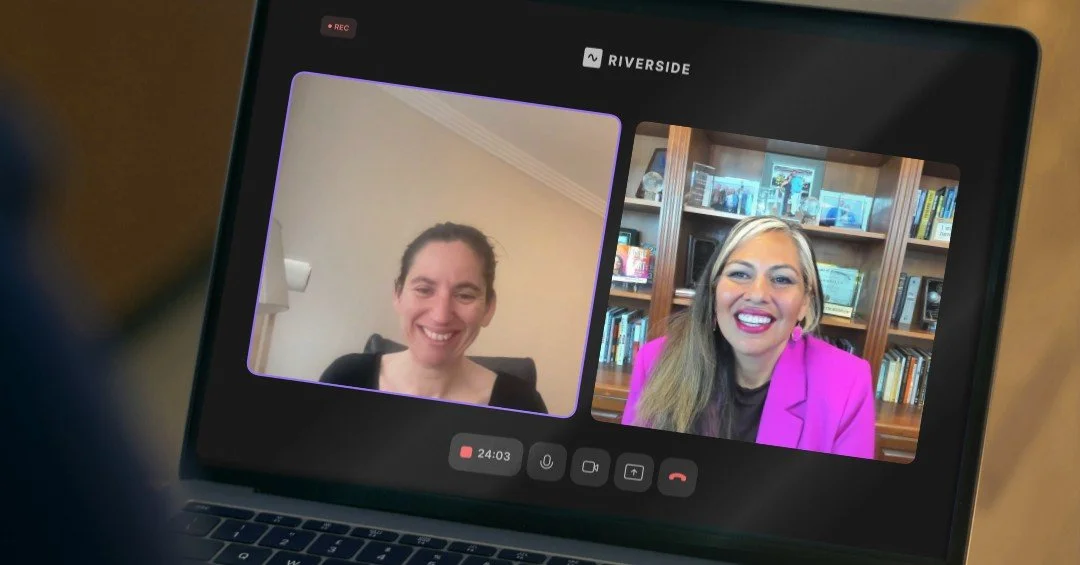
Listen to the entire episode on this website, on Spotify, or on most major podcast platforms.
Show Notesn - Lead From the Heart: Burnout, Values, and the BEAT Method with Hanna Bauer
What if the key to sustainable leadership has been inside you all along?
In this conversation, Melanie Suzanne Wilson sits down with Hanna Bauer — founder of Heartnomics and a globally recognised leadership transformation specialist — to explore what it really means to lead with alignment, values, and humanity. Hanna shares a deeply personal story of surviving severe heart disease from childhood, navigating failed surgeries, and building a framework for purpose-driven leadership forged from lived experience rather than theory.
This is a conversation about more than burnout. It's about the art of receiving, knowing which season you're in, and understanding that the very things you've tried to hide might be your greatest gift.
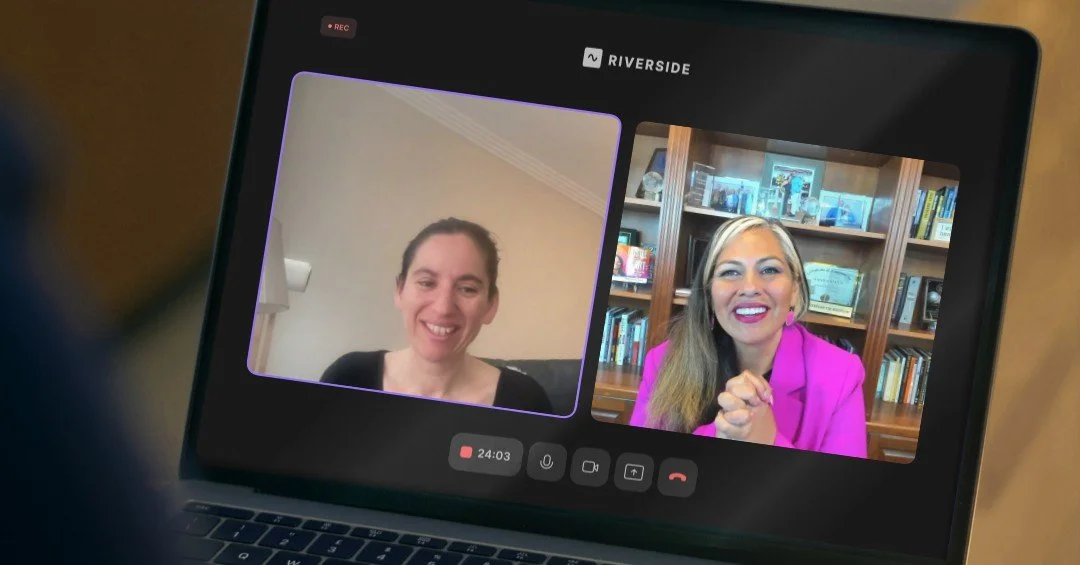
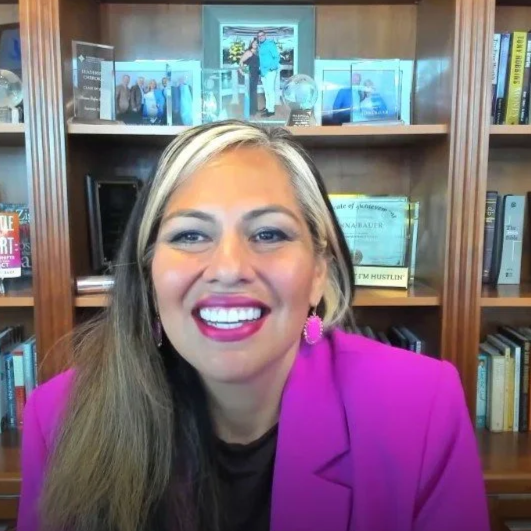
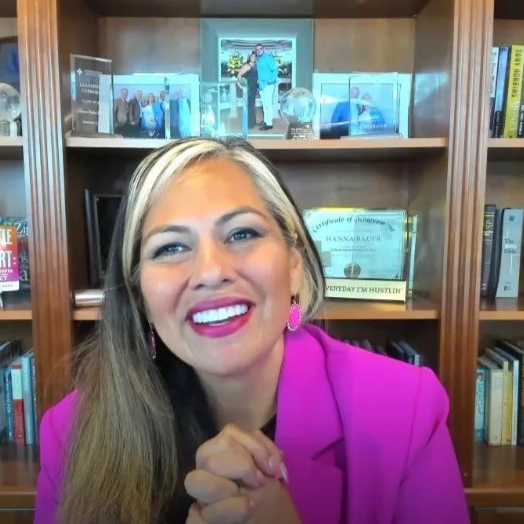
About Hanna Bauer
Hanna Bauer is the founder and CEO of HEARTnomics Enterprises LLC — a professional training, coaching, and consulting firm built around the belief that people are the heart of any organisation. Her proprietary Heartnomics methodology draws on decades of leadership experience and certifications across Baldrige Excellence Performance, Zig Ziglar Legacy, Maxwell Leadership, DISC, Six Sigma, and Lean Six Sigma, among others.
Hanna is a Faculty Member at Maxwell Leadership, a DISC Certified Trainer and Consultant, and a long-standing member of The John Maxwell Team — one of a global network spanning more than 146 countries. She has served as an Executive Leadership Facilitator with New Horizons Computer Learning Centers and has held senior leadership roles across a range of industries, including nine years as President and CEO of American Book Company, where she led the business to become debt-free and achieve double-digit profit growth in a declining market.
Beyond her corporate career, Hanna serves as Chair of the Board of Directors of Ser Familia, Inc. — the largest Latino-serving non-profit organisation in the southeastern United States, delivering accredited mental health services and nationally recognised family intervention programs. She is also a founding member of Acworth Women's Center and brings a lifelong commitment to community, family wellbeing, and servant leadership.
Hanna holds a Bachelor of Arts in Psychology from Georgia State University, where she was President of the Senate in Student Government, co-founded a Toastmasters chapter, and was inducted into Omicron Delta Kappa leadership honour society.
Her approach to leadership is forged from lived experience — including years of severe heart disease from childhood, multiple failed surgeries, and a medical breakthrough at 14 that later became the foundation for everything she teaches. Today, Hanna coaches leaders and organisations worldwide through the HEART Framework: Hope, Empowerment, Accountability, Results, and Trust.
Hanna is based in the Atlanta, Georgia area and speaks internationally on leadership, burnout prevention, values alignment, and purpose-driven culture.
🌐 heartnomics.com 🔗 LinkedIn: Hanna Bauer
Show Notes
Lead From the Heart: Burnout, Values, and the BEAT Method with Hanna Bauer
What if the key to sustainable leadership has been inside you all along?
In this conversation, Melanie Suzanne Wilson sits down with Hanna Bauer — founder of Heartnomics and a globally recognised leadership transformation specialist — to explore what it really means to lead with alignment, values, and humanity. Hanna shares a deeply personal story of surviving severe heart disease from childhood, navigating failed surgeries, and building a framework for purpose-driven leadership forged from lived experience rather than theory.
This is a conversation about more than burnout. It's about the art of receiving, knowing which season you're in, and understanding that the very things you've tried to hide might be your greatest gift.
Episode Breakdown
What this episode covers:
What Hanna does through Heartnomics and why she built her practice around the alignment of people, purpose, and performanceThe reality of burnout — including the statistic that 77% of professionals experience it — and why 56% of leaders say they're not confident in their decision-making as a resultHow Hanna's childhood experience with severe heart disease mirrors the symptoms of burnout, and the wake-up call that reconnected her to her own valuesWhy starting something new almost always involves a survival phase — and how to recognise when that phase has run its courseThe trap of hustle addiction and why some personality types are more susceptible to it than othersThe concept of receiving: learning to acknowledge progress, celebrate small wins, and find fulfilment in the season you're actually inWhy problems at every level of growth are actually signals — not setbacks — and what separates leaders who move through them from those who don'tThe BEAT Method — Believe, Engage, Act, Transform — and how Hanna developed it from her hospital bed as a teenagerHanna's journey from hiding her scars and her story to becoming a medical breakthrough and building an entire business around the very thing she once tried to buryThe HEART Framework: Hope, Empowerment, Accountability, Results, and Trust — and why these values are the foundation of sustainable leadership
Key Insights
On burnout and leadership: Hanna speaks to the cost of burnout on decision-making, noting that exhausted leaders are less able to make the calls their organisations are counting on them to make — and that the solution isn't more willpower, but better alignment.
On survival mode and new beginnings: Hanna describes how any new venture naturally places its founder in survival mode, and that this phase requires extra care rather than extra pressure. Knowing where a milestone is — having an end point in sight — makes the early intensity far more sustainable.
On choosing your pain: For those who find reasons to stay small or stay still, Hanna offers a direct reframe: there is pain in staying where you are, and pain in moving forward. Either way, it costs something. The question is which pain is worth choosing.
On the BEAT Method: Developed through Hanna's experience as a young patient navigating uncertainty and physical limitation, the BEAT Method offers a simple, grounded framework for moving through overwhelm — Believe (what's here now), Engage (with what you have), Act (take the smallest action available), Transform (check whether this aligns with the belief you're building toward).
On receiving: Hanna distinguishes between gratitude as a concept and the actual practice of receiving — noticing the progress you've made, acknowledging that the frustrations of today are often the dreams of your past self, and learning to celebrate what exists before reaching for what's next.
On scars and story: Hanna spent years hiding her heart surgery scar and downplaying her medical history. It wasn't until the hospital invited her to be part of a documentary — and later, a 100-year anniversary feature — that she began to see her story not as something to be ashamed of, but as the very foundation of her purpose.
Resources & Links
🌐 Heartnomics website: heartnomics.com🔗 Connect with Hanna on LinkedIn: Hanna Bauer💡 Free heart alignment assessment: available via heartnomics.com🌿 Join The Motivate Collective community: www.motivatecollective.com
Transcript
Melanie Suzanne Wilson (00:00.206)
Hannah, welcome to the show.
Hanna Bauer (00:04.769)
Thank you so much, Melanie. Pleasure to be here.
Melanie Suzanne Wilson (00:08.736)
It is great to bring you on to the show and to have you on the podcast.
Hannah, you're in Atlanta. What is happening in your world right now?
Hanna Bauer (00:19.735)
Well, the season's changing. So we're starting to get glimpses of summer. We are known for Hotlanta. So yeah, we're getting ready for that. We're also getting ready to receive a lot of visitors here. Just mentioned it, like we have the FIFA World Cup is gonna be here next month. So there's a lot of excitement going around. There's a lot of things with entrepreneurship, and marketplace and headquarters. So, isn't fun, is it fun seeing the business community mobilised and also just the people ready to receive the world coming over here in a bit.
Melanie Suzanne Wilson (00:54.978)
That's exciting connecting with people from everywhere. And I'm so sorry, there's a lot of noise. I'm going to close a window for one second. It's reinterrupting this whole thing.
Hanna Bauer (00:58.858)
Yes.
Hanna Bauer (01:05.323)
No worries.
Melanie Suzanne Wilson (01:09.752)
Closed.
Melanie Suzanne Wilson (01:20.406)
That's a lot better.
I'll edit that out.
So you're getting people coming over to your area from anywhere in the world, but what so what's happening with you right now? And the question I normally ask I'll start with the question I always ask my guests, how do you explain to everybody what exactly you do?
Hanna Bauer (01:32.79)
Yes.
Hanna Bauer (01:45.473)
Ooh, okay, that's always a hard one because people don't really understand. Like, well, what do you do? What do you do? But what's going on with me?
I also get ready to receive people, and I’ll be travelling. I'm actually getting ready to go internationally to go speak at a conference in Canada. So it will be my one my first times going there. And I'm embracing, I don't know how cold it is, but I hear some things that it might be a bit colder than our hot Lana. So I'm embracing for that. I'm not a fan of cold. So I hope people will keep me warm the hospitality. So I'm looking for that. But getting ready for it, as far at what I what I'm doing, getting continuing to expand. and for what I do with harmonics, really the simplest way I can say it is transformation through love and excellence. And it is for those leaders, the people that don't just want to do the thing, but want to do the right thing.
And do it right. So that means it's gonna take understanding what right is for you, that that purpose, you know, doing it right, you know, doing it right for the people, the ethics that go along with that, the values that go with it, as well, the ones that we live by, but also the alignment with not only the people, the purpose, but really the performance. Because we're doing something, right? That's the part we want to be able to do something and do something together. So that's what I do. I'll bring in that alignment with people, purpose and performance as well.
Melanie Suzanne Wilson (03:11.224)
The performance is that about the results or how people are showing up?
Hanna Bauer (03:17.461)
Well, the results are gonna be in line with how people are showing up. But I also understand that a lot of people say whatever it takes, right? So that may maybe people would do whatever it takes, but the question also that comes up with that is the sustainability. So when you're talking about sustainability, there are those short-term and long-term goals, right? And what I'm seeing again and again is that it a lot of the the short terms end up being long terms and it's not sustainable, and it's coming at a very high cost in health. is coming at cost even in the health of our teams, the cultures that we have, and then really, in a sense, wanting to dismiss our humanity, the very humanity that brings us together, as far as, like you know, knowing the empathy, being able to hang out with each other, really enjoying life. And that is one of the main things that really the the alignment is able to help bring to you: where you have that fulfilment and not reduce the cost and still do the thing, still perform, but don't let it take everything.
Melanie Suzanne Wilson (04:27.478)
Absolutely. Are you talking about burnout?
Hanna Bauer (04:28.033)
Well, yes.
Yes, 100%. It is that burnout. I came close to that, actually feeling the burnout. And it was when I had an interesting an interesting event. I had been the recipient of an innovative heart surgery, and I received a call from the children's health hospital because they wanted to do a 20-year reunion from this surgery. Now I didn't know.
The impact because I was a kid. That surgery happened when I was 14. And when I'm going there, I'm listening. I'm, you know, I they like I got to go with the doctor, I got to see my the nurse that admitted me there, my actual nurse, you know, got to go into the the place. And in all that, the interview is asking me, you know, well, what was I feeling? The symptoms, you know, the you know, what were you going through? What was the relief that I got from this surgery?
And I remembered explaining all the things, and then, as I reflected back, I realised, my gosh, I'm kind of feeling that now. But this time I don't have heart disease anymore. I mean, we're actually talking about the cure, which it did work and it wasn't lethal. So the difference at that moment and what came as an aha moment to me, as I'm going through, in a sense, getting a lesson from the past, is that you can definitely experience the symptoms of heart disease.
Because having been a patient with a severe heart problem, I was feeling the same symptoms, and I did not realise it came from exhaustion and burnout. So that was a wake-up moment for me, in essence, like the very cure that came to that we were looking at the heart ablation as we were reliving everything was also a Hannah.
Hanna Bauer (06:24.651)
Let's take a look what's going on here because some things are sounding a little bit familiar. You know, the burnout is something that we, a lot of times we like, it'll get better, or you know, we're gonna wait until next time, or this can wait. And it's something that it could definitely sneak up on you. And next thing you know, you're just tired and exhausted, and then we live by energy drinks, coffee.
Maybe we might even start going and getting some other things, you know? So it's definitely a problem. 77% of professionals do experience burnout. What does that burnout do for leaders? It means also they're not able to make the decisions that we're counting on leaders to make. Actually, 56% of leaders say they're not confident in decision-making. The reason being they're too tired. They're burned out.
Melanie Suzanne Wilson (07:25.602)
The exhaustion. It is so real. And this is resonating so much with me because, growing this podcast, I can share with you that the show started in August last year, and it takes effort when you're starting something new. I'm curious to know have you seen anyone creating something new and not getting burned out? Or is it
Hanna Bauer (07:39.991)
Mm.
Melanie Suzanne Wilson (07:52.702)
Is it a side effect of those early days, something that we don't have to maintain forever, the burnout?
Hanna Bauer (08:00.855)
Absolutely. I mean, anything at the beginning, you're gonna be in survival mode. I mean, you're getting something started; it is new. I mean, if you look at a newborn, right? Like they need extra care. The problem is when you're starting, even like something new, it's not having that extra care readily available. So you have to give yourself that extra care in those times. I think one of the things that gets exhausting about stuff is just not knowing when is this gonna end or when is a milestone that I know I can slow down at this point. And it's a lot of times our own ambition in a sense or like not knowing what even enough is enough, or what level, or what, you know, how do I know I am a capacity? How do I know I am at, you know, my at my top? Or is this a will problem or is it a capability problem? Maybe I don't have the skill. A lot of times, when we are starting something new, it's not just implementing the skills that we have. There's a lot of stuff that we don't know that until you start implementing, you realise, now I need to know. So there's quite a bit of skill acquisition that's happening at the same time as execution of what you do know. And that is a part where it gets exhausting exhausting in a sense. Again, if you're doing it by yourself, the blind spots will remain longer. They'll linger way longer, which is where the tendency to stay in that survival happens for a lot longer period of time. So I would say yes, it's part it when anything worth anything is uphill, it just is. I mean, if it was easy, if it was not gonna require hard work, you know, then everyone will be doing it, and not everybody's doing what's necessary, right? I mean, there's certain things, so it is gonna take extra effort. The deal is when you're doing that extra effort, is that you also have to take care of the asset, and who's the asset right here?
Hanna Bauer (09:53.047)
This is the main asset because if you're not healthy, you're not well, you cannot get what you don't have. You won't have the energy, you won't have the passion, you won't have the vision. That happens to us all. The key is to be aware and to recognise it and be able to have that leadership to not only listen to it, but act on it. That's where it really comes in: you really are in control of really the the things that you internally, but understanding that I for anyone who's ever tried to do a plan, a lot of things happen that are unplanned, and they're gonna like take completely the the floor from under you. And that's something that, being aware that those are things that are gonna happen, but also having the backup in people and things that you do to keep yourself well and giving it milestones and time.
You gotta have those.
Melanie Suzanne Wilson (10:49.464)
Give it time.
Hanna Bauer (10:51.114)
Yes.
Melanie Suzanne Wilson (10:52.908)
Yes.
This is fascinating. It takes a phase early on when doing something new of putting extra energy in. One thing stood out to me in what you said, in particular. One thing stood out. You said that we often don't know when the endpoint is for our extra energy that we have to invest. And that's significant because from
Hanna Bauer (11:19.575)
Mm-hmm.
Melanie Suzanne Wilson (11:23.25)
A marketing psychological perspective, we know that if people are waiting for something, if they know how long it's going to be, then they cope more. If they don't know how long it's going to be, then we don't cope. So part of it could be that, and we keep holding on, holding on and holding on. But
Hanna Bauer (11:37.878)
Yeah.
Hanna Bauer (11:45.3)
Delayed hope, yeah. Makes says hope delayed makes a heart sick.
Melanie Suzanne Wilson (11:47.808)
Hold on the heart.
Melanie Suzanne Wilson (11:52.152)
Do you think people get a bit addicted to the hustle anyway, though?
Hanna Bauer (11:55.894)
Yes, absolutely. I mean, especially different types of personalities, I'm more addicted to the hustle than others. You have, you know, you've heard about a personality, right? You've heard about also even communication. Someone who is very direct, who's very extroverted, is gonna be more into, like, Hey, do do do do do very task-oriented. And that goes back to, like, hey, I feel well, I feel on purpose on that. But here's the deal, it's not only necessary to perform in the purpose, it's also just as necessary to receive the fulfilment from your purpose. And that is where people don't take the time, is in why sometimes we get stuck on this never-ending wheel because we haven't learned to receive the fulfilment that comes from the purpose, from the activity that we not only do, but who we do it with and what we do it for.
Melanie Suzanne Wilson (12:55.342)
That is what everybody needs to hear. This is so crucial. I'm so glad you are saying this because we become martyrs or we become sacrificial. There's so much ideology behind wanting to give everything of ourselves until there's nothing left. But then, if there's nothing left, how can we keep producing and creating? We can't.
Hanna Bauer (12:55.65)
That is what species.
Hanna Bauer (13:16.321)
Right.
Hanna Bauer (13:23.776)
I tried it. It doesn't work. I have five kids. So on top of being an entrepreneur, yeah. it when it comes to motherhood for those of you that, you know, are parents or have had somebody you've had to take care of, even a pet, you know, is that really not doing something for you. and you really constantly giving, you know, even on your best days or all this stuff, you're gonna have worse days, it just feels at times exhausting.
Even for the very beings that you know that you're going to, that you're a purpose in equipped to take care of. And that is why it's so necessary. I mean, that's it takes leadership to know yourself. It takes leadership to take time to get reacquainted with yourself. Seasons change, times change, everything. There's a lot of things you have learned this year, this since yesterday, even we're we're like an information age. And we do need to take a time to where we're sitting down, we're processing, we're looking at it, and we're seeing, well, what is relevant for me at this time? and that is that is huge. What I've seen a lot of people really leaders, not taking the time to reflect and look into their purpose, and also in relation to what's going on right now. Where am I in my life? Because some things that were maybe the hustle wasn't, I'm telling you, yeah, when my kids were all little, and they were one hundred per cent depending on me, I it was hustle. I mean it, I did what it took. I mean, I had to take care of and make sure they were fed, and I could five buy the food that would feed them. So yeah, there was a there's a season for that. But again, it's a season, and knowing what season you're in is key.
Melanie Suzanne Wilson (15:14.594)
Know which season you are in. This is the lesson. It's this is comforting because it's comforting because if someone is in that season, we know that there will be a time when it concludes and there'll be a time for a new season. What does receiving look like?
Hanna Bauer (15:18.656)
Mm-hmm.
Melanie Suzanne Wilson (15:44.962)
I'm wondering what receiving looks like. We know that we need to give ourselves a bit of time and breathing space. But for founders, for anyone who is creating a business from scratch, anything like that, is there also a sense of return on investment where we can say, I have invested so much of my time, my energy, my focus?
And now this has to get a return to be sustainable. Is that a part of it?
Hanna Bauer (16:19.776)
Yeah, 100%. So sometimes, the way that you look at it is with kind of like the frustrations. What's frustrating you now? And then just take a moment, even like, okay, what is the frustration that you have now versus the frustration you had maybe last year? Or frustration from five years ago, ten years ago, because sometimes we don't see our progress. But you know, like we we we get we get like frustrated, like for example, traffic and it's like so bad. But you remember there was a time where you're frustrated because you born old enough to drive. So I mean, you think about that is like, you know, where am I in the season? So it's still a frustration, but look at where the frustration is coming in. It's like, hey, you get to drive now. You get to drive whenever you want. You get to be able to go wherever you want. There was a time in your life where you couldn't. You depended on everybody else to drive you. And although you wanted it, there was nothing anybody could do because you weren't of age. So even in just being an aware of those things. Like, you know, there's some things that right now, it's like, you like that driving, yeah, I wanted this. I wanted this so bad, and now I'm so upset at the traffic. But listen, again, well, you're not believing for that car. Isn't that the fact that you get to have a car or that you get to have some sort of transportation system that you can jump on and be able to get somewhere? You know, those things. So I think receiving is seeing that. It's even understanding in my frustrations, there was a time where I wished, or I hoped.
That I would have this very thing that now is causing me some frustration. Right. I think that goes a lot with the owners and founders. Like now it's not just, hey, I remember the days when it just used to be me and maybe a volunteer and now I have twenty-five people or fifty people. So now I have HR problems. I have many people that are getting their feelings hurt and I have them in my office. Like, my gosh, you know, that's where all my day went. But at the same time, it's also in the receiving is I get to have employees.
Did I back five years ago? Was just me and this other person. Did I ever think I could even have more than one? More than two could I did I even think I could get paid when I followed this? So the the receiving aspect is being aware of those steps. And we tend to easily forget, which is also is it's a good thing, right? And forgiveness. I mean, that's why we can we can really forgive and then not really make it dictate our lives.
Hanna Bauer (18:45.727)
And we forgive the bad things, but we also tend to forgive or dismiss the good things in the sense like dismissing is different than really being able to acknowledge. So I would say for those leaders, for learning the art of receiving, it does take to pause, it does take even looking at that gratitude of Hey, even those things that are causing me some frustration now. My goodness, like you know, like yeah, my kids sometimes frustrated me, but there was a time when I won't I could do is hope to have a kid. So you know like that was that is one of the things. It's like under learning to receive where I am, also in the season that I am. There is things that I'm receiving at this point that are really fulfilling. If I don't take the time to understand what brings me joy, what brings me that peace.
What brings me those moments of like, hey, like I just wanna be able to not only sometimes take a breath, but also go take over the world. You know, what are those moments? Sometimes we get stuck in just knowing what's not right, but we really don't know what's well. In receiving is understanding really what is well for me. And that also goes back to like, well, what is enough? I understand enough doesn't mean I have to settle.
But what is it that I would say what's a good job, and, you know, how do I know today was a win? In that sense and can receive even if it wasn't perfect, but I made progress and celebrating that progress.
Melanie Suzanne Wilson (20:27.478)
It's about being grateful for the problems that are actually beneficial. That's that's amazing. I I know that we all need to be reminded of that. Because a lot of people are saying now that when you grow you simply have bigger problems. But you think so? No?
Hanna Bauer (20:47.305)
No, no, no. I mean like, they're they're bigger problems in the sense at the time compared to like yeah, when my kids are fighting over a toy, it's like, that's not a big deal. But it's a big deal to them. I mean, like that was like the whole thing. So I think, yeah, they're, in a sense, they're bigger, but it's because of the perspective, maybe the impact. but at the end of the day, when you're wherever you're at.
It's gonna feel like when it's a problem to you, it's gonna feel like it's the end of the world to that, you know, even on the stage. But yes, just like there's bigger problems, and you can say that, there's also bigger rewards, there's bigger impact. and really the problems are opportunities, right? I mean, you think about it, they're really there's signals for a leader that means like go. That's your signal to we need you.
So it's a it's a call out.
Melanie Suzanne Wilson (21:48.674)
It's a callout. The problems are opportunities. Okay. Have you seen anyone being reluctant to scale or grow and needing encouragement to dive in, take the next step, maybe show up more publicly, maybe publish more? What do you say to those who have been finding excuses or reasons or justifications to stay minimal, stay small and and you know that they need to progress further?
Hanna Bauer (22:29.859)
Well, I think I mean it starts with them, right? I mean, like if you're gonna find reasons not to, you will find reasons to not to. And they're probably very valid reasons because they're valid reasons to you. So whatever you work works. That means you have to work it. It can be working in to to stay where you're at, or you can work it to get out of where you're at. There is pain, right?
There's the pain of staying where you're at. There's the pain of getting out. Choose your pain. Either way, it's going to hurt. It's going to hurt to say goodbye to those things that you maybe thought once you were gonna accomplish, and now, for whatever reason, you feel that you can't. And it's gonna hurt to go after that dream, that very same dream, when maybe you have nobody on your side, and it's just you in a dream, and it's gonna hurt. Either one is gonna hurt. Choose your hurt, is what I would say. It's not gonna hurt any less. So if we're talking about we get one shot at this, one shot at life, right? I mean, that's one thing, like you can get everything else back. You can get time back, you can get things back, you can get all things back. What you cannot get back is your time.
That is why so much value is put in your time. So with the time that you have here, the time that you have been entrusted, the time that you have been given to do, and you're gonna go through pain, which all we are, choose your pain.
Just which one? That would say that that would be one of those. And then the other part is, I mean I I can't help but recall, for example, like I said, I went through a very severe heart disease. And what did that look like? And men from the age of four. I wasn't able to breathe. It really felt like my hell, my head was being held underwater, not knowing when I was gonna come out. So as a four-year-old, five-year-old, six-year-old, you can imagine not only the trauma of just breathing, we're talking about just vital.
Hanna Bauer (24:41.64)
part and the pain that it would cause for my heart to beat. We all need our heart to beat. So couldn't be afraid or painful of very thing I needed to be alive. And that was my childhood. That was not only my childhood, but that was also my preteen years, all the way to my teenage years. I didn't know how long it was going to last. I didn't know, you know, what triggered it.
There was no specific trigger; there was a lot of uncertainty. So, what would happen? The advice I would have, rightfully so, is don't do anything. Stay flat. The moment that you know you sit up, your heart goes fast. The moment you stand up, your heart goes faster. Forget walking. So, as a kid, I was consistently told not to do many things, and that was to save my life.
Now you move forward, you know, like growing up, and I had the perfect reason for why I should stay sitting down, for why I should stay laying down. As a matter of fact, there were many times where I was literally tied to the bed because to move could cause a heart failure. I went through two heart attacks. Yes, because if you move, again, I'm a kid, any sudden moves could.
Melanie Suzanne Wilson (25:57.164)
You were tied You were tied to a bed.
Hanna Bauer (26:09.164)
Suddenly triggered this very lethal rhythms. So it wasn't because, like, we don't want you to do anything. It's because they were trying to save my life. So it wasn't it, it was things that we even get advice. So what I'm trying to get to is like being older, even being at that time, I had every reason why I should stay laying down. I even had the reason in my formative years to why I shouldn't do certain things. And I had a lot of very loving people that would tell me why I didn't even need to worry about doing those bigger things. Yet I can tell you, and again, it was with good intention because I'm also between life and death. So it wasn't like we wasn't want you to be bigger. No. It's okay. You don't have to go to school right now because you can't breathe. So you can't stay sitting down; you're gonna pass out. You know, it's just too much of a liability. Again, I say that because there were many times in my life where I was giving every reason, I had every excuse not to move forward. I would have a group of people trying to save me that for my own safety would say no. And I would have to again, in that sense, it was a decision. I went from that to being able to go to the university, to being able to own my business, to being able to train leaders worldwide, to train leaders globally. And I say that because it really started as a decision in my hospital bed of making every little movement count. Understanding that every smallest action would be the gr would be the greatest of intention any day. And even though I was bound by my circumstances
Any small action, any way that I could engage with my environment, any way that I could control my belief, was gonna move me that much forward to a future I would hope I would have one day.
Melanie Suzanne Wilson (28:17.548)
This is changing everything. This is beyond inspirational. I'm so grateful that you are sharing your experience because we need to hear that, although most people have not had that sort of heart condition, we all have a moment where we need to pick up our mat or at least get up and walk. I can share with you that a couple of months ago, I I fainted.
Hanna Bauer (28:33.669)
Mm-hmm.
Hanna Bauer (28:39.248)
Yes.
Melanie Suzanne Wilson (28:47.592)
When I was recording with someone on the podcast. Yeah. And I just felt embarrassed. I hadn't fainted in more than a decade. I have been recording since then, but for a while I didn't want to record. And then the next time there were some life setbacks, I had moments when I didn't want to record. I only rescheduled when I really couldn't
Hanna Bauer (28:50.615)
wow.
Hanna Bauer (29:16.251)
Yeah.
Melanie Suzanne Wilson (29:17.368)
But there's this inner feeling. I don't know if you've seen people you're guiding and leading, of they're just feeling so reluctant to do the work, and they're having to convince themselves to keep showing up. So that happens a lot. You do?
Hanna Bauer (29:28.389)
Yeah. yeah. I mean
Yeah. I think we've all gone through that at some point. But yeah, but go ahead. Yeah. Absolutely.
Melanie Suzanne Wilson (29:42.048)
So when people are feeling that reluctance, is there any secret source in that, or do you just get up and do it anyway? Do people need to stop waiting to feel ready?
Hanna Bauer (29:55.163)
So again, we don't learn from experience; we learn from reviewed experience. And that opportunity I got, like I said, when I had when I was looking at the interview, and I was even back in the room and revisiting what had happened, right? Like this, what had happened was this part. And I realised that there was a pattern of how I made it through, right? Because as a kid, I don't understand what's going on.
I mean, as a kid, I didn't understand the impact of the surgery I got. I not to the level it did. I didn't really even understand why this was happening, right? So it is easy like to ask, like, hey, everybody else gets to do this. How come I don't? Am I ever going to? And it wasn't something that even my caretakers could say without flat out lie, yes, of course you will, one day you will. Because we there really was no cure insight.
So I have to go back into that. What did I do to go through those moments? Like I said, I started observing a lot. And I observed what the things that the monitor, not my heart monitor, couldn't tell me, and that was a lot of the sentiment around. I could observe when people were hopeful. I could observe when people were integrous. I could observe when people, you know, inspired and gave trust.
Because there was a lot of trust in my story, I needed to give. and understood what also results. Like, even though we were gonna try something and it was a risk, we really was kind of like keep the eye on the ball, right? Keep the eye on the results and regardless of what happened. So I understood that what I was really looking at were values. So for me, even as a young age, not understanding everything, I could understand values.
And I could start seeing the values that people led by, even in times when it was very hard. Yes, it was hard for me to go through surgeries that failed, but I know it was just as hard for the doctor who had to tell me it had failed. For the doctor that had to tell my parents that there wasn't something else, but yet the value that he had of hope to continue looking for that cure, which eventually led to finding a cure.
Hanna Bauer (32:11.917)
So there was a value I got to live in my body. Outside of that, seeing the values and great leaders, which is what I have continued to see, is that sustainability really comes from living with the values, being true, not only committing to values, but living out those values. For me, I call it the heart framework. So that is hope, empowerment, accountability, results, and trust.
And those were the values that I learned, and I have seen consistently show up with great leaders. But outside of that, it's like, okay, so I have these values, but how do I grow in those values? And for those moments where things have been flat, moments where I feel like everything just overwhelmed me. Like life happens, I have to go back to like this quick little method I learned even at the hospital bed, and that's called beat, just like the heartbeat.
And it's called believe, is’s for believe to be what's here. I can't control anything, but I can't control what's here, what's in my head, what's in my thoughts. Engage is I don't need one more thing, but I do need to engage with what I have. So understanding that freed me from this anxiety of, like, what else I need to get to let me take an inventory internally, around me, whatever it was, engage with it.
Just engage with the environment, engage with the people I had, engage with whoever was available, with whatever was available. So engaged. So believe, engage, then act. Smallness of action. Something I learned in the hospital was that, you know, sitting up for 10 minutes was a sufficient reason to celebrate. Being able to stand up on my own and walk around one time around the hall and not have a heart attack was a big win. So
Those were celebrations. Those were things that maybe at one point, when I wasn't doing well, it was a dream to walk around the hallway. But learning to celebrate those now, that's not all I did. Later on, I said, I have a business, I go to university. But learning to celebrate the small actions. So taking the smallest of actions, whatever that is, and whatever that looks like for you today, is going to impact that more of
Hanna Bauer (34:34.555)
Tomorrow, right? So the smallest of actions. So that's act for beat and then transform. Is the transformation what I'm experiencing right now? Does it align with the belief I want? Is this a transformation that I'm looking for? Is this taking me any closer? So that way I can also see my progress. So believe, engage, act, and transform. The beat method.
Melanie Suzanne Wilson (34:58.402)
beat and part of the beat is connecting with what is in us and what is around us instead of looking for more and more, connect with what already is.
Hanna Bauer (35:10.287)
Yes, that's right. Engage.
Melanie Suzanne Wilson (35:14.848)
Engage, engage with what there is. I appreciate that part of your acronyms so much because we're in a culture where we are taught to always want more or look for the next thing, what's happening next, instead of what's here now.
Hanna Bauer (35:26.347)
Mm.
Hanna Bauer (35:33.283)
Yeah. What do I have? You know, be grateful for what I have. What, what, what do I have, and what can I give away?
Melanie Suzanne Wilson (35:40.342)
Absolutely. And you mentioned the failed surgeries. That's opening my eyes so much. Was that a few of them? Did you how did you feel going through were you recovering from these surgeries that then didn't work? Were you physically recovering? I mean, how old were you when you were having those early surgeries?
Hanna Bauer (36:00.806)
So there was a lot of intervention in my story, right? And a lot of them came with pharmaceuticals, drugs, things like that, right? Things to do. The more in invasive of those interventions was at the time a heart cat.
And also an open heart surgery. Open heart surgery being like the most invasive, kind of like the thing that everybody tries to avoid, right? Like, we don't want to have heart surgery, especially not when you're a kid. So when those opportunities, or you know, like they were presented, it was already scary, right? I mean, a hard cat was scary in itself, and especially at the time we're talking about, the late eighties. there's not the technology that's that we have today, it's not the the precision was a big question.
The risks, again, you're dealing with the heart. And one of the things that they do as in with most surgeries is like they immediately test you to see if your heart would go into the abnormal rhythms or the rhythms, or did the if the we would know that the surgery worked if the heart wouldn't go into that tachycardia for a sustained amount of time or if it wouldn't go into the abnormal heart rhythms. So that's how it was proven. Basically, you stress it, you stress the heart right away and see how it responds. The same way that anybody would take a stress test. Well, not even 24 hours into that, they would do the stress test and heart CAT fail. And open heart now as a 12 year old being having been cut, that stress test is done, and that also failed. So now going through the same disease, but now I'm cut up essentially, my body won't be the same and the pain that comes with that, all the limitations that came with that, but to not get to the goal, to not get to what we would consider success. Well, for me as a kid, it was very hard. It was heartbreaking, especially because there was not, like, okay, it's okay, we're gonna try this next. There was no next. The next was a heart transplant. And what did a heart transplant mean for me?
Hanna Bauer (38:13.142)
It meant that at maximum ten years if everything went well. And as long as there was no i if my body took everything. So, plus you had to have a donor, right? So it wasn't something that necessarily, like, yes, okay, well, let's do that tomorrow. So the relationship with that, it became not a healthy relationship even as a kid. I did not have a healthy relationship with failure.
I had the pain, literally the pain of failure, the pain of lost hope. And it's something I really had to work on a lot, even as I got older. Because it is hard. Now I had the heart ablation. That one didn't fail. That was when I was 14. But I didn't take it as the success that it really was because I was still looking so much every today I would look at my chest, I would see failure.
So it was a time where it really probably took about, yeah, over 20 years for me to get into a relationship where I learned to view up my scar not as that moment when, do you remember a moment when this didn't work, and it failed? But as a moment when look at what it what it took and the beauty that it took to have progress, to have this innovative surgery that not only saved me, but
At the time when they told me the documentary that they did, it had saved three thousand other kids. And if that meant me having a scar, that wasn't a sign of failure. That was actually a sign of progress.
Melanie Suzanne Wilson (39:52.962)
You are teaching us to literally relate to our scars. I can only imagine. You are describing something that a lot of people could only imagine, and you are a teenager. I mean, it's hard enough being a teenager at all. And then to be feeling like that I the only way that I can try to put myself in your shoes a tiny bit is that I had operations when I was really tiny.
But it wasn't like what you are describing. However, I always had this relationship to scars. And these days, I don't think people even notice my scars. And that's the other thing. Did you did you have to journey to identify as something beyond your scars and your survival? You are literally just surviving again and again.
Hanna Bauer (40:47.724)
Yeah, no, I mean, I would do everything I could to hide the scar because as soon as somebody would see it, they're like, Ooh, what's that? It wasn't like, Wow, how cool you have a scar. No, it was more like you may want to cover that up. Or you've got something on your chest. It's like, yeah, it's my scar. You know, it's like, so it was it let's say, the reception of many people, especially when you're a kid, by other kids, was not one that, like, how you know, that's really neat, it was almost like, really received with disgust, especially when it was brand new. So I had to deal a lot with that. I mean, it's just what has happened, and people will say, you know, what happened there? You know, what was that? So, the way that I immediately had learned to live with my scar, in a sense, I wanted to hide my entire heart story.
I really put it under the rug, and I honestly would not speak. I was kind of like a trivial thing. Yeah, yeah, yeah. There was a heart thing that happened. You know, but I'm all good now. I'm all good. I promise you I'm fine. Don't worry about it. Did you have any heart at heart promise? Yeah, I had two heart attacks. What? No, no, no, no. It's okay. I'm good now. So I'm consistently what I did in my relationship with all this was to like avoidance.
Let me hide my scar. Let me hide my story. Because you what we're not gonna do here. So you're not gonna look at me being weak. That's not what we're gonna do. And then I had the opportunity to go on camera, and out of all things, I gotta talk about my heart. And I'm like, wow, well, how cool, how neat is this? How interesting. But that's really I honestly, when I started seeing that and really get away from myself is…
Melanie Suzanne Wilson (42:38.4)
So, you had an opportunity to talk on camera. When did you start sharing your story, and what led you to share your truths and share your reality?
Hanna Bauer (42:39.483)
You there. How is it? Are you there? Okay.
Hanna Bauer (42:56.849)
Well, it was then. It was that. It's like, wow, if they if the hospital thinks it's that big of a deal, it probably is. So let me take a look into it. And then I really realised it wasn't just a twenty-year anniversary, but later on they featured me as part with the one hundred-year anniversary for the hospital. And that really meant something to me. It's like, wow, I got to be a part of history. I actually became the medical breakthrough for nineteen ninety two. And it wasn't something that in any way, shape or form I should be ashamed of. On the contrary, this is good. This is a win. But I also needed that perspective. You know, and I don't, and I understand not everybody gets a chance to do that. Not everybody gets a chance to like look at like look at a a painful part and say, Hey, it's okay. But I think we all do get that chance to have a different perspective, to ask people that are around us to give us a perspective and be open to that. So that is one of the things that that I would definitely share in and and make sure that we are that's why we need people that we are getting different perspectives. I became strong, actually, the more I talked about it, and I didn't realise how much it was hurting me to try to keep this hidden from everybody else. I'm like, well, why am I even doing this? That takes energy. That just takes energy. Just be who you are. And when I embraced my scar, I really was embracing me. When I embraced my story, I was really embracing for my purpose. And that's why I get to do what I do today. My company is called Heart Nomics. It's all about the heart. I help organisations with their heart, their people, their standards, you know, aligning. So it's every bit of what I do today, the very thing I try to hide for so long.
Melanie Suzanne Wilson (44:41.614)
This is so much more inspirational than anyone could have imagined. I am so grateful that you are sharing your truth, sharing your values, and your determined energy. So much of what you are guiding people to do is to persevere, show up with what is around us, show up in our truth. Thank you.
Hanna Bauer (44:50.109)
Okay.
Hanna Bauer (45:08.797)
No, you're welcome. It's a it's a lesson for us all. I still continue to learn that every day. And like you said, we get a lot of noise of everything that's telling you what that what more you need, what more you need to have, what all enough you don't. And I will tell you this: you are fully resourced with everything that you need right now. And the way that you're gonna know it is by aligning every day. Because when you do align, you realise I don't need that. And actually it's more it probably takes more work, I would say, to get rid of things than it is to acquire things. Again, it's a bigger blessing to give than to receive. And that really applies to everything in life.
Melanie Suzanne Wilson (45:46.676)
It is how can people connect with you and learn from you?
Hanna Bauer (45:47.719)
Well,
Yeah, well, you can visit my website, Heart, just like the heart heartnomics dot com. also, if you're on LinkedIn, you can follow me on LinkedIn, and if you go in there in my website, I have a free complimentary assessment that y'all can take for heart alignment, exactly that for your leadership and also come and join my community.
Melanie Suzanne Wilson (46:12.878)
Amazing. Thank you so much.
Hanna Bauer (46:13.725)
You're quite welcome.