
Christopher Charles Burns: From Addiction and an Ended Marriage to World Records, Theology Research, and Engagement:
Acclaimed World-Record Recipient
Listen to this episode in two parts that were recorded on the same day.
Part 1
Part 2
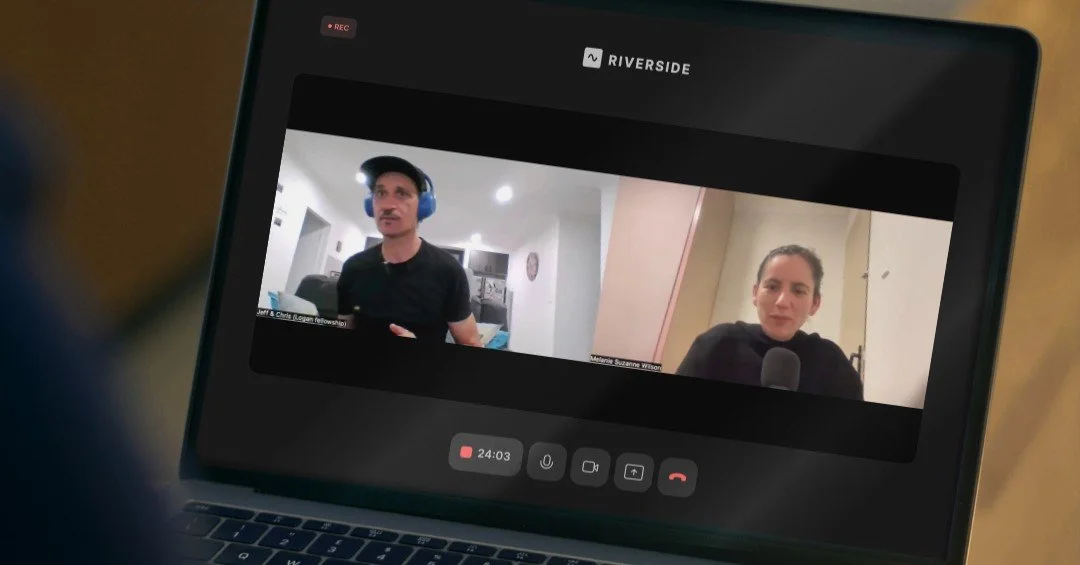
SHOW NOTES — SQUARESPACE
⚠️ Content Warning: This episode includes discussion of alcohol addiction and recovery, relationship breakdown and infidelity, and an account of serious violence. Please take care while listening. Support resources are listed at the bottom of this page.
From Rock Bottom to World Records: Christopher Charles Burns on Sobriety, Truth, and Rebuilding a Life
What do you do when your marriage ends, your world unravels, and every instinct pulls you toward the very habits that broke you? For Christopher Charles Burns, the answer was to stop drinking, start over, and pursue the research career he'd always dreamed of — with results that made history.
In this raw and unexpectedly funny conversation, Christopher shares how he went from working as a fine dining chef in Auckland and getting caught up in gang culture, to surviving a violent attack that changed his understanding of good and evil, to rebuilding his life in Brisbane after his marriage ended. Now two years and ten months sober, Christopher has completed a Master of Arts in Theology, submitted his PhD proposal, published four peer-reviewed articles in under a year, and holds two world records as the first independent Tongan researcher with peer-reviewed publications.
We explore what it really takes to change — why willpower alone never worked, how surrounding yourself with the right people transforms what's possible, and why his theological research into the concept of truth feels so urgent in what's been called the post-truth era.
About Christopher Charles Burns
Christopher Charles Burns is an independent theological researcher based in Brisbane, Australia. Born in New Zealand to a Tongan mother and European Kiwi father, Christopher's path has spanned fine dining kitchens, food manufacturing R&D, online marketing, and quality control — all before finding his calling in academic research. He holds a Master of Arts in Theology (combining Theological Studies and Divinity), has four articles accepted in peer-reviewed journals, and holds two world records as the first independent Tongan researcher to achieve a peer-reviewed publication and the first to publish multiple articles. His research centres on the concept of truth in ancient Hebrew and Greek texts and its application in the modern world. He aspires to lecture in theology, serve as an army chaplain, and speak in schools and communities about bridging the gap between faith and everyday decency.
Episode Breakdown
[PLACEHOLDER: Timestamps below are drawn from the raw recording across two sessions — please adjust against the final edited episode before publishing.]
[00:00] — Welcome and how Christopher moved from online marketing to quality control in a wrecking yard
[~05:00] — The end of a fifteen-year relationship: discovering his ex-wife's affair with the neighbour
[~08:30] — Choosing sobriety at the crossroads: blocking out the past and moving forward
[~10:30] — Living alone again after fifteen years and rebuilding daily routines from scratch
[~14:00] — When the past follows you to work: staying disciplined under provocation
[~20:00] — Finding love again: meeting his fiancée, a doctor in infectious diseases
[~22:40] — Dating after divorce: the red flags Christopher learned to recognise
[~28:30] — Why your environment matters: surrounding yourself with people who see your value
[~30:00] — Falling in love with research: from Harvard online courses to a Master of Arts in Theology
[~31:40] — Researching truth in a post-truth era
[Part 2, ~00:30] — Christopher's religious upbringing: a Mormon mother, a sceptic father
[Part 2, ~02:30] — Selling drugs at 21, gang violence, and the night that changed everything
[Part 2, ~10:30] — Moving to Australia and building a foundation of faith
[Part 2, ~11:00] — When faith and addiction collide: losing leadership roles to drinking
[Part 2, ~14:00] — Two years and ten months sober: why "never again" worked where moderation failed
[Part 2, ~15:00] — Future goals: lecturing, army chaplaincy, and community speaking
[Part 2, ~17:00] — Hypocrisy, perfectionism, and why belief in the message matters more than the people
[Part 2, ~24:30] — What the original Greek and Hebrew actually say: challenging certainty in theology
[Part 2, ~32:00] — Making history: two world records for Tongan independent research
[Part 2, ~36:00] — Christopher's call to action: believing you can change is where change begins
Key Insights
Christopher reflects that if he hadn't put in the work to become disciplined before his lowest moments, the provocations that followed could have destroyed his future.
He observes that surrounding himself with people who saw his value — rather than treating him as a burden — unlocked growth he could never have imagined, including a master's degree, a PhD proposal, and four peer-reviewed publications in nine months.
On sobriety, Christopher explains that years of promises, pledges, and modified drinking never worked; real change only came when he reached a genuine crossroads and chose a complete stop.
He notes that people struggling with addiction have to want help before they can receive it — and that his role is to be ready when a person reaches that point, without judgment, because he's been there himself.
His research into the concept of truth across Hebrew and Greek texts challenges the certainty many bring to theological debates, arguing that honest scholarship requires looking at how words were used in their full historical context.
Christopher believes communities of all faiths share common ground in kindness, decency, and connection — and that religion should never be used to justify treating people badly.
Connect with Christopher
[PLACEHOLDER: Confirm Christopher's website, LinkedIn, and/or social handles before publishing — not provided in the transcript.]
🎙️ Listen to the Full Episode
[PLACEHOLDER: Insert live episode links — Spotify / Apple Podcasts / YouTube — once published.]
🌿 Join The Motivate Collective
Join The Motivate Collective community for more conversations, events, and resources built around growth, wellness, and conscious living: www.motivatecollective.com
Support Resources
If anything in this episode brought up difficult feelings, support is available:
Australia
Lifeline: 13 11 14 | lifeline.org.au
Beyond Blue: 1300 22 4636 | beyondblue.org.au
1800RESPECT (domestic, family and sexual violence support): 1800 737 732
Blue Knot Foundation (trauma support): 1300 657 380
International
Crisis Text Line: Text HOME to 741741 (US/UK/Canada)
RAINN: 1-800-656-4673 (US)
Find a helpline in your country: findahelpline.com
Special Opportunity for the Motivate Collective audience:
10% off your entire order at HumanCharger
Support your energy, circadian rhythm, and confidence
Code to be used at checkout: THEMOTIVATECOLLECTIVE
As seen on The Motivate Collective Podcast
Get your HumanCharger light therapy headset now.
https://humancharger.com/THEMOTIVATECOLLECTIVE
I used to. Yeah, so I used to be in online marketing, and then I moved out of that just after COVID. And then I started working in, like, a wrecking yard and stuff. Because, like during COVID and all that, kind of locked up at home and everything and started drinking far too much because what else was there to do? You're like drinking and online, and it's just I had to get out to the real world, and then I end up getting a job in a wrecking yard with my brother. And I really enjoy it. And that also helps with the likes of me getting back into research. So I really enjoy research. So that kind of worked hand in hand with me being in the like so putting.
How? How did that combine?
Because, like, the section that I work in in a wrecking yard is in QC. So, it's like being really into the details and stuff. And with me used to being a chef and then going into QC and then in the research side, just getting really granular with all the details, it kind of helped. And then with me getting more serious in the likes of research was pretty much after the marriage kind of fell apart, and then I had to pivot my life in a better direction.
Pardon, I'm fixing up my hair. It's just looking weird on the camera. We need it to be sensible. You had a lot going on.
Yeah, yeah, like that's like when I was kind of reading over the background thing and I was thinking to myself, I'm like, man, like I'm not sure which side we're gonna talk about, but yeah, it's my story.
Well, okay. I think we'll just dive in, and this will be the very casual start of the recording because you've had everything going on. You mentioned did you say that a marriage ended as well?
Yes. It was very dramatic, to say the least. So my ex wife, she ran off with the neighbour. I know it sounds tragic. It's true. And I didn't want to admit to that for like the first three months. And then the reality kind of came home, and then I was like, Yeah, it is true. She actually did do that.
Speaker 2 (06:30.186)
And like actually going sober and not drinking any anymore; it's just like at that time it's like I really wanted to drink, but I don't. Wow. And then just yeah, yeah. So just being able to move forward in a positive direction. It was where there was a lot of things pulling to go the opposite way. It was like, yeah, I need a change for the better.
Had you already been sober for a while when you realised the wife was cheating?
No, no, no. I was still drinking up until that time, right? And it was roughly end of September in 2023. Right. And at that time, just a lot of things were happening within the marriage and within life in general. And we had an argument as you do. And I ended up leaving.
It was meant to be just for the weekend. I was gonna just stay at my brother's for the weekend, and all sorts and rumours started coming out that she was getting up to no good, and I'm like, yeah, this is just rumours. And then it was probably about a couple of weeks later, I'm starting to hear more and more stories from the people that were living close by, because we're living in what is it called? The Ingenia trailer park.
Caravan park place. So we're amongst a lot of different people. And she got a bit comfortable with the neighbour next door. And it just made it even spicier that that guy at that time, he was in jail. He was in jail at that time for domestic violence. And I know, I know.
Speaker 2 (08:31.19)
You can't even make this up. And when that guy got out of jail, she started hopping from motel to motel with this guy. And at this time, I was staying at my brother's, living with him. It was good that we s worked together in the same place. And bit by bit, news started coming out. I confronted her because I managed to find out that she was at one motel, and I went there, and I was like, what's going on? And she was swearing black and blue, nothing was happening. Just best friends, just best friends. And I think it wasn't until I think it was nearly Christmas time of that year, like the truth really came out. And I'm like, nah. And that's where I had to really dig my heels in and, like, am I still gonna stay sober? Am I still gonna take the direction and actually move forward, or am I just gonna just chuck my life away and just go and fight for something that was worth it? And I just blocked her and him and just moved forward. And I ended up moving into my own place at one point. It was in a share home. I ha I hadn't lived by myself since I was probably in my early twenties, and that was such a weird feeling. It was so weird living by myself again and just having to go through my own routine, being by myself, single. It was like I was married at that time for seven years, been with her for fifteen. It was like it was like I'm like a kid. It was so weird.
Feels like y the life of an early-twenties person in a way. My interpretation of doing that is you kind of have to live like a student for a moment to just rebuild, you think so.
Speaker 2 (10:37.23)
Absolutely. Even when I was telling the likes of my family, my mum, my brother and my sister, some of my routines, because I would have my usual routine that I would do. I'll I get in my room, I would have a single couch, a single-seated couch, because you don't need to, it's only just me. So every day I'll get home, and I'll sit down, and I would just sit there for ten, twenty minutes, and I'll just chill out. Sometimes I might fall asleep. I can do that, I'm by myself. And I had two fridges. God knows why. I started putting healthy food on one side that was wasn't really healthy. And then I was just putting fresh food. Fresh-ish food. Pretty much like my meat. It was pretty much like my meat fridge; I would put one side and then all my other stuff I would just put like my drinks. Like, what would you call it? Like the ginger beers and stuff like that. Because I really got into ginger beer. Since I wasn't drinking real beer anymore.
Okay, I'm seeing too many parallels here. I need to dive in. So you also sound are you Kiwi?
Yes, yes. This is hilarious.
Speaker 1 (12:00.968)
My grandparents were Kiwi.
Wow, wow. That's yeah, that's amazing. Yeah.
So
I apologise. Are you in Queensland?
Yes. I'm in Brisbane. Brisbane. Yeah.
Speaker 1 (12:22.5)
My gosh. This is hilarious because I have Kiwi relatives in Queensland and I know ginger is a big thing over there, so I understand why you're saying you had ginger beer in the fridge. It's my Kiwi is a bit rusty, but you know you're a Kiwi in Queensland when you're putting ginger beer in the fridge.
Yeah. It's it's such a thing. It's like what look my mum, because my mum is Mormon. She doesn't drink or anything, and she loves a ginger beer. So like me and my mum, we get along very, very well. Like we'll we'll knock them back like we're drinking alcohol.
So, alongside all of this, sorry, I'm going to just one second, I'm going to close Safari; it kept making noises. So, along with all of this, you were changing what you were doing with work during COVID, after COVID. What was going on with work when all of this was happening?
Speaker 2 (13:37.23)
That was a bit of a spicy time. At first, it wasn't necessarily really affecting work because I try to keep all sides separate, right? So it didn't really kind of affect work until her boyfriend, that neighbour, turned up to work.
My gosh.
I know. This is like from a movie. He turns up to the Yep. Blind drunk. Blind drunk.
He turns up to work, and he's asking for me, right? And I was at work, and I was helping up one of the guys because it's inside a warehouse, right? And it has many levels. And I'm upstairs, and one of the boys he's yelling out to me. He's like, Gratis, Chris, there's a guy named Phil here to see you. I only know one Phil, and that's my friend from fellowship, and I'm like, why, why would he be turning up to work? He would call me or text me or something. I'm like, hey. So, I so I look down, because I'm upstairs, and I'm like, and then I'm like, that's not a field that I know. That's such and such as boyfriend. Go and tell the boss to call the cops. Because he's because he's wanting to cause trouble.
Speaker 2 (15:13.58)
And then as soon as I got down the stairs, everyone's like, he smells like alcohol, he stinks, and all this. And I'm like, it's probably not too bad. And then I got close. And then he starts yelling at me. And he's going, he, he's it's like he wants to fight. And like I I wanted to and then I'm like, I can't. I just can't because I know if I go down that track, there's a lot of ugly things that can happen, and I'm trying to change my life, right? I'm trying to set an example, especially him coming into my workplace, and I'm like…
What work was this?
This was when, like, 'cause I'm still at the same place. So, I work at the wrecking yard. It's a premium wrecking yard, right? And he comes into work, and he's at the warehouse, and he's saying all this. And at that time that I meet him at the door, the boss comes over, and it's quite funny because the boss had just finished shovelling out.
The drains, because on that day, for whatever reason, it was storming and the drains were getting filled up with mud and all sorts, as they do in a wrecking yacht. And the boss has this big shovel, he's got it over his shoulder, and he's comes over and he's like, What is going on here? And I'm like, you know how I was telling you about my ex in that situation? This is the boyfriend.
Speaker 2 (16:54.474)
And then the boss with the shovel is like, " Get off the property now, or I'm gonna call the cops.” And then I'm like, and then the boss is like, get back to work, Chris, go. And I'm like, Okay. And I'm like, Well, if anything happens, it wasn't me. It wasn't me. So at least that was off my shoulders. And then I just went back to work. I didn't want anything to do with that. And then everyone was like, man, the boss is nearly gonna knock him out with the spade. And I'm like, I don't think it was a good idea, the boyfriend turning up to work, blind drunk, wanting a fight. Especially there's a lot of mixed guys in a wrecking yard. Some of them have some colourful pasts.
So basically, he was putting himself in a vulnerable situation more than anyone else.
Yes. Yeah. It's very crazy to think of it because he was driving as well. He was driving the car that was still registered under my name. And I'm like, I know. And I'm like, my god. Yeah, it was yeah. Hilarious. But it wasn't hilarious at the time.
No, have you found that essentially life gets so weird that all you can do is either laugh or the opposite?
Speaker 2 (18:26.786)
Yep. And I was doing both. Yeah. And it's in times like that, if I hadn't put the work in to be somewhat more disciplined, it would have been extremely difficult. Because when I go to think about it, if I was just very loose and I was still drinking, I would have happily just entertained that guy and just had a fight with him and just been, what the hey? kind of a thing. And then I and what? And then I'm in jail. And then I've got no future. No. It's yeah, nah.
Speaker 1 (19:11.934)
No, no. So okay. So I want to really check what your key message is. Because I'm trying to figure out, normally on the podcast, we talk about how we look after ourselves when doing all sorts of different work. And it sounds like you were doing a lot of marketing, and now you're at this other place.
But it sounds like part of your self-care is navigating life after did you end up fully getting a legal divorce? Are you still sorting that out? Where has everything ended up?
Yeah, so with the likes of the ex, I have no idea where she's at now. I'm trying to sort out the likes of the divorce. It's really difficult trying to do a divorce when you have no idea on the whereabouts, 'cause you're trying to fill in some of the paperwork with the unknown, and the courts are like, " What's the address? I don't know. So that part's a bit challenging. But apart from the likes of that aspect, I have a new partner. She's amazing. We met two years ago and we're getting married in no November. Yeah, she's truly amazing. She's a doctor infectious and she's a doctor in infectious diseases. Amazing. Yeah. I know when we had our first chat on the phone, I thought she was just telling porkies. I'm like, yeah, yeah. Why? And then we had our because, like some sometimes people might just try to tell white lies to make themselves sound better. Especially in early days and dating. Yeah, okay, cool. Yeah, you're a doctor, sure. And then we had our first actual date, and it was at her place, and she was cooking dinner and she had already told me prior to that.
Speaker 2 (21:24.846)
She's not very good at cooking, so I was a bit unsure if that was a good idea. But then I had seen just lying out on the bench; she had one of her hospital tag badges, and it had her name, and it actually said she was a doctor. And I'm like, lo and behold, she's telling the truth. That's a first. Yeah, with many other girls in the past.
Some of the stories that they told at the beginning weren't necessarily the true story after the fact. So Okay. I actually
Yeah.
Let's explore that. Actually, this is an interesting angle to take because really I've talked with people who are psychologists, whatever, but it's very occasional that I get to chat with a bloke on the podcast who has had a marriage and then gone through dating. And look
This is a chance for the women out there to hear the blokes' perspective. What goes on? What sorts of lies are women telling? And what else do we all need to know?
Speaker 2 (22:42.924)
Well, there was this thing. It was even when I was like getting back into the dating game, I wasn't necessarily looking for a girlfriend or anything. I just wanted to find like a friend as such. Like, even if it was just talking on the phone. I had some girlfriends that was on Facebook that was in other states. When I first started chatting with my fiancé now.
It was good. It was a good conversation. We wouldn't talk too long. She was quite busy being a doctor and all into the evenings. But a common pattern that I started to see with other girls that I would talk to prior to meeting her, they would be very self-indulgent. And they would they would talk a lot about themselves in a position like I had to qualify, and it's like I'm not up for that. I'm not I'm not interested. And yeah, yeah, like, like they were some kind of special prize. And to be honest, yeah, yeah, I know. And like that's like red flags. It's like I'm not into that kind of stuff because by the end of the breakup of the marriage
That's kinda like what it was seeming like, and it's like, deja vu, no thank you. Like
Where was the deja vu? Considering that marriage ended in a colourful way, what's the parallel between the two experiences?
Speaker 2 (24:20.76)
Because it was like with the ex-wife, by the time it came to the end of the marriage, it seems like she needed more kind of time. She needed more validation. She needed all of this extra stuff that just seemed a bit over and beyond. Whatever I gave her was never enough. And yet some somehow the next-door neighbour was enough.
Okay, sure. Don't know what he had to offer, but yeah. It's
That's perspective. Look, it's a fine line. I think that you are basically teaching women here because I I don't know where everybody should draw the line. We all need to feel seen, but of course we don't want to look needy. But it sounds like, from what you're saying, the key part is that nothing was ever enough.
Absolutely. Absolutely. And that's where I could see that same parallel going into all sorts of different things. Cause it's with the likes of the ex-wife, she was terrible with finances, and then she was terrible with her health. And then it w it would just be in all sorts of categories. So then I'm trying to help and try to make up for it. Although I can't, a two-body.
I can't run for you. Like kind of a thing, you know? But then it's like meeting my partner that I have now, she's actually a woman that is actually independent that can do her own thing. Whereas I thought that was the case with the likes of my ex wife, but she became a bit too dependent on me in certain sides. And then, when things didn't go her way, she would be dependent on
Speaker 2 (26:22.754)
Say the likes of the neighbour. Yeah.
So she was dependent on you and still getting cozy with the neighbour.
Well, when it comes down to it, when I gotta reflect on things, it wouldn't surprise me if that was happening at that time when we were still married and still living together. 'Cause there were periods of time when I would be at work, and she's not at work, and he didn't have a job. So there would have been ample opportunity because we were quite close with our neighbors because we lived all in the same trailer park.
So, there would be different occasions we might have a barbecue, or they have a barbecue, and we come over and hang out. But yeah, sometimes getting a bit too close can get a bit too uncomfortable over time. Yeah.
So why were you living in a trailer park?
Speaker 2 (27:24.13)
Well, the way I looked at it at first, it wasn't a trailer park. It was a new condo. But it was a trailer park when you gotta think about it. Because it was like brand-new cabins, kind of a thing, right? So that was what attracted me because it was brand new. I would have preferred getting a home, like renting out a house and stuff.
But the likes of the rent seemed affordable, and it was close to the shops and stuff. And was like, yeah, sure. But after month two, three came along, and I'm like, wow, the kind of people that's in here, a lot of them don't actually work. I didn't know that at first. And a lot of them would just drink, or they would just do drugs, and they would be into different things. It would be very rare to have people that would just work and do their own thing. Most people would just do the opposite.
Speaker 1 (28:33.068)
I see. So the lesson here is to surround yourself with the right people, not the wrong people, absolutely. Absolutely. And I've seen that like time and time again, like as my life has got better in the last three years, like after the fact, when I started surrounding myself with people that saw the value in me and not me as a burden or anything, I was able to grow beyond what I could ever comprehend. I started getting into the likes of research like I'd never thought possible. I started doing the likes of a master's degree. I done my finals, I think the other week I done my proposal for my PhD. I was able to get four articles accepted into peer-reviewed journals. All of this within nine months, right? It hasn't even been officially a year. So but all of this is like a combination of like over a decade of work up to that point.
But I go to think about back in the past, all those years I was in like a broken-up marriage and there was always such a struggle to do just small things. And yet, surrounding myself with strong, independent people, wow, it's like the world is truly your oyster.
Is the research. Tell me more about that.
Speaker 2 (30:04.236)
Well, with the luxury research, I've always had a bit of a knack for it. And then once I started really reading what was in the peer-reviewed journals, I just fell in love. And I'm like, one day I want to be able to do that. And I'd done some undergrad studies through Harvard online. So I started learning a lot of the different basics. I started taking all the different courses for just basic Greek, different manners and customs and stuff like that.
What exactly are you researching?
Theology. So it was like theological research. So that's what my research is around. But even in the translational side, you're able to kind of bring what's in those articles out into the real world, and so it's practical, so it's not just Bible verses, like kind of a thing. And a fascinating part that I was able to see, because the main theme for my research is truth.
And the thing that I love about that is being able to see how many people kind of understand what truth is to them and how they value truth. Because it's like when I've discussed the likes of truth of different people, they understand it differently. And it's not that they are wrong. Sometimes that can come from your environment, what you've been taught, or what you believe from your different religious beliefs.
Speaker 2 (31:41.514)
And when I've gone through the likes of the research, going down the rabbit hole into the Hebrew and the Greek, I just really got more interested on seeing what the intent is like for truth in the old age and then seeing how that is useful in the modern age and how we can live truthfully. Because in I believe it was in 2016, Oxford had the word of the year, post-truth. And I'm like, wow, that's quite a word. And you think about the likes of the time that we're living in now, with such an AI boom and the post-truth era, is what some of them call it, with this mass production of all this AI and things that are out there, it's crazy.
Okay, post-truth. How can we understand this post-truth?
Well, that's pretty much like around the realms of how you would have, like, the misinformation and people that are, like unqualified to make certain calls and stuff. 'Cause that's what really encouraged me to actually go and get a degree. To go and get a degree in theology. And the more
That I was around the likes of my fiancé, and her being a doctor, she had to get degrees to become a doctor. There's no YouTubing around that. So even she would be like sharing with me. It's like, if you're really passionate about this Bible research stuff, why don't you take it seriously and go and get a degree? And I'm like, hmm, you might be on to something fair. So I
Speaker 2 (33:40.574)
Started actually doing it seriously and took it to heart, and I in this one university, it's in the US, so I'm able to do it online and being able to follow that through to the doctoral studies, and I'm definitely crossing my fingers and praying that my final exam did pass so I can move on to do my PhD.
Amazing. So you're doing a different course before then the PhD?
Yeah, so it's the masters of Arts and the theology, so that's what was just closing up. So that was pretty much the culmination of two degrees. So that was pretty much encompassing, like the MTS, so that's the Master of Theological Studies and the likes of Div, so that's the Master of Divinity, so that's like Christian ministry. So it's like bringing those two together as one degree kind of a thing. So that really blessed me that that's possible doing one degree instead of two, so that's like saves like many years. Like, praise God for that.
So, did you do that, and now you're doing the PhD?
Speaker 2 (35:06.659)
Pardon?
Did you do did you finish that degree and are you now on the PhD or is the PhD coming up the PhD will be coming up pretty much after the professor has signed off on my final exam and given that the all pretty much the thumbs up and then I can move on to the PhD. he needs to approve the proposal that I've sent through because that was my last part that he was saying. Because usually for the MA in theology, you would do the likes of a thesis. But how I'm able to kind of bypass that is because of my peer-reviewed work. At that time, I only had three, and I was able to kind of go past that because I had peer-reviewed work. And even with the likes of the PhD proposal, I had put the likes of now four articles in the proposal, as well as what I would do for an integrated essay.
The research. There's so much to look at on this, and I'm glad that we have the time to really explore what exactly you're doing with this theology. That's something in this day and age, and with how counter-cultural it is.
What was your religious background? How did you end up becoming this involved in religion?
Yeah, so with the likes of my upbringing, right? So my dad, he doesn't believe in God, church, religion. He sees it all as a bit of a joke. My mum, my mum is Tongan. My dad is European, white Kiwi. So my mum was raised as a Methodist and Mormon, so it's a bit of a mix.
And I believe it was like midway through youth, Mum started getting us to go to the Mormon church. And that was hardcore. I can remember. Pardon?
What happened?
Speaker 2 (01:17.1)
What happened? What's involved in that? I'll just let you tell the story. Some of us know nothing about Mormons.
Well, well, it's not a dog on Mormons or anything, 'cause most of my family are Mormons and I love it, it's a very strict church. Very, very, very, very strict. Especially around the likes of if you're young and you're still trying to figure things out, and you might want to go to a party, you might have a beer, you might smoke, you might want a coffee. You can't do those things.
Yeah, I know, I know. Like, I don't know what my life would be like with no coffee. And so when I was at high school, like going to the likes of the Mormon Church on Sunday, at first I was like, yeah and then I was learning about some of the different things and stuff. I wasn't really too interested about the church itself.
But the whole concept of God, it was like, yeah, one day I wanna look into this a bit more, but not right now. I'm a bit too busy being a teenager. And it wasn't until like this, this is where it gets a bit spicy again. I've got more spanners to chuck into the wind. So it was roughly I was twenty-one and I, well, prior to that, I was getting up to no good. And I was selling drugs, right? As you do. Yes. I I know. So I was getting mixed up into gangs and all sorts. I was working in the fine dining restaurant. I I I was pretty decent in my career at the time. I was a chef in the fine dining restaurants in Auckland City, getting mixed up in the gangs and
Speaker 2 (03:02.647)
This is the
Speaker 1 (03:23.704)
Selling weed. I wasn't into the higher stuff yet. Thank God I didn't get into it. And I had a young, young friend, and he knew different people and stuff. So we would get the weed from, and he would sell it. So, I was funding it, and he would sell it. And this, yeah, I know this all sounds like a Hollywood movie, and then this is where it is. I'm and then it was roughly, I think it was probably about three or four months after he was working with me. We were hanging out at his place, and it was one of his young friends' birthday. And we're all drinking and stuff in the garage. Like I'm 21, and he was 14, and his friend was turning 15. And we're, yeah, yeah, I know, like it's, and at that time, this was in Clendon in New Zealand, in Auckland. And at that time, there's a lot of different colourful gangs and stuff that were in that neighbourhood. There were some guys that had come over. And at first I thought they were just friends of friends that were coming over to have some beers. Nope. They jumped over the fence, and then they attacked me.
I was drunk at the time, so I didn't really understand what was happening. And then they dragged me around the side. And then as soon as I kind of found a bit of a split, I jumped over the fence and ran round the front. And at that time, that's where 'cause they had a hammer and they had a gun. That's where I'm kind of fortunate, somewhat, that I'm
Speaker 1 (05:29.432)
Half Islander because it's like they hit me with the hammer and it didn't do any damage to my head. And my mum's like, Yeah, that's because you're an islander and I'm like, " Mum. " And so when I came round to the front and by the time I came round that's that that's when the damage was done. My friend had been shot, he had been hit with the hammer, he was blood and guts everywhere. I
Yeah, and then the ambulance was there. It seemed like it was forever, but it was probably only five or ten minutes. And yeah, that was like a real turning point. After seeing that face to face, I was like, Yeah, yeah, like this is this is not good. I've seen evil like that up front. If there's evil, there's gotta be something else. Like there there has got to be.
There's gotta be some good. If there's a devil, there's gotta be a god. Like, like, like that's just the logical reasoning that I was thinking. But I was not in any kind of position to want to learn about any kind of religion. I was kind of like scared, angry, going through all these different emotions. And I I was kind of spiralling out of control for roughly
Two to four years just trying to figure my life out. Cause after that I ended up shacking up with that guy's sister. I don't know why. It was it just seemed
Like a good idea into the time?
Speaker 1 (07:14.626)
Yeah. Yeah, it just seems, yeah, but then we were engaged in all sorts. We were going to get married. Yeah. And we ended up moving up north with her family, with the rest of her family. And things just got worse and worse. And as things got worse, the drinking and the fights and that with all sorts of different people got worse.
I started wondering even further about whether there being a God, whether there being all these different things. And at that time, my older sister was already very active, going to church. And she would share like different things to me. And I'm like, that sounds a bit too churchy, a bit too kind of like for me at the time. And then bit by bit, I was like,
I was kind of willing to listen, but not really take it on board yet. And it wasn't until
Roughly about twenty ten. Yeah, it was twenty twenty ten that I kind of wanted to take a bit of a turn. When yeah, I wanna check out this church side. I wanna see if this God stuff in the Bible was a real kind of thing. I was definitely going in like a sceptic. Cause like my background was a chef and I got into the likes of R and D working in food manufacturing. So we're looking at, like, the scientific process, like being able to test things, how to examine things. So it's like when I started hearing about different Bible verses, I'm like, okay, I'm gonna examine that. Is this real? Is that real? Kind of like kind of kind of a thing. And at first I thought people would have kind of like kind of pushed me away from doing that. But some people encouraged it, like, okay, look, look into this further, you know. What, like, what do you think?
Speaker 2 (09:13.26)
Okay, I have a question at this point. What type of church were you getting involved in?
It's a non-denominational. So yeah, so that's the church that I'm still part of now. It definitely help helps me along. And yeah, it's like home base. We have a headquarters over in the US. And yeah, it's what's worked.
Are you happy to share what it's called?
Yes. so it's the way of Australia. So the the way of Australia, my brother's group, and me is called the super conquerors. So you have the word superconquerors that comes from the Bible verse, Romans eight thirty seven. It has more than a conqueror, and that can be better translated as a super conqueror. Yeah. So that's what we call our group of superconquerors.
So you became religious. At what point it sound like it was after you got involved with your fiancée that at some point you decided you wanted to study this? But when did you feel sure about religion? When were you unofficially starting to study it in some way?
Speaker 1 (10:34.24)
It probably would have been when I first moved to Australia. That would have been in 2016. Prior to that, I would study it, kind of dabble in it a little bit. But when I moved over to Australia, because my older sister was the one that was leading the ministry work here in Australia. So I was able to learn a lot from her and a lot about the different languages and different things, and it gave me a good foundation to want to learn more, on my own and from other teachers.
Good, good. I'm realising something here. You got that involved in religion that early on, but it was then years later that your wife was having that affair. Was she religious? Where did religion fit with that story?
Yes. Yeah, it's a bit of a spicy one. So me and the ex wife, we actually were leaders together. We were running our own group, right?
But by the time that happened, we got relieved of duty as leaders because of our drinking. That's how out of control the drinking got. And I know, I know. And that was good and bad, because then it gave us a bit of too much time to go and do more drinking. And it just got out of control.
Speaker 2 (11:59.491)
Gosh.
Speaker 2 (12:16.454)
There's a question in that. So you were becoming addicted, essentially. I'm not qualified to say if someone is addicted, but you were drinking too much on an ongoing basis. And your religious community, of course, you needed to have a pause or a stop in some form from doing your leadership to sort out your health and your lifestyle. But
Were you not getting any support? Were you basically just left to figure it out yourself after that?
Well, yes, like 'cause we're getting the support from my older sister, 'cause she was the one that was like the ministry leader of our work here in Australia. So there was definitely that support from the likes of her and just being able to counsel on, like productive next steps. Like, I was definitely willing, but that's where, with a lot of the follow-through, it was a bit of a tug and pull with the likes of the ex-wife. I
I wanted to, at times, slow down the drinking and stop. And then the ex would want to fire up and drink more and do all sorts. And then it was just it just got just crazy, just one after another. And that's where, once I left, she left, I knew that was a time that enough was enough. No more drinking. Yeah.
So for you the solution was to say never again, not a bit, ever.
Speaker 1 (14:00.428)
Yeah, yeah. So pretty much I haven't had a beer for two years and ten months. And thank you. And I don't have any kind of urge, desire, craving or anything for it. I guess you could say I'm a bit more obsessed now into just being a bit more productive instead of just wasting money and time into something that wasn't really helping. Yeah.
Well done.
Speaker 2 (14:30.798)
Absolutely.
Speaker 2 (14:34.698)
Okay, okay. This is very significant. So you became completely sober. Was it after that that you started officially? Well, it was after that you started officially studying? Because it was after your breakup that you got sober. So now, where do you think this is all heading? Are you going to end up working in the space that you're studying? What's the next step?
Now that you don't drink, and you have this theoretical knowledge. Where does that all lead?
Yeah, well, my main goal is to be able to become a lecturer in the university, to be able to teach theology. Also being able to go into the army and become a chaplain, being able to help soldiers on the front line as a chaplain, to be able to have that practical service in there as well. and also being able to go into schools or wherever and being able to speak, not necessarily about theology, but being able to bridge the gap between, say, religion and Christian and with the community. So being able to show that no matter what your religious affiliation is, you can be a good person, you can be a kind person.
I appreciate that intention so much. And honestly, I don't very often share my beliefs because I want to connect with anyone, and I don't want anybody to think she believes something I don't believe, and then there's the disconnect. So it's amazing that you are sharing your beliefs, but you're connecting with people regardless of their views. And what I'm seeing in that is
Speaker 2 (16:25.09)
That you want people to simply do the right thing, seeing your lifestyle transformation and knowing that you saw you saw that horrible violence back years ago and you were cheated on. I can see that you simply want people to be decent humans. And that's what we all need right now.
It seems like we're in a bit of a selfish society. What do you think?
Yes. that that is so, so true. And I've had many passionate discussions with many a Christian and others out there that especially when you gotta think about things on a like a moral value side, like everyone understands that it's not nice nor kind to go around punching people in the face, right? Right. Most people understand that. And Christians don't need to get a Bible verse to know that it's wrong to go around punching people in the face. So it's just basic things that I believe on a humanistic nature side that most people understand what is right and what's wrong. But when people start to bring religion into it and say, the religion or this belief system told me to do this, no. I think that is just not right. Yeah.
Speaker 2 (17:58.402)
So you're seeing people doing the wrong thing and then using religion to justify it?
Yeah, yeah, absolutely. Not to point fingers, but I've seen within different religions, like every religion has extremist groups. Every religion has people that do go off the handle. But that's where I think a lot of groups can come together and be much more unified on the common ground that they believe in, like a higher power, right?
And they believe in doing good, they believe in being nice, they believe in community. That is like a lot of the basis of my research and truth, right? That every kind of human group, tribe, they believe in being a community. It's not about being by yourself.
Yeah. It's a community. That's it. We all need to support our fellow humans. What you're doing, I'm seeing the value in it so much. My experience lately has been that I stumbled upon a few top religious leaders just by coincidence, honestly.
They are often the ones who are very understanding. I'm guessing it's because they've seen it all. They have seen the whole cross-section of humanity. And also they know they are we're all human beings, regardless of who we are. And so I've seen some great acceptance and support, but then I saw some things that might not be what you're describing, but people just
Speaker 2 (19:45.74)
Take religion in a weird direction. So, in a way that is aligning with what you're saying. I don't know if you've seen people expecting perfectionism, but I had someone very recently wanting me to look essentially religious enough, and I'm not even saying if I'm religious or not in this moment, but I don't know if you've seen people kind of putting everybody else to a standard, even though we're all not perfect.
Speaker 1 (20:18.592)
It's that's a very, very good point because that's like a good example, right? It's like with the Christian church. Most people know the likes of the Christian church as being the judgmental group, the ones that condemn others, the ones that know how to dish it out but can't, you know, like take it.
And it's it it gets quite funny as well because many people ask about my fiancée, what her background is. she doesn't come to church or anything like that. And her simple ethos is she believes in the message; she doesn't believe in the people. Because she's just seen a lot of hypocrisy, it makes it difficult.
And I get that because I've seen a lot also, and it does kind of mess up your head. It's like we are meant to believe the same thing, and you know, like, what are you up to? And quite like what you're saying as well, the likes of this perfectionist kind of demeanour attitude that does run very deep in a lot of groups. Even in times past with the ministry that I'm part of, it would have the likes of that. And not saying that that was responsible for the breakup of my marriage. But there was aspects in there where I feel that some of that stress is there. We have to try to be so perfect. Yet we're not, we're at the drinking the fate of this conversation. I have to say it. I mean, it is honestly just in recent weeks where this was all coming up, and you're talking about this. So the podcast does that to me. Sometimes I'll just get a guest talking about exactly what's relevant in the moment. And I wonder. I'm sorry, but that's cosmic. It happens. So
Speaker 2 (22:37.878)
You had in your marriage this stress about perfectionism, and let me know if you agree. I think there's inherently always going to be a hypocrisy in perfectionism. Because whether we're at the extreme or not, we all make mistakes because none of us humans are we can't be perfect.
Absolutely. And that is so, so true. Like many a time I go to think about, say when I was married and me and the ex, we would run our fellowship group. I like to think that I'm good at teaching. I would teach our group and all sorts. And then, of course, she would have her critique nitpick here and there. And I'm like, you know, and then, of course, my confidence would feel shocked.
But for her, from what she's heard and what she's learnt, she thinks what she's doing is right. But it's more or less how it's been delivered. It's like, wow, that's like a night to the heart kind of a thing. So then, and like after that, I would try to teach differently, but then it would seem awkward because it's like I'm trying to go in this cookie-cutter to try to please someone else.
Then it might be perfect, but it's like that's not perfectly me, though. That's like to me, that's fake. Yeah.
Okay, here's a suggestion. Does it work better for you when those discussions, be it philosophical or religious or anything like that, is it better when people are asking questions instead of just nudging one view onto everybody? Is it easier to simply ask and let some things not be certain?
Speaker 1 (24:36.012)
Yeah, that's a very good point because that's where I think sometimes, especially within the likes of the theological circle and in the biblical realm, many do try to say a lot of things with such certainty, where the likes of the Greek text and the Hebrew doesn't allow for that, right?
Many, many, many because there's, like certain there's certain realms of certain things, depending on the context, right? Of just different things. I d I'm speaking in a very general so we don't go into too many rabbit holes.
It's okay. We need the rabbit holes.
Yeah. So, like so like what what I mean at like at a glance in the English version that we have, things things can look good. And it's not that the translators done a bad job or they had this malicious intent. No, it's the best they were able to do. So when we're able to have an understanding of
What the languages were like, how it is actually translated according to the correct methodology, not according to what my doctrine is. It's able to have a clearer point of view. And one good example is when I was doing research on the likes of homosexuality, right? This
Speaker 1 (26:18.06)
This is a very pointed one. Very pointed one within the Christian church. And I know this is going to ruffle a lot of feathers once my article is out.
Dive.
Speaker 2 (26:28.544)
You're in the right place for this, seriously.
Yeah. So when I reviewed the literature, the research suggests there is nothing wrong with homosexuals according to the word.
How?
Because there are certain verses, right, that some people are gleaning to but it's not saying exactly what they think it's saying. A good example is in Romans one. At the latter part of that chapter is used day and night for the likes of pretty much the condemnation of homosexuals, where that's not technically, in reference to homosexuals, that's in reference to lust in a generalised sense. That's not specifically talking about home homosexuals. Some could say, yeah, homosexuality is lust. True. Could be, but is that what the text says? No.
Speaker 2 (27:40.948)
Okay.
And stemming from that, by the way, two things come to mind for me. I have heard, now I'm not qualified in this in any way, but I heard that those languages have lots of different words for love, and they all mean different things, and then we tend to just give the one word of love onto all of them, but they all actually have different meanings.
Yes, yes, yeah. That is very, very true. And that is quite like many of the different Greek words. And what can become very dangerous at times is when you could be in a certain belief system, and you start to use a blanket term for Greek words or for words in general. But what starts to happen when you get into a certain context?
And those words don't necessarily fit. You try to make it fit however you can, and it becomes extremely awkward. And that's what happens at times with certain people's theological beliefs. It just it doesn't really line up on like actual scholarship side.
Right, right. And I'm trying to remember from many years ago, I think I heard that maybe Aristotle had categories of friends. Do you remember something like that from philosophy? That's probably stemming too far away.
Speaker 1 (29:20.91)
Yeah, like I haven't read a hell of a lot of his work, but even when it comes to the likes of some of the Greek writers, so even when I've had to do some of the work, you have to look at say some of the writings that he's done and some of the writings of Homer to be able to see how certain words are used. Otherwise, you're not getting a full scope. You're getting a very narrow view.
And when you start to look at the totality of how different words are used outside of the Bible, it gives a bit more of a clearer scope on how it's best understood.
Absolutely. One of the best things about what you're doing is that you have had this colourful life, and I'm saying you're going to have a lot more compassion for the people you talk to moving forward instead of saying everything is so black and white, absolutely. I definitely try to extend that grace unto others as it's been afforded to me. And it's like many a time when I see someone that might be a bit drunk or a bit high or something. I know I might have a bit of a chuckle, but it's like I've been there. I see what you're up to, even like there's a coworker that I work with. I see that he struggles with alcohol.
But I see that he's not at the point that he wants help. He believes he doesn't have a problem. I get that. I was in that position too. But I'll be there ready to help him when he believes that he's ready for help. Yeah.
Speaker 2 (31:08.61)
That's powerful. People need to want help.
Yeah, yeah, ab absolutely. 'Cause there was even what the likes of myself, I had many promises, many pledges to stop drinking. Yeah, never happened until it really happened after they actually split. Like I I can rem remember all the times that I would cry, all the different kinds of how would you call it? Like the different interventions say that I won't drink, or I won't drink like that, I'll change the drink or change the environment. But it would still be the same. But it wasn't until that crossroads really came that change actually happened.
Speaker 2 (32:01.543)
You had to know that you needed change, and you had to choose to act differently and change the habits absolutely. Because when I go to think about it now with a lot of the habits that I did have and the choices that I did make, they're not very productive. And the choices that I do make now and what I do now, I see it as, like, am I living in this same reality? It was like I I believe it was like the other week.
And I was telling my mum, yes, it was last week, that I was sending over my awards to her. So I received two world records for being the first independent Tongan researcher to get a pair of re reviewed articles and the first Tongan independent researcher to have multiple. And my mum thought they were just paper. I'm like, because I was gonna send them with my younger brother because he was going for a holiday over in New Zealand, and she thought they were just paper that they wouldn't weigh much. I'm like, no, no, no, no. These are like actual proper A3 plaques; they're nearly a kilo each. So that's nice. I'm like, yeah. Yeah, they're getting shipped directly to you, express shipping. Yeah, so I really hope you like them. And it's quite funny because when my brother was over there, he he does a bit of a video of mum and dad. They like it on the bench and stuff. And it was really cool because, looking back, I was getting no awards or nothing. But I look at where I am today, like I've made history for the culture that I'm part of. Like what? That's crazy.
Speaker 2 (34:01.422)
So, to clarify to everybody, the awards were world records. Let's remind everybody of the two world records.
So the first world record was a special recognition for being the first Tongan researcher with an accepted article in a peer-reviewed journal.
That's amazing.
And then the second one is the same, but for multiple articles. Well done. Thank you very much. Thank you. When I first got notified of it, I was like, nah, this isn't real.
Classic K Way response, I think.
Speaker 1 (34:50.19)
Please.
You're doing great. And I appreciate how you tossed that in near the end of a long chat that, by the way, you have these world records. It's very much the old tall poppy mentality there.
Well, well, that's the thing. Like, I found it was actually quite funny when I started. It's not even that I was trying to promote it to friends and family. I just got to share this a little bit. And then I can remember one time I got a bit stroppy. I think it was like with my fiancé. It's like, yeah, I was mentioning it to such and such. And it was like they didn't even care.
And it was like they cared more about blah blah blah. And then she was like, maybe it's not that they don't care, it's probably that they don't understand. And I'm like, true.
Yes. Yes, it's a lot to wrap their heads around. People have an interesting attitude towards awards. Look, honestly, I feel like I think we could do two or three episodes because there's just so much going on. You have so much story. I want to wind up this episode because we need to, at some point in letting people know as a call to action in one minute.
Speaker 2 (36:19.85)
If someone needs that call to action to clean up their life in some way, what's the first step?
I believe it's first to acknowledge like that you're able to change no matter on your environment, your culture, your religious beliefs, you're able to change. And then being able to really understand that if you believe that you can change, that you will change. No matter of your cultural background, your belief systems and any of that. And as it happens, you will truly be able to change the world.
Amazing. Thank you so much.
It's been an honour. Thank you.
Thanks.