
Podcast Episode - Learn to Be Comfortable in the Uncomfortable: Personal Development, Paintball & Purpose with Julian Maliszewski
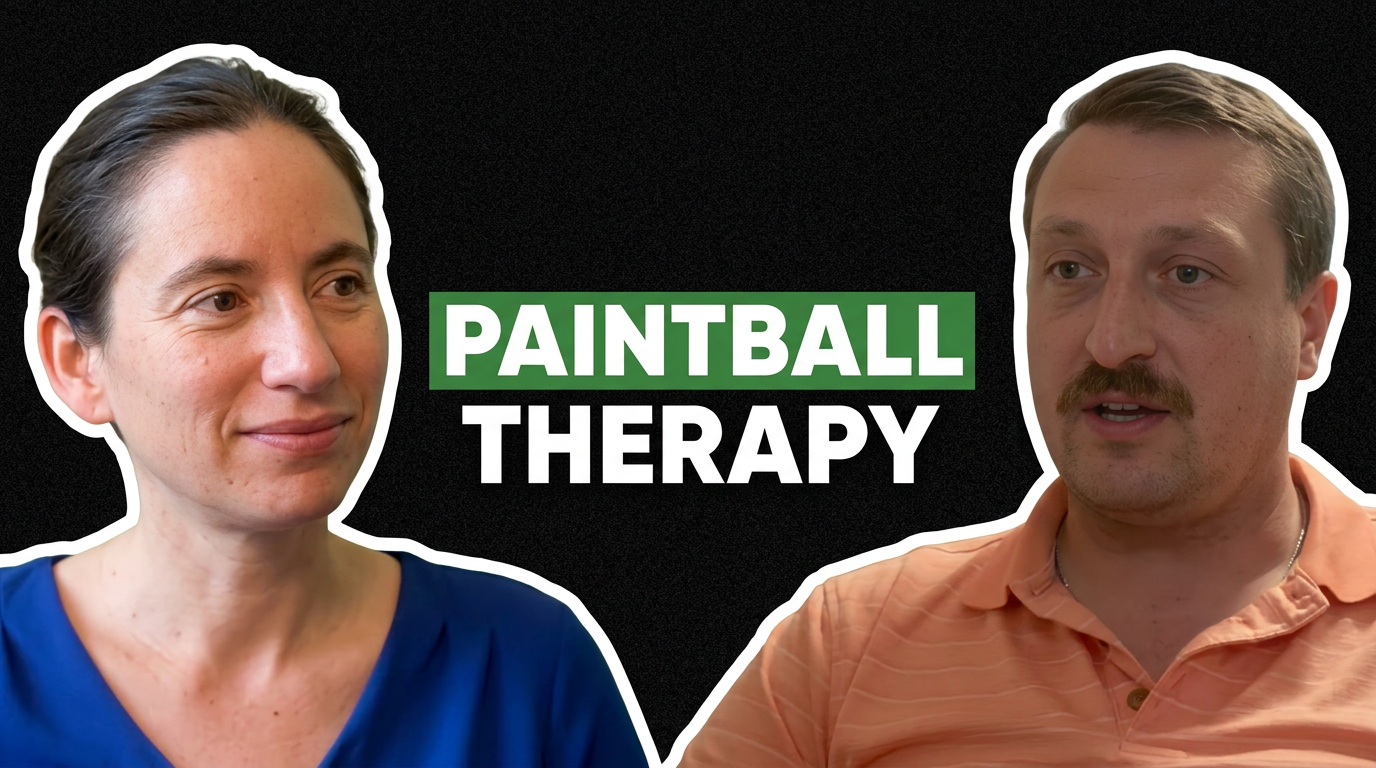
Julian Maliszewski
Personal Development Coach for @paintballforpurpose
Provider of T2F Coaching
Former teacher, athlete, and team coach
Listen to the entire episode at this website, on Spotify, at Apple Podcasts, or on most major platforms.
Show Notes
What does paintball have to do with personal development? More than you'd think.
In this episode, Melanie sits down with Julian Maliszewski — personal development coach, former teacher, lacrosse athlete and coach, paintball industry veteran, and founder of T2F Coaching. Julian's life has been anything but conventional: he's lived across the world, played lacrosse internationally, spent decades in the paintball industry, studied philosophy and religious studies, and now channels all of it into helping people get over their mental hurdles.
Julian is also a proud supporter of Paintball for Purpose, a not-for-profit organisation connecting veterans with mental health resources, community, and support — proving that something as unexpected as a paintball event can become a lifeline for someone who needs it.
This conversation covers resilience, accountability, the art of sitting with discomfort, the philosophy of going with the waves, and why learning to be comfortable in the uncomfortable might be the most important skill any of us can develop.
What We Cover in This Episode
How a life in sport — soccer, lacrosse, and paintball — shaped Julian's approach to coaching and resilience
What paintball actually feels like (finally, an honest answer)
The work of Paintball for Purpose and how community connection supports veteran mental health
Julian's "matchstick approach" to coaching: sounding board, accountability, and helping people teach themselves
Why we learn more from failure than from winning
The Taoist philosophy behind going with the waves of life
Finger people vs thumb people: the hard truth about accountability
Why Julian offers two free coaching sessions — and what that says about his approach
How to use technology mindfully rather than mindlessly
The Finch app: a surprisingly powerful daily wellbeing tool
Why getting outside, touching grass, and unplugging still matters
The importance of community investment — from youth sports to not-for-profit foundations
About Julian Maliszewski
Julian Maliszewski is a personal development coach, former teacher, athlete, and team coach based in Maryland, USA. He studied philosophy and religious studies and brings a grounded, practical, and genuinely human approach to personal development coaching through his business, T2F Coaching — named for the principle: teach a man to fish, and he eats for a lifetime.
Julian is also a coach and community representative for Paintball for Purpose, a not-for-profit founded by Todd and Tammy Adamson that connects veterans navigating mental health challenges with community, services, and support. He was also previously president of the Winona Foundation, a not-for-profit supporting cultural beautification and community enrichment in Winona, Minnesota.
A husband, father, business owner, and lifelong sport enthusiast, Julian brings warmth, directness, and genuine lived experience to every conversation.
📲 Find Julian on social media: @T2Fcoaching (Instagram, Facebook, TikTok, Threads) 🌐 Paintball for Purpose: @paintballforpurpose
Key Insights from This Episode
Julian's core coaching philosophy: learn to be comfortable in the uncomfortable. When you can do that, you can handle what life throws at you — in sport, business, and relationships.
We learn more from failure than from success. A win confirms what you already knew. A loss shows you exactly what needs to change.
The ocean doesn't care about your feelings. The tides will rise and fall regardless — and that reminder can be a surprisingly grounding anchor when things get hard.
Accountability is uncomfortable precisely because when there is no one else to blame, you have to face yourself. That is also where real growth begins.
Success is deeply personal and subjective. Chasing someone else's definition of it is a guaranteed path to feeling lost.
Remembering the good times is not toxic positivity — it is a practical tool for reigniting motivation when the path gets difficult.
Practical Tools & Resources Mentioned
Finch App — a free self-care and daily wellbeing app with gentle check-ins, journaling prompts, and mood reminders (Julian's personal recommendation to clients)
T2F Coaching — two free initial coaching sessions offered to new clients
Paintball for Purpose — veteran support through community, not-for-profit events, and service referrals across the US
CTA (Coach Training Alliance) — the accreditation program Julian is completing
Phone-based coaching: Julian conducts sessions by phone rather than video for more focused, distraction-free listening
Daily task planning: writing out key priorities each morning and releasing attachment to the "fluff" items
Categories / Tags (Riverside-style)
Personal Development
Resilience & Mental Toughness
Coaching & Mentorship
Veterans & Community Support
Sport & Mindset
Philosophy & Wellbeing
Accountability & Growth
Technology & Mindful Living
Not-for-Profit & Community Impact
Guest: Julian Maliszewski
Parenting & Family
Inner Work
Transcript
Melanie Suzanne Wilson (00:01)
Julian, welcome to the Motivate Collective podcast.
Julian Maliszewski (00:05)
Hey, thank you so much for having me. Glad to be here.
Melanie Suzanne Wilson (00:08)
You have an interesting bundle of specialties. You work with paintball, but you also focus on helping people to get better. How do you explain the various things that you do?
Julian (00:25)
Gotcha. So I grew up playing sports. The sports I predominantly played in my youth were soccer and lacrosse. And then I played at a high level of lacrosse well into my mid-20s. So I was coaching different high school teams and club teams throughout that time. And my family has been in the paintball industry, you know, well before I was born, but we had businesses here in the greater Baltimore area for about 30 years up until last year. And then my parents ended up retiring. So along the way in that realm as well, I've coached different teams, individual players. In owning facilities, you're often dealing with first-time players. So, you know, having to, you know, kind of coach people through their first experience. Cause playing paintball is a really unique experience. There's no other sport that's like it because it takes all those aspects of capture the flag. But then, you know, to feel like getting shot by a paintball, there's no other sport that you would do that replicates that. It's always depending. It's a different experience from person to person. So sometimes, you know, they're psyched up about it. Sometimes they're sad about it. So, you know, having to, you know, positively talk to them and get them through it. But it's been a pleasure doing that, and that really kind of transitioned well into becoming a personal development coach. I've done a myriad of jobs throughout my life, but I've also been a teacher as well. And I was actually talking. I saw one of my old therapists in an airport, and I was at a point of flux in my life, and she actually recommended that this would be a really interesting career to potentially go into, going from my coaching and my athletic ability, and you know my personality, that it could be a really good fit. So, I you know did some research on it, and I'm actually working with a company to achieve some accreditation as well, because being a personal development coach or a life coach, it's a really unregulated market. So I wanted to also, you know, have a few acronyms after my name just to you know, show that I am taking it serious as well. And in the paintball world, recently, I believe about two years ago, the foundation that I worked for was formed, and that's called Paintball for Purpose. And that was started by two of my good friends, Todd and Tammy Adamson. And it's a not-for-profit that was originally centred on helping veterans with mental issues, but then also giving them avenues in which they can seek help wherever they are. Obviously, we're really just mostly based in the US as of right now. I'm here in Maryland. We have someone else in Montana, someone else down in Arkansas that are able to make the different events. So we actually will show up and be there running a booth. But then, you know, we can connect people in any state that they live here as well. So we can find whatever services that they're needing as well.
Melanie Suzanne Wilson (03:45)
There's a lot going on here. You support veterans, and you are doing personal development coaching. Okay. The veterans, I just wanted to bring my coffee over to this side for a second. The veterans: what issues do they need to overcome the most? Is it the stereotypical PTSD or is something else happening?
Julian (03:54)
Mm-hmm.
I mean, I think that there's a myriad of issues, so I don't want to speak directly to this is the most important thing. But a lot of the time, it's connecting them with a positive community, because sometimes all they have is just previously their experience in the armed services and that reacclimation. So finding groups and services that way that they can connect with. If there is any substance abuse issues that they want addressed, can you know, help find them, you know, means for that, as well as, you know, mental issues, you know, whether it's just a sounding board or finding a proper therapist, we can help connect them with the services that they need. So, really just providing another outlet because sometimes people are tired of dealing with the same. And the interesting thing about being at paintball events is it's bringing awareness to a topic that everyone already knows about.
So even if people don't come up and talk to us, they at least know that we're there, and they'll smile and wave. But some of the most rewarding things is when people just come up, and when I was, we had an event at the beginning of year in Tampa, and there was a few people, one guy came up, and he was celebrating nine years of sobriety. There was another one that was coming up on just like a year and a half. And there's a few others that are like that, and they're proud to come up and just share that. And sometimes it's just a high five, and where you go. And you know, that's really all they're looking for. And then sometimes people are looking to connect, and that's where, you know, we'll get their name and their number, and then we'll say that someone will be right in touch with them. Others are in the same industry as we are, but then they're just looking for more ways to connect and help out. We've been, you know, we've picked up a few people just from them passing by, and then they're already, you know, nurses in the field or therapists themselves. So it's just a really positive thing to be around.
Melanie Suzanne Wilson (06:12)
This is amazing. What I'm hearing is it's a social connection that has a real emotional benefit from people who are navigating all sorts of things.
Julian (06:24)
Yeah. And you know, oftentimes, like, especially in running the booth, it's, and in my realm and where I'm coming from, you know, oftentimes people just want to say, Hey, what's up? And just that simple bit of connection can often be what someone needs. And then, I'm not a pusher, but if someone needs something, you know, I'll be there for them. I, you know, give out my phone number, everything like that. That way, they feel as though they have someone they can reach out to. And whether they do or they don't, it's up to them. You know, I don't do it for hoping that they're going to get in touch, but least just they know that there is an outlet if needed.
Melanie Suzanne Wilson (07:05)
That's dedicated, providing you a phone number, providing the conversation. Are these people wondering where they can find their people? A group where they can be understood.
Julian (07:22)
I mean, I think that that's one of the commonalities. think that, you know, especially for the company Paintball for Purpose, you know, when we're at a Paintball event, that common thread's already established. So there's already that camaraderie. So you already have that icebreaker going, which is nice because whether or not they're going to immediately open up, you can always find small talk at an event because there's always so many different things going on.
Melanie Suzanne Wilson (07:51)
And that brings us to the paintball itself. I have never actually done paintball. I think deep down I felt a little bit nervous. And let's just talk about that for a second. What exactly I... let's assume that a lot of people have done paintball, but what exactly happens?
Julian (07:54)
Mm-hmm.
Yeah!
So in one of the simplest formats, there's a three-man game. So you would have a game of tag with three on three on a mirrored obstacle course. And you guys each have a marker, which is filled with these gelatin balls filled with paint. And they're coming at, I forget the miles per hour, it's under 300 feet per second. It sounds like a large number, but it's really not that bad compared to playing other sports like lacrosse or baseball. Getting hit with one of those hurts way worse. But it's that little sting, it's that zap, it's like putting a rubber band around the inside of your arm and a few inches and letting it go. So there is that little bit of risk factor involved.
Obviously, you can have a lot of different padding on to protect you, but it does sting when you get shot. It's not for everyone, but it is fun, and it can be done in a myriad of different scenarios. There's been different fields that will have inflatable bunkers, mound fields, different city-style layouts that you would see in different video games and paintball played by everyone.
It's played by men, women, people of all ages, young and old. At my facility, we used to have all kinds of different groups. So you could have random people that come in two and threes, and those are called walk-ons. And then we would group them together under a referee's supervision. Everyone gets the rules ahead of time, so they know what it is. And then you've got one or two referees, depending upon the crowd size, making sure all the rules are in force, starting the game, stopping the game.
And then we've had different sports teams have, you know, team-building events, companies come out to their restaurants. You know, bachelor bachelorette parties, like birthday parties, you know, you name it. So, normally, the common icebreaker for people is a birthday party, and then that's their first experience. So yeah
Melanie Suzanne Wilson (10:28)
Fair enough. You deal with people a lot, and I'm seeing a lot of leadership and training required in guiding people to make sure that they know what's happening. And I'm sensing that you would be dealing with a lot of people's emotions. They come in, they are there for a bachelor party or even the emotions of doing that with a work group.
Is it a totally different experience every time?
Julian (11:01)
Yeah, I mean, I think everything's unique to its own. But there is always that common little bit of trash-talking between friends. You can see some people are a little nervous. They'll be voicing in that kind of laughter, nervousness aspect. Some people have played before, but I think it's always fun to see everyone's first experience of getting shot. Some people make it this giant mountain, and really, it's just a little molehill.
You know, and then the thing is like once they get shot, it's like the, at, it's just, it's that little like, once you get punched in the face, you know that you're not made of glass. Like when you take that little shot in the hand or in the arm, and you realise that like, the world's not coming to an end, you're like, okay, I can do this. So you get to see the confidence level that, you know, happens between each individual. And it's always been, you know, a really good time. have.
Out of everyone that's come out, there's been just a handful of people that, you know, and it's not for everyone. Sometimes they get shot, and that's not for them. And sometimes you try to give them that little bit, like a little push, like it's okay, you'll be fine. But then when they like put that hard, like, no, I'm like, all right, you know, I'm not here to force you to do this. If it's not for you, it's not for you. So there is that aspect to it as well.
Melanie Suzanne Wilson (12:20)
There is so much in that you are saying that everybody experiences discomfort differently.
Julian (12:27)
Mm-hmm. I mean it's it's not the It's not badminton. You know it's something different but
Melanie Suzanne Wilson (12:37)
But it's interesting that you are highlighting that because on this show, there's been a repeated focus on living with discomfort and accepting discomfort. For paintball, it's that feeling. So finally hearing that it's like flicking a rubber band, nobody ever explained that to me. So that's finally illustrating what it would actually feel like.
Melanie Suzanne Wilson (13:04)
But that simple practice of, okay, something will be uncomfortable, but it's okay. That has come up with goodness, the mindfulness people I've talked to and also with you. So this is a great chance to pivot then. What are you bringing from that space into the personal development coaching that you are exploring?
Julian (13:30)
Gotcha. So my little matchstick approach is I say that I'm here to help people get over their mental hurdles as well as provide a sounding board and a space of accountability. The way that I go about a coaching session is I try to describe it as taking a walk with a friend, but having that professional touch that someone's looking for and the way that
I coach, think comes from years of just sport and coaching, both as an athlete and a coach, as well as my background. I was a double major in philosophy and religious studies. I'm not religious, but I always grew up watching movies like Constantine and The Exorcist. So I liked voodoo and that, you know, offshoot, you know, cult-sect-style religions.
It just not always kind of fascinated me. I view it as history. And then for philosophy, I was really more so into existentialism in college, Descartes Meditations. But recently I've got into a lot of kind of like Taoism. And I think that that's kind of brought me a little bit more grounding as I've come to this coaching experience. When we were kind of talking about like the being uncomfortable when I used to coach lacrosse, I was a high-level face-off player. So sometimes you're in uncomfortable positions, and I say you have to learn to be comfortable in the uncomfortable because when you can do that, you're going to succeed. mean, and really in life, there's always going to be some sweet and sour, you know, you can still have a great day, you know, bad things are going to happen. It's just life, you know, but it's all about rebounding and moving forward. So. Yeah, I mean,
Melanie Suzanne Wilson (15:23)
It really is.
Julian (15:26)
And that's where, like with Buddhism, they'll sometimes say, ‘Embrace the suffering.’ You have to learn to sit with it. When you sit with it, you can learn with it and understand why it's there. And you can learn from good things, but it's also from sport. You don't learn as much from a win as you do from a loss.
Melanie Suzanne Wilson (15:49)
Really?
Julian (15:50)
Think about it like if you achieve first place in something and if you've trained and you've worked hard and you've done all the things to get to the top of the mountain then that's fantastic and you know a good person knows that they did everything they need to do to get there but now they need to do even more to continue to stay at the top and you know wherever you fall off along that way you know it's in
In an individual sport, there's only one person that you can look at. In a team sport, it's different because your success and failure, yes, one person can make a highlight play and that can happen, but ultimately in the end, the success and failure is done as the collective. And to go through bumps and bruises along the way to still achieve success, there is something there to that.
So I think that whether it's an individual sport or a team sport does bring a different aspect there.
Melanie Suzanne Wilson (16:50)
That is a lesson everybody can learn. I appreciate this so much. Being reminded right now that we can learn from our failures more than the successes, and coming from that sport approach, can tell you very occasionally I've talked with people who are from actual sport. I have seen a few more
Julian (16:58)
Yeah.
Mm-hmm.
Melanie Suzanne Wilson (17:16)
yoga teachers and there's a slight overlap, but there's more of the philosophy, but hearing about that from sport, it's showing me that it doesn't matter what we are doing, we actually need those failures, and that was just sinking in so deep for me because we will have listeners who are perhaps running a business or doing a job or perhaps overcoming a personal a personal failure in a way, well, you've seen the people who are overcoming addiction as well, and that's not as black and white as the failure and success, but what I'm hearing from you is that people learn from those hurdles perhaps more than doing everything perfectly.
Julian (18:04)
Yeah, I mean, for, for you know, I've lived such a dynamic life. I've never been one of the normal is; they would the phrase like the nine-to-five kind of people. I do envy those people because I would love to just, you know, clock in, have the two and a half kids and off on the weekends. But that wasn't what I chose to do in my life. You know, I have lived all over the world. I've played lacrosse in a couple of different countries already. The amount of different people I've met.
I've lived a few lifetimes within my short span already. And everyone's life is different. And some people that have a simple life can still have a hard life, and some people that have a dynamic life can have it easy. But everyone has their own story. And when you do stumble, or one of the things I always say too is you need to remember the good times to help you get through the bad times.
And because oftentimes, you can just get stuck in your wheels can just start spinning. But, you know, ultimately, in the end, like you can have outside help, but you know, you're the person that's going to ultimately get yourself out of that hole and continue that. You know, you can always have that support network that's there for you that you can lean on, but you know, they're not always there 24 seven. And sometimes you do have to, you know, have the hard conversations with yourself, and you know that's where it of talked about the suffering and the pain, like sometimes you have to sit with it. And that's also coming from my own experience. You know that sometimes it's a lot easier to, you know, want to take the edge off of something, but you know, sometimes it's you have to sit with the feelings and understand why they're there. And it's funny, one of the other things I heard, like from the Taoism aspect, is
The ocean doesn't care about your feelings. The tides are going to rise and fall regardless of how you feel. I kind of think about that at times when I'm starting, you know, everyone gets in rough. So there's nothing wrong with talking about it, but that's something that I use in my head when I start, because I'm like, you know, it's going to is life. It's a roller coaster. You're going have ups, and you're going downs, but everything's going to be fine in the end.
So that's one aspect that I remind myself with. Same thing with, as I said before, remembering the good times. So oftentimes, like paintball is one of the current things I'm doing. So sometimes when it's hard, and I'm starting to kind of get a little down about it, then you got to remember something good, like a great play or a great event. And then that, you know, reminds you why you're doing it. Not that I'm falling out of love with it, but it's just always that something to reignite the fire.
Melanie Suzanne Wilson (20:42)
That's something that I need to learn and that other people need to learn. For me, my comparison is that recently I was looking at those memories on Facebook. It shows what happened at this time a year ago or a decade ago. And it was showing some big things when someone became unwell, things like that. And I realised just from what you are saying, I'm realising that the algorithm was bringing my attention to things that don't go well, but I wasn't choosing to bring my attention to things that do go well. So it sounds like, in maintaining that motivation to keep doing what you do, people absolutely need to consider what can be successful.
Julian (21:36)
Yeah, I think that, you know, success is very subjective because it can be tangible, you know, whether it's wanting to have your own car or your own apartment or that financial, you know, safety net like that. That's sometimes what people will view as success. So I think it goes to the individual.
I, you know, like everyone has their own journey. So I think it's finding yourself along the way and, you know, understanding that there's always going to be an ebb and a flow with it as well.
Melanie Suzanne Wilson (22:12)
So part of this is going with the waves, knowing the waves will happen regardless of how we react to them.
Julian (22:21)
Yeah. And I think that, like, I playfully have like a fatalistic approach to things because it allows me to not take it so seriously. Like, I am a husband, I'm a father, I'm a business owner, and you know, I'm still a son to my parents. So I wear a lot of hats, but at the same point in time, you know, it's the little things that, you know, still mean more than big things. You know, hearing my girl laugh, you know, that's a joy. You know, and I was playing video games the other day, and I was playing online, and the guy I was playing with, his daughter was playing recorder in the background. And he was like, " Oh, I'm sorry, it's probably annoying.” I was like, " No, dude, I completely understand.” I was like, you gotta enjoy the times when you got them because they're not gonna be around that long. So I think that it's that, you know, Dead Poets Society movie quote, like trying to like suck the marrow out of life. Like, there's a lot to enjoy each day.
And even if there's a little bump along the way, like there's always a way you can turn it around.
Melanie Suzanne Wilson (23:25)
There's always a way.
Julian (23:27)
Yeah, I mean, oftentimes it's about you dealing with it. Pardon my words, like dealing with you. Like some people just have to deal with their own shit. And sometimes it's hard to have to do that. Because when there's no one else to blame but yourself, that's a hard pill to swallow. Because a lot of people want to be finger people. And it's a lot harder to be a thumb person when it's really on you.
Melanie Suzanne Wilson (23:52)
So, to translate that for a second, people want to point the finger elsewhere, to someone else and point the blame to someone else instead of pointing the attention and the accountability internally to themselves.
Julian (24:07)
Yep. Because then it's always... If you blame someone else, it can be more palpable. When you have to blame yourself, and you have no one else, then that's harder.
Melanie Suzanne Wilson (24:17)
You are running a business. How does this mindset help you to run a business? And I'm curious within that; I'm going to assume there would be seasonal highs and lows as well. Wild guess, do you have seasonal highs in the summer or anything like that? And how do you navigate the metaphorical waves of running a business?
Julian (24:20)
Mm-hmm.
So I recently just launched my coaching business. It's all the handles. It's called T2F coaching. So the moniker for that is teach the fish. And that's really the tug of the religious joke with it. You know, it's obviously if you give a man a fish, you can eat for a day. If you teach him how to fish, you can eat for a lifetime. So it's that aspect of coaching to help teach people how to navigate their own hurdles because then they can learn to do it themselves when it comes up. So I launched the company here in March. I have one pro bono client and one current paid client. I haven't pursued picking up clients super heavily because I wanted to kind of finish my accreditation. And I've been getting a lot of FaceTime doing the events, and I'm through social media. There is a lot of a soft touch approach that I'm doing right now. Obviously, the goal by the end is to have at least ideally, over 10 clients per year. going through this coaching therapy realm, understanding that I think the most recent statistics I looked up in the US, it's like 60 % of women's actually seek therapy and then it's 30 % of guys so Whether or not those stats are somewhat true, you know, it is kind of like pulling teeth But at the same point in time, you know, you have to have the light on regardless You know, you don't know when someone's walking in but still always being available I did try That one app called Muse to try to jump on there as a coach I'm canceling the service because it is not the service that I'm hoping it was going to be. So, trying to connect with clients. I mean, obviously, I'm used to doing from sales, like doing cold calls and things like that. So you basically, as a coach, have to send them a little pitch in the beginning. So, you know, had a nice, easy kind of blanket pitch, send it to, you know, a bunch of people over, you know, over a hundred within the first couple of days.
And started to get a few responses, but they're really kind of bot-style responses. So, you know, it is what it is. You have to go fishing to see what you can catch. So one thing I'm looking to do is I'm going to be at more paintball events, like within the local circuits, and just, you know, and often it's just showing up and just saying, " Why are you there. And, you know, the more that you're there, the more eyes you get and goes in that realm.
My dad is an avid outdoorsman here in Maryland and is really involved with a lot of different local groups. And I'm gonna start going to some outdoor expos because obviously, when you're going out and being in the outdoors, it's a lot of mental time. People are working through things that way. And just having more FaceTime in different ways. So there's goals that I'm looking to meet. I'm starting to meet them.
But if I don't have a bunch of clients in the beginning or by the end of the year, it doesn't mean I'm going to stop and go, well, why did I do this? So, yeah.
Melanie Suzanne Wilson (28:13)
You are connecting with the community to spread the word about what you are offering. And to clarify, this is separate from the foundation that focuses on veterans. So with your business, I'm wondering who you would want to serve the most?
Julian (28:37)
I mean, honestly, anyone that needs someone to talk to. The cool thing about the Paintball for Purpose is it gives me a way to advertise my own company. So if someone comes up and wants to talk to us, I'm not immediately trying to sell them to come talk to me. That's not the point of why I'm there. But if someone comes up, they start talking to me, and they're like, " Do you do like what services do you offer?” Then I can obviously then pitch myself, and it's something if it's something that people are interested in, then they can go from there. The one thing I do offer in the beginning, which most people don't, is two free sessions in the beginning because you know I've gone through therapy myself, and you know that first time you sit down with someone, it's kind of like the smell test, like do I like this person? Can I get along with this person? If that works, you may take one thing from them that session, come back to the next one, see how that one goes. And then, really, in that kind of second or third session, you know whether or not you want to invest your time with that person.
Melanie Suzanne Wilson (29:42)
Absolutely. We all need a different person, and you are talking about therapy. We know that often seeing a different type of therapist can be a lot more focused on solving a problem. Whereas my understanding of coaching is it brings people to the next step of aiming for goals and having that encouragement. So it's a very different style and
I personally like to explore a variety of different forms of therapies, and I hope that other people explore different formats for themselves as well. Are you mainly helping locals, or are you looking at helping people remotely as well?
Julian (30:31)
Remote is one of the easiest ways to connect with people. So, that's mostly how I do it; obviously, when I'm at an event, there is that face-to-face option. But the one thing that's interesting in coaching is the company that I'm learning from, CTA, which is Coach Training Alliance. They do it via the phone. So it's that audible aspect of things because there's times when you know, like we're speaking here, like I'm not doing it deliberately, but I will look off because I'm just, that's where I'm just thinking. And at times when you're having that, you know, face-to-face connection, if I'm looking away, it doesn't mean I'm not paying attention. So when you're just focusing on listening, then you're taking away some of that other sensory aspect as well. So their idea behind it is that way you can really be listening intently to the client.
So that's the way that I've been going at it because when they said that, I was like, all right, well, that makes sense because there's that time in a Zoom meeting, or if you're doing face-to-face, if they're writing down, you're like, well, what are they writing? Then, cause you're watching them write. So, meanwhile, like I could be typing or I could be writing, you know, and doing a session, because then that way it'll give me a track of thought as well.
Melanie Suzanne Wilson (31:49)
The phone also is extra accessible. Of course, if someone can't use audio with hearing issues, then that's a different thing. But over here, where I am at least, the internet, everybody has a different level of internet quality. And I've had private conversations on audio and video calls. I've had, of course, the podcast recordings, and it varies so much.
So it's a little bit easier when something is audio because it should go a bit more smoothly, from what I understand, than video.
Julian (32:26)
Yeah, exactly. And that's where, a lot of the times, people will have, you know, basically like Facebook Messenger, WhatsApp, something like that, Telegram. So there's a myriad of ways to connect with someone now, and it can still have that business separation, too.
Melanie Suzanne Wilson (32:44)
It absolutely can. It can have that professional setting. It's great you are helping people remotely because people need that for so many reasons. People have busy lives. They need someone. I mean, you have such a set of specialties, and people can access that from anywhere. What I'm seeing in your combination of interests is that you do have the sport, but also the recreational community mindset of paintball. There was such a community element in that. But also, then having that personal interest in philosophy. I wonder if more people need to at least consider philosophies, anything, when we're in an interesting time at the moment.
Julian (33:40)
Mm-hmm, yeah, I think that you know it, I mean, some people's brains go that way, and other people's don't operate that way. Some of the people that I work with in class, you know, when we'll do a practice session, or you'll hear them speak, you can tell when someone is kind of on that same wavelength. So I think that you know, philosophy is kind of like that phrase, can lead a horse to water, but you can't make him drink. You can let him know about a couple of different things, but some people's brains just it's not their style. Yeah.
Melanie Suzanne Wilson (34:23)
Okay, that's joining dots for me. I feel like I'm understanding people who are hearing that because what I'm getting from that is that some people want to dig deeper and ask the questions, and others just want to keep things on the surface and simplify things.
Julian (34:40)
Yeah, and some people are just, or the word I was looking for was binary, you know- and that's not a bad thing. Like some people are just zeros and ones, and that's and that works. And there's a different, you know, methodology when you see, like, those high-level binary people; you can see how they operate. And like when I hear them talk, I am like, I am not there. Like, you are way smarter than I am. But it's, again, it's just it's in different realms. So.
Melanie Suzanne Wilson (35:08)
Okay, that's really clarifying things, the zeros and ones. You're teaching me so much because I grew up around people who had an engineering brain, be it for IT or for actual engineering, things like that. It was the math brain. And I think that some people who naturally thrive in that do have that perhaps black and white, or they thrive in a context of Here's a set of rules; just follow these rules? And whereas with how my brain works, when I was growing up, I was wondering in math, why am I finding X? Why does it matter? What's the purpose of this X? It was, I could not just find X for the sake of it. So when I meet people who do ask philosophical questions, that's
That's encouraging, but it's even more encouraging to realise, okay, some people just aren't asking why does X exist; they're just finding it, and that's okay, it's what works for them.
Julian (36:19)
Yeah, exactly that.
Melanie Suzanne Wilson (36:20)
Absolutely. So I'm curious about the foundation. Let's look at that a bit more. Okay, basics. How did you set up a foundation? How did you make a foundation?
Julian (36:34)
So I'm only a member of it in terms of that I'm like a coach at an event in terms of the structuring of the foundation. I can't speak to how they started it. I know with some of my limited experience with other foundations, you have to get qualified as a not-for-profit organisation.
You often need to have a set of guidelines, a mission statement. If you're having benefactors, it needs to go through the proper like tax channels and things like that. Oftentimes, you'll have a board of directors where you'll have your CEO, your CFO, and then your board members under that. And then they will help guide the foundation in that facet. I'm a part of a family company here based in the Seattle area known as the Laird Norton Company, and I'm actually rolling off of a I was the president of a not-for-profit called the Winona Foundation, and our mission statement for that is to grow the beautification and culture of Winona, Minnesota. Through our benefactors, we have every year a list of organisations that will send grant applications to us, you know, and then they'll talk, they'll outline, like, what they're looking to do, and you know, how much money they're looking for. And then we decide, you know, yay or nay and how much to go, you know, based off of what our treasurer tells us we have to spend. So yeah, that's kind of like the basics of a foundation.
Melanie Suzanne Wilson (38:19)
That's the basics of a foundation. You are doing something that I think more people should be doing where I live, at least. I don't know how, how common or normal it is in America, but although you are involved in business, you are involved in not-for-profit organisations, and it has a community benefit. So you mentioned the beautification. That for a nature for something else?
Julian (38:44)
Mm-hmm.
Yeah, so within Winona, Minnesota, there's a lot of different historical buildings. One renovation that we were helping with was an outdoor band shell and then the seating around it, and the landscaping, the hardscaping in the Polish National Museum that they have there. You know, we were getting updating the shelving because it was funny, guy that was telling us, like, the old wooden-style shelves, like that allows for more oxygen flow and then therefore that can oxidise the books faster. Whereas, you know, replacing these with metal shelves will help keep them safe, you know, safer longer and learning about things that I didn't know about before, you know, we have helped sponsor a bunch of different theatre projects, art projects. So helping people get new sound systems and PA systems and, you know, video systems, things like that. You know, really working with the community there to help grow it. We have a bus on us program where that provides local transportation to the different museums to help people learn about Winona. And then, as I said before, just general pairs to different museums in the area as well, like the Pickwick Mill, and there's a local trail known as the Flyway Trail. So, you know, it really help maintain those things for the community to enjoy.
Melanie Suzanne Wilson (40:13)
That's amazing. Helping people to access creative opportunities as well as supporting the physical environment. Have you seen? I guess you would be meeting other business owners who get involved in NFPs through the groups that you are in, but do you have any words of encouragement to people who run a business and could be contributing to groups in ways that could improve their communities, their surroundings? What's in it for the people who get involved in these NFPs?
Julian (40:54)
You know, I was around, um, we had a, this one meeting of other different family businesses because our family is more philanthropic than others. And we're coming in our eighth generation as a privately family-owned company. There are others that have been around longer than are publicly held companies. And for them, you know, they, um, not to like name-drop it in a bad way, um, but there was this one very large company, and since they are so large, if the family members do anything on any philanthropic level, like that's good, but that doesn't really matter to them. Like not saying that in a bad way, you know, it's like, whereas our family uses it as a source of pride, at, you know, for their like family gatherings, it's, there's other things that are, you know, more important to them that are on the table than
Melanie Suzanne Wilson (41:37)
What do you mean?
Julian (41:53)
If they're doing efforts. Obviously, there are people that do philanthropic endeavours and other family companies and things like that. But, you know, some people celebrate it. Some people are not on the same level of us. Some people are just bad. If they do cool, if not, it is what it is. I think it is, you know, to each their own. You know, I think getting involved in the local aspect in some facet is always good, ⁓ especially in, you know, youth sports.
Youth sports always need some kind of donation. Here in the States, the arts programs in the schools have always been taking a hit. So to support those programs in any way, that's one thing we do with the Winona Foundation as well, because we know that. We know that the art programs have taken a hit. So, therefore, to help support, you know, actually like the physical art as well as music, you know, absolutely. You know, especially, you know, if there's any other reason, like do it for the kids.
Melanie Suzanne Wilson (42:47)
For sure.
Julian (42:51)
Or help save some puppies and cats. There's easy heart touch aspects that you can donate a little bit to and check that box.
Melanie Suzanne Wilson (43:01)
There would be a mental health and social wellbeing angle to what you are supporting. Just reflecting on the other conversations I've had this week on the show, I talked with a former detective in Australia who said that teenagers often need to be connected with knowledge and resources. And so knowing about that emotional need and the, and the community leader in a small town who said that a teenager tragically took their own life, his own life. And so I'm hearing these stories that are a bit more negative. Yes. About young people. And what you are saying is that you can build something for young people. can create the creative opportunities and the ways for young people to get involved and thrive in life, instead of the opposite.
Julian (44:07)
Yeah, I think kids are a hard topic to go around because I grew up in the early 90s. So I don't know what it's like to grow up and be a kid right now. I'm raising a kid that's nine and a half right now, going through this. So I only get to kind of see that from the outsider's point of view. Obviously, the access to all the technology that kids have nowadays is not what I grew up with.
And that you know if the cell phones were causing mental issues for adults What is it causing for a young kid that you know doesn't have the mental capacity that an adult does to an extent so I think that you know Restricting some of the technology is really good I forget where it was but someone one nation recently passed like kids under a certain age can't access social media now and…
Melanie Suzanne Wilson (45:03)
Yes, that was my country. We did that, or my government did.
Julian (45:06)
Okay, yeah, that's, I think that's awesome.
I think there's ways that you can still connect people, but I think that, you know, getting, you know, it's like if they're going to restrict smoking and drinking and stuff like that, there should be a restriction on social media. You know, I don't want my 10-year-old on Facebook. There's no need. You don't need to connect with anyone that way. You can call mom, dad and grandma. Like, that's fine. You know, you don't need to be on Facebook and upload pictures and stuff like that. Like, no, you're too young.
Melanie Suzanne Wilson (45:34)
That is such a slippery slope, of course, because there are all the issues.
Julian (45:39)
Exactly.
Yeah, and it's like, you know, for instance, you know, we will walk the dogs and play Pokémon Go. And my daughter, she doesn't have a cell phone. She has one of my old iPhones that I basically treated like an old iPad touch. But I have it set on the kid mode. So she can't even get a game like Pokémon Go. And she's like, " Can we change the settings?” And I'm like, no, no. Like, and I was like, it only works on Wi Fi. I was like, as soon as you walk out the door, honey, it's not going to work. And then she's like, really? Like, yeah. So, you know, it is what it is.
Melanie Suzanne Wilson (46:12)
It is. And you remind me, actually, that a teacher recently told me that in some educational settings, almost everything is done on screens. Look, I might, it's bizarre to me that I look like I have a tin hat on to say, can we get a bit of space from the screens occasionally? And you said you grew up in the nineties, and you are supporting sports that get people outdoors and not staring at a screen. Do you believe in what you've seen in communities that people need to get out there and do activities that are beyond staring at a screen?
Julian (46:59)
Oh yeah, for sure. Now I also love video games, as well, and I've got a tattoo of Earthworm Jim. So, you know, I grew up playing PlayStation 1, and I've got a PlayStation 5. But, you know, I think you got to get out, and you've got to touch some grass. You've got to go, you've got to go put your feet in the ocean. You know, even if you don't want to go play a sport, take a walk, you know, and take it without headphones in. Listen to birds, listen to cars, listen to just the noise around.
And that's even harder because sometimes I like taking a walk, and that'll be a time where can listen to a podcast or an audiobook or music, and it's nice. But, you know, it is nice to also unplug. And it is definitely a lot harder to unplug. You know, the one benefit, you know, that when I'm on a positive kick, like for instance, like for me, one thing that helps in my Monday through Friday is I will write out my day, and I'll put like big hit points that I do need to get done. But then I'll just put like other kinds of fluff stuff.
And if I don't get to the fluff stuff, I don't beat myself up over it. I just move it to the next day. But that helps me organise my day. And since I help with social media, whether it's just me posting something for my personal thing or my coaching business or the paintball team that I also run social media for, by the time I've done reposting and I've been on this and that, and then I've uploaded something for me, I'm done. I'm like, you know what? I don't need to look at this right now. I'll see it tomorrow and look at the likes and comments unless it's something where I'm getting tagged in the video and then I gotta jump back in but I spend enough time on it that I don't really need to scroll like what I've learned for me and I've learned it right now because then at other times I will go back and do scroll but I know what's important to me obviously there's always times to unplug and whatnot but what I've tried to do is actually make like a folder that's just known as daily, so then I'll plug in a couple of things. One app that I actually use often that I actually tell others about, it's called Finch. And it's basically like a little personal Tamagotchi. So you've got this little pet, and he goes to different places, and it's a little like kind of self-help daily planner guy. You know, it'll be something simple like brush your teeth, drink some water, wash your face. You know, earlier, as I've got the neighbour across the street, and our daughters were playing today before we got on. That's what I was watching out for, and the one thing said, you know, write how you feel right now. And I opened up my little journal app, which is in my daily tab. And I was like, I'm feeling grateful. You know, I had a great day, and then I'm watching my kid have fun. Like that, you know, it's a perfect icing on the day. And then there's another bit where it'll say like, you know, write down your, you know, all your thoughts and feelings for the day and just different stuff. And so that's a really cool, fun app that I tell you, know, my clients about.
Because oftentimes, you know, you don't always have that person you can call or text but it's a nice way to get away from doom scrolling and then I'll plug in a couple of the things there and Yeah, you know, so I if I am on my phone I try to keep myself away from social media like a little bit, you know But obviously it's always still fun to go around and look at stories and reels for a little bit.
Melanie Suzanne Wilson (50:10)
It is fun. And perhaps we can see technology as a tool to be mindful instead of mindless. We all know the phrase mindless scrolling, but with this, even having these conversations, the podcast episodes are typically around an hour. And we know that so many people want a 30-second reel, but I actually like that we are overcoming the attention span issue because you can have more of a conversation. You can explore more. And so people need to just consider, of course, you don't always have an hour to spare. That's okay. If it's educational or if it's something useful, you mentioned that an app is reminding you to do some of the basic daily routines. I like that so much. I had a calendar item, and I should really put it back in. I want my calendar to pester me to brush my teeth.
Julian (51:09)
And the cool thing about it is it will just pop up and give you little random messages and not that some of them are cute and cheesy But you know it's funny at different times if you're feeling down or like when I would feel down I would get a little message from them randomly be like I'm proud of you And it's just a little app that means nothing, but it's just like Okay, you know now I'm smiling so ⁓ It lets me know when he wakes up during the day lets me know when it's time to start winding down for bed, so it's a fun little interactive app, and it's free, but there obviously is some paid aspects to it, but it is nice that it is free and that I've been using it for quite a bit now.
Melanie Suzanne Wilson (51:49)
feel inspired by that because I've been trying to figure out what sort of app could be useful for this podcast, and before you are recorded with someone who worked at Facebook and then created an app, and from what you're telling me, there's the opportunity to we have countless sound bites and quotes from all these transcripts, and that's all guidance for people it is the reminder. I can't tell you how many people on the show have even just said, " Get your feet on the grass.” That comes up again and again. So many of you from different perspectives have the same wisdom. So to circle back, if someone is wanting to connect with support, be it individually or with the community,
I'm wondering because you are doing the coaching, but also community, I'm wondering what's the first step someone should do if they were wondering where to begin, where to reach out.
Julian (52:51)
I mean, so on social media, whether that is Facebook, Instagram, TikTok, Threads, my personal handle is T2F coaching. Everything else. You can send me a message, whether it's one-on-one coaching, because, like I said, I'm offering two free sessions, or if you're looking for services, you know, more so directly in your area, you know, I can, you know, help you get in touch with those. I would get your name and your contact info and then send that up to our Paintball for Purpose organisation. And even if you don't play paintball, like you can still seek out services from us. So we're not just for paintball players because you could be a husband, wife, girlfriend, boyfriend, whatever of someone that plays paintball, and you're just there. You know, it's for anyone. But again, all my stuff is T2F coaching. And yeah, I'm here.
Melanie Suzanne Wilson (53:49)
Thank you so much for the conversation.
Julian (53:52)
Yeah, this was really awesome. Thank you so much for having
Melanie Suzanne Wilson (53:55)
Anytime.