
Podcast Episode - Finding Your Inner Sanctuary: Yoga, Breathwork, and Wellness in the Corporate World with Kimia Shirkhani
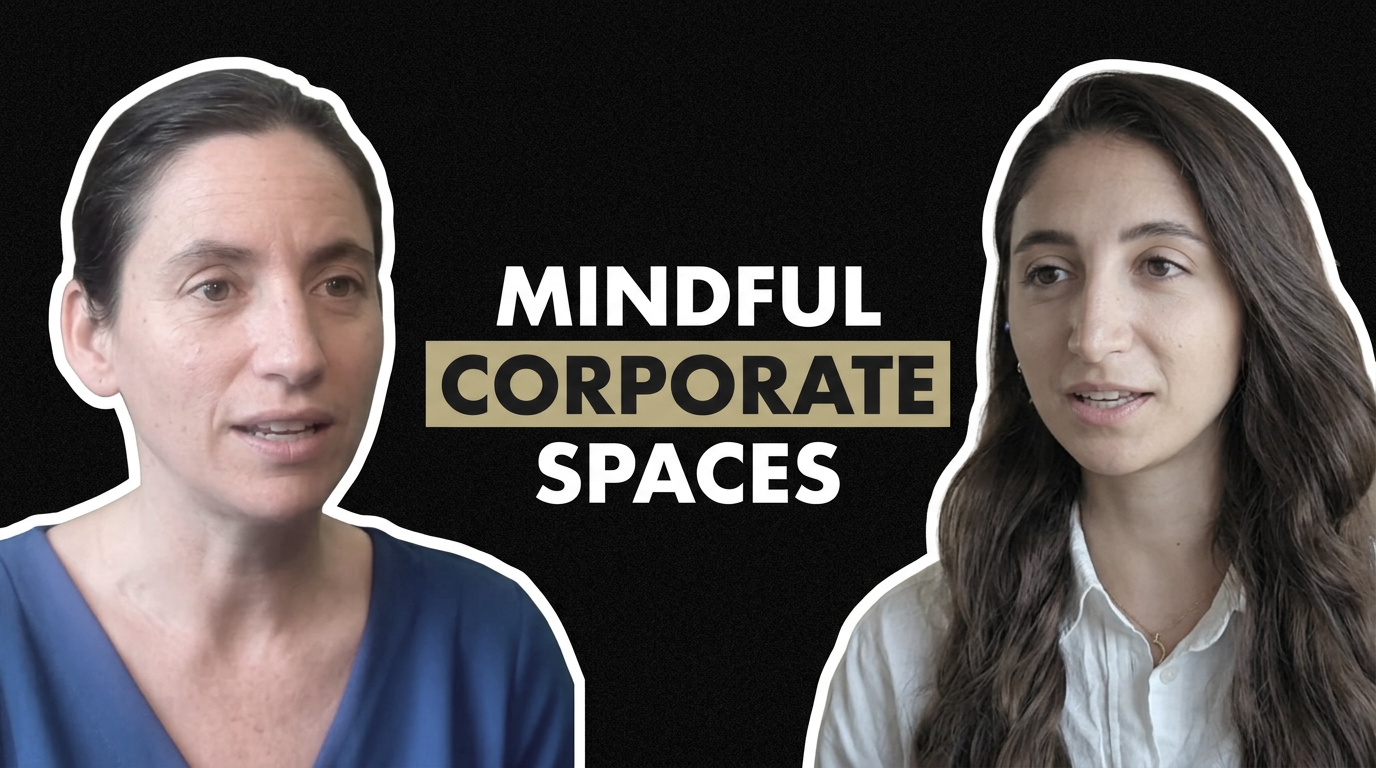
Kimia - Podcast Guest
Qualified yoga teacher
Administrator
Iranian working in the USA
Listen to the entire episode on this website, Spotify, Apple Podcasts, or most major platforms.
Episode Summary / Introduction
What if you already have the most powerful wellness tool — and it costs absolutely nothing?
In this episode, Melanie sits down with Kimia Shirkhani, executive operations partner at Cisco Meraki, yoga and fitness instructor, and MBA graduate with a background in industrial engineering. Kimia's story is one of resilience, reinvention, and the deeply personal journey that led her from horseback riding in Iran to navigating a new life in the United States to finding her sanctuary on the yoga mat — and ultimately choosing to share that sanctuary with others.
Together, Melanie and Kimia explore the intersection of corporate performance, mindfulness, and the ancient wisdom of yogic practice — and how even the most time-poor professional can begin to weave meaningful pauses into their day.
This conversation is for anyone who has ever felt overwhelmed by the pace of modern life, curious about yoga but unsure where to start, or simply seeking a more grounded way to show up — at work and in life.
What We Cover in This Episode
How an industrial engineering background shapes a systems-thinker's approach to wellness
The surprising link between horseback riding and mindfulness meditation
Why Kimia calls yoga "the most humbling practice you can do" — regardless of your level
Simple, practical rituals to introduce calm into a busy corporate workday
The eight layers of yoga — and why asana is just one small part of the picture
How breathwork can regulate your nervous system in real time (even mid-meeting)
Building psychological safety in corporate teams through sensory experiences and human connection
Kimia's personal journey: weight gain, culture shock, COVID isolation, and how yoga became her "rope"
Why yoga is not something you need to earn — and how you're probably already practising it
The train metaphor: finding space between your thoughts
About Kimia Shirkhani
Kimia Shirkhani is an executive operations partner with over six years of experience at Cisco, where she currently supports the CISO and Director of Data Science at Cisco Meraki. With a Bachelor's degree in Industrial Engineering and an MBA from Santa Clara University's Leavey School of Business, Kimia brings a rare blend of analytical rigour and holistic wisdom to everything she does.
She is also a certified yoga and fitness instructor (NASM certified), teaching part-time at CorePower Yoga and hosting her own yoga, meditation, and breathwork sessions — informed by her Middle Eastern heritage, love of poetry, and sensory approach to movement and mindfulness. Her work bridges the worlds of operational excellence and inner wellbeing, helping teams and individuals build the pause that changes everything.
📍 Based in the San Francisco Bay Area 🔗 Connect with Kimia on LinkedIn: linkedin.com/in/kimia-shirkhani-69a48214b
Key Insights from This Episode
Kimia reminds us that we already have everything we need to begin a yoga practice — no equipment, no experience, and no special background required.
Breath is one of the most underrated and accessible tools available to us. Slowing the breath slows the heart rate, regulates the nervous system, and costs nothing.
The yoga mat can become an inner sanctuary — and with practice, that sanctuary travels with you, available no matter how turbulent life gets outside.
The pauses between thoughts are where creativity lives. Mindfulness practice trains us to find and widen those gaps, and that is where clarity and response (rather than reaction) become possible.
Yoga extends far beyond the mat — listening with compassion, being present in the shower, not cutting in line. Paying attention to how we move through the world is practice in itself.
Practical Tools Mentioned
Box breathing and simple breathwork techniques (ask AI: "What are simple yogic breathwork techniques?")
Five-minute morning ritual before opening your laptop
15-minute buffer between back-to-back meetings
Grounding technique: feet on the floor, palm on the thigh, slow exhales during high-stress moments
"Look away" eye rest: one minute every hour, away from the screen
Active meditation: walking, slow dancing, body shaking
Weekly family yoga and breathwork video calls
Categories / Tags
Wellness & Mindfulness
Yoga & Movement
Breathwork & Meditation
Corporate Wellbeing
Personal Development
Mental Health at Work
Stress & Resilience
Mindful Living
Guest: Kimia Shirkhani
Leadership & Culture
Inner Work
Body & Nervous System
Transcript
Melanie Suzanne Wilson (00:00)
Kimia, welcome to the Motivate Collective podcast.
Kimia (00:05)
Thank you, thank you so much. Thanks for having me.
Melanie Suzanne Wilson (00:09)
You have a diverse professional skill set and expertise. You do a few things. You teach yoga. You are a fitness instructor, and you also work in corporate. What do you tell people about what you do?
Kimia (00:29)
Well, that's a very good question. would say my whole educational background and career profession is very diverse, but at the same time, it's very interconnected. I got my bachelor's in industrial engineering, which gave me like a very systematic thinking thought process. But I, when I was pursuing, I was always like growing up, I was like a horseback rider.
So I always had that connection with nature. I had that connection with that meditative flow of being on a horse, like working, like letting go of the future, letting go of the past and being very aware of the moment, like being at Ander Saj, a horseback rider. I was practising that meditation, being flowing in the moment, but I didn't know at the time. And then I moved to the US, I channelled that into yoga. And I started practising yoga, I started like finding that low of being in the moment while practising yoga. And I'm going to expand on it a little bit more. But at the same time, working in corporate as an executive assistant, I almost feel that like an interconnection because I really care about people and how they experience the work environment. And at the same time, the processes and how like that processes can be simplified in a way that they have like a good experience at work in general. That's why, like I first believed, my MBA in leading innovative organizations so it's just like a learning process as I move forward with it. And there is like so many aspects that I find, like interconnectivity or, like, rationale, relatable aspects of it, but it might come across as very diverse. I totally accept that.
Melanie Suzanne Wilson (02:38)
Yes, everything is connected. And I have seen other people who have a technical specialty or work in corporate, and also work with mindfulness. It definitely happens. The engineering: what types of industries have you worked with? And were you bringing the engineering into that? Or is it mainly impacting how you see the world as a whole?
Kimia (03:07)
Back in the time for my internship and two years after finishing my bachelor's, I was working with heavy engineering as an industrial engineer working with quality control, inventory planning, production planning and very heavily focused on industries like car and manufacturers. But I would say it definitely shaped the way I think and the way I see the world in a way that is very helpful to think in a process format and at the same time think about efficiency and being effective at the same time. So I really appreciate those years, and like those learnings from like an operational perspective, especially like currently sometimes I host yoga sessions, like workshops, experiences, and I definitely tap into those skill sets that I learned as an industrial engineer, how to work as a head of operations manager and try to think about the processes and the tasks, logistics and other things. So I would definitely say it shaped my way of thinking as well.
Melanie Suzanne Wilson (04:22)
It really would. Okay. Are you running a yoga business? Are you working for other people?
Kimia (04:32)
So currently, I part-time teach at Core Power Yoga. Their value for position, their core values as a business, really align with who I would say how I would like to teach in yoga business specifically in the US. But definitely, because I'm coming from more like a Middle Eastern region, I have more, I would say my approach is a little bit more sensory rather than heavily focused on the physiology of yoga. So I would say I love the literature. I like the poetry. I like a little bit of - to touch upon that when I do meditation. So for those times that I want to incorporate a little bit of my background into my yoga sessions, I host yoga and meditation sessions. Yeah. So a little bit of
Melanie Suzanne Wilson (05:36)
A sensory focus, that's interesting because there's the philosophical side, and of course, the Western classes often will emphasise the asana, the physical movements. Are you seeing the sensory aspects as something beyond the philosophy? What is it to you?
Kimia (06:00)
So I would say based on the philosophy, I try to simplify the philosophy as much as I can to some extent that it's relatable to people who don't even have that much experience or don't have, would say they didn't invest time learning about it or learning about the philosophy of yoga, or they're just not interested enough to go and like search for it on their part, but they would want the physical aspects of their showing up in the class. So I use those minutes of like walking into the class, or like the Shavasana or like the guided meditation, as short as it is. Even like the music, I try to pick the music that is like the instruments have higher vibrations, or they might not understand the words because it's in different languages, but it has different aspects of poetry. So it's a little bit deeper than usual conversations, more into like human emotions and human experiences, to give them the touch of what it can be and what it can translate into, specifically in day-to-day work or day-to-day life. And I would say those pauses are all that matters, all that meditation is for, or yoga is for, to create those pauses within our experiences throughout the day that give us the space and the grace to actually feel our journey or like being present with ourselves. And I say, yeah, I try to touch on those from a sensory perspective. Yeah.
Melanie Suzanne Wilson (07:55)
The whole sensory experience can shape our focus and our mindfulness. Definitely. I'm wondering if that is translated into how you interact with corporate spaces, whether you try to bring some sensory calm into the workplace.
Kimia (08:14)
Absolutely. Definitely in a world of working specifically in like tech industries, are who are very fast-paced, very rapidly changing and majorly because the majority of the interactions are over Zoom or over video calls, and there's like very limited human interaction per se. I would create those experiences. I try to find those gentle, like small tokens of days or like hours, like in the case of a hybrid meeting, in person or even virtual or like offsite planning, I try to incorporate a little human touch with hosting experiences that they need to stay creative and get to know each other better from a human level. So, for example, I try to find events like bouquet like creating bouquets or like cooking classes or like more from like a creative perspective, having the team joining and having deep conversations and like creating those psychological safety environment for the team to open up by asking gentle questions every and at the beginning of this task meeting or like in all hands or, know, just creating those moments or opportunities for individuals to not necessarily open up from like a very connected or like very close friends perspective, but to be able to find those like shared common like areas that they can talk about together and create that sensory that feeling of belonging, feeling of like inclusivity.
Melanie Suzanne Wilson (10:09)
The belonging and inclusivity, that's so crucial, even in the workplace. I was actually talking with someone from tech earlier who had previously felt overwhelmed by a lot of noise in the workplace and also had felt frustrated and needed to learn to be at peace with people. And I would say that would be very common.
What are some things that people can draw upon from the yogic teachings to make peace with the discomfort of any of this work, basically of corporate, all of the things that can be a challenge?
Kimia (11:00)
That's a very good question. Would say practising yoga itself, even from like a very beginner's perspective, is very humbling. Doesn't matter what is our stage of practice. Can it be your first time on the mat, or it can be your hundredth time? Specifically practising vinyasa, or like even practising any type of yoga. It allows it's very humbling in a way that you experience a sauna in different stages of your life very differently. And that experience itself allows you to really face your strengths, your capabilities. I wouldn't say your weaknesses, but like where your body is asking for more support throughout your breath and just allowing yourself to be uncomfortable or be comfortable with that feeling of uncomfortable and being uncomfortable is helps you to build that resilience to resiliency to be able to be surrendered with turbulence or like conflict in different areas of your life, not only just corporate, but just in general. And it gives you that patience to detach yourself from that moment, and just like look from a little bit further and not react so quickly. So I would say that is one of the things that might not look from the first that then you might not feel it the first or second time you're on the mat. But if you give the practice enough time, enough chance, come back to it, like come back to yoga, come back to your meditation, even if it's like 15 minutes per day yoga practice, even if it's just five minutes meditation. And when I say meditation, I don't say, I know people like really incorporate that, just sit somewhere, be along with your breath, don't do anything. And some people, specifically with a very fast-paced lifestyle, find that very disturbing. But only like five minutes, if you're peeling a fruit, really be there with your food, like peel it slowly, look at it, or if you're walking, just be in your body, take a five-minute break within your day, just step away from your desk and just be in your body. Those little habits throughout your week make a huge difference after a month. You feel calmer at work, you feel calmer in your relationships, your conversations, the way you communicate with other people, because it gives you that pause that helps silence the inner chatter, the constant inner chatter in your brain. I'm happy to tap on it like we can expand on it more, but I want to like give short answers so we can like continue them.
Melanie Suzanne Wilson (14:15)
It's okay, we have an hour, so we can go into more detail. Sorry for my voice, I'll get some water as you explain, let's get detailed.
Kimia (14:21)
Yeah.
Yeah, absolutely.
So I would say from if you want to consider it from like a corporate setting, like imagine like a day as someone who is working in a corporate from the beginning, like from the morning till the end of evening, there's like so many if they're working from home, depending on their family situation, depending on their housing situation, they might be very stressed to like check email, they might be very stressed to like check Slack, check like messages and like running to the meeting and everything. So it would be very important to, I would say, start their day a little bit earlier if they can, even like 15 minutes earlier every day and allocate five minutes when before they open their laptop, just have their drink beverage of their choice, like one warm beverage of their choice, on their desk. Sit behind their table, allow themselves to just breathe for like five, six long exhales through their, like inhale through their nose, pause for a couple of seconds, and long exhale through their mouth. They know they don't need to do anything. It's not rocket science. Just like give themselves that five minutes before they open their laptop to just collect their thoughts, get ready and then start their day after that. So that's one of the things that they easily can start their day, they can add into their, you know, daily corporate rituals. As they move forward with meetings, one other thing that I would recommend is give themselves a 15-minute buffer in between those meetings, like back-to-back meetings. I know like emails come, messages come, and everything, but allocate at least 15 minutes throughout that four-hour break of like nine to like 12, nine to two one, like p.m. before lunch hour. Allocate like 15 minutes just to take a gentle walk, stretch a little. Even if you're in the office, you can go to the bathroom, and it takes like there are two approaches. You can go to the bathroom with your phone, check your phone, come out, or you can go to the bathroom.
Stretch for five minutes, stretch for 10 minutes. Just breathe, lengthen your arms, roll your shoulders back. Try to relax your neck. Or if you have a window beside your desk, look away. That helps a lot with your eyes. Every hour, look away, look out the window. Let your brain just be there. You don't have to judge the thoughts that come in. You don't have to correct the thoughts that are coming in.
Just look away and let your thoughts come and go. That's all. It's like a stretch for your muscles, a stretch for your mind and just long, slow breaths. And breath is such an underrated tool that we have. In our world, there's so many things we don't have control on. And breath is one of the tools in our body that we have control on.
One of the tools that when we slow our breath, it slows down our heart rate, slows the pace of our body. So it regulates our nervous system. So it's like a free tool for us, very handy that we can use it anywhere. Even if it's in the meeting and it's very heated, and we don't have, we are not getting the results that we want or we are hoping to get. And we get frustrated, we get stressed out. Give yourself that 30 seconds, that one minute to just ground in your body. If you're sitting, try to feel your feet on the ground. Try to plant your palm on your thigh. Try to feel the heat of your palm transferring to your thigh. Just like allow your, like, find your heaviness of your seat on your seat, not to do anything about it, just to connect back with your own body. And that tiny steps allows you to ground more, allow you to feel more connected with your own self, with your own body, with your own breath. And eventually your mind slows down too. And when the mind slows down, it’s just - imagine our thoughts are passing like a train is passing, right? Like the speed of our thoughts, like the amount of thoughts coming to our brain. If you look at it from a metaphor, it's like a passing train is going in front of you. And those pauses are those small spaces, the void space between two trains. What do we call those? Like those train-like boxes. So as they're passing, in between each of those train boxes, there's like one gentle void that, as much as you like, the more you try, the more you practice, the more you ground, you can see in between those train boxes. And that is like in that space is where creativity comes, is where all the responses that we are looking for desperately rely. And it's very important, and it's very handy. So I'm going to pause there.
Thank you for that.
Melanie Suzanne Wilson (20:16)
You're having a pause. Like that. Actually, this is something that I have appreciated on the podcast. I can tell you I had two recordings in the morning before talking to you. And even now, by a few minutes, it is still the morning in recording number three, but in between those two, someone told me have your 15 minutes. I wanted to keep helping and doing more, and what I'm learning from that, which I'd love to know your perspective on this. I believe it can help when we work with people who value these things, work with people who value allowing time for the 15-minute pause, things like that. As you are working as an executive assistant, I assume this means you must be supporting executives by the nature of it and teams. I'm wondering.
How do the people in your working world encourage each other to allow time and space for the pause?
Kimia (21:23)
That's definitely a very good question, as you mentioned, like the people can encourage each other, and that's where the culture in the team really defines. And I would say definitely it can expand when the culture is there, and the results show how this specific culture being supportive of individuals, time being supportive of taking that pause, making that time for creativity, making that time for mental health and making sure people are self-aware of that. So the way it works is people will bring that idea, and people will touch upon that by data, and they worked around it. And then they try to implement it as a culture, right? As a norm. And as it moves forward within one organisation, the results will show how impactful this cultural norm was. And that is when that specific norm will expand outside of that organisation to other organisations. So, as you mentioned, it's very important. It is very true. So I have been lucky enough to be surrounded with executives who really appreciate and try to actually encourage people to pause as much as they're busy, as much as they're working on different projects, to make sure they're healthy, to make sure they care about their well-being, their employees' well-being. And I think it makes a huge difference. It can be as small as a no-meetings day for a team or as small as working hours, like quiet working hours for the team, especially if they're working like virtual or hybrid, to create those moments for the team to just quiet the noise and have time for either stepping away, working on the projects they're working on or taking time for themselves or making sure.
They are very like, like they have the capacity to focus on deliverables, but at the same time, focus on being creative. And I think to your question, it is a necessity at the moment, and it's not something leaders can look away. And that is where you can see like more individuals in corporate life are coming to wellness, are coming to health and wellness criteria under learning, and they're expanding their experience in that area.
Melanie Suzanne Wilson (24:16)
For sure. For those who are not in corporate and looking to perhaps stress less or just explore some of these strategies, what do you say to someone who is trying out the yoga practices for the first time?
Kimia (24:36)
For those who are not in corporate or anyone. Yeah, so basically I would say to start practising yoga, so as you like, yoga has eight layers, right? And one of them is asanas, one of them is meditation, one of them is nyamalas. So there's like tapas, there's like so many, like there's eight layers. And one of the layers that we have come across more, and it's been commercialised more, is asana meditation, and breath work hasn't been that commercialised, but still very heavily promoted. I would say
First of all, it's not far from a human experience. So it's not something from the outside. We already have, as human beings, everything it requires. So I would say don't see yourself you're too far, or you're behind, or you need a lot of equipment to start.
You can sit on the floor and start tuning inward by breathing slowly, or you can start looking at your hand.
Feel your posture and try to relax your shoulders or roll your neck side to side, or just feel more connected with your body. You can pay attention to what you eat. Try to focus on options that give yourself energy but keep you light. Just monitor how you feel after eating things. You can try to listen more when you communicate with other people. As you listen to the other person, have an intention of showing compassion toward that person, showing empathy toward that person, and observe: how do you feel in your own body as you listen? You can, when you take a shower, just be there for the experience. Observe the stream of water going away. Listen to the sound of water falling down on the ground or feel the sensory of water touching your skin. And when the thoughts come, just let them come, let them go and be there with your own experience, be present with yourself. All of those little small moments, you're practising yoga. And every day can be different. You can pay attention to not harming others. And when we say not harming others, it can be very extreme of not hitting someone or like not, you know, actually not harming physically, but it can come to some extent that not harming others with our language, like the words that we pick when we are talking to people or not harming others per se if I'm in the line, don't cut someone's in the line. So all of those small movements, all of those smalls attention that allow you to not only pay attention to yourself, but also pay attention to whoever is surrounding you. It can come to animals, to plants, to... not popular, you know, just like try to be a good human and like those are all practising yoga. That's why I would say don't feel like you're too far from it.
I would say like breath work is the easiest version you can start with if you want to make it practical. I would say just be aware of your breath. You can try box breathing, and there's different methods out there. I'm pretty sure, like you can now with the rise of AI, you can always ask AI: give me four techniques of breath work or share me four videos of breath work.
Melanie Suzanne Wilson (29:57)
And I would add to that, ask AI for yogic, simple breath work, because there is so many forms of breath work and we want it to start simple, right?
Kimia (30:11)
Exactly, yes, yes, exactly. You want to start as simply as you can. And I would say first thing is to start with the simplest things, just 10 minutes of yoga from home. It can be on your carpet, it can be on your bed. You don't have to get different equipment for the beginning. Just allow yourself to try it. And then five minutes per day tuning into your body. Try to do one method of meditation. It can be active walking. It can be just listening to music and dancing slowly. It can be shaking your body. There's different methods you can always find. And I would say try to incorporate breath work, meditation, yoga, and just pay attention of your intention throughout the day.
Like, how can you stay consistent with those as you move forward? And after a month, you can feel it in your life. You can feel the difference in yourself and how you approach your life in all different aspects that you would like to come back for more. You would like to practice more. You would like to sit longer in your meditation, or you would like to journal. You would like to learn a little bit more about the philosophy, and I would say the smaller steps you start taking, the closer you get to the peace, which is not like a peace from staying distant from things outside of yourself, but being in peace with all the things that you cannot control, you have the capability of facing that have whatever you need within yourself. You have the tools, a regulated nervous system to come back to, even if outside work is very turbulent or not in your control, is majority of the time.
Melanie Suzanne Wilson (32:19)
Find the ability within.
Kimia (32:22)
Exactly. Yeah. So basically, like you have the sanctuary, you have the safe space within yourself. So doesn't matter where you are, what happens to you or in, you can be in a very hectic situation, but you have the tool set, the skill set, the capability to come back to your own sanctuary, to come back to your own safe place within yourself.
And you can pass that, you can pass that situation.
Melanie Suzanne Wilson (32:55)
You absolutely can. Okay, here's a question. What led you to pursue this path?
Kimia (33:05)
So for me, a little bit of like a personal experience, as I mentioned to you, like growing up as a horseback rider, I didn't know, but I had that experience of being in the moment because of hours and hours of riding horses. And the fact that that relationship was in the moment, like, because of being connected with an animal,
I didn't know that, but I had that experience of flowing in the moment, and I was growing up with it. When I moved to the US, I got distant from horseback riding, and I always felt that void throughout the turbulence of coming to a new country, learning a new language and trying to find stability with all that stress, with all those things that wasn't in my control, per se.
I turned into yoga. I started practising yoga after work. I going every day. I started because that was my safe place. It was a quiet time. I didn't have to talk to anyone. I didn't have to prove myself. I didn't have to compete with anyone. And I didn't have to be entrapped with anything outside of myself per se. So I was in that hours practising on my mat with my body. And throughout that process, I gained a lot of weight because of stress. And I had to go through that uncomfortable feeling of not feeling familiar with my body. wasn't experiencing the way I used to experience my well-being. And those hours, like every day for at least two years of practising yoga with different instructors, some of them were candlelight, so it was pretty much dark. Some of them were like instructor led, some of them were like different formats of Hata or like Vinyasa or like just different Ashtanga, and I was eager to get on my mat because my mat was my safe place. My four corners of my mat was where I would rush into after work to get connected to myself, find that peace within myself, and just let go of the results of what this is taking me toward. I was only there because of the experience of that flow, because of that experience of being connected with my body. And when COVID happened, I lost that as well because the gym was closed. I didn't have access to it. And we were all from, like, you know, working from home and through that isolation. I realised this process of two, three, two and a half, how helpful it was for me personally, like how much it helped me to keep my sanity, how much it helped me being apart from my family, my loved ones, my country and everything. How that was my, I would say that was my rope to stay connected, to stay safe, to stay together, to be able to pass that like really stressful situation. And each person has a different capacity. I would say for some people, coming to another country might not be a big deal. For me, it was a very - not only coming to another country, but being distant from everyone that I loved was a big step was very heavy.
And again, horseback riding was cut out of my life as well. So on that moment, I realised how this has helped me as a person in this age, in this time, going through this hardship in my life, I realised I want to take training. want to become, I want to expand my knowledge in yoga. And at the time, I didn't know anything about the philosophy. I was just practising in class. I wasn't talking about the philosophy.
But I had that craving, I had that need to know more, to learn more, so I could understand where does this come from, how does this work, and what is the philosophy. That was a time I took, like, online training, like a 200-hour training, and I started practising and, like, learning, like, reading the books and getting a little bit more in-depth, and hearing from other people's perspective, which was very eye-opening because
It was kind of similar, but kind of different because they were kind of drawn into yoga by going through hardships. It kind of helped them going through cancer, going through divorce, going through different stages of their life and going through those conversations with other students in the class. I realised, we all share one thing in common, is yoga has helped us practicing yoga has helped us going through one of the biggest changes in our life, one of the biggest challenges in our life and how interesting it is. And that allowed me to like be deeper on it. And that was a time that I realised I'm coming from a unique background of, like, having the luxury of studying yoga in another language, but also, like, translating it into my language. So let's get a little bit more in depth in that and at the time, I really wanted to share what I learned with people around me, and I wanted them to know we have this perfect tool, like this is very helpful, like you can actually practice yoga, you can meditate, you can use breath work and you can pay attention to what you're eating. So your journey going through a challenge is easier than my journey. Like it would be easier, like it would be less hurtful. Like you can have a better experience. You can have more regulated systems. don't, you know, just like to create a better experience, a more, a better board, like in a better way to put it. And that was when I realised I want to teach. Like I already had my fitness in the end. I already had my NASM certification.
And that I got that because, as I was losing weight, I realised my quality of life, even after gaining a certain amount of weight, was so much lower. And when I say quality of life, I'm talking about like going up the stairs or just walking to grab coffee from across the street because I was able to experience both of them, growing up being an athlete.
I had a different dynamic in my body. And when I came to this country, gaining weight, I had a very different dynamic in my body. And I could see how much it impacts my confidence, my self-esteem. And I was like, I want to help other people not have that feeling and really use workouts at the time, exercise or workout and having a good regimen to gain back their confidence and, like, have a better quality of life. And then the yoga came, I was like, wait a second, this is more beyond this comes, it's not just the physical aspect, it's the mental aspect, it's the, as you mentioned, like the emotional aspect and how beneficial it can be if I can learn as I go as I practice more, gain more experience and at the time like at the same time try to incorporate it in my own life, but at the same time share it with people who I know. And I started with sharing it with people who I knew. So I started like these weekly work video calls with my family all over the world. And I was like, hosting the sessions. was like trying to do, like, breath work, yoga, like all of that. And I was like trying to pull them and to something that I really find beneficial and like very helpful to my heart. And that was a time I realised, okay, I think I want to expand. I want to teach more people. I want to be able to create that space for individuals in the studio to come and have that space, that safe space to tune into their body to go through this experience to practice together and show empathy, show compassion and learn from them, like learn from their experience, learn from their practice. And that was the time I took the training of core power yoga, and I also like I applied for their role, and I started teaching there. And it has been just like one thing to another, taking more training, the 300-hour, like more breath work training, and, you know, meditation and just like reading more books. And the more you go, the more you understand how small our experiences in the vast ocean of experiences and knowledge out there in this field. It's humbling for sure, but at the same time, it's amazing because us humans are curious creatures, and it's beautiful how we can grow as we practice.
Melanie Suzanne Wilson (43:36)
That's amazing. Is there any final word of wisdom that you would like to share with anybody who is listening?
Kimia (43:47)
I wouldn't say a word of wisdom, just like from your little sister. We, humans are capable of change, and we are very intuitive. If there is a criteria in your life that is impacting your quality, your experience as a human being, and you feel you're not aware of it, or you don't have a solution for it, or you don't have the strength or the capability to change it.
First, take the time to sit down with yourself. Maybe with a pen and paper, maybe just with yourself.
Give yourself the grace and space you hoped, or you wished the world would give you to open up, be vulnerable, you might cry, that's okay, and share that. Hold yourself that space to share that. And deep down, know that there are good humans out there when you ask for help, they are willing to help you, or they can refer you to someone who can help you, and you already have all the strength, all the skill sets, all the answers, and all the things you need to change in your life. It might take time, it might hurt, it might be painful, but it will get better. I promise.
Melanie Suzanne Wilson (45:41)
Wonderful. Kimiya, thank you so much.
Kimia (45:45)
Absolutely, thank you so much for having me.