
Podcast Episode: Niamh Devine - TEDx speaker, somatic movement teacher, and former television presenter, on easing physical symptoms after PTSD
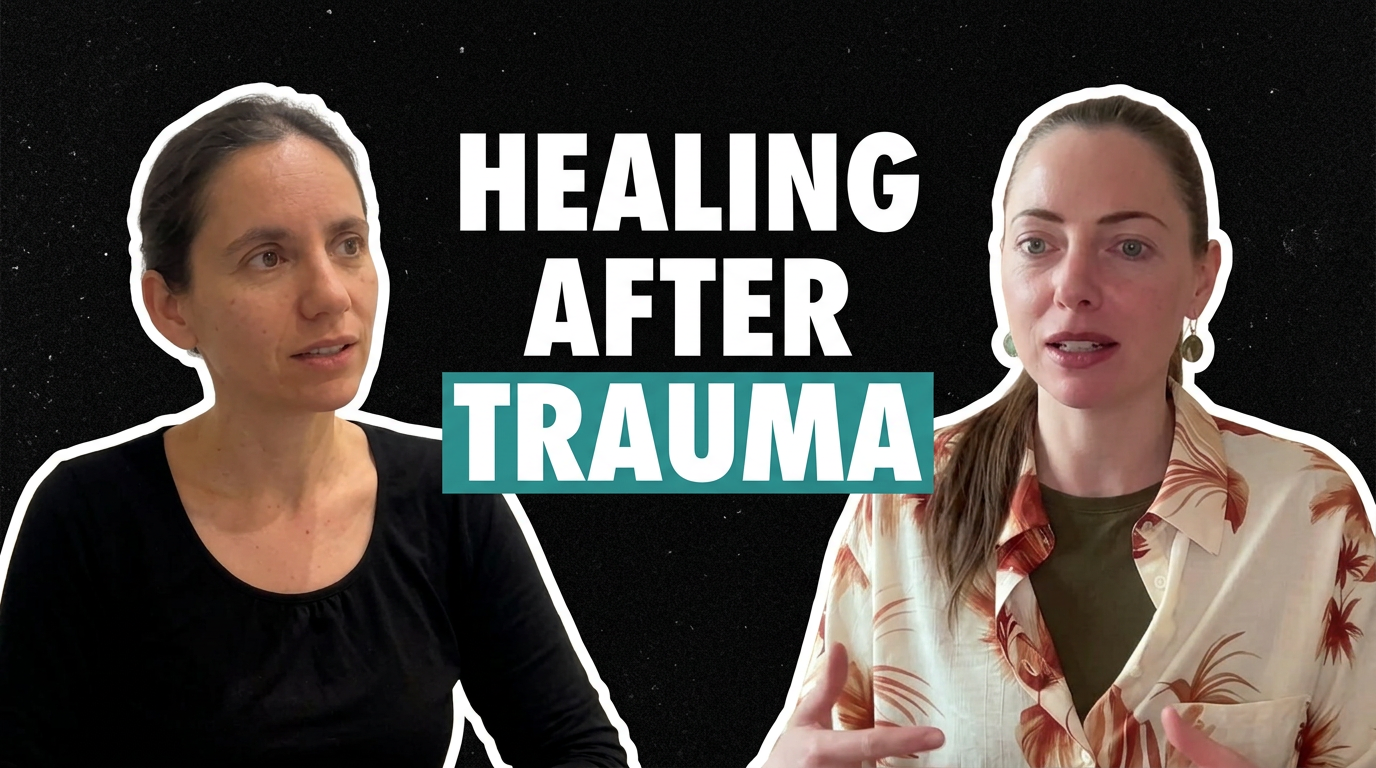
What if the physical symptom you've been trying to fix isn't the problem — but the message?
In this profound and deeply personal conversation, Melanie sits down with Niamh Devine: mind-body mentor, somatic practitioner, TRE® facilitator, and former television presenter. Niamh's journey from a paralysed foot with no medical explanation to full restoration overnight — through a single conversation with her own brain — is one of the most extraordinary stories to ever grace this podcast. But more than a remarkable recovery story, this episode is a practical, paradigm-shifting guide to understanding what your body has been quietly trying to tell you all along.
What you'll discover in this episode is a framework that could genuinely change how you relate to every physical symptom you've ever experienced.
About Niamh Devine
Niamh Devine is a mind-body mentor, somatic practitioner, TRE® facilitator, and former television presenter based in Ireland, working with clients across Australia and around the world entirely online. After a successful career in Irish media — including presenting her own travel series — Niamh set out backpacking through Asia, where she survived a devastating assault that she kept in survival mode to move through. Months later, while working on a strawberry farm in Tasmania, Australia, she stood up and found her left foot completely paralysed: numb from the knee down, with no sensation and no movement.
What followed was four months of fruitless medical appointments, no diagnosis, and a growing certainty that the explanation lay somewhere other than the physical. It was during a retreat at a Buddhist meditation centre — on her 30th birthday — that everything shifted. While practising loving kindness meditation, Niamh sent love and forgiveness to the two men who had attacked her. Her upper left leg twitched. A single word she had never heard before dropped into her mind: psychosomatic.
That word opened a world. She went on to research the mind-body connection deeply, discovered the work of Dr. John E. Sarno, spoke directly to her brain in a four-step process — and woke up the next morning able to walk for the first time in four months.
Today, Niamh teaches the very framework that healed her through her group program Language of the Body and individual sessions. She has been featured in The Washington Post, BBC World, CNN International, NBC's Today Show, Sky News, Cosmopolitan, and Marie Claire, and delivered a TEDx talk titled Your Body Isn't Failing You — It's Talking to You at TEDxTralee Women in October 2025.
Listen to the entire podcast episode on this website, on Spotify, or on most major platforms.
When Your Body Is Trying to Tell You Something: The Mind-Body Connection, Psychosomatic Healing & Trauma Release with Niamh Devine
What We Explore in This Conversation
The body as your best friend
Niamh introduces a perspective that reframes physical symptoms entirely. Your body isn't attacking you. It's protecting you. When life moves too fast to face what we feel, the body holds it — patiently, lovingly, like a best friend who says "I've got this for you until you're ready." The symptom is the knock on the door.
Not all physical symptoms are purely mechanical
This is the starting point that changes everything. Acknowledging that a physical symptom might have an emotional or mental root is not the same as saying "it's all in your head." The symptoms are real — they're just communicating something beyond the structural.
Niamh's own story: from survival mode to paralysis to full recovery
Niamh shares how her body held the weight of what had happened to her while she kept moving forward. The assault happened in Southeast Asia. She flew to Australia. She kept going. Then she bent down to pick a strawberry — and stood up without the use of her foot. Four months of medical confusion followed. And then a single meditation changed everything.
The role of loving kindness meditation
On the fourth day of practising loving kindness meditation at a Buddhist retreat centre, Niamh did one of the hardest things she has ever done: she sent love and forgiveness to the men who had harmed her. Her leg twitched. On the fifth day, it happened again. The word psychosomatic arrived. And from that moment, a new path opened.
The four-step healing framework
Niamh walks us through the exact four steps she used — and continues to teach:
Awareness — Recognising that there is an emotional undercurrentResponsibility — Stepping into ownership of what you can actually do
Release — Finding a way to move what's held in the body out of the body
Focus — Redirecting your mind, because what you focus on, you recreate
The healing can happen at any step — but all four must ultimately be completed.
Speaking directly to your brain
Niamh describes locking herself in a room and having a four-part conversation with her brain: anger, gratitude, asking for what she wanted, and making a promise. She woke up the next morning able to walk. This isn't metaphor — it's a methodology.
The stye story: what happens when we don't finish the work
Niamh shares a deeply relatable story of a stye in her eye — and how it returned months later on a perfect solo getaway, revealing that she hadn't actually completed the work of releasing the irritation behind it. The body will always remind you.
What 70,000 thoughts a day are actually doing to your body
We have an estimated 70,000 thoughts a day — the majority unconscious. Niamh connects the cumulative weight of unexamined thought to physical fatigue, chronic pain, and illness. How many of those thoughts are angry? How many are sad? How many are weighing on you?
TRE® — Tension and Trauma Releasing Exercises
Niamh explains TRE® (Tension and Trauma Releasing Exercises) — the somatic practice she used to heal her own PTSD symptoms and now teaches to clients. It activates the body's natural tremoring mechanism, allowing the nervous system to release what's been stored below the level of conscious thought. It is gentle, self-paced, and does not require re-traumatisation.
Slowly and often: the principle that makes healing sustainable
Rather than dramatic cathartic sessions with days of recovery, Niamh advocates for a "slowly and often" approach. Releasing a little at a time, returning to baseline between sessions, building a sturdier self gradually.
You are not here on earth just to heal
One of the most important messages in this episode: the journey inward is not meant to become your entire world. You are a creator being. You are made of many parts — and focusing only on the wounded self neglects all the other branches of the tree. Give life to all of them.
The anchor point practice
A simple, everyday technique for building awareness: find a place in your body — the chest, the belly, along the midline — and hold your attention there while you go about your day. Washing dishes. Reading. Listening to a podcast. Just a few seconds at a time. This is how Niamh began. This is where the body starts to feel heard — and stops needing to shout.
What it means to give up your armour
Some people are not ready to release their physical symptoms because those symptoms are providing protection. Niamh talks about this without judgement. When her foot wasn't working, she didn't have to face her trauma. That foot was a relief. Understanding this — that the body protects you, not punishes you — is the beginning of genuine compassion for yourself.
Key Insights From This Episode
Physical symptoms are the body's only language — and they are always trying to help youHealing can begin with awareness alone — you don't always have to fully process the eventThe four steps to healing: awareness, responsibility, release, focusTalk therapy can only go so far — because it's your body that has lived through everythingYou can release stored emotion without re-experiencing it or re-traumatising yourselfWhat you focus on, you recreate — changing your thoughts is not optional, it's structuralSlowly and often is more effective than intense, infrequent cathartic workYou are not here on earth just to heal — you are here to create, to grow, to live fully
Resources & Links Mentioned
Niamh Devine's group program: Language of the Body — available at [niamhdevine.com]TRE® (Tension and Trauma Releasing Exercises)Dr. John E. Sarno — Healing Back Pain (book)Eckhart Tolle — The Power of Now (book)Niamh's TEDx talk: Your Body Isn't Failing You — It's Talking to You — TEDxTralee Women, October 2025
If You Need Support
This episode touches on sexual assault, trauma, PTSD, and the long-term physical impact of unprocessed emotional experience. If anything resonated in a way that feels heavy, please know that support is available.
In Australia:
1800RESPECT (sexual assault & domestic violence): 1800 737 732 — 24/7Lifeline (crisis support): 13 11 14 — 24/7Beyond Blue: 1300 22 4636 | beyondblue.org.auBlue Knot Foundation (complex trauma): 1300 657 380
Internationally:
RAINN (USA): 1-800-656-4673 | rainn.orgCrisis Text Line (USA/UK/Canada/Ireland): Text HOME to 741741Find local support worldwide: findahelpline.com
This episode is not a substitute for medical or mental health advice. Please consult a qualified health professional regarding any physical or mental health concerns.
Connect With Niamh Devine
Website: [niamhdevine.com]Niamh works with clients online, both individually and in group programs, supporting people across Australia and worldwide.
Enjoyed this episode? Leave a review and share it with someone whose body might be trying to tell them something.
🌿 Join The Motivate Collective community for more conversations, events, and resources built around growth, wellness, and conscious living: www.motivatecollective.com
Transcript
Melanie Suzanne Wilson (00:00)
Neve, welcome to the Motivate Collective podcast.
Niamh Devine (00:00)
you
Thank you so much for having me. I'm delighted to be here.
Melanie Suzanne Wilson (00:06)
I'm so glad you focus on the connection between emotions and physical health. What do we need to know first?
Niamh Devine (00:15)
I guess number one is not every physical symptom is purely structural or mechanical. Not to say that if you have a physical symptom, that it's not all in your head, because we kind of have to break that stigma, because that's kind of the first thing that jumps to people's minds. But it is to say that if you have something physical going on that it might have a mental or emotional component to it root to it and by addressing the mental or emotional root, you can actually clear the very physical symptoms.
Melanie Suzanne Wilson (00:49)
Interesting, interesting. Then
Is this beyond the very immediate recent experiences that might have impacted our emotions? Do you see physical symptoms coming up where the emotions have gone further back?
Niamh Devine (01:05)
Really great question. So I look at our body as our best friend, and we have made an unspoken agreement with our body that our body holds what we cannot yet face or feel because we don't have the time, space or capacity. We need to keep moving forward. We do not have time to deal with maybe how we feel if there's some crisis. We just need the energy, the focus to take with the practical steps. So our body's like, no problem. I got it. I'm going to hold on to that for you, and I'm going to hide it in this pocket. So you don't become aware of maybe the impact of a certain situation. And it is over time that these, let's say, pockets, they accumulate, and it gets to a place where we've reached our limit. The body essentially has reached its limit. It can't hold any more for you. And so it comes out to be expressed as a symptom. Now, what actually is happening here is like the body's giving you a wake-up call. It's like, knock, knock. You have to look at this, you know, it might be neck pain. Might be shoulder pain. Get a sty in your eye. could have foot pain, whatever it might be. It's the body trying to get your attention. Could you please look here? Because I can't carry this anymore. And if we are to wake up to that, then we can actually help and facilitate the release of said charge from the body, which means that our body no longer has to knock, right? No longer has to give us the wake-up call, so there is no expression of physical symptoms anymore.
Melanie Suzanne Wilson (02:50)
That's amazing. And there's a lot to explore in that what led you to look at this.
Niamh Devine (02:58)
So I lost use of my left foot, total function, total mobility, and I was numb from the knee down. And when I went to medical professionals, they couldn't really tell me what was wrong. They told me it was probably nerve damage, and it would probably come back in a year, or time was lots of probablys. There was no definite least. Now, how it happened, I was picking strawberries in Australia, in Tasmania. Yes. And nice and not so nice as the story goes, but yes, it was lovely. I loved Australia. But as I was picking strawberries, I was in squat position for quite a number of hours. Now I was up and down from squat position, but the strawberries were low to the ground.
And after my shift had ended, let's say after my day had ended, I stood up, and I had a dead foot. And this dead foot never came back.
So the expression of that then was losing complete function and mobility. It was just a dead foot that lasted. And I was also numb from the knee down.
When I had to return to Ireland after a number of weeks because it was clear that this dead foot wasn't going to come back. This is where I sought out professional help. know, went to lots of different medical professionals. Nobody could help me. And at the same time, I started seeing a therapist for the first time in my life because something traumatic had happened to me while I was travelling. The number of months before I had this dead foot, and I had told her that my 30th birthday was coming up, and I just wanted to be alone away from everybody because I really felt the pressure of, " You okay? How are you? What are you going to do in the next chapter of your life? Whereas really, I was just trying to hold it all together. And so she recommended this Buddhist meditation centre, and I had never meditated before in my life. I wasn't spiritual.
But I went to this Buddhist meditation centre, and here they practice loving kindness meditation. And on the fourth day of sending loving kindness, so love, to the two men involved in the traumatic incident that I haven't really gone into here, but I sent love to them. My upper left leg twitched, which was the only part of this leg that I could feel. And I was like, that's interesting. That was only happened for a millisecond, right? And then on the fifth day, I'm sending love to these two men and my upper left leg twitches again.
And a single word, psychosomatic, drops into my head. Now I'd never heard of that word before that point. So psychosomatic is when... So psycho is mind, and soma is body. So that a physical symptom has a mental root, has a mental or emotional root. So I am given the gift of this word in this meditation, and also just that movement in that upper left leg. So then that brings me down the path of what is, what are psychosomatic illnesses? Could that be what is up with my own foot and leg?
Melanie Suzanne Wilson (06:24)
So much is going on here, and we don't have to visit what actually happened. I like that we're not visiting that because you can explore solutions and issues without actually visiting an experience. But first of all, it was two men. That says a lot. I'm wondering, had you been completely switching off from your emotional response to what happened, because you said it was months ago. I mean, when something happens to me, I have a phase at some point, maybe a while after, whenever, when I'm just scared of everything, scared of the world. We having any emotions, or were you so switched off to just keep going, keep travelling, keep doing the things and working?
Niamh Devine (07:11)
I was in survival mode, pure survival mode. I think I knew if I stopped for a second, I would break because the thing that had happened was so enormous that I just needed to keep going. I didn't know how else to keep myself upright. And I, yes, and it didn't happen in Australia. I had had the visa already for Australia as I was travelling.
So I decided just to, you know, continue on, try, try to continue on. And it was roughly maybe two months after that. Then I find myself on the strawberry farm, and my leg stops working.
Melanie Suzanne Wilson (07:51)
That's, that's huge because even then you were, you were bringing yourself into a big change and a big shift. So, were you going straight from Ireland to Australia, or did you go somewhere else in between?
Niamh Devine (08:05)
No, this incident happened in Southeast Asia. So I had already been travelling for a number of years.
Melanie Suzanne Wilson (08:09)
Wow.
okay.
Niamh Devine (08:12)
Yes. So I had had my career in Ireland, and I came to a certain point in my career in Ireland where I was like, I need a break. And so my break was like, I want to backpack around the world. It was always a dream of mine. So I decided to hop on that dream, and then this…
Melanie Suzanne Wilson (08:30)
And then you end up in a strawberry farm, and in a way, there's- I can only guess. I haven't seen a strawberry farm so much, and I haven't been to Tasmania, but I'm going to guess there would, in a space like that, be a whole lot of peace and quiet, and you're finally stopping after you'd been travelling and this thing had happened. You're finally stopping, and your body finally responds and then go for it.
Niamh Devine (08:54)
So it was actually the complete opposite. So on this strawberry farm, you're paid per tray of strawberries for the amount of strawberries that you pick per tray, right? So it's not how long you're there. And the particular managers on that farm decided to take it out on me that day and weren't happy with my... picking of strawberries and kept sending me up and down the very same row to pick strawberries that I had apparently missed. So I'm going up and down the same row, maybe finding one or two strawberries each time, and they keep telling me it's not good enough. So I'm seeing all the other pickers just kind of go off into the distance, like these little dots in the distance. And here I am, like going up and down the row, absolutely no money with these fuckers, right? These people... really putting pressure on me, you know? And so it was actually more the straw that broke the camel's back, right? That's what broke me. That was the added bit of pressure that I was already trying to keep everything in. And that was the final straw.
Melanie Suzanne Wilson (09:46)
Wow!
It sounds to me like you were being exploited after being traumatised.
Niamh Devine (10:07)
Yeah, yes, but obviously they didn't know my history or my past, but yes.
Melanie Suzanne Wilson (10:11)
No, no, they didn't know. But he don't know what anyone has been through, and to go ahead and exploit someone and isolate; it sounds like the others were further away. You are becoming isolated and vulnerable. I mean, you're just out wherever, and people are doing this. That's, that's huge. Then, to move forward and get to the comfort of looking at the next step, something is going on with your foot, and so was it a while? How did you feel when you were trying to figure out what was going on with your leg and foot?
Niamh Devine (10:52)
Well, I went down the traditional route first, you know, because I came from a quite conventional background, and that's just what we do. You know, we go to the doctors, we go to the physios, we see the specialists, you know, we get the scans, and nothing was revealing anything. And so I was left in quite a confused and frustrated state. And anytime anything would change, like if I had some kind of movement one day, that would then literally disappear the next. And I talk about movement and talk about millimetres, but that to me was an achievement, you know, and I would contact these professionals that I was in contact with, and none of them were interested. None of them had the time. And that would make me more and more frustrated. And so, you know, all of this is like by divine design. works out to be the greatest thing, you know, for me, because of the line of work I'm in now and my knowledge going on that journey by myself. So I just started reading and researching, and I took what nudges were given to me, you know, go to this Buddhist meditation centre, literally, because I just wanted space to breathe. And it was really when I got that word psychosomatic, as soon as I got home, I started researching about psychosomatic foot drop, because that was the closest kind of term I could get to what the presentation of my symptoms were. But I found psychosomatic everything, psychosomatic tennis elbow, psychosomatic back pain, everything psychosomatic.
And these people kept referencing a particular doctor, Dr John E. Sarno. He's written wonderful books, but one of his books, Healing Back Pain, is amazing. And so this particular doctor-surgeon kept being referenced. I'm like, who is this guy? He was based in a New York hospital, and he used to work with people who presented with back pain, and he would perform surgery on these people.
And what he found is that the majority of these people that he performed back pain a year later were presenting with the same symptoms. So it hadn't helped their pain. And year after year of this happening, he decided something, you know, something is up here. And so he started talking to them, and he realised that a lot of them were going through some kind of emotional difficulty, some crisis. And so he split the groups, then he talked to half of them, and he performed surgery on half of them.
And what he found a year later is always the group he talked to were performing far better. You know, had maybe say 90 % were pain-free as compared to the group who had surgery. So then he completely flipped his practice and started teaching these people about the mind-body connection. And so I was reading all of these stories in kind of these forums in the internet, you know, not the front of the internet. Like I was really searching for individual stories, and I was finding a lot of them of people understanding that their mind was causing it and were able to heal it. And I was like, well, if these people are able to heal it, I will be able to heal it. And Dr Johnny Serino had a theory that it was something kind of like an oxygen switch. I don't think he called it an oxygen switch, but the way I was reading, I understood it at the time. Was like, right, my brain has turned an oxygen switch off to my foot.
And that is why it's lost mobility. I just need to turn the oxygen back on. I just need to switch it back on. And if my brain could switch it off, then I could switch it on. I was convinced of that by what I was reading. And because I come into a place of kind of inner felt knowing that this absolutely has an emotional underroot. Absolutely. And so I decided then that I was going to talk to my brain, have a good talk to my brain. And so I locked myself into a room so I wouldn't be disturbed. My first step in this whole process was kind of, F you. Like, I'm so angry. You've taken away the use of my foot. I used to be really mobile, know, yoga, hiking mountains. I was so fit. There's no reason why there should be anything physically wrong with me. Like, this is bullshit. So I really felt it all and just let it out because my mind knows, right? I'm the only person I'm really admitting it to is myself. Like all of the cells in my body are aware of what we're living in. And it's more kind of admitting to myself like that. This is not fair. Just saying it aloud. And then the second step, then, because I was able to kind of move that out of my system, was thank you. Thank you. And why am I saying thank you? Because my mind is giving me something to focus on that takes up.
All of my attention, all I'm doing is worrying about how do I get my foot back? How can I walk again? How can I get my life back again? Which means I don't have to worry about the whole trauma I've been through. It's the perfect diversion. And that's what happened. That's what's happening with a lot of people's physical symptoms. So they're presenting a physical symptom, which means you're just focused on fixing that rather than the thing that needs attention inwardly. So I was like, just thank you, you know, for kind of the life raft that you gave me, you know, to just keep floating. And then I decided to ask for what I wanted, but now I want my foot back. All right. I want my foot back. And the fourth bit of that was, and if you give me my foot back, I promise I will deal with the emotions. So if you do this for me, I promise I will deal with the emotions. And so I went to bed.
And the next morning I woke up, I stood up, and my foot worked.
Melanie Suzanne Wilson (16:27)
Wow.
Niamh Devine (16:27)
And it's continued to work since that day.
Melanie Suzanne Wilson (16:30)
This is amazing. I know that in a chat like this, I can hydrate a lot. We're talking about how the body needs support. Okay. This feels nearly biblical, right?
It does. Because you are making a choice to give attention where attention was needed, and your foot was working because, truly, it had been a while, right? It was a while that it wasn't working. Four months. That's real. I know that I used to hear stories about something like that happening, and you would think, oh, look...
Niamh Devine (16:58)
Four months. Yeah, roughly around four months.
Melanie Suzanne Wilson (17:09)
There must be a different explanation, but no one chooses to have a foot not working for four months. It was really, really happening. You were trying all of the things, and then after four months, you were giving things the attention that they needed. This is, it's also giving a message to the world. Frankly, I can tell you that look, I believe that fate gives me the podcast guests that are needed. And in the last while I, look, I had a former detective on the show, and you can imagine the stories that come out from that. So people are saying, look, things really happen. And what I'm seeing in your story is that when people do things to people, it's impacting a lot more than the emotions because the emotions and the brain really are connected to the body as well. It had a real impact on your health.
Niamh Devine (18:09)
God, absolutely. And you don't need a detective for that. mean, in terms of, you know, if you have an angry thought, you're going to feel the direct result of that in your body, right? Your heart's going to race, maybe your chest tightens. And that is from a thought, you know, that's not from anything in the room with you, right? There's no direct threat. That's from a thought. Thoughts are generally what create emotions and what build emotions; it's generally the thought is first.
It's a very interesting kind of angle that you're coming at it from in terms of just what I'm receiving is the impact of an act is more than, there's more than a direct cause and effect from, let's say, what happens physically.
There's much more. And I just want to add to that because you're speaking about faith.
Because yes, all that happened to me, and you can talk about all that negative angle. Look how much I learned, and look about like what I learned about what the human body and the human mind is capable of. Right.
Melanie Suzanne Wilson (19:21)
You learned, you learned that the mind can transform the body because you learned how and you did it.
Niamh Devine (19:29)
Yes!
So when we talk about physical symptoms, the mind can create. And if so, the mind can create, that means the mind can dissolve.
And it's more about just the in-between, but then it’s the understanding how to. But if the mind can create, the mind can dissolve.
Melanie Suzanne Wilson (19:41)
Get ready.
Guessing that can be used with great power as well.
Niamh Devine (19:52)
How do you mean? Speak to me on that?
Melanie Suzanne Wilson (19:54)
I mean, the mind can dissolve what exactly? The aches or something else as well, all sorts of things.
Niamh Devine (20:02)
The mind can absolutely dissolve aches. It's pretty, it's pretty simple to dissolve aches. I take people through this work. I have something called the language of the body. And this is what I see all of the time. You know, I've had different aches and pains for years, you know, and even two weeks into the course, it's gone. And this is what I mean. It's kind of the understanding in between because most of the issues between us getting to that place is opening our mind up enough to allow that possibility, because there's been so much conditioning, right? We've learned that things happen a particular way. This is how we heal. This is who heals us. This is how things are caused. And so we have to unlearn all of that and begin to open ourselves up to possibility, and then maybe take on some new beliefs through some common sense understandings of how thought affects your physiology. Like you can feel it in your body if you have an angry thought, what happens in your body. Now, what happens if you have a hundred angry thoughts? And by the way, think it's have 70,000 thoughts a day, right? So how many of those are angry? How many of those are sad? How many of those, right? How many of those are kind of giving to us, and how many of those are maybe weighing on us?
And then, if we go back through the years or through the decades, the majority of obviously those 70,000 followers they're unconscious. Otherwise, we would be keeled over. A lot of people who are very fatigued, they have a very busy mind. We can...
Melanie Suzanne Wilson (21:37)
That explains everything.
Niamh Devine (21:39)
We can gain a lot of energy back through bringing awareness into the body. If we can bring our awareness into the body, which means giving the mind a job, right? So we give the mind a job, direct my awareness in my body. We calm down the mind, our sense of sensitivity and subtlety increases in the body. So we can become more aware of our yeses and our nos. Because when we move into that broader subject, this is what our body is trying to do: move us into a place of health and alignment. So like, maybe your work environment isn't so great for you. And it might be that maybe the environment isn't so great, or it might be how you're showing up in that environment. How are you adding to this environment? Like, what are you saying to yourself on the inside? What chemical cocktail are you creating within your body with your thoughts that you can address, which takes awareness first and then responsibility, but you can create a better inner environment for yourself? And that might be all you need to do instead of changing the actual work environment. That's only one example.
Melanie Suzanne Wilson (22:46)
Absolutely, it's how we show up. Is it a journey to end up showing up in the right way if we are still yet to heal?
Niamh Devine (22:56)
Repeat that again.
Melanie Suzanne Wilson (22:57)
Okay. I'm wondering if we are still, if we are still not yet healed, then how can we? Do we need to heal ourselves before we can show up the way we should? Or is there a way to show up in the world in the right way when we are still not broken, but perhaps still in pain?
Niamh Devine (23:22)
Still in pain. Okay. I love this question because it's one that comes in a lot. And the way I kind of look at it is, what does being completely healed mean? First of all, what are we trying to reach, like this illusory place? Okay. If it is that you have never spent any time looking inward, if it is that you have avoided a big trauma, it might be that you need to take a certain amount of time to address that. It might be if you have never ever laid down tools, if you've been carrying it around, if you can feel the effects of it in your physical body, it might be that you need to direct your attention there for a particular amount of time. That depends on what the person has been through. That's what I needed to do. Right. And I am reaping the rewards from that. Okay. And so, where a lot of people get stuck, though, once they start going that direction, is then they find all this other stuff. This is related to this, and this might be related to this. And then this comes from my childhood, and it's just kind of, you know, a pause for a moment. The reason you are here on earth this moment is not to focus solely on your wounded self, right? It is not to heal. You are not here on earth to heal.
You are here to drive. Yes. You know, you were here to create. You were here to bring whatever it is into the world, right? You're a creator being now, where the body might help us is that it might be showing us where our blocks are. Like, this isn't the environment for you. You need to stop these thoughts, which can show up as these physical manifestations, right? These physical symptoms. If we can bring our mind into the body, understand what the body is trying to tell us, then we naturally redirect ourselves not to create the same physical symptoms. You're right. I shouldn't be on this path. You're right. I knew to the body, you're right, buddy. I shouldn't be thinking these thoughts. So it aligns you, it aligns you. And at a certain point, this is something that I share a lot, and I shared it in my TEDx talk, Listen to Your Body. It's that when we're trying to find that healed version that healed version doesn't come from focusing solely on the wounded self. You are made up of so many parts. So there's the part of you that maybe loves to go for walks. There's the part of you that loves to work, maybe, right? There's a part of you that loves to give to your children. There's a part of you that loves to craft with their hands. There's this multitude of parts.
And if you continue to only give to the part of you that you think needs to be healed, then you're neglecting all the other parts. And if you give energy to all the other parts, you're actually helping fuel life into the part of you that needs to feel connected, needs to feel whole. So the only way forward is by giving all of those branches of the tree life. If we've been focused on one more than the other, then let's just see what branch can we maybe give a bit of that energy to. And you will see in yourself, if you're to follow this through, life will return. You don't just focus on the part that you think is broken.
Melanie Suzanne Wilson (26:35)
It seems like also our attention brings energy in a particular direction. So we can either focus on what's broken or how to fix.
Niamh Devine (26:48)
Yes, absolutely. And a key part in the way I work and what I teach, so is our mind, right? So there are a million ways that I could tell my story about what's happened to me. There's a million ways that I could sit in private and think about the things that have happened to me, when sometimes they might come to mind. I have trained myself because there's nothing I can do about the past. There's absolutely nothing. And we can get into a lot of trouble with our mind continuing to rehash things that are just.
Not in our favour, right? Now is the moment that we have moving forward. Like that's an opportunity. So when we look back at the past, right? If there are any stories that rehash, when I look back at what happened to me, I look at what has that given me? What has that given me? Like, what gift has come from that? It was like my whole life is dedicated right now to the mind-body connection, like teaching people this, which I would have never been on. I used to work in media, right? But I worked in production, and then I went on to present my own show. I actually presented a travel series around Australia.
Melanie Suzanne Wilson (27:48)
What did you do?
Nice.
Niamh Devine (27:57)
I did for a time. But so I'm on a totally different, more fulfilling trajectory.
Melanie Suzanne Wilson (28:04)
You are.
Niamh Devine (28:04)
And that's the way I choose to look at the story.
So how can you maybe rewrite some stories in your life, or whoever's listening to things that are more positive. What's the gift?
Melanie Suzanne Wilson (28:14)
What you're saying is seriously speaking to everybody because, look, at least for me personally, I'm going to just hope or trust the listener will have the same experience as me in some form or not the life experience. Trust me. I think that's pretty rare, but I think that we can have this response of, okay, remembering and processing the things that have happened that won't fix it. I can tell you what I was doing even days ago is I was, I lost track of time. think I was talking through something that happened for about an hour, and it didn't even feel like that because I was just saying this happened, and then so and so did this, this person did that. And then that happened. And in my head, I was thinking, surely if I put the puzzle together, then things are not a mess, and things are fixed, but it's not like that. That's just obsessing over a puzzle, and you don't know if you have all the pieces, and it's not, it's not putting together something new. It's not building something new. And what I'm hearing from you is that you're a physical healing. Okay. I'll tell you just how consequential this is. Your physical healing happened after you looked forward to a focus on the healing. That's massive. In the last few days, I've been losing my voice. I was a bit more creaky after having quite a bit of water, a bit seriously, and I cannot tell you what's going on right now. And literally, I've been losing my voice. So what you are showing me, I know that I'm going to learn from this. It's: focus the attention elsewhere, and it doesn't mean I worried that by doing that, it means we have to feel happy all the time, but it's not like that, it's just looking forward, is that it?
Niamh Devine (30:11)
So there's two things here. One is present and stored experiences, and the other is your voice. So your voice, right? When we lose our voice, oftentimes it speaks to a fear of expression or a fear of authority figures. Right? So we just kind of close up. And so that would be, if that rings true for you, if you're, if you're feeling that, yeah. So then your body no longer has to express that because you can now say to your throat. Thank you, throat, I've got the message. I hear what you're saying loud and clear, and I'm going to figure out what I have to do. So you're taking responsibility. That time I had the conversation with my brain, I took responsibility. You don't have to carry this anymore. Like, thanks so much for carrying it for that long. You don't have to carry it. I'm going to take responsibility.
Now, when you're to figure out a way of how to release it, okay. So when you're talking about the press, well, sorry, I don't know for context. When you're speaking to your friend or whoever it was, you, when you're maybe renting for an hour, like this happened and all of these.
Melanie Suzanne Wilson (31:19)
Not to myself, not like a crazy person. No, I was talking to someone who doesn't need to be named right now, but yes, definitely. Talking to someone.
Niamh Devine (31:24)
Yeah. Okay. Cool. All right, that's all right. Sometimes I do myself just to let it out, but you know, there could be- if you're talking about something present, as in it's just happened, right. It's in your present environment. That's one thing. If it's something that happened a long time ago, that you're just bringing up to rehash, then that's different and separate. I deal with those differently. So, which was it for you?
Melanie Suzanne Wilson (31:49)
It was things that were months ago. Months.
Niamh Devine (31:53)
Months ago. So if something is relevant or important to your experience today, it should present itself today because the whole point is life is energy moving us forward. So if it's worth looking into, if it's worth finding, let's say the puzzle piece, then it will be presenting in your life today. If it's something that happened months ago that you just can't let go of then this is a building experience for you, right? Maybe it's something that you can do absolutely nothing about. The situation might be ongoing, but there's something you just can't do anything about it. How does directing your attention to whatever it is going on, know, through that hour of, of, of rent, how does that make you feel? I'm going to share a personal story here. Okay. There was one time where somebody was just really wrecking my head, okay, really frustrating me. And I got a stye in my eye. Now, a stye in your eye is seeing through the eyes of literal frustration, or sorry, literal irritation. Literal irritation, right? There's a growth on my eye or seeing through the eyes of anger. And I was angry. And so my friend came, and I ranted.
Like, say at her for a good hour. And it felt great because I hadn't had time or space to just let out what had been building up, right? It felt great to release that pent-up charge. That night the sty popped. So it told me a lot about emotional release. That's not the end of the story. A couple of months later, I planned this amazing trip to go to this triangle wooden house, right?
I like quirky things, right? This is triangle wooden house in the middle of nature. And I had dreamed of staying in this place. I get to this place, and like within an hour or two getting there, this stye appears. This is months later. And so I stop myself, and I go, my God, I haven't let that go. I have continued to rehash that. And now that I've given myself a little space or downtime, the body is bringing it to my attention.
So I could see that actually, that vent with my friend, while at the time, made me feel good. My step two was to begin to work with my thoughts. I hadn't addressed that. So I had continued that tape in the background. And so when I got to that triangle house, I was like, I need to do something because I'm not letting this disturb my special time away, right? So thank you, eyes, for showing me that I'm irritated about this thing that I can't really do anything about. The months have shown me there's nothing I can do to change anything, right? So then what I can do is change my focus. So I double down on being present and double down on gratitude because gratitude creates a different feeling in your body.
So I'm so grateful to be here in this wooden house. I'm so grateful to have all this beautiful food. I had bought all this amazing food to cook in this really cute kitchen. I'm so beautiful for like all the things that I had set up, this wooden playground for my son. I'm so grateful.
At night the the spy popped.
And so it's taught me a lot in terms of there are four steps to healing. The healing can happen at any step, but each of these steps must be completed. Right. So the first step is awareness, as in we have to become aware that there is an emotional undercurrent. The next step is responsibility. So we have to step into ownership of there is actually something I can do about this. So, like, what can I do? Because in this process, you are likely going to meet a lot of resistance, and the resistance is going to come up in inconspicuous ways, right? That you won't realise. So you need to stay committed, and don't worry, your body will remind you if you haven't stayed committed, which is what happened in my case in that first instance.
And so when the body reminded me, I got back onto the path. Then the third step of that is the release. So, finding some way to release what's held inside. And there are many ways that you can find to release, scream, can, anything vocal is really good because we're vibrating all those tissues. ⁓ We're kind of activating that vagus nerve. Somatic practices are really brilliant. Somatic practices are brilliant because
You're releasing from the body beyond the level of mind. I teach something called TRE, tension and trauma releasing exercises, because that's what I found on my path. I actually had PTSD, and TRE healed my PTSD symptoms. It activates a part of your brainstem, which is responsible for like your breathing and your heart rate. So all of the things that are outside of our conscious control, we also have a release mechanism.
So we don't have to tell it what to release. just knows. So anyway, you could dance. There are many ways to just get, get whatever it is moving. And then the fourth step, what have I said to you, have said, awareness, responsibility, release and focus. So focus is that you have to change where your mind is going, or you'll recreate the same thing or another thing.
Melanie Suzanne Wilson (37:33)
Wow, you have to focus on the right thing, or you will recreate.
Niamh Devine (37:39)
just like my stye story has shown.
Melanie Suzanne Wilson (37:39)
You'll
So this die came back as a recreation of that same feeling, that same experience.
Niamh Devine (37:47)
Yes, because my thoughts hadn't stopped on it. They were at a lower volume, but they were there present in the background. They came up every now and again, raring their ugly head. I wouldn't give it much thought. I'd, you know, just try to brush it off, but they were there, and I needed to actively work on. Okay. And, know, going through all these experiences, it's building me into this stronger version of myself that these things can be going on outside because in the life of a human that are always challenges.
And so it builds you into this sturdier person where you can have your challenges, but you can, yeah, I'll dedicate that time to deal with that challenge. It doesn't start to seep in to your nature as much anymore. You know, your person, your being.
Melanie Suzanne Wilson (38:34)
You can let it out from who you are, and you can become something else.
Niamh Devine (38:38)
You. You grow more into you more of yourself instead of letting these other things in.
That's what these physical symptoms are directing you to, like if you were to take up the call, because it's going to ask you to live more in alignment. And when you live more in alignment, sometimes that might mean, you know, you have to stop being the people pleaser. Right. You have to stop saying yes when you really mean no. Like, so you have to start practising, no or whatever it is for you, whatever the lesson in front of you is showing. And so it allows you then you kind of building yourself up to be the person who you are meant to be. And that's continually evolving. Like I'm growing into myself every day, like every chapter I see this new version of myself, something new about myself, because I'm continuing just to answer the call and step up responsibility.
Melanie Suzanne Wilson (39:36)
Absolutely. I'm curious. Have you ever seen people who for quite a while, did not even realise that a physical symptom was existing, and I'm asking that because I've felt a physical lightness during our conversation, but I don't think I was consciously aware of the physical tension before we were talking. Do you ever see people not being aware, or perhaps maybe they reach an extreme before they realize that their bodies are struggling.
Niamh Devine (40:07)
Is what a lot of people accept things. You know, they say that's just the way it is. A lot of people that I work with, let's say in TRE, they might say to me, ⁓ I have this old shoulder injury, but I've always had it. I've been working with someone recently in my course, you know, and she's had this neck and shoulder issue for years and years, and it's, prevented her from doing her work. Within two weeks, that's gone.
There are things that people have put down to old injuries. Mostly is what I see and they don't think anything can be done. And when you begin to understand things from the mind-body lens, you begin to see it as, I call it, a site of importance. So your mind has said that this place always captures so-and-so's attention. Right? So let's say it's neck and shoulders.
This place always catches Melanie's attention. And so if anything stressful comes up in your life, then we'll just give her some more neck and shoulder pain. Go and just throw that at her, throw that at her, give her some more neck and shoulder pain. So Melanie goes, oh yeah, it's just my neck and shoulder pain. I've had that for 10 years, or had a car crash when I was a kid. You know, I like these kinds of stories. And when people come to work with me, I go, no, no, no, yes, I hear you. That story might be valid, but let's just try work with a new truth.
Let's just be with the sensation in the now. Let the story go. Let's see what happens if we're just with the sensation in the now. And I have some practices that I guide people through to be with the sensation. And a lot of times it just disappears.
Melanie Suzanne Wilson (41:40)
and disappeared.
Niamh Devine (41:40)
But I think people accept things. When you say about your question, do people not realise they have something, they might have accepted it, or they don't have enough awareness. And that goes for all of us because we all can't be like super aware all of the time because life can get full. So we need to create moments with buckets.
Melanie Suzanne Wilson (41:59)
But really Ken,
we need to allow time to become more aware.
Definitely.
Niamh Devine (42:04)
Yes.
And the great thing is you can do that in your everyday. So let's say, for example, you know, I teach them to call like an anchor point. So an anchor point is somewhere you find in your body. For me, it's in my chest, just underneath my chest. And for somebody else, could be in their belly. Maybe you your throat along the midline of the body is always easier. And if you're able to hold your attention here, let's say while listening to this audio, right? Or hold your attention there while reading a book, or hold your attention there while washing the dishes. You're probably only going to manage a couple of seconds, maybe a minute. Keep coming back to it until you get bored of it. But the next day you can try it again. And in this way, that's how I began in the very beginning to build awareness. was something that was inspired by Eckhart Tolle's book, The Power of Now. He spoke about something similar, like this and this practice kind of built from there. And it was wonderful for bringing my mind into my body. So my body didn't need to shout as loud.
Melanie Suzanne Wilson (43:08)
That's a great way to put it because we've all understood that feeling where there's a hint of something, and then the body gets louder with any sort of symptom or a feeling or whatever it might be, a headache, something, but you're saying we can bring the mind to the body more closely so it doesn't have to get so loud. I like that
Niamh Devine (43:28)
Yes, it generally dies down or dissolves completely when you bring your attention to it as opposed to away from it, which is what we normally do.
Melanie Suzanne Wilson (43:37)
We do, we do. So it's an attention seeker.
Niamh Devine (43:40)
More like, as I say, best friend and alert alarm system. You got to look at this. You really want to look at this. Right. It's helping us. It's helping us.
Melanie Suzanne Wilson (43:51)
It's helping us. Absolutely. It's a good type of attention seeker to support us. Yes. Yes. Absolutely.
Niamh Devine (43:53)
Yes.
Yes, yes.
And it's the only language it has. Sensation.
Melanie Suzanne Wilson (44:03)
True, it's the only thing it can do to tell us it doesn't have another way.
Niamh Devine (44:07)
Yes.
Melanie Suzanne Wilson (44:08)
Okay. It was quite a framework that you shared, but as a first step, if someone is thinking there's more going on here than, than the physical symptoms and keep in mind that we're not replacing medical advice here. If someone wants to go to a doctor and figure out something, then be empowered. However, if someone is sensing, there could be something emotional behind what's happening physically? What should they do first?
Reach out to someone like you or Google something. What's the very first step when they have that gut instinct?
Niamh Devine (44:45)
So, gut instinct, a lot of people kind of sit on that gut instinct is what I've noticed. They have that feeling, but they're kind of bridging between the fear in terms of this is the path I normally go down, conventional and medical. And I also don't rule it out. You know, it's what I did myself, and it can be quite good to kind of give the mind a place. Okay. They're not able to offer me help. And if it is something, you know, that is presented for that person medically, there can also be an emotional or mental aspect that would help that process be more easeful for them. So they're not adding to whatever has been given to them when they go down that route. But let's say they have this gut feeling that, and they're listening to it, that there is whatever it is behind it, that they can begin to, like the examples I've given, speak.
Melanie Suzanne Wilson (45:25)
slowly.
Niamh Devine (45:41)
to that part of their body.
They need to know the message. They need to know what their body is trying to tell them. They need to take action.
Because if you don't take action, and what I mean by actions, aligned action, and that could be changing your thoughts, right? It might not be like something, you know, that you're physically doing with your body. It could be, I was going to say, as simple as thoughts, but it's not simply done.
That's a route or a road you can go down if a person's symptom is presenting to them, if they know why it's there.
If they take action on that, the body doesn't need to shout anymore. Now the thing is, the four steps, the four steps to healing, the healing can happen at any time. The healing can happen, you know, for me, you saw it one time happening when I was, when I became aware. Another time it happened when I released the emotion. Another time it happened when I changed my focus.
Melanie Suzanne Wilson (46:35)
Thanks.
Niamh Devine (46:39)
All times you have to finish out those four steps.
Melanie Suzanne Wilson (46:42)
Okay, always do the four steps.
Niamh Devine (46:44)
Always or it comes back. I teach this in a group program called the language of the body. And this is a lot of it is to help the person open up their mind.
Because a lot of times the blocks are what we knew before. And there are also a lot of tricks of the mind. So I touched on this earlier. The resistance that we might not be aware of, because it comes in so subtly that you really need to be on the ball in understanding what's happening with your mind because your mind can convince you of many things. So it's to stay with the presence, stay with the now moment rather than any stories. Just your direct experience of, your direct experience of what's your direct experience now telling you? What's your direct experience now? What is that instead of, but in five months time, but in 10 years ago, this happened.
So I know that was a really long-winded answer. I wouldn't, yeah.
Melanie Suzanne Wilson (47:54)
Long is good. The direct experience, instead of the stories from another time focus on the direct experiences. I really appreciate what you are teaching, and it's great to know that you are doing groups. Do you support people from any location? Do you work remotely for this?
Niamh Devine (48:16)
Yes, all my work is online. I work with people in Australia, and I work with people all over the world. And I do group programs, and I also work with people individually because some people want more direct support.
Melanie Suzanne Wilson (48:29)
amazing. That's great. It's going to really make a difference.
Niamh Devine (48:35)
It is, it is. Yeah, there's a lot of people where their symptoms have been completely alleviated, where people have been living with chronic fatigue for decades, you know, gone and heart issues, gone breathing issues, gone. And.
While I am teaching the knowledge, it is the people affecting the change for themselves.
Melanie Suzanne Wilson (48:57)
That's big. We have to create the change within. Look, you are teaching me something there is so much because I tend to look to be rescued, and this is another form. expect the, the health industry to rescue us. And although there are resources and services that will help even some people say you have to want to change, but you're saying that
Focusing our attention and focusing the mind, bringing the energy in the right direction. That has to be within.
Niamh Devine (49:31)
Yes. And I mean, that speaks to you have to want to change. You do. You have to want to change because some people come to me that have been.
Maybe somebody else has paid for the session. It never works. It never works. There has to be something within you, within the person actually seeking change. Because it's a process that you're going to go through. Like I can guide you. I know where those pitfalls are. I can hold you through them. I can guide you out of them, but it's you that's going to have to go on that road.
Right. And not everybody wants to give up their comfort. Some people are very happy dealing with an illness. Some, and that sounds that can be taken in many ways. But what I mean by that is, know, when my foot was, when I didn't have the use of my foot, right. That meant that I didn't have to focus on my trauma. And that period of time, that was such a relief. That was such a help to me. I obviously didn't know that there was that I was causing it, right? Or that my mind, and you know, when I say that I was causing it, some people might take offence to that too, because they might think I'm not causing it. And yes, you're right. You're not consciously causing it. What you're doing is you're protecting yourself, right? You're protecting yourself. So if you are ready to kind of, yeah, I'm going to give up my protection. Right? You're kind of giving up. I am going to lay down the armour so I can meet myself again and know who I am without the weight I've been carrying. Because the people who are keeping the armour on, they're continuing to carry the trauma. They're continuing to carry whatever it is that life has given them. Describe it like, it's where my hands are like this, I describe it like a backpack, right? And they're just walking around with all their experiences, and in order to let the backpack down, you actually have to put the backpack down and then take out each piece and put it down, take out each piece and put it down. Now, the person thinks that they have to re-experience or they're going to re-feel the same things. That is not how it works at all. Certainly not in the way that I work, that I teach, that I guide people, that I hold people. Because, as I say, I bring everything back to the now.
You will not re-traumatise yourself, right? You're going to learn how to be in the now. What the body has held is held as sensation. It's not held as memory. Okay. So if we can stay with the sensation, we're giving it a chance to pass from the body.
And so we free ourselves. It's the path to freedom and empowerment.
Melanie Suzanne Wilson (52:16)
The path to freedom to let that energy flow through and move on. The armour that you talked about, these are great ways of explaining it. It's a great descriptions because even that feeling of having baggage, it's... baggage is not just something happened and this manifests in so many ways for months. I don't know if it has been half a year or something like that. I've had a giant handbag. Everybody around me would have seen my, it's a tote, but just trust me, it's larger than my MacBook screen. I can say that to just illustrate the point. This thing is giant. could live out of it.
And so there were moments where that taking up space, and sometimes even if I'm not cramming it full of stuff, it's, it does become physical baggage. And of course we can feel a weight as well. I think the phrase a weight on your shoulders can be quite literal, but we'll, we all have a version of this, right? Whether it's the hoarding or the buying a few more things, there are so many versions of this and the armor of course, there's the image armour Of course, putting on a mask in some way, and of course, we need to do that carefully because I've been. Actually, that's something interesting to look at for a second because you're so open about your truth. And if someone, if anyone, is wanting to free themselves from avoiding their reality through armour and masks and things, from your example, it doesn't have to involve sharing every little detail or reliving every little detail of every single thing, but still turning to authenticity.
Niamh Devine (54:19)
Yeah. So if something's living in our body, right? If we've experienced something, but we haven't had the time or space to move it from the body, it's generally still held there. And when we work with a somatic practice and you know, what I guide is TRE. So I know that intimately and with TRE, as I said, I use this to heal my own symptoms of PTSD, and I didn't have any traumatic memories, right? And now I'm able to speak about what happened to me. I'm able to bring these two men to mind, and there's no charge in my body. Now I've done a lot of work. I said they don't hold anything over me. Okay. And so with Tiore, you're releasing the charge from your body. You're releasing what's hell from the body. The body is releasing it through movement and sensation, generally shaking, vibrating, tremoring, pulsating, bouncing, swaying, all of these movements. It's quite phenomenal to watch because the person isn't doing it. They've activated this release mechanism. They're holding the container. They can turn it off, right? So they'll just keep it on for 20 minutes, and then they'll turn it off. And the body has a chance to release in those 20 minutes. And then we turn it off.
I guess in the way that I work, I work slowly and often. So slowly and intentionally. I don't believe in re-traumatising. So there are a lot of practices out there and I've done, I've personally experienced very many of them because I was trying to release emotions from my body and release the experience from my body. And I could see that some experiences, like I know breath work, for example, is people have great things to say about breath work and breath work.
practices. Now, in my experience, I did 10 sessions of breathwork, and in almost every single breathwork session, I experienced something called tetnya, which is where my fingers locked, and my different parts, myself, locked, and I was frozen. I was stuck in that position. And so it was like I was reliving shock. Okay. And so at the end of the session, would take about 20 minutes or so of like the practitioner kind of rubbing my hands for this all to kind of my nervous system to calm down. And, you know, I went through it as an experimental phase, like I trusted the practitioner and I was really open to throwing myself into anything, but I realised it doesn't have to be that way. So, so breath work is great for something. Some of these things are great for
And when I talk about breath work, I'm talking about our long sessions. I'm not talking about pranayama or any breath practices, which are absolutely wonderful for, you know, regulating hormones or different kinds of things. I'm talking about when people go for healing through breath work, which would be an hour session. And if you have any deep trauma, it can be ⁓ quite intense. And, so then there's like this period of time, so it's very cathartic. So there's this period of time then that you have to take to recover from that session.
Right. So I would have to take a couple of days, maybe two, three, four days to be gentle with myself. So I get back into a place of balance where I was before the session. Did it lift something from me? Absolutely. But it also took kind of time. And so if you're able to, you know, go for that, and if that feels okay for you, great. But for me, what I've learned from this, because I think that I healed really quickly in terms of the approach I took, is slowly and often.
Melanie Suzanne Wilson (57:53)
.
Niamh Devine (57:57)
So I found TRE and TRE is like something you switch on, you release for 20 minutes, but you do it every three to four days. And after 20 minutes, you feel grounded and totally regulated. You know, it's like something that's positive and uplifting to your day. And then, you know, three days later, you can do it again. And so I did that for maybe five months like that, you know, instead of going to these, and TRE is something you can, so I teach people.
So they're able to continue practicing themselves at home. teach people over five sessions, so they feel competent because again, the mind can come in with ways that we don't fully understand. And I say this because you can find TRE YouTube videos. I found clients that have come to me that have done TRE via YouTube videos. I did it. And I thought I was releasing, but I wasn't. But what I'm trying to say is there are ways of doing it, and there are ways of doing it for a true release. And, so I teach people to be able to do it so they can continue at home. So it's also part of that empowerment, like giving you the tools to affect this yourself, but you also feel very safe within it. So there are, if someone's holding a lot of trauma, slowly, intentionally. I've worked with people that have come to me with a lot of trauma in the middle of it. Oftentimes, I make sure that that person also has a therapist, right? So that is taken care of if that is the support that they need. And we're working on more of a slower and intentional, slower and intentional.
Melanie Suzanne Wilson (59:41)
Thank
Niamh Devine (59:48)
The majority of the people that I work with are more in a place where they are able to challenge themselves. And what I mean by challenge themselves is if I give you a different belief, right? How does this belief feel? Can you try it on for a while? How does this feel in your system if you were now to believe this?
Melanie Suzanne Wilson (1:00:09)
How does it feel to believe something that's, that's amazing? And it's great. You are acknowledging that having a therapist alongside this can help. What I'm hearing is that this is one of many tools.
Niamh Devine (1:00:24)
It depends where, it depends where the person is, you know, and it depends what the person needs. You know, what I do is, let's say it's a path of transformation. And if you're in a more solid place in the beginning, and by solid, I mean, able to hold yourself. If you are able to hold yourself, you're in a very good starting point.
If you are not able to hold yourself, slowly, slowly.
Melanie Suzanne Wilson (1:00:50)
slowly, absolutely and safely. I like how you talked about having a safe practice. That's so crucial. Whatever the practice is, especially getting movement, things like that, going gradually and slowly, so it doesn't have to be extreme. That's great. And I can relate to how you felt about the breath work. And yes, the clarification does help because
There's for most for quite a few of the Prani arms; there is a calm to it, or at least it's a bit more steady. But what I guess you're referring to with the breath work is the Wim Hof style, and there might be other names for it. If you can think of some, it could help to illustrate what we're referring to, because breath work is so broad. But absolutely. Do you think so?
Niamh Devine (1:01:44)
I've never done the Wim Hof breathwork. There are many different types of methods. The method that I was speaking to there is, is rebirthing breathworks, which is wonderful in its own right. But I'm speaking to people who might be heavily traumatised, as I was, let's say. And, but I was also a person able to hold myself through that, understand what was going on. But I'm saying in the path that I went on to take.
What I have learned is slowly often is what's going to release something much quicker from your system. Slowly and often gives you a chance to stabilise and kind of meet your new self, this new version of yourself, a bit more regulated, a bit more calmer before you move on to this next place. And right.
You know, I'm talking about a release practice there, right? I'm talking about theory as a release practice. You know, the work that I'm speaking of before in terms of ⁓ figuring out what the mental and emotional factors are behind your physical symptoms, is its own body of work. And release is an aspect that facilitates the cycle of, let's say the four steps to healing, you're going to have to find a way to get it out of your body. But the core body of work is more about teaching the person how to
know what's behind their physical system, symptom, teaching the person the mind-body connection, teaching them how to reframe thoughts.
teaching them much more, right? To get that symptom up and out, unweave that symptom. And that can be enough to relieve the physical symptom. But you have to complete all four steps at one point or another, you know, like a really, some, some way to release, it could be running for you. Right?
Or if you have something deeper than it might be, you need some kind of somatic practice, unless you find a way to keep that balance in your system.
A symptom will come back as a knock on the door, as a reminder to, hey, you haven't fulfilled a promise.
of releasing what was held inside or by changing your focus or whatever that symptom is trying to tell you, you know, like that voice, like you need to express your truth.
Melanie Suzanne Wilson (1:04:13)
you have to release in any way. I think after this I might just shake it off like the song. Why not? So it doesn't have to be one specific way but just whatever feels right for the individual.
Niamh Devine (1:04:27)
Yes. And you know, there are different, so there are different types of release and those different types of release affect a different depth. So every day, right. If you just want to every day to discharge, right. Dancing or shaking, all of those can be really helpful. Let's say for me, I knew that I had a lot of anger in my system, but I couldn't feel it. But I presumed I must have a lot of anger in my system because of what
I had been true. And because I had made that promise to my brain in terms of I'm going to find a way to release what's held inside, you know, I had figured anger must be one of them. How do I access it? And so I created this process for myself where, um, I just made a little ceremonial space, like candles, I must have made myself tea or something and incense and whatnot. And just a place where I felt
nice and safe and held and I was alone and I started journaling about what I thought must be upsetting me. And I wasn't journaling to recount. I was journaling to try and feel. So as soon as I started to feel something as I was writing, I put the pen down.
And I started to focus on, let's say, that edge of anger that wasn't really anger yet, but I could feel something. And as I held my presence there, it began to grow. I began to put my voice behind it. I just started to give it like a tone. ⁓ And that helped build it. And that tone then went into a roar and that roar then went into a scream. And I was just living the anger in my body. I was really feeling it.
That whole experience lasted maybe 10 or 15 minutes, but I really went for it. Like it came up and I just felt it to let it out. And I lost my voice. Like I had screamed so hard. I lost my voice for the next two days. I felt pretty weak. I had to rest a lot because it was the end of this cycle. I had to bleated a lot of energy. This energy had come up. I had released it. My body needs to find.
balance again, but I knew that in that time that this was normal. I'm not going to make any stories out of it. I'm just going to ride it out. No, my body needs rest. And within two days I was fine again. And I had released all of that anger. So that was something that I needed to do. And the people that I work with sometimes, so as an example comes to share, this woman used to chop a lot of wood, you know? So I said that as she was chopping the wood, you know, to bring whatever it is to mind and channel it.
Right. So this action to get it out of, get it out of her body and that worked for her. So it's, so it depends. It depends on the person. And if it's something much deeper, right, if you've never released anything and there's like trauma from your childhood or from anything, then you need a somatic practice. And I always recommend TRE because I've tried so many. Yes, I teach it, but it is fantastic. A lot of the people that I teach have gone on to train and teach.
Melanie Suzanne Wilson (1:07:12)
Take.
Niamh Devine (1:07:37)
because it's so good, it's so effective, it's so effective and gentle.
Melanie Suzanne Wilson (1:07:42)
That is amazing. It's amazing. You've found something. You found something that works. That's empowering. I'm proud of you.
Niamh Devine (1:07:51)
Yes.
Melanie Suzanne Wilson (1:07:51)
Thank you so much for sharing the solutions and the wisdom and a great amount of honesty. I appreciate it.
Niamh Devine (1:08:00)
My absolute pleasure. Thank you so much for having me on, Melanie.
Melanie Suzanne Wilson (1:08:03)
Honestly, this has been one of the most valuable conversations on the show. I've had more than 70 episodes published. We have to be around 75 guests quite easily at this point and you are one of my favorites. Thank you so much.
Niamh Devine (1:08:20)
Thank you for saying that. Thank you.
Melanie Suzanne Wilson (1:08:23)
Okay, I'm clicking stop. you used this program before?
Niamh Devine (1:08:26)
Riverside.
Never.
Melanie Suzanne Wilson (1:08:27)
Okay, what we did well, the main thing to know about Riverside is it has to upload. So ideally you don't close the tab until it has fully loaded. ⁓
Niamh Devine (1:08:37)
I won't touch anything. ⁓ You have to have a lot of trust in your guests for that.
Melanie Suzanne Wilson (1:08:39)
Okay, sounds good.
Yes, a couple of times people didn't. I actually, there's a dear friend I've known for a long time who didn't let her whole thing load and it just published the part that did load. So it happens. But yeah, absolutely. That sounds really great. ⁓ And thanks for being so patient. I'm traveling. I'm literally traveling for a work ride to now and just popped the microphone on in nearly the middle of the night. So
Niamh Devine (1:08:44)
Hahaha!
I won't touch the screen.
Melanie Suzanne Wilson (1:09:11)
Thank you so much for doing this recording when everything is shifting, but you had a message that absolutely needs to be shared. I appreciate it.
Niamh Devine (1:09:21)
Thank you so much, Meli. I really enjoyed speaking with you. Thank you for this opportunity.
Melanie Suzanne Wilson (1:09:26)
I'm so glad. Okay. So I'll close up the window now, but you leave the tab open, but we'll leave what it calls the studio.
Niamh Devine (1:09:35)
I'm not going to touch anything. Yeah. I'm going to leave this computer.
Melanie Suzanne Wilson (1:09:37)
You're all good.
Okay, have a great rest of the day.