
Kitty Stitt — Author, Former Teacher, Women's Circle Facilitator & Community Leader on Finding Alignment, Authenticity, and Abundance
What if the story you have been living needs a reframe and a new narrative?
In this rich two-part conversation, Melanie Suzanne Wilson sits down with Kitty Stitt — author, educator, women's circle facilitator, and community leader — to explore what it truly means to live in alignment with your own truth.
Kitty brings 30 years of wisdom spanning Buddhist teachings, consciousness exploration, and a 12-year Native American shaman apprenticeship. She is the founder of By Kitty and the author of Living Evolved: Write Here, Write Now — a deeply personal and powerfully practical guide to evolving from chaos to calm, one conscious choice at a time.
From a small country town in central-western NSW to the corridors of the University of Sydney Faculty of Education, Kitty has spent decades holding space for people to feel held, heard, and seen. In this episode, she shares how to rewrite the narratives that no longer serve you — and why the next chapter always begins with a single, courageous choice.
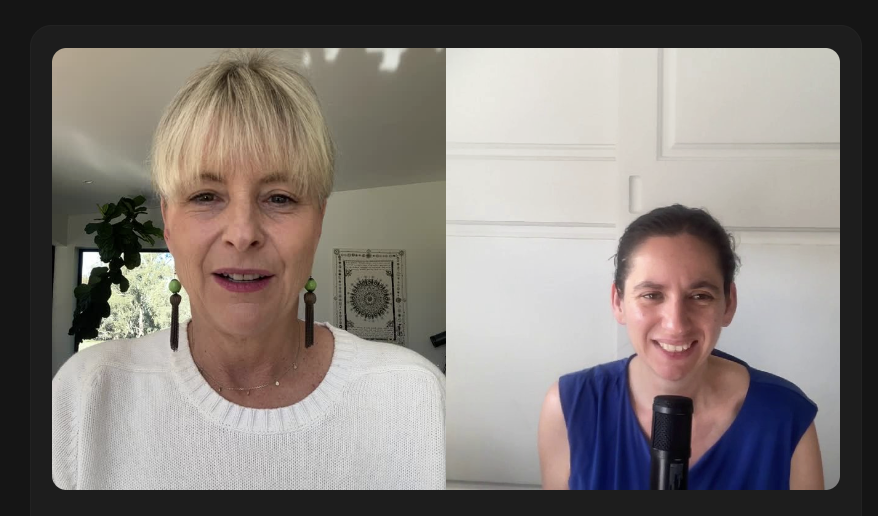
Kitty (Katherine) Stitt
Facilitates monthly Full Moon Women’s Circles and provides one-on-one sessions
Facilitates her Light Up and Stay Ignited workshops at NSW conferences, festivals, council events, local gatherings in groups and with individuals.
Part of the Forbes Talk2mebro crew
Taught health and wellbeing for over 30 years, including six years lecturing at the University of Sydney in the Faculty of Education.
Audio: Podcast Episode Part 1
Audio: Podcast Episode Part 2
Show Notes
What We Cover
How Kitty built a thriving women's circle community in Forbes, NSW — and why she has shown up every single month for 55 consecutive circles (including one live from the River Ganges in Varanasi, India)
The profound difference between city and country living — what regional communities know about connection, grief, and human support that cities are losing
Kitty's use of cacao ceremony, Reiki, intention setting, and the 13 Original Clan Mothers as tools for community healing and personal transformation
Her voluntary work in suicide prevention alongside Talk to Me Bro — and why reducing stigma around mental health begins with showing up consistently
How her background as a health and education lecturer at the University of Sydney shaped her belief that real teaching is about holding space, not just delivering curriculum
What trauma-informed education looks like in practice — and how teachers can create environments where no child has to conform at the cost of their wellbeing
The power of the Red Tent tradition and honouring women's cycles in a world that demands constant output
Living Evolved: the core message of Kitty's book and how it guides readers from old, inherited narratives to new, self-authored ones
The pause — why it's the most powerful tool we have for changing patterns, releasing perfectionism, and stepping into a freer way of being
How living in alignment with your truth is not just personal development — it's how we evolve consciousness as a species
Key Insights from This Episode
"You don't need to know what the next step is to take the first step. You just need to be brave enough to acknowledge this doesn't feel right."
Living in alignment doesn't mean life is without challenge — it means you have the tools to navigate it consciously
The smaller the town, the more tightly you feel every loss, every joy, and every need for each other — and that's exactly what cities are missing
Honouring your cycles — whether of the moon, your body, or the seasons of your life — is an ancient and radical act of self-respect
In each moment, we can be our old narrative or our new narrative. What we choose creates our future.
About Kitty Stitt
Kitty Stitt guides others to find their truth, align to it, and eventually embody it. She is an engaging storyteller who grew up across Italy, France, the USA, and Australia, and now lives in Forbes, NSW, where she has built a thriving community of women through her monthly Full Moon Women's Circles and her one-on-one healing and self-exploration sessions through her business, By Kitty.
She has been teaching health and wellbeing for over 30 years, including six years as a lecturer at the University of Sydney Faculty of Education, and completed a 12-year Native American shaman apprenticeship with a teacher in Forbes. She also volunteers monthly with Talk to Me Bro in suicide prevention, supporting men, women, and the broader community.
Her debut book, Living Evolved: Write Here, Write Now, is now available.
Connect with Kitty Stitt
🌐 Website: bykitty.net 📘 Facebook: ByKitty1 ▶️ YouTube: ByKitty2 📸 Instagram: @ByKitty1
📖 Get the book: Living Evolved: Write Here, Write Now by Kitty. Available now in Australia: Amazon AU
Listen and Subscribe
🎙️ Spotify: The Motivate Collective Podcast 🎙️ Apple Podcasts: The Motivate Collective Podcast ▶️ YouTube: @TheMotivateCollective
Join The Motivate Collective Community
🌿 More conversations, events, and resources built around growth, wellness, and conscious living — all in one place. 👉 www.motivatecollective.com
Author Bio
Do you ever feel like you are living a story that is no longer true for you?
Do you long to evolve from chaos to calm?
Kitty shares the three methods she developed and uses to find ALIGNMENT, AUTHENTICITY, and ABUNDANCE
In each moment, we can be our old narrative or our new narrative.
What we choose creates our future. So, what story will we write; write here, write now?
When we are living our truth, the rest takes care of itself.
Together we can awaken our universal creative power, the power needed at this time to ignite a global shift in consciousness.
LET’S TAKE A LEAP
About the Author
Kitty guides others to find their truth, align to it and eventually embody it. She inspires the collective to answer their call to action.
She is an engaging storyteller who grew up in Italy, France, the U.S.A, and Australia. She facilitates monthly Full Moon Women’s Circles and provides one-on-one sessions for healing, intention setting, and self-exploration (including trauma resolution) through her business, By Kitty, which is dedicated to inspiring Homoluminous Ones to shine their light.
Kitty’s life-long mission is to evolve from chaos to calm. This yearning led her on a path of self-discovery, which included practising the Buddha’s teachings, exploring consciousness, and a 12-year Native American shaman apprenticeship.
She has been teaching health and wellbeing for over 30 years, including six years lecturing at the University of Sydney in the Faculty of Education. When she realised her impact could reach further, she left teaching to translate decades of personal development insights into empowering and easy-to-read stories. She shares these in her workshops locally, interstate, and overseas.
Kitty’s charisma encourages everyone to create a life aligned to their highest potential. This book is full of Kitty's awakening stories that created the necessary catalysts to live evolved. She hopes her readers will discover their true SELF and purpose.
Be on the lookout for more books in this series:
Beyond Evolved: Write Here, Write Now
Sensually Evolved: Write Here, Write Now
Soberly Evolved: Write Here, Write Now
Parenting Evolved: Write Here, Write Now
Creating Evolved: Write Here, Write Now
Kitty’s message to each of her beloved readers is, As each of us lights up, we evolve as a species to preserve our planet. Together we create peace and raise human consciousness.
Website ByKitty.net
Facebook: ByKitty1
https://www.facebook.com/share/18hQvpY1PW/?mibextid=wwXIfrhttps://www.bykitty.net/
YouTube: ByKitty2
https://youtube.com/@bykitty2https://www.instagram.com/bykitty1/
Instagram: ByKitty1
https://www.instagram.com/bykitty1/
Book: LIVING EVOLVED: Write Here, Write Now by Kitty
Link to buy in Australia https://www.amazon.com.au/Living-Evolved-Write-Here-Now/dp/1764019202
Transcript
Melanie Suzanne Wilson (00:01)
Welcome to the show.
Kitty Stitt (00:03)
Thank you, Melanie. Pleasure to be here.
Melanie Suzanne Wilson (00:05)
What do you say to people about what exactly you do and what you provide for others?
Kitty Stitt (00:13)
That's a beautiful
question. I feel like I contribute to my community by just holding spaces for people to feel held, heard, and seen. I do a regular monthly women's circle. And I have consistently shown up and provided a space for 55 months in a row. I even did one live from the River Ganges in Varanasi in India.
because I was there for a full moon in December 2024. So I just popped on and we did it live. But I just feel so proud of myself that I've, you know, shown up consistently. And I feel like I really want to use my privilege that I've been able to experience so many beautiful teachers over the past 30 years. And I've been able to travel and, you know, I was able to go to university and get an education degree as a teacher and a psychology major. And I feel like
It's my way of just allowing others to not have to leave this country town, but to be able to have the beautiful insights that I've been able to be privileged to. So it's really my way of giving back to the community. Also, there's a lot that goes on in any town. We've had floods and droughts and mouse plagues. And a beautiful woman in our town was murdered from a domestic violence issue. And we were able to hold space for her community, and it's just a really beautiful space that I create for everyone just to be themselves and to feel supported.
Melanie Suzanne Wilson (01:41)
community.
That's amazing. I'll just clean the camera for one second. You mentioned a small town. Where exactly are you?
Kitty Stitt (01:56)
So I live now in Forbes, which is a small country town over the mountains from Sydney. So it's about five and a half hours. So it's sort of around Bathurst, Orange, Parkes, if you know those areas. And my husband's family came here in 1880. And we met and sort of lived overseas and travelled around Australia and had children in Sydney, where my family's from. And we thought when his mother became sick with Parkinson's, we thought, yep, it's their turn now.
So we came back, and we've been here 16 years.
Melanie Suzanne Wilson (02:27)
There is so much. 16 years. This is a fascinating one because I would love to see later what percentage of Aussies are in major cities. However, it's such a piece to get away from the centre of a city, but then in any regional areas, there can be a small-town mentality. I was in something that's technically a city, but behaves like a country town or
Kitty Stitt (02:30)
Yes.
Melanie Suzanne Wilson (02:54)
No, it behaves like a small town. And I'm very curious, what's the different mindset that you have seen? You mentioned bringing everybody together and supporting the people around you, but what are some of the other differences being away from the city and really connecting with the people?
Kitty Stitt (02:56)
Yes?
Sure.
Sure. I think, firstly, Melanie, it's the fact that when you live in a small country town, you're so affected. Like I feel like everything that happens, you know, know someone who, you know, somehow you know them. So it's like the smaller the town, 8,000 people, it's like you're so tightly woven that you feel everything. So, you know, it's so important then to find ways to navigate out of feeling the grief of a family that's lost a child in a car accident or because we all know each other. I mean, we don't know everyone obviously, but we have that feeling of a country town that there's not as much, you know, you're not just someone in the street, you know, everybody. And so in that way, it's nice to be able to support. Yeah, I do feel like that's probably the major difference, is that what happens here really affects everybody.
Melanie Suzanne Wilson (04:15)
That could be something that people need more of because we all know people are getting isolated and more attached to devices than fellow humans. It seems like where you live, people are supporting each other.
Kitty Stitt (04:30)
Yes, so if someone's child is having treatment at Westmead, you know, we're here cooking meals and looking after people around here. And I feel like it's just, in Sydney, you know, people can just slip away and become disengaged and not, you know, have that opportunity to step up and support each other. So yes, you're right. I think it's such an important thing that the city people can learn from the country people. Yes, indeed.
Melanie Suzanne Wilson (04:59)
You said that you support a community. Is that a specific community that you have built or gathered? Which, or is it simply anyone around that area?
Kitty Stitt (05:09)
Yes, very quickly.
Yeah, great question. With the women's circles, it's open to anyone. So it's any woman. And people bring friends and family members of people who are staying for the week. People bring people all the time. And I also support people one-on-one. So they might come to the house. I do a really beautiful sort of circle with the cacao. And the cacao is this really beautiful. Have you heard of cacao?
Yes, it's like a really lovely, it's like a hot chocolate. Yes, it's like a hot chocolate, but I spent a long time training with the woman over in WA to be in reverence around it and to be really sacred and to honor it and to welcome it as a very gentle plant medicine that just meets you where you are and opens your heart and just allows you to feel, like I said, held, heard, and seen. So that's lovely. We might sip on the warm cacao.
Melanie Suzanne Wilson (05:44)
Hope.
Kitty Stitt (06:10)
I do Reiki, which is a really beautiful energy work. And women just feel like, just feel sometimes that they haven't been able to stop for days, weeks, years. And when they come here, they can just relax. And so I provide that beautiful service as well. So we do goal setting, and intention setting, and vision boards. I'm always doing really beautiful vision boards.
like this, so it's whatever the person needs. Sometimes they may be grieving someone, a loved one in spirit, and so they might come on their birthday and we, you know, have cake and yes, it's just a, it's just, each time somebody comes, it's 1000 % different to the last person, and you never know what people need or want. So it's just nice just to be, have that safe space to just turn up and relax and just be still.
And also the women's circle that I'm doing at the moment, you know, we're going through a book, and we do it every second year. It's called The 13 Original Clan Mothers. And it's just a really beautiful Native American, because I've done a 12-year Native American Charmin apprenticeship, amazingly with a woman in Forbes. So when I moved here 16 years ago, I met her, and it was fascinating because
I had been born in Rome and then we lived in Paris and then we lived in Indianapolis, Indiana and then we lived in Sydney and I was just, I was of the city and I had no idea how much I was yearning to connect with Mother Earth and nature until I actually arrived in Forbes and I met her literally just weeks after arriving and started my apprenticeship and I realized, that was what brought me home back to Forbes was this chance to understand my cycle and the moons and the animals and the land. I have spent so much time on this property, down at the river, drumming. And I feel like it's just such a beautiful place to heal. And nature shows us how to heal, because you only have to connect with, well, looking at this river, what would the river do? The river's flowing. Holding on or being attached, it's just flowing. Or you might look at a snake that just sheds its skin and just allows itself to be a newer version of itself without asking, " Why did I have that skin? And beating themselves up, it just sheds the skin. And so I found that coming to Forbes and learning from Chantelle Toucose and Madison Crowe, who's her teacher, who's from the States, learning from them, it just gave me this beautiful opportunity to understand the world from an ancient perspective because the Native Americans are the original people, like the Indigenous people of Australia. So this book, each month, it goes through the different ways that you can access your truth. And that just means come into alignment with what your truth is. It's one month, this month, there's listening woman. So it's like, you know,
Kitty Stitt (09:28)
How can I be still enough to hear what is my truth? And then last month, was seeing the truth. Am I ready to really see what is my truth? And that's a beautiful month. But every month, we go through, and we look at these beautiful ancient stories, which are great for people who, it's a big concept, right? But each chapter has this beautiful story of a Native American story. They said, women say to me, I just love the stories because then I can understand and then I can relate it to my life. So it's just trying to contribute to my community in a way that's relevant and practical because I've spent 30 years and explored so many things from Buddhism to consciousness, and it's just good to be able to put it into simple terms that people can meet those teachings where they are and nothing feels too out there or too unattainable. So I think that's my gift. That's how I support my community. And I also work with suicide prevention.
Melanie Suzanne Wilson (10:34)
That's a very.
Is that with a particular organisation?
Kitty Stitt (10:39)
Yes, so we had a beautiful boy take his life who was in the under-18s rugby league team. And again, towns like their sporting groups are like their family. And that's another thing that we talked about you and I earlier about the beautiful aspect of the country town is that ⁓ the club, you know, it's like, yeah, when something happens, everyone gets around their people because you they've all been doing in the football since they were the under eights you know so they like they've been grown up with this this beautiful family and so when this boy took his own life the coach his wife he came to me she said I'm gonna make a difference you know we've got to be talking about this it can't happen in our town we have to be talking about it and so that was in like around June and then by November they'd already contacted an organization called Talk to Me Bro.
And they're an Australia-wide organisation. And they were here in November. We had a beautiful gathering. And from then, we formed a small group. And we do monthly free catch-ups. So people can just turn up. And we can reduce the stigma around talking about mental health. We can make it a place where you just come, and you feel, again, held, heard and seen. And it's all free because they've had been successful in getting grants from the government, because they recognise what a big issue it is in all over Australia, as you know. And I love that because we have not missed, again we've never missed a month and that was like three years ago or two years ago, two years ago, turned up every month and the boys do the boys catch up because with the research we've shown that men often like to just be supported by men and we do women's catch up and then sometimes we do a community catch up, is just everybody. So we have one tomorrow morning. And we're raising awareness because they're doing a fundraiser, Stride to Survive. So we're walking around the lake instead of doing our usual, what we normally do on a catch-up. So that's been really beautiful. That's just totally voluntary. And so there's so many ways that you can be a community person if you are willing to, yes, put your hand up. I run workshops, and I go into schools sometimes. Yeah, there are just so many beautiful ways that you can support a community if you've got that open heart.
Melanie Suzanne Wilson (13:17)
Absolutely. I wanted to ask about so many things. Firstly, I do want to go back to early on though, you mentioned that you were a teacher as well.
Kitty Stitt (13:30)
Yes, I did my degree at the University of Sydney and did my honours in HIV, AIDS and drug education back in like the early 90s. And I've worked in all different, you know, the Catholic education, the private education. And then when I got back from travelling with my husband, I started to lecture at the University of Sydney in the Faculty of Education. And I just loved that.
I was really ahead of my time, you know, like we were talking about, because it's ⁓ health, health education. So, you know, I was talking to the people who are going to be primary teachers about, you know, you may have someone in your class whose parent dies, you know, and how are you going to do that? And have you actually looked at, you know, have you dealt with grief in your life to then be able to be a teacher, to then be able to hold the space for that child? And I got really beautiful emails from people who said, I thought I was OK about this that happened. And I realised that I wasn't. And now, I'm you know, seeking help. And so many positive things that they said, you know, you're not just teaching the curriculum. You're actually allowing us to explore where we're at so that we are more empowered than to be teachers that are, you know, what we do as teachers is, you know, all, it's not just the curriculum, it's, you know, it's that tie in the shoelace right in that moment where that child just needs you, or the things you say, like that's actually what is, what teaching is all about. It's, you know, those moments where you're just changing lives.
Melanie Suzanne Wilson (15:16)
You are, are, because especially in some of the more arts focused topics, you're exploring, you're exploring issues that impact people. And I personally don't believe that someone could fully detach from hearing about a story that feels just like their life without then wondering, okay, what's the implication today? That would happen so much, but even young people are in that environment for such a portion of their day and week and year that these are the people they are around, and they're going to be showing up in whatever reality they are in, and life happens.
Kitty Stitt (16:01)
Yes, that's exactly right. And that's why I love teaching health because it is teaching the children to be empathetic. It's teaching them how to problem solve with people who have a different background or who are going through something that you could never understand. And I think that so many aspects of the curriculum do that. I mean, look at English. When a child reads a book, it's like opening a whole world to see how somebody else relates to the world, how somebody else has developed their coping mechanisms from experiences they had as a child. And it's just such a beautiful opportunity to allow them to see the world from a different perspective. So I feel like teachers have that magical opportunity, yes, for those moments, those life-changing moments that shape a child.
Hmm.
Melanie Suzanne Wilson (16:53)
going to ask the controversial question I probably shouldn't ask, but what do you say to the educators who are trying to expect conformity from people who are recovering and probably still in a fight or flight? How can people bring a trauma-informed response to any educational spaces or workplaces?
Kitty Stitt (17:20)
Fantastic. So I have had the opportunity of working in schools that do that really well, and I'm just in awe because there's that beautiful skill. Someone said to me the other day, just, you know, do kids get in trouble if they're different? And I said, God, no, that is the absolute teacher's specialty. It's like knowing the child so well that you just see, right now, we just need to redirect. Nobody knows, nobody sees. And it's like, I feel so proud to be teacher with when I see children, you know, who, who don't want to sit still, who don't want to like always do as they're told and conform. And I love, I'm so proud to be a teacher when I see it done so beautifully. When I see that there's no shame, there's no telling them that they're in trouble, that they're wrong. It's like a good school. The teachers are so meshed and so well, they're so connected that and they're so connected with the children that it's honestly, it's effortless. I've been lucky enough to have that experience. So Melanie, I can't even speak about that because I've never witnessed a teacher like that. I've been so blessed. But these teachers, they've been given a lot of support, like professional development. they know the beautiful ways to... In our town, we have special education units and you learn so much even seeing this how the special ed teachers deal with children and then you go into a mainstream class and it's the skills that they have are the way all children should be taught because there's so there's so much beautiful mirroring okay like what does the child need right now let's make that happen so nobody has to feel any of the things that you said can happen it just can effortlessly not happen and that's that's skillful teaching.
Melanie Suzanne Wilson (19:22)
Your town is very lucky to have you.
Transcript Part 2
Melanie Suzanne Wilson
As we get into part two of this episode, which is a treat only get to do occasionally, a double, I want to seriously acknowledge the work you are doing because,
You talked a lot about mental health last time and the importance of community. And this is as important as ever. And knowing that you are a former teacher, I can tell you that we live in an odd world right now. And so I'm very curious as we bridge into talking about your book, Kitty, I'm wondering, I'm wondering in particular what
wisdom you can share with everybody about navigating spaces that are either... actually, here's a way to put it. We have very relaxed communities. We have very informal spaces where someone is sick, and people bring a meal to them, and then we have some very bureaucratic spaces that could have felt like a community, but it's not. I'm very keen to ask you.
How can we look after everybody, whether we are in one of those types of spaces or the other?
Kitty Stitt (01:19)
Good question, Melanie, I feel like it's well, actually comes up when I talk about my book. It's like knowing in your heart what's right for your child, what's right for you. And it's like following that. And if something doesn't feel safe and comfortable and authentic, and it really goes back to following your body's internal cues, you know, if you're getting an extra stomach in a place, it's kind of like
I don't have to spend my time in a place where I don't feel seen, heard, understood and acknowledged. And, you know, we need to be in spaces where we thrive. And that's why I'm so proud of, you know, people I know who have said, " My child feels anxious at school. I, can't get him to go to school. It just didn't feel right. So they've chosen homeschooling.
And then when they're in that space, especially in a rural area where it's not common, then they have to use the amazing technology that we have that you and I are utilising now to find groups of people who are also following what's right for their child. And then so it's about creating that community. You have to drive to the local town to get together with the other children, that's what you do, and it's following your heart, and it's hard to go against the grain. It's hard to not be going mainstream. But I feel like if you're following your heart and you're following that being authentic, then find the community where you have that feeling of safety, like you're saying, where there's not the bureaucracy, where you can assist people to be in their happy place.
Melanie Suzanne Wilson (03:06)
That's amazing.
Kitty Stitt (03:08)
Like I said, a lot of schools.
Melanie Suzanne Wilson (03:10)
Go for it, go for it.
Kitty Stitt (03:11)
If you can find a school that does that well, that's wonderful. If you can't find a school that does that well, I feel I just have so much admiration for people who then find a way to do an alternative to what everyone suggests you should do. Because that's not easy. It's easier just to go along with what the, as you say, bureaucracy is of just, yeah, so I'm really proud of people who can choose a different alternative if something doesn't feel right for them.
Melanie Suzanne Wilson (03:49)
That's an important thing to consider in any life decision. Knowing what feels us, sorry, knowing what feels right for us. And the reason why I feel so emotional asking these questions is because I've seen that we are in a society that questions our legitimacy when we are doing something that feels right for us.
I personally, I don't eat meat, and I feel comfortable with that decision, and I don't judge people who do eat that because we all have our freedoms. And I know that some people feel anxious because they feel overwhelmed in some spaces or whatever it might be. And it seems like there's a fixed approach to people who are not fitting the box.
Either wear a set of headphones or do what everybody else is doing. So I'm wondering how can we feel empowered and speak up for what we need and legitimise what we need in spaces, in a society that questions us.
Kitty Stitt (05:07)
Well, then I would say, you know, start with what I started with at the beginning of my book. It's like, am I just going along with things because it's the way I was brought up, it was the way society thinks I should do it to think, you know, or am I there an alternative way? And that can take time. It takes a lot of guts. It takes a lot of guts to say, you know, if the pediatrician says try medication and you say, " That's not my first choice. Then you try another avenue, and it takes a lot of being steadfast and saying, I don't know where I'm going or what's going to happen, but I know that where we are right now doesn't feel right. So it's like, you don't need to know and be sure of what the next step is. But if you're motivated by, well, this doesn't feel right. So I'm going to try to find space where it does feel right, then I've always found in my experience that all the doors open. So I'll just share a little story from my book. We're living in Newtown and, you know, Newtown's like, our house is three k's from the city. It's a lot of pollution. We had a beautiful school, but the walk to school was along King Street in Newtown and Sydney. So a lot of traffic and pollution.
And my daughter had been sick with colds all winter, and my little one had pneumonia, and I just cried out to the universe, " This can't be, this can't be it. I just don't know what I, where or what or how it's gonna change, but this can't be it. And as soon as I spoke those words, that was on the Wednesday and on this Friday, my husband came home, and he said, You know, the parent companies, the company that owns us, is having some troubles. How would you feel moving to the country? And so literally eight weeks later, you know, we'd had four farewells. We'd put our house in the market. We were driving into this place in the country. I had no idea what I was doing or what it would look like or how I was going to create that change. But as soon as I was like, really knowing that this wasn't right, then all the doors opened into the future for me to create what I needed to create. And then we had a house on the lake, and we had trees, and we had fresh air, and we've never looked back, and that was 16 years ago. But in that moment, I could have continued living in Newtown. I could have pushed all that down and said, oh, don't be ungrateful. You should be counting your blessings. You have so much to be grateful for. Why are you complaining? I could have ignored all of that and been like, " It's good enough, you know, but I didn't. I felt with every part of my body, I allowed myself to cry and to grieve and to be like, " This doesn't feel right. So by doing that and acknowledging honestly, all the doors just opened. And that's what I say to people I work with. You don't need to know what the next step is to take the first step.
You just need to be confident enough to take that first step, and everything else, you know, everything else works out because you've been brave enough to acknowledge this doesn't feel right for me or my family or this community. You know, it's been wonderful to this moment, but right now I need something else. It's not, you know, it's not that the community was bad. It wasn't, but it just wasn't right anymore for me, my children and my husband.
Melanie Suzanne Wilson (08:51)
You can be grateful to people who have helped you when also knowing that you need something else.
Kitty Stitt (08:57)
Correct. Yes.
Melanie Suzanne Wilson (08:59)
You mentioned how this aligns with your book. What other lessons do people need to learn that the book highlights?
Kitty Stitt (09:07)
Beautiful. Well, as I say from the beginning of my book, this is just an example of one of the infinite ways that somebody can connect to their truth and then light up and then contribute positively to their community, to humanity. That's how we evolve as a species. Mine's just one example. There are so many different ways. And throughout the book, I've always said, at the end of a chapter, I might say, have you ever planted a seed that you had no idea that you were planting? Then years later, it just manifested, and you're like, wow, I had that thought five years ago, you know? So I always try to invite the reader to think about times in their lives or how they felt when they really felt an alignment. You know that feeling when you're just like in the flow? One time I went away for eight days, and I wrote every day for like 12 hours with no, my body held up.
I was just so creative. I was just like plugged into something beyond me because it was for the good of all. And I was just guided because I I'm sharing about inspiring others to answer this call to action, which is, you know, find what is your truth, listen to your body so that you work out what feels good, what doesn't feel good. And then start to align to that. And by aligning to that, takes us back to what you said. That's where you need to be like, well, you know, who makes me feel good that I spend time with, who drains me, who, what job is my job really fulfilling me and making me feel satisfied? And then eventually, you know, I start the book stories around the age of 18, and I finished the book stories around the age of 50. And by then I was really living a line to that truth. And then when you, when you do that, there is abundance, and it does, life does flow. It's not to say that
Life doesn't happen. We still have all the things of being human, know, death and being away from people and sickness. But it's just that you're more, you have more tools because you develop those tools. And my tools may not look the same as the tools that you develop, but you'll find it's like when the student is ready, the teacher appears. So the person reading will find their own tools to live in that feeling, have that alignment.
And so it's just a very positive book. It's all about how, when we do this together, we can evolve consciousness on the planet. So it's very positive, so much positivity, so much acceptance, so much shift in perspective that allow you to view your past stories in a more evolved way so that you're not the victim of those stories. You're more the empowered creator. It's like
Wow, I created that story so that I can learn all these things. So you go into gratitude for those. So it's a very beautiful book, and it's got like a futuristic ending. I don't want to give away the twist at the end, but it's got a very futuristic ending where consciousness evolved to a beautiful cooperative, kind, abundant place where everyone feels safe and accepted.
Melanie Suzanne Wilson (12:24)
That is amazing. That's a great book in particular.
Sorry, it flicked microphones. I'm just checking. That's a great angle and a great end to the book in particular.
This is, this is a big message. You're saying that we can listen to the voice within, and I'm wondering how does this approach line up with your background in education, where, especially historically, I mean, you were teaching so many years ago. I was a child in the nineties and
There were expectations in these spaces to fit the box, fit the norm. And there was an expectation as well to do what we are told instead of finding what feels right for us. How did you bridge from one to the other, and how can both thoughts, how can both spaces coexist? Because I know that those thought processes, it goes beyond schools; we know that those expectations then filter into workplaces, all sorts of mainstream structures. How can we make peace with the world around us when also living in our truth?
Kitty Stitt (13:46)
Yes, great question. So all we can start, the only place we can start is ourselves. And once you start with yourself around how can I navigate those spaces and still be in line to my truth, then I feel like you become a good role model for people. So my children went through mainstream education, but they had this, you know, incredible mother and father who just modelled.
You can be whatever you want to be. You've got so much, and they've got such beautiful emotional intelligence. So my dream is that teachers will do that in the classroom, that they will show children to be kind, to be compassionate, to be loving, and to celebrate everybody in their diversity and that there's equality in their hearts.
So I suppose I hope that a child will find that. My positivity believes that children will find that. Even if they don't have it at home, they'll be that teacher, they'll be that community leader, that coach, someone who gives them a job. I just feel like we have to trust the process that we can. If you start with knowing what aligns to your truth, then you can find the job that lights you up and that we can navigate our joy by knowing what's true for us.
Melanie Suzanne Wilson (15:18)
So living in alignment, it's fascinating that you did move from the city to a small town. And I would say these days that is an experience that a lot of people would be considering or contemplating whether they have done it or not. I'd say, since maybe a few years before COVID, at least, and definitely after COVID, people were wondering did they really want to be in the city. It's, it's a big leap because we are fed a narrative that we'll have more of what we need in the city, and we could have more resources in some ways in the city. But, but at least within your truth, you needed a different space. I wouldn't swap places with you. I like to be near water, but I appreciate, I know some people who wanted to do the sort of thing you did and get some space from the crowded city. I'm curious, have you talked with anyone else who made a similar elite?
Kitty Stitt (16:26)
Yes, I have. You know, although there are so many resources in the city, when you raise a child in the country, they go away to the city, and people notice that they're very resourceful, very resilient. They can do things, and they just have this attitude, a, you know, I can do an attitude. And I feel like, you know, the feedback that I've got once they've moved to the city, when they finished year 12, that there is a certain protective factor from growing up in the country that I've noticed when they've moved to the city. And I just needed to spend more time in nature. Like I said earlier, I'd lived in Rome and Paris and Indianapolis, Indiana, in the middle of Sydney in the eastern suburbs. And I just didn't have any idea of my cycles, the moon, tides, rivers, trees. And when I came here, I met the Native American Shaman teacher straight away. And then I realised, wow, there's so much I can learn from nature that I never ever would have been able to learn in Sydney, a new town where there was more concrete. So I feel like it's just, it's the slower pace. You can go down to downtown and do like five jobs in 20 minutes, you know, whereas those five jobs in Sydney would take the whole day. So it's a simpler life, it's slower. And yeah, people, other people who've made the change feel like they wouldn't go back. But I mean, I still have all my family in Sydney. So I go to Sydney a lot. So I still have the, I still have the experience of the city life. Whenever I'm there, I think I've made the right choice.
Melanie Suzanne Wilson (18:24)
It's definitely good to stay connected with the city for sure. Absolutely. And it's fascinating. I see both sides a lot. You talked about physical health a bit and, and the light is very odd. Would you mind waiting? Would you mind waiting one second? I really want to get to that blind stand. There are blinds there, and you can see this, just this light on my arm. Can you see that?
Kitty Stitt (18:52)
Yeah, yeah, go for it.
Melanie Suzanne Wilson (18:54)
Thanks. I felt like I had to. It was just looking odd. sorry. It was, I mean, it's going to look like that through the whole recording. Why not just fix it?
Okay. That's Think, have it right. Have it the, have the light the way we need it. Okay. That's good. They say that you need a lot of light, but I think sometimes you need less. Okay. The physical health in the city or your physical health in general. This is something I would love to look at because I found after I had a few days in the city and I was settling into it, I felt quite sick for the first time in so long. I felt like I was losing my voice physically. And I know that we adapt to all sorts of things, but also, there's a rush and a busyness that could happen anywhere. And that would of course, change our physical makeup quite a bit. But you mentioned cycles as well.
I think women should be encouraged to talk about the realities that do affect us because I don't know if you've seen, but in professional work in general, we're expected to just keep going in a straight line with our energy levels all the time when we know we're not built like that. And I'm so curious about your experiences because on my end, I know that I will have a few days in the month when I'm just wiped out, fading away, and it's just happening. And there's no point saying to us, be in a straight line, because then the highs are so great, even if the lows are something else. What has your experience been with things like that?
Kitty Stitt (20:50)
Yes, I found exactly the same. And I hope that the future workplace is more respectful. I know there's a lot of people doing amazing work in that area where they're, you know, trying to get men to understand that women have different energy levels. Some days, they just need to go home at lunchtime or they're tired. So yes, I hope that the future there will be a much, much more respect. And that's why we study that 13 original mothers that I spoke about because that's respecting that in the old days they had something called the Red Tent and every single cycle the women would go into the Red Tent and first they would honor three days, three days and two nights of complete silence where they would just go within for the answers, they would be still and then for the rest of their cycle they would be in the Red Tent with their other tribe members and sisters.
And they would be creating because at that time the womb is the most open to the universe, and that's when women were most creative. And in that time, that honouring of their cycles, the other younger girls who weren't menstruating yet or the older women who'd gone through menopause, they would do all their chores. And so by doing the 13 original Clan Mother'’ book by Jamie Samms, we honour that going within on our moon cycle to respect the silence, to go inward. Sometimes you can't necessarily go completely silent, but it's that honoring, I'm starting to menstruate, I'm going to honour that and just be a bit quiet, look after myself, a little bit more self-care, a little bit less doing and a little bit more being. So I think if we follow traditional indigenous people, they always lived with their cycle. Their cycle was what how they sowed, you know, the pagans, how they sowed their crop. Everything was done around the moon cycle. So I feel like by me doing like all these 55 full moon cycles in a row, we've been doing that. We've been honouring our cycles and honouring when the moon's full and then coming together and being quiet and, you know, letting other people do our jobs for the night while we tend to self.
Melanie Suzanne Wilson (23:16)
That's amazing. Knowing that this was honoured and respected. It's a very different narrative because when we hear about ethnic spaces elsewhere these days, where some communities encourage women to be elsewhere when they have their cycle, there are stories and realities elsewhere where there's a feeling of shame, where there's restricted access, and it's probably used in the wrong way. But what you're describing in a more positive community, in a positive village, it's not about shame, it's about compassion.
Kitty Stitt (24:01)
Yes, exactly. It's the opposite. It's about celebrating that we're creative at that time and that we give ourselves permission to go within and to just slow down and look at what do I need at this time, and even just being, even just sitting and being creative, know, knitting or crocheting or writing, that's that, also that permission to just slow down.
Melanie Suzanne Wilson (24:26)
Slow down and be creative.
Kitty Stitt (24:28)
And I was just gonna say, yes. And I was gonna say, I didn't get to talk about what my book's called. It's called Living Evolved, right here, right now. And the reason why I've done it with the W's is because the word that you've used a few times this interview, Melanie, is about our narrative. And I wrote on the back, in each moment, we can be our old narrative or our new narrative. What we choose creates our future.
So what story will we write? Write here, right now. So it's about choosing to write the narrative that's in alignment with what makes, what brings you joy, following your bliss, being in your heart. And for a while, you may need to stalk yourself because you may have habits and patterns that have been established at school, and you've just always reacted that way.
So for the first part, need to take the time to look at how does that feel when I say that? Maybe that's not my truth. Maybe that's something I just picked up from school or family or community. So then you start to change those thoughts, change those habits, and eventually those deliberate choices become an evolved way of being when you're no longer having to catch yourself the whole time you've done it for so long. And that's what I mean when I say you begin to embody your truth, because you start to be living your new narrative and creating from what feels good to you, as you said, not just the society's narrative or the workplace's narrative or the school's narrative.
Melanie Suzanne Wilson (26:09)
This is becoming even more than emotional empowerment and decision-making. This is becoming a reframe that can be used for personal branding. This is becoming a reframe that can be used for personal branding because we are the version of ourselves that we choose to be. And I appreciate that so much.
This cycle can either be seen as a, as a, can't say handicapped these ways these days. The cycle can either be seen as a burden or it can be seen as an opportunity because, within the pausing and the slowing down, there is a chance to reflect. Then, looking at the narratives as mentioned in your book, as highlighted in your book, we can ask, okay, what's another way to see reality and shape reality?
Kitty Stitt (27:17)
and then each choice leads to an evolved way of being.
Melanie Suzanne Wilson (27:22)
Absolutely. What sorts of opportunities can people gain when they are taking this approach? Have you seen that in people in your community, in yourself, where the reframe has created real everyday opportunities?
Kitty Stitt (27:40)
Well, absolutely. I mean, it's that choice point. It's all, as I say, it's all in the pause. It's looking at how's my body feeling right now. It's like, ooh, I could just react as I've always reacted, how I reacted because of the way my parents were when I was a child. Or I could pause and say, this is not, this, this, this,
This old memory doesn't need to define me right now. I'm safe. I don't need to lash out at my husband or feel like I need to control a situation when it's not going to plan. And in that moment, there's that softening, that acceptance, that forgiveness of self. You're forgiving yourself for having to have developed all those behaviours to protect yourself leading up to this moment.
And it's kind of like, wow, I don't have to choose that narrative in this moment. I can choose a different way of being. And it's quite freeing, and it's liberating, and it causes the person to feel so much more calm, like I said, there's not the anxiety of being in your patterned habitual ways all the time, because that can be exhausting, you know, someone who's a perfectionist, it can be exhausting. And when the person says, I don't have to, you know, I don't have to worry. I don't have to; I'm not defined by whether my house is tidy if someone drops in. It can be a real relief. So it's very empowering. It's very, very liberating. And I feel like myself and all the women that I work with, there's that freedom. They tell me that there's a freedom that they feel when they, particularly people who've always felt like a victim, like, it's, this always happens to me. Instead, they might say, " Wow, I created this opportunity to learn from it. How can I, how can I think differently this time? Maybe the outcome might be different if I think differently. Then they give it a go. So it starts with curiosity, and then it's, it's followed on by practising, and then results come. And then you realise, wow, this is, this feels a lot more in alignment to my truth.
Melanie Suzanne Wilson (30:05)
This is exactly what people need to hear. Living in alignment creates freedom. Kitty, thank you so much for sharing this wisdom.
Kitty Stitt (30:16)
Thank you, Melanie. It's been so lovely to meet you. You're just a full of joy person. I just love your positivity and your energy and your beautiful questions, and you're bringing so much knowledge and joy and happiness to the world with the work you do. So keep it up.
Melanie Suzanne Wilson (30:35)
Thank you so much.
Tags / Keywords
Kitty Stitt, Living Evolved, Write Here Write Now, women's circle, full moon circle, conscious living, alignment, authenticity, abundance, personal development, community building, trauma-informed education, Red Tent, Native American teachings, cacao ceremony, Reiki, mental health, Talk to Me Bro, suicide prevention, Forbes NSW, country living, The Motivate Collective, Melanie Suzanne Wilson, wellness podcast, conscious leadership