
Episode 111: Graham Newman, former graphic designer, on living with Parkinson's
Graham Newman was diagnosed with Parkinson's at 55, in the same month a six-year relationship ended. He spent much of 2022 mildly depressed, wondering what his future would look like. What turned it around was a simple question: What can I do that will give me purpose? The answer was a bicycle, a fundraising goal, and a velodrome at Adcock Park in West Gosford, a couple of kilometres from his home.
Before his diagnosis, Graham built a long career in graphic design, starting in the print era of colour separations and Pantone books, working to deadlines that sometimes meant no sleep at all, before moving into digital work and later into a warehouse role at Woolworths. That eye for precision still shows, from the way he set up this recording to his reflections on how AI now does in seconds what once took him an hour in Photoshop.
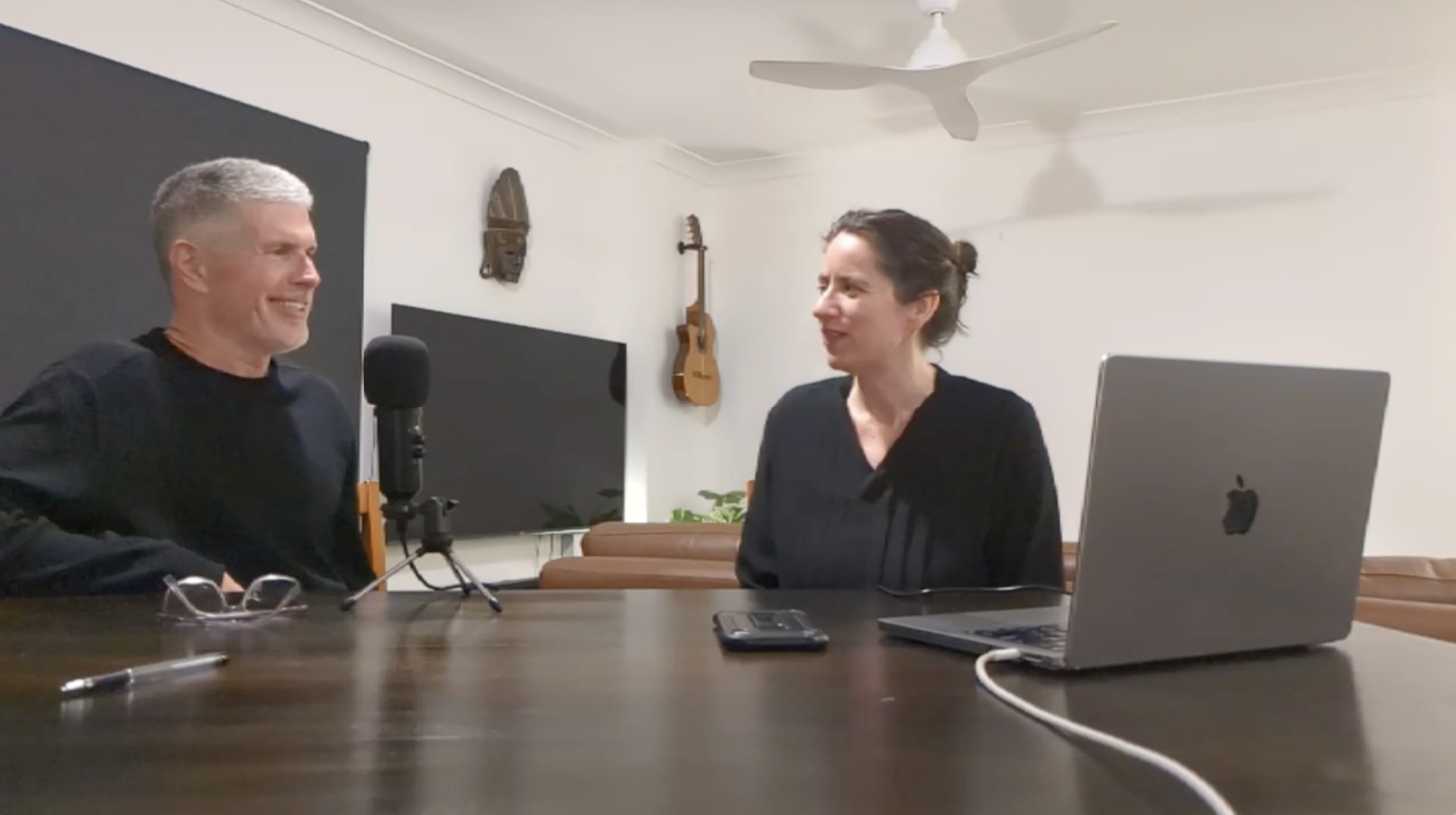
Now living on the Central Coast, Graham trains three times a week with yoga, Parkinson's-specific exercises, and weights, and credits exercise and his medication with getting him back out amongst the community. In his first podcast appearance and his first time on camera, he talks with Melanie Suzanne Wilson about the night he finally felt normal again in a crowded room, what deep brain stimulation involves as he understands it, why a visible tremor makes every stress impossible to hide, and the practical tip he wishes he had heard straight after his diagnosis.
Content note: This episode includes discussion of depression after a diagnosis. If you need support in Australia, contact Lifeline on 13 11 14 or Beyond Blue on 1300 22 4636. Outside Australia, please contact your local crisis support service.
Health note: Graham shares his personal experience. Nothing in this episode is medical advice. Please speak with your doctor or specialist before making changes to medication, diet, or exercise.
In this episode, we explore:
1. The Motivate Collective's 100-episode anniversary party, and why it was the first night Graham's medication worked in a crowded room
2. The first signs: two fingers sticking together and a small tremor when holding a glass
3. Receiving a diagnosis and the end of a long relationship in the same month
4. Finding purpose again through cycling and fundraising
5. Deep brain stimulation (DBS), as Graham understands it from his specialists
6. His weekly routine: yoga, Parkinson's-specific exercises, weights, and cardio
7. Why stress, nerves, and even driving on the highway increase his tremor
8. How 24-hour fasting has helped with his brain fog, in his own experience
9. His family history, and why he believes pesticide exposure on his mother's North Queensland cane farm may have played a part
10. His advice for anyone newly diagnosed
Graham's tip for anyone newly diagnosed
If your medication doesn't seem to be working, film yourself before you take it. Pour water from one glass to another, touch your nose, and touch your fingers together, like the tests your doctor asks you to do. Then take your medication and film the same tests again. Graham only realised his medication was helping when he put the two videos side by side.
"I'm feeling great about life again. And so you're gonna feel great about life again eventually." – Graham Newman
Connect with Graham
Instagram: https://www.instagram.com/helpgnhelp/
Graham is building an Instagram community to encourage people living with Parkinson's to get out and move. Follow along and share this episode with someone who needs to hear it.
Keep the conversation going
Become a member of The Motivate Collective for more conversations, events, and resources built around growth, wellness, and conscious living: https://www.motivatecollective.com/join
Prefer ad-free episodes? Subscribe on Substack: https://substack.com/@themotivatecollective
You can also listen for free on Spotify and all major podcast platforms.
THE MOTIVATE COLLECTIVE PODCAST — GRAHAM NEWMAN
EDITED VERSION: transcription corrections plus all ten suggested cuts applied
What changed in this version:
- Cuts 1 to 10 from the cut list are removed (light version of the pest control cut), plus the Dr Jen location exchange.
- Only mis-heard words have been corrected (place names, people, products, terms). Spoken words, filler and voice are untouched.
- Speaker labels have NOT been re-attributed yet. The whole draft is still labelled under Melanie Suzanne Wilson.
- Inline [verify: ...] notes mark anything that could not be confirmed online. Check these against the audio.
------------------------------------------------------------
Melanie Suzanne Wilson (00:19)
So you were telling me about your first podcast appearance? My first one.
An
Americans assistant found me online because a website that I have mentioned the word wellness, that's back when my website was on Squarespace, anyhow. And I was still doing a lot of volunteering at the time. So I looked like such an active speaker, but it was a lot of volunteering. And they were fascinated that I'd lost a lot of weight, about twenty kilos. It's hard to even imagine that now. But then I found myself
out of the blue first time ever as a podcast guest talking to an American in a recording about weight loss and I was wearing I was wearing a green satin shirt, kind of like this but different material. I was using that same MacBook camera. So it was blurry as hell. It was so blurry. But I'd been doing a lot of community speaking. So I just kept talking. I mean
I often was doing the one to two minutes off the cup talk about anything you name it. So I thought, okay, right, now I'm going to talk for half an hour about how I lost weight. Okay. Right. And you just just did it. Yeah. Just went. But then that person was trying to sell me something. And I think for the past year and a half, people overseas have been realizing, okay, Melanie doesn't really have a business that makes loads of money. But
this podcast is creating value for so many people because we've had so many guests on. A lot of them have been experts and you have your lived experience. So it's now at the point where even though back then I goodness, I was just volunteering then into the day that I made that podcast episode, I got invited from someone to create what became my first independent event. So it was only the start of last year that it was
very early days. Yeah. So the reason why this brand has grown so slowly is because it all happened by accident really. The collective brand. Yes, yes. You think it's grown slowly. I think a hundred podcasts over a hundred podcasts is amazing for one year. Really? Yeah. Thanks. Yeah, I don't call that slow. I'm now I'm about to put up I'll be up to a hundred and ten before this one.
Okay. So this will be a hundred and eleven. One one one. Since yes, it'll be one one one since August twenty first. That's when my first guest episode came out. right. Last year. okay. That's just over a year, yeah. Yes. We and you saw the celebration episode and party in Sydney. That was such a moment in time really.
because I had reconnected with a friend that I'd been close to twelve years ago. And yeah. That night. Not that night. So I co-hosted that party. The Motivate Collective podcast needed to celebrate in any form the anniversary. Because a hundred episodes in twelve months is definitely something. And I was thinking a few of us might grab a table at a pub. I didn't know what it was going to become.
And Sarah Harding, who has the Voice of Mosman, paired up with me. We both collaborated to put flyers out. We spread the word at a business chamber. We really let people know. But also I was promoting the gathering on my social. I had people there, I was blown away because someone went there who'd seen me as an undergrad student back and say,
Somewhere between ten sorry, somewhere between twenty ten and twenty twelve, I was where that person was a student. So it had been that long. And I also had someone attending who had been in my voluntary team where we provided amazing training for corporates. That was a couple of years ago. So she's now in Granville, but we knew each other in Newcastle. So
I had people who'd known me a seriously long time ago. Yeah. we had people coming there from anywhere. I mean, you looked like you had fun. Yeah, kind of great time. It was it was fun because yeah, that was the first night when I really felt like I was on my medication and it worked. That first
It
was the first time. It it wasn't it wasn't the first time it had worked. It was just early when I started taking medication and it just was the first time it it worked in a in a crowded room. and that's what you avoid having Parkinson's. You avoid the the the shit out sorry. You avoid the shit out of you know, crowded spaces. Why? because y you're tremoring, you're you've got this tremor and and
you are conscious of that, very conscious of it and you you want to hide from the world. You don't want to go out in public. But that night, like when I first got there, I was tremoring for about the first fifteen minutes or something and then it just calmed down and then I just had the best night because I could relax. And I was that's what I was saying to like the guy at the table that I'd met and people that I met.
on that point on was like in the during the night is like that was me feeling like normal again. You felt normal finally then. Finally. And it shows that we'd created the social environment that was stretching you beyond your comfort zone within this condition.
Yeah, yeah, because it was all strangers too. Right. You know, except for you, like I don't didn't know anyone there. so it was really good. It sort of brought a tear to my eye. That's so sweet. Yeah. For me, the amazing combo was that we started off with the discussion and then there was quite a party because Luiza so
I'd co-created it initially with Sarah and then we brought in Luiza as a kind of trio. And Luiza has the Zumba brand. I don't know how she knew that to DJ, but literally this thing was totally free.
the organizers didn't have to spend any money, were in a half of a bar that was separate, which worked great. And also basically the DJ, Luiza just said she was bringing a DJ and it was a
proper DJ. So I was I thought, okay, sure. But it's turned it I was super stoked with the DJ because he played the tune that I wanted him to and he he was meant to finish and he said, okay, last one. Which one was it? it was a I'll when I think of it, I'll tell you. Okay. But that was incredible because what could have been just a few people at a mic like this, which would have been fine, turned into okay, where
Partying. there was a YMCA dance at one point. This was outright partying. It was Luther Vandross. Okay. I can tell you that much.
That's pretty good. Trying to think of the song. Okay. Yeah, I can't think of it. But even now the shaking. So which hand shakes more? So it's my right side, right leg. It's shaking a bit, like this. Yeah, it's sh shaking now because like I haven't done podcasts before, haven't been on video before. So you get more shaky when you feel nervous? It's brain activity. yeah, it's just
If I get into an argument for for instance, that's a lot of brain activity and that'll make me tremble more. If you're shuffling around furniture and equipment for a podcast for twenty minutes. Yeah, and and if I went on a date, for instance, and she was asking lots of questions, then I'd shake a lot as well. Yeah. Right. Brain activity. Okay. Yeah. combines into tension.
So
the tremor isn't simply constantly the same, it's a tension. And we haven't actually set at this point what it is. So you have Parkinson's. Let's now tell the story, because we've told the story about the party. Great. When did you realize how long ago did you realise what you have? first thing I noticed was that my little finger. that's right, my two fingers stuck together.
I think it was it was either these two or these two, I can't remember, but two fingers stuck together on my hand. And I thought that's strange. And I don't know. I I noticed at the same shortly after that I I had a little tremor when I pick up a glass in a certain way or pick up a piece of cutlery in a certain way. I I noticed a tiny tremor and then it just
I was in Brazil during COVID and we used to walk down to the beach quite often and I just found myself my hand shaking and I put my hand in my pocket or just put it against my body and that would stop it shaking. But that was twenty two. Wow. no that was twenty one, end of twenty one and beginning of twenty two January. I was back in Australia and I got diagnosed, but
I don't think it was the jab because I had those first symptoms that fingers sticking together and slight tremor when I held a glass a certain way I I had that like before I had the jab. Yeah, so I think it was on its way. Wow. And did my mum have it? My mum my mum had it. so
Yeah, she had she had it already. but she didn't get it. I got it when I was fifty-five and she got it when she was sixty-five. No, seventy-five. Okay. So I got ripped off twenty years. You kind of were, But seriously, some people get it when they're a lot older. Yeah, it presents presents differently for some people. some people don't have a tremor. I have what's called an at-rest tremor. So if I'm actually engaging my hands to pick up something.
Or I'm doing weights at the gym, for instance, I won't notice it. but yeah, some people they get face contortions and some people can't walk properly and some people can't talk properly, and yeah, it presents differently for different people. so must be a hard one to pinpoint in the beginning, but yeah, eventually I got diagnosed. How long did you take to get diagnosed? well
first doctor who saw me he said I think you've got Parkinson's a neurologist up here at Gosford and then I went to see Dr Stephen Tisch at St. Vincent's and he said yo without a doubt you've got it so he he was the bearer of further bad news
That way that it sprang, how did you feel when you finally realised what was definitely happening?
I I I think I knew I had it. How did I feel? So I had two things happen at the same time. I had a six year relationship finish. her choice, not mine. And I got diagnosed in the same month. Which happened first? Which happened first?
I'd say the breakup probably happened in the first week of January. I I'm I'm not certain. Not certain. But yeah, back to how I felt. yeah, it was it was a double punch. It was a one two, you know, in the same month. And basically twenty twenty two was just spent
moping around wondering what I'd do with myself, wondering why I should go on wondering,
what my future was gonna be, why I should have a future, why I should be alive. I'd say I spent a a good portion of that year sort of mildly depressed. Mildly. Mild I would s yeah, I I don't think I ever had like major depression. but I'm pretty optimistic so I call it mild. Considering you were trying to convince yourself to
continue with anything. I'm wondering what brought you out of the depression? what brought me out of it was thinking to myself what can I do? what can I do that that's gonna give me purpose? And the answer was I can ride. I can ride a bicycle.
And I suddenly thought I'm gonna engage in some fundraising and I went for a ride just around my area and that's funny, like I got to West R West Gosford here and there was a Velodrome like a kilometer and a w and a half, maybe two kilometers away from my house. A velodrome. A velodrome. It's it's this track that you can cycle around. really? Yeah.
Whereabouts It's like the only Velodrome north of the Harbour Bridge. And we're like fifty odd kilometers north of the harbour bridge. Okay. And south of the harbour bridge, there's like three of them. Where is it? Is it near anything I'd recognize? no you you don't recognise it. It's it's called Adcock Park. And as you go out through West Gosford, there's there's
There's a bunch of playing fields and it's just in the centre of that. Good. Yeah, so I took that as a sign. that's that's gotta mean something. The opportunity. Yeah. So isn't it funny that just there are all these opportunities on the central coast? Yeah, it is. It is it it's it's been a good place for me. I've really enjoyed it. It's like Sydney was twenty years ago.
Twenty years ago. Sorry, the northern beaches twenty years ago. What's the comparison? I've only glanced at this at the northern beaches now. What's the comparison? It's just it's just the northern beaches used to be like easy to get around. And now it's bumper to bumper thing. And the the central coast is easy easy to get around. Basically that. You know, just like the vibe here is what
The northern beaches used to be twenty years ago. That's interesting to me. And I'd say the northern the northern beaches, the central coast is becoming such a haven. Because whether it's that or the northern beaches, people have that feeling of wanting to get away from the city. I'm guessing that having that peace away from the noise and the crowds, does that help you to find peace and even calm?
the the the symptoms. Does it help to have some peace around you? I don't I don't really know. I'll I I have a Central Coast perspective and I don't I don't have like I I can't say I go to the city often and I I don't know I I don't live there but when I go there yeah it's stressful like I I try and avoid it. So
I don't know I don't know. yeah, I just I just go there for outings and sometimes I have to go there for like I was going to Westmead to see the people about DBS surgery and I was grateful that I could find a doctor from that DBS team who actually has a practice up here on the north on the Central Coast, just a few kilometers away from me. So instead of driving an hour and twenty minutes to to see him through traffic.
I just yeah, I just pop over to Erina, I would [verify: transcribed as "Erin I would"] in a few minutes. What does that surgery involve? What does that mean? That involves basically cutting your scalp in a U shape, peeling it back, drilling a hole, putting a wire into your brain at the particular point where they think it's gonna have the most effect, running that wire inside your skin down your neck, and opening up
op opening up your neck and s inserting it like a pacemaker under your skin and sealing it back up and that stays in there for 15 years or so. And that generator can be programmed from outside the body and it can they you know it it has an amplitude or a frequency or whatever that nullifies your tremor tremor and so the point I'm at at the moment
basically he said, your your medication's working quite well for you. It doesn't appear to be working quite well for me at the moment, but it does work really well when it works. it's just that we're we're at the end of the day or something like that. It's it's worn off, you know. But it's working really well, and when things get worse, he
he'd probably recommend that I get into the the program to do the surgery then. But there's a lot of there's a lot of testing and that they don't just sort of give it to you just because you want it. You know, they they've got to do psychological testing for example and various other tests that make sure that you're suitable for it. But yeah it's basically setting up this frequency that nullifies that tremor.
that that tension just e eases it and apparently in the beginning they took a long time to adjust it like it might take two days now they've got it down to like 20 minutes you know just slowly they brought that down from two days to one day to 12 hours to two hours now they can do it in 20 minutes you know like get that frequency that amplitude right
for you and now they've got machines that are adjustable as well. So if you do get into an argument, if you do go on a date, if you do set up the studio, studio the the the amplitude or the the frequency will will automatically increase or decrease as as is necessary to allow that tremor to be nullified with it no matter
That's the idea anyway. That's my understanding of it. It's amazing. That's called deep brain stimulation on DBS. It sounds like all of this has developed very recently. Yeah. no, that's been going for quite a few years. I think either t ten years or twelve years it's been going, but it it's getting more successful. And it's not cheap either. It's you know, like depends what state you're in, but
In New South Wales, I think it's twenty to thirty thousand with with private health care. You can get it on in in the public system, but you're waiting a long time. I'm not sure how long. So for those listening from other countries where in Australia the public health is a type of insurance, but it's a different amount of quality and
case, but the private health insurance, so you're saying it would be that cost after a private health insurance covers some of it or a yeah that that'd cover a chunk. Yeah, I'm not sure on the figures. That's okay. But let's go back to after you realised what you had and then eventually you got to cycling. That's a big deal and I wanted to look later at how you connected with other people who have the same condition, but
Getting
active, this is something you want people to know about, right? That you can stay fit, you can stay active even when something is happening to you. Yeah, it's it's been apparent to me, like watching my mum not be active and hearing the message over and over again that exercise is great for slowing the decline of Parkinson's.
And
I'm I've always loved being fit and it just seemed natural to me to do the best I could like no in in the beginning like I was just worried about my tremor but as time's got time has gone by I've realized that my symptoms have been so much more under control.
Since I've the more I get into doing the Parkinson's exercises, doing yoga, doing weights at the gym, and sauna's really good as well. Okay. apparently it it really reduces your rate of getting Alzheimer's. Anyway. I wonder, by the way, if you'd get to the same effect having a heated yoga or Pilates. Yeah, well that was that was the first thing I did actually was
Bikram Hot 26, Heated Yoga, whatever you want to call it. they used to have it down here at Central Coast Leagues Club. And that was the first thing that I did when I got back on my bike, so to speak, you know, when I got out of the house when did that and I loved it. It was so good. Because you had to you'd walk into the room and you'd unroll your mat. And by the time before you'd finished unrolling your mat, you were dripping sweat onto it.
was that hot. It was thirty nine degrees, something like that. unfortunately they don't have it anymore, but yeah, I loved it. And I had to push myself really hard to do do the poses. If there are places when you visit Sydney there'll be plenty of heated studios that you can pop into occasionally. If you feel like it.
Well you're not missing the heating. I think I think you can get heated yoga here at Woy Woy, but I haven't I haven't wor worried about it yet. I've just done more yoga than not 'cause the hot yoga I was doing on Fridays only. now I do yoga on Tuesdays and Thursdays. And I and then I I can't I don't have the discipline to do what I was set out to do in the mornings, which was
twice a week do the the specific Parkinson's exercises. That's that's a series of exercises that are typically got a lot of opening your fingers, splaying your fingers really wide, and then clenching your fists. So going from a throwing your arms out and splaying your your your fingers and bringing them in into a clenched fist and lifting your legs up high, big marching steps.
and balance as well sort of like some sort of tai chi or something like that but a bit quicker and yeah like I didn't have the discipline to do that in the morning. I I found that I just I just wasn't I just for some reason I just wasn't doing it. So what I do now is I do the yoga class and then the studio is empty or or if not I find an empty studio.
Just go and do the Parkinson's exercises and then move on to the weights and do those for an hour or so and a bit of cardio as well. And just do it all in one night, make a make a big night of it. For sure. Rather than spread it out on Monday I'm gonna do this, Tuesday I'm gonna do I couldn't I couldn't get those things, I couldn't make them fit in my timetable. I I I put them in the calendar, but I
could never do them when I was supposed to. The alarm would come up on my on my phone and say, it's time to do you Parkinson's exercises. And it just never worked out. I was always busy with something else. So doing them in that big group on Tuesdays and Thursdays. And and if I've got a spare night, like a Friday night for instance, I might and and yoga's on at 6 30, 530.
I'll go and do the whole series as well for a third time that week, but I always stick to the Tuesday and the Thursday. So it's like that that works for me. And I'm gonna keep on making that work. And if I can do sometimes I'll do Friday night and sometimes I'll do Saturday morning instead, but yeah, if I can do that series of disciplines three times a week, even better. For sure. Yeah.
I like that because it's nice to have a rest day. Especially when you're doing a lot of activity. It's okay to pause and then do it again the next day. Yeah. Yeah. It's I don't often do the Friday night, but I I often do the Saturday morning. So that's Tuesday. That's that's like Sunday and Monday are free. Tuesday's gym.
Wednesday's free, Thursday's gym, Friday's free, Saturday's gym. if I can do that three times a week, I'm really happy. Right. So the type of yoga, I know the place you go to has a Hatha yoga class. Is that what you're going to? Hatha is is one and the other lady does
I can't remember what it's got. I can't can't remember. Probably a vinyasa. Vinyasa, yeah, vinyasa. Yeah. Normally I've seen Ashtanga is at separate centers. So the other one at that place would be a vinyasa. So that's the more flowy fast zero one. Well this this lady, Rochelle, she pushes you so hard. Like it's yeah. She's just a tough
Strong teacher. What do you do? What makes it a top? it's the it's it's the it's the non-stop part of it. Like you you're going from one pose to another pose to another pose to another pose to another pose, and it and you're just breaking, you know, like by the third pose you you're ready to drop. And she and she just doesn't flinch, you know, it's she just takes you into the next pose.
That's how a vinyasa flow can go. But I've seen there are teachers who will either cue now move your arm this way and then move this way and then you're ending up in the pose. And they could start with, we're going to end up in this pose. So first we'll go here, then we'll go there, but they will often also cue the breath in between. The ones who emphasize, okay, now inhale and then we're moving this way. That gets a bit more steady, but
There is some down this end of the state. I've seen a teacher who cares so much about everybody, but it's this, now do this prose, that prose, that prose, and it's just a bit more rapid. It depends on the person. Hmm. Yeah, I I know Malcolm on Thursday nights, he's always stressing the importance of breathing and he always says, Smile, smile. Nice. He's doing the Hatha. Yeah, yeah.
Tell
him I say hi. Yeah, he's great, isn't he? He he knows some people I learned from before. So that was that was great. It was really good. That's the other thing. And this is branching off into community because for me, I have loved going to different yoga communities and seeing there's either a a familiar face, there'll be a familiar face somewhere, or someone knows someone. And it's like that in any of those communities. So
You have though connected with people I haven't heard a lot about this yet, but you have what, a group of people who have Parkinson's just like you do? I'm I'm not particularly connected with any groups like I I've been to a few, but they tend to be people who are much older than me. So how much older? well seemingly much older I should say. Like I'm sixty I'm almost sixty.
but I guess I guess my mother who got it at seventy-five, that's about the age group that's more typical for getting Parkinson's. twenty years older than me. So or twenty years older than I was when I was diagnosed, I'm talking about. yeah, I don't connect with a lot of groups. I've yeah, I've done a few and learnt some things and and I think
That that one I did at Woy Woy Hospital. that put me on to the specific exercises. they call it Parkinson's Warrior [verify: the program is officially called PD Warrior; check whether Graham says "PD Warrior" on the audio]. It's a program that was started in Artarmon at the Artarmon ARC at the ARC. I think it is. And they developed it, but
It's around it goes around the world. people in America, Canada, France are doing Parkinson's warrior pro exercises that were developed from Artarmon. So last year I spent time going there and doing a class a week and that was really good. But now that I've experienced that, I can get refreshers up here on the central coast at the
called Gosford East East Gosford Physiotherapy [verify: transcribed as "Crosford East East Crosford Pharma physiotherapy"]. Right. Yeah. but I don't I don't I don't connect with groups at the moment. do you want to? I'd like to connect with people who are sort of more my life stage. Yeah yeah sort of physical level I would like to do that.
and and maybe I'll meet them through the physiotherapy here at East Gosford, but just I just haven't at the moment. But I'm happy just going down to the gym now locally and normally I don't find myself shaking very much at all. people in the yoga classes are are very
understanding I think, just generally really accepting and and I also hide in the back of the room, That's okay. I tend to do that, but they they understand. but but yeah, people people I I'm finding I'm more and more I'm getting out amongst the community and I'm thanking exercise and my medication for that. But
Yeah, I'm enjoying I'm enjoying getting out more and not hiding at home.
That's such an eye opener because I saw goodness however many months ago you're happy to go out to the gym and to the beach wherever, but I know when it's I think that the party was, like you said, a bit more of a crowd, a bit more excitement. And I was going to add, with the yoga classes, any regular yogis, any teachers, of course.
They'll be used to people having all sorts of needs and often people don't talk about it. So even though you might not see another person with Parkinson's in your class, there might be someone with sensitive knees. I always fold up. I will get a blanket onto the mat to lean my knees on. Or if for a Pilates, whatever, if there's no blanket, then I'll do two mats layered together. But
For me, the knees are a little bit of a thing. And of course there'll be people coming in with sometimes someone is feeling dehydrated. There could be women having various health things going on. So anything comes up. And the the sorts of teachers I can relate to will say if you ever feel exhausted, just you can have a rest. There's no one forcing you to do every single thing.
It's it's a very compassionate space, but going to other compassionate spaces as well. I know if you felt ready, I'd love to see a meetup group for every single every single thing that needs people to find like minded people. Yeah, yeah. Yeah, well I'm soon to start up a a channel, like I guess you call it a channel on Instagram and I wanna bring people together like that.
want
to create a community like that. yeah, I'm I'm I'm just practicing at the moment with the fundraising, which is getting me used to reels and stories and everything like that. it's it's rather more complex than it was a few years ago, but I'm getting my head rounded again. And hopefully that'll launch me into starting the Parkinson's based
channel. For sure. It'll be so much easier to get content when you see some of the back end of this podcast. But I see potential if you feel like it or if you want to nudge anyone to do this. You can have a podcast like this talking to other people anywhere in the world who have that same experience. And then that's going to find someone with common ground regardless of your location.
This is your first podcast episode and it's nice to be able to encourage that. And we can go back to that a little bit because we can, why not? We can also talk about what it's like being a guest on a podcast. I take it for granted because I when I as I said at the start of the recording, when I was a guest on a podcast start of last year, I was doing a lot of talking in community. So
I felt comfortable enough talking in front of my laptop. But I think if I'd been in a big studio with giant cameras, I might have felt differently emotionally, but I'd been talking all the time, so it didn't bother me. But but what do you say to people who want to share their story like what you're doing now, but they feel nervous about it? I was
thinking we were only going to do an audio interview. We can. And yeah, the camera adds an extra element to it. Yes. But I don't have any advice for for people. All all I can say is this that when l like tomorrow morning, I'm not gonna remember that I was
tremoring and awkward. I I suppose may maybe if I watch the video I will, but when I go out and I go to a show or concert a play, a a crowded place like the Sydney Opera House or the State Theatre or something like that, and I'll be really shaking, that's that's awkward. you feel judged and you really feel self co self conscious. And because your brain activity's firing, you're
Tremoring so much more than you would do if you were just sitting down in front of your TV. But the next day, I don't I don't recall any of that. I don't I just recollect the good time that I had. And I think that's the same with this podcast like experience is is tomorrow morning. I'll just remember like what I've done and and that I enjoyed it. I can relate to that. I'm wondering the extra brain activity, is that
specific to the Parkinsons or from what you've heard from Doctors anyone, is that a general thing if any of us would go into a crowd, are we going to have the brain firing off a lot more? Yeah, I I think it it does, but for some reason, yeah, for when you've got Parkinson's, it tr it just it
Everyone gets stressed, like I'm I'm feeling the same stress as everyone else does. It's just that it translates into this damn tremor. Right. you just you just shake and and it's also when I'm driving, for instance, and I'll feel the shaking increase when I'm coming into the hundred and ten zone and we're going faster than we were than we're from the sixty zone.
I'm checking my mirrors, I'm I'm I'm constantly scanning the road for people changing lanes and so forth, I'm checking my speed. all that's firing my brain and translating into an increased increase in my tremor. It's hard because you're pretty much having a physical and visible sign of that stress. Yeah. Meanwhile some exactly what it is. It is
Yeah, it's a it's a it's the full telltale. It means you can't hide the thing that's going on. Yeah, yeah, you can't hide your stress, you can't hide your anxiousness. That's it's such an experience because I was going to compare that to how I can end up if I'm extra stressed then if I'm going through a crowd in the middle of the city, I'll have more of a personal space bubble.
And I just I feel a heightened alertness about that. It's maybe a form of stress or overwhelm and then I'm just kind of shutting down a little bit. So that's really hard because I love connecting with everybody, but there's that overwhelm when there's so much going on. But I'm curious, you have the physical sign of all of that now, but what was life like?
Before
all of this.
perfect. it was it was I I thought it was great. I during during Covid I got stuck in in Brazil and
Yeah, I spent I spent my COVID swimming in tropical water and eating wonderful s Brazilian snacks. yeah, it was it's super good. And that yeah, it does does does make no i I I'm I'm blessed, you know, I'm I'm happy for what I've the life I've had before. I'm not yeah, I I miss it, sure, but
It's a new chapter and I've just gotta face it head on and try and do my best with what I've got and I I feel energized, I feel confident to do that. not all the time. I I have bad days for sure, and and but I tell you what's what's what's really helped me
I used to get really bad brain fog. And this is since I've had Parkinson's only. And that brain fog was just really heavy most days. And I started probably about two months ago. I st I started a bit over. I started fasting for 24 hours and it's gone. So
I I haven't done research into it. I've just taken it upon myself to not eat for twenty-four hours and that's it's it's all gone. I feel so much more clear headed. And yeah, it's it's just amazing. Like I said, I I haven't I haven't found out the right way to fast. You know, obviously it's probably I obviously I've worked out when you finish the fast.
You don't go and have McDonald's and and hot and hot dogs and and and Coca-Cola. What do you have? You have the best meal that you can have. Such as I don't know, like can I say baked dinner or something? Like something wholesome, something healthy. tuna rice bake or something like that. And and it also helps to eat well. But what I do is like a lot of a lot of mornings I wake up hungry and
Some mornings I don't. And when I when I wake up in the morning and I'm not hungry, I just I just say, yeah, this is the day that I'm fasting. And it normally happens once a week. I'll find a day that I'll wake up and I don't feel hungry. So I just make that, I just pick that as the day. Sometimes it doesn't work out well, but if you have a busy day, it's good to get through the day. And and I drink I drink coffee with no sugar. I actually drink it with salt in it.
And I just have water and and that's about it. some people dry fast but I don't. but it's yeah, it's it's got rid of that brain fog, which I'm really happy about. Super stoked. So yeah, things are going well in that department too. It shows that you have a range of healthy habits and you talk about being what, fifty nine now.
I imagine a decade or a decade and a half younger than that. So it goes to show the power of looking after yourself. Hmm. Yeah. Yeah. I people have asked me in the past what what I what I do to stay how I am. And I've always said it was stress, lots of stress. And
don't know if there's any truth to that, but yeah, I can't like all I can say is that what what I can say is that I think people gravitate towards foods I think they naturally gravitate towards foods that are good for them. Yes. Yeah like I just like I love almonds and I love coffee and I can't I can't give you
give you a load of examples, but it's yoghurt, Greek yoghurt [verify: transcribed as "yoga, Greek yoga"]. and I keep on finding out that these things that I like are good for me. And I just think people I I feel like people naturally gravitate. Most people, like a lot of people, gravitate towards Hungry Jack's. But I think if people are following their true self,
I think that they they gravitate, they naturally gravitate towards foods that are good for them. Deep down we know what feels good and we're convinced otherwise. I was walking past a McDonald's, just walking along the road. There was a giant banner with my goodness, I think the ad, the advertisement, was a cookie with.
whatever a goo inside and then there's ice cream on top of the cookie and I was thinking this isn't remotely appealing. I just want a smoothie bowl and some berries, whatever. I mean and eating real food can be simple and accessible. That's the other thing. For my classic examples are the brown rice and the lentils, but even I'll get a handful of mandarins.
They're normally cheaper than the things that don't have a skin. I've found that the skin fruits can be cheaper, whatever. But even I have access to a good blender at the moment, so I'm blending up a bit of frozen fruit. That's really simple. But do you find as well that the foods that feel good, they're not fancy or complicated, right? Yeah. They're they're like pears, they're like avocados. Love avocados. They're eggs. Love eggs.
Yeah. Simple stuff. And I've ha I I'm interested in there's a few people talking about eating like a dog and just having a really simple range of food. and I'm interested in in hearing what they've got to say. you have you have seen the benefit even beyond the Parkinson's of just feeling young because you talked about how if I get this right, your mum got a diagnosis around what, seventy five. Yeah.
It's
mind blowing to think that's only a bit over fifteen years. fifteen, sixteen years beyond where you are. Because you don't seem like it. And I think there's a stereotype around age. Think of how many people would be seriously. There would have been sixty year olds who I can't remember in Australia there are those seniors cards and the
Over fifty five, over sixty, whatever. They get these discounts, they can't fish when they're all you can go to the old people's club here. It's it's over fifty five, isn't it? No way. Really? Well retirement villages are over fifty fives, aren't they? So I don't I can't imagine myself no in that scenario, but even going down to the local club. But having said that I'd I would like to check out what they're doing down there. I'm interested, this building devoted to old people and their hobbies, so
like to get in there but just going back to my mum can i talk about how she probably got Parkinson's yes it seem it seems pretty apparent she lived on a a cane farm her my grandfather and and his daughters they lived in in a cane farm
Queensland I assume? Queensland, North Queensland, Ingham, Ingham. And they had the house and the yard and just cane fields around them. And anyway, they used to crop dust, you know, pesticides, herbicides. wow. They used to come down with the planes and drop the spray across the the fields. They, who would have been the day? just just like hired help, you know.
they being farmers in general. So the thing that's getting sprayed is some sort of pesticide? Yeah. I'd it could be g I've heard of glyphosate, I've heard of paraquat. Actually, speaking of paraquat,
They spray it on our crops. Like that's a really broad statement, but they do spray it on crops, which ones I don't know. And how much they use I don't know. But scientists use paraquat, the same thing we we're spraying on certain crops. Scientists use it to induce Parkinson's in lab rats. my gosh. Just let that sink in for a bit.
What are we doing to our food? Yeah. So anyway, the crop dusters are coming down and spraying the pesticides and herbicides across the crops. And my mum and her sister are out there, she told me they used to dance under the rain.
Yuck. And they both got Parkinson's.
in their later years. They pretty much were getting themselves sprayed and showered essentially in pesticides directly. Yeah. Yeah. I'm so going organic after hearing this. Extra organic. Yeah, I think a lot of people are waking up about this. even the use through local councils of of of of pesticides by local councils.
They're driving along the side of the road just spraying it and people are walking past and they're and you you you've no idea how fine that is. I remember I was spraying I I don't use it anymore, but I used to spray, I don't know, fly spray around, surface spray. And I remember spray I remember I stopped using it when I sprayed it into into the air. I was getting a spider that was up in the corner.
Between the ceiling and the wall. And I was spraying it, and the sun was shining through. And I just watched how microbic [verify: possibly "microscopic"] those particles were, and how much they lingered in the air, and how much they engulfed the entire room. And it's just like a quick sh like that. And I just watched it, this cloud just formed for ages. And like I don't think we realize.
how these things are getting into our body. But anyway, that's a not a you dig digress when you start to talk about that stuff. But it's a thing and people are thinking about it. I know a lot of people are talking about microplastics, but the pesticides it gets some conversation. I'd say some people feel nervous about offending the agricultural industries. Yeah. But it's but it makes offence.
needs to be offended. Yes. And I think there should be a a ministry for health that's sorry. I think there should be a ministry ministry of food that ensures the safe growing of our food and through to the table. You know? On that one, I read a book by I think it was Simon Hill back during COVID and I
realized that a lot of the food issues that we have can be explained if we follow the money. But what I've noticed environmentally with the pesticide sprays, a couple of things, in very suburban areas. Not right here where you're near the bush and the and the water, you won't get these habits, but in a very simply suburban spot, you'll have people spraying the weeds
along the edges of all their parts. I used to do it myself. I don't get it. And someone out there is going to call me irresponsible. Trim the weeds if you need to. And I realise weeds aren't amazing, but is it that much better having all those sprays? People don't realise how airborne that those particles get, how much the wind carries them and how much they're consuming of that crap. I was going to also add another flaw based one. It's around the train stations. There'll be signs occasionally saying that some sprays are used. And I won't totally be quoted right now of remembering which ones, but
they do use those sorts of sprays of some sort. And then you can only do so much to avoid it. And that's where we need to, I'd love to connect with scientists who can back it and say, look, there must be a statistic because that that people had such high exposure to this chemical. And we know that other people have seen issues with it. So we would
hopefully one day reach a point where it's not debated and people acknowledge, look, okay, this is not great for us. But I'd say it's hard to even totally be having the choice when it's done in all these public spaces. We don't get as much choice. You can't avoid some of these areas. So hopefully one day there won't be monetary incentives for these companies to keep doing it.
in those public spaces. Hmm. This is getting Yeah, they s they they sprayed they sprayed in the foyer in my building. and what is it? normally I wouldn't pay attention to that sort of stuff, but now that I've got Parkinson's I pay attention to everything. And they didn't say th they said they were spraying on a particular day. They didn't say what time of day. So like I could walk out my door straight after they had sprayed the entire
stairwell and just walk straight into it. I I taped off the bottom of the door and and and I had to reply to them and I said, What are we spraying here? And that they actually sent me then they sent me the fact sheet on the on the product and it looked really bad as well. And yeah, I I did a search of course and that's a thing. That's the thing with AI now is you can
get a really good clear idea of how harmful these things are to you. And I put up, an an objection to it, but they want to spray the spiders and and the they want to keep cockroaches out of the place. And you can't deny your neighbors of that sort of thing, but they need to be more cautious in when they're spraying and letting you know what time and and yeah just taking
s setting setting up the giving people the knowledge so that they don't walk straight into it. Yeah, there's got to be a lot more duty of care when using these products. This is going to a topic I'd never expected in all of this podcast because I'd love to talk on the podcast with a pest control person who can relate to health.
Yeah, well there are pests like I I looked it up at the time and I found on the Central Coast there are green companies that specialise in pesticides that don't kill humans as well or or or animals. That's important. And and I I hope there'll be good growth for there'll be more opportunities for companies like that.
Let's go way back. What were you doing to give people more context? What were you doing in work and life way back early on? graphic design. Yeah I did graphic design like back in print media days back in like go to the printer.
and
look through large I think they were called bromides or something like that, separating the colours and looking at the cyan magenta, yellow and black and checking that the colour being printed was close to the PMS chart that you brought with you or something, the PMS which is the Pantone? Pantone, yeah, yeah, book. You know, you carry your book with you. so yeah, big
long background in print media, then merged into digital and then ended up a forklift driver at Woolworths. Okay. Like close during COVID in in the beginning of COVID. Yeah. my s my son had a brain tumor and when he was four. gosh. And yeah, I just couldn't I just couldn't keep doing the graphic design.
And I needed a job that I could go to a bit more casually. That's saying so much about how the industry's ended up. look I the last graphic design job I went for had a hundred and twenty applicants and it was just working for a real estate agent.
That's quite a
bunch. Sometimes people get now hundreds of thousands, especially because those job boards like Seek, Indeed, whatever people are into and LinkedIn as well. People can apply from any country. So the quantity is so huge. I'd say that personal branding helps so much and connecting with humans at this point is working more.
Than than those applications. So the quantity that absolutely happens. What shocks me is back then it sounds like he needed those full-time roles to be in that creative field. And now there are so many different ways that people work independently with creativity. And it's showing me, you know, there's such a precision with how graphics used to be done. I could see how you wanted everything to be right through setting up this recording. Now I get it.
And and deadlines. I remember I worked I worked around the clock. I worked all night to meet meet a deadline the following day and just didn't sleep. At all. No. Just worked a day, a night, and the next day. But yeah, so now it's gone from that to now ChatGPT will churn out.
the Instagram graphics for you and what click of a button. that's that's yeah. not just ChatGPT. WhatsApp. I did I did my last graphic in WhatsApp and it totally did something that I I wouldn't even be able to do in Photoshop. Like text over a picture. You'd have to have them in in separate layers before to be able to change the text. But this used a flat
flattened text text on an image and was able to change it like perfectly. I couldn't, I couldn't I couldn't tell there was anything like altered about it. It was perfect. And and that and that wasn't even ChatGPT, that was just WhatsApp. That was WhatsApp. The AI feature in WhatsApp. So that shows look, so many people panic over AI replacing jobs, but do you agree?
We don't have to totally miss the very manual work of past creative methods that took all sorts of hours and took your sleep away. Yeah, I said to someone it it probably would have taken me almost an hour on Photoshop to do that. Wow. for one reason and another. And you're still If I was doing it properly, like for an advert advert or something like that. Yeah, but now there's no print media, there's no
eyeballs, there's no three hundred DPI, there's just seventy-two DPI. There's just what's it's it's just gotta be good enough for screen. No, it's it's great to be learning how to
manipulate images with with it with AI and I don't miss the old days at all. Pretty much. So getting back to the Parkinson's and sharing the word about a cause, there's so much more opportunity now, however the storytelling is going to go, that you can spread the word about what you do, but anyone listening, if they have something they're experiencing, maybe their own condition, maybe an adversity, a resilience story.
then there are tools available. Why not share your truth? Because it's so easy to do it. We should be grateful, right? Right. Grateful to be able to do this. Yeah, yeah. it's I'm I'm so looking forward to having a having a message to share. I I'm s I'm so looking forward to helping someone. That's what it is, really. I I just like
Can't wait to feel can't wait to hear someone or read that someone's been helped by something I've said. So it's gonna happen. It's definitely gonna happen. At the moment it's just helping people with through fundraising, but I wanna help people with Parkinson's, I wanna show them that exercise is gonna assist them to slow the progress of Parkinson's.
And I wanna I want I just wanna motivate them. I just wanna see them get out get out to the gym, get outside of w whatever it is that they choose to do, but get out, get out and do it. And I can't I can't wait to see my first replies coming in like you know, I I was I was depressed in my bed like I was.
And you gave me some inspiration and I just hope that I can give that to a few people. If someone has just received a diagnosis, what's the first step to feeling read short empowered and getting back out there? Is it simply get out there and move? Or is there anything else they should keep in mind to also have faith in living life?
Yeah, it's it's it's tough to give some advice to to somebody to tell them how to feel. but all you can say is that like
I'm feeling great about life again. And so you're gonna feel great about life again eventually. and how quickly you get to that point is up to you, but if you just knuckle down and
Take your medication. and just on that.
Your medication may not seem to be working at at first. Take a video of yourself. Get a glass, get your hand that's tremoring. fill it up, fill a glass of water up, tip it into another glass, touch your nose, touch your fingers together. Do those videos that the the doctors when you go and see the doctor that they ask you to do that they're determining that you've got Parkinson's or not.
Do those videos, then take your medication and and do the videos again. And because it wasn't until I put them side by side that I realized that the medication was helping me. Because I thought it wasn't helping me at all. And then I and then I I became comfortable with the fact that it is helping me. And and and it and it was like it changed changed everything. And
So so take your medication and take your exercise as well. Sounds good. Mm. It's been a good podcast episode. Thanks for I think so. All right.