Podcast Episode 107: Catherine Vincent (Academic Educator and Yoga Teacher) on Collective Burnout, AI, and Mindful Grounding
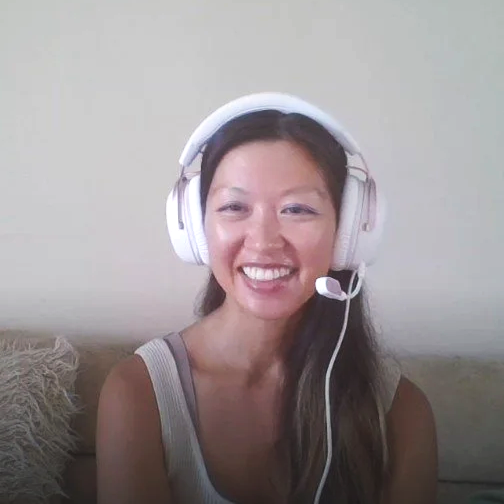
Catherine Vincent was one of the first guests on The Motivate Collective Podcast. Since then, she has moved from Vietnam to Thailand, entered the second year of her counselling psychology studies, and kept teaching students and seeing energy healing clients online.
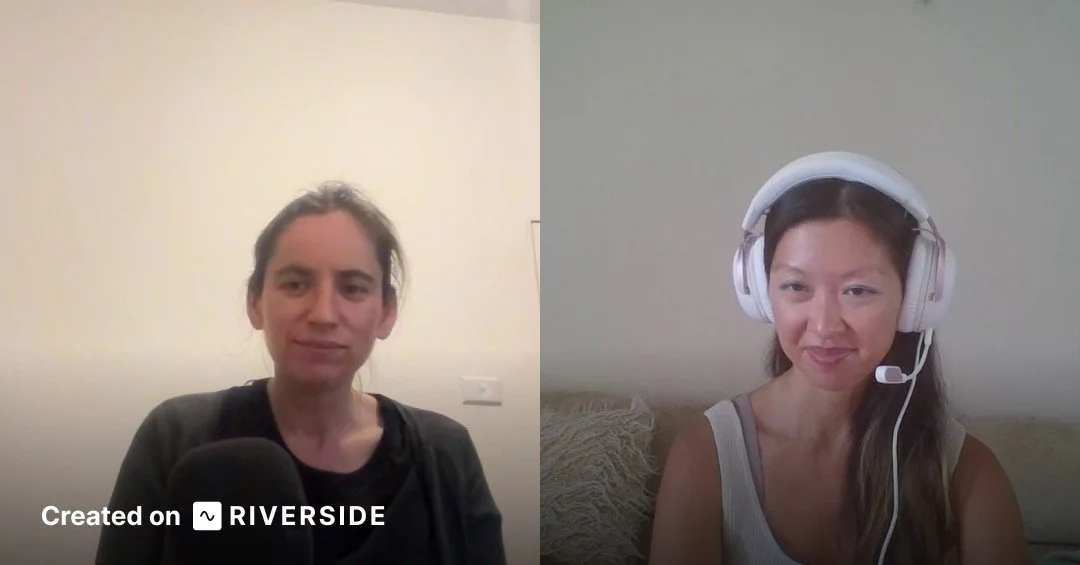
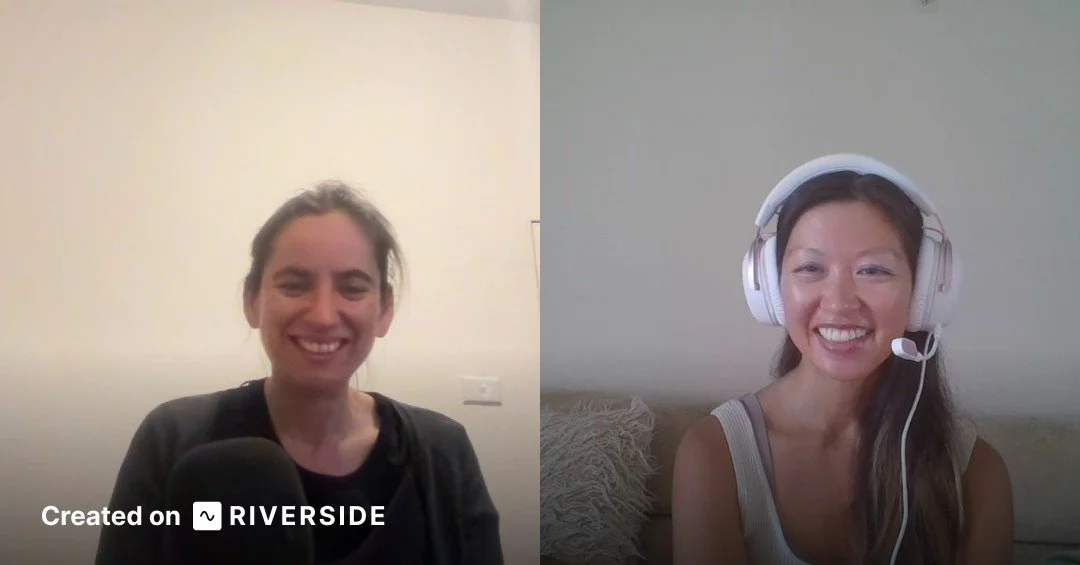
In this return conversation with Melanie Suzanne Wilson, Catherine explains how her practice has changed, then the two talk about why so many people feel uneasy, how blame replaces nuance, and how to use AI without giving up your own thinking. Catherine finishes by guiding listeners through a short grounding practice for when the world feels like too much.
Content note: This episode contains some strong language and brief references to sexual violence, the sexualisation of women and children, war and violence. Support details are at the end of these notes.
In this episode
Life in Thailand, and what Catherine loves about Thai culture.
Her path from teaching and yoga to the energy healing practice she now calls restoring your divine blueprint.
Betrayal, trust, and toxic workplaces, and the practice Catherine calls cutting cords.
Why people in many countries are sick of their governments, and why Catherine won't blame refugees and immigrants.
Quick one-liners, memes, and the loss of nuance.
How the media portrays women and girls, and why Catherine thinks Gen Z is onto it.
Using AI well: why Catherine uses it, why she worries about students under 22 relying on it, and what she thinks teachers are doing about it.
The environmental and social cost of AI, and the case for a balanced view.
How Melanie uses AI to produce this podcast.
What counselling training has shown Catherine about talk therapy?
Living with aphantasia, the inability to picture things in the mind.
Staying informed without burning out, and why rest is hard when you have to earn a living.
A guided practice: the five senses, a body scan, tensing and releasing, and breathing out with an audible sigh.
Try it with Catherine
Limit serious news to once or twice a week, or to a five-minute skim once a day. Avoid the start and the end of the day.
Name five things you can see, four you can feel, three you can hear, two you can smell, and one you can taste.
Scan your body slowly from your toes to your head.
Tense everything, or one section at a time, for a couple of breaths, then release. Don't hurt yourself. Repeat a couple of times.
Breathe in through your nose and out through your mouth with an audible sigh.
Quotes from this episode
"It's hard to find rest when you have to put bread on the table." Catherine Vincent
"Talk therapy is healing. It just is." Catherine Vincent
"Every generation has trauma to release." Catherine Vincent
"All of us, we need to adjust, we need to adapt." Catherine Vincent
"When you explore the extremes enough, you just kind of naturally find your neutral." Catherine Vincent
"We have been trained to want those quick one-liners that couldn't possibly sum everything up." Melanie Suzanne Wilson
About Catherine Vincent
Catherine Vincent is a holistic educator, medical intuitive and energy healing practitioner, yoga teacher and therapist-in-training. She spent most of her life in Canada and taught in Toronto before moving to Vietnam and then Thailand. She teaches students from kindergarten to university online, with a focus on neurodivergent learners, and works with energy healing clients around the world. She is in the second year of graduate studies in counselling psychology.
Connect with Catherine
Website: https://catherine-vincent.com
Instagram: @thesoulcurrenthealing
Bookings: https://tidycal.com/catherinevincent
Catherine's first episode: https://www.motivatecollective.com/4-catherine-vincent
Also mentioned
[FORMER FACEBOOK GUEST: NAME AND EPISODE LINK]
Garima Verma's episode: [EPISODE LINK]
This episode shares personal and spiritual perspectives and is not medical or mental health advice. Please consult a qualified healthcare professional for diagnosis or treatment.
Support
If this episode raises anything for you, support is available.
Lifeline: 13 11 14
1800RESPECT: 1800 737 732
In an emergency, call 000. Listeners outside Australia can contact their local crisis service.
Enjoyed this episode? Here's how to get more from The Motivate Collective.
Become a member
Join The Motivate Collective community for more conversations, events, and resources built around growth, wellness, and conscious living.
https://www.motivatecollective.com/join
Listen ad-free on Substack
Subscribe on Substack to hear episodes without the ads, and help keep these conversations going.
https://substack.com/@themotivatecollective
New here? Start free
The Motivate Collective Podcast is free to hear on Spotify and other major podcast platforms. Follow the show there so you never miss an episode.
Transcript
Melanie Suzanne Wilson (00:00)
Catherine Vincent, you're back on the podcast. You were one of the very few people to ever be on the show, and now you will be, goodness, after a hundred and six, a hundred and seven episodes. It's, it's been a good year. I'm wondering what is new in your world.
Catherine Vincent (00:23)
Sure. Wow, you've been busy recording. That's like two podcast episodes a week. That's insane. That's impressive. Congrats. What's—
Melanie Suzanne Wilson (00:33)
Thanks.
Catherine Vincent (00:34)
—been new in that year or so? I moved from Vietnam to Thailand. And so I'm, I've adjusted better to living outside of Canada. I've adjusted to the heat, and, yeah, it's, it's been awesome. I am used to being a passenger princess on a motorbike, and eating fruits and vegetables from the market, and I live steps from the ocean. I'm so grateful. So Bodhi, my Labrador Retriever, and my partner and I just go and take a dip, and Bodhi plays fetch there every day, for the most part. So I'm, I'm super grateful for this connection to nature, and I do really love Thai culture as well. Just the way people just say, like, sawasdee ka and khop khun ka with this kind of gentle cupping of hands, like the namaste. It's just really beautiful. It's, there's this sense of s— soulfulness, I'd say, that is ever present in Thai culture, and it's just really beautiful to be amongst the Thai people.
Yeah, super grateful. And I'm still studying counselling psychology. I'm entering my second year now. And yeah, just loving it. Like, the practicum experience looms closer. So I'll be applying everything I have learned soon, in May. So I'm always looking forward to that. And I just continue to work online as a holistic educator for a couple of students, K to university, mostly, like, focusing on neurodivergent kind of students with multiple exceptionalities, and I continue to do my medical intuition and energy healing practice and work with clients around the world, so I'm super grateful for that, and I'm always learning. Things are always deepening.
Melanie Suzanne Wilson (02:44)
Absolutely. A couple of questions there. I am keen for you to explain what those phrases were. And also, for those listening—
Catherine Vincent (02:52)
Yeah.
Melanie Suzanne Wilson (02:52)
—on audio, it was a bit more of a loose diamond shape, relaxed, with the hands resembling the namaste, but a bit more loose. That was really cool. I'm wondering what those phrases meant. And also, it will be great to share, for those who didn't hear your first episode on the show, or who don't know your career journey, maybe we can do a quick recap of the, the things that you specialise in, because you've worn a few hats.
Catherine Vincent (03:25)
Yeah, definitely. So, yeah, this, this, when you do this and you say sawasdee ka, it, it is gendered. The women say sawasdee ka and the men say sawasdee krap, and it just means hello. And when you say khop khun ka, that just means thank you. But you, you do this every time, and sometimes people just go like this, like, ka or krap. Like, okay.
Melanie Suzanne Wilson (03:49)
Nice.
Catherine Vincent (03:50)
Yeah, it's really cool. And, yeah, like, I guess regarding my career tr— trajectory, I started out as an educator, and for what we called at-risk youth back then. I mean, they're called marginalised populations now.
And so I've c— kind of continued in that theme, moving into specialising in working with students with learning disabilities and, yeah, multiple exceptionalities in learning centres and in brick and mortar schools. And done a lot of tutoring and a lot of yoga and meditation as well in Toronto before I left for Vietnam. And then I just continued the yoga and meditation, and I had done some volunteer Reiki healing too, at yoga studios and even in corporate settings. And then it kind of just kind of crystallised and customised into just generalised divine energy healing and medical, medical intuition.
So I'm grateful for that experience. So yeah, I did start out with a lot of hands-on. And then it's, I started opening up my clairsentience. So my ability to feel other people's stuck energies in different parts of my body and to release them as they're releasing as well. And often clients will release in the same areas, or if they're deeply intuitive, they will have intuitive experiences of release. Releasing and receiving alongside, alongside mine. So it just depends on the person. But yeah, so it's, it's more of a, a customised, individualised energy healing practice that I have now. Because I can see people's divine blueprints. I can see rectangles and kind of versions of them for people that represent their soul blueprints, and it just gives information about how their chakras are doing, and also how their connection to Mother Earth and to navigating this material reality and to their body is. Like, that's the bottom of the rectangle.
And the top of the rectangle is their connection to divine forces and to the universe, to Source. The left side of the rectangle has to do with their connection to their divine feminine, their personal life, their intuition and emotions. And the right side has to do with their connection to public life, divine masculine, thinking and actions, social and work life. And so things can happen. Like, the rectangle can be like a trapezoid, it can be wonky. It comes to the lower chakras, so then it would really cave in, or it would be like a T. But if everything's balanced, bottom and top chakras, then it just becomes like a really nice solid rectangle with a strong base, or perhaps it's like a thinner base, but it's more expansive. But either way, you want a whole, coherent, structured rectangle. And that's what I call restoring your divine blueprint. So it's, it's just a blueprint that just gives information about how your aspects of your soul are doing. And it changes as the session progresses. So yeah, that's, that's definitely not Reiki. So I can't call it Reiki anymore.
Melanie Suzanne Wilson (07:28)
I see. For those who might be living in the mainstream but curious about spirituality, how can we translate this? Is it about the personality? Is it about connecting with different parts of our needs? How can we translate it?
Catherine Vincent (07:46)
It's, it's definitely about the personality, for sure. It's aspects of your soul expression. Not exact— I, I see personality as traits, you know, like, they're kind. Like, the, the divine blueprint doesn't tell you whether you're kind, but it tells you whether your heart chakra is balanced. And your heart chakra has to do with giving and receiving love to people in your personal life and your public life, right? So if there's something, some, some kind of columns, any kind of aspect there in the heart space, even like a little rectangle, I can see that there's action happening there. Maybe something expansive coming in from above. So that could translate to kindness. So it's not so much personality, it's, although some of it is there, because being a grounded person is a personality trait, right? And being a creative person and an expressive person is a personality trait, and those correspond to the root chakra and the sacral chakra: groundedness for root, creativity and expression for sacral. So yes, it's sort of connected to personality. It's more like soul aspects, like who you are beyond who you think you are, right? And it'll show you who you think you are as part of your core identity.
So, if that makes sense, anything that happens in the middle affects your core identity of the rectangle. Anything that happens to the sides of the rectangle is more of, of your, it has to do with your interfacing with people in your public life or in your personal life. I think I'm, I'm flipped. So this is my right side, so it might be showing up as left side, is it? Because I have to flip it. I—
Melanie Suzanne Wilson (09:29)
Yes. Mirror. Yes.
Catherine Vincent (09:31)
—have to flip it. Yeah, so personal life. This is personal life.
Melanie Suzanne Wilson (09:36)
Think like a yoga teacher, right? Because if you're looking at a class—
Catherine Vincent (09:37)
Yeah.
Melanie Suzanne Wilson (09:40)
—your right is their left. Am I right?
Catherine Vincent (09:42)
Li— yes, yes. Yeah, yeah, definitely. So, yeah. So this is public life. And so anything that—
Melanie Suzanne Wilson (09:50)
Right.
Catherine Vincent (09:50)
—happens near the edges has to do with your interfacing with people in your public life. And so someone who has a really weak lower chakras might have a trapezoid that goes like that instead of a rectangle, or it might have a T, where it just really caves in like that, and there's development that's needed in the lower chakras, because public life and personal life are not developed when it comes to the, the chakras. So it, it does give a lot of information. It gives information about whether there are distortions inside and outside. So if, if there's a distortion, like a bunch of swords coming up from the bottom, then there's some kind of issue with betrayal and, like, an energetic attack at the foundational level. So it could have been from childhood. It could have been from ancestral influences. So—
Melanie Suzanne Wilson (10:45)
Recently?
Catherine Vincent (10:48)
It could have been recently, yeah, but it could have affected you at a foundational level. 'Cause this is the connection to Mother Earth, right? So I don't think, it's not Mother Earth that's stabbing you. It's just, your, it's affected your sense of groundedness and your connection to the material world, your ability to navigate the material world and your ability to be in your body. So some kind of energetic distortion that affects your ability to be in your body, for example. So yeah, I hope that makes sense. We can talk more about it. I mean, maybe more ex—
Melanie Suzanne Wilson (11:16)
Totally. I have—
Catherine Vincent (11:17)
—amples are needed.
Melanie Suzanne Wilson (11:18)
—a few, I have a few questions there. Is the betrayal affecting the connection with the world because we might question our feelings of trust with the material world?
Catherine Vincent (11:33)
Usually, yes. Usually the energetic betrayals affect your ability to trust others, to be open and vulnerable, to give, to be open to giving and receiving. So yes, it affects you on many levels. It creates stagnancy, right? When there's this sharp thing energetically inside. And often I see multiple swords, and, I mean, it's not untypical to, like, at our age, I mean, I've lived a couple of decades. I've lived over four decades. Like, to have a couple of betrayals, you know, at least several, in personal life and in public life, right? Just, people are human, and you meet all kinds of people, you know, when, in your professional life, especially when you work at a big company, like a big organisation. Usually, you know, there's at least one toxic boss and at least one toxic peer, right? Who hates you for no reason.
Melanie Suzanne Wilson (12:28)
We are going everywhere. I love this, because I was thinking about personal life, but you're spot on. There's something universal, and even in community. I know in workspaces we can't do as much about it, because it's, of course, a professional space where people all have different values, and there is that individualism, and we're all, most people are there to get ahead, even though we should have a service mindset. But we can see those feelings, or some sort of betrayal, whether it's intended or not, in other spaces beyond work as well, right?
Catherine Vincent (13:10)
Yeah, definitely. And it, it affects us more deeply than we might admit. Like, in some cases it might be really helpful to cut that cord to that coworker. And you might have had, like, mostly good relations with them, right? It's just, cords can be created at particular times. And it's usually when you're thinking about someone for a little bit, like maybe for a minute or so, and if you're thinking about them even a little bit, you could create a cord, and through the cord, it's not really great things that run through. It's usually more negative aspects. That's why cords can be cut, and you can ask your divine guides to do this energetic surgery, to, to cut both ends.
And you can explore what's inside the cord, what information, but it runs through the cord, like, on and on, until, every second of the day, until you cut the cord. You might feel lighter after you cut the cord as well. So I very much recommend cutting cords, whether by yourself or with a trusted practitioner, to people in your life, especially family members and coworkers and past relationships with exes and former friends and so on. And you'll know who's a good candidate for the cord cutting if they keep popping into your mind randomly. Like, you're just doing things, right? And it's like, what about that person from seven years ago, you know? And then you just keep thinking about them, and it's like, there's no reason to, right? So very likely there's a cord that can be cut. And you can ask if you feel good about that. Just connect with your divine guides and just ask: is there a cord between me and so-and-so? If there's a cord attached between me and Brandon, then can you cut it? Like, where, where is it attached to me? Where is it attached to Brandon? Do I have permission to cut it? So just, you can run through the process.
Melanie Suzanne Wilson (15:15)
It feels like a visualisation. Also, we all have a version, spiritually and emotionally, where we hold on to things that might be in the past, or that are not serving our highest purpose. We all reach a point with some sort of connection where we need to ask, is this really where I should be directing my attention and my energy?
Catherine Vincent (15:45)
Mm-hmm. Yeah, definitely. And, you know, having monkey mind doesn't help. Having all these distractions thrown at us, you know, by the different countries that we're in doesn't help either. Like, it, I'm just thinking, it depends on the country you're in, but every country has something it's throwing at you, right? That it, it wants to impose upon you. So I'm talking brainwashing, by the way. Everything. Every, every—
Melanie Suzanne Wilson (16:13)
Okay, let's unpack that.
Catherine Vincent (16:15)
Well, yeah, I just feel like it doesn't matter which country you come from. No country's perfect. There are some countries that are closer to perfect than others. I mean, I would say those countries that treat women, children, and refugees well, and animals, dogs, cats, those countries are kind of pointing more towards perfection than others. So I hope that makes sense. Like, there's, there's so many imperfect governments, right? And they're really pouring a lot of garbage down our throats.
Melanie Suzanne Wilson (16:49)
I have seen a bit of emotional garbage floating around socially, whether it's from governments or beyond.
Catherine Vincent (17:00)
Yeah.
Melanie Suzanne Wilson (17:00)
For what I have seen on both ends of politics, I did not expect to get political, but we can go there a bit. People are, just a little bit. I—
Catherine Vincent (17:09)
Just a bit. Just a little bit.
Melanie Suzanne Wilson (17:12)
—feel like I've sensed that most people are feeling a bit uneasy. It's like we're struggling to be at peace with our social surroundings these days. Do you sense that for some countries?
Catherine Vincent (17:28)
My gosh, incredibly. I mean, it's because I had this, you know, I, the first few decades I was in Canada, right? For, like, 39-ish years. And then I was in Vietnam for a year, and now I'm in Thailand for almost a year. So I, I really get to meet a lot of people from around the world. You know, they all come to Vietnam and Thailand, right? So I've met everyone around the world.
And Toronto was extremely diverse as well. So I would say most people sing the same tunes. It's really interesting. They're just really sick of their governments. And unfortunately, people aren't really showing too much nuance in their thinking, because I'm hearing a lot of blaming, just pointing the finger at refugees and immigrants. And I, I will not, I will not entertain that. Like, I'm the child of Chinese Vietnamese refugees from Vietnam. My parents were born in Saigon. And my ancestors were kicked out of China a long time ago. And then I've had a couple of ancestors living in Vietnam. So they're very Vietnamese, but they're still kicked out of Vietnam. So they were kicked out of China for being the wrong kind of Chinese, Chiu Chow and Hakka. And they were kicked, and that, that's my ancestors. And then my parents were kicked out of Vietnam for being ethnically Chinese, even though China kicked them out for not being Chinese. So yeah, it's, and then, like, it's not like I felt like I a hundred percent belonged in Canada as an Asian woman. So yeah, there's this sense of a lack of belonging. But anyway, fast forward back to the now, where I'm having conversations with all these people from, they've escaped their developed countries, right? Australia, United States, various countries in Europe, Germany, France, Switzerland. And they're just really tired of it all. They think er— everything's in a shambles. But the thing is, when I read the news, I'm like, man, they're not far off. There's, like, there are these massive protests happening in France right now. We got a lot of French here right now doing Muay Thai at my Muay Thai gym.
So yeah, it's crazy. So they're saying a lot of things, but what they say is, like, the refugees, my god, like, this and that, it's their fault. But it's just, you know, why don't you point the finger at the government? I think they do, but it's just easier for people to not think, to just categorise and assume a whole population is a specific way, or at least talk that way. You know, even if they don't believe it, they're not willing to just slow down and, and, and not paint a whole population with the same paintbrush. So when they speak, and a lot of these people from these developed countries, like the UK, they speak fast, right? So they're not gonna, like, slow down and, like, be conscientious about what they say. They're just gonna say the thing, and it's gonna come out racist.
Melanie Suzanne Wilson (20:31)
Going to suggest that it's risky to most people to point the finger at their governments, because, especially in this day and age, you have the digital identities, we're all tracked, we all had freedoms taken away during COVID. Whether it was right or wrong, it happened. So we all have seen various reasons to be a bit careful about attributing things to the government, whether it should or shouldn't be attributed that way. And people want someone to, don't know if it's blame, but people want a direction to point the finger. And you're looking at counselling, and you've looked at psychology in some ways. I'm wondering, is there a psychological concept we can look at here, where people, I think we inwardly, we, we feel a need to point the finger somewhere. Do you think so?
Catherine Vincent (21:37)
Just easier. I, I would say that it's more like a neurological, like a cognitive thing. Like, it's more like people are acquainted with their, what, left brains more in these westernised countries, in believing in and following the scientific method. In that logic and analysis and qua— categorisation, in the quick quips, you know, like the witticisms, like just the one-liners, where, like, you say something sharp and it's kind of true for some of the population, but it's just something to be superior, to be funny, to one-up someone. So they're, the banter, right? That toxic masculine banter that you can engage in even as a woman. Yeah, so I think it's just sort of Western thinking and Western kind, growing up in the West and saying something fast to crack a joke, to be funny, and to be superior, to cut, to punch, yeah, to cut down the other person.
But, like, that's punching down. That's what I think. You know, I think you should punch up. You should, but that's just my opinion, right? Well, no, I mean, no, no, no.
Melanie Suzanne Wilson (22:44)
Yay. Punch up with it. Yay.
Catherine Vincent (22:48)
Punch someone more powerful than you. You don't punch someone who's weaker than you. You don't punch a refugee. Like, that's rude. To me, they, they have needs, and, like, they're, they need safe harbour, right? So you don't punch someone, you don't punch a woman or a child, is my opinion.
Right? You don't punch someone who's physically weaker and vulnerable. But, you know, these people complaining about the refugees have no problem doing that, right? Or, like, they don't mind that a genocide is happening, for example, or that all these difficult wars are happening around the world.
And, like, the plight of women as well, right? All these things happening in the news lately, with the group rapes. So it's, it's just this sense of, I think, being in your left brain, this usefulness in categorising others instead of allowing yourself to perceive them in their full humanity, in a multifaceted way, and perceiving people on an individual, case-by-case basis, right? It's just, there's this need to put everyone in one group together. Everyone from that country—
Melanie Suzanne Wilson (24:02)
You talk—
Catherine Vincent (24:03)
—is like this, and I hate them. It's always like that.
Melanie Suzanne Wilson (24:07)
You talk about the nuance. I've seen a version of that here, where things become, not literally black and white, but with some debates on very specific topics. And I won't get into which debates they are. It was very, you're either a completely good or you're completely evil, based on this absolute rule that everybody should follow no matter the circumstances. It becomes this polarised yes, no, black, white, with no grey, no in-between. No—
Catherine Vincent (24:39)
Mm-hmm.
Melanie Suzanne Wilson (24:40)
—question about the circumstances. That's happening a lot. But also, you talked about the quick one-liners. That can happen in conversation. I'd say it also appeals to the political landscape. Whether some people are in politics or in media, or they want to chuck out a tweet, for those who still use that, or whatever platform you're into now. We have, through the traditional mass media and then social media, we have been trained to want those quick one-liners that couldn't possibly sum everything up.
Catherine Vincent (25:19)
Exactly. And the memes connect to that as well, right? Bringing this humour and this sharpness. And it doesn't quite paint the full picture, but it paints, like, one aspect of, like, a thousand. And it's, you know, a lot of it is misleading. A lot of it is not, yeah, it's not quite truthful. It's not quite on point. It's just, there's something viral about it. It just speaks to certain people.
I don't know. I, I'm actually not on top of all the memes right now. But I'm sure there—
Melanie Suzanne Wilson (25:48)
Me neither.
Catherine Vincent (25:50)
—yeah, I'm sure there are many out there that are similar to the, the tweeting, the one-liners.
Melanie Suzanne Wilson (25:55)
Yes, yes. It would be great to pivot, and I giggle so much because I try to stay out of politics, but it was actually Garima on the show who acknowledged life is political, and what you're saying is that everywhere you go, no matter where people are from, they are having these nearly universal or shared experiences, no matter where they came from.
Catherine Vincent (26:19)
Yes, it's like a failure of the government. There's civil unrest, and the high, the cost of living is just astronomical, and, like, society's bursting at the seams morally.
Melanie Suzanne Wilson (26:38)
Morally, let's, I was going to grip onto the cost of living part, but let's explore the moral side for a second. What have you seen there?
Catherine Vincent (26:46)
Yeah. You know what? I think they're, that's more, yeah. I think I meant to say, not morally, but more like they're feeling unsafe. That's what I meant to say. They're feeling unsafe. So maybe civically, like, there's civic unrest, and there's also a lot of violence happening. But in terms of morally, sure, I think so. I think there's a lot out there that tries to manipulate people through advertisements and social media. Like, I mean, it's a tale as old as time, like, just the over-sexualisation and objectification of women and girls. You know, like, i— that's prevalent in Western media. I don't know about Australian media, but I know about American media. In the West, like, in, in American advertising, it's, everything's hanging out, and everything's just extremely sexual if they can get away with it, and all the movies jump to sex in, like, one second. And there's a lot of, like, young preteens having sex. There's a lot of movies preoccupied with the middle school, high school experience. It's just, like, there's a lot more to life than, like, you know, the, your pimple-faced years. Like, it's just, like, what about movies about older people? And yeah, I know they've come out and they've been amazing, but it's just, it's been a lot of that kind of middle school, high school stuff. And just, yeah, I think it's, it's really, it's terrible. Like, the intersection of violence and the sexualisation of women and minors as well.
But also through the rise of pornography and social media and everything. Like, it's, it's so many things. I'm, I'm not actually participating in any of it. So I'm certain, I'm sure there's so much that I'm not mentioning, that I'm not aware of. But this is just stuff that I'm aware of from, like, years ago. And I'm assuming it hasn't stopped, all this stuff, all this brainwashing. But I think Gen Z are onto it. I feel like they're kinda on the ball, and they're not really, like, they're doing digital detox days. I know many have talked about the dangers of porn and staying away from it. And so yeah, Gen Z's been really brave in just calling a spade a spade and taking action. I think, from what I've read.
Melanie Suzanne Wilson (29:11)
They have needed to take an angle. What I have seen is, okay, we've looked at the whole big picture here. So in Australia, I would say we very much shared a culture for a while with America, okay? Within that, okay, I was born in '89. That gives us a frame of reference here.
I very much saw the early Britney Spears era, the magazine era, that sort of thing. We all know what they were like. It was probably the same in America and Australia. But then, looking at social media, the big difference. I didn't grow up with social media. And even in my early twenties, social media was not what it is now. Whereas Gen Z, however we call it, they have literally been growing up with a form of communication that has never existed in this form, and that can have anybody reaching them, and they can reach anybody, in a way that no other generation has really had at that sort of age. They, it's good to know that they have that conscience and that awareness to say, hold on, this doesn't, something about this needs to be done differently.
Catherine Vincent (30:39)
Definitely. Yeah, and they're the ones leading the protests. It's incredible. But I do think there's a lot of trauma. I mean, every generation has trauma to release, right? Like, we have trauma that we received from the boomers and, to a certain extent, Gen X. And then, yeah, Gen Z. Gen Z. I'm Canadian, so, like, we learned to say zed, but yeah, I've been kind of switching between zed and zee.
'Cause I, I associate with so many Americans now that, like, I'm like, zee, zee, Gen Z, right?
Melanie Suzanne Wilson (31:11)
You know what, we can even talk about that for a second. I'm kind of similar. I, okay, I talked with an Aussie who has lived in America for years, and that person said the words changed. I think I need to start saying zee, but for me, the R is the thing that changes. I do end up saying water instead of water. So you can teach me, which things do we need to adapt for the American—
Catherine Vincent (31:36)
Well, well, I, I wouldn't, yeah, no, I wouldn't want to adapt to the American specifically, but it's just, I think I ended up liking zee, the sound of zee, better than zed. So I would say just be yourself and pronounce things the way you want, because your soul likes it, you know? 'Cause I wouldn't want to sell out for any American.
There are a lot of terrible Americans out there. A lot of great Americans, but, you know, I'm not doing it all for the Americans, for sure. But yeah, I, I guess, yeah, what I wanted to say was, like, and Gen Z has trauma from Gen X and, yeah, Gen X. Just their parents. Their parents—
Melanie Suzanne Wilson (32:11)
Ooh, in what form? Which traumatised?
Catherine Vincent (32:14)
—and, well, I, I think, I think we've unleashed, it's not exactly our fault, but sort of, as, I'm an elder millennial, 1984. But, like, all the tech creators, I think they're around our age or a little older, like the big tech creators, like Zuckerberg and so on. Elon Musk. They can't be more than 50. I don't know, but he looks like he's like—
Melanie Suzanne Wilson (32:30)
Yes. How old would Zuck be now? No, Zuck—
Catherine Vincent (32:36)
—45 or something, right? So he's probably, I don't know. But either way, he created Facebook, so it's like, it's like the elder millennials that, or, like, early Gen X, that unleashed all this, you know, without thinking hard about consequences. And even the AI stuff, it looks like this is all sort of, like, Gen X, mil— millennial business. So they're not thinking, they're not thinking about the consequences, and they're unleashing this beast as well. So yeah, it's, it's kind of like the fault of the j— the older generation, generations, and then the boomers, they're just so unhealed, right? Like our parents, and, you know, they, they did the best they could, but it wasn't good enough. And that's just, same story for everyone, right? Same story for, for the boomers and for the, I'm sure alphas are okay, but I don't know.
Melanie Suzanne Wilson (33:25)
Actually, we went to a few things there. So in terms of the social media, we mentioned Zuck, and it's worth acknowledging. Can you believe we're at the point where if we go to almost any topic, I've had someone on the show who has covered it? It's cracking me up. I had someone on the show who worked at Facebook for a bit, and I'll, I'll grab her name and her link for the notes, but, but she said there was a moment when Facebook had been just in a browser on the computer, and there was a moment in history when they decided, we're going mobile now, to say it a little bit American. So it was a conscious decision, but it wasn't from the start. And I really get the sense that, do you remember the stories about how Facebook started as, what, a college directory?
Catherine Vincent (34:15)
It was a dating website. They were gonna rate girls.
Melanie Suzanne Wilson (34:18)
It all, all of this tech has just evolved. With AI, it's, we're in such an interesting time, because AI has really just exploded in the last year or two.
Catherine Vincent (34:31)
Mm-hmm. Yeah, that's true.
Melanie Suzanne Wilson (34:33)
How are you relating to AI yourself, and how are you seeing other people, clients, communities handling AI now?
Catherine Vincent (34:42)
Personally, I, I acknowledge that anytime I use it, you know, it's taking up critical thinking, problem solving that I could have used. But also, I, I do a lot of problem solving outside of my AI use, right? Like, I'm a teacher and I'm a tutor, and I, I do a lot of things. I do just to solve problems in my everyday life. I guide students without using AI in writing essays and, and everything, problem solving. And I always have to be kept on my feet, because I don't know what problem they're gonna bring me. Like, these university students I'm helping, right? I don't know what they're gonna ask me to do, but I'm often helping them to, like, study for an exam across a variety of subjects. So I'm always kept on my toes.
And I am using my brain. So that's my justification for using AI. It's efficient, it's effective, and it teaches me. When I ask it to teach me, when I ask very specific questions, and if I have knowledge base in the subject, I can call it out on the mistakes easily, you know? So it's a great way to help me to find mastery, especially because I get to call out its bullshit. Like, that helps me to gain mastery as well, right? So that—
Melanie Suzanne Wilson (35:53)
Yes.
Catherine Vincent (35:54)
—also keeps me on my toes. So I'm not against using AI. Just concerned about people, especially younger students under 22, using AI all the time.
Because our brains are til— still developing, right? Our executive function is still developing until our mid to late twenties. And so, like, we're lucky in that we had to suffer with our blood, sweat, and tears, writing long-ass essays and studying our butts off for exams, right? And, like, with, we used Microsoft Word, and then, like, if we didn't save it, we'd lose everything, then we'd have to type it all up again. So, like, it was a lot of crazy stuff, like pulling off ten-thousand-word essays, like, the night before, like, for me, you know? So I don't know, I have, I guess, crystallised intelligence. Like, I, I went through all the motions. So if I use AI now, I just feel like it's not really taking away too much of my intelligence. It's more just, like, reminding me of stuff I used to know, that I might have studied before. But yeah, when it comes to, like, elementary, middle school, high school students, like, I feel bad for them. Like, they need to learn to think, like, really use their brain fully, or else it might not develop fully. So it is scary. And I think teachers are on it, for the most part.
I think teachers are pivoting and making sure a lot of the assessments are happening live in class. And, like, they're teaching responsible use of AI. So, like, here's an assignment where you have to use AI. Like, how do you use it in a responsible way? So I'm sure kids are definitely learning to work with AI, which is what employers are looking for anyway in the future. From a spiritual perspective, it's good to connect with divine guides before using AI. It's good to connect with gu— divine guides before starting any major project, just because you get this, this sense that you're co-creating with something higher, and the most loving, the most truthful, the, the most brilliant. So, like, if you bring in, like, Source, or whatever you want to call this, the highest power, that can help you to navigate any project, including using AI, better.
Melanie Suzanne Wilson (37:59)
It sounds like, with calling in a higher purpose, we need to check, is this AI-driven suggestion aligning with my purpose? And also, we're using our critical thinking, not mindlessly accepting everything the robots tell us.
Catherine Vincent (38:20)
For sure. And also considering the social, political, environmental impact, like the use of water and also the use of land in these developing countries, and, like, the taking away of what could have been some really solid jobs otherwise. Like, maybe there could have been some really awesome agricultural jobs available, but then these AI companies took all the land on that island, or wherever they put it, you know? So I just feel like, I wish, I hope this is happening, but if these people are, are just grabbing land for these AI factories, if they can just make sure they're creating a lot of jobs to support the local economy, and they're just giving back. They're creating some kind of water filtration system or whatever, to just make sure that they're not harming anything. You know, the carbon footprint remains zero. And maybe they're giving back in an incredible way to the community. Like, can they build a garden around it or on top of it? You know? So yeah, I feel like it's a time to think innovatively. Is it a time to demonise AI? I'm not sure. I think you have to think in a balanced way. There are those out there who are just demonise any use of AI at all. And I just, I think that's really imbalanced. Like, I get philosophically where you're coming from, but also, a lot of jobs require AI use now, right? Like, all these tech people have to use, like, multiple AI bots.
And I'm sure a lot of teachers, like, I come from a teaching background, I'm sure a lot of teachers are grateful that they don't have to work like a dog anymore.
By a dog, I mean, like, work day and night. They just have to work like a dog during the day. But at night, they can generate reports, right? Based on different types of cases. Like, I'm sure, like, AI is just so helpful in a lot of ways. Like, they help entrepreneurs too, who don't have a lot of money, to, like, build a strong foundation. So it's, it's helping a lot of people to rise up. And it, I think it can solve a lot of problems, but it's, it's also used in times of war, which is really disgusting. So yeah.
Yeah, I, I think there are pros and cons to it. And completely cutting AI out of your life is philosophically amazing, but hard to, hard to apply for many people. And I don't think it's wise to look down on them and get on your high horse and tell them to stop using AI. It's just, like, dude, it's baked into our Google now. So, like, it's everywhere. You can't really tell people to stop using AI. You might as well just tell them to stop using the internet. And it's, like, baked into many jobs. So it's just not realistic. Do you know what mean? Especially to tell—
Melanie Suzanne Wilson (41:08)
Shop.
Catherine Vincent (41:09)
—young people to stop using AI, because the employers expect them to work with AI bots in the future. So no, they should actually be learning how to use AI.
All of us, we need to adjust, we need to adapt, right? So that's how I feel. It just, it, it bothers me when I hear people saying all that, like, just completely shitting on AI and just saying, like, you better not use it. It's, like, really gonna mess you up energetically. Like, from a spiritual perspective, there are many energy workers out there who say that. You're, like, you're gonna enter your—
Melanie Suzanne Wilson (41:38)
I need a—
Catherine Vincent (41:39)
—worst timeline.
Melanie Suzanne Wilson (41:41)
—okay, I need a six-K camera that can capture the just completely puzzled look on my face here, because I understand some people are sceptical about AI, but what you're seeing is another version of the black and white, either/or, we're going to either totally have this or not go anywhere near it. My experience with AI, I must say, it helps to get this podcast out there. And also, side note, an engineer told me a while ago that the whole electricity issue, a lot of the time, for AI data centres is the air conditioning. Okay, that's what I heard.
Catherine Vincent (42:19)
Okay.
Melanie Suzanne Wilson (42:19)
But for how AI helps me and this show we're talking on, firstly, Riverside has a bunch of AI things in it. Our conversations are human conversations.
It is us humans talking. But the AI will clip reels instantly. It will churn out the show notes from the transcript that is generated instantly. Grammarly, or an AI behaving like Grammarly, can tidy up the grammar. If I was going to do all of this myself, I know how it would take ages.
Catherine Vincent (42:58)
For sure.
Melanie Suzanne Wilson (42:59)
It does that much. What else? AI can even flick through my calendar and check if I have any double-ups of appointments. It can help to research early on. I would get it to quickly research guests in a hurry, or anything like that. So the organising end, AI can behave like a PA and a, and a content person a lot. So—
Catherine Vincent (43:27)
Mm-hmm.
Melanie Suzanne Wilson (43:29)
—anyone from the spiritual side, from eco, whatever, whatever a persuasion people are from, if they're going to say don't use AI, then it means that those who are getting a message out will get it out more slowly, to less people, compared to those who are using it. That's just one angle.
Catherine Vincent (43:47)
Mm-hmm. I can see it's really beneficial for you, and it t— it has many roles. That's cool.
Melanie Suzanne Wilson (43:54)
Do you, do you get AI doing that sort of thing? Does it help you to organise your life, or do you still do that—
Catherine Vincent (44:01)
Yeah.
Melanie Suzanne Wilson (44:02)
—yourself?
Catherine Vincent (44:03)
Yeah. Yeah. Does, when I ask it to. Like, I don't, I don't use it all the time, but yeah, I, I think it's really helpful. I, I use it a lot to study, to kind of take things apart and to study different aspects. And, well, right now I'm creating an energy, like a medical intuitive atlas, like an energy healing atlas, like, just because I get clairsentient hits and the clairvoyant hits about the, the divine blueprints. So, like, left knee, for example, has to do with moving forward with grounded humility, yielding, and surrender in your personal life, because left side is personal life, the knee is about moving forward, like, the lower body is about moving forward with groundedness, and the knee is about humility, yielding, and surrender. So there is a formula.
And just, like, right knee would be moving forward with grounded humility, yielding, and surrender in your public life, because right side is public life. So I'm just kind of putting it all together, like, when I get these insights.
So, for example, the right side of the nose has to do with this sense of guardedness, exploring themes of assertiveness versus guardedness, or, like, a defensiveness, or an aggression from that defensiveness, because of your past experiences. So when I get that hit from a client, this pain here, I know that's an area that needs to be released. If I get a hit about my left glute for a client, then that tells me that there are some issues around moving forward with grounded safety, security, stability, protection, and power in their personal life, and when it comes to their intuition and emotions. Because left side is personal life and intuition and emotions. And the glute has to do with safety, security, power, strength, like, root chakra issues. The glute is around the root chakra. So it's just nice. AI—
Melanie Suzanne Wilson (45:56)
Okay, question around there.
Catherine Vincent (45:58)
—helps me to put it all together. If I didn't have AI, then I'd have, like, so many notebooks filling up my shelf.
Melanie Suzanne Wilson (46:06)
So it brings all the info into one space.
Catherine Vincent (46:10)
Yeah. Yeah, I mean, I, I haven't explored others. I heard Notion's really awesome. So I might, I might open to that one day. But for now it's just, like, a little chat. And yeah, it just kind of remembers stuff, and it keeps on building stuff and cross-referencing, because I wanted to cross-reference just traditional bodies of knowledge that have been proven to be true anecdotally, if not through clinical studies. So things like acupuncture and traditional Chinese medicine and mudras, and palmistry and reflexology and stuff like that. Face reading. Like, having all of this come together and overlap. And I like to, like—
Melanie Suzanne Wilson (46:54)
Right.
Catherine Vincent (46:55)
—hold on to what's, what's the true thread amongst all of them.
Melanie Suzanne Wilson (46:59)
You're bringing together a lot of disciplines, and you mentioned the left and the right. For those who need a reminder, we know one side of the brain is emotional and the other is rational. Can we remind everybody which one is—
Catherine Vincent (47:11)
Yeah.
Melanie Suzanne Wilson (47:11)
—which?
Catherine Vincent (47:12)
And putting it on the left side is showing up as your right side. Left side is logical, analytical, where you categorise and there's structure, and you're going from point A to point B, and you're learning languages like English and math. And then the right side has to do with integrative, abstract, holistic thinking, intuitions, emotions, music, creativity. And the right side of the brain is connected to the left side of the body. So left side of the body has to do with intuition and emotion.
The left brain has to do with the right side of the body, which has to do with thinking and actions, like that logic and analysis. So it's like divine—
Melanie Suzanne Wilson (47:53)
Mm.
Catherine Vincent (47:54)
—left brain and right side of the body is divine masculine, public life, thinking and actions. Right brain and left side of the body has to do with emotions and intuition and creativity, or divine feminine, intuition and emotions. Personal life.
Melanie Suzanne Wilson (48:09)
We have a, we're learning a bit of everything here.
Catherine Vincent (48:13)
Yeah, yeah, it's really cool. It's like everything's connected if you, if you dive deeply into overlapping systems of truth.
Melanie Suzanne Wilson (48:22)
For sure. They overlap so much. What else have you been learning in your courses lately that intertwines with any of this?
Catherine Vincent (48:33)
Well, when I do practice sessions with my peers, we take turns counselling and being counselled. So I, I found that when I close my eyes, I can see soul fragments. I already see them in energy work, when I'm doing energy healing. But when I am a client and I close my eyes and I see that I'm talking about an experience, because I like to role-play experiences I've already had, just so I can be authentic and I'm not really acting, right? I'm just embodying someone I used to be, or I'm talking about stuff that I, I just, it would be worth, it would be worth receiving counselling for, you know, even—
Melanie Suzanne Wilson (49:14)
You have something you can draw upon.
Catherine Vincent (49:16)
—yeah. So yeah, when I close my eyes, I can, I can see the soul fragment that is ready to be integrated as we talk, and as, as I reach realisations, as I face hard truths, admitting things to myself or admitting things to my open, compassionate, empathetic peer.
Then things open up, that soul fragment gets integrated. So, like, I might see the soul fragment inside a box that's inside a box, that's inside their divine blueprint. So then, as things get integrated, I reach that moment of realisation, the box opens up, the fragment disappears to be integrated. There are stairs leading out of the box. So that's normal. I see that all the time in my energy work with clients, but it's not normal to see it when you're just having a, a talk therapy session, you know. So it showed me that, yes, talk therapy is healing. It just is. You can integrate soul fragments. You can have realisations that shift a lot in you mentally, emotionally, and physically, just by chatting with someone who is walking beside you with empathy and openness. Yeah.
Melanie Suzanne Wilson (50:26)
Yes. Absolutely. What I've seen in the way you describe your spiritual beliefs, it's very visual. And it feels like you're able to visualise all these things, especially with all the shapes, but then, of course, the talk—
Catherine Vincent (50:45)
I'm not able, I'm not able to visualise. I have aphantasia.
Melanie Suzanne Wilson (50:50)
Okay.
Catherine Vincent (50:50)
I lack the ability to see with my mind's eyes. So when I close my eyes and I try to imagine your face, I can't do it, because I don't have the ability to do it. But what I'm seeing right now is my divine blueprint. Like, I'm seeing my rectangle. I've been seeing it for a while. So that's given to me from, from Source, from my divine guides. Because I can't make it myself. So unfortunately, unfortunately, I, I, I have a poor memory, because I lack the ability to make images. I have to rely on pictures. I'd have to rely on a picture or video of you to remember what you look like after this. Unless I see you all the time, then it would kind of anchor into my memory.
Melanie Suzanne Wilson (51:33)
Yes. I feel like people are similar to that with names sometimes. You know, you'll meet a new person and the name floats out of your brain. I wish I knew what causes that. Have you seen that, where, maybe you don't do that, but for me, I'll go to a social thing. I shouldn't be admitting this, but someone will say their name and it pops right out of my head, and I'm wondering, why did it stay in there? It's the weirdest thing.
Catherine Vincent (51:59)
Yeah. I mean, probably, so has something to do with the language part, you know, of your memory. So you, like, we all have different, different brains that work differently. Like, different parts are, like, underdeveloped, different parts are kind of messed up.
We all have brain damage. We all have brain damage from our upbringing, right? F— like, us being raised in the eighties and nineties, like, drinking water out of hoses and being left to our own devices till the lights go on. You know, there's, there's a lot that we probably dealt with.
Melanie Suzanne Wilson (52:34)
The thing that comes to mind for me, as an Aussie, is walking through the bush, as in the trees, you would call—
Catherine Vincent (52:42)
Yeah.
Melanie Suzanne Wilson (52:43)
—it a forest on the other side of the world, and there was a metal pole that just fell onto my head. I just remember—
Catherine Vincent (52:50)
Jeez.
Melanie Suzanne Wilson (52:51)
—that my head was bleeding a whole lot, but I don't remember a lot else. We all—
Catherine Vincent (52:54)
Wow. Yeah. Yeah, I think—
Melanie Suzanne Wilson (52:57)
—lived.
Catherine Vincent (52:59)
Yeah, we lived. Let's say that. We, we all felt very alive. Like, my partner was bit by a dog, like, ch— it just bit this huge chunk out of his leg when he was on a bike as a kid. So yeah, I get that. And my older brother was chased by this truck full of teenagers. It was disgusting. So yeah, we've been through a lot growing up. Like, I've had rocks thrown at me even as, even as a three-year-old. I, that's one of my earliest memories, of these teenagers, these teenage boys, throwing rocks at me.
Melanie Suzanne Wilson (53:27)
That's horrible.
Catherine Vincent (53:29)
It is, but, I mean, who isn't scared of a group of teenagers? Like, I mean, it's not like it, it's not like that out here, actually. I'm not scared of teenagers out here. They have a different energy. They do. But I was scared of groups of teenagers back at home. I mean, it didn't help that I was a teacher of teenagers and I knew what things you could get up to, right? And I still remember being a teenager. It's just, like, teenagers, their brains are still developing. They don't know what they're doing. They could do something that could end your life.
And they don't care, they're not thinking.
Melanie Suzanne Wilson (54:02)
They're not thinking. Totally. This is, we've gone in so many directions. And just really quickly, to stem from that, we talk about how we lived. Do you think people are, at all ages, a bit more hesitant, reluctant, and careful these days?
Catherine Vincent (54:21)
I think so. I think just the social, political climate has been really insane, especially if you watch the news. And many don't, but they still consume social media, which is full of bias.
And people have family members who have different political beliefs, so there's a lot of strife. And then there's, there's just personal trauma on top of that to deal with. You know, the ongoing wars and, you know, the threat of AI and everything. It's, it's just really, really tough. Like, the limited job opportunities for everyone around the world, the falling birth rate, and it's just a lot. It's a lot every day, all the time, if you pay attention. But then even those who don't pay attention, they're ostriches in the sand, right? Like, I get why they're not doing it, but also, they're not doing themselves any favours by being ignorant, because then they don't get to help make the world a better place. Like, they just kind of are stuck in their own little bubble. Which is, like, I don't know, I think that would annoy anyone else they come into contact with, you know.
Like, when they say, I—
Melanie Suzanne Wilson (55:36)
Right.
Catherine Vincent (55:37)
—don't, I don't watch the news, I don't read the news, I don't follow politics. I remember, I remember meeting this person, and I was like, you know Carney, right? As in Mark Carney, the Prime Minister of Canada. And I was talking about, yeah, he's just trying to connect more with, like, European countries, make more alliances, because of the conflict with Trump. And then this person was like, I don't know who Mark Carney is. And I'm just like, come on, you're, like, fifty-something years old. Like, you're so ignorant. Like, seriously. Like, just, like, you can't become 50 and still know nothing about your neighbour, okay? So it's just, it's so silly.
Melanie Suzanne Wilson (56:19)
I, I think that we need to be aware, and I want to pivot into self-care in a moment, but I've seen that we need to be aware, because our immediate surroundings will have something going on, even if we ignore the greater surroundings. For me, my most recent example, some locals saw in the news something that happened, but I was metres or blocks away from it. I was on a bus going through the Inner West in Sydney. Think it was us just commuting through this space. It's a very alternative space. And, and I saw that there were lots of police cars all lined up, lights flashing. The bus driver just got out. I thought, okay, something is going on. I went to just find a different way to get from A to B. I left. But then someone told me the next day that there had been a stabbing, and the person had stolen the blade from a hardware store there, and then people had heard about it in the news. So you can ignore the news, and then something will end up right in front of you. You can ignore the news about—
Catherine Vincent (57:32)
Mm-hmm.
Melanie Suzanne Wilson (57:33)
—the economy, and then you'll end up struggling with your own cost of living. I don't know how easy it would be to completely avoid the, the issues of today, because it will end up in front—
Catherine Vincent (57:45)
Yeah.
Melanie Suzanne Wilson (57:45)
—of us in some way. Do you think so?
Catherine Vincent (57:48)
I think so, although many out here in Southeast Asia are pretty effectively ignoring whatever's going on back home. And they proudly wear that, you know, that ignorance. You know, they're just happy living their lives here. Just, you know, wash their hands of it. So yeah. I, I agree with you, though.
Melanie Suzanne Wilson (58:10)
Are they, sorry, are they the Americans?
Catherine Vincent (58:12)
You can't really, yeah, they're usually Americans. I've met some awesome Americans, by the way. Who are very, very involved, very connected and very empathetic, concerned. So yeah, I'm just talking about the ones who aren't. But yeah, I, I agree with you. I, I think they can't, they can't run away from it forever.
Melanie Suzanne Wilson (58:34)
Do you think that people are exhausted? And we'll give it, say, five more minutes of looking at how burned out we are from the world, and we need to nurture our listener too in the final chunk. But I'm wondering if people are exhausted from—
Catherine Vincent (58:51)
Thanks.
Melanie Suzanne Wilson (58:53)
—the world, because we all got through COVID, which really became a few years of various—
Catherine Vincent (58:58)
Mm-hmm.
Melanie Suzanne Wilson (59:00)
—forms of it.
And then the economy did whatever it was doing. Politics did whatever politics was doing. We got back into the world after COVID and felt that hustle, the struggle, whatever, at least a lot of people felt that way. Are you sensing a bit of a collective burnout?
Catherine Vincent (59:23)
Yeah, yeah, definitely. And I've been meeting people who've been speaking essentially the same thing you're saying. And they felt like things got really weird after COVID, really. And they haven't really come back from it, you know? Just lots of strange things, very absurd things, happening all around the world, and yeah, the sense that, that it's incessant, and there is a need for rest, but it's just tough when we live in this society where, if you don't have that nest egg, you gotta keep working to make money, to, to survive in this region of the world where you're living, which is likely high cost of living. So there's, there's a lot of that. You know, just sink or swim. Yeah, and rest is needed.
Melanie Suzanne Wilson (1:00:09)
Yeah, definitely. The survival.
Catherine Vincent (1:00:12)
It's just, it's hard. It's hard to find rest when you have to put bread on the table.
Melanie Suzanne Wilson (1:00:18)
That brings us perfectly over to the self-care. You talk about rest when we are burned out, perhaps physically or emotionally, all of that. We do need rest, as hard as that is. You have that yoga background as well, the mindfulness. We've covered so much. It would be awesome to, for 10 minutes or so, guide the listener to what we can do in this moment and beyond. To, frankly, just cope. Take any angle—
Catherine Vincent (1:00:54)
Yeah.
Melanie Suzanne Wilson (1:00:54)
—and you're a teacher as well. So you can take the special ed angle, the counselling angle. Let's take all the angles to look after ourselves.
Catherine Vincent (1:01:03)
Think, so, if you just bring your attention inwards slowly, because our attention's outwards, at all the different streams being thrown at us, right? And they're all equally important and they're all equally devastating, right? So if we just kind of minimise our time looking at these spotlights, maybe limiting it to re— putting reasonable boundaries around it. So maybe, like, checking serious news, like, honestly, once a week or twice a week. Or if it's gotta be every day, then just, like, a five-minute thing, a five-minute skim once a day at an appropriate time of the day. So not at the start, not at the end, because those are potent times for just connecting to yourself and, you know, reflecting on your day and manifesting and things like that. Those are not good times to read the news. But, so just limiting that, and then bringing more attention, especially when you're feeling just discombobulated in the moment, chaotic, just slowly bringing your attention to the embodiment, environment you're in. I like to awaken that sense by using your five senses. So just cycling through five things that you can see, that orients you right away into your body, into the present moment, into your environment. Five things you can see. You're just listing it. Four things you can feel. So you might be noticing the hair on your neck, the shirt on your leg.
Three things you can hear. That might even be your own breathing or your own heartbeat. Two things you can smell, and one thing you can taste. So these five senses help bring you back into the present moment, into your body, and into the space that you're in, and relating to your body in the space that you're in, nurturing, strengthening these relationships. And then you can, if you're ready, continue to bring your journey inwards, from the space you're in to your body itself. So just doing a quick body scan from toe to head. You could just scan like a laser. Scan your toes, your feet, ankles, shins, and calves, knees, thighs, hips, glutes, moving up your torso, lower, mid, upper. You can spend as long as you want. I'm just zipping through. Upper back, shoulders, arms, neck, head.
And then in that body scan, if you're feeling particularly tense, you could just tense up, tense up everything, or just tense up each section that you're scanning as you scan it, one at a time. Just tense up for a couple breaths. Release when you're ready, or tense everything up. Everything. Tense as hard as you can.
And then release. Well, don't hurt yourself, of course, but tense. Do it a couple times, and notice that every time you do it, there is more and more relaxation. It's incredible. Like, I just did it, like, three times, and it feels better every time I do it. Are you doing it? Yeah.
Melanie Suzanne Wilson (1:04:14)
Tense up and then relax.
Catherine Vincent (1:04:16)
Everything, everything that you can, or just one section at a time, if you like that more. And notice all the releasing happening.
And then just more attention to your body. You can start noticing your breath, the movement of the breath into your nostrils, moving down in through the chest and then the rib cage and then the belly, and then the passage of the breath back up, and it's warmer as it comes out of your nose or your mouth. If you're feeling particularly stressed, you can in through, inhale through nose, exhale through mouth, and you can add that audible sigh to help you to experience that sense of release. And there is research on this. I saw there's a paper, at least, about the healing effects of making audible noises as you exhale. So you might inhale slowly through nose.
And then, like, you could just exaggerate, right? Exaggerate the sigh. Because sometimes exaggerating just helps you to just explore expression in a variety of ways. And it might give voice to something that needed to come out. And then you might not feel so exasperated anymore. So feel free to play with expression, right? To lean into a role or an archetype.
Like, it might be a quieter, more resigned sigh. So you might add that in. Like, you might add disappointment. Like, you might even slump. Like, play with it, right? Play with your body. And then that might help you to find that way back to balance. If you explore the—
Melanie Suzanne Wilson (1:05:47)
Expression.
Catherine Vincent (1:05:48)
—extremes. Yeah, explore the extremes. And then, like, at some point, when you explore the extremes enough, you just kind of naturally find your neutral, right?
'Cause you can only, like, play a crying character for so long, where you're just like, okay, I'm done. Like, I'm done with wailing. Like, let's move on. Let's have a peanut butter sandwich—
Melanie Suzanne Wilson (1:06:06)
Yes.
Catherine Vincent (1:06:07)
—you know.
Melanie Suzanne Wilson (1:06:08)
Absolutely. We need to reconnect with our expression, be it the breath, and letting the voice come out with the breath. Perhaps there could be a way to get the voice out. I wonder if using the voice in some way can help. Some communities, spiritual or otherwise, will use their voice.
Some people like to sing in the shower, or whatever feels right.
Catherine Vincent (1:06:36)
Yeah.
Melanie Suzanne Wilson (1:06:37)
Does that, do you think the voice can add something along with the breath?
Catherine Vincent (1:06:41)
Yeah. Yeah, a, a lot of healing practitioners definitely use the voice to express and to release. And I definitely always inhale to receive Source energy, and exhale to release stuck energies, or exhale to focus that Source energy on an area of my client, whether emotional, physical or mental or causal, like, seed level. So it's, it's potent, because if you can see the, that we breathe as Source itself. You know, if you, if you believe in the idea that, you know, Source is us and it's everything around us, it's everywhere and everything, all at once, right? When you inhale it in, you're bringing in this potent healing energy. And the longer your inhales, the better. You're inhaling more of God in, more of Source, universe, creator energy in. And when you exhale, it's focused.
Right, you can just imagine focusing it on an area of concern. Maybe it's your shoulders, maybe it's your upper back, maybe it's someone else's heart space. You want to support opening it. So you can just exhale and focus on that area. Play with it. Yeah—
Melanie Suzanne Wilson (1:07:55)
Absolutely.
Catherine Vincent (1:07:57)
—you might be surprised.
Melanie Suzanne Wilson (1:07:59)
I love that reminder, and so many people have a version of an understanding of that, the divine is everywhere. Our breath can bring us back to the divine, which is so important when the world is how the world is, but we can bring the right energy into ourselves. Catherine Vincent, thank you so much for being on the show again after so long, for talking about anything and everything. This has been such a joy. Thank you.
Catherine Vincent (1:08:32)
Blast. Thank you, Melanie. Yeah, maybe we'll do this another time. That would be cool.
Melanie Suzanne Wilson (1:08:37)
Anytime, totally.