
S7 Ep 110: Celeste Halliday — Connection, Trust and the Future of Human Work
In this episode of The Motivate Collective Podcast, Melanie Suzanne Wilson sits down with Celeste Halliday, a global keynote speaker, executive coach, and connection expert who has spent more than two decades helping leaders and teams build high-performing, connected cultures.
Together, they explore why so much of modern work is busywork, why podcasts have filled a gap in our lonely, device-driven lives, and why trust at work comes down to competence and warmth together. Celeste shares how organisations are now using internal podcasts to humanise leadership, why she teaches "listening with fascination" instead of active listening, and what it costs us when we shrink ourselves into beige, cookie-cutter versions of who we are at work.
The conversation also takes on the bigger picture: falling trust in institutions, the pressures on small businesses in Australia, and why most organisations are viewing AI through a productivity lens rather than a possibility lens. Celeste closes with the five human skills she believes will matter most in the years ahead, and simple first steps any leader can take to build a team that genuinely belongs together.
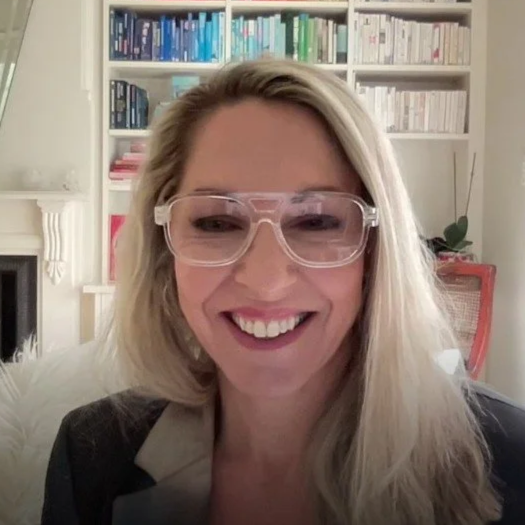
1. About Celeste Halliday
Celeste Halliday is a global keynote speaker, executive coach, mentor, and facilitator specialising in connection. For more than two decades, she has worked with organisations to address disconnection among leaders and within teams, helping them drive high performance and humanise the way they work. Her clients have included ASX200 companies and progressive organisations across Australia and around the world.
Her approach draws on a background in psychotherapy, a fascination with emerging insights from neuroscience, and practical board and executive experience in Australia and overseas. Celeste ran and later founded businesses in London before bringing her business to Australia. She hosts The Reconnection Revolution podcast.
2. Episode Breakdown
00:00 Welcome
00:25 The busywork trap: doing what we're told we "should" do
01:27 Google Ads, energy, and why passion drives results
04:57 Why podcasts boomed: connection, loneliness, and long-form conversation
06:30 Short clips versus real conversation
09:26 Internal podcasts: leaders talking with their own people
11:44 Corporate jargon versus how people actually speak
13:17 Values as "words on a wall", values mapping, and the Authentic Authority program
18:20 Trust equals competence plus warmth
20:10 Listening with fascination
22:43 Projecting an image at work and becoming "beige"
24:04 The authenticity caveat
25:11 Trust, polarisation and the social fabric
30:40 Cost of living and the case for starting a small business
32:06 Running a business in London versus Australia
33:06 AI through a productivity lens versus a possibility lens
35:19 Why fear holds back innovation
37:11 Using AI for admin to make space for conversation
38:09 The value of human-made work, and five future-fit human skills
40:05 What schools are getting wrong about engagement
42:03 The Meaning Method: feeling like you matter at work
45:04 Ted Lasso, teams, and belonging
47:34 Why having a good friend at work matters
48:38 From competition to collaboration
50:24 First steps for leaders: strengths, shared identity, and career conversations
3. Key Insights
1. Busywork drains results. When we put energy into what we feel we should be doing, rather than what we love and are good at, we tend to get mediocre outcomes.
2. Podcasts meet a human need. In a time of widespread loneliness and burnout, long-form conversation lets us get to know people with nuance, beyond a polished ten-second clip.
3. Internal podcasts humanise leadership. Celeste's team is increasingly asked to create podcasts with executives, so employees can hear leaders talk about strategy and culture in their own words.
4. Trust is competence plus warmth. Many leaders double down on what they do and forget who they are being. Warmth, Celeste explains, isn't about being extroverted. It's about humanity and presence.
5. Listen with fascination. Borrowed from work with surgeons in the UK's NHS, this is listening that tunes into the whole person, rather than listening to respond.
6. Authenticity still requires respect. Being authentic is never an excuse for being rude. Real authenticity is rooted in deep respect for everyone.
7. Fear blocks innovation. As Celeste puts it, "we are not very innovative when we are scared."
8. The future belongs to human skills. Celeste's five future-fit capabilities include relational intelligence, connection, authentic self-understanding and emotional management, judgment and critical thinking, and creativity.
9. We can belong for the chapter we're in. Even when jobs change, teams built on genuine care, dignity and respect can create a real sense of community.
4. Resources Mentioned
VIA Character Strengths Survey (free strengths assessment Celeste recommends): https://www.viacharacter.org
5. Connect with Celeste Halliday
Website: https://www.celestehalliday.com
LinkedIn: https://www.linkedin.com/in/celestehalliday/
Instagram: https://www.instagram.com/celestehalliday/
Facebook: https://www.facebook.com/thereconnectionrevolution
The Reconnection Revolution podcast: https://www.celestehalliday.com/the-reconnection-revolution-podcast/
Newsletter: https://celestehalliday.activehosted.com/f/4
6. Support the Show
Become a member of The Motivate Collective community for more conversations, events and resources built around growth, wellness and conscious living: https://www.motivatecollective.com/join
Prefer ad-free episodes? Subscribe on Substack: https://substack.com/@themotivatecollective
Or listen free on Spotify and all major podcast platforms.
The Motivate Collective Podcast
S7 Ep 110: Celeste Halliday
Transcript (punctuation, capitalisation and spelling corrected to Australian English; every spoken word kept verbatim)
Words in [square brackets] are review notes for Melanie Suzanne Wilson, not spoken words. Check each against the audio, then delete the brackets before publishing.
Melanie Suzanne Wilson (00:00)
We have Celeste on the podcast. Welcome.
Celeste Halliday (00:04)
It's lovely to be here. Thank you for having me.
Melanie Suzanne Wilson (00:07)
This is a great joy. You do fascinating things in business. We were just talking about the realities of running your own business, how you end up doing things you wish you wouldn't be doing. What's that looking like at the moment?
Celeste Halliday (00:25)
So we were talking about when we're running our own businesses, which we both are, but definitely this relates to people in other businesses. So some of the leaders we work with in big organisations around the world. The same thing, I think, holds true, which is we are told what we should be doing to be good at our jobs, or to make our business grow if we've got our own business.
And I think so many of the things that we do, the busy work, they aren't actually always necessary. So we end up over-indexing on the stuff instead of getting laser-focused on the things that we love to do and are actually really good at.
Melanie Suzanne Wilson (01:10)
Absolutely. It's left over from corporate culture, from, I'm going to say, some of the retro methods, for
sure. What sorts
Celeste Halliday (01:19)
Yeah, yeah.
Melanie Suzanne Wilson (01:21)
of things have you been doing where you realised it's not actually necessary?
Celeste Halliday (01:27)
I think so
much is changing in terms of marketing. I, I qualified in marketing about a hundred years ago. So I've always loved it. I've always been interested in it. And if I think about my business now, or any of the big businesses that I work with, actually a lot of what we learned all that time ago still holds true.
But we have all these different channels now to access people and to position ourselves. And I think that we can get very caught up on "we must do all of these things in order to grow the business that we want." And so if I think about some specific examples, we've started running Google Ads, and they've
not been
that's [check audio: likely "that"] successful. And I know you have to give them time, and it's an art form in itself to, you know, get them right, to tweak them. But I'm not very passionate about it, so I don't give it a lot of energy. And so therefore we get mediocre results. And I think if you matter [check audio: likely "map"] that out across any part of the business, where do we get great results? When I'm developing IP and delivering well. When I have the
energy,
the focus, the passion into that, then the business works much more effectively. Whereas when we're doing kind of some of that business stuff that we should be doing, because I don't feel passionately about it, I, I tend to not invest the right energy in it.
Melanie Suzanne Wilson (02:59)
Absolutely.
Celeste Halliday (02:59)
Do you find the same thing?
Melanie Suzanne Wilson (03:01)
Yes, yes. If you've worked for, you've worked for big companies. I worked for businesses, somewhere tiny, but had traditional mentalities. And I probably learned marketing a little bit later than you, but it was, goodness, I graduated with marketing in 2012.
And it was really in a bunch of years after that where I was working anywhere. So sometimes it was a big brand or a startup. For startups, the mentality was that someone had poured loads of money into having an office, all of these things. For the really big brands, they were doing a TV commercial. To each their own. Maybe some people still want a TV commercial.
But, but I'm seeing now how communication has changed so much. The podcast even,
Celeste Halliday (04:04)
Mm.
Melanie Suzanne Wilson (04:05)
that, I really wondered, I didn't expect podcasts to be such a thing. I'd
say
Celeste Halliday (04:12)
Mm.
Melanie Suzanne Wilson (04:12)
maybe a few odd years ago. You know, there was a point when Darya for CEO [check audio: likely "Diary of a CEO"], for example, became what it is now.
But there was a
Celeste Halliday (04:19)
Yeah.
Melanie Suzanne Wilson (04:19)
time when podcasts were cute. And
now
Celeste Halliday (04:22)
Yeah.
Melanie Suzanne Wilson (04:23)
the way we connect with people, it's, it's fascinating that you talk about ads. Ads can reach people, and I won't come into too much, too much on paid ads, because I don't do it, but
Celeste Halliday (04:34)
Mm.
Melanie Suzanne Wilson (04:35)
the organic reach. I mean, as saying before I clicked record, that someone who's pretty much a proper brand and a public figure
phoned me up yesterday after finding me on LinkedIn.
Celeste Halliday (04:51)
Mm.
Melanie Suzanne Wilson (04:52)
That nobody spent thousands of dollars to make that happen.
Celeste Halliday (04:57)
Exactly. Yeah. I think for me, the reason I love podcasts, and we have our own, which we'd like to do some more work on. So it's how you fit all the things in. I think because I obvious [check audio: possibly "obviously"] I work in the area of connection, and the counter side of that, which is this loneliness and burnout epidemic that we find ourselves in globally, at work, at home, in our lives.
I think podcasts have filled such a huge gap. Because whether we're on social media or we're listening to a podcast, we are forming parasocial relationships with people that we could probably never connect with or access. I mean, that's the amazing side of it. And what I think happens is it, the podcast,
it fills such a gap because we feel like we're spending elapsed time with people that we want to know, have these parasocial relationships with. And we feel like we get to know them, because some podcasts, like Diary of a CEO, where they're long format particularly, you really start to understand the nuance of a person. They can't just deliver a 10-second clip,
perfectly worded, you know, and then refilmed and refilmed. So it is really live, and it's really innately human. And I think that, I think that's part of the reason podcasts have just had this boom.
Melanie Suzanne Wilson (06:30)
Absolutely, especially as there's AI now, so people wonder what, what content is AI and what isn't.
Celeste Halliday (06:38)
Yeah.
Melanie Suzanne Wilson (06:40)
Also, even the 30-second clip, that format that has grown so much. I wonder if it was perhaps Snapchat that really started the
Celeste Halliday (06:50)
Mm.
Melanie Suzanne Wilson (06:50)
thing that then became stories and reels on Insta. So that has
became more and more popular, and we could talk about attention spans, but that tiny little snip, it's not going to give the whole story of something. It's a little taste test. So, but you're spot on with how some people are going to record something for social and maybe do a bunch of takes. That's fine. With a podcast, we're having a conversation. It's, it's amazing when occasionally people will ask
what we're going to talk about, but some want to feel prepared by having a long list of questions, or they, very rarely, once or twice, people have tried to prepare what they're going to say. But
Celeste Halliday (07:36)
Mm.
Melanie Suzanne Wilson (07:37)
this is a conversation. It builds trust between
Celeste Halliday (07:40)
Yeah.
Melanie Suzanne Wilson (07:41)
listeners and brands, because what you see or hear is really what you get.
Celeste Halliday (07:47)
Yeah, yeah. Yeah. And I think it, it is, it's an exchange. So there's energy in it, in a different way that than putting energy into a clip. It's still energy, but it's not an exchange of energy. It's one-way traffic.
Melanie Suzanne Wilson (08:01)
It is. It's, it's conversation.
Celeste Halliday (08:04)
I think we miss conversation in our lives. We're not spending as much time talking to other people. We're very device-driven. And I mean, devices can be such a great vehicle, that's what we're recording on, to enable conversations and connections that might never have happened. But I don't think that we use it always effectively that way.
Melanie Suzanne Wilson (08:27)
Absolutely. There's a difference between scrolling through and something like this.
Celeste Halliday (08:33)
Yeah. Yeah.
Melanie Suzanne Wilson (08:34)
It's connecting
people with... although TV episodes were, of course, a different format, it had that longer, more in-depth look at something. And everybody would have heard those anecdotes where someone starred on a TV show for a while, and then people feel like they knew them. We're
Celeste Halliday (08:57)
Yeah.
Melanie Suzanne Wilson (08:57)
getting that feeling with long-form content.
Because
Celeste Halliday (09:01)
Yeah.
Melanie Suzanne Wilson (09:02)
someone really can listen in. I listen to other people's podcasts. Occasionally I listen to my own, because it was so amazing. I don't like hearing myself talking a lot, but
Celeste Halliday (09:11)
Yeah.
Melanie Suzanne Wilson (09:13)
sometimes the chat was so good. This one will be one to listen to again and again. The Gurama [check audio: likely "Garima"] one, I was going back to that one a few times. But you feel like you're right in the room with people, right?
Celeste Halliday (09:26)
Exactly, exactly. And it's interesting, because we work with big businesses, and we run, we run leadership programs, culture programs. It might just be with the executives or the senior leaders, or it might be with the whole business. What I'm, what I'm really interested in is, rather than development being just development or training, what we're getting a lot of requests to do is, as part of a program,
develop a podcast with the leaders of the business, or with a group in the business, because there's real demand for podcasts internally, as well as in our personal lives. So you can imagine if you've got a CEO, or a whatever, executive, or a senior leader, or just somebody who runs a particular function, talking about it in longer form, as a conversation.
You learn so much more, with so much richness and depth, that you just don't get in an email communication out about "here's where the business is at, this is what we're doing, this is how the business works," you know. So it's a great way for people to engage and learn in a very human-centred way, as opposed to that formal comms strategy way.
Melanie Suzanne Wilson (10:45)
Okay, are they sometimes podcasts that are for the internal staff to listen to?
Celeste Halliday (10:50)
Yeah,
yeah, yeah. So we might run a program, say we're doing a culture change or leadership development. You know, how do those people really understand the strategy, what's happening in the business now, what the exec think about what's happening in the market and the future of the business? You know, how do they really learn? And the formal comms give them structured information, but a podcast format,
it makes them feel like they know, they've got the inside run. They've dropped in on a conversation between people. So they're hearing the exchange, they're seeing and hearing the relationships play out in real time. And so it connects them to the business and to those leaders. And vice versa, because it is still a mutual exchange there, because they're sort of dropping into a conversation, as opposed to just watching something or reading something.
Melanie Suzanne Wilson (11:44)
There is the closeness and authenticity. Also,
Celeste Halliday (11:47)
Yeah.
Melanie Suzanne Wilson (11:49)
a lot of people write differently than how they talk.
Celeste Halliday (11:53)
Exactly.
Melanie Suzanne Wilson (11:54)
Especially, we've all seen those corporate emails. "Please, please
Celeste Halliday (11:58)
Yeah.
Melanie Suzanne Wilson (11:59)
be advised and take note that
Celeste Halliday (12:02)
Yes.
Melanie Suzanne Wilson (12:03)
blah, blah, blah." We all know how those go. And somewhere in that is
Celeste Halliday (12:06)
Yeah.
Melanie Suzanne Wilson (12:06)
the actual message.
Celeste Halliday (12:08)
Yeah.
Melanie Suzanne Wilson (12:09)
In a podcast, we're saying things
how someone would, how someone would actually hear it, say it themselves. Because I, okay, a marketing expert who is actually a bit of a piece of work, but personally, but really good at marketing, told me years ago, "Write, or use the words that you would use with a nine- or ten-year-old."
I doubt we would say to a nine- or ten-year-old, "Please be advised to that." And of course, a lot of the time we do need that, but we can end up translating everything into jargon. And that's actually, podcasting has stemmed, for some of us, off from public speaking. As speakers, I learned, and other people learned, if you're going to use jargon, translate it and figure
Celeste Halliday (13:02)
Yeah.
Melanie Suzanne Wilson (13:03)
out, okay, if someone is not from the
specialty you're in, the profession you're in, if they knew nothing, simplify it. Go back to the basics. Do you see a bit more of that happening in the podcasts?
Celeste Halliday (13:17)
Absolutely, absolutely. And if you think about, you know, most organi— big organisations will have values, and those values become what we call "words on a wall," because they're not necessarily lived and breathed. The leaders might not walk the talk of the values. And it's because they don't necessarily connect the organisation's values with their own.
So we do a lot of values mapping with organisations, where we get people to do a value, their personal values inventory, and then look at the organisational values and think: how do my values and these values link up? How can I authentically walk the talk of the values, not just kind of parody them, or embody them in a way that feels like I'm not being myself, not being authentic? And I think that,
you know, in a, in a podcast, you get more of that translation. So if they know what the values are, the culture they're trying to create, the business, but they're talking from their own perspective, very different than a town hall, you know, where some, they'll bring lots of people together and deliver messages, financial updates, you know, changes to the strategy, all of those sorts of things.
Again, I feel like we have these expectations of leaders that they're TED Talks now, that they should be able to get up and deliver these incredible professional keynote speaker type, you know, results. And actually, we do a lot of work with execs to do the opposite. So for media stuff, they have to be media trained, because they have to be very conscious of what they're saying. But internally, we have a program called the Authentic Authority.
Melanie Suzanne Wilson (15:03)
No. [check audio: likely "Mm" or "Oh"]
Celeste Halliday (15:03)
And it's
about how do I actually find my own real voice whilst still being legally [check audio: likely "legal"] and still understanding the organisational values? How do I bring my own humanity, my own nuance, my own language, to your point, to it, instead of these specific, you know, words and phrases that are like a whole internal language that no one else will understand,
and aren't engaging. They're not human words a lot of the time.
Melanie Suzanne Wilson (15:33)
Absolutely. I'm using that word a lot. Actually, the words we choose, it makes such a difference. I
Celeste Halliday (15:41)
Mm.
Melanie Suzanne Wilson (15:41)
was, I'll add a side note, that I heard from a random salesperson yesterday who used the word "just" three times in a couple of minutes. I gave up. I wasn't keen on whatever that person had, because it was all "just this, just that." But the words we use, they do have an impact. I, I can
have compassion for the corporates, especially the ones who have been around a long time, who got used to having to very carefully select every word. I remember
Celeste Halliday (16:11)
Yes.
Melanie Suzanne Wilson (16:11)
the days of people agonising over the precise words in a press release. That happened.
Celeste Halliday (16:17)
Absolutely. I just didn't. [check audio]
Melanie Suzanne Wilson (16:20)
Yes. But I am in awe at how all sorts of professionals
on this podcast, to even have just gone with the flow and talked about anything. For any corporates out there, anyone who's an executive, we are doing this now. I've had people on the show who, let's see, they are healthcare professionals, yes.
Celeste Halliday (16:42)
Mm-hmm.
Melanie Suzanne Wilson (16:43)
Robbie owns a business, and some of those sound bites,
Celeste Halliday (16:48)
Yeah.
Melanie Suzanne Wilson (16:49)
the sound bites were a juicy [check audio: possibly "were juicy"], that's for sure.
But I also had someone talking who has been a hospital exec in America and was a CEO of a hospital during COVID. There were some, and I'm keen to get more business people on, there's been, there were some in media. I've had a few who have been journalists or similar. And wherever someone is from, when we're talking as a human, it's okay.
It actually, there's a lot of trust for the person who has the platform, be it this show, any other show. You
Celeste Halliday (17:26)
Mm.
Melanie Suzanne Wilson (17:27)
trust, "Okay, we're not going to say anything too stupid, it's okay." But what you gain is that people do feel connected, but the word "trust" is the key here. I know that some people
can end up working for a large organisation, and they wonder, do managers even care?
Celeste Halliday (17:47)
Yeah.
Melanie Suzanne Wilson (17:47)
When you have a chance to say, authentically, "I really do care. We're doing what we can.
Celeste Halliday (17:52)
Well
Melanie Suzanne Wilson (17:53)
Here are the limitations. Here's what we're doing." That's a turning point. I've had moments socially where someone in a great executive position was telling me privately, "Look,
these are the limits, where there are rules where I can't do this, and people need this." And it's so heartbreaking when people just think on the outside that people don't care, when they're doing what they can. Podcasts,
Celeste Halliday (18:16)
Yeah.
Melanie Suzanne Wilson (18:16)
long form gives you an opportunity to share and care, really.
Celeste Halliday (18:20)
Yeah, yeah, it's true. I think when you boil trust down, it's, at work, it's competence and warmth together. And we talk a lot with people we work with about the fact that most people believe they should be doubling down on the competence part. So the "what I'm doing." And they forget the
"who I'm being," the warmth. And we talk about it being a radio dial, old school. And a lot of people would think that they're an eight warmth, but other people might say they're a two warmth. And, you know, warmth isn't extroverted or overly, like, friendly, silly friendly. It's about humanity and presence.
Which I think is another thing with a podcast format, is you have to learn to listen, because it's a conversation. And I think that's a skill that we are really lacking in general. We're sort of deteriorating in all those peopling skills, and the, the listening, the genuine presence, not just waiting to speak or deliver the message. The "who I am," you know, is so important.
Melanie Suzanne Wilson (19:36)
That's, it's really a skill, hosting.
Celeste Halliday (19:40)
Mm.
Melanie Suzanne Wilson (19:41)
Partly because, look, you're great at this. I have some people who are very lovely souls, but they'll talk and talk and talk, and I need to, I need to get in somewhere. But absolutely, we need to be absorbing what someone says, and everybody should try hosting a podcast, because you have to listen to then bounce your next question off anything. But
what sorts of listening issues have you seen in corporate?
Celeste Halliday (20:10)
So many. The frame we teach is, I don't love the whole active listening thing that we get taught, because it feels like a technical skill. And
Melanie Suzanne Wilson (20:21)
Yes.
Celeste Halliday (20:22)
there's a phrase out of the health system in the UK, the NHS, where they worked with surgeons to figure out how to teach them bedside manner,
because they knew that if they taught them that, they had research that proved people's health outcomes significantly improved if their practitioners had bedside manner.
Melanie Suzanne Wilson (20:49)
It's funny we have to prove that with research, but that's the world we live in.
Celeste Halliday (20:52)
I know. Yeah. Yeah. Yeah.
Like, you shouldn't be human. Just, you know, cut them open. So they came up with this term, "listening with fascination." And I've used it ever since. I was working in an aligned sector in the UK for a long time, for a while, a long time ago. And I've used that term all the time, because to me, there's a demeanour of listening with fascination.
And it feels like, you know, it feels like I'm, I'm hanging on your every word. I'm tuned in. The noise, the chatter in my head is turned down. And I'm really in my body and listening beyond your words, tuning into your physical presence. And I think that we miss that. We, we listen to respond, or we listen
in a way that is just this sort of technical skill, and it's not, it's not effective. People don't feel heard or met.
Melanie Suzanne Wilson (21:51)
Yes. There's a way to even rephrase something for yourself to really absorb things. I've seen people really deeply caring, and I could sense within their whole being that they cared, but it was probably how they were taught, that they were trying to pull the therapeutic words, the, to say this with so much love and care.
They're pulling the therapeutic words, or the jargon words, or the "okay, this is the textbook word for what you are saying." And yet sometimes it can be the most simplified, "this is what's in front of me." Because we have
Celeste Halliday (22:32)
Yeah.
Melanie Suzanne Wilson (22:33)
been taught that everything needs a label, but of course,
Celeste Halliday (22:39)
Yeah.
Melanie Suzanne Wilson (22:40)
sometimes labels become a box that you're trying to squeeze into.
Celeste Halliday (22:43)
Yes, that's, I mean, such a good point. I think, and I think we're squeezing ourselves into boxes as well. You know, there's some research that says at work we are projecting an image of ourselves about eighty percent of the time. We're re— that's what we're focused on more than anything else. And it sounds crazy until you think about writing an email.
And you might write it and then think, "But how is that going to sound?" And so then you rewrite it, and you rewrite it, and part of that's good, because you're conscious of how it's being received, but it's still taking the human out. I think we're, we're so scared of difference and of being politically correct, and there's a lot of positive in that, but there's so little tolerance for
imperfection and difference. We've sort of become beige, cookie-cutter people fitting this corporate profile, not unique humans with nuance.
Melanie Suzanne Wilson (23:49)
Are we allowed to be our unique humans, though? I, I worry a lot that the corporate spaces expect the beige. Do they, are they ready for more than beige?
Celeste Halliday (24:04)
Mm. The great cultures are, that idea of bringing your whole self to work. I do have to say, though, we talk about authenticity all the time. It's part of our frameworks. And we always talk about the authenticity caveat, which is, a lot of people will say, "I was just being authentic," when they've been rude, or, do you know? It's just like, "It's just who I am."
And there is no excuse for not caring about how you're impacting another human at work or anywhere else. So
Melanie Suzanne Wilson (24:37)
Yeah.
Celeste Halliday (24:37)
being authentic and not beige is absolutely, you know, it's going to provide a richer culture, it's going to provide more innovation. It teaches us to work across difference and work with anyone, work with different people, different styles.
But there's sort of the, the basis has to be rooted in deep respect of anyone, of everyone, and not just "You have to accept me and tolerate me, however I'm communicating, because that's the rules, that's being authentic."
Melanie Suzanne Wilson (25:11)
This is, do you mind if some of these ideas are overlapping into politics a little bit? Because I think it is
Celeste Halliday (25:18)
Not at all.
Melanie Suzanne Wilson (25:19)
good. Good. The whole politically correct issue, the free speech issue. I have seen a few, I'll start to that again, I'll let it do that. I've seen a few political spaces from the inside, and I can say with terrified certainty that Australia is at a tipping point
for what everybody considers to be respect and inclusion versus freedom, free speech versus peace, all of those things. It's simmering below the surface here, at a time when it is outright loud in other countries. So that's happening at the same time as, yes, in corporate as well,
people would be trying to figure out how to be either honest or politically correct, or somewhere in between.
Have you seen
Celeste Halliday (26:15)
Mm.
Melanie Suzanne Wilson (26:15)
it going that far in corporate?
Celeste Halliday (26:18)
Have, but I'm, I'm really curious to understand, in terms of the examples you were giving, are you, are you saying that we're too politically correct in the political arena, or that actually we're the opposite? We're
Melanie Suzanne Wilson (26:32)
Both.
Celeste Halliday (26:34)
doing
Melanie Suzanne Wilson (26:35)
Okay. And I have to be so careful, because basically I had the bizarre experience of mingling in some political spaces, and to those who are political and know me, I care for all of you. I'm concerned. And so I'll keep some things vague. Look,
Celeste Halliday (26:53)
Mm.
Melanie Suzanne Wilson (26:54)
I, there are very hidden pockets of
politics at the moment in Australia that are outright racist. Quite,
Celeste Halliday (27:02)
Mm.
Melanie Suzanne Wilson (27:04)
quite simply, there's no other way to put it. You look at this and you'll say, "Okay, that's what it is." And however, then you get to the, and it's beyond what you see in the news. Then you get to the free speech, and nobody knows how to handle all that, because
everybody will either believe in a god or a no god. People will believe in making more money for themselves or having more money for the whole country, whatever it might be. I think deep down we all want to be okay for ourselves. Nobody wants other people to suffer, but we don't all know how to coexist in a way where everybody gets what they need. But with that,
the free speech, you needed to draw the line somewhere with free speech, but you don't want to take it away. We always, I heard in journalistic spaces that Australia always had less rights to free speech than other countries anyway.
Celeste Halliday (28:10)
Mmm. Mm, interesting. Yeah. I mean, I think we're seeing globally, if you look at the Edelman Trust Index [note: the official name is the Edelman Trust Barometer; spoken words left as said], we have the lowest trust levels globally than we've ever had since we've been tracking it or measuring it. And one of the, a few years ago, one of the places that trust was still being maintained, because it's certainly really deteriorated in terms of our
public institutions. So our governments, our banks, the media, you know, a lot of, there's so little trust now of where we might have seen these places as kind of bastions of representing our values, that I think so many people don't feel that about those things. Interestingly, for a while, corporates were hanging in there,
that people still felt that they trusted certain businesses, or they trusted businesses they worked in. But it's become so, we've become so polarised. You know, that social fabric is so frayed that, I can't remember the exact wording, but it's something to the effect of, the question is, "I don't want to live on the same street as somebody that has different political
views to me."
So that kind of animosity for people who have different views, full stop, is frightening. You know, it borders on the start of civil unrest, which a lot of people are saying, you know, this is, we can see it happening elsewhere, and, and there's definitely rumblings of it here.
Melanie Suzanne Wilson (29:50)
It is. People sometimes feel scared. I'd say Bondi was a moment for everybody, but
Celeste Halliday (29:56)
Mm.
Melanie Suzanne Wilson (29:58)
there must have been some moments before that. But I can't remember when the Lind Cafe [check audio: likely "Lindt Café"] happened in Martin Place. I can't remember what year that was. But that was a significant moment. And
Celeste Halliday (30:11)
Yeah.
Melanie Suzanne Wilson (30:12)
of course 9/11 was so long ago, but
we've had these occasional moments where we wonder, will we o— will we be okay just living our everyday lives? And I'd say yes, it's partly the social, the social fabric. And of course, economically. I
I recall that we're talking a bit about the cost of living when we last chatted.
Celeste Halliday (30:39)
Mm.
Melanie Suzanne Wilson (30:40)
The cost of living issue, especially in Australia.
For businesses, I personally believe that everybody, and I, I know this is quite an absolute, I believe everybody should be trying to create a small business.
Celeste Halliday (30:55)
Yeah.
Melanie Suzanne Wilson (30:55)
Don't sell much of this podcast right now. If you want to buy something off the podcast, reach out to me. I'll put more links in. But this podcast, I can tell you now, you need a couple of little subscriptions, and
this microphone, I got this for about twenty-five dollars, whatever it was, on Marketplace, and whatever computer you have, or you can use your phone. There are so few barriers. I really think, with, yes, businesses still need employees, but
Celeste Halliday (31:22)
Mm.
Melanie Suzanne Wilson (31:24)
we do still need to create a business. However, whether you have a small business or you work for a one, this is affecting everybody, where Australia has gone, where
the changes for small businesses. I say "for them," but that's not the way to put it. There was, so for those who are in other countries, there was news about people being allowed or not allowed to use their credit card to pay tax. And
Celeste Halliday (31:52)
Mm-hmm.
Melanie Suzanne Wilson (31:52)
there was a tax change that was getting close to half of what a business would make. So some of these things came in. If you heard about any others,
then let me know. But have you seen the ripple effect of all of that going on?
Celeste Halliday (32:06)
Definitely, in small business and in big. It's not easy to run a business, I don't think. I find, I think it's harder to run, I ran a business in, I ran, I ran somebody else's business in, you know, London, and also then I started my own small business there, and then I bought [check audio: likely "brought"] that business out here into Australia, and I find it much more difficult to run the business economically here.
Some of that's about scale. You have so many more people that you can access, but a lot of it was around the support, or lack thereof, that you receive from the government to actually foster small business. And it's such a growing sector, and, you know, it's, it's where a lot of innovation does come from. So agree, it's a great thing for people to do, the idea of side hustles or starting their own thing.
And it's not easy. So the barriers are low, but it's not enabled well.
Yeah.
Melanie Suzanne Wilson (33:03)
It's happening for large businesses as well.
Celeste Halliday (33:06)
Absolutely, yeah. I mean, I think something I hear a lot around the traps is, you know, twelve months ago, I was talking to lots of organisations about AI, because I believe that AI could be one of the greatest enablers of us being more human. And it could be world-changing from that perspective.
And so were [check audio: likely "we were"] talking about AI as an enabler, about an enabler of possibility. But really, most organisations are looking at it with a productivity, not a possibility, lens. So how do we cut cost? Which in many cases is not just improved processes, systems, et cetera. It's people. And if you can use AI to do lots of tasks that people can do,
I mean, great, we do that in our organisation. But it's to, it's to 10x, you know, the potential of the people and the business, and not just to cut 20% or 30%, which is what a lot of boards and a lot of big corporates, that's what they're being tasked to do. So it, it becomes then through the line, through the leaders,
that the pressure is on to figure out how to just cut cost and/or people. Instead of starting with a blank sheet of paper and thinking about how we can connect all the disconnected silos in the business? How do we run processes end to end in a much more effective way? How do we deliver more value to our customers and clients, and help people in our business, our talent,
do work they love, that lights them up, unless the stuff [check audio: likely "less of the stuff"] that felt bureaucratic or not fulfilling?
Melanie Suzanne Wilson (34:56)
Okay, it's cost cutting. The issue here is that corporate has an opportunity to innovate and get creative in a way that will
Celeste Halliday (35:06)
Yeah.
Melanie Suzanne Wilson (35:07)
expand. Are they expecting growth from the cost cutting, or are they just looking to change the gap between what they currently earn and
Celeste Halliday (35:19)
I mean, I think a lot of people talk about the innovation. I think the first step is, let's cut cost. And I think we get stuck in that. If you look at the research around AI implementations globally, it's about six percent that see a positive ROI on all of the money they spend on AI.
And there are many examples of organisations that have cut thousands of people and then hired a whole lot of them back, or similar people back. So we're not, we're very short-term. I see in the business world, in every part of the world, but in the business world, we, we're very reactive. We're looking at the next quarter, or delivering the financial year. We're not thinking in three years, or
five years seems like an impossibility now. I think the uncertainty of what's happening in the world keeps us very short-term focused. And honestly, my belief is that there is so much fear in the world because of the lack of trust, because of the uncertainty, because of what happened during COVID, all of those things, the loneliness and disconnection we're seeing globally. It creates fear
and disconnection. And we are not very innovative when we are scared. So if you think about an organisation where a whole lot of people may not admit, but are worried, "Is my job gonna go? Am I gonna be skilled up enough to see a future for myself? Or am I just gonna be, you know, outplayed by AI?" It doesn't create
space, or the mindset, or the safety to genuinely play, experiment, create, innovate.
Melanie Suzanne Wilson (37:11)
Yes. AI, and I'd love to hear in a moment about what people are doing with AI in very large corporate spaces. For me, in my everyday life, it has made such a difference when I can tell AI, "I need you to check my whole email inbox for anything that would be about podcast guests or from podcast guests." Because then, people email in bits and pieces. It can just
look through my emails and then put something straight into the show notes. I don't have to do that. That is administrative. There's a difference
Celeste Halliday (37:43)
Yeah.
Melanie Suzanne Wilson (37:43)
between,
there's a difference between the administrative tasks and having a conversation like this. For those who feel the desire to put an AI voice over their content on YouTube, you do you. You do you.
Celeste Halliday (37:59)
Yeah.
Melanie Suzanne Wilson (38:00)
But we have more time to have a conversation like this because AI has helped to create the space for it.
Celeste Halliday (38:09)
Exactly right.
So I think when you talk about small businesses and people starting their own businesses, you know, it would be a beautiful idea to think that a lot of those might be very human businesses, whether that's, there's gonna be so much value placed on anything created by a human. So handmade, handcrafted, experiences that are human inhuman [check audio: likely "human, in-person"] with other humans.
The things that we know weren't made by AI or by machines will be really valuable. And I think that's a, it's such a return to, you know, to our roots, to where we started, those handmade, hand-connecting things. I think in terms of big businesses, because not everyone wants to go and start a
whatever small business, or so when they're working in those big businesses, we have five critical capabilities, skills for the future, that we are teaching organisations about now, to help the businesses, but also individuals, future-proof themselves. We call it being future fit, and they're all human skills. They're, it's relational intelligence, it's
connection, intelligence, understanding myself authentically, emotional management. It's judgment, critical thinking, creativity. It's the things that still make us innately human that will be exponentially more valued in the short term, in the coming next two, three, five years.
And our schooling system is absolutely not set up to support that. And our organisations have not, they've traditionally treated those things as soft skills and not invested time and money in. So the really progressive organisations are really focused on how we start building the foundations for those very human skills now. Yeah.
Melanie Suzanne Wilson (40:05)
What have you seen with the schools?
Celeste Halliday (40:07)
Well, I have two teenagers, so I have my personal lens in, and I, I see a lot of very well-intentioned teachers who I'm sure did not get into teaching to do a whole lot of bureaucratic admin, or to teach a curriculum that they might not personally believe is going to make a difference. So I see my challenging teens, particularly one of them,
really, really disengaged with school. One of them can't see the point. "Nothing that I'm learning feels like it's going to be valuable to me in the future. Can you, teacher, put your hand on your heart and say that this is going to be critical in some way for me? And do you feel great about teaching it?" And the emphasis is on so much on hitting those curriculum notes
that a lot of teachers don't have the capacity, in these larger classrooms, etc., to focus on the connection with the student, which is the thing that enables the learning. And so we've kind of got this perfect storm of, I think, all the, all the people, the teachers, the kids, you know, the system, it wants to do a good job, but ultimately it's really disengaging a lot of people. I can look at my
kids' reports, and without asking them whether they liked the subject, I can ask them if they liked the teacher. And that's where they've got better results every time.
Melanie Suzanne Wilson (41:39)
Yes, yes. You need to have an engaging interaction to learn something more deeply.
Celeste Halliday (41:49)
Yeah.
Melanie Suzanne Wilson (41:49)
The bureaucratic side is out of control. Because
Celeste Halliday (41:54)
Mm-hmm.
Melanie Suzanne Wilson (41:55)
then people think they're ticking the box enough if they are being bureaucratic enough, instead of going
Celeste Halliday (41:59)
Yeah.
Melanie Suzanne Wilson (42:00)
to their actual goals.
Celeste Halliday (42:03)
Yeah, that's right. Yeah. Well, the, some, not all teachers, obviously, they're brilliant teachers as well. But that well-intentioned thing, leaders in the workplace, teachers in schools, where we're forgetting what's meaningful for us about the work. So actually, the direction our work is taking is, we've got a program called the Meaning Method.
And we're starting to work with organisations to teach them how to get leaders, but also just individuals, to really connect with the meaning in their work, which AI can help them do, because it can take the less meaningful things away. And so when I'm showing up to work feeling like I'm helping another human, whether that's an end customer or client, or it's somebody in my team, or it's the person in the next department who gets the product of my work,
then I start to feel less like I'm just ticking a task list, and that I'm part of a living, breathing entity. And ultimately, that meaning thing, it's about feeling like I matter. Like, what difference does it make that I'm here?
Melanie Suzanne Wilson (43:18)
Exactly. I want to look at the collective meaning in a second, but that, that meaning in the educational space, what came into my head hearing that was the Dead Poets Society.
Celeste Halliday (43:31)
Mm, absolutely. Yeah.
Melanie Suzanne Wilson (43:34)
And where that cross— sorry.
Celeste Halliday (43:34)
No, no, you go.
Melanie Suzanne Wilson (43:38)
Where that crosses over with what you teach is that we can be actually embodying our words, or we can just say words.
Celeste Halliday (43:47)
Yeah, exactly. And interestingly, so many teachers would relate to that movie and want that for themselves as a teacher. And my children, when they watched that with me, were so moved with the idea that teaching could be like that, but they haven't experienced it.
Melanie Suzanne Wilson (44:09)
And that's a whole, that's a whole area we could explore for so long. I mean,
Celeste Halliday (44:14)
Mm.
Melanie Suzanne Wilson (44:15)
some people get into it because it seems like steady work. There are all sorts of things going on there. But she [check audio: possibly "you"] also talked about the collective meaning. I came from quite a background of community, be it official structured communities or otherwise. And I hope that corporate spaces can gain
a sense of community. However, we know that jobs may or may not last forever. So I wonder if you recommend that people need to find a sense of meaning for themselves in work and beyond work. How do we balance all of that? How do we find that, how do we find that feeling of trust and connection in a space where, where goals and realities evolve in a business world?
Celeste Halliday (45:04)
Mm. I think the idea of using sports teams, which Australia loves, as an example of great leadership, great teamwork, good cultures, all those things, it does ring true for me. If you think about Ted, have you ever watched Ted Lasso, the show?
Melanie Suzanne Wilson (45:21)
No.
Celeste Halliday (45:22)
No? Well, it's about a English
football team, soccer team, we would call it here, and they get an American football coach to come and train this team. And his whole philosophy is innately human. It's about seeing every person on the team as an individual human and meeting them where they are, valuing them for who they authentically are, and then garnering all of those different people
to have a sense of shared identity and a common, you know, a goal. So whilst he might coach that individual person on their, the way they kick, he's very much coaching them on how they interact with each other, how they can be dependable for each other and show up for each other in service of the collective goal, not just the one shiny superstar
in the team. So that analogy does play out for me in leadership in organisations. I think we often teach leadership as a skill where I work with my direct report, or my whatever. And actually, we don't really always help leaders work with teams. How you build that team to be a team, with a common collective identity and a sense of
community, and a, a safety to grow and to make mistakes, and, and help them with their skills to do that, to genuinely collaborate, not just deliver their goals side by side. Very different thing. So I think there's a huge place for community in the future of organisations. And I don't think, because our jobs might not be safe, that that stops us forming
a sense of community. If we're treating people with genuine care, dignity, respect, then we can have different chapters and still belong for the period of time that we're there.
Melanie Suzanne Wilson (47:22)
We can belong when we are there. That's powerful.
Celeste Halliday (47:26)
Mm. Yeah.
Melanie Suzanne Wilson (47:27)
It's necessary, because surely that must create greater results for an organisation.
Celeste Halliday (47:34)
Interestingly, one of the things that really can help a team's performance, or a business's performance, is having a good friend at work.
Melanie Suzanne Wilson (47:44)
Yeah.
Celeste Halliday (47:44)
And
so many people, when they go to work, they're much more thinking about the people they're working with, as well as obviously their goals and results. But the fun part, the exciting part, the really interesting part, it's often the relationships. So it's, it's, it's fascinating to me that organisations don't spend a lot of time, effort, money on helping facilitate relationships
and teach people how to have really effective relationships with each other.
Melanie Suzanne Wilson (48:17)
Yes. I hope there's a version of this where people can be working with each other instead of competing against each other. Have you seen some spaces where they are all getting compared? And so it's
Celeste Halliday (48:32)
Yeah.
Melanie Suzanne Wilson (48:33)
very hard to collaborate with someone who looks like you're a competition. Think so?
Celeste Halliday (48:38)
Completely think so. It takes us straight back to the schooling system. Here, and in many other places around the world, we're raised in a schooling system that assesses us against other people. So you either get the blue ribbon or the A, or you don't. So that sense of real constant
solitary, individualistic achievement. Then we're put into the workforce and told to collaborate. And most people have no idea how to collaborate effectively. I would absolutely include myself in that. So I had an idea, as a leader or as an individual contributor, that collaboration was making sure I got the results I needed with other people,
to either help or not get in the way of that. But genuinely thinking that they would have real value to add, that their ideas might be as good or better than mine, it might actually improve something, I'd never really been taught that. And so I think that's true of so many organisations. But where they get that right, where they have a leader or a culture where it's genuinely about the greater good, and everyone is genuinely valued and accepted and seen,
it's magic.
Melanie Suzanne Wilson (49:52)
It is magic.
Celeste Halliday (49:53)
Yeah.
Melanie Suzanne Wilson (49:53)
That's powerful. If someone is in any position of leadership listening to this conversation, and they are thinking this is a big shift from how things are currently happening, what can
Celeste Halliday (50:06)
Yeah.
Melanie Suzanne Wilson (50:07)
they keep in mind? What can we tell them to feel less overwhelmed, more empowered, and ready to take some achievable first step,
steps towards an environment that will thrive in the current social and economic and technological world?
Celeste Halliday (50:24)
Mm.
Mm. I would say you already have the foundations of all the skills you're going to need. And that we shouldn't look at them as new skills. You know, look to where you have really effective, positive relationships. Look to where the work lights you up and you find meaning,
and tune into those things for yourself and for the people you're leading. I think one of the most effective things a leader can do now, but so it's always been, is to help the team be so clear on the identity that they want to have together, that they choose that together, who we want to be, what we want to be known for, as well as the what we're trying to achieve, and career conversations.
So I would recommend every leader, themselves, but also with their teams, that they go online and do a strengths assessment. There are so many free. We, we like the VIA Strengths, because it's quite related to character development. But looking at those strengths that I already have and figuring out how I turn those strengths into superpowers,
all with a very human lens, is an incredibly engaging conversation to have with every person working with you, and for yourself as well, so that we stop seeing ourselves as just functional experts that do this job, which is not going to exist. Much more a human with all these skills, strengths, some superpowers, and the ability to really connect with and work with other humans.
Melanie Suzanne Wilson (52:03)
Celeste, thank you so much for these insights.
Celeste Halliday (52:06)
Hmm. Such a pleasure. It was a great conversation. Thank you for having me.
Melanie Suzanne Wilson (52:10)
Thanks. I'll click stop in a second. And I just want to check. Either you can go totally audio only, or we could use some of your talking-head little sections for the reels. Amazing.
Celeste Halliday (52:23)
That's fine. Of course,
absolutely, yeah.
Melanie Suzanne Wilson (52:27)
Sounds good.