
Podcast Episode Coming Soon
From Minister to School Teacher and then Hypnotherapist: John Queripel on How to Transform
Episode Overview
John Queripel joins Melanie for a wide-ranging conversation that moves from his decades-long career path — teaching, ministry, prison chaplaincy, and now hypnotherapy — into how belief and imagination drive real behavioural change, and finally into a deep dive on what several major faith and wisdom traditions actually emphasise once you look past their literal surface. Along the way, the conversation touches on the history of Mary Magdalene's reputation, the Magdalene Laundries, tribalism in Australian history, and the shared themes running through Buddhism and Christianity.
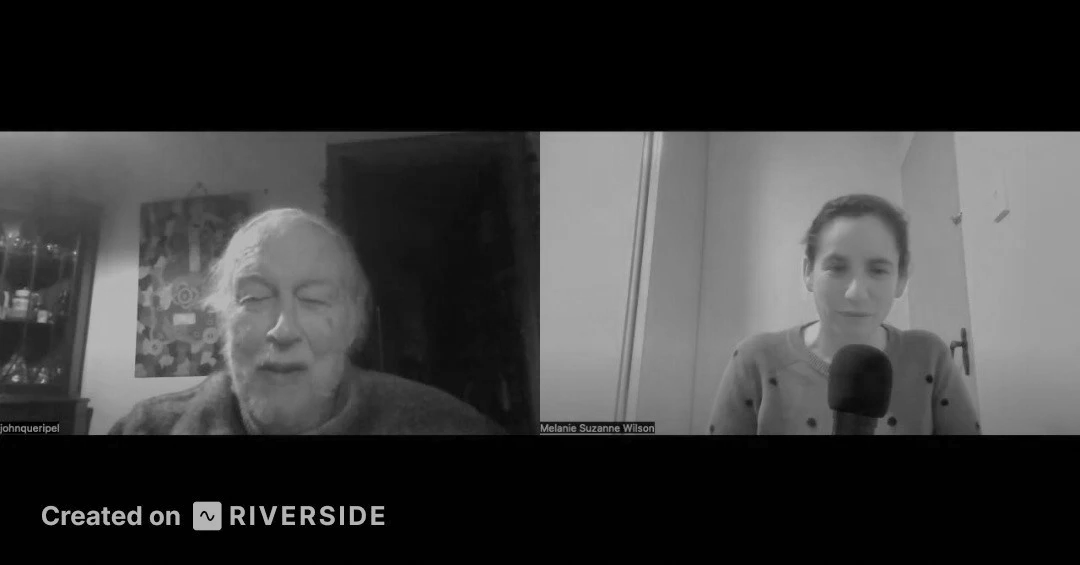
Guest Bio
John Queripel is a reverend, hypnotherapist, published author, and former school teacher based in Newcastle. He holds a Bachelor of Arts (Macquarie University), a Bachelor of Divinity and a Master of Theology with Merit (both University of Sydney), and a Diploma of Education (UNSW), with studies spanning history, politics, philosophy, comparative religion, biblical studies, and psychology.
He served as a minister of the Uniting Church in Australia for roughly three decades, with placements including Wollongong, Bondi (Sydney), Newcastle, and Wauchope, as well as periods of prison chaplaincy. He has also worked extensively as a secondary school teacher across History and Social Science. His community involvement — including solidarity work with Indigenous communities, peace and justice advocacy, and climate-change protest — has, in his own words, "not always sat well with church authorities."
He now runs Newcastle-based hypnotherapy practice HypnotixWorkx, a role he has held since January 2016 per his LinkedIn profile — practising hypnotherapy for just over 10 years. He works with clients on smoking cessation, weight management, anxiety, phobias, chronic pain, and related concerns, and also teaches self-hypnosis. He is a professional member of the Australian Institute of Neuro Linguistic Programmers (AINLP).
John is the author of four books: Bonhoeffer: Prophet and Martyr (a play and essay on the German theologian executed for his role in the plot against Hitler); On the Third Day: Re-looking at the Resurrection, which has been reprinted; Christmas: Myth, Magic and Legend; and his latest, In Wisdom and in Passion: Comparing and Contrasting Buddha and Christ. He also writes regularly on geopolitics and Australian politics for the public policy journal Pearls and Irritations, and publishes further commentary via his blog and Substack. Beyond his writing, he is also a singer-songwriter, poet, and visual artist.
⚠️ Note on sourcing: this bio draws on John's LinkedIn profile, his Pearls and Irritations author page, his author WordPress site, and his Natural Therapy Pages practice listing. On years of hypnotherapy experience, sources varied (LinkedIn ~10 years, his own words in this episode "five, six years" of solid practice, his Natural Therapy Pages listing "over 25 years") — the bio above uses the LinkedIn-based figure as the most conservative and verifiable estimate. Worth a final confirm with John directly if precision matters for published copy.
Episode Breakdown
Timestamps are approximate and should be confirmed against the final edit before publishing.
[00:00] Introduction to John Queripel
[00:25] John's career path: banking, teaching, ministry
[01:32] Entering ministry with the Uniting Church, and early postings
[02:45] Newcastle, the 1990 earthquake, and prison chaplaincy
[04:38] Wauchope, Bondi, and the "furore" that ended his ministry career
[06:21] Returning to casual school teaching through COVID
[07:36] Transitioning into hypnotherapy
[08:04] What hypnotherapy actually treats: habits, stress, anxiety
[08:58] How his humanities background shapes his worldview
[10:34] The role of imagination and belief in hypnotic susceptibility
[13:20] How hypnotherapy works: logic, belief, and demonstrable proof
[15:57] Why most clients come to remove a habit, not build one
[17:56] Session structure and teaching self-hypnosis
[19:18] Identity and belief as part of lasting change
[21:32] John's four published books, starting with Dietrich Bonhoeffer
[22:36] Reading the Easter narrative beyond the literal
[25:12] Why the Gospels aim to transform readers, not just recount history
[26:04] The Gospel of Thomas and Gnostic interpretations
[28:58] The historical erasure and mischaracterisation of Mary Magdalene
[00:00, disc. 2] The Magdalene Laundries (content note applies — see above)
[02:04] Shifting norms around cohabitation within religious spaces
[03:11] Why justice and economic issues, not sexual ethics, are the scriptural focus
[05:55] Tribalism, political division, and Australia's historical "two tribes"
[10:04] Judgment, belonging, and the parable of the Good Samaritan
[14:48] The Christmas narrative and questions of Jesus' divinity
[16:53] John's fourth book: comparing Buddhism and Christianity
[19:40] Holding wisdom and passion in tension rather than resolving them
[21:42] Closing reflections
Key Insights
On hypnotherapy and belief John's approach relies on demonstrating hypnosis with small, low-stakes exercises (like a hand feeling "stuck") before applying the same principle to habits like smoking. Once a client experiences the effect firsthand, they invest belief in the process, which he says is what allows meaningful change to follow.
On imagination and mental health He connects imagination directly to both creativity and vulnerability to depression and anxiety, describing imagination as "a great servant" that fuels art but "a terrible taskmaster" when it runs unchecked.
On independence over dependency John deliberately avoids creating ongoing reliance on himself as a practitioner, often resolving a client's issue in one or two sessions and teaching self-hypnosis so clients can continue the work independently.
On religious texts and literalism Across three of his four books, John argues that Easter and Christmas narratives are best understood as metaphor and transformation stories rather than literal historical accounts — and that focusing on literal interpretation causes readers to miss the deeper intent of the texts.
On Mary Magdalene John traces how Mary Magdalene's historical reputation was reshaped — he attributes the association with prostitution to Pope Gregory in the sixth century, alongside a conflation of several separate biblical women — despite what he describes as a lack of historical evidence for that characterisation.
On tribalism and division Drawing on Australian political and religious history — including sectarian divides that persisted in institutions like the police force into the 1970s — John argues that a "monoculture" never existed in Australia, and that tribalism, not any single ethnic or religious identity, is the more consistent thread running through division.
Support Resources
Included due to this episode's discussion of historical institutional abuse of women (the Magdalene Laundries).
Australia
1800RESPECT — 1800 737 732
Lifeline — 13 11 14
Beyond Blue — 1300 22 4636
Blue Knot Foundation (support for complex trauma) — 1300 657 380
International
RAINN (US) — 1-800-656-4673
Crisis Text Line — text HOME to 741741 (US/Canada)
findahelpline.com — for support lines outside the above regions
Connect with John Queripel
Author website: johnqueripelauthor.wordpress.com
Hypnotherapy practice (HypnotixWorkx): Natural Therapy Pages listing
Political/geopolitical commentary: Pearls and Irritations author page
Blog: johnqueripelblog.com
Substack: johnqueripel.substack.com
Books available direct from the author — details on his author website
Facebook: [personal profile link provided by Melanie]
[Placeholder — please confirm which of these John wants featured for a wellness-podcast audience; his political commentary work may be worth omitting from TMC-specific copy given it's a different audience/context than his hypnotherapy and author work.]
More from The Motivate Collective
Join The Motivate Collective community for more conversations, events, and resources built around growth, wellness, and conscious living: www.motivatecollective.com
🎧 Listen on Spotify: [link] — also on Apple Podcasts
📺 Watch on YouTube: [link]
📸 Follow us on Instagram: [handle]
Transcript
Melanie Suzanne Wilson (00:00) John, welcome to the podcast.
John Queripel (00:00) Thanks, Melanie. It's great to be here.
Melanie Suzanne Wilson (00:05) You have, from what I gather, heard some of the past episodes of the show.
John Queripel (00:05) Yeah, you've had a good number of them and haven't got through all, I have to admit that. But enjoyed what I've listened to, so hopefully those listening to this will enjoy what they're listening to as well.
Melanie Suzanne Wilson (00:25) Absolutely. A high bar set. I appreciate that. You do a lot of different things these days. And I want to start by explaining your career very briefly so people know where you came from before you ended up — you've been other things before becoming a hypnotherapist.
John Queripel (00:25) Yeah, look, I've run through a fair number of things. I started off with a bit of, death by degrees I've got, I think — but what were they? I went first of all into school teaching. Second, well, I did actually have a year in the bank, which was not really suitable for me, but even though the vocational guidance said I'd be ideally suited for banking, it just did not work out.
John Queripel (00:51) Then I went and did more study and went into secondary teaching, and I still felt young when I went into that, and that's a hard road to hoe when you're young. So I think it's — you lack that confidence. I was only about twenty-seven, twenty-eight, and you haven't got that confidence and presence of mind in yourself, even at that age.
John Queripel (01:32) Yeah, I went back to school teaching later and found it much easier when I was in my fifties and sixties. Then I went from school teaching into the ministry of the Uniting Church in Australia, which is a more liberal church, and I was probably on the more liberal, radical extreme of that, I'd guess.
Melanie Suzanne Wilson (01:54) How old were you when you started that?
John Queripel (01:54) Look, I — I did different placements. For those in Australia or who know some of the areas, I started off in Wollongong and then went to Bondi in Sydney.
Melanie Suzanne Wilson So which years — when did this happen?
John Queripel It's almost ancient history these days. Nineteen eighty-four I started in the ministry with the church in Wollongong. In nineteen eighty-eight I went up to Bondi in Sydney, which people overseas may well have heard of — it's sort of the archetypal Australian beach, and of course had that tragedy there six, seven months ago. And then from there I went to Newcastle. That's the first time I'm in Newcastle now, but my first sojourn in Newcastle was nineteen ninety, I think, just after the earthquake — Newcastle got an earthquake.
Melanie Suzanne Wilson (02:45) Did you work for the church in Newcastle?
John Queripel (02:45) Yeah, I was working with the church in Newcastle. I just came up here just after the earthquake. I remember hearing about the earthquake — I was in, of all places, Peru, where they get plenty of earthquakes, and these two Canadians came up to me and said, "Where are you from?" When I spoke they knew I was from Australia, and they said, "That's where they've had that earthquake," and I went, "Where?" "Newcastle." I said, "My God." Because in Peru they have them all the time, but in Australia you don't expect earthquakes — but they had one here, and they were very lucky that only fourteen died, I think, where it could have been hundreds if the club had come down and crushed people, except it was in the morning and no one was in the club.
So I did time in Newcastle — sounds like I was in jail, I don't — I have done jail work, by the way. I have done jail work after Newcastle. I did a period out at Lifco prison as a prison chaplain, filling in for someone who was off on long leave. I met some of the most infamous people in the state.
Melanie Suzanne Wilson (03:33) Went from — hold on, hold on. Where is that all going?
John Queripel (03:48) They were the long-laggers there — the ones in for the long period. You check your shoelaces and belt as you leave, make sure they're still there, because you didn't want them — for the obvious reason, didn't want them necking themselves. It was nineteen ninety-two, and you'd ask them, "When are you getting out?" and they'd say, "Two thousand and twenty-three," or something, and you'd say, "My God, that's a long way off." That's perspective.
Melanie Suzanne Wilson (04:12) For perspective, I was born in eighty-nine, so if they were getting in in the early nineties, that's a long while — I can picture that length of time.
John Queripel (04:12) Yeah, yeah, it's a long, long while — hits my shaking my belt and my shoelaces when I left the place. As I say, some of the most infamous names — I won't mention them, but local people would know them if I said them.
I went from there to Wauchope, which is on the mid-north coast, a town of about six thousand people, and did ten years up in Wauchope. That was nineteen ninety-seven to two thousand and seven. Then a rural area, so it was different. I went then to Sydney again, at Bondi, and did seven years there, and that all ended up in a bit of a furore.
Melanie Suzanne Wilson (05:03) When was Bondi exactly?
John Queripel (05:03) Two thousand and seven to two thousand and fourteen — even that's getting a while back now, it's twelve years ago. But yeah, it ended up in a furore, which — the church and I finally came into real loggerheads, and it came to the point where my lawyer said, "Well, how deep are your pockets?" And I said, "Well, not as deep as the church's." So he said, "I think I'd advise you well to just take what they're offering."
Melanie Suzanne Wilson (05:30) I did — you've got to know when to bend with the wind or take the best offer. That's wisdom, quite sadly, because you were a trusted leader and something happened.
John Queripel (05:30) Yeah, it was a breakdown of relationship between the congregation — who were on my side, the vast majority of them — and the church authorities, who were just a bit too progressive, doing things which didn't fit into the mould. Which you'd never imagine that I'd do things that wouldn't fit into the mould! But nonetheless that came to a breakdown. I was sixty at that stage. I needed to do a few more years to get to retirement, so I was lucky I could go back to school teaching, which I did — about five, six years of it, just casual. You'd go out to different schools each day; they'd ring you in the morning, or if you're lucky told you the night before, or you'd booked for a block. Sometimes you'd be waiting for the phone in the morning, rudely awakened, nice and early — "Can you come in and teach today?" And I'd say, "Which school?" and they'd tell me.
So that was all great — you could teach anything, from mathematics, which is not my forte at all, I could get up to about year ten after that.
Melanie Suzanne Wilson (06:47) No, it's beyond me — "wait till your teacher comes back."
John Queripel (06:47) And my area was history, social science, but you could do a bit of science, a bit of history, a bit of English, a bit of manual arts — anything, you could be in. So it was always interesting.
Then COVID came along, schools closed, so I obviously didn't go into the schools. Then they opened again, and I was teaching. The kids — you'd hear them as I came down: "We've got that old bloke again." And I'd come down and say, "All right, who said that? That's a perpetual detention for that." And they'd say, "Well, what's that, sir?" And I'd say, "It's detention forever." One day a kid said, "Sir, did you know Julius Caesar?" I had to tell him, "No, I never knew Julius, but I did see him from time to time." I studied that as modern history and now they're studying it as ancient history.
But anyway, we finally got out of school teaching and I went into hypnotherapy, which I'd been doing on and off before that, but as a solid thing I've been doing for the last about five, six years.
John Queripel (08:04) Most of it's pretty non-eventful — it's sort of giving up smoking, giving up vaping, more of that now of course, weight loss. You get some depression, stress, anxiety, all sorts of things. It's a great modality — so if you've got any of those things, any of your listeners, I'd recommend hypnotherapy, it's fantastic, it really reorients the mind in a more positive way.
It links into imagination, creativity — the more imaginative and creative you are, which means you've got more chance of being depressed, by the way, because imagination is a great servant — that's how we get to our art, our music, etc. — but a terrible taskmaster, because it causes depression, anxiety, and fears, all this sort of thing. So we flick the switch on that, and that's really fantastic.
Melanie Suzanne Wilson (08:58) And let's just check — because you had all those jobs, but you mentioned a bunch of degrees, and although work is bigger than degrees, I'm wondering what sort of background in that sense now influences your view of the world.
John Queripel (08:58) Yeah, look — history, social science, so real humanities. I'm an inveterate reader, I love reading and thinking and cogitating about things, so I do a lot of that. I've got a huge library, I'm a real bibliophile — you can hardly move in the place, my wife thinks anyway. There's too many books, what can you do. I got rid of some of them actually when I retired from the ministry, but I've still got a lot of books here. I love thinking.
So the degrees were in history, politics, philosophy — sort of that humanities area, a bit of psych thrown in as well. Comparative religion too — the last two degrees were in religion, a lot of comparative religion, theology, biblical studies, and language studies as well — you had to learn Greek, the Greek the New Testament was written in, which was not by great forte, but nonetheless had to be done.
Melanie Suzanne Wilson (10:09) Okay. I was mainly asking about the study that came before the work — but to get back to the hypnotherapy: so basically you looked at the humanities a whole lot.
John Queripel (10:09) Yeah, yeah, a lot — system and thought, psychology and philosophy, history, all sorts of things.
Melanie Suzanne Wilson (10:34) So you did look at psychology before all of this. That really informs then the hypnotherapy. And of course, from what I understand about hypnotherapy, people have to believe that it's possible, and they need to trust and believe that it can work — do you find that so?
John Queripel (10:34) Yeah, look, it — the correlation with hypnosis is imagination. The more imaginative a person is — and most people have got sufficient imagination, people think "I'm not imaginative, I'm not an artist or a poet or a musician," but of course people are imaginative, they daydream, they do sorts of imaginative things. Think of an imaginative tradesman — they've got to think of an imaginative solution to a problem facing them. So anyone can be imaginative, and the more imaginative a person is, the more they're a better hypnotic subject. That's pretty much everyone. I've had hundreds and hundreds of people, and I think I've had about two or three that basically weren't hypnotisable, and you just tell them, "Look, it's not going to work, I won't charge you, you can go and find some other modality that'll help you." But it's very rare you find someone that's not hypnotisable — well, that varies as to the depth, but you don't really need a great depth to do those therapeutic things. People are hypnotisable because they're imaginative — we all have dreams, we all have daydreams, we're imaginative.
Melanie Suzanne Wilson (12:11) This is fascinating, because you're dealing with some of the big problems people get, like addictions. And of course, if someone needs help with anything medical, go and see a medical professional, we're not arguing against that. But the fascinating thing here is that other spaces used to help people with those sorts of issues — I mean, you were a religious leader for so long, and a teacher, and now it seems like people are finding more of a solution to these emotional issues from hypnotherapy.
John Queripel (12:36) I swear by it, because it's really effective — it changes their orientation and their goals, and it gives them renewed strength. I've had people come in and say, "Look, I smoked thirty years, thirty a day, saw John, and that was the end of it, I never even thought of smoking again." Now that's the incredible exception — you have to ask them, "Please leave me a review saying that" — but you do get that. For other people it's a more gradual process, but it really is a very powerful modality for goal-setting, for changing orientations and habits and that sort of thing.
Melanie Suzanne Wilson (13:20) So how does it work so effectively? Is it simply that people suddenly believe something? Do they have to then take action? What's going on?
John Queripel (13:20) What happens is it's a logical thing — I work with them very logically. You can do little experiments, and you can get their hands stuck together and it'll happen, or their eyes glued shut — these sort of things will happen, and once that happens to them they invest a whole lot of belief in you, and then you can do fantastic things.
I do it quite deliberately — things like their foot stuck to the floor, and I tell them what I'm going to do. It may sound silly, but then I say, "Well, see how powerful hypnosis is with silly little things like that, which are pointless exercises — well, imagine how powerful it would be for something you really want." Now the mind will think quite logically, "Yeah, that makes sense — I want to give up smoking, if you can make my foot stuck to the ground or make my hands glued together, well of course you can make me stop smoking." And once they believe that, it becomes quite incredible. Then you tell them, "I count to three and you no longer have the taste of tobacco in your mouth," and you count to three and they roll their tongue around and go, "He's right, there's no taste of tobacco in my mouth — now sniff your hand, you used to smoke, right?" And they sniff that hand and go, "There's no odour there." By this stage their mind is absolutely convinced, and the convinced mind is the mind that will work.
It's the same as most people's experience of hypnosis — stage hypnosis shows — the more people believe what the hypnotist is saying, and the more they see evidence of that, the more they go into it. So it's a very powerful modality. And I would always say to people, "See how powerful it is for the silly things, the pointless things — how much more powerful for the thing you really want: the change of orientation, or setting a goal, or dropping a bad habit."
Melanie Suzanne Wilson (15:57) Absolutely, absolutely — so much of this is people believing that it's going to happen. So we talk about dropping a bad habit — what successes have people had in sticking with a good habit?
John Queripel (15:57) Yeah, it's interesting — most people come to get rid of a bad habit, very few come with "I want to be more successful" or "I want to be more positive about myself." Of course, some of that's associated with bringing bad habits too — obviously if someone's depressed it's because their imagination is running their show rather than them running their imagination, so you can turn that around to make them feel more positive about themselves and about the world. But it's usually people coming to get rid of a negativity, not that many come to take on a good habit.
The negativities I've gone through — one interesting one, of course: you never get gamblers. Gamblers don't have problems. Very rarely do I get gamblers — "just lose a couple of hundred dollars a week, or a thousand dollars a week, that's not a problem." So you very rarely get gamblers. Mainly you get people coming for depression, stress, anxiety, addictions, smoking, vaping more now — young ones especially who are vaping — and alcohol, occasionally illicit drugs. But usually it's to get rid of something rather than take something on. When they get rid of something, I give them something to take on as well — a positivity about themselves, about their whole life orientation, and their goals and goal-setting.
Melanie Suzanne Wilson (17:29) Right, right — you do need to add the goals on, and people need to be heading somewhere. So does someone really just do a practice once, or a few times? How do people not end up needing to refresh and stay on track again and again over time?
John Queripel (17:56) Yeah, look — the last thing I want is for them to become dependent on me. They've been dependent on something else, I don't want to transfer that to being dependent on me. So I normally say, "Look, two sessions will probably do it for you," and often it's just one. I'll say, "Are you coming for the second session?" and they'll say, "No, it's okay, I've stopped smoking," or "I've given up drinking," or "my fear and anxieties have gone, so I don't need a second session." I always say, "Well, sometimes it's good to have a second session," but I teach them self-hypnosis as well, and self-hypnosis allows them to be in charge of the whole process. I tell them it makes logical sense that they know themselves better than I know them, which is always the case — therefore the hypnosis they do to themselves will be more powerful than the hypnosis I do to them. So it's all logic, in a sense — if the mind accepts logic and can see the effects of that logical process, they're much more likely to think, "Yes, this does definitely work, I'm definitely now a non-smoker," or "I'm definitely no longer depressed, and feeling better about myself."
Melanie Suzanne Wilson (19:18) So it's quite incredible the way the mind works — so in a sense you just do it quite logically, but you're touching deep places inside a person. There's the logic, but also I'm sensing there's an element of identity for a lot of these — "I'm not a person who does this, I'm not a smoker, not a drinker." Is that part of what makes the switch — the identity?
John Queripel (19:44) Yeah, look, yeah — you switch it, and I do it very instantly. I tell them the thing they want to get rid of is going to shoot away at the speed of light, across the other side of the universe, as soon as I count to three, and you'll feel an immediate release — and of course that'll take you deeper into hypnosis, because when you feel that in hypnosis you drop down deeper. The deeper you go into hypnosis, the better you feel, the better you feel, the deeper you go — it's a cyclical thing as they keep going down. And then you count to three, and suddenly there's no taste of tobacco in your mouth, or anything to do with drinking, or your fear and anxiety shot away at the speed of light. And then, if it's something like fear and anxiety, you say, "In that vacant spot now we're pouring in positivity and wellbeing and positive identity about yourself." They can feel that, and it's very, very powerful, because they feel it very deeply — their mind is so relaxed that all these censoring things that get in the way — "No, I can't give up smoking," or "no, I'll continue to be frightened" — they just drop away. The censoring faculty in the front of the mind drops away, so what I'm saying becomes much more powerful, and they're much more open to accepting it because they're not censoring it out. And that working with the logic I spoke of previously becomes a very powerful thing for them.
Melanie Suzanne Wilson (21:32) Absolutely. I want to pivot at this point, because we've learned a lot about the hypnotherapy, but you've also been doing some writing — how many books have actually gone out at this point?
John Queripel (21:32) Four books, officially published on paper. The first one was a play and an essay on Dietrich Bonhoeffer, who was a German theologian in World War Two, who started off as a pacifist but ended up being involved in the plot to kill Hitler — the whole family were involved in the plot to do away with Hitler through German intelligence. He was in court, and they hung him in the end, the ninth of April nineteen forty-five, only a few days before the end of the Second World War. So that was a play and an essay.
Then I moved from that to one on Easter — the stories of Easter, which are far deeper than taking them literally. In fact, if you take them literally you miss the point of them.
Melanie Suzanne Wilson (22:36) Okay, how do we go beyond the literal there?
John Queripel (22:36) Well, even just reading the biblical texts — there's all this ambiguity about the nature of the physical resurrection. They don't recognise him, he can walk through doors and enter rooms, he can ascend to the heavens — it's not the normal physical resurrection. You're not supposed to try and just nail it down, that sort of thing — you should never do that with religious discourse. It's the same with art — you ask an artist what a painting is about, they're not likely to be very impressed, or "what's the poem about," you know — you don't approach that area of life in the literal sense you might approach mathematics or science. Although once you get into science you realise it's not all literal either — there are deeper dimensions, subjective, objective, quantum physics, this sort of thing, but that's not my area.
There's deep stuff beyond the literal — there's literal stuff there too, yeah, Pontius Pilate was there, that's literally true, but that's not why you read it. It's the deep stuff which moves beyond the literal. So what is the resurrection? It's something beyond us, we don't really understand. Suddenly these people who were absolutely fearful for their lives — understandable, they'd seen their leader killed off by the Romans, and the Romans had no compunction about doing that — they were fearful, and suddenly something happened, something they called resurrection, and they experienced it in such a deep way they ascribed physicality to it, but it's not the sort of physicality we normally associate with that. It transformed them, and that's the important thing — the transformative power. You move beyond the literalism into that deep meaning, and the metaphor which gives the meaning and the power of transformation. That was on the Easter book.
Melanie Suzanne Wilson (24:51) Hold on — are you saying that what really matters more than whether one person changed is actually that the followers transformed? I don't see people looking into that so often.
John Queripel (25:12) That's where the gospels were written from — and they do plagiarise off each other, of course, but at other points they disagree with each other. It's deep, and — they're called gospels, which is an old English term for "good news," and it's to transform you, to reorient and change your life, rather than give you the life of Jesus. That's the secondary goal. The real goal is to change you, to transform you. That's why they're all different, because they all understand Jesus in slightly different ways — John particularly is very different from the other three gospels. It's the power to transform you rather than give you an account of Jesus' life.
Melanie Suzanne Wilson (25:38) Interesting. It's worth asking — how are people meant to transform? Or is it different for everybody?
John Queripel (26:04) Look, it's going to be different for everyone. It was different for Matthew, Mark, Luke, and John — they understood it differently. Paul understood it differently. Most of the New Testament — the Christian scriptures, as they're often called these days — is Paul. They're all different, and they sometimes disagree with each other, and they were just part of wider parts of the church which had vehement disagreements. There were the Gnostics, who had a different understanding, and they lost out in the early battle for the church — but the Gospel of Thomas, if someone wants to look it up, is easily found online. It's more Buddhist almost, in the sense of how you become — you take in Jesus, "drink from this fountain that I drink from, and you shall become as I am." So you save yourself through your knowledge of Jesus, rather than Jesus saving you from beyond, as the accepted canonical gospels have it.
Melanie Suzanne Wilson (27:21) The Thomas point is interesting, because so many people grew up trusting they could just ask the great mysterious whatever in the sky for what they want, and then things will hopefully happen. But it sounds like people need to take action within their own lives instead of just hoping that life will change.
John Queripel (27:47) Yeah, well, that's the Gnostic understanding — Jesus gave you the power for transformation. They lost out to the ones that said Jesus somehow transacts something which saves you, that it's an exterior thing, that accepting Jesus and Jesus bridges the gap, the chasm, to God or whatever. The Gospel of Thomas and the Gnostics are much more about Jesus showing you the way for your own self-transformation, so that you find your wholeness and become as Jesus — it says that in the Gospel of Thomas. You can find it online — it's 114 sayings, no account of the life of Jesus, just 114 sayings, until the last one, saying 114, which is very sexist — Peter says, "How does Mary get into the kingdom of God, because she's a woman?" and Jesus is supposed to have said, "We'll just make her into a man and it'll be all right then." But that's part of the patriarchal tradition which informs unfortunately so much of history and religion.
Melanie Suzanne Wilson (28:58) I see, I see — so it sounds like the patriarchy — I'm getting it from the source. You worked in this space, and you're saying there's quite a patriarchy behind what was written, that we do actually read, aside from these other texts we don't normally hear about.
John Queripel (28:58) Yeah, the patriarchal tradition was overwhelming. I'm fairly positive that Mary Magdalene and Jesus had some sort of intimate relationship, which is nothing wrong with — it's expected of rabbis that they would be married. You can read the account — one of the Gospels, I think it's the Gospel of Mary, one of the Gnostic Gospels — that says one of the disciples complains that Jesus loves Mary more than the others of us. Mary Magdalene was probably a very prominent figure in the early church, there's enough evidence for that, but the tradition had to write her out because she was a woman.
Now, what's the best way of writing a woman out, of delegitimising her? Turn her into a prostitute. And that's exactly what happened. I think it was Pope Gregory, in the sixth century, who turned her into a prostitute — and if you ask most people today what Mary Magdalene did, he was very successful, because people will say "she was a prostitute, wasn't she?" She definitely was not. There's a means that connection happened — I can explain it: there was a woman who washed Jesus' feet with her hair in a sort of seductive manner, and then there was a Mary — not Mary Magdalene, another Mary — who anointed Jesus' head. Those two got associated, and then that Mary who anointed Jesus got associated with Mary Magdalene — so the connection was made right through, and Mary Magdalene became associated with the woman who seductively washed Jesus' feet with her hair, because she was "a woman of dubious intent," as they'd say.
Melanie Suzanne Wilson So it's even within that intent, she was washing feet — there are worse things.
John Queripel Yes, yeah — but anyway, it was considered not proper to do that sort of thing, only "improper" women did that. So you can see the connection was made — Mary Magdalene was turned into a prostitute, and that's still associated with her to this day. But there is absolutely no historical evidence — it was a sixth-century thing, codified by one of the popes, and it landed very successfully.
Melanie Suzanne Wilson Yes, so that was Mary Magdalene — that's what happened to Mary. And so the Magdalenes were the ones who "looked after" the women of ill repute, as they used to say — and terrible things happened, especially in Ireland, to those poor women.
John Queripel What are you talking about? Well, the Magdalenes — in times past — not — in fact I'm old enough to remember the end of that period — a woman pregnant out of wedlock, it was a scandal. I can remember a cousin of mine, a bit older than me, who was sent up country to have her baby before she got too obviously pregnant. So the Magdalenes were those who looked after women who'd done "sinful" things.
Melanie Suzanne Wilson So are you saying even in your lifetime people were getting severely punished — through essentially what feels like exile — for not fitting the religious mould?
John Queripel Yes, yeah — that was happening right up until, well, that would have been the sixties, about mid-sixties, maybe the later part of the sixties. Things did start to change then, but it was still considered a shame to the family for this thing to happen. And it was very sexist, of course — it was always the woman's fault, never the man's. Men were expected — you could play the field a bit, just don't get caught out. But the woman was the one who'd obviously get caught out, because she got pregnant. There were big changes then — the whole cultural thing changed, and of course the pill came in, I think in the early sixties — massive changes. But Mary Magdalene was associated with these women of ill repute.
Melanie Suzanne Wilson (02:04) However, even though things changed in the mainstream, did you see that some religious spaces or cultural spaces hung on to that tendency to judge people?
John Queripel (02:04) Yeah, there's some of that — it's actually becoming less. Look, when I was in the ministry, in the early days in the eighties, up into the nineties, you'd have couples come to you who wanted to get married, and you'd ask some questions, fill in the form — "What's your address?" And he'd say, "Six Blog Street, Smithville," or something, and then you'd ask her, and she'd desperately try to make up some other address — "What's my parents' address again?" — even though they were obviously living together already. In the end, you'd ask that question and the woman would look at you as though you were stupid — "Well, the same as his, of course." No understanding of how massive a change had happened in twenty or thirty years, from trying to cover up that they're living in the same place, to "of course we're living in the same place."
Melanie Suzanne Wilson (03:11) At what point was it fine, and some people not batting an eyelid, so to speak, when they were getting married already living together — even within a religious space?
John Queripel (03:11) It was becoming fine even within those religious spaces — it was just accepted that of course people were cohabiting before they were married. But the moral thing hangs on — it's still there in terms of sexism, of course, but also gender preference and these sorts of things. One would think the whole of Christianity should be all about sexual questions — and gender preference, these sorts of things — but these are only minor issues, if you want to go to the heart of what the gospels and the scriptures as a whole are really about. It's much more about economic and justice issues. It's very peripheral as to whom you're sleeping with, or which gender — that's only a minor thing. The major thing — and if anyone disagrees with me, well, I'd point them to the scriptures — just read through it, and you'll find it's much more about economic issues, about justice, than about sexual issues. But we've got hung up, of course, on these minor things.
Melanie Suzanne Wilson (04:40) So within these texts, does it simply not come up so much? People clinging on to a few words or a few phrases here or there — is that what's happening?
John Queripel (04:40) Yeah, of course, they're not challenged by that — because "well, I'm heterosexual, I'm married," and that sort of thing, "therefore I can feel content, I'm not breaking any of the dictates of scripture," if we limit it to sexual things, because I'm doing the "normal" sexual thing. And then you can judge the ones that aren't — you're the insider, they're the outsider, so you can do that. This is a comforting thing to do — but if you only have to read the message of Jesus, Jesus never once — well, very briefly, anyway — spoke about sexual matters. It was all about justice issues, about living together, about what being a good neighbour was, what compassion was — it wasn't this judgmentalism.
Melanie Suzanne Wilson (05:55) Let's dig into that a little, because if it's so much about economic issues, or compassion and justice — for a moment, before we look at the other books you wrote — I'm curious, because we're in an odd political space right now, and I'm stunned by how often I've had to talk about politics, or needed to. I've recorded with multiple Americans experiencing a whole lot of politics where they are, and Australians are feeling the political wave rushing over them, whether they want to participate or not — you either surf that wave or it dumps you into the sand. This justice and compassion — we're seeing people from all different viewpoints either saying, "Let's see everybody as human beings and we're all just trying to navigate the world," or we're seeing a bit more division. I don't know how worried I should be — but what do you say to the groups out there who are getting a little extra divided, on their high horses at the moment?
John Queripel (06:46) Yeah, look — it's always "we should return to a Christian culture, the old days," and of course, for a start, that's gone, that's completely gone — there's a myth that it ever existed. In Australia — talking about Australia — there was never a sort of monoculture, this term that started to be thrown around. It started off with some who were getting whipped and others carrying whips.
Then there were the Irish and the Anglo establishment — the Irish non-establishment, Catholics versus Protestants. It was always a tribal culture in Australia, two great tribes, and this operated very recently — the Anglo non-Labor-voting establishment versus the Irish Labor-voting, non-establishment. This continued right up until the seventies. People don't realise this, but in New South Wales, for instance, there was an alternate police commissioner — one was a Mason, therefore Protestant, the next one Catholic, the one after that a Mason, then Catholic — this was rigidly held to. There were whole segments of the public service with a Catholic section and a Protestant section. It was very, very powerful. In political parties, the first non-Catholic leader of the Labor Party was Gough Whitlam, you're talking 1967. The first non-Catholic leader of the Liberal Party was a state premier, Nick Greiner, late seventies I think. So it comes up to fairly recently. Monoculture has never existed in Australia, and to try and project it, to make it happen now, is just ridiculous — you only need to walk around, say, Cabramatta in Sydney, or Dandenong in Melbourne, and you can see it's gone.
Melanie Suzanne Wilson (08:50) That's understandable, but people are on either side feeling threatened. And I'm seeing so much of a parallel thing — I stumble upon wonderful people I get to record with, I've talked with some conservatives on the podcast, like my good mate Sarah, bless her so much, and I've chatted with a Democrat as well, and all sorts of people. But the sense I see, of external groups beyond the show, is that people feel threatened by whatever is on the opposite end from them. I'm seeing it on both sides — either that reaction, or people trying to find some common ground. So, moving beyond the monocultural/multicultural issue — I'm seeing a parallel between that and the religious judgment. Are Aussies just so judgmental? We have the tall poppy syndrome as well — are we all just going around judging each other? Is that what we're really doing?
John Queripel (10:04) It's a very comforting thing to do, to judge people from being inside a status — you judge the ones outside, and it makes you feel good, it makes you feel as though you belong. Tribalism is very strong, as I just said — Australian history can be understood through tribalism. So tribalism is a very powerful thing, and the neighbouring tribe are always the enemy, the dangerous ones you've got to watch out against — and we're seeing a lot of that now.
This brings us back to the Christian writings — the whole of the New Testament, the Christian scriptures, were written around this issue of race, of whether Jesus could be contained within the old categories of ethnicity and religion, which was Judaism, or whether he broke out of that. We know what the Christian faith came to the conclusion of, because Christians aren't all Jews — there was an acceptance of the Gentiles of the world into the church, and the church became universal, not identified with an ethnicity or a religious background, but wider than that.
That's what happened in the account of Pentecost, the birth of the church — understand it mythologically, not literally — when suddenly the disciples could speak all the languages, of Phrygia and Parthia and Egypt and Cyrene, etc. They magically had this ability to speak those languages. The sign in that story is that the church is a universal thing — it can't be contained by category, by ethnicity or race or anything like that. It is beyond ethnicity.
Melanie Suzanne Wilson (12:14) It's interesting that you bring up ethnicity, because I'm going to put myself at risk here — and it shouldn't be that way, but I'll say it — I was reminded by family very, very occasionally that I am a small percentage Jewish. I didn't think about it a lot, but it popped into conversation very rarely. And you're reminding me — right, Jesus was Jewish. Do you think we're all going to always be in division, because it's human nature, seeing how things have unfolded over so many decades?
John Queripel (12:45) Yeah, well — human nature is a big question, isn't it. Of course Christianity plumped down the side, especially since Augustine, that we are born with original sin, and we're oriented to doing the wrong things. But when you think of the cooperation of people together — you know, someone's broken down on the road, and people stop and say, "You all right, mate?" or, "You'll get to the next town" — that's a small instance, but people have this capacity to cooperate, to care, and to think of other people. So I think it's too easy to say humans are essentially bad or evil, or essentially good — I think we're a complex mixture of both, and it's to cultivate the latter, to become the people we ought to be.
And Jesus tells the story, of course, about the Good Samaritan.
Melanie Suzanne Wilson (13:55) And the issue of that is, who do I make a neighbour?
John Queripel (14:00) The person lying on the road — will they make the outsider a neighbour by accepting their help? And in that story, the person does. That's the heart of the story of the Good Samaritan — who will I make my neighbour? The question is asked, "Who's my neighbour?" and Jesus says, "No, it's who will you make your neighbour" — and he gives the story of the Good Samaritan, who is prepared to make everyone his neighbour. It's a bit like the saying of how you can choose your family, as in your friends can become your family, that sort of thing.
Melanie Suzanne Wilson (14:48) So what about the other books — were there other books after Easter?
John Queripel (14:48) Yeah, the next one, it won't surprise you, was Christmas — the mythology around Christmas. Questioning the literal things, because you've got to understand the deeper things — why is the star there? The heart of it is the angelic choruses sing because something incredible has happened. The disciples came to appreciate Jesus was first a teacher — they started to follow him, and then they came to different, deeper categories — that he was the Messiah, the expected one who was to come, and pretty nationalistically release Israel from the oppression of Rome. And they came to deeper and deeper understandings — once they did that, they understood this one had been divine. That's the deepest understanding they came to, which is incredible — it's beyond Messiah, because the Messiah was never expected to be divine. Once they understood that, they said, "When did you become divine?" — the Christmas story is an attempt to answer that question. It wasn't just at his baptism, at the beginning of his ministry — no, it must be at the beginning of his life, his birth.
John says, no — he was divine from the beginning of creation, from the very point of creation. "In him was the word" — the logos creates the world, that's the idea of the logos in Greek — Jesus was the logos, there from the beginning of creation, co-creating with God. That's John's solution, so you move actually back — but the Christmas stories are a halfway point in that, they're in two of the gospels. You've got to give signs that show Jesus is divine, and they use the archetypal signs of star and angelic choruses.
Melanie Suzanne Wilson (16:53) That's what you've been writing about — but there's another book after that one, right?
John Queripel (16:53) Yeah, yeah — the fourth book I've done is on — I've got it in "Wisdom and Passion," comparing and contrasting Buddha and Christ, because they're fascinating figures, both of them, but they come at things from a different direction. I try to get that in the title — in wisdom, in Buddhism you turn inwards, and in wisdom you find, to use a Christian term, salvation, where you find your freedom. In Christianity, of course, you don't turn inwards — that's a danger, the whole Judeo-Christian tradition, you don't, as a fruit of the tree of knowledge, you shouldn't need that, you're fearful of that. So turning inwards — in Christianity you turn outward, and in a love relationship you find salvation. Salvation is given from outside, some transaction between God and Jesus — you're saved exteriorly, whereas in Buddhism you turn inwardly to find wisdom.
It's very different, but the mythology is very common actually — there's tree, there's snake in both of those faiths, and there's the devil / tempting figure, but they're done very differently. In Buddhism, the snake is the figure of wisdom — because in the ancient world, most of the ancient world, snakes were considered wisdom. Think of the doctor's symbol, the medical profession, the snake on the pole — which comes from the Old Testament, Moses beholding the snake on the pole, which stops people being killed by the snakes in the desert. So the snake was a figure of wisdom, male and female — because it's phallic and feminine, it swallowed, but it had the flickering tongue, which is fire, a masculine symbol, but also had the feminine symbol as well, and it had eternal life because it could shed its skin and be made new again.
Now, as I was saying earlier, these are metaphors — you don't take these literally, people in the ancient world weren't stupid, they'd all seen a dead snake, they knew snakes died, but it's the symbol that counts, not the reality. So the snake is held to be the symbol of wisdom. In the East, the snake is good.
Melanie Suzanne Wilson (19:40) We've looked at how hypnotherapy can transform people, we've seen how believing something can transform the person — so it seems like a common thread here has been a whole lot of transformation. But what do people need to keep in mind in between all of that?
John Queripel (20:01) Look, there's a whole lot there — the last thing is passion, and passion is about love, it's about the exterior, relational thing. One is the turning inward, very much a solo thing, to find wisdom within. The other is saying it's love, it's the exterior thing, it's relational. You need to hold both of those in tension — and that's a really important thing, that's what I come to in the book on Buddha and Christ. Don't try and homogenise them — that does justice to neither of them. They're very distinct figures, but they'd have had a wonderful discussion if they'd ever met each other — they were five hundred years or so apart. It's this tension — hold things in tension, don't always try to solve them, there's love and there's wisdom, there's passion and wisdom, as I called that book. It's not an either/or — we don't disparage one because there's a different system of thought to the one we hold. We can hold that, look at it, and learn from it, without giving up our own, without saying, "Well, I'm going to try and become that." Even the Dalai Lama was very critical of Christians trying to become Tibetan Buddhists — so just hold them in tension, relate that way. That's a lesson to be learned.
And the wider thing we were talking about earlier — Joseph Campbell, a great mythologist, did a lot of work on Carl Jung and mythology in general. He said, "Follow your bliss" — that lovely little expression — and if you follow your bliss, you'll probably find yourself in the right direction, at least, somewhere near where you should be.
Melanie Suzanne Wilson (21:42) I hope so — of course we have to survive and thrive along with being blissful — but that's a lot of insight, a lot of perspective. Thank you for sharing a whole lot of perspectives on pretty much everything.
John Queripel (22:08) Yeah, I tell you — I study a bit of everything. Look, thanks, Melanie, it's been great talking with you.