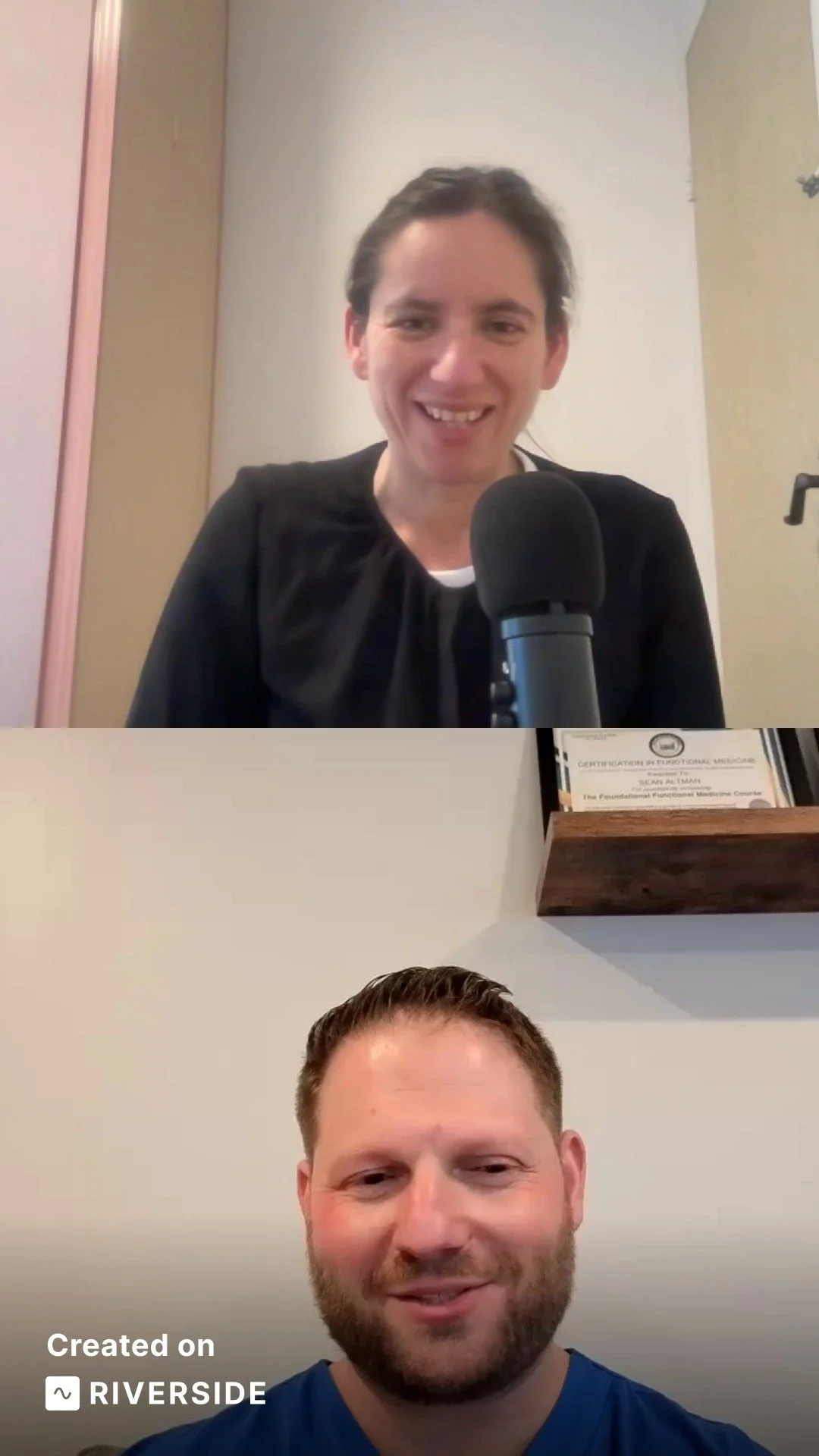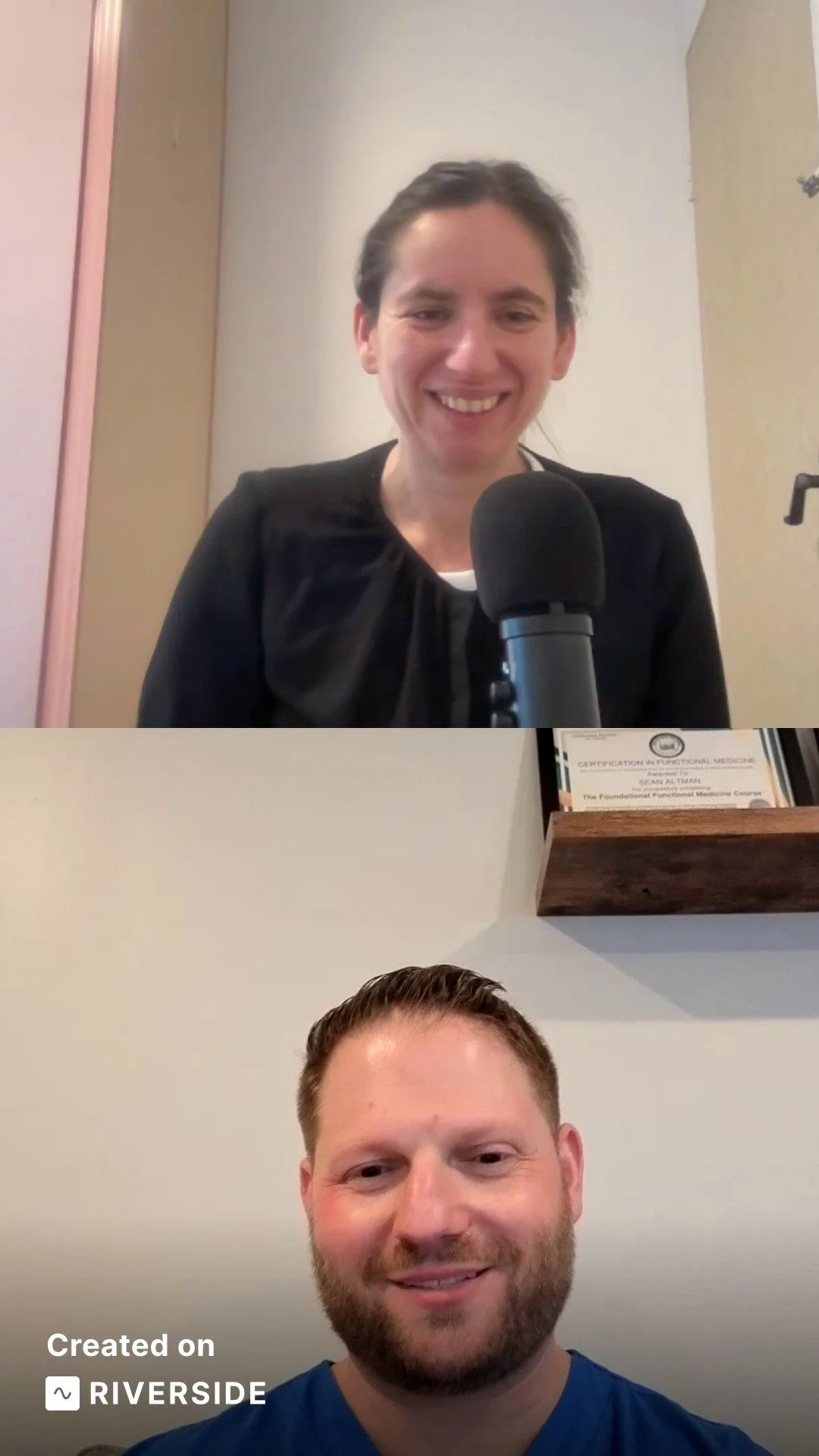
Show Notes — Dr. Sean Altman: The Nervous System, Nutrition, and the Truth About AI in Medicine
This podcast episode is available from August 2026.
Episode Overview
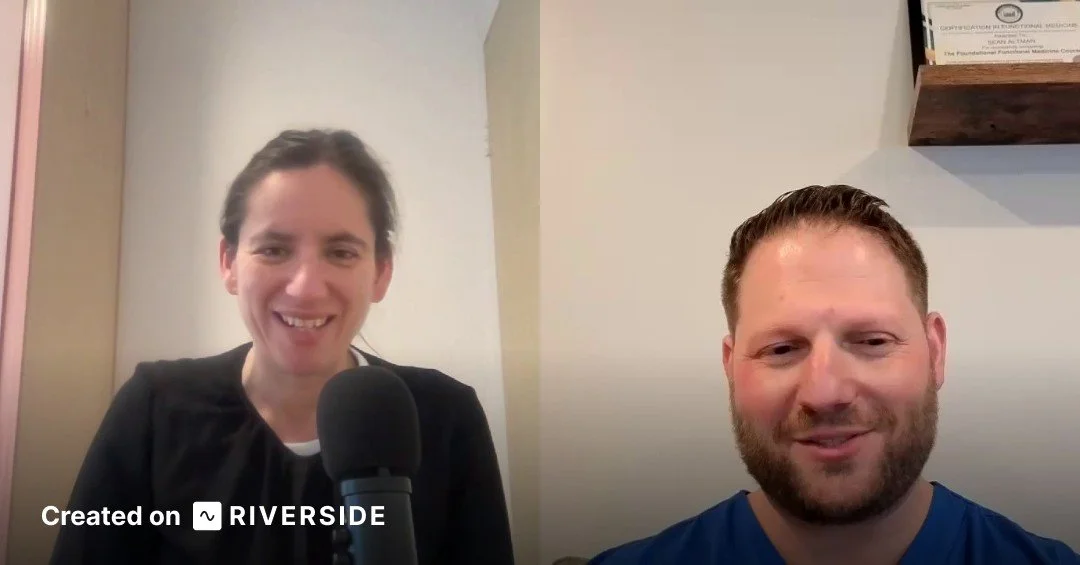
Dr. Sean Altman talks with Melanie Suzanne Wilson for a wide-ranging conversation on what it really means to heal — physically, emotionally, and systemically. They cover the physiology of the nervous system and how to measure it, the role fear and trauma play in physical health, why moderation matters even in "healthy" habits like yoga or running, the promise and real limits of AI in medical decision-making, and Dr. Altman's own experience of professional burnout inside a profit-driven healthcare system. The conversation closes with practical guidance on becoming your own health advocate — and why individualised care beats generic advice every time.
Show Notes
Table of Contents
Guest Bio
Dr. Sean Altman is a Doctor of Physical Therapy (PT, DPT) specialising in orthopedic and functional medicine, regenerative orthopedics, and what he calls bioelectric signalling — treating pain, injury, and nerve conditions by looking at the body as one connected system rather than a collection of isolated problems. He holds a Bachelor's degree in Molecular Biology from Colgate University and earned his Doctor of Physical Therapy from Stony Brook University in 2014, and has been a member of the American Physical Therapy Association since 2011.
He currently serves as Director of Orthopedics and Functional Medicine at Concierge Medical Associates in Stamford, Connecticut, alongside Dr. Steven Murphy, and as Functional Medicine Doctor and Director of Regenerative Medicine at Whole Body Medicine LLC in Fairfield, Connecticut. His broader work spans research and clinical education, including roles as a Medical and Biophysics Consultant for Cutting Edge Laser Technologies, a Research and Development Consultant for SoftWave Tissue Regeneration Technology, a Medical Advisor for the PrescriptFit Medical Advisory Board, and a shoulder and sports medicine spokesperson for RangeMaster Shoulder Therapy.
Over more than a decade in practice, Dr. Altman has held clinical director and hospital leadership roles across New York and Connecticut, including Director of Physical Medicine and Rehabilitation at St. John's Riverside Hospital and Owner/Regional Director of Access Physical Therapy & Wellness — work that was featured in a PBS documentary on integrated medical practices. He has treated patients with conditions ranging from Lyme disease and fibromyalgia to autoimmune disorders, spine and neurologic conditions, and sports injuries in professional and semi-professional athletes.
Dr. Altman has developed a proprietary four-part evaluation and treatment approach — assessing structure, chemistry, nervous system function, and cellular energy — that underpins his current orthopedic functional medicine practice, alongside advanced training in techniques including dry needling, cupping, myofascial release, shockwave therapy, and Frequency Specific Microcurrent (FSM), for which he holds Advanced Provider and Sports Medicine Provider certification.
⚠️ Note on sourcing: this bio draws on Dr. Altman's own LinkedIn profile, his practice websites (wholebodymed.com and drseanaltman.com), and publicly listed credentials. One discrepancy to flag before publishing: his LinkedIn "About" section states "over 15 years of experience," while his Whole Body Medicine staff bio states "over 10 years" and describes his Colgate graduation as Summa Cum Laude, whereas his LinkedIn education section lists Cum Laude with Beta Beta Beta Biological Honor Society membership — please confirm the correct figures/honours with Dr. Altman directly before this goes live. Also worth confirming: he is a Doctor of Physical Therapy (a clinical doctorate), not a medical doctor (MD) — the bio above reflects that distinction, but flagging it since the episode title previously used "Doctor" without qualification.
Episode Breakdown
Timestamps are approximate and should be confirmed against the final edit before publishing.
[00:00] Introduction to Dr. Altman and orthopedic functional medicine
[02:16] Why "no pain, no gain" is outdated — the nervous system has to feel safe before the body can heal
[04:37] How to actually measure nervous system health: heart rate variability, sleep quality, wearables
[08:55] Why a healthy nervous system isn't flat — it's adaptable, able to escalate and de-escalate
[10:34] Where fear and trauma fit into physical health
[13:14] Case studies: when emotional symptoms turn out to be physical (vitamin imbalances, light therapy)
[15:53] How to know when a healthy habit — exercise, yoga, diet — has gone too far
[21:14] AI in medicine: a radiology imaging experiment and why AI is a research tool, not a decision-maker
[26:32] What's lost when communication happens over text instead of in person
[27:23] Dr. Altman's own experience of professional burnout in a profit-driven system
[35:25] How patients can advocate for themselves inside a rushed medical system
[38:14] Evaluating health information online — what separates credible guidance from influencer advice
[41:49] Why individualised care outperforms generic advice, including in diet and mental health treatment
[47:22] Carbohydrates, insulin spikes, and reading your own body's response to food
[55:02] The body as a closed system: how gut health, nervous system regulation, and healing are connected
[1:00:39] Closing reflections: "You are the medicine"
Episode Breakdown
Timestamps are approximate and should be confirmed against the final edit before publishing.
[00:00] Introduction to Dr. Altman and orthopedic functional medicine
[02:16] Why "no pain, no gain" is outdated — the nervous system has to feel safe before the body can heal
[04:37] How to actually measure nervous system health: heart rate variability, sleep quality, wearables
[08:55] Why a healthy nervous system isn't flat — it's adaptable, able to escalate and de-escalate
[10:34] Where fear and trauma fit into physical health
[13:14] Case studies: when emotional symptoms turn out to be physical (vitamin imbalances, light therapy)
[15:53] How to know when a healthy habit — exercise, yoga, diet — has gone too far
[21:14] AI in medicine: a radiology imaging experiment and why AI is a research tool, not a decision-maker
[26:32] What's lost when communication happens over text instead of in person
[27:23] Dr. Altman's own experience of professional burnout in a profit-driven system
[35:25] How patients can advocate for themselves inside a rushed medical system
[38:14] Evaluating health information online — what separates credible guidance from influencer advice
[41:49] Why individualised care outperforms generic advice, including in diet and mental health treatment
[47:22] Carbohydrates, insulin spikes, and reading your own body's response to food
[55:02] The body as a closed system: how gut health, nervous system regulation, and healing are connected
[1:00:39] Closing reflections: "You are the medicine"
Key Insights
On the nervous system A healthy nervous system isn't one that stays calm all the time — it's one that can escalate under stress and then recover. Dr. Altman uses metrics like heart rate variability to track how quickly a person's body returns to baseline after stress, rather than aiming for constant calm.
On AI in healthcare Dr. Altman cites a radiology experiment in which an AI model, given the same set of imaging but ten different prompts, only correctly identified a known fracture in three of ten attempts — each with a different report. His conclusion: AI is a useful research and support tool, but not yet reliable for independent medical decision-making, particularly because it's designed to respond to the prompt it's given rather than form an unbiased read.
On moderation Even beneficial habits — yoga, running, sauna use, cold plunges — have a "just right" range. Overuse can tip into injury or harm, and Dr. Altman encourages listening to the body's signals (discomfort, fatigue, pain) as the clearest guide.
On burnout Dr. Altman shares his own experience of near-burnout while working inside a large healthcare system that prioritised profit and patient volume over care quality — including being told his "biggest weakness was that he cared too much about his patients."
On individualised health Generic advice — a diet, a supplement, a treatment — rarely works for everyone. Dr. Altman points out that research findings are often built around averages, which can obscure interventions that work powerfully well for a smaller subset of people. His guidance: test, don't guess, and seek individualised care where possible.
Connect with Dr. Sean Altman
More from The Motivate Collective
Join The Motivate Collective community for more conversations, events, and resources built around growth, wellness, and conscious living: www.motivatecollective.com
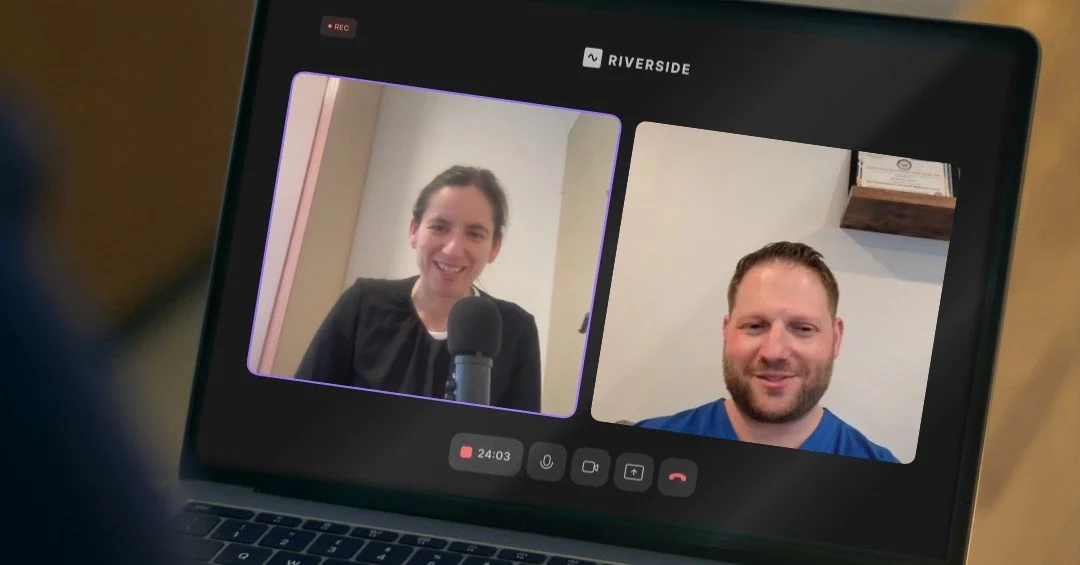
Melanie Suzanne WIlson (00:00)
Doctor Sean Oldman, welcome to the podcast.
Dr. Sean Altman (00:05)
Thank you, thank you.
Melanie Suzanne Wilson (00:08)
You have quite a specialty, quite an expertise. I'll let you explain to everybody what exactly you do.
Dr Sean Altman (00:16)
Absolutely. So it's taken me quite a while to come up with a name with for what I do, but I think the best way to describe it is orthopedic functional medicine. so I work within the longevity medicine space, and I help people with various types of pain, you know, orthopedic injuries, nerve pain, neuropathy, you know, all different types of of of pain and you know, we we get to the root of what's causing their pain, both from a structural standpoint, but then also from a systemic standpoint, by looking at the body as a whole, by looking at the body holistically, you know, we forget that pain and muscle tension and inflammation are local processes, like at the level of the injury, but they're also global processes where they affect the whole body. And you know, when we start to treat the body in that global holistic sense, people get better a lot faster, and they feel better a lot faster. And that has really anchored, you know, the type of medicine I've begun to practice over the past, you know, seven to ten years. And, you know, it's something that gets reaffirmed every single day, you know, when I see patients, you know, kind of breaking through and and and feeling better about themselves, about their injury, you know, and you know, and just getting that vitality back, that zest for life.
Melanie Suzanne Wilson (01:51)
Getting the vitality after an injury, that's a good place to start. A lot of people get some sort of injury at some point, or they might have a phase where they can't get as much movement. And then how much of this is about mindset, having the courage to get back out there and get back into what we should be doing?
Dr Sean Altman (02:16)
I think it's a combination, but I think you know, I was talking to someone about this earlier today. I think traditional medicine often, you know, puts the cart before the horse. So in order to move, you know, and to feel safe to move, the body and the nervous system have to feel safe. So what I find is if we're able to spend, you know, two, maybe three treatments calming down the inflammation in their body, re-regulating the nervous system, getting their body and their nervous system in a place where it's more comfortable, then exercise, movement, all of that becomes much easier. And then the recovery ultimately moves much faster. You know, we shouldn't really be stuck in this mindset of like, pushing through the pain, no pain, no gain. You know, like we learn, you know, in athletics, cause it it really doesn't serve us well in the long run. You know, it's important to look at these symptoms- pain, inflammation, muscle weakness, nerve symptoms- they're signals that your body is telling you that something's wrong. And if you're able to write that wrong or start getting the body into a place where it feels better, then you can get back on track much quicker. You know, so it's it it's just this intuitive nature that we realise that you should listen to your body and, you know, find what it needs first.
Melanie Suzanne Wilson (03:57)
Absolutely. There's a lot of talk about the nervous system now from all sorts of professions, the mindfulness space and the medical space, and probably a few other specialties as well. I'm wondering how do we know, firstly, what our nervous system is and what that means in a practical reality, but also how do we know if something is off? Is it when
Perhaps someone has been in shock or if someone is not feeling confident, what are we talking about when we're talking about the nervous system?
Dr Sean Altman (04:37)
So the way I investigate someone's nervous system is more we would call data-driven. So looking at actual metrics, things like heart rate variability and sleep quality. There are ways to measure how well the nervous system is performing. And you can look that look at that in terms of like a snapshot. So like a period of time where you're tracking the person.
Or in a lot of cases, you know, many patients I see these days have wearables, things like Apple Watches, Fitbits, et cetera, where there's historical data. And you can look back at historical data and see if there has been a change in terms of, you know, various metrics. And that, you know, that becomes very definitive evidence that there has been a change in the nervous system. And yes, very often it's precipitated by either trauma, big T trauma or little T trauma. Big T trauma meaning like a major accident, like a car accident or an injury or a fall. That's a major traumatic event. But then there can be little T trauma, like having a very stressful job or having a challenging time, you know, say parenting or, you know, some sort of life struggle. And that can cumulatively add up to, you know, a heightened state of sympathetic nervous system activity where we are stuck in this fight-or-flight mode where our, you know, heart rate, blood pressure, cortisol levels, various hormones are consistently elevated. And again, like I said, there's there's metrics behind this. There's ways to test it through the wearables, looking at data that way. And then we can even verify, you know, often just in someone's blood work, if things like cortisol are elevated or salivary cortisol testing too. So you know, I try to use the data when possible for two reasons. Number one, diagnostically it it holds up better. Someone's more likely to believe you if you have data attached to it. But we can also use it to show progress. You know, we can use it to re-record and re-measure and see that someone is doing better and responding well to interventions. You know, and that's an objective way to track that. But I do think that the concept of the nervous system has been a bit oversimplified in terms of the way that we talk about it on social media, or even, you know, the way it's being talked about in terms of things like mindfulness, etc. You know, the reality is that, you know.
Our nervous system should be able to be variable. And that's what heart rate variability measures: the variability between heartbeats. You know, a healthy nervous system has a high variability. So that means that a healthy nervous system can go high, like it can get escalated, elevated during times of stress. So stress could be physical or emotional stress. You know, stress could be, you know, working out at the gym, wait doing weight training or running a marathon or whatever. And then when we need to calm down, a healthy nervous system can de-escalate. It can calm down. It can rest and digest. It can promote healthy, restorative sleep, and then we can recharge and do it again the next day. It gets oversimplified where people think that just teaching their nervous system to meditate and calm down during one interval is going to make it more adaptable to daily life stresses. And it doesn't always translate that way. You know, I often tell patients, can you meditate when you're on the verge of like a panic attack? Probably not. You know, it so my my goal with patients is to teach the nervous system to be more balanced, but also to teach it to be more resilient, more able to handle stress and then calm back down without having that difficulty of de-escalating.
Melanie Suzanne Wilson (08:55)
Are you saying that the nervous system is doing better not being in a straight line, but when it's able to level out after it is required to be heightened?
Dr Sean Altman (09:06)
Yes,
Exactly. And that's really how I gauge, like, a healthy nervous system is: you know, I will look at wearable data in terms of how, so when someone exercises, how quickly is their heart rate and their vitals able to drop back down to normal. And then something that's useful in terms of training is things like interval training, you know, high-intensity interval training. Where you're teaching your body to like sprint and then go back down to a co sprint about and, and having that flexibility preps your nervous system for those times of stress and also decreases the likelihood that your nervous system will overreact to that type of situation. Cause you're training you're it's a tr it's a form of training, you know, and that's what, you know, exercise and a lot of things we do are geared toward: teaching the body to be able to handle, you know, things that it encounters.
Melanie Suzanne Wilson (10:07)
I have a couple of questions about all that. Firstly, I'm wondering if different people are more sensitive to the nervous system issues than others. And also, I'm wondering where fear plays a part in this. It's great to hear that we can measure things like our sleep, but the underlying emotions- I'm wondering where fear fits into all of this.
Dr Sean Altman (10:34)
Absolutely. No, there's people of all types; they can have, you know, backgrounds that involve abuse and emotional issues. And that certainly is extremely relevant, you know, and obviously psychotherapy and, you know, treatment and addressing that is part of the process. But I think that very often nervous system regulation.
In addition to being a mental and emotional, you know, state is also, you know, we would call it like an energetic state. So it has to do with how the energy flows through our nervous system, and emotions are going to affect that. But then there is a way to address it from the other end, like from the energetic, molecular, chemical, you know, more scientific way. And, you know, I'm not saying one or the other. I'm actually saying both, you know.
I think it's the combination of the two. But it's, you know, it's important to to, to, you know, I think of it like tools in a toolbox. There are, you know, tools that are gonna work on emotions that, you know, may involve things like talk therapy, CBT, DBT, you know, my I know all about that from my wife who's a therapist and working with therapists, you know, in and working in trauma, you know, for quite so many years but then there's somatic, so that's body problems. Then there's chemical problems and, you know, system-level problems. And those are, you know, those are gonna be addressed more with a physical intervention instead of a verbal or, you know, you know, emotional one. So I think it's often the blend of the two. But you're absolutely right. Like fear, fear is definitely some, you know, there's there's a part of that that's, you know, stems from all of this. And just like, you know, orthopedics where we're looking for the root of someone say pain, you know, there's probably a root to someone's fear, you know, that they're dealing with. And getting at that is helpful. But doing it from that physical and chemical standpoint also helps because whenever we experience any type of emotion, there are hormones and chemical signals and electrical signals and, you know, things going on within our body that accompany that feeling and that emotion. So, you know, you can treat that simultaneously or just in conjunction with, you know, whatever therapies you're doing.
Melanie Suzanne Wilson (13:14)
It's encouraging to know there are physical solutions beyond simply talking about things because when we're dealing with the physical body, although the mind is connected, it's clear that there can be something else going on, or the memory people say that the memory can be stored in the body in some way.
Dr Sean Altman (13:36)
And there's, I mean, there are many examples of, like, emotional states being caused purely by physical issues. You know, I've had patients who've been dealing with anxiety and depression because of simple vitamin or mineral imbalances that come up on blood work, and that entire emotional state is resolved once that's corrected.
I have this very interesting case of a patient who got this very fancy infrared sauna that also had phototherapy. So, very like different types of light to stimulate brain waves and mood, you know, for there's like, you know, different light waves for, you know, making you more calm or more, you know, attentive, focused, etc. And he really enjoyed the blue light.
Which is only supposed to be used sparingly. And he was actually doing too much of it and gave himself depression from the blue light. And as soon as he stopped doing the blue light therapy, it resolved. So it just shows us there is that interplay between the physical and the emotional. And having that differential diagnosis, that functional medicine approach to it helps us to tease out all of these factors and really establish what the, you know, nature of their of their issues are.
Melanie Suzanne Wilson (15:08)
It sounds like sometimes people are using too much of a good thing. I'm wondering if you have more examples of that. The one that I have, I don't know where I will draw the line, but a few times in the past year, I went to four yoga classes in a row, all in one go. Four classes. That's
Dr Sean Altman (15:27)
Mm-hmm.
Melanie Suzanne Wilson (15:28)
on the extreme end. Everybody would have something that they are doing to the extreme, perhaps getting a bit obsessed with the ideal diet.
Even though we need to eat healthy, how far do we take that? Or people go to the gym a lot? How do we know where to draw the line? Do we need to get someone else to help us to measure whether we are taking a habit too far or not?
Dr Sean Altman (15:53)
I think it's it goes back to that theme of listening to your body, you know, where I im you know when when you do too many yoga classes in a row, all of a sudden, you know, the poses and the stretches start to feel a little more uncomfortable, you know, because you're you you probably cross this line where now you're over stretching areas instead of just promoting flexibility, you know, and mobility.
Now you're starting to create more micro tears, and the body's not responding well to it. And the same thing goes with other, you know, lifestyle activities. So yeah, I mean, I think, you know, it depends on the person. I think having someone like a health coach is excellent because they can coach you and move you along and make sure that you're not overdoing these things. I recognise that that's not always within everyone's budget.
So, you know, I'm a big fan of them if that's possible, if you can have someone that's, you know, keeping you motivated and just watching you along the way. But if you're not, then I think that's when, you know, you have to become more aware of yourself and listen to your body and figuring out that balance, and and what what is the right amount for you to feel good and not pushing it too far, and you're absolutely right. I mean, there people get hooked and they start doing too much, you know, yoga or spin classes or running. I see a lot of runners that have, you know, overuse injuries, stress fractures, Achilles, etc. You know, because running is also addictive. We have that endorphin rush when we run. You know, so it's definitely part of this larger process of listening to those signals that your body gives you that, like, now I'm starting to get a little bit of pain. Maybe I need to take a day off. Maybe I need, you know, and I think that goes to the larger message that we need that balance for our nervous system. We need the rest. You know, our body needs rest days occasionally, you know, at least once or twice a week to repair, to build new muscle, to respond to these positive interventions. If we're not doing the appropriate amount of rest, it turns into, you know, things like overtraining and injuries and all of that. And, you know, you only need to look at, you know, professional athletes to see a lot of those examples of what can happen when you push the body too far. So if you're not being paid to go to do yoga or, you know, exercise or any of these things.
I think you have the autonomy to decide, okay, let me- let's today be a rest day. Let's relax and let my body reset and recharge. And, you know, you'll realize you're all the better for it. You know, it's- I've had patients on training programs, and they're always fascinated by the fact that, like, structuring it a little differently, adding a rest day, having them actually like work out less makes them feel better. And sometimes they'll actually put mus more muscle on that way. And they're always confused because they're like, I don't understand. I feel like I'm doing less, but I'm getting more out of it. And I'm like, it's just more like the body needs rest, and it needs a certain amount of stress to get better. But too much stress is, you know, is harmful. You know, it's if we and I'll stop after this, but like y the classic example of hormetic stress is something like a sauna or cold plunge. there there's a spec there's a specific temperature range that is therapeutic. But if the temperature range of the sauna is too high, we could burn ourselves. And if the temperature of the cold plunge is too low, we could get frostbite and freeze. So there they're, you know, just right amount for everything.
Melanie Suzanne Wilson (20:05)
There really is. The cold plunges, the ice baths, there are all these names for it. I feel so cautious about those. I dipped a limb into one of those, and it was very much electronically managed. It wasn't just someone putting a bunch of ice cubes in water, right? And I just felt numb instantly. I thought, I don't know what this is meant to do. It felt like
Something was happening to me. So I totally agree that we need to be careful and listen to ourselves. Beyond listening within, I'm so keen to ask about AI. I wonder if in your work, in what your patients have been experimenting with, where AI has fitted into all of this, whether we can trust what it tells us or how we can trust what it tells us. And if someone is going to experiment with using AI for these purposes, how can they do it responsibly?
Dr. Sean Altman (21:14)
I think the best way to utilise AI is as a research tool. but it's not capable of making sound medical decisions for us. it is by its by its nature, it's designed to please. So when when you send a query to AI, it it is trying to give you the answer that you want.
Not necessarily the correct answer or the most accurate answer. There was an experiment that some radiologists did to s to test AI's ability to read imaging. they fed it a thousands of imaging images, they you know, explained how X-rays work, etc., what to look for you know, tried to like program this model to be, you know, like a radiologist and read imaging. and then they took the same set of images and they gave it 10 different prompts. And they knew what the they knew what the actual, you know, diagnosis was was that there was a fracture in this specific area of the bone and, you know, some cartilage damage in another area. But of the 10 prompts, only three of them identified the fracture. And all 10 had completely different reports. So, because the prompts were different. So, you know, the prompts indicated to the AI what to look at more, and it wasn't able to have an unbiased view of the images, and therefore it wasn't able to have an accurate, you know, interpretation. So I think that we need, you know, we can certainly use it to help us write something to help, you know, help us to research a topic, but ultimately the ideas need to be our own. Or at the very least, we need to fact check and we need to make sure that some, you know, there there's human there's a human element behind it. You know, and I get a little bit concerned when I hear about some of these AI models being built into hospital systems and being able to help a person be prescribed a medication. You know, because if it's, you know, if AI is built to give us the answers we want, and you're someone who is, say, you know, a drug addict and you're drug seeking, you know, you can kind of fool the AI into giving you the drugs you want. I mean, they, you know, drug addicts do this to doctors all the time, you know, and it takes human judgment by the doctor to realise that, you know, it's not appropriate to prescribe that medication to that patient because of their history. so it it it does concern me that, you know, there's there's definitely possibilities of this hurting people. So I think there's tremendous, you know, benefit in some of the things that AI can discover and can help with. But I would like to see it used, you know, more.
As a support structure and not as the primary structure.
Melanie Suzanne Wilson (24:43)
For sure. I've heard about AI being introduced gradually to even therapeutic spaces like for social support and some forms of psychological support. It seems like with any of these specialties, there's the slippery slope where what you're describing is that a human can use that intuition or read someone, especially when meeting in person.
And the prompt is a big part of this. Most people haven't been taught to prompt well, but also AI can be set up however someone wants to set it up.
Dr Sean Altman (25:26)
Mm-hmm.
Melanie Suzanne Wilson (25:27)
And it doesn't mean that it's going to have all of the information because also we're all unpredictable, even if AI has been told the general norm, someone is going to come in and be the exception, right?
Dr Sean Altman (25:43)
Absolutely. And as you said, in person there are things like, you know, nonverbal cues that clearly AI cannot pick up on that, you know, could be paramount to, you know, a correct interpretation of what someone is trying to say. And it could be very easily misheard. I mean, I've done it. I've read a text message and not realised that someone is being sarcastic about something. So, and and and you know, humans have the ability to dissect something like sarcasm a little bit better. So if if there the context, the physical context, the body language context is not part of the communication, you know, there can certainly be things that are lost.
Melanie Suzanne Wilson (26:32)
Absolutely. That's a whole thing in itself. We're all texting so much, and it's not the same as interacting in person or even having a talk like this. I really appreciate doing video calls for the podcast because you can read the other person even from a distance. That's something, and of course being in person is even better.
Okay. It would be great to look at burnout at least a bit. I mean, I don't know how extremely busy your work is, whether you mentioned people who run and then take that too far. I don't know if that is a version of burnout, but I'm wondering whether people go to you with all sorts of things.
Dr Sean Altman (27:23)
No, I mean I've experienced some professional burnout in my career. I've worked with, you know, quite a few people who've dealt with it. I think it's quite common in the medical field, especially with the way health insurance has become, with much, much lower reimbursement, higher quantity of visits that we're expected to see- and it can get overwhelming.
You know, I I worked for, you know, a I worked for a large corporation, you know, with many, you know, hundreds of offices around the country. And then I was director of rehabilitation at a hospital. And I, you know, I ended up in situations where I was seeing a lot of patients and had a lot of responsibility, and, yeah, I started to burn out. I started to feel like I was really drifting away from the reason I went into medicine to begin with, which was to help people. I felt like it it the the the job, the work, it, you know, it became much, much more focused on money, on profit and loss and financial statements and how well the department was doing, and the reimbursement and the approval, you know, getting a certain amount of things approved by insurance and it really watered down like the inner drive that I had to you know to to help others. and that and you know I I I reached a tipping point where I really you know I was not happy, you know, with with the life I was living, with the the job I was doing. and it really I think I I probably would have burnt out if it weren't for this annual review that I had with one of my bosses, which basically pushed me out of it. Like I he said that my biggest weakness was that I cared too much about my patients.
Melanie Suzanne Wilson (29:30)
My goodness.
Dr Sean Altman (29:31)
That the office, while profitable, he wanted it to be he he he wanted us to make 20 to 30 percent more profit. We needed to increase the volume; we needed to increase.
This, that. And that hit me really hard. And I said, I can't. Like, if I stay, I will, I will burn out. I cannot stay in this environment. It's not healthy. It's not me. You know, I just didn't; it didn't represent the ethics and the I you know, the values that I believed in. And you know, with the support of my family and my wife, who's amazing.
I was able to, you know, carve out a career and, you know, g go outside of insurance and, you know, give the care that I wanted. and it ha it hasn't been an easy path, but it definitely helped me avoid that burnout that I most certainly would have experienced. And I know people who are still stuck in the system and are not happy and are, you know, just kind of pushing push pushing along to retirement, and it's hard. It is really difficult. You know, and it's it's something that that not everyone has the the resources or the support to do. and that's that's often what kind of drives burnout: that you're literally stuck in that position. You don't have the ability to leave. You know, you could then you can't support yourself or your family or whoever. And, you know, it just it it just keeps building on you.
Melanie Suzanne Wilson (31:16)
I feel so concerned hearing about that issue within the hospital space. It's safe to generalise and say this would be beyond the hospitals themselves. You mentioned the insurance UR in America. I have seen implications from similar funding insurance issues over here in Australia, whatever it's called.
I've seen that these things get complicated, but it seems like the bottom line is that very large spaces are focusing on return on investment and profitability, things like that, or even efficiency. A former general practitioner, Jen, said on the podcast that the assumed average time of an appointment in her work was about seven minutes.
Was it kind of like that for you? People needed to show up and get out very quickly.
Dr Sean Altman (32:19)
Yeah. And it it it really weighed on me for quite a while. I, you know, I I started to become more and more aware of the the people I wasn't able to help. And, you know, I would try to fit in an extra minute or two here or there, and it just it it became unsustainable. You know, I would work through lunch and not do a single bit of paperwork all day. So I could squeeze in 10 minutes instead of seven minutes and get a little extra, but then it it just it it you then then you're exhausted and you can't you can't you know, do that forever. so it it really gets challenging. You know, and as you said, this isn't just exclusive to medicine. There are there are corporations that work that way.
There you know, there are lots of companies that are, you know, more cutthroat and more, you know, focused on the finances than on, you know, the quality of life and quality of, you know, the the jobs for their employees.
Melanie Suzanne Wilson (33:30)
Absolutely. It happens in so many spaces. I'll stay super vague to say that recently I was dealing with a professional who I realised wasn't aware of any of the facts of what that person was dealing with. How many people were involved, what requirements, nothing. And I wondered, how can you give me advice if you know nothing about this at all? It doesn't make sense. But I'm hoping you can give some comfort or guidance to people who do have to interact with the medical system, and they want to still feel seen because eventually someone will go into a hospital or something else. And it can feel scary. My experience on the other end of it, as not a professional, is I mentioned to you before that it was actually in 2017. I slipped in the bathroom, and I'll let you know a paramedic came to my home, unwrapped some crutches, and said, Look at YouTube to learn how to use these. Turns out I needed surgery. But I was terrified. I was wondering what's going to happen. So people go into medical spaces of any sort, feeling like they don't understand what's happening to them, what's happening around them in these spaces they're entering; it's all confusing. They might feel scared of the solution or what has happened. So, and then they're dealing with a space where people want to care, and they want to help more, but they're restricted by the system that they are within. So how can people feel cared for and heard or even helped sufficiently within these spaces if that's what they have?
Dr Sean Altman (35:25)
So I think I think there's there's two things. Number one, just improving your health literacy in any way. Just, you know, reading some books, listening to podcasts, just understand it and, you know, and f and that's what I've tried to do, you know, with my social media work is just putting information and content out there so people can learn and understand more about their bodies you know, because the just having a better understanding of of of your body and of medicine and how how the system works makes you feel a little less lost within it. And then the second thing is being your own advocate, asking questions, getting answers, you know, and you know, it may feel like you're holding people up or you're getting in the way.
But you have every right to ask these questions. You have every right to find out what's going on, what procedures are being recommended, what your test results say. You know, just to make sure that you're, you know, you're informed, and you're actually making these decisions. You know, and and and you're absolutely right. A lot of people get like pushed through the system, and you know, they don't even know what is going on.
You know, and and it's it it shouldn't be that way. You know, there's no reason why you can't ask and ask a question and get, you know, get information, and you know, it may be a little inconvenient for the people who have to, you know, help you, but that's okay. That's you it's ev you have every right to be.
Melanie Suzanne Wilson (37:16)
For sure. I'm encouraged, and I hope everybody can be encouraged, knowing that we can turn to people like you. You're putting content out there, and we can trust it. At this point, most people know that anyone can put anything on the internet. And there's a stigma around influencers to some extent, because anybody can become an influencer, but you're an expert, and you know what you're talking about.
So it seems like part of the solution then is for people to turn to the experts online, trust it. And this is the better side of the internet. People talk about scrolling all of those things, but it's okay to browse social media and use it in a constructive way.
Dr Sean Altman (38:14)
Absolutely. I just ask people to be critical of the content that they're reading. You know, for my part, what I try to do with anything that I post, and what I've been posting a lot more of lately, is information that is backed by a scientific research article, you know, advice that's that's grounded in actual science, that's grounded in an actual research trial is much more sound than just a tip that you know someone gives you, you know, in one of their Instagram feeds that's an influencer. You know, there has to be some evidence behind it. So that's what I would encourage people to do. And to hold to that. You know, we there in America there's been this, you know, and I think globally there's been a a a big trend toward things like peptides, you know, which are essentially like precursors to proteins and some of the supplements and they help to you know have various effects accelerate recovery and you know there we have these these GLP ones that people are using for weight loss like semiclutide and terzepatite which are peptides and there's absolutely merit in those peptides when they're used appropriately and in the right people, but it doesn't mean that everyone should be taking them. And it does and certainly doesn't mean you should be taking them if you're not under a doctor's care, you're not under some sort of medical guidance to make sure that you're taking the appropriate dosage, you're taking care of your body the right way. You know, all of these things have, you know, evidence, but there's also a structure that needs to go behind.
Melanie Suzanne Wilson (40:10)
The common thread here is to apply the general information to individual specific needs with guidance. Are you saying it helps to get guidance from someone who can help individually and personally?
Dr Sean Altman (40:27)
Absolutely.
And even if you're, you know, making some of the decisions on your own, make sure that they are based on, you know, actual scientific evidence, you know, reliable guidance, not, you know, not just tips from someone who does who doesn't have necessarily the background or, you know, has done the research behind what they're doing.
Melanie Suzanne Wilson (40:55)
There's an abundance of expertise out there. I'm so keen to see more of what you put online. And people can use the same approach to learn all sorts of things. It was during COVID that I started following people who guide nutrition. And there are specialists who use nutritional knowledge to help things like mental alertness, all of that.
Whatever we are trying to learn, it's about finding the people who know what they are talking about. How can we tell? I was going to ask how can we tell the difference? But this is beyond we know: not to just look at the one who is; we need more criteria than someone is wearing Lululemon, great. But what else can someone look for?
Dr Sean Altman (41:49)
I think you kind of hit the nail on the head when you said individualised. So everyone's body is chemically, biologically, you know, energetically different. So people who are giving the same advice to every single person or to the majority of their followers, patients, et cetera, it's unlikely that that's going to be
Appropriate for everyone. It's, you know, it's more likely that an individualised approach will be best. You know, with mental illness, we know that ketogenic diets can be very helpful with certain mental illnesses. For some people, it their the carbohydrates and the insulin have have a lot to do with the way that their brain is metabolising sugar and it, and it's at honestly at the root of their issue. However, it's only about 20 to 30 per cent that that works in. It's not everyone, but in the 20 to 30 per cent, ketogenic diets can be incredibly effective at treating certain mental illnesses. But the other 70, 80%, it doesn't work. It doesn't do anything. So it's highly individualised, and I was just reading this very interesting post actually by a colleague of mine who was talking about that. And he was saying it's very hard to prove that with research because with research, it's all watered down. So if the diet works in 20% of the research group really well, the evidence of the study is not good because the other 80% did not do well, and when you average the effect, it's not a very significant effect. So it it's interesting when you think about how these things work and how research interprets them, that, you know, there are like these hidden treasures in terms of treatment that work for certain people and and not for others, but you have to find what what's best for you.
Melanie Suzanne Wilson (44:05)
Is it that research is about what works for the majority?
Dr Sean Altman (44:11)
Or at work, what works for the average, you know. But the reality is that, you know, who is that? Who's the average person? You know, probab no one's truly average in every category. We all have, like, you know, various idioc idiosyncrasies where we're average maybe in a few categories, but we're not in others. So no one really fits that average individual.
You know, so these studies are guides, you know, so I see them as potentially useful interventions. And then the important part of the research is also showing the safety of those things. So the ketogenic diet, it may work, it may not work. It's entirely safe. There's nothing, there's no side effects; there's no risk to trying it. You know, so those are good interventions to try, especially if there might be some evidence that it'll help you, but yeah, it's better to have someone guiding you and helping to individualise your plan as opposed to just trying different things and seeing lipsticks. You know, a colleague of mine who's very much into lab work, you know, way more than I am, these functional laboratory tests. She loves to say, test don't guess. You know. So the there are there are excellent labs that you can do to figure out.
You know, if you have gluten sensitivity, if you have these various things, and then based on that, you can structure an intervention that is much more likely to be successful because you have data behind it. So I think that's really the best way to use these things. And AI is helpful in some of those in terms of reading that data and coming up with potential, you know, connections that, you know, that we may not have found because we don't have that processing power.
So it does fill in in certain places. but it it should be used as part of this whole and with someone behind the wheel.
Melanie Suzanne Wilson (46:16)
It's fascinating hearing about the keto diet. I will share that I eat whole plants, but I find on some weeks or some days having a bit extra olive oil feels right for me. So even what I need varies between different weeks. But I've seen that some people want those other categories. But the thing that got my attention in what you said, what got my attention a lot is
The carbs. The best way I can ask these questions is by drawing upon an example, right? And I was on a trip recently where over a few days most of what was available was bread and jam. I could feel it. You're sounding like those carbs, or look, I'm not anti-carbs. I think carbs are awesome, but I'm curious what people see?
With how a spike and carbs or sugar or something like that can affect the mind.
Dr Sean Altman (47:22)
So in a lot of people, carbohydrates and and sometimes it's specific types of carbohydrates, depending on your body can cause spikes in insulin, you know, inflammation, bloating, you know, and then this like post prandial like it you know, insulin spike with a glucose drop, where you know there can be that kind of fatigue sort of
like a hangover feeling when you when you eat too much. And that's a very real thing. So I, when it comes to carbs, I think it's just identifying how your body responds to them. And if it's not if it doesn't respond well, it's either minimising carbs or figuring out what carbs are compatible with your body. You know, one of the things in the longevity medicine field that's starting to become more and more popular is using CGM continuous glucose monitoring. The little, you know, attachments, but in non-diabetic individuals, to determine, you know, what foods work best with your body, what foods are causing glucose spikes, and then you can identify, you know, what diet is best suited for your, you know, your gut and your microbiome. And it's different across the spectrum. You know, I have a friend that, you know, his body doesn't respond well to apples. He has a massive glucose spike with apples. But he doesn't have a glucose spike when he has pasta. And another colleague of mine, sweet potatoes. He cannot have sweet potatoes. He doesn't.
His body just responds really badly to sweet potatoes, but regular white potatoes, no problem. So it just shows there like there is no generic diet that's gonna work for anyone. Like you know, we all need to, you know, establish something more precise, more specific. And if we can't, at the very least, there are diets like the Mediterranean diet or just even eating more whole food, whole plant, less processed that we know to be safer and better on the whole. But I think, you know, adding that level of precision can just make a big, big difference in terms of how you feel on a day-to-day basis and just figuring out, you know, how best to keep your vitality and your energy up.
Melanie Suzanne Wilson (50:04)
Have you seen that a common thread for pretty much everybody is to at least start with eating real food, like you said, instead of the processed foods? Is that a good general guideline for everybody as a starting point?
Dr Sean Altman (50:19)
I think so. At the very least trying to incorporate more whole foods into your diet. You know, we're realising more and more that America's considerably worse in terms of the way we process food with, you know, GMO and microplastics, high fructose corn syrup. There's just a lot of additives in our processed foods that, you know, it's actually interesting. I was reading something the other day. There was like this list of all of these things that are in American processed foods that are illegal in many other countries throughout Europe. Like they're not even allowed in foods in Europe. And it really makes you think twice about having something that has that in there. Because, like if it's if it's illegal elsewhere, like there's gotta be a reason; like it can't be good.
There must be a reason why they're not allowing it in their food. You know, and so it just- yeah, the more you read and the more you learn. And, you know, I think that's where this being, you know, an educated consumer and being more informed helps you realise the why. And I think that's the best way to help someone to improve their diet is rather than telling them to just start eating XYZ, showing them why it's beneficial to do that and why it might be harmful to have these other things, you know, in their diet and what's in it and what, you know, long-term implications might exist to having that. You know, because then they're making the decision and they're more likely to stand by it.
Melanie Suzanne Wilson (52:11)
They will feel informed. Will these new habits also help the nervous system?
Dr Sean Altman (52:17)
Yes,
absolutely. I mean, having a cleaner diet, the gut and the immune system and the nervous system are interconnected. I'll go a little science here, but there's the vagus nerve, V A G U S, is located in our neck, and it dictates how our nervous system works, but it also plays a role in our gut and our immune system and digestion. So if we have a better, cleaner diet and digestion is easier, then that frees up resources for our nervous system to be stronger and to function at a better capacity. You know, it's useful to think of the body as this closed system that has a finite amount of energy, kind of like.
A car having a certain amount of gasoline, as you know, fuel. And you know, the way all of these systems work, they each use some fuel; they each use energy in a certain way. And if there's a system that's monopolising our body that's using energy too much, it leaves less energy available for the remainder of the systems. So if you're eating a clean diet, your gut has less on its plate. It doesn't have to work as hard. Other systems are able to, you know, dedicate more resources to repair all of that. and that's where, you know, we've seen people with GI issues, you know, become, you know, improve their gut health and the lining of their gut and things like that in response to these healthy diets. And it's, it's actually not the food, the diet, like the, you know, the food doesn't make the gut heal. The body heals the gut, but the body's able to heal the gut because you make it easier on the body. You've now allowed the body to be able to finish the job. And the same thing, it works the same way in orthopedics in terms of injuries. If we're able to optimise the way the body is functioning in terms of the gut, the nervous system, all of these systems, now more energy can be dedicated to laying down collagen tissue, scar tissue, fibroblasts, et cetera, and healing that particular soft tissue injury that you have in your, you know, meniscus of your knee or your rotator cuff of your shoulder or, you know, ankle sprain, et cetera. You know, it's just the, you know, the energy has to go somewhere. And it makes a lot of sense when you see it that way.
Melanie Suzanne Wilson (55:02)
Are you saying that if we look after our dietary habits and our nervous systems, the basics, we can have more progress towards healing?
Dr Sean Altman (55:15)
Yes, absolutely. And often that's the reason why people are unable to heal is that their body is too taxed in terms of the other things that are going on. So it's not capable of mounting an appropriate healing response.
Melanie Suzanne Wilson (55:38)
Whatever is going on, whether we have a small issue or we had a small or a big T trauma, looking after the basics will help us.
Dr Sean Altman (55:49)
Absolutely. No, it's essential and you know it factors into, you know, virtually every type of healing. And you know, something that's easier to think of in terms of, like, say, visual proof is if you think about something like wound healing, you know, so a big wound and its ability to heal in individuals that have h better health, cleaner diet, less systemic inflammation, you know, the wound is going to heal much quicker and actually much cleaner. Like the borders of the wound, the scar tissue, the way that it heals will actually look nicer. Versus someone who, let's say, is diabetic or has chronic stress or, you know, improper diet, et cetera, there will be like a visual, significant visual difference in terms of.
quality of the wound healing and the time that it takes for that wound to heal. You know, we we've all
Melanie Suzanne Wilson (56:49)
We really are.
Dr Sean Altman (56:50)
heard about diabetics and, you know, how they can have these ulcers that don't heal. And that's, you know, because their body is is overwhelmed with dealing with the diabetes and all of the sequelae of the diabetes. So they're not able to finish that healing process.
Melanie Suzanne Wilson (57:07)
We are what we eat.
Dr Sean Altman (57:09)
Mm-hmm.
Melanie Suzanne Wilson (57:12)
You look at so many different topics. I'm keen to wind up by checking which issues will someone learn about and get empowered to improve by looking at your content. We've talked about the nervous system and food and, of course, orthopedics and burnout all sorts of things. What do you teach everybody in your content, and how can they connect with that?
Dr Sean Altman (57:42)
I think my larger content is geared around, you know, pain and illness and injury. So better understanding the context behind the struggles that you may be dealing with and looking at it from all of those various angles. And once you do that, you're able to get the full picture of what's going on and address, you know, the primary cause, so like the root cause of the problem, as well as secondary causes. You know, and when you do that, there, you know, the outcome is obviously going to be much better. And then the resilience and the risk of recurrence, that's really the key when it comes to cro things like chronic pain is preventing recurrence, coming back of that problem will be much lower because you've identified those key factors that led to it in the first place or that led to it coming back so as I said, I think it's it's about, you know, learning and and being able to be your own detective, and then asking the right questions and and knowing how to advocate for the right care. And you know, in the case of going to a hospital, you don't have as much freedom to choose, you know, who is conducting your care because you're in an emergency situation.
But for other, you know, routine medical appointments, for nutritional advice, for personal training, for you know, other health-related advice, you do have a choice, you know, and you can seek out the people that have the right qualifications and are really invested and really do care. It isn't a weakness to care too much about people. I don't care what you know; my former boss said. So, you know, you wanna find people to be on your medical team and on your health and wellness team that have your best interests in mind and that are helping you to learn how to better take care of yourself. you know, and and when you f when you do that, you know, you start to become much more empowered and you know, feel like you have more control over your destiny and your fate. and that's that's my goal with every person I work with, every patient I work with, everyone I try to reach on social media: to really try to make you feel more powerful and more informed about your own body. You know, it's a little corny, but I like to say you are the medicine. You know, there's a lot that you can do if you just figure out the right interventions, the right strategies, and you learn how to better take care of yourself.
Melanie Suzanne Wilson (1:00:39)
This is empowering. Dr Sean Oldman, thank you so much for talking about all of this on the Motivate Collective podcast.
Dr Sean Altman (1:00:49)
Thank you.