How to Rewire Your Brain Through Movement — Beverly on the Feldenkrais Method, Nervous System Regulation & Conscious Growth
Former Facebook employee turned Feldenkrais practitioner Beverly shares how gentle, focused movement rewired her brain, regulated her nervous system, and transformed her experience of ADHD, perimenopause, and workplace burnout. A powerful conversation about slowing down to change everything.
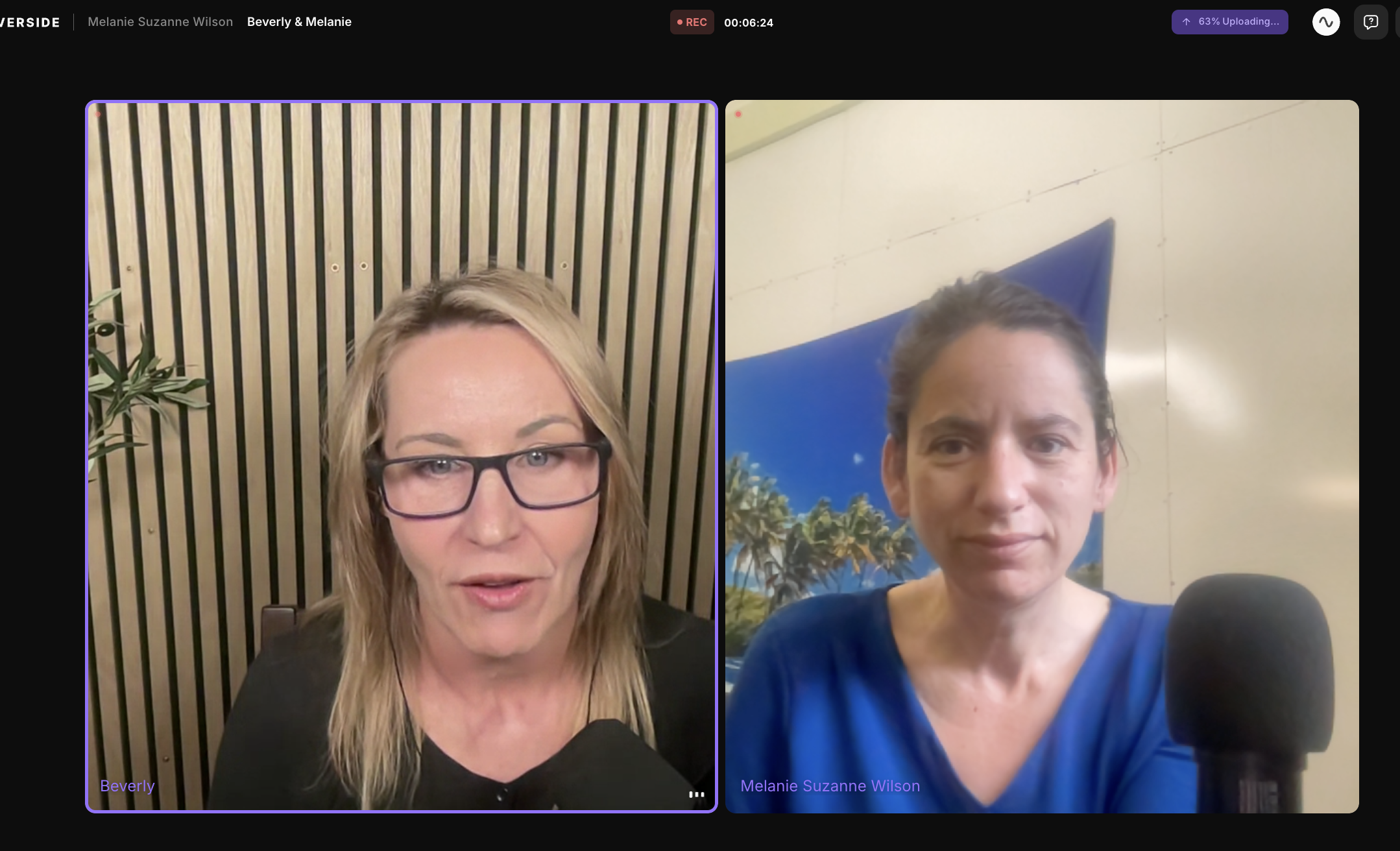
Listen to the entire episode on this website, Apple Podcasts, and most major podcast platforms.
What if the key to changing your brain wasn't a new app, a better routine, or the right supplement—but a quiet hour on the floor, listening to your own body move?
In this episode, I'm joined by Beverly, a former Facebook executive turned Feldenkrais practitioner and app founder. Beverly's story begins in a noisy open-plan office in Los Angeles, circa 2012—the year Facebook was pivoting to mobile, post-IPO, and growing at a speed no one had quite anticipated. Beverly was there for all of it, and she was struggling. An undiagnosed neurodivergent brain, extreme noise sensitivity, perimenopause, and a workplace culture that didn't have the language for any of it.
What she found—almost by accident, on holiday, in a movement class she didn't expect to change her life—was the Feldenkrais Method. And it did change her life, profoundly. Not because it fixed her, but because it fundamentally rewired who she was.
This is one of those conversations that will stay with you. We go deep on nervous system regulation, what reactivity actually looks like from the inside, why curiosity is the catalyst for brain change, and how Beverly built a wellness app—self-funded, with a single developer—while staying sane and staying regulated.
What We Cover in This Episode
Beverly's experience at Facebook during one of tech's most pivotal moments—and why she was quietly falling apart
What perimenopause really felt like in 2014 when no one was talking about it yet
The discovery that changed everything: a Feldenkrais Awareness Through Movement class at a resort
How three weeks of movement lessons resolved chronic back pain and began rewiring her nervous system
What undiagnosed ADHD looked like in a corporate environment—and how it showed up as anger
Why the brain can stay 'stuck' in a protective loop even after the physical cause has healed
The neuroscience behind the method: neuroplasticity, curiosity, and slow, attentive movement
The difference between performing a movement and truly noticing how you feel
Why Beverly left a well-resourced corporate career to build something she still doesn't fully understand—but deeply believes in
The Pauseture app she's built over 12 years: what it is, how it works, and where to find it
Practical wisdom for anyone building an idea into a product—slowly, sustainably, without burning out
About Beverly
Beverly is a Feldenkrais practitioner, former Facebook sales executive, and founder of Pauseture—a movement and nervous system regulation app available on both the Apple App Store and Google Play. After spending years navigating the intersection of neurodivergence, perimenopause, and high-performance corporate culture, Beverly trained for four years in the Feldenkrais Method and has dedicated the past decade to making this powerful practice more accessible, more scalable, and more widely understood. Her app features 11 teachers, 365 lessons, and a 21-lesson guided journey path with a 7-day free trial.
Standout Quotes
"I didn't know I had a nervous system to be regulated."
"They fundamentally changed who I was at my core—they did not make me feel like myself. They changed who I was."
"The brain's not going to change if it's not curious."
"I went from hating my body to using my body for achievement. But I never gave any attention to my body."
"If the discomfort is boredom, stick with it—because when you stick with boredom, it gets really interesting."
"We overestimate what we can get done in a day and underestimate what we can do in a year."
"I can't be dysregulating myself in service of bringing this to more people."
Resources & Links Mentioned
Pauseture App — pauseture.com | Available on Apple App Store & Google Play
Book: Estrogen Matters (Beverly's recommended read for perimenopause and HRT)
Book: The Brain's Way of Healing by Norman Doidge
The Feldenkrais Method — Awareness Through Movement
Join The Motivate Collective community: www.motivatecollective.com
Episode Tags / Categories
Nervous System Regulation, Feldenkrais Method, Brain Rewiring, Neuroplasticity, ADHD, Perimenopause, Conscious Leadership, Burnout Recovery, Wellness, Personal Development, Entrepreneurship, Tech Industry, App Building, Somatic Movement
TRANSCRIPT
Beverly Atkins | Pauseture | The Motivate Collective Podcast
---
Editor's note: The app name referenced throughout this transcript as "Posture" or "posture.com" has since been corrected to Pauseture (pauseture.com).
---
Melanie Suzanne Wilson (00:01)
Beverly, welcome to the show.
Beverly (00:04)
Thank you for having me, Melanie. I'm excited to chat with you today.
Melanie Suzanne Wilson (00:08)
I'm so glad. For those who don't know what you do, what exactly do you do?
Beverly (00:19)
I help people rewire their brains through movement, through gentle, easy, sometimes confusing movement with focused attention. And it changes people's brains and their bodies so they feel physical changes, emotional changes. That is fundamentally what I do.
Melanie Suzanne Wilson (00:33)
Thank you, you change everything through movement. And you mentioned before we started recording, you mentioned how you worked at Facebook in the past. That's significant. Facebook has impacted everybody's lives. What did you learn from that time?
Beverly (01:11)
Well, my experience there was challenging for me because I had a very dysregulated nervous system. I did not know I had a nervous system to be regulated. That's how much has changed in my life. But at the time, I was incredibly dysregulated. I had undiagnosed ADHD, which I wasn't aware of. I had extreme noise sensitivities, so an open workspace was challenging, and I was in perimenopause. So incredibly dysregulated that led me to being pretty reactive in the workplace, and I was struggling. So I found this method that, before I knew the term nervous system regulation, I, within a few weeks, began sleeping better, focusing better, became a better listener to others. And the changes were so profound for me that to answer your question, what did I learn working at Facebook? What I learned working at Facebook was don't build something to help 100 people, build something to help a billion people. So, as I came across this method, thinking it was at first just magic. I thought, "Why do more people not know about this?" And how do we get more people to know about this? My first thought was, I need to call this organisation and teach them how to scale their product because they are doing a terrible job at scaling their product. That was my first thought. And that's how my thinking operated while working there.
Melanie Suzanne Wilson (03:09)
Scaling, that's something everybody needs right now. There's so much there before we look at the business side that people need to learn from. You mentioned perimenopause. How old were you for that?
Beverly (03:23)
I, when I discovered these lessons, I was 47. So I did not know the term perimenopause. And I knew I was having hot flashes, but there was, this was in 2014. So, so much has changed through social media. And it's amazing that women are learning about this now. But at the time, nobody was talking about it. I knew I had hot flashes, and I have four older sisters, and one of them gave me advice on, I'm like, I'm sweating in meetings at work. So it was all about the physical. Nobody shared with me what I was going through mentally or psychologically. And my sister gave me the tip. She goes, buy a lot of sleeveless shirts and wear your jacket over it. And when the hot flush comes, take your jacket off. So I had a lot of sleeveless shirts. But nobody said, you may have brain fog, you may not be sleeping well. And when you're not sleeping well, you're reactive in the workplace, there was nothing like that was happening. So I was 47 when I started doing these lessons. And as I mentioned, they just felt like magic. And they were helping me sleep, and they were helping me through the menopausal symptoms. However, I will say when I was 49, so two years into doing these lessons that were helping me at 49, I was then told to read the book, Estrogen Matters.
And I read that book and was convinced I needed to be on hormone replacement therapy, and went to my doctor and asked for it. And he said, absolutely not. I don't want you to get cancer or a stroke. I will not prescribe this for you. And I told the person who gave me the book, and she said, tell him you're going to get a different doctor if he doesn't prescribe them. And so I just said, I'm getting a different doctor.
And he prescribed them then. So with regret, I simply just got on them. I wish I would have had a more supportive physician to help me to do the right tests and really dial in on the right dosage. But between doing these lessons plus the hormone replacement therapy together, I felt like a human being again.
Melanie Suzanne Wilson (06:02)
It made you feel like yourself.
Beverly (06:15)
You know what, I'm gonna correct that statement. It made me, it did not make me; these lessons did not make me feel like myself. They fundamentally changed who I was at my core.
Melanie Suzanne Wilson (06:15)
Okay, they changed who you were. How did that happen?
Beverly (06:36)
Through focused attention. I think it really started with the lessons are audio. There's no demonstrations. So for most of my life, I knew I was different from most people, and I thought it was because I was overweight as a child, and I always felt different, and I always thought it was because of my weight. And I was always working so hard to lose weight or maintain my weight. So much of my brain power was consumed around finding the right diet, being on the right diet. And I now realise a lot of my differentness with other people was actually my neurodivergence, and that my brain fundamentally was functioning different than most people.
So I was always a little bit quirky. I was always a little bit different, but it wasn't, and I didn't even know I had ADHD until a friend just maybe two years ago, a friend of mine is a therapist. And we were just talking about my journey of how much this method has changed my life. And I said, "This is how I used to be." And this is the focus I have now.
And she said, it sounds like you have ADHD. And I was like, what? And somebody, maybe 10 years prior, had mentioned I had ADHD, and I defensively gave the reasons why I didn't have it. But when I look at the full picture, at that point, I got an ADHD specialist therapist and explained the symptoms, and she said, "Yes, you definitely had ADHD." She wouldn't even call it ADHD. She's like, it's ADD. She goes, they've renamed it for the symptoms that men have. I technically have ADHD inattentive type. But this therapist I was seeing said, "You know, I would call it ADD" and she said, I don't think you need to get tested. You're definitely, your history has presented as having ADD. And I eventually did get tested just because I started listening to a lot of ADHD podcasts and going, "How was this messed up?" I learned so much from listening to those podcasts, but as I listened to them, I started to wonder, am I also autistic and I was curious, definitely, you know, it's a spectrum, but I was curious, okay, I'm definitely ADHD, am I also autistic? I'm just curious to know. So I went through the panel of tests and met with a psychologist for that and officially diagnosed as ADHD inattentive type, not autistic. But I will be honest when I filled out the questionnaires, for the test, I had to think about how I used to be. And I'm still very much, I can definitely lose focus. I'm not saying this is a cure for ADHD by any means, but I definitely answered the questionnaire because things, the way I used to behave, is not completely consistent with how I am today.
Melanie Suzanne Wilson (10:19)
That's amazing. You really have changed. I'm curious about how all these things influence how you related to corporate spaces. I know you are beyond that, but again, okay. This stereotype, first of all, with tech is that it would be an industry that's filled with men. Was it actually like that when you were there?
Beverly (10:44)
It was, so I joined the Los Angeles office. There were men and women, but the culture was defined by the men in the office for sure. I joined the Los Angeles office. There were only 17 people in the office at the time. We were a very tiny sales office. And the culture was of a microcosm that didn't exist across Facebook, but it was a culture that was very, very hard for me because of my noise sensitivities. And the culture was to play music in the workplace. I was 45 when I joined, I was 47 when I found these lessons. So it was a couple of years of struggling because I simply just wanted the music turned down.
I will also say my part in it was I had a lot of other stuff going on with me that I was dysregulated and reactive. And what I learned is when you're reactive in the workplace, it's not, my part was there as well.
Melanie Suzanne Wilson (11:58)
That's very relatable because things do come up in personal life, and it's so hard to segment that from everything else. The noise sensitivity, I appreciate that a lot because honestly, I will have moments of just noticing sounds a lot more, and everything feels noisy in this moment more than another moment, and I worry about looking fussy. I worry about looking demanding. Do you, how do you overcome those sorts of concerns, and just how do you adapt to your environment if that's still becoming an issue?
Beverly (12:41)
I had adapted in other workplaces. I worked at AOL prior to being at Facebook, and it was an open workspace as well. And I adapted, I worked in a sales role, so I adapted from working from home a lot, and also kind of working in off-hours. So I wasn't so tied to the team I was working with, so I would go in at 11 or 12 and stay till three, and then I would work from home in the morning and after. It never had been an issue for me in the past, but at Facebook at the time, they did not allow remote work. So if I wasn't on a sales call, I had to be in the office. What I later realised, and when you become regulated, you start to notice things different.
I don't think I was the only person disturbed by it. Most people just took their laptops and went into a conference room and worked from a conference room and found their quiet because I was 47 and my vision probably wasn't the best. I need my two big monitors. I couldn't work from a laptop. I needed my very big monitors on my desk. So I was struggling with adaptations.
It was tough, it was really tough. I definitely had maneuvered through it in the past, but needing my two monitors and having the open workspace, being vibrating with music was challenging to the point, people said to me, "If you're struggling this much, why don't you just quit?" I heard that over and over. And I knew what was happening. It was 2012. I knew it was a phenomenal company, and it was going to change the world in ways it hadn't yet. I knew that I understood the moment and I wasn't even though I was miserable. I was not willing to just quit because noise was bothering me.
Melanie Suzanne Wilson (15:00)
Absolutely. Noise should not get in the way. And for a perspective, we know what Facebook does now, but 2012, I'm trying to remember, was that the time when most people were starting to use the app? I mean, this was before Reels and it's probably before it acquired Instagram. What exactly was the technology like then?
Beverly (15:29)
Great question. When I joined, 10% of Facebook usage was on desktop, not mobile. Facebook, just prior to that, did not even have a mobile app. There were developers that were hacking the desktop and bringing it on mobile. So Facebook had just launched the mobile app. And we also just had acquired Instagram. So I was in a sales role, but we weren't selling ads on Instagram because it was too new to us. Desktop usage had gone from 10% in the first year that I was there, desktop usage had gone from approximately 10% of our usage to 90%. So that was the year. That's, I joined just post IPO. So a lot of things were changing. We started to grow rapidly, and that is when the company as a whole began understanding that mobile usage was the future of the company, not desktop — that was the moment you saw the moment in history when people realised. So that's interesting. It's telling us that the mobile usage was not necessarily a plan from the very beginning.
Beverly (17:02)
No, it was a desktop. It launched as a desktop. And there are stories out there. You can find Mark Zuckerberg's stories about having to shift the mindset and how product managers would bring in a product idea to him on a desktop layout. And he would say, "You need to leave this meeting until you come back with the mobile version." We are only thinking about mobile at this point.
So yeah, it was a pivotal moment in the history of the company for sure.
Melanie Suzanne Wilson (17:35)
It sounds like it, definitely. And within that, you were having your sensitivity to noise, but also the reactivity. You brought that up, and I am fascinated because I can share with you that I have explored mindfulness so much. I really only started during the pandemic, which is far too late, but I still have moments where, for me, it's the fight or flight, it's the panic, it's the I don't know if I'm going to be okay, and that's when I know that I just might call things out a bit more black and white, and so I'm curious what was reactivity like for you?
Beverly (18:34)
Anger. It was anger and complaining, and demanding, and insisting, and criticising. So instead of creating allies with my colleagues, I created uncomfortableness in the workplace for myself. And I would handle it much differently if I had had a regulated nervous system, I could have handled it differently. But I definitely was, it was just presenting as anger and unhappiness, which the answer was, if you're so unhappy, then you should just leave.
Melanie Suzanne Wilson (19:32)
And you knew that something else was happening within. So it looked like anger. Was that the feeling within, or were you also feeling scared or exhausted or anything else?
Beverly (19:44)
Well, how it manifested, I knew in order to keep my job, the anger and the resentment needed to stop. It was clear, I needed to behave in order to keep my job. So I held it in and I pretended and I would go to team happy hours and pretend that they were my friends and I was going through the motions to keep my job and what that ended up manifesting as I put my back out and I couldn't walk so when you hold in anger it's well documented that when you hold in anger, it can manifest as back pain and boy did it. And I put my back out, and I could not walk upright; I could walk at a 90-degree angle for three weeks. And so the first week I went to my doctor and got on pain pills. The second week, I tried all the modalities that had worked for me in the past. And nothing was helping and working, and I could walk at a 90-degree angle. So I was in sales. I would go to, I would take a client for lunch, and I would walk into the restaurant at a 90-degree angle. I would sit, the client would come in, we would end lunch. And then I would be like, "Oh, I need to check something. I'll get the bill, go ahead and go." And then I would walk out at a 90. It was the only way I could walk. So after three weeks of living this way, I happened to go to a Feldenkrais Awareness Through Movement class. And I did that first lesson. It was the right lesson on the right day at the right time at the right place. I will say that. I stood up at the end of the lesson, an hour later, a group lesson, and my back pain was completely gone.
Melanie Suzanne Wilson (21:59)
Okay.
Beverly (22:00)
And your expression was my feeling — you're kidding me? What just happened? How is this possible? I could not wrap my head around how that could have possibly happened.
Melanie Suzanne Wilson (22:19)
What was the movement? What exactly was the movement and the practice in that session?
Beverly (22:26)
I think it's going to be different for everybody. So I don't want to say if you have back pain, do this movement. It also, I was three weeks in. So that initial inflammatory, because I was on the cusp between the acute pain when you're inflamed. And I will say, because in my private practice, I would have clients come in with acute pain. And there's not a whole lot you can do when there's a lot of inflammation.
But I was three weeks in, and that is usually about the time where you can cross over from acute pain to chronic pain. So at that point, my tissues, the inflammation, everything had healed at that part. But my brain was stuck in a loop. The brain can stay in the loop of protection mode because my nervous system had learned when I stood up straight, it was painful. It was keeping me in that 90-degree angle. So when I walked into this class, the teacher saw me, and I told the teacher what was going on. And so she identified what I needed, and she adapted the class for what I needed, which was I was in a 90-degree angle. And what we do in this method is we go into the person's pattern deeper, unlike most modalities that are corrective and try to pull you out of where you are. We see the pattern and go deeper into that pattern. So she changed the lesson because she saw my need, even though there were probably 15 or 20 people in the lesson, I think. And we did this folding lesson where I was lying on the back and putting my leg through my arms like this circley. It's an unusual lesson that is typically not taught. But she saw that and saw that that's what I needed. But what was most important, and what's most important about this method, is that she told us to close our eyes and explained to us she would not be demonstrating. And she told all the people in the class, follow my verbal cues to the best of your ability. And if you can't do it, modify, do what feels good for you and only look for what feels good for you. If you feel an increase in pain, don't do that. And she said, "Do not get tempted and don't open your eyes because the way the person next to you is doing the movement is not how you need to be doing the movement." And I will not be demonstrating, so there's no point to opening your eyes. So that was incredibly frustrating for me because, having ADHD, I was not a good listener. I needed a demonstration. I needed, that is how I had done body modalities in the past, yoga, Pilates. Somebody would demonstrate, I would follow along and for the first time I was noticing how I felt and what felt good for me. So that is really why the method is so effective, it is being audio, you have to listen. So I, for me, and ADHD brains or anxiety brains, having to listen or lose your place becomes like a meditation because you can't ruminate, you can't think about dinner, you can't think about the conversation you had this morning. You have to really listen. And just listening for me is like meditation, and research shows that 30 days of meditation, five minutes, 30 days of five minutes of meditation can reduce depression, anxiety, and even inflammation. But if you don't have the type of brain that can get into a meditative state, how else can you get those benefits? So for me, this method is a pathway for brains like mine who otherwise have a hard time. So neuroscience now supports that slow, gentle movements and the attention on the movement and the curiosity. The brain's not gonna change if it's not curious. So being deeply curious — does that make me feel better? Does that make me feel worse? How do I explore myself and get curious, and it's that searching for instead of performing a movement, just going through the motions, but going, I'm gonna tinker it and do it this way, a little bit this way and a little bit that way. It's that curiosity that fires up the brain for change.
Melanie Suzanne Wilson (27:49)
It's about being curious about how you feel within, instead of just someone else telling you how something should feel or look.
Beverly (28:07)
Yes. Shifting out of performance mode. And for me, for the first time in my life, because I was overweight as a child, I began running in my 30s, which led to basically an exercise addiction and all the way to Ironman Hawaii. I went from hating my body to using my body for achievement, but I never gave any attention to my body. And I certainly wasn't going to love it. It was just noticing it without judgment and getting curious. Does moving my foot a little to the right feel better than moving my foot to the left? Just tinkering and playing around and getting curious about how my body is connected internally and what feels better and what feels worse. So it started for me just being deeply curious without judgment.
Melanie Suzanne Wilson (29:24)
Okay, what I'm seeing in all of this is that it's also letting go of that need for achievement that you had when you were addicted to exercise. I know that in any physical practices, there'll be that mentality, at least in a moment, where someone wants to achieve a particular posture or whatever it might be. And then it's all about these goals. It's all about its partly cultural. We always wanted to achieve something, and you worked in tech, that's naturally achievement-based. But what we're saying here is step back from having to achieve something and check, instead of what do I have to achieve? It's what do I need, and what am I feeling? So it's actually listening to your needs for once.
Beverly (30:25)
Exactly, and just being in the process and what, so the teacher, the first lesson I went to, I did.
I think three or four lessons with her. I was at a resort on vacation when I came across this. And at the end of the week, I was asking her, now what? I need this in my life. And she just said, I have 24 free lessons on my website. Do those.
With no other direction. And what was really cool about her lessons was that she just named them number one, number two, number three. There was no title. I didn't know what the lesson was and I think that is why I had no expectations, like this is a rolling lesson, this is a crawling lesson, this is, which is how Feldenkrais is usually packaged up. This is the neck, and this is the neck pain series. This is the knee pain series. She just had lesson one, number two, number three, with no description. I had, each day I did them, I didn't know what was going to unfold and happen. And I had zero expectations because, I will say, again, I did not know I had a nervous system to be regulated. And I initially committed to those lessons when I got home, because I didn't want the back pain to come back. I was committed to my back. It was a process of, I'm going to do these so I don't have back pain. But within the three weeks of doing those lessons, I started sleeping better, focusing better, literally walking into that noisy office and not being as angry.
And also realising, okay, it's triggering me today. This is annoying. What's my option? I'm going to have to go work on my laptop. I'm gonna have to give in a little bit. I'm gonna work from a laptop than having my two monitors. But I had the regulation. Within three weeks, there were, I didn't have the changes I've ultimately had over years of practising. But within that three weeks, it was enough that I knew I wanted to keep doing them. So at the end of the, she had 24 lessons, at the end of the 24 lessons, she also abbreviated them. They weren't full-length, real Feldenkrais lessons. They were just movement lessons. And at the end of the 24 days, I began, of course, I'm loving this. I'm coming into work, I'm curious. I would go into work and I would tell my colleagues, I did this movement this morning. Like, I was so excited about it. And it actually gave me a little bit of connection and bonding with some of my colleagues because I found something that was so interesting for me.
When I began to repeat those lessons, it didn't do the same trick. I was like, yeah, I kind of know this movement. Yeah, this is that lesson where you're doing that. And then you go back to autopilot, which our nervous system is programmed for efficiency to be on autopilot. So when I did a lesson a second time, the autopilot started to come out, which meant it didn't feel like meditation. It didn't feel like magical. So I began foraging for more and more lessons.
Melanie Suzanne Wilson (34:20)
At what point did these practices then become an app?
Beverly (34:27)
They became an app about a year ago, but the process to get there so that's a 12-year journey. I wanted it to be an app in 2014 when I found them and wanted to call the organisation and tell them to build it, but I didn't want to pick up the phone and make that call until I still didn't understand it. I'm like, how can this be changing me so much? I don't understand, and how am I going to learn? And at the time, obviously, like searching about it, AI will tell you a lot about it now. It's amazing how clear AI will explain the Feldenkrais method. But at the time, there was nothing online that explained what was happening. And the reason that is, is Moshe Feldenkrais, he had a PhD from the Sarbonne. He was a very educated man. He was a physicist who worked for the British Navy during World War II. Brilliant man. He did not believe that higher education, a man with a PhD, he did not believe that higher education was really helping people to learn. He felt that most people with a higher education degree were regurgitating. So when he began to teach the method, he did not want people regurgitating what he said. So the training programs are actually quite confusing because he wants you to figure it out on your own. So, how he would feel about me summing it up on a podcast, not sure, but his grand niece actually said that she thinks he would love what I'm doing because one of his ambitions was that it would be more well-known. Unfortunately, because of the confusion behind it, the whole point of the method is self-discovery and finding the answers on your own, and not knowing how and why it works. And also, when he began the method, there was no science to back up what he was saying. He said he was after flexible brains, not flexible bodies. And he began saying that in the 1940s, 50s, and neuroplasticity wasn't fully validated until the 1990s. So the training program didn't have a textbook. This is how neuroplasticity works. But as I started going through the training and understanding it was about neuroplasticity, and in our training, they recommended we read Norman Doidge's book, The Brain's Way of Healing. And he articulates really well in that book why the neuroscience behind the method working. And then as I've studied neuroscience more, it's really exciting how this genius of a man was just ahead of his time in how to rewire the brain.
Melanie Suzanne Wilson (37:47)
That's amazing, knowing that it was so recently that people were even knowing for sure that we can rewire the brain. I didn't realise it was so recent.
Beverly (37:59)
It's incredible because in, I don't know how far back and when the shift happened, but if you had a stroke in the 1960s, maybe 70s, I'm not sure, they told stroke patients, you're gonna be one-sided, these deficits, learn to live with these deficits. And when you believe that, that's the outcome.
But neuroscientists working with stroke patients today will say your brain is plastic. You may not fully heal from a stroke. We're not saying this is magic, but if you believe your brain can change, you can improve the side effects from that stroke over time. It's not a magic fix, but if you are told you can improve it and you do the work to improve it, you can dramatically change the outcome. So it's amazing that neuroscience has caught up and gives people with neurological conditions hope for rewiring their brains.
Melanie Suzanne Wilson (39:18)
This is changing everything to see that we can; this is about mindset. We were talking about physical movements, but behind it all, there's a mindset shift as well. And that's going to be crucial for anyone who needs to change anything. If you don't mind me asking, do you have any glimpse of any experiences earlier on that led to your nervous system changes and hurdles?
Beverly (39:58)
For me, I loved doing the lessons just because it gave me the quiet time I needed before I went into work, where things were hustling and bustling. I just enjoyed, I didn't do the lessons for the benefits. I did the lessons for 20 to 45 minutes of time alone to get curious about myself. And that's really why I was doing the lessons consistently. I think of it, I've never been a meditator, but people I know who meditate, they need their meditation daily, it becomes a daily practice. You can't just go on a weekend meditation retreat, and you're all good. It is a practice. And for me, I think my changes have been so profound because it has been a daily, consistent practice. Backing up to how I got to the app. So while I was still working at Facebook, I decided I can't find why this is changing me, but it's changing me. I'm going to have to sign up for one of the training programs. So I learned that the training programs were four years long, eight weeks a year, 800 hours a year. And so I applied for it and just decided, I knew this needed to be my future. And I was going to resign from Facebook to pursue this. So I signed up for the training, just thinking at some point I'm going to run out of vacation days because we get three weeks of vacation, and this is eight weeks. I'm gonna hit a deficit pretty soon. And I, at the time Facebook did, until COVID, Facebook did not allow any remote work. But I asked my manager kind of on the slide, can I, the first training segment was three weeks long.
And I said, "Can I work remotely for this three weeks?" And I'm in this training program from noon to six. I'll work until noon, and then I'll work in the evenings. And he agreed, and it was off the record. And so I got through that first segment, and I kind of just kept asking permission to do that remote work. Because again, when you have a regulated nervous system, you instead of demanding something, managers and colleagues become more flexible with you when you are flexible with them. I was able to manage the entire, also after you've been at Facebook for five years, you get an extra four weeks of vacation. So that was coming to me. And so I was able to bank those extra days. And so I was able to almost complete, I actually could have completed my entire training and still worked at Facebook. But as I got to the end of my training, I just, I felt I still didn't understand it enough, and I really needed to pay attention. So I eventually resigned, and then COVID hit right as literally right the week after I left Facebook.
Melanie Suzanne Wilson (43:42)
That's huge. I mean, that's so significant because you saw the lead up realizing people at that office were not working from home until COVID. I know it's like a different world now, and work from home is sort of expected, but it's showing that you really needed that. You needed the work-from-home time to help you, and we're lucky there has been some cultural shift now, but also, what we can learn from this is there will be a moment when someone needs to look into a new specialty, a new profession, something that is helping them. And it takes a leap to go from a large organisation to go from a known brand to go from a nine-to-five and say, okay, to look after myself and to create value for others. I need to go somewhere else and to do something else. That's a leap.
Beverly (44:54)
It is, it is. You know, I'm lucky because I made good financial investments and I am incredibly privileged that I was able to make the leap with, it was still scary. I didn't quite have enough money to retire forever at the time. But it, yeah, it was, it's much easier when you have the financial resources or you have a partner to support in those changes. So I did stick it through there for quite a while because the financial incentive for staying kept me there. I learned, interestingly enough, after two years of training, you're allowed to teach awareness through movement lessons publicly. So we had Facebook had moved into a larger office that we had more conference rooms available. So I would book the biggest conference room every week, and I was teaching the awareness through movement lessons at Facebook, which also helped my performance reviews because one line item on the performance reviews, "Are you helping to build a good culture?"
And so that was my line item. I'm teaching these movement lessons to help people feel better. At the time, I still didn't think of it as nervous system regulation. I was just thinking of it, as you're not gonna be in pain while you're working at your computer, is kind of how I was marketing the classes to get people to come in. Do you have neck pain? Do you have back pain? And that's kind of nervous system regulation, I didn't know that was a term really, at the time.
And, but I was teaching the classes at Facebook for two years, and I was getting better reviews because I was contributing to a positive culture in the workplace.
Melanie Suzanne Wilson (47:00)
Absolutely. This is teaching everybody that we can be the change and create change within existing structures. That's a clever way to get your experience. And there's a lot of talk now about helping corporates to cope, whether it is the physical pain or the emotional exhaustion, the burnout, there's a lot of talk about the word burnout.
I'm wondering, do you work with those groups now? Not of course, specifically Facebook, but do you hear from corporates now with their hurdles, or are you mainly focusing on the app?
Beverly (47:44)
Now I'm focusing on the app. COVID, I had my private, I opened my private, I waited about a year of COVID. I was in Los Angeles, and we were very locked down. So I was doing a lot of online training and advancing my learning of the Feldenkrais Method. I continued to teach my classes to the Facebook office on Zoom for like the first year after I left, some former colleagues were still coming to that class. And at that point, I was kind of marketing that I could do corporate and did a couple of things. And basically, it was teaching the lessons online. But when I, two years ago, pivoted to focusing on building the app, my focus right now is to build the most scalable product to help as many people as possible, hopefully corporations will find it, and it can be a part of offerings within the corporate world. That would be amazing.
Melanie Suzanne Wilson (48:54)
That's something in itself to learn from. I've been so keen to ask in all of this. How does an app scale?
Beverly (49:06)
Building it well, so I am self-funding it. And I certainly have learned the reason people need tens of millions of dollars to launch an app. Because now with AI, anybody can launch an app. It's a very cluttered marketplace right now. But it's going to crash if you don't build it well. We've been very slow, very un-Facebook-like, to not move fast and break things because I just don't want people to have a bad experience, it's building it with a developer and quality assuring, testing it. We have a very basic app. I have really big ideas of where we can ultimately take it, but because I am self-funding it, working with a developer, and just making sure we have a really good quality assurance person to test it for bugs, so that it's not, people are coming to us for nervous system regulation when it crashes, that's not a very regulating experience. It certainly happens. Yeah, building it and investing more in building of it than people who are building apps with AI have.
Melanie Suzanne Wilson (50:30)
Do you want people to follow your journey now and also sign up? Is it available now? How can we sell this thing? How can you sell this thing as it is still getting built and refined?
Beverly (50:47)
So it is fully built.
It is fully functioning. I am just really starting the marketing part of it. We've been very slow in taking it to the Feldenkrais community. I haven't hired outside marketing people to scale the marketing just yet because I want to make sure things are stable. But it is fairly stable, and it's functioning. It is in both the Apple App Store and the Google Play Store. You can download it, it's Pauseture, or you can go to our website, pauseture.com. And we have a seven-day free trial. When I launched the app, it was kind of mysterious of like, just filter for a lesson, there's no title. Because I wanted people to experience the way I experienced it, but the overwhelming feedback is that people want a path.
So we have a 21-lesson journey path that people can start on. They can opt out of it. They can jump in and do the filters. But we do have a 21-lesson series, a seven-day free trial. Then, after the, you can definitely do the first 21 lessons in the seven days if you want to experience all the teachers. We tried to do a variety of different movements and teachers within that.
21 days, and then after those 21 lessons, we have another 21 lessons. So the first 21 lessons are five to 18 minutes long, because people who are training their attention, I wanted to build up to their attention. So they're five to 18 minutes long. The second 21 lessons are 20 to 30 minutes. And I will say that that second set of lessons, you will feel more musculoskeletal differences for pain. So I would say the first 21 lessons is a little more nervous system regulating. And then the second little bit longer lessons, you will feel deeper changes.
Melanie Suzanne Wilson (52:56)
That's amazing. People will feel the difference.
Beverly (53:00)
I will say not everyone, because not everyone's ready for it today. If you have a, if you're still in performance mode and you're not ready to notice how you feel, then it may just feel performative to you. If you're doing the movements for performance, you probably won't feel that difference. But if you get deep and lost into how you feel and what feels better for you, and you slow down and go slower than you may be inclined to go, then you will feel deeper differences. But I will say not everyone will feel it because everybody's not ready for that right now. I will say that some people, they may feel uncomfortable with the stillness. Now, if it's triggering and something trauma-based occurs and comes up, and it's not right for you for that reason, and you need to connect with a professional on that, then honour that. But if it's a little, I would say if the discomfort is boredom, stick with it, because when you stick with boredom, it gets really interesting.
Melanie Suzanne Wilson (54:26)
Okay, that's a lesson for life as well. Stick with the boredom, any form of discomfort. I am definitely ready to ask.
Having seen how tech can scale, even when you are in this early phase with this app and with other tech, I hope you might have some advice for people who are trying to build something that can help others, because everybody has an idea, but there's that step between the idea of forming and something getting created and then being provided to people. What are some essentials that someone could keep in mind if they are considering scaling an idea?
Beverly (55:21)
Just do a little bit every day. And it may take longer than I think we all overestimate what we can get done in a day, and we underestimate what we can do in a year. Be conservative with what you're gonna get done this week or this month, but be ambitious for where you can be in one or five years. Pauseture was built by, initially I still had my private practice where I was working with clients one-on-one. And so I would, I was working with teachers. So I do not teach in the app. We have 11 different teachers in the app right now. I want to bring it, I want to have hundreds ultimately.
And I want to have 365 lessons in the app right now. I want it to be thousands because it is the novelty that really makes the magic. But I would just do a little bit every day. And while I was still working with clients, and then when the workload increased more and more, that's when I made the hard choice to let go of my private practice and focus specifically on the app.
Even today, it's just, sometimes I'm like, I am absolutely insane, and I have a gene deformity to think I can, because consumer expectations right now are that you are funded with $10 million. And the emails I get, I'm like, it's just me and my dev. It's every day I'm like, I can only get so much in a day and make sure I'm still taking care of myself, and I'm well regulated. And there was a period of time not too long ago where I was incredibly dysregulated. And I finally just said, "Wow, the whole point of this app is to be regulated." I can't be dysregulating myself in service of bringing this to more people. And I need to not work as many hours as I'm working. So just know it may take a while, but if you do a little bit every day, you'll get there ultimately. I also have to say, when I decided this was my path and delaying quitting from Facebook another five years. So when I knew this was my path, and I wanted to build this app, and this was the future, I stayed at Facebook another five years.
I didn't mentally check out of my job. You have to be 100% present to focus and to get reviews that keep your job there. And I can't even imagine what it's like there now. But I balanced both because I knew the longer I delayed quitting, the more money I would have saved to put into what I ultimately wanted to build. And sometimes I think, gosh, I should have just launched a 30-day nervous system reset program and charged $100 for it on a course instead of an app. And maybe I should have done that route, and it would have been a more profitable route. But I took the long journey for sure.
Melanie Suzanne Wilson (59:00)
You took the long journey. You're showing it is okay to do a nine-to-five and build something on the side. And it's safe to assume that the expectations would have been almost like perfectionism within tech. So if you can do it, other people can do the juggle. I feel inspired by you because you said that the consumer expectation assumes all this investment.
I can share with you that some people assume this podcast is a blossoming business. Well, how much listener out there? How much are you paying to listen to this? It's not. And so it takes a lot of love and care to build something without a lot of backing, which is what you've done. And that's amazing. So you said that you could have launched an e-learning platform. Do you ever wonder now, do you think there is an ideal platform, or do you think it's a matter of just trying something and seeing what works with all these formats in how we can provide solutions for people?
Beverly (1:00:18)
Yeah, I think there are a lot of somatic teachers out there doing an e-learning course with a 30-day program and are quite successful. So you can start that way. Personally, I didn't feel I was good enough because the reality is the teachers who have been teaching longer are much better at teaching than I am.
I recognise that. And so I wanted to attract really good teachers into the app, and I want to continue to attract more. And I recognise that limitation in myself. I always think I'll sit down and maybe record some lessons and put them, but I just have too much on my plate. I think maybe having worked at Facebook and wanting it to be a big answer to what I felt could help people. It definitely has made me personally less successful than other somatic teachers that are selling 30-day programs. But me just knowing the novelty is important. I know people can feel better in 30 days, then what?
So I just wanted to make sure I gave people something that they could stay with consistently.
Melanie Suzanne Wilson (1:01:48)
Your strength is that you have had the personal experience and you did the training, but also you are bringing together all sorts of teachers. So you are the glue bringing everybody together, and you are providing the platform. That is inspirational.
Beverly (1:02:07)
Thank you.
Melanie Suzanne Wilson (1:02:11)
Beverly, thank you so much for being on the show.
Beverly (1:02:14)
Thank you, Melanie. I've enjoyed talking to you.
Melanie Suzanne Wilson (1:02:17)
I'm so glad.