Podcast Episode - Next with Linda: How to live well at any age, guided by an 84-year-old speaker and author
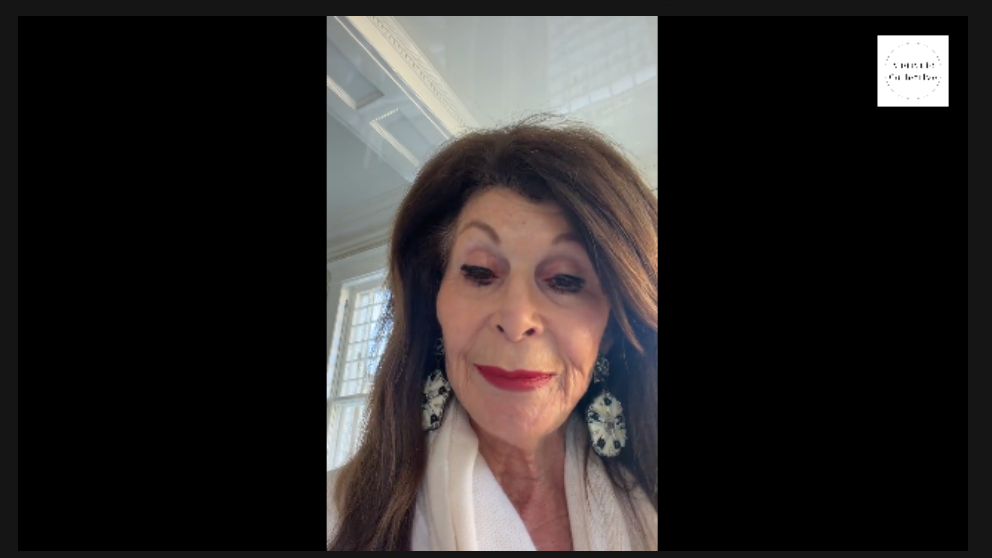
Linda is a Los Angeles-based hypnotherapist, transformational coach, author, and speaker, and the founder of Next With Linda. At 83, she has reinvented her career multiple times — building a Beverly Hills hypnotherapy practice where she focused significantly on supporting the LGBTQ community during the AIDS crisis, appearing as a trusted voice on national TV and radio, and becoming a luxury interior designer at 70 with no formal training, selling a record-breaking $6.5 million property, and being featured in The Wall Street Journal. She has also worked as what she describes as a "reluctant medium." Linda began her Substack four weeks before this recording and is publishing a forthcoming book, NEXT… With Linda, aimed at readers over 60, navigating reinvention, loss, and starting again.
Listen to the entire episode here on this website, on Spotify, at Apple Podcasts, or through most major podcast platforms.
Linda is a Los Angeles-based hypnotherapist, transformational coach, author, and speaker, and the founder of Next With Linda. At 83, she has reinvented her career multiple times — building a Beverly Hills hypnotherapy practice where she focused significantly on supporting the LGBTQ community during the AIDS crisis, appearing as a trusted voice on national TV and radio, and becoming a luxury interior designer at 70 with no formal training, selling a record-breaking $6.5 million property and being featured in The Wall Street Journal. She has also worked as what she describes as a "reluctant medium." Linda began her Substack four weeks before this recording and is publishing a forthcoming book, NEXT… With Linda, aimed at readers over 60 navigating reinvention, loss, and starting again.
Linda joins Melanie for a rich, wide-ranging conversation spanning her decades of hypnotherapy work — including past-life regression sessions and her focused support of the AIDS community in the 1980s and '90s — her philosophy on belief, spirituality, and manifestation, and the parallels between her family legacy and Melanie's own. The conversation moves into food, ageing, and mindset, before landing on independence, love, and reinvention: Linda reflects on her four marriages and divorces, why she still believes deeply in partnership and love — including falling in love again at 80, with a partner who was 87 — and why she remains firmly committed to never losing her own identity within a relationship.
Episode Breakdown
Timestamps reflect the actual recording and should be confirmed against the final edit before publishing.
[00:01] Introduction to Linda
[01:52] "I have no intention of ageing gracefully" — Linda on being 83
[02:55] Starting a Substack and writing her forthcoming book, NEXT… With Linda
[05:18] Spirituality, belief in God, and making a daily promise for a great day
[06:56] Linda's Beverly Hills hypnotherapy practice and her work supporting the AIDS community
[08:59] Past-life regression stories, including a client's mother's spirit and a coffin experience
[09:XX] How hypnotherapy reframes desire, using the "chocolate cake as friend vs. enemy" example
[12:53] Supermarket placement, temptation, and reading food labels as we age
[15:42] Melanie's own journey with whole-food eating and weight change
[20:06] The Blue Zones as living proof of diet and longevity
[21:29] Melanie's grandparents' legacy in public speaking and community leadership
[24:43] Confidence, "following the recipe," and Hansel and Gretel as a metaphor for success trails
[26:XX] Belief systems, manifestation, and "when you believe, you will receive"
[28:25] How to build belief without a support system physically present
[31:46] The power of "I am" language
[32:57] Letting go of the past: the rearview mirror metaphor
[35:59] Linda's four marriages and four divorces, and what she's learned
[41:11] Comparing relationship histories: marrying young, and the wounds we try to heal through partnership
[44:09] Reframing painful chapters as catalysts, not just losses
[46:49] Independence after four divorces — and why Linda still believes in partnership
[47:14] Falling in love at 80, and why it won't be the last time
[49:41] "Baking your own cake": Linda's Reinvention Workbooks and forthcoming book
[54:18] When Linda found her confidence, and starting her podcast journey at 83
[58:42] Closing reflections: kinship across an age gap, and spreading hope and joy
Key Insights
On reinvention without an expiry date Linda has built entirely new careers at nearly every life stage — hypnotherapist, media voice, self-taught interior designer, author — and frames age not as a limitation but as accumulated proof that reinvention works.
On hypnotherapy as reframing, not magic Linda describes hypnotherapy in practical terms: helping clients reclassify what feels like a "friend" (a habit, a substance, a behaviour) as something working against them, so the desire for it naturally reduces — alongside deeper work like past-life regression and resolving inherited emotional patterns.
On independence within relationship Linda draws a clear line between healthy partnership and self-erasure — arguing that a loving relationship should never require playing small, hiding your intelligence, or abandoning who you are to make someone else feel more comfortable.
On love having no age limit At 80, Linda fell in love with a partner who was 87 — an experience she describes as one of the most wonderful of her life, and one she's explicit wasn't a final chapter.
On the "rearview mirror" approach to past relationships Rather than suppressing painful history or fixating on it, Linda advocates acknowledging what happened, placing it in perspective, and directing energy toward the present rather than an unknowable future or an unchangeable past.
On women, caretaking, and self-worth Linda connects the pattern of women prioritising others' needs above their own to both relationship breakdowns and, in her view, the prevalence of autoimmune disease among women — arguing that reclaiming self-worth means literally putting yourself at the top of your own list.
GRAMMAR-CORRECTED TRANSCRIPT — Linda (Next With Linda) Episode — FULL EPISODE (Grammar, punctuation, capitalisation, and transcription stutters corrected. Wording and meaning preserved. This replaces the earlier partial version, which was accidentally built from a reel excerpt rather than the full episode.)
Melanie Suzanne Wilson (00:01) Linda, welcome to the podcast.
Linda (00:04) Thank you so much for having me, Melanie. I've been excited to meet you, for lots of reasons — and foremost, the fact that you're coming to me, coming to all of us, from Sydney. Am I correct with that? That's one of my favourite places in the whole world. So I love you, Aussies.
Melanie Suzanne Wilson (00:31) That is so good. Have you visited Australia a lot?
Linda (00:35) I have. I'm one of the most blessed people walking — I lived on a ship called The World for five years, and we stopped in Sydney many times. It was one of our favourite ports.
Melanie Suzanne Wilson (00:54) That is great, that is great. What are the other reasons?
Linda (00:59) Well, the other reasons are that you and I do similar work — we may approach our goals slightly differently, but we are both here to make this world a better place, and to particularly help other women remember who they are, never give up their grandeur, and understand how each of us has a very important place in this jigsaw puzzle of a world.
Melanie Suzanne Wilson (01:31) We do. Let's explore that right away — it's a powerful message, and you're bringing it to me at a time when I need to hear it. A lot of people need to hear it. It used to be not so polite to mention age, but part of your message is that you're still going at quite an age, right?
Linda (01:52) Quite an age — I'm 82, excuse me, 83 years old. And I am not going to go out easily. I was talking to a wonderful gentleman the other day on a podcast, and I came up with something I'm going to repeat again: I have no intention of ageing gracefully. When my time comes, I will be sliding into home base — with a very dirty uniform.
Melanie Suzanne Wilson (02:25) Okay — what does that mean?
Linda (02:30) What that means is I'm going to experience it all. I'm going to have tried everything. I am not going to leave anything on the table. There will never be words coming out of my mouth that say, "I wish I would have, when I could have."
Melanie Suzanne Wilson (02:47) I adore that so much. What led you to have this mindset?
Linda (02:55) Well, I can't really say — I think it's always been the way I've felt, even as a young person. A lot of people have been interested in how I got to be this 83-year-old who will not take no for an answer. So I started another reinvention — I started my Substack, only four weeks ago. I'm using that as a platform to talk about my life story, because I have a book in the works, which is going to be released shortly. For those of you who have pre-ordered, thank you for your patience — I just want to make sure it's the best I can possibly put out there for you.
But it's not really about my life story — it's more a "chicken soup for the soul," where every story, based on a true story, has a protagonist. It's difficult to make change, whether it's good change or not-considered-good change at the moment — all change is difficult. So there's a catalyst, something that happens to us or for us, that causes us to have the courage to stand up and say, okay, this is the time I'm going to make the change that's going to make the difference. And then the joy that comes out of that. That's going to be the book you're going to see soon, and it's going to be called Next With Linda.
But for now, I just wanted to say that even as a child, I really understood the grandeur of what was on the plate in front of me, even in times when things didn't feel that great and that grand. I've always been very spiritual, and I believe that God is good, and that if we play our parts — which only we can do — it will all work out in our favour.
Melanie Suzanne Wilson (05:18) Let's explore that. Spirituality keeps people going, and it can shape what you do. What tells you that God is guiding what you are doing, and how does that live out on a normal day?
Linda (05:40) Well, I think I make a deal with the higher power every morning when I get out of bed. I first promise myself, and promise the world, that this is going to be a great day — and with that mindset, I set about making that the truth. That in itself makes a big difference in the way you handle things, or the way I handle things, I should say. But I really, really don't want to be a waste of space. I want somebody else's life to be better because I was here today, and if I'm lucky enough to provide that for somebody, I consider myself a big success. So it starts with the promise of a great day, and it ends with: what did I do today that made the difference?
Melanie Suzanne Wilson (06:42) I appreciate that mindset so much — do something that makes a difference. I feel that way about the podcast. I saw that you do hypnotherapy — do you make a difference through that, or other things as well?
Linda (06:56) Well, I tell you, the height of my hypnotherapy success was a number of years ago. I had an office in Beverly Hills, California, and I was very helpful to many people, but I concentrated at that time on the AIDS community, because going back a number of years, there was a tremendous need among the LGBTQ community to help them deal with and resolve their guilt, fear, shame, and all of the negative things people put upon themselves because they were ill. Once we could bring them to peace with all of that, they were able to respond to the medications that were available, and they looked at life through a completely different lens. So at that time, I really did concentrate on that effort.
Although I must say, some of my most interesting hypnosis was past-life regression, for those who believe in that. One woman evidently "died," in her hypnosis, and found herself in a coffin, and was afraid she couldn't get out of the coffin in the end. We had all kinds of discussions about that — for one moment her fear took over, but we managed to get it all under control. I had a woman whose mother's spirit was still running her life, and we had to ask the spirit to please go where she belonged and allow my client, Ashley, to live her own life and make her own mistakes, even if her mother felt she knew better — because Ashley was no longer tormented by that voice inside her head.
I know to some of you it sounds foolish, but let me explain hypnotherapy in a very common way. For instance, if you're a person who wants to lose weight, and you particularly love chocolate cake — that's your downfall, you'll eat chocolate cake as often as you can find it — you've put it in your mind that chocolate cake is a friend, that it makes you happy, and it's a wonderful thing, and you're always delighted to find it. But if you want to lose weight, the truth is chocolate cake is your enemy — you put it into that column. None of us wants more pain in our lives than we already have; we're all seeking forms of pleasure. So if you reclassify chocolate cake as your enemy instead of your friend, and instead of thinking about the pleasure you'll get from eating it, you envision it going right to your thighs or your tummy — wherever it seems to collect — you really lose the desire for it. So in many instances, it's really about sobering people up as to what is a friend and what is a foe — what is worth doing, what is not worth doing — and reminding them of the consequences of their actions. It's a very simple thing.
Melanie Suzanne Wilson (11:16) It sounds like part of hypnotherapy is about reframing the preferences we have, to desire what is actually good for us, instead of just what we think we want.
Linda (11:29) Exactly — very simply put. Thank you for that.
Melanie Suzanne Wilson (11:34) That's an important thing to keep in mind for whichever goal people are pursuing, and I'm glad you brought it up. A while ago I had an extra focus on food — I still prioritise healthy food, but people thought it was my main message. I still hope a lot of people will talk about healthy habits, because I see in my surroundings — and it's probably happening near you too — people prefer the unhealthy habits, and they don't understand that healthy things can be fun. I saw near the checkout there was a $23 box of Krispy Kreme donuts, and I thought, people are going to lose money and gain weight, all in a few minutes, and they don't think about it — it's placed right near the checkout. Whereas I've been blending my own smoothie bowls for years, no sugar. I wish everybody would enjoy the healthy habits, and also enjoy the work — things like this, making the podcast, it's fun. Do you think part of what gets someone on track to success is about enjoying it?
Linda (12:53) Well, it's really interesting — of course the donuts are put right next to the checkout, because that's where temptation lies, in a place where you haven't had time to really think about it, you just react to your initial reaction. By the time you've come to the place where you say, "Melanie, this really isn't good for you," you're already in the car, it's already in the bag, and you're on your way home. So that placement takes advantage of whatever weakness we have toward instant gratification, without ever really taking the time to think about what we're doing.
But I heard something interesting not long ago, about one of the things that often occurs during ageing — however one defines it — is that more mature people become more interested in labels. Not labels of clothing — labels of food. What is actually in this? I've been told lately that seed oils are horrendous for you, and now I find myself looking at labels to see if they have seed oils or not. I find it interesting, because never in my life have I really thought about labels — I know celery and carrots are good for you, and chocolate cake probably isn't, but I never took it any further than that. I don't know whether it's a change in many people's attitudes of late, or whether it's just my age that causes me to care more. I think of Aussies as beer-drinking, barbecuing steaks, always laughing and happy, and not really thinking about the ramifications of some of those choices. Do you think that's true — that some of the consciousness has changed a bit, or maybe not with the young folks, and maybe it's just the more mature people who feel that way?
Melanie Suzanne Wilson (15:42) I'd say there are people who have thought about the choices, and those who haven't. When I was growing up, and even five or ten years ago, most people were staying with the norm. You mentioned the barbecues — what I see the most with barbecues here is community fundraisers. The trend for a long time has been that some giant hardware stores let people put a barbecue there to raise money for a community group or charity. Of course, in summer there's more barbecue too, but I'd say in general that's led to an emphasis on meat. I'm not going to tell people what they should eat — I don't eat meat, but I can share that when I switched to whole plants, I dropped, initially, more than 10 kilograms — Americans, you can convert it, I can't remember it in pounds. But I wasn't using a scale, I wasn't thinking about it, I wasn't trying to lose weight — when I just switched to having more fibre, that changed automatically. A lot of people don't think about that. It's a mix of, yes, perhaps the traditional — we inherited the norm from the English of a chunk of meat and some peas on the side — but we also inherited the American habit of ultra-processed foods. I can share that the very first podcast I ever appeared on, surprisingly, focused on this exact issue — it happens in a lot of countries. I took for granted that I lost weight just by eating differently. It became, eventually, 20 kilos, and I can tell you right now I'm more than 25 kilos lighter than I was a decade ago. I can't even believe it — I'm a different woman. This jacket—
Linda (17:59) Well, that's wonderful. And it wasn't specifically for weight loss — it was just that you changed the way you thought about your food. What exactly happened before you actually got this on your plate, and somehow the conscience, at some point, kicked in?
Melanie Suzanne Wilson (18:23) Yes.
Linda (18:24) And it sounds like that's what happened with you, as opposed to saying, "Okay, my jeans are so tight, if I don't do something different I'm going to have to get a new wardrobe." It wasn't about that — it was more about your conscience.
Melanie Suzanne Wilson (18:40) If people are only thinking about the numbers, it puts pressure on them, and it doesn't focus on the solution — it focuses on the problem. That's where we are with diet culture, and we can see that in a lot of spaces. For example, Oprah got some distance from, or a bit less involvement with, just counting points in Weight Watchers — and if that works for anyone, that's okay, counting calories, counting anything, that might work for a bunch of people. But I found just starting off with eating real food — real food, with more fibre — was a great starting point for me. I used to get the jar of sauce that would have a lot of sugar in it, that sort of thing — I could share with people later exactly what I switched on. But it was about enjoying it, having fun. For those who follow the Blue Zones — a lot of those communities that live longer — they enjoy their food. I realise a lot of entrepreneurs get someone else to cook their food, but they still enjoy getting something that's not processed and in a packet. That's been the most simple thing for me.
Linda (20:06) Yes, I think that's certainly true. And what you say about people in the Blue Zones — that's really obvious in their culture, and it's had, I don't know whether "miraculous" is the right word, but certainly astounding results — the difference in their lifespans, the difference in the quality of their lives, as far as disease and that sort of thing is concerned. So those folks are all living proof that what you say is true, and they're really reassuring if anyone has doubts about whether it makes a difference. The answer is an astounding yes, it makes a huge difference.
So — I know you're the hostess, and you're supposed to ask the questions, but I'm fascinated by the fact that you're so heavily influenced by your family, by what your parents and grandparents were all up to a number of years ago, and you've kind of done similar things and put your own flavour on it — is that correct? Did I understand that correctly?
Melanie Suzanne Wilson (21:29) That is so sweet — I can tell you it's very rare that someone asks about family on the show. I can say the more recent generations had their own path, but my journey with communication is actually very sentimental for me — it was my grandparents, my parents weren't so involved. Both of my grandparents on my father's side were involved in a public speaking organisation from the early '70s — from what I've read, around 1970, give or take. My grandfather became an international director for a not-for-profit — I'll call it the '80s. I'm so used to needing to often Google my grandparents to try to get it very spot on — I think it was a few years before I was born. Then, the year before I was born, my grandmother was the first female leader of their community group within the state they were living in. That was a precedent that told me a message early on. Every woman has a different way of influencing their surroundings — she wasn't burning bras or anything like that, to each their own, but she was very much creating leadership within the space she was in, and doing it in the style people expected.
What I also learned from her is that she was completely focused on other people. She used the phrase "caring and sharing." My grandmother passed away in '21, at the end of COVID — she had a cancer diagnosis from 2014. Her whole purpose, she was essentially mothering everybody, she just wanted to see everybody else win.
That mentality carried me through. The speaking itself was always about — pardon me, sorry, I've had a coffee, I'll edit that out — I caught a cough a couple of weeks ago. The speaking was always about presenting ourselves in a way people can understand. I learned very early on that if we present ourselves as the person we want to become, that's a great step in getting the confidence and feeling like the person we want to be, to then feel more comfortable doing what we want to do.
Linda (24:43) That is really an important point you're making, because people ask me all the time, where do you get this confidence, that you can just go on a podcast — there's no script, we don't even know what we're going to be talking about. But the one thing you and I both know is that we'll have something of value to share, no matter what the subject is. That's really because we both have a lot of confidence.
Confidence is something — like you said, you don't really need to reinvent the wheel. If there's someone already doing what you want to do, follow the recipe — every great success story leaves you a trail. Remember Hansel and Gretel, and the trail of breadcrumbs? Or fine chefs who provide recipes for what they produce — it's just a matter of following what they did. And even if the words you and I have to share are slightly different, the actual act of being — and being before you physically are, because we create our own reality (and I know that makes some people very angry, because they don't like what's going on in their lives right now, and they refuse to take responsibility for having created it) — but that is the truth. We are all the ones writing our next chapter. That's how I came up with Next With Linda, because my goal is to help everybody, guide everybody, to create the best chapter yet in their lives.
It's all a matter of your belief system. When you believe, you will receive — that's short, but very powerful, because if you really believe something, it actually feels as though it exists already, and you behave in that manner, and it becomes very comfortable coming on in, because you've extended an invitation. You've already shown how it works. You can call it the good Lord, you can call it luck, you can call it whatever you like — but I think you need to prepare yourself for a lot of synchronicities, a lot of miracles. All of a sudden the phone rings, and it's like, well, how could that have happened, how interesting — or you're introduced to somebody that ten minutes ago you weren't even thinking would be in your orbit, and yet here they are. Why? Because you believed — you believed in yourself, you believed in your situation, you knew you were meant to have this life that you not only desire but deserve. And once you believe that, my goodness, how quickly it all comes together. So the situation is to really, really believe that you deserve all that you desire. For some people that's a difficult thing to understand, but it is really the truth.
Melanie Suzanne Wilson (28:25) Belief shapes what we do. I'm wondering whether you had external influences that shaped your beliefs, and whether you encourage people to look for something or someone around them to shape theirs. I ask because it was a lot easier for me to believe I could be something when I was sitting next to my grandparents, back when both were around — one is now gone — and it's harder now, not having someone right next to me saying, "you are this, you're going to be that." It's a bit harder. Do you find that other people need to surround themselves with like-minded people? Do they need to just create the mindset if they're not in an environment that encourages what they need? How can people manufacture the belief?
Linda (29:24) I do believe one needs to surround themselves with very positive people, people who believe the same way you do about things important to you, and who themselves demonstrate the power of belief — that they, in turn, believe in themselves, and you can see for yourself how that works. It's the same as talking about people who live in the Blue Zones — they're very positive proof that what's said about certain food types, overprocessed foods, and eliminating those from your diet, creates a certain result. So again, surrounding yourself with people who are already proven — they began their journey believing they could make it, and believed it to the point where they began acting as if. The joy that comes into you when you act as if you have something you really, really want — it produces all of the same hormones and brainwaves that would actually be there, and will be there, when it physically happens. So you get the same joy, and you start attracting like-minded people, you start attracting the opportunities that allow you to get to that point — because you're really already there. You've developed the cake, and what happens next is just the frosting.
Melanie Suzanne Wilson (31:16) That's a beautiful way to put it, the cake and the frosting. I'm wondering — is part of it about people going beyond saying, "I will do this" or "I will pursue this," to also saying, "I am, I was this, and I am this now"? The "I am" phrase is a very deliberate choice of words — does that help people?
Linda (31:46) Absolutely. "I am" is maybe the two most powerful words I can think of, that really take us all where we want to go — because we already are that, it's just a matter of remembering, and being open to anything we may be afraid of, overcoming fear, that sort of thing.
It's also a matter of staying in the present. Some people become crippled by their fear of the future, or by their history — if they've had a failed marriage, for instance, they may be afraid to let somebody else become intimate with them, because they're afraid again of it not working.
Melanie Suzanne Wilson (32:43) I'm okay, I have water here. I just felt so emotional hearing you talk about people not wanting to be loved again. I think what you're talking about is so powerful.
Linda (32:57) Well, it is. Again, I like to use metaphors, because it's easier for people to understand — but if we were driving a car, there are certain things that happened in our lives that we need to put in the rearview mirror. You will never forget that you went into a relationship with a dream, a dream that it would be everything you wanted it to be, that it would be for the rest of your life — nobody goes into a marriage thinking it's going to fail. So when it does happen, even if it's for the best for all involved, it just didn't go the way you'd planned or the way you thought it would. And so, in itself, you lose trust in your decisions — or you thought you really knew somebody was a good person, and later discovered your error.
But if we can take those situations and put them in the rearview mirror — not forget them, because we never will, but just put them in their place — and not spend too much time worrying about the future ("well, if I make this decision, where is it going to take me, what's going to happen then") — that's a complete waste of time and energy, because nobody knows, we don't have all the pieces yet. The only thing we know for sure is that we're here, you and I, Melanie, right now, having this conversation. If you can put most of your eggs in that basket — staying in the today, staying in the present, without fear of the future, and without the guilt and fear of a repeat performance of things that happened in the past — and just remember that at this very moment, everything's perfect. You don't need to put your energy into something you don't know anything about, the future, or waste it on something that no longer exists. So I think if you can eliminate those two wasteful situations, where we're wasting our time and our energy — our two most precious resources, by the way — you'll find you have a lot more power to attract what you really want, today.
Melanie Suzanne Wilson (35:40) There is so much in this. What experiences did you have with relationships that you needed to put in the rearview mirror?
Linda (35:59) Well, I think any failed relationship — and it doesn't necessarily have to be a marriage, sometimes it's a relationship with another woman, a relative, or someone you allowed to be your teacher, whatever it is, any failed relationship. But for any of you who know me — I'm Linda, Next With Linda — I've talked a lot about my value being the eighty-three years I've been alive. I don't teach from a textbook, I teach from life and life's experience, and I'm living proof that what I say is true, because here I am. I have had four marriages and four divorces. I am not proud of that. It took me a long time to figure out I didn't have to marry every person I loved, because I love everybody, and I would see good in everybody's eyes and think, "my God, this is the most wonderful person I've ever met, I want to be with them for the rest of my life." And then, later, realise — I think we forgot to talk about whether we both wanted children, or we didn't talk about the fact that politically we don't see eye to eye, and that's a very important thing to one of us — you don't talk about your ethics, your goals, what the future holds for you in your imagination, and see how those things measure up, because the lust and excitement of the beginning, of finding something new and someone looking at you with those dreamy eyes — there's no price tag for it, it's wonderful, but it doesn't always last that way. After the shine and glimmer have worn off a little, there needs to be something basic that holds the two of you together.
I really think, in my case, it took me a long time. Part of what I try to teach is for other women not to make the same mistakes I did — and in some cases, not to hang around longer than makes sense because you want so desperately to make it work. Some things just can't work, and you have to have the courage to fold up your cards and walk away. I must say, in most of the cases with me, I still love the people I was married to — but we shouldn't be married. We can love each other from a distance, as friends, as a support system. But marriage is a different thing, and having children together is a different thing.
I don't know if that was the sort of answer you were looking for, but—
Melanie Suzanne Wilson (39:30) Yes, absolutely, it really was.
Linda (39:33) That's really been my experience. I think anyone contemplating marriage, or a situation they'd like to see as a lifelong commitment, needs to seriously think about all the other subjects I just listed — not just the lust, or wanting to fix somebody. "I know if I love him enough, he'll stop drinking." "I know if I love him enough, he'll feel better about himself, he'll be able to hold down a job," or whatever the situation is. We women seem to want to caretake — we've been raised, in many cases, to believe that's our job, our place in life, to take care of others. Which, by the way, is one of the reasons so many autoimmune diseases are experienced by women — because we completely debilitate ourselves, put ourselves on a back burner while we take care of everybody else, instead of reclaiming our worth. On the to-do list of all the things you need to do and take care of — put yourself at the top of the list. What a concept.
Melanie Suzanne Wilson (41:11) It is, it is. There's so much in all of this — I'm glad you shared this much. It feels very relevant to me, and I want to frame this in a way any listener can relate to. You have been married four times, I have been married twice, and recently someone said they wanted to get married and then changed their mind — so that feels like a third thing. I'm 37. You're 84. I'm wondering, how old were you when your relationships happened?
Linda (41:50) Goodness, I'm terrible with numbers. But they were when I was young — the first time when I was 19, that's very young, especially by today's standards, and that was very short-lived, only two years. Then I married again before I really even knew who I was as a woman, and how I wanted to live my life, and what was important to me. So part of it, I guess you could blame on youth — although it certainly was more than that. We all have wounds, wounds we try to heal from our childhoods, that we try to heal with a new relationship — and it isn't fair to thrust that responsibility onto another person, because healing happens from within, not from without. When you marry at a very young age, your ideas tend to change, so you're at a bit of a disadvantage. Although I must say, there are so many high school sweethearts who've been married for fifty years and are completely head over heels in love today — so you can't generalise about anything. But in my case it was the truth. What about your case?
Melanie Suzanne Wilson (43:30) My situation — I was very young for the first one, sort of like you, got together around age 19, then there was a wedding when I was 20, and then that person went away with someone younger when I was 21.
Linda (43:49) Yeah, I'm younger than you, my goodness.
Melanie Suzanne Wilson (43:53) Yes — I actually got more involved in what my grandparents do, because it was something to focus my attention on after the first time I was dumped, which happened after the first time I was married.
Linda (44:09) Oh my. That's amazing. But do you see what a gift it was, Melanie? If you had not had the wound to heal, you may never have been driven to share your gift and do the work you do — because that was all part of your healing back in the day.
Melanie Suzanne Wilson (44:35) The presenting was a part of the healing — that's an interesting perspective. I'd say the gift I was given in that one was that I grew up very religious, and being divorced at a young age meant I was never going to fit the mould. I wasn't thinking about husband number two when I was 22 — I just wasn't. So I needed a version of my view for a life that would still ideally be ethical and admirable, but not perhaps as traditional. A lot of my friends were having their first wedding when I was having my first divorce. That shaped a lot — it shaped how I view religion quite a bit.
And then, I can't say a lot about the second time, but I can say that I was a bit too open to relationships around the time my grandmother got diagnosed with cancer. I think, because she had nurtured me so much — I can look back now and see I always wanted, for a long time, to be someone's shadow, or be nurtured by someone, because I didn't know how to nurture myself. It's very easy to look back at these things, right?
Linda (46:04) Hindsight is just golden, absolutely. But you know the most important love of all — yes, you had great love for your grandmother, I hear that in everything you say — but the greatest love, of course, is the one you need to have for yourself. What you're telling me is that you needed to fall in love with the person you are, that you were, back in those days. You needed to respect yourself, realise your worth — those were the things you were working on developing as part of your healing.
Melanie Suzanne Wilson (46:49) It's about an independence — because even though you're not married now, right? You had four divorces.
Linda (46:54) That's correct.
Melanie Suzanne Wilson (46:56) Yes, you had four divorces. So you have an independence where you're confident, and you have your personal brand. You are living your life, and you don't feel a need to be in a marriage to do that.
Linda (47:14) That's true, but I also believe that no man or woman is an island, and none of us were meant, in my mind, to be alone — that sharing anything with a loving partner, whether it's a glass of wine, a sunset, or a lifetime, is the ultimate joy, the ultimate gift, and the ultimate ideal for most people. Not everybody, but that doesn't mean you have to give up who you are. That relationship should not require that you give up your own independence, and that you give up who you are and how you operate, to humour somebody else or make them feel better — so you play small, and don't show how clever you are, to make them feel better about themselves. I'm not talking about that sort of thing — I'm talking about a healthy, respectful, and loving relationship. I still think that's the ultimate, certainly my ultimate goal, even though I am not in that situation at the moment.
But, you know, I say the last time I fell in love was when I was 80, and we had a fabulous, fabulous love affair. He was 90 — actually, he was 87, and I was 80. We met and fell in love and had the most wonderful time. And I say "the last time I fell in love," but I have to correct myself — that was the last time I fell in love, but not the last time I'm going to fall in love. Because I haven't given up on that part of my life yet. I still think there is somebody out there for me, there's somebody out there for you, who's looking for exactly the person that you are. Not that you have to pretend to be something different, not that you have to be thinner or smarter or more accomplished or more of anything, because you're already enough. And so am I.
But we're not going to give up our independence. That doesn't mean we can't love, and have passion, in all of its forms — a partner can bring passion back into our lives, not just in a physical way, but the passion for living and the passion for having a purpose.
And it's just, again, going back to the cake — you're finding a way to bake your own cake, baby. You go out there and you speak and you share and you do mastermind classes and you teach, and you teach by example, and you do all of these wonderful things. I have my own way of doing it with my reels. I've developed two workbooks, which are digital workbooks, Next With Linda. And they really, really help people resolve a lot of issues that they have in their lives. I'm writing this book, Next With Linda, to again show living proof of people who've had similar problems, to other women who'll be reading it. And my real hope is that everybody reading it will say, "My gosh, that's exactly what happened to me," or "that's exactly how I felt — and look at her now. She had the courage to make that change."
Sometimes it's just a little tweak in our behaviours. I'm not saying take your whole 40 years, or however old you are, and throw it in the trash. I'm saying those are all valuable lessons we take with us as we move forward. So we're never starting completely over — we're starting from experience, which is a wonderful place to begin anything.
So I wish for everybody — for you, for me, for all of our followers and listeners — that they find passion. Where there is a spark, we can help create a bonfire. And that is what life is really all about: finding ways to take something small that's wonderful, and make it even better. And in that way—
Melanie Suzanne Wilson (52:11) You went on mute suddenly.
Melanie Suzanne Wilson (52:33) Linda? Now I can hear something.
Linda (52:37) Okay, I know, I know — I had it on whatever it is, with the sound X'd out so it wouldn't ring, and what did it do? It rang.
Melanie Suzanne Wilson (52:41) Yeah, the phone calls come through the computer and mess everything up, right? But you are so inspiring. I'd seen just a bit about what you do — I saw your website mentioned becoming who we want to be, the hypnotherapy, things like that — but knowing your personal journey, this is what I love doing on the podcast, seeing the personal journey you've had in your 84 years. I know you see the value in this, but I wanted to emphasise it — people feel old at any age when they don't need to. I can share that I've felt that way, and I know others would too — I don't like the stigma I perceive on the inside, that I'm 37, and I absolutely think to myself, "I should have done this before 37," or "I should be this now, at this age." But you're 84, I'm realising — it'll be a long time before I reach the age you are. There'll be someone listening who's 40-something, 20-something, anything. When did you reach this personal brand and this confidence? Was it always here, or was there an age where you realised, "let's just be this and do what feels right"?
Linda (54:18) I think I've always had it — I wish I could say something different, but it wouldn't be true. I look at life as a huge lesson — there's always something to learn from each other, about ourselves — and each lesson brings us closer to really being able to feel joy, to feel we're on the right path, doing what we were sent here to do. Certainly you have found yours, for now — you may want to tweak it when you get closer to my age. I've only been doing this since October of last year. I'd never watched anybody's podcast before I did one. I've just always relied on having the confidence to know I've got friends in high places, and those spirits don't let me down. I'm here to do God's work, and I will be given the words. I will always have this friend you talk about, that you like to have people surrounding you who kind of shore you up if you start to get a little iffy — mine are in the spirit world. I know a lot of people listening are going to go, "my gosh, here she goes" — but it's really the truth for me. We all need to find our own paths, but I believe I'm here for a reason. I have words to share, which is why I'm given the energy and the ability to do it, and I'm going to do it until I slide into home base, when I'm called back home.
So it's really been a pleasure to be with you today, Melanie — I can't tell you how much I've enjoyed getting to know you. Here we are, you in Sydney, and I'm in Connecticut right now, visiting my family, but I'm from California. Here you are in your late 30s, and me in my 80s — and yet, I know you can feel, because I felt, the kinship, and how much we think the same. You haven't had as many experiences as I have, obviously, but it's not as dissimilar as one would expect under the circumstances, and I'm very grateful.
Melanie Suzanne Wilson (57:02) Half the divorces.
Linda (57:17) I love it when I find someone else who's on the same page I am — it reassures me, it reassures me that somebody like you, who could be doing anything you wanted, would pick this path and decide this was your way to make a contribution. Because it just says, "see, Linda, you're not crazy — there are other people like you who really do understand what I'm trying to say, and don't disagree." We all have different paths of getting to where we're going, but we have a lot in common.
Melanie Suzanne Wilson (57:57) We do. It sounds like you're a bit new to podcasting, and especially talking with someone who is elsewhere — you're experiencing the magic of this podcast that I believe comes from something beyond me. Most of the guests are from America, a bunch from Australia or sometimes Europe, but we're from anywhere, all different ages. You and I have such an age gap, but we have so much common ground, and that's part of the magic of these conversations — we see our experiences in each other so much. That's encouraging.
Linda (58:42) And it's a validation, absolutely — you know, at 83, I still need it, and it still brings me joy. I like to know somebody else has made the same choices I have — and you've made some of the same choices I have, in your own flavour. I'm just delighted we're both doing the work we're doing, and we're both about making this world a better place. I've told my children over and over that I see myself as the salve on other people's wounds — that my joy comes from making your fear and sorrow less, from feeling that you have a kindred spirit who has survived that which you fear will destroy you. And I'm here to say, "baloney" to that stinking thinking. We're all here to love and be loved, and to spread hope and joy — and you've been a vehicle for me today to do exactly that. So thank you so much for inviting me on your show — I'm going to follow you, follow your progress, and I wish you all the best. For any of you who are listening, I'm Linda, Next With Linda, and you can find me on your favourite platform — I post every day, and I just started a new Substack that will be telling my life story. So for any of you who'd like to know more about me, or receive one of the love notes I write daily, especially to you, I would love to get to know you better. Melanie, thank you, thank you.
Melanie Suzanne Wilson (1:00:40) Thank you, Linda, so much. You said you have friends in high places — you said that spiritually — but you are now also part of this community as well. I'm going to encourage people to get connected more officially in this community. But you are, at this point, in 95 episodes — I'd say you're one of at least 80 guests who've been on the show. We have people following this journey from anywhere in the world, different countries, different types of success, and they're going to see that you're putting a message out there that people need to hear. I appreciate what you're doing so much. I appreciate your time, and it has been just such a joy talking with you. Thanks.
Linda (1:01:41) Thank you so very much, and I look forward to us staying in touch. Thank you, thank you, Melanie.
Melanie Suzanne Wilson (1:01:46) Absolutely.