Podcast Episode: Helen von Dadelszen on Speaking with a Confident Voice, Not Perfection
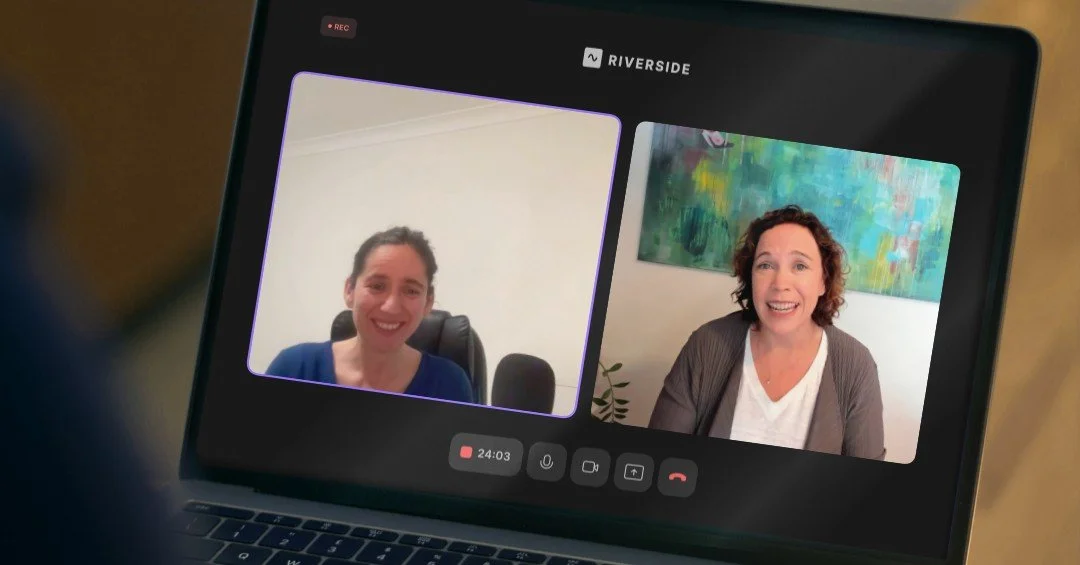
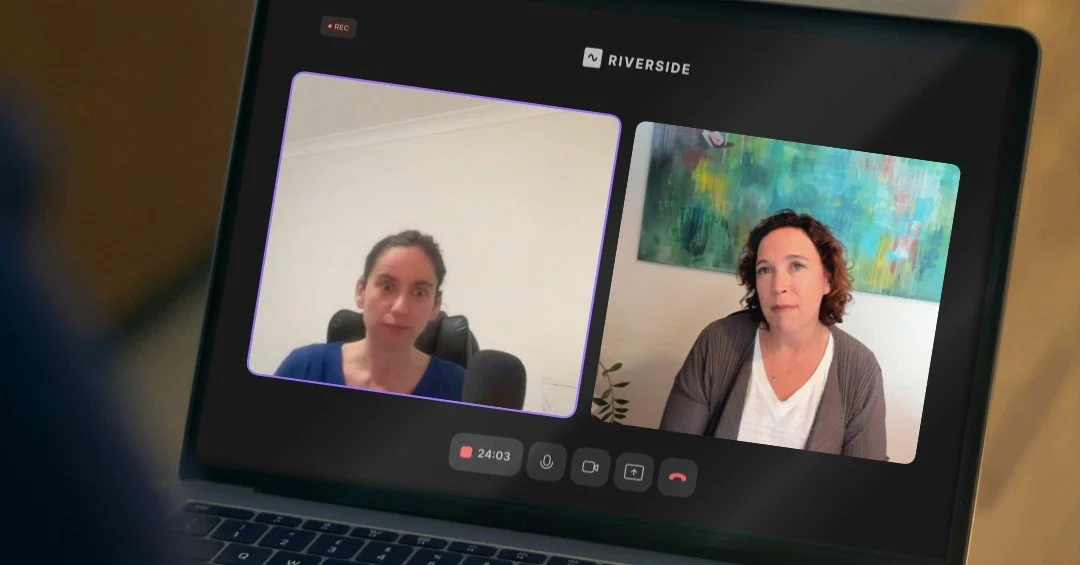
Listen to the entire episode on this website, on Spotify, at Apple Podcasts, or through most major platforms.
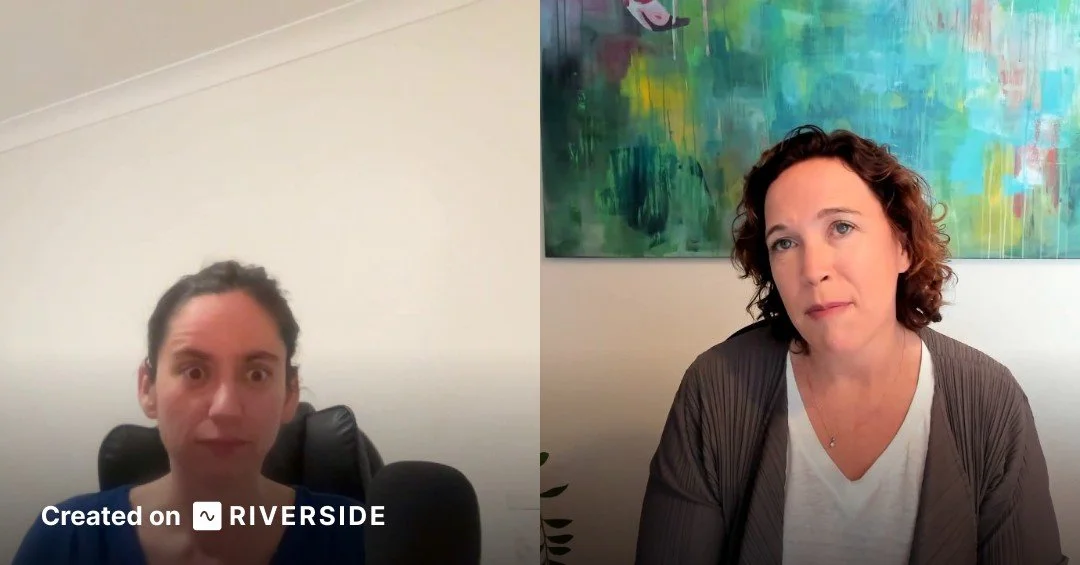
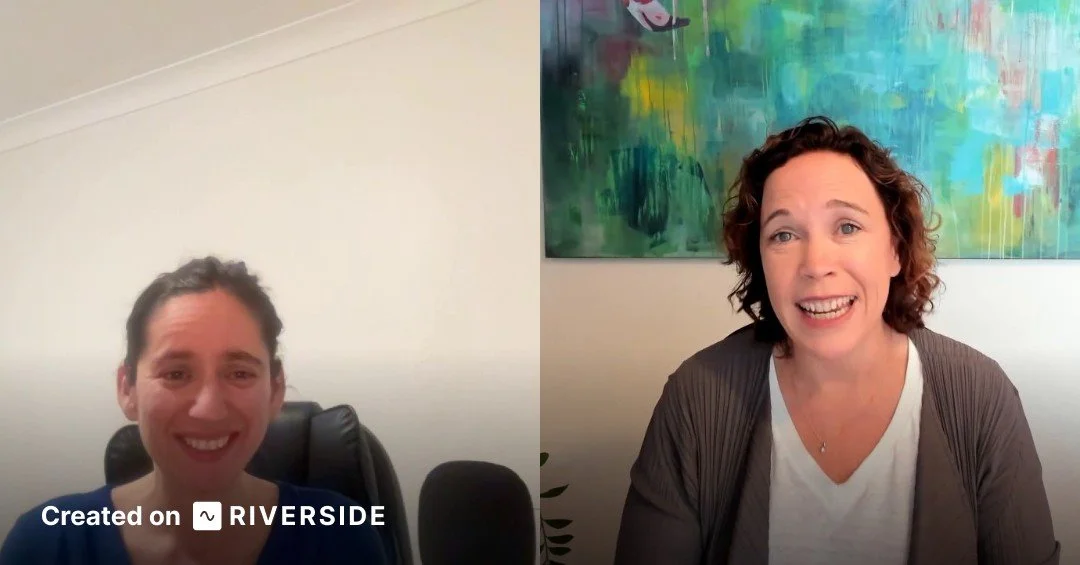
Guest Bio
Helen von Dadelszen is a communications and vocal coach who helps professionals doing meaningful work in the world — researchers, healthcare professionals, and humanitarian staff — communicate with clarity and confidence. Through her practice, Present Potential Sàrl, based in Crassier, Vaud, Switzerland, she provides tailored speaking, presentation, and interview coaching that builds skills and confidence through a customised, empathetic, and practical approach.
Helen also works as a facilitator with Collaborative Art, designing creative team-building experiences that use art to connect employees around a shared vision, mission, or strategy. She is the author of Courageous Action: Your Playbook for Communicating Confidently, One Small Step at a Time, and holds multiple honours from Toastmasters International for public speaking, impromptu speaking, and evaluations. She specialises in working with non-native English speakers and clients from academia, NGOs, and the healthcare sector who often need help translating complex, impactful work for diverse audiences.
Originally from New Zealand, Helen has lived and worked across Europe for more than two decades, drawing on a background that spans theatre and vocal training, psychology and human resources, and nearly a decade in humanitarian event management — a combination that shapes her distinctive, whole-person approach to coaching voice and presence.
Guest Bio
Helen von Dadelszen is a communications and vocal coach who helps professionals doing meaningful work in the world — researchers, healthcare professionals, and humanitarian staff — communicate with clarity and confidence. Through her practice, Present Potential Sàrl, based in Crassier, Vaud, Switzerland, she provides tailored speaking, presentation, and interview coaching that builds skills and confidence through a customised, empathetic, and practical approach.
Helen also works as a facilitator with Collaborative Art, designing creative team-building experiences that use art to connect employees around a shared vision, mission, or strategy. She is the author of Courageous Action: Your Playbook for Communicating Confidently, One Small Step at a Time, and holds multiple honours from Toastmasters International for public speaking, impromptu speaking, and evaluations. She specialises in working with non-native English speakers and clients from academia, NGOs, and the healthcare sector who often need help translating complex, impactful work for diverse audiences.
Originally from New Zealand, Helen has lived and worked across Europe for more than two decades, drawing on a background that spans theatre and vocal training, psychology and human resources, and nearly a decade in humanitarian event management — a combination that shapes her distinctive, whole-person approach to coaching voice and presence.
Episode Breakdown
(Timestamps approximate — confirm against final edit before publishing)
00:00 — Welcome and introduction to Helen's work as a communications and vocal coach
01:11 — Why fear is the main hurdle to speaking up, and why silence has a real cost
03:23 — Cross-cultural communication and why we're never taught to manage our nervous system
04:19 — The Toastmasters story: reframing nervousness as excitement
08:13 — Why audiences want personality and passion, not flat delivery
09:37 — Coaching academics and researchers to be audience-centric without losing authenticity
12:46 — Perfectionism, filler words, and why "good enough and human" beats "perfect"
13:xx — Catching and rewriting negative self-talk (the power of adding "yet")
17:18 — Helen's path: theatre, psychology, humanitarian event management, and how it all built her toolbox
22:02 — Why breath is the foundation of a confident voice
24:06 — Diaphragmatic breathing, nasal breathing, and vocal fry explained
28:17 — Pace, monotony, and why controlled pacing keeps an audience engaged
29:xx — The power of the strategic pause
34:04 — How Helen's client base has shifted from humanitarian to corporate over the years
36:49 — Accent, rhythm, and adapting speech patterns across languages
40:18 — The pen exercise: a simple daily drill for clearer enunciation
43:23 — Building a personal brand as a communication expert — and getting comfortable being seen
45:xx — How Courageous Action came to be written
49:14 — Learning to watch and listen to recordings of yourself without cringing
53:20 — Practical fixes for a soft or high voice, including the "walk down the stairs" pitch technique
59:11 — Projecting your voice without a microphone
1:05:01 — Final advice: proving confidence to yourself through small, courageous steps
Key Insights
Confidence follows action — it doesn't precede it. You can't wait to feel ready; you build confidence by acting first and gathering evidence afterward.
Nervousness and excitement produce almost identical physical sensations. Relabelling the feeling ("I'm excited, I'm ready") can shift your entire state before you speak.
Authenticity has to be audience-centric. Letting your personality show matters, but it should always be filtered through context, not performed indiscriminately.
The inner critic is rarely accurate. Catching your self-talk and asking "Is that true? Is that kind?" is a trainable skill, not a personality trait.
Breath is the foundation of every other vocal technique — pace, volume, pitch, and projection all trace back to how effectively you're breathing.
Vocal fry and rising intonation are habits, not fixed traits, and both can undercut how credible or certain a speaker sounds.
Watching and listening to yourself separately — video without sound, then audio without video — makes self-review far less overwhelming and more actionable.
A quieter or higher voice can be trained toward more range and grounding, though it takes sustained, low-stakes practice (in the shower, not in the meeting).
Personal branding is a gradual, ongoing act of visibility — Helen spent years "hiding" behind a company page before showing up as herself moved the needle.
Guest & Community Links
Present Potential Academy: academy.presentpotential.ch
Present Potential website: www.presentpotential.ch
Helen's LinkedIn: linkedin.com/in/helen-von-dadelszen
Book: Courageous Action: Your Playbook for Communicating Confidently, One Small Step at a Time
Collaborative Art Team Building: [mentioned in episode — website not provided, flag for confirmation]
🌿 Join The Motivate Collective community for more conversations, events, and resources built around growth, wellness, and conscious living: www.motivatecollective.com
The Motivate Collective — Episode Transcript (Grammar-Corrected)
Guest: Helen von Dadelszen Episode number: [TO BE CONFIRMED]
Note: Grammar, false starts, filler words, and duplicated words have been cleaned up for readability. No wording or meaning has been altered from the original recording. Timestamps below are drawn from the source file and should be treated as approximate until confirmed against the final edit.
Melanie Suzanne Wilson (00:00): Helen, welcome to the podcast.
Helen von Dadelszen (00:03): Thank you so much for inviting me, Melanie.
Melanie (00:07): This is very exciting, and I invite you to explain to everybody, in your words, what exactly you do.
Helen (00:15): Sure. I am a communications and vocal coach, and I help smart people get their brilliant ideas out into the world with clarity and confidence. That's what I'm on a mission to do. I do that through one-on-one coaching, group work, workshops, and trainings in companies. I'm also the author of Courageous Action, a book that came out last year, which ties together my ideas around speaking up with confidence. The core idea is that you can't wait to feel confident — you actually have to act. Prove that you can do it, give yourself evidence, and then gradually you will feel confident. But it starts with the action, which can feel scary.
Melanie (01:11): It really does. It starts with the action. Do you find that a lot of people, when they are starting to speak or present, find that fear is their main hurdle?
Helen (01:24): Absolutely. And I would say even before they start to speak, some people say, "No, that's not for me." They don't put their hand up. They don't offer their ideas. They say, "No, no, I'm no good at that. I don't feel confident. That's not my thing." And so it stops them even before they get the opportunity to explore and try. I think that's such a pity, because imagine if more people shared their ideas with the world and didn't stay silent — how much further we could evolve on so many of the issues we're facing today.
Melanie (02:02): This isn't just about people making an appearance. You're saying this is about sharing valuable wisdom and knowledge that people need.
Helen (02:13): Absolutely. I've witnessed teams where ideas are silenced before they're even voiced by the person themselves — just because they feel their heart race, or they feel the blush coming, or their hands trembling, and they say, "No, I won't share that. Anyway, what's my value? So-and-so already knows that. Who am I to share?" In fact, in most cases, they are there because they have something to give. It happens all the time. So I'm not even speaking about standing on stages, although that is a great way to share an idea. Sometimes it's just sharing it with your team or your family.
Melanie (03:03): I hope that all groups — be it teams, families, anyone — can encourage people to speak up. Have you seen that people often grew up in social settings where they were expected to wait their turn and self-censor?
Helen (03:23): Yeah, absolutely. I work internationally, across cultures and across languages, and we know that we have different ways of communicating, and a lot of the settings we find ourselves in are not necessarily well suited for us. I think one of the biggest problems is that many of us never learn how to manage our nervous system and then put our thoughts into coherent ideas that other people can understand. The cross-cultural and cross-lingual element makes it even more complicated.
Melanie (04:04): It does. The nervous system — I'm glad you brought that up, and you mentioned some of the physical signs. I've heard some people say that excitement and nervousness can feel like the same thing. Have you seen that happening?
Helen (04:19): Yeah, absolutely. This is one of the moments when I really realized that in my own life — it was, gosh, probably ten years ago or so — I was competing in a speech contest with Toastmasters. Some of your listeners may know what Toastmasters is.
Melanie (04:41): Yes, they will. I came from that space.
Helen (04:46): I was competing — it was my first time competing — in table topics, so impromptu speaking. We were in a coffee break, and I was just standing there going, "Gosh, I'm so nervous, I'm so nervous," shaking my hands, looking around, and expressing this nervous energy to everyone. One of the more experienced Toastmasters turned to me and said, "Darling, you're not nervous, you're excited." I was like, wow, okay. And it's true that we interpret our body's reactions and put a label on it — "I am nervous" — which can make things worse, because we think, "I shouldn't feel nervous. I know what I'm doing. No one else feels nervous. Why am I feeling nervous? There's a problem with me." Whereas the reactions in the body — if someone says, "I've got a surprise for you," your heart rate goes up, you catch your breath. If you're walking into a situation that's really exciting, you might tremble a little bit — you've got the adrenaline going through your body. But in those situations, we don't interpret it as nervousness, we interpret it as excitement. The reactions in our body are really similar. So one of the very simple tips is, when you feel those feelings — the heart racing, the hand shaking, the mind starting to race — say to yourself, "Ooh, this is good. I'm excited. I'm ready. I'm human. This matters. I'm going to perform. I'm ready." That little switch — having that in the back of your mind, knowing you will feel those feelings and have those thoughts and reframing them as soon as you can — can get you into a different frame of mind, and help you perform in a more connected, present, engaging way.
Melanie (06:49): It really can. It makes — I'll be careful, sorry, I have water right near my microphone, I'll move that. It makes a significant difference, reframing that and embracing that energy — whether it's nervous energy or excited energy — it can add so much to a talk. I'm very glad you've had that experience. I saw a business founder last year who was doing a book signing and a talk. It was the most energy I'd seen in a speaker, almost ever, and I don't say that lightly — it was like bouncing off the walls. I wish people would embrace that more, because this was a business person talking to business people. I'm glad you're embracing the energy, because there was a time in history when people were very reserved, very flat.
Helen (07:56): Mm-hmm.
Melanie (07:58): But have you found, with the speaking training you're doing, that in any setting — including organizations — people want to see a bit of personality as well as enthusiasm?
Helen (08:13): Yeah, absolutely. I think communicating is such an important expression of who we are. If we strip away all of the energy and passion, that humanity, then we just become robots. If we speak like this all the time and don't give much inflection, it's really hard for me to do, actually — I can only do it for a very short period of time because I'm so passionate. And when I say passionate, I say it with passion. We don't all need to be actors and actresses, but just think: what emotion do I want the other person to feel? If I say, "You did such a good job, I'm so proud of you," flatly, you probably don't feel that even though the words are correct. Whereas if I say it with energy in my voice, it can change how that message feels. That connection is the most important thing — thinking about the transformation, the touch you're giving to the audience.
Melanie (09:24): It's about being human. Do you see an opportunity for people to let go a little and loosen up while still looking professional?
Helen (09:37): Yes, although it's very challenging, because of the social and business norms and the pressure on us — we're often chasing this authenticity, this being true, but we also need to fit in and not push too far past the boundaries. I think it's really important to filter and think about the situation you're in, the context, the people you're talking to, the content, the topic — and adjust. It's all about being flexible in your style and, most importantly, being audience-centric. Sure, let yourself go, show some of your humanity, but not so much that it bothers people. I work quite often with academics who are in the process of applying for research grants, and most of these academics are geniuses in their field, but often they haven't been told, or even thought about, how they are communicating their ideas. When they're in these processes, the panel is assessing ten or twelve research proposals a day, and I always say to them: you are talking to humans, so connect on a human level at some stage. Also, at that stage, your research has already proven to be valuable enough to get to this step. Now the panel wants to see you — the researcher — who they're going to invest in. You have to let a little of that personality out, but it needs to always feel true to you. There's a lot packed in that. A lot of reflection people need to do, and you need to try and see what works for you.
Melanie (11:44): You do, for sure. I like that angle — how someone got to wherever they are, talking to the people they're talking to. Being there at all is validating and reassuring, because how many people get to the group they need to talk to and still have all these doubts — the imposter syndrome, tall poppy syndrome, or even just hesitation and questioning themselves? For me, very occasionally back in the day, I'd sit down afterward and think, "I could have said this, I could have said that," because we always think of something after. Or even if someone is about to start talking and they're checking, "Should I add this?" — do you find that people need to let go of perfectionism a bit, within reason?
Helen (12:46): Absolutely. I think especially now, with more AI and things becoming almost standardized, people are looking for even more connection and humanity rather than a perfect, polished performance. It's okay to add a few filler words, as long as it's not distracting. It's okay that we all have our own unique accent and way of communicating — in fact, that's what makes it interesting. I think perfectionism is one of the things that can stop us from acting. If we wait until everything is perfect, we will wait forever. The way we learn is by trial and error, and even failure, and learning from that.
But I also wanted to pick up, Melanie, on what you were talking about — all those things happening in our heads. The "I'm not good enough," "they'll see that I don't know what I'm talking about," "they can see my hands shaking" — all that internal dialogue that can really bring us down and feed that negative cycle of nervousness and self-doubt. What I think is important is to know that everyone has a lot going on in their heads, and it's very useful to start picking up on what you are telling yourself, because we know this can have a huge impact on our feelings of self-worth and value. So what I usually encourage people to do is notice: "I'm feeling nervous," or "They probably [think] blah blah blah, whatever it is" — and ask, "What am I telling myself there?" It's hard to catch at the beginning, but you can get good at it. Is that true? Usually not. Is that kind? Often not. How can we quiet that mind, or change that dialogue in our head, to something more positive and helpful for us? For example, "I'm not a good public speaker" — you tell yourself that, and you will prove it to yourself. If you can catch yourself saying something like that, the easiest fix is to add "yet." "I'm not a good public speaker yet." Or, "I am working on this," or "I have chosen to try before things are perfect" — which could be a good one for the perfectionists. There's a lot going on in the head. You can rewrite those soundtracks in your mind to something more positive. It's a lifelong journey — it's not as if you get it, change the soundtrack, and then you're good to go. Those negative thoughts can creep back in, so you need to be vigilant and keep listening to what you're telling yourself, and make sure you're reframing it into something helpful and positive.
Melanie (16:07): The one about what other people would think of us is an easy one to combat, because we're not telepathic. We suddenly behave, in our own minds, like we can read everybody else's minds, but deep down we know that's not true. We don't know what people are thinking.
Helen (16:22): No — and most of the time we're all a bit selfish. We're thinking, "What am I going to have for dinner?" or "Did I forget to reply to that invitation?" Even if you are engaged and interested in the topic someone's speaking about, in the background you've often got a lot of other things going on, and you're not thinking, "She should have practiced more," or "That story wasn't very relevant." It's just not front of mind for most people to judge others in that way.
Melanie (16:58): Typically, typically — you'd think so. We've talked so much about mindset, but it'll be good to look at the actual techniques a bit more as well. I looked online and saw that you're bringing a bunch of different specialties to this.
Helen (17:18): Yeah. My career has been full of turns and twists, and I've collected many things along the way that have helped me get to where I am, and it gives me a fairly unique view and toolbox to help clients. I come from a family very involved in theatre, so that was part of my life from a young age — being on stage, performing, practicing. We never talked about nerves; we said, "Are you ready? Are you excited?" We never asked, "Are you nervous?" That wasn't even a thing, even though I know I was nervous. I learned the craft, I learned stagecraft, I learned about my voice, I sang as an amateur, and I was always on stage. Then, at university, I studied psychology and human resources, and that's where I started my career. And that piece is quite interesting too, because — while we're talking about mindset and psychology, and psychology has evolved enormously over the last thirty-odd years since I was at university — the recruitment angle is very interesting as well: who is the organization looking for, how do you present yourself, your values, your skill set, all of that. Then I spent half my life now in Europe — I was born in New Zealand but moved to Europe for my overseas experience and basically never went back, and now it's twenty-something years (I won't give away my age). That's been hugely influential on me too. Now I'm living in Switzerland, in the French-speaking part, so I have to deal with the additional challenge of speaking a second language and all the baggage that comes with that — not being perfect, maybe even sounding different in French compared to English. I also taught English to adults in Italy, which was very interesting as well, and that's something I can bring into my teaching, because most of my clients are speaking English as a second, third, or fourth language, which again brings many challenges. And then a lot of my career here in Europe has been in the humanitarian world, particularly in health, and managing events. During that experience I realized that, because I was introduced to the stage very young — and to the idea of being audience-centric, being very aware of what my body's doing and what my voice is communicating beyond the words — I could help people, such as academics, researchers, and even NGOs and entrepreneurs, express themselves in a better way. Often when people come to me, it's the first time they've ever thought about how they use their voice or how to manage their nervous system — even teachers, who you'd think should get some of this training early in their careers.
Melanie (20:51): They don't.
Helen (20:53): They don't. Most of them don't. If you ask a teacher, they may have had an hour of training — obviously they learn how to design lessons for students — but often they don't talk about how to manage their nervous system, even though it must be scary standing up in front of twenty or thirty teenagers, for example, or having something happen in the classroom that you hadn't planned for. And the voice — definitely not covered. I think the voice is the most interesting for me, because we've all got this instrument, but very few of us have learned to use it well, and that can block you in so many ways in your career and personal life. I've got a client who speaks with a very high voice, and every time she gets a phone call, the person says, "Can I speak to your mother?" And she's thirty-five. So that doesn't make you feel so good, simply because she's speaking at a higher pitch.
Melanie (22:02): Right, right. That happens. And I'll make a point about how women can change their voices a bit in a second, but I'm very glad we're giving the voice attention. I need to express a lot of gratitude for the public speaking communities — you acknowledged it, I learned quite a lot of what I know from there, and a bunch of those people were very kind. However, those spaces don't look at how to use the voice in the way you're describing. You're very lucky because you had the theatre and singing background. I attempted to learn to sing when I was young — anyone who knew me as a teenager knows I tried. Sometimes we learn what we're good at, and not good at, by giving things a try. But I learned the theory behind it, and it's the same thing you learned, which is that it's partly about breathing. I wish everybody doing a speech understood — and I'm keen for you to explain how you understand it, because you've done far more of that than I have, thank goodness — because every single person doing a speech needs to understand, firstly, the breathing behind talking.
Helen (23:33): Mm-hmm.
Melanie (23:34): But also the pace. Before you explain this — I saw someone speaking recently who was constantly talking at this rate, with a lot of excitement, but it was so steady and consistent that everybody eventually zoned out, even though the person was amazing.
Helen (23:53): Exhausting. Yeah.
Melanie (23:59): Do you find that a talk needs to be delivered a bit like the rhythm of a song? How do you approach all of that?
Helen (24:06): Yeah, there's a lot in that. The first thing is: how is our voice produced? The way I see it, everything comes from the breath — the breath vibrates the vocal cords, which create the sound. That's as simple as it is. Then there are resonators and articulators, but the most important thing is the breathing, and this is what I find most people have no idea about — how do you breathe? Maybe we can do a simple exercise here: if you're sitting quietly, put one hand on your chest and one just under your rib cage, where your diaphragm sits, at the top of your stomach, and breathe normally. See what's moving. A lot of people say, "Oh, my chest is moving," or "I can't feel anything." That's funny, because breathing is such a fundamental part of being a human being alive. But ideally, a good breath — to calm your nervous system and create a good sound — comes when we fill our lungs in a way that expands the rib cage and pushes the diaphragm down. So when you're breathing, you should feel your stomach moving out as you breathe in — you're filling your lungs, and it pushes the diaphragm down. We can't really see this, and I know some people are only listening, but you should feel the stomach moving, and very little movement in your chest, because we should be pushing — or encouraging — the air down. We've got huge lungs behind our rib cage and lots of space to fill up. You're also breathing through your nose. Why the nose? Because that's what it was designed to do — to warm the air, to moisten the air — and it also gives you a deeper breath if you breathe through your nose. The opposite is true if you're stressed: imagine someone who's really stressed or out of breath — shallow breathing in the chest, lots of chest movement. That's the opposite of effective breathing. So already, those two things — am I breathing through my nose, and am I filling my stomach with air — can change a huge amount for people. But all of this is a habit created over time through repetition, so of course, breaking a habit takes some effort and time. Anytime you catch yourself breathing through your mouth, remind yourself: breathe through your nose. Anytime you have a second to think about your breathing, try to breathe deeper. That's really the basics with breathing and speaking.
The other thing I find is particularly a trend at the moment is the placement of the voice. Again, it's not something most of us think about, but we can speak quite nasally, into our nose, or we can speak into our throat. You'll hear lots of people falling into vocal fry, which means they're basically dropping into the back of the throat, vibrating the vocal cords in a way that can actually be harmful — that's when we get that creaky sound. Typically more American voices, and I have heard men do it, but it's predominantly women. And that's become almost a marker of, "I don't really care, I can't be bothered speaking properly," and the more you do it, the more it becomes a habit — and it can actually cause damage. Honestly, it's not a nice sound. The idea is to move the sound to your lips, so you're using your mouth as a nice, wide cavity to get the resonators going, and you've got a richer, fuller sound.
Then you mentioned pace. Most of us, including me, speak too quickly — I have my "slow down" sign stuck on my screen, because I get excited, all my ideas are in my head, and I want to get them out as quickly as I can. But it's not very kind to your audience — we can speak more quickly than other people can understand us. So I'd say all of us, if we all slowed down just ten percent, that would be great. But as you mentioned, it's also about monotony — even if you speak more slowly, there are moments when you want to speed up and engage the audience, and then slow down again. Having control over your pace can really elevate your speaking and make people feel things in a much more profound way than if you're not thinking about your voice at all.
The other thing, very much linked to pace and a quick delivery, is the pause. A pause is a moment you give your audience to make their own connections in their brain about what you've said. It also allows you to breathe, and to figure out your next sentence. Pausing strategically is really a power move, and if you can practice pausing more often, that can make a huge difference to how people perceive you, as well as how you feel and how in control you are.
Melanie (30:11): Pausing helps a lot. It's interesting exploring that now, given how technology is. I adore this program I'm using for the podcast — Riverside — but I need to be careful, because there's a button that instantly removes the pauses. Sometimes that's handy, if people hesitated for a while — not
Helen (30:31): Mm-hmm.
Melanie (30:38): — hesitating emotionally, but just pausing to gather themselves. But everybody would have seen those reels on social media where you can tell it's just jumped to the next thing. Do you think we need to, in any setting, let ourselves have those silent moments?
Helen (31:05): Yes — that pause I gave earlier was actually to see if your audience had a reaction to it. It was probably only two seconds, but it felt really long. I think it's important to pause. We're always so busy and rushing, and we like the speed and the dopamine and doing five things at once. But what we need is to actually reflect more, to sit with thoughts, to let emotions pass, to make connections. It's interesting with social media — and there is a place for it — I understand why these quick clips are created, because they drag you in and grab you quickly, and they don't have time to waste. I understand that. But that's not what we want for a real human conversation, I don't think, for most of us. With something like podcasts, I certainly listen at 1.2 or 1.3 speed, usually — I've already sped up the pace so I can listen to more. But it's an okay pace for me. There are certain podcasts where I can't do that, because the people are speaking too quickly. Is it right or wrong? I don't know, but I can adapt it — that's the cool thing about technology. But I think we need to be aware of our speed, and not be afraid of the pause. If I ask you a question and you rush in immediately, with not even a second to breathe — that's great, because it creates energy and connection. But on the other side, if we're having a conversation about something that really requires reflection and thought, that pause signals that you're taking the question into consideration, gathering your thoughts, crafting an answer that's thoughtful, well packaged, and really addresses the point. So speed isn't always what we're aiming for, and I think, with human connection, we need to slow down and pause more often than not.
Melanie (33:38): We can also acknowledge a question when we're having that moment — acknowledging what someone wants from us.
Helen (33:49): Sure. Like saying, "I need a moment to think about that." People appreciate that. It feels considered, deliberate, professional, and polished.
Melanie (34:04): Interesting. What sorts of audiences do you talk to, beyond consulting clients?
Helen (34:15): I have such a wide audience now. I started working with the network I had — mostly humanitarians, people working for the good of the world in nonprofits and charities, and a lot of people from the research world. What I've found interesting is, over the seven or eight years I've been doing this work, the last two years I've seen more and more corporate people coming to me — from banks, med-tech companies, pharma. I think that's an interesting shift. It's partly because I've built up my own network and people know me more, but I also like to think people are starting to realize that working on your communication skills can make a huge difference to your life and work — it's not something you're born with, it's something you can continue to work on, and it's really interesting and gratifying at the same time. So I work across all industries and all ages — I've worked with teenagers right up to people who are retired. I don't know how many nationalities I've worked with, and, as I said, many non-native English speakers, because they often need to work in English in businesses here, and they lack confidence, or their native language, if unmodified, can make their English sound disjointed — which is quite interesting too. So a huge range. All languages have a different rhythm when we speak, and what I've seen really interestingly is that most Eastern European languages are very heavy on consonants, and speakers can sound a bit like this when they speak English — it feels quite aggressive, almost, to an English speaker.
Melanie (36:21): Disjointed.
Helen (36:49): It's not that they're doing it intentionally — it's just the way they learned to speak their language, and then they transfer that into English or French. This isn't something typically taught when you learn a language — you learn pronunciation, grammar, which syllable to stress — but this is something additional. If you want to sound like — or not even sound like an English speaker, but if you want the communication not to break down, and for you not to be misunderstood — sometimes there are very slight modifications you can make in how you're speaking so people actually get the message you're trying to send across. With an Eastern European speaker who speaks like that, I get them to create more of a legato — using more air and softening the way they're speaking throughout their words. I even get them to soften their hand gestures — for those listening, I'm doing a wave with my hands, a legato sign, like in music, to smooth out the words so they run from one to the other and sound more melodic than staccato, which is a "chop chop" style. Does that make sense?
Melanie (38:13): I feel inspired by that, actually. You're teaching me that, as well as those who have that kind of accent — because I don't know who out there has the problem I have, which is having too big a voice. Maybe it's partly how I'm built, partly that I grew up in a big house where I'd call out "hello" to the other end — so I got that practice. It's okay on a big stage, but when we have that forceful big voice in some spaces — and I can even feel that my voice has been a bit held back, I've been sick for weeks — but it can get really, really loud. Some people have that issue. So softening it out, the way you described, is powerful. I have almost the opposite issue in that I have too much diction, whereas — I'd say a lot of Australians, for example, have less diction, and the Ds and Ts just aren't happening. Have you seen that occurring for people?
Helen (39:19): Yeah, definitely. Kiwis as well — we mumble, we have a very flat accent. Australians tend to be wider, but Kiwis are very flat and very lazy. But honestly, most people in most languages don't pronounce words very clearly — they're not moving their mouths much. It's as though it's become cool to look like a ventriloquist and not move your mouth at all. Just by opening your jaw, or dropping your jaw a little, it makes a huge difference to sound quality and to the audience's understanding on the other side. There's an excellent exercise for this — in fact, I think all speakers should do it, or anyone with a particular problem with pronunciation or enunciation — which is to practice speaking with a pen in your mouth. So let me show you, and I'll try to describe it for the listeners.
Melanie (40:13): Okay.
Helen (40:18): So you take a normal pen, put it in your mouth — obviously it needs to be clean — and what I suggest is that you hold it. I've seen other people say just put it in your mouth and speak, but then you're tightening your jaw, which is also a huge problem for many people. If you're holding it in your hand, you don't need to hold it with your jaw. The idea is that you take a book, or even read the first email of your day, with the pen in your mouth, and it makes you work your mouth a lot more. For example, I'll take my book, because I've got it here.
Melanie (40:55): This is the best. We've never done this on the podcast before.
Helen (40:58): We haven't. Great — so I've got my pen in my mouth. It's going to sound a bit funny, but that doesn't matter, I'm practicing. "One of the most important lessons I've learned about confidence and public speaking came from an international [speech] contest." Okay.
Melanie (41:15): Can I ask a favor? Can we use an example that's not Toastmasters? For the listeners, I'll say I need to make sure I don't trip over the trademarks and use their name.
Helen (41:22): Yes.
Helen (41:30): Sure, sure — it was just an introduction to one of my chapters, but no problem. This is what I'm reading from my book, where I talk about my experience with Toastmasters, which has been hugely informative, and I am a Toastmaster still, eleven years and going strong. Same thing, another chapter: "It's important to prepare for your speeches, presentations, and even simple team meetings where you'll need to speak up." It's almost inaudible, but now I feel like I've stretched my mouth, and I'm much more likely to remember that I have teeth and lips and a tongue. Just doing that for thirty seconds to a minute a day, I've seen it improve people's enunciation, which is a gift for your audience and makes you a better speaker, a better communicator.
Melanie (42:33): It does. For those listening, the pen is horizontal, from one side of the mouth to the other, by the way. This is a great pivot — you have your book. I'm very curious to ask how you built your business, and especially how you developed the content for your book. Having that Toastmasters background — I won't name names, but somebody once told me, "Don't overlap." And I thought, well, it's talking, I talk. So — however you bring all your specialties to it — what has your experience been in forming your own personal brand in this space?
Helen (43:23): My personal brand — I was kind of shy about it for a long time. I had a great business coach who helped me realize I could do this for a living. I created a name, a logo, everything you think you need at the beginning, but most importantly, identifying the value I'm giving to people and who I can help, and then getting my first clients in. It's evolved over time. What was really helpful for me was having a part-time job when I started — I think that was a smart move, because it gave me time to build up my methodology, my network, my know-how. When you're a business owner, you need to do everything yourself at the beginning — figure out how to do a website, how to market your work, how to get your designs done, how to write and publish things. That's obviously evolved over time too. Having a job at thirty or forty percent along the way gave me some security, and some money coming in, because the hardest thing is the ebbs and flows in sales, especially when you're starting out, not known yet, and don't have a really solid sales funnel. So I hid behind my LinkedIn company page for a good two or three years, and it wasn't until I started putting myself out there more that it really made a difference — because people don't care about the name of your company necessarily, especially with something as personal as working on your communication skills. They want to know who you are, they want to see you, hear you, figure out if they can trust you and like you and work with you, if you're the right fit. So I slowly and gradually became more comfortable putting myself out there. But it's constant work, because it's much easier to hide away and just get on with the day-to-day, send a few emails — it's much harder, even though I've done it many times, to speak on camera and write up my ideas and keep promoting. I feel like I'm over-talking about what I'm doing all the time, but you simply have to, because the market is really saturated and the algorithms keep changing, so you have to create content to get known.
In terms of the book — I never wanted to write one. I know lots of people say, "I'd love to write a book," but it wasn't my idea, and I couldn't find the angle. It wasn't until I had a client who finished his work with me and gave me a wonderful testimonial — I always ask for feedback — and one of the things he said was, "I wish some of the stuff we talked about was written down." Of course, it was in the portal he had access to, but not in one nice package. So I thought, maybe I should think about this not as a book, but as a resource for my existing clients. I knew I wanted to talk about confidence, because I continue to manage my own nervous system, my own concerns, my own imposter syndrome — it's very personal for me. It wasn't until I realized that all the books I found currently written on confidence were very theoretical, and what I've found to be true is that you actually have to take the action. That's when I realized I needed to give people actions to do, so they can prove to themselves they can do it — work that muscle. That's how I put the content together — it's simply a collection of concepts and techniques you can dip in and out of, try, and find what works for you, so you can take more courageous action, step by step. I call it courageous because it feels terrifying — you're at the edge of your comfort zone, and that's what I'm asking you to do, expand your comfort zone. That's where you grow. So whatever you'd say "no, I don't want to do that" or "no, I'm too nervous" to — do that thing. A little step toward that thing. It's going to feel scary. That's why you need to take courageous action.
Melanie (48:22): This scary thing — that's a lesson we can broaden beyond speaking, although it is true for speaking. It's great we're coming back to that, because we all have something we're scared of. I like it — sorry, I'll get water for one second, I've truly been losing my voice.
Helen (48:27): Sure.
Melanie (48:46): I resonate with that, because some people are scared of speaking, some people just need clarity, but they're scared of something else. Sorry, I'll edit that out — talking on camera. I like that you mentioned that. I don't know if you've had this experience, but I didn't like the sound of my voice coming out of a voicemail, or anything like that. I didn't like hearing my voice. I had to just get over it to do the podcast — I didn't listen to it for a long time. Now, because the episodes are so insightful, I listen to my own show a little bit. Did you have that feeling of not wanting to hear a recording, or not wanting to see yourself? Do you see other people having those hang-ups?
Helen (49:14): Absolutely. I think, as humans, we're not really supposed to see and hear ourselves as much as we can now — it's very unnatural, and it makes us feel very uncomfortable. I still don't really like it. My voice is better now than it used to be. I still cringe sometimes at my Kiwi accent, even though I know it's an important part of who I am, and I know it's softened over the years. I still squirm sometimes and put a little filter on to get rid of some of the wrinkles. There's a lot going on when you put yourself out there. But people connect with that, and we know that video, especially short-form, works really well. I do have a tip around looking at and listening to yourself — I'd start by saying it's really important to do so, even though it feels uncomfortable, because this is how you become aware of what you're doing well and what you're not doing well, what you could change. You can't change anything if you're not aware, and the only way to become aware is to confront it. One way that works really well is to break up the visual and the sound. If you're watching yourself, do it without the sound first — what does your body say? Do you have any strange hand gestures that are distracting? Does your face match the story you're telling, the message you're giving? Are you solid, or are you jiggling around? What's the energy you're bringing — is it supportive, is it coherent with the message you're trying to give? Then do the opposite — listen without the visual. What can you hear in your voice? When you say you're excited, do you sound excited? Are you speaking too quickly? Do you have pauses? Do you have too many filler words — the non-words in between? Is your voice particularly high, do you get stuck, are you speaking in vocal fry? Separate them, and become a little analytical, in a kind way, to see: what's the one thing that sticks out to me? That's the thing to work on next time, rather than being overwhelmed and thinking, "I hate this, this is horrible, I don't want to listen or watch myself." Breaking it down makes it a lot more manageable.
Melanie (52:27): Definitely. You mentioned the high voice again — I want to look at some solutions for women who are literally not feeling heard. It's come up in a few episodes on the podcast — we had a former cop who said, "Just yell," in the context of self-defense. Some other people talk about breathing — of course, we can get sound out if we breathe, as you mentioned. But some women naturally — I wonder if it's inherent, or if they can change it — have a very, very quiet voice. I have so much compassion for them, when they're literally not getting heard as much. How do you normally handle that?
Helen (53:20): Unfortunately, there's no quick fix. As I said, our voice, or our communication style, is a habit we've created, and changing it takes some effort. Firstly, I think it's good to think about the mindset — why have you got this smaller voice, and why is it not serving you, if that's the case? Because, say you're a yoga instructor — you want a nice, gentle, airy voice, that's great, that's fine. But if you're giving your opinion, you want to make sure that's backed up by the way you're using your voice. So think a little about what you're doing there. Then there are a couple of things you can do. One is to use your body to support your voice and the message you're getting across — even if you haven't developed a more confident, solid voice, at least sit and stand as though you have one. What I usually see is that softer-voiced women tend to be quite small as well — they close their shoulders off, cross their arms, or fiddle with their hands, and they physically shrink into a small shell. This is something we can easily change, even if it feels strange — just be a little bigger. Use more open palms, a little bigger than you naturally would. Your voice will probably follow. So there are things you can do physically to put yourself in a better state. Then there are two issues with a soft voice. One, as you said, is breathing — you're either not breathing effectively, or you're letting too much air escape, like the yoga-speaker or late-night-DJ style of voice. So one thing to do is turn up the volume a little more, to encourage the air to come out in a more solid flow. One excellent exercise is to actually engage the diaphragm — this is what we used to do for singing: stand slightly bent forward a little, or even on your seat — instead of sitting back, sit at the edge of your seat, leaning slightly forward, so you're engaged. You can feel your abdominals tighten a little, and that's already going to give you a more solid flow of air. The other issue, which we've mentioned before, is the higher voice. Unless you have something physiologically going on — which I find most people don't — you've just got stuck vibrating at a certain pitch, so explore the lower parts of your range. Not in an important situation, not in a high-stakes meeting, but maybe in the shower — do some low humming. How far can you go? Don't push it, but find those notes you can reach that remind your vocal cords they can vibrate at lower pitches. Doing that every day for ten or twenty seconds, for a week or so, should rewire your brain to understand it can go lower. And related to that — at the beginning of a sentence, that's a great opportunity to start the way you want to end. If you tend to have a higher voice, start your next sentence lower: "Hi everyone, my name is Helen" — and then I'll probably speak back up here, but at least I started lower. Maybe related to that — be careful of the rising intonation at the end of a sentence, because in most languages, that sounds like you're asking a question. "Hi, my name is Helen?"
Melanie (57:51): Totally.
Melanie (57:56): It really does. It sounds uncertain — it feels like you're questioning your own point. I feel pretty sure it's this, it should be this, but it doesn't feel like, "Do you agree?" It doesn't feel certain.
Helen (58:15): Yeah, it sounds like you're questioning yourself. It's a very typical way for women to speak, because we think it's opening, welcoming, non-committal, and everyone is invited in. But if we want to make a point, what I tell people is to walk down the stairs — from a higher pitch to a lower one. "Hi, my name is Helen. I'm sure of that. I'm an expert in my field. I think we should go with option two." So mentally think about walking down the stairs of your pitch. It doesn't matter most of the time — I don't want people to get hung up on having this perfect voice — but there are moments where it really matters, and that's when you need to be more strategic and intentional.
Melanie (59:11): Absolutely. We don't want everyone getting anxious all the time about these things, but especially for a high-stakes moment, there's time to practice and think about these things. Someone can even go through — we do get transcripts of the episodes — read through, highlight the techniques, listen to the episode again, and check on all of these things. You mentioned yoga instructors — I can share that I've attended a lot of yoga classes as a follower, and although it's a very calm, slow, mindful practice, of any sort, it still requires a particular kind of voice. You brought up something relevant to a lot of professions — those yoga teachers are making their voices heard from one side of a room to the other, typically without a microphone unless it's a very trendy studio, and often talking over music.
That inspires something I can ask as we start winding up, before our final points, because eventually someone will be doing a talk in a space where they don't have a microphone — or even at conferences or events, people worry, "What if something happens to the microphone?" Perhaps there are only a few mics, but more people talking. It's important — I'm wondering what techniques you'd recommend. The one a lot of people keep saying is, "Visualize, imagine you're talking to the back of the room" — but what other hacks do you use for that?
Helen (1:00:57): I think the most important thing is, again, breathing. Your breath is your powerhouse — that's where you control the volume. If you need to be louder or more sustained, you really need your breathing to be more effective — for example, engaging it by leaning forward, as I mentioned, or even bending your knees slightly and feeling as though your center of gravity is a bit closer to the floor, which can make you feel more solid and able to use more of the air. That's a really important one. Knowing that in a high-stakes environment you're probably feeling all those feelings we started with — nervous or excited — you tend to forget about breathing and possibly speak too fast. But anytime you realize you're doing that, come back to your breath. I'd say it's really important to practice this in advance, because in the moment you've got other things on your mind. Getting your breathing right, starting today, is going to make a difference in managing your nervous system and creating that more controlled, fuller voice we're looking for. You can do this simply by lying in bed before you get up, feeling where you're filling up your stomach — can you get your stomach to move out as you breathe in? And when you're speaking, or breathing out, is it coming back in? Are you using your breath that way? You're retraining yourself, so that in a high-stakes moment, you can call on that good breathing.
Melanie (1:02:49): The breathing is such a great place to start winding up, because so many of these techniques depend on the breath — well, we need to breathe. I adore this, because the mindfulness space looks at breathing, medical people think about breathing, but wherever someone is coming from — whether it's corporate or medical — deep down, we all know we have to breathe, we're all human, but everybody needs to go back to that basic and make sure we're doing it sensibly. What other key essentials would anyone listening need to keep in mind if they want to start building, or boost, their confidence with talking, or with anything?
Helen (1:05:01): I would say that you need to start proving to yourself that you can do it, and that's through small actions, small steps. Don't suddenly think you're going to jump on a TEDx stage and present, or run a really successful podcast, immediately. Do the simple little things you can do now. Do them with intention, reflect — what worked well, what would you do differently? Be kind to yourself, but continue to move forward. Just putting up your hand in a meeting, or offering to do a presentation when usually you'd hold back, or making that phone call you've been putting off because you got the ick — anything like that proves to you that you can do it, and feeds a positive loop that builds your confidence, one little step at a time.
Melanie (1:05:01): Amazing. Helen, thank you so much for all the insights, and for talking on the podcast.
Helen (1:05:07): It was awesome. Thank you so much, Melanie, for giving me the platform.
[FINAL TIMESTAMPS TO BE CONFIRMED AGAINST FINAL EDIT]