
Podcast Episode: Abbey Pantano on Building Community With People, Not For Them
Show Notes
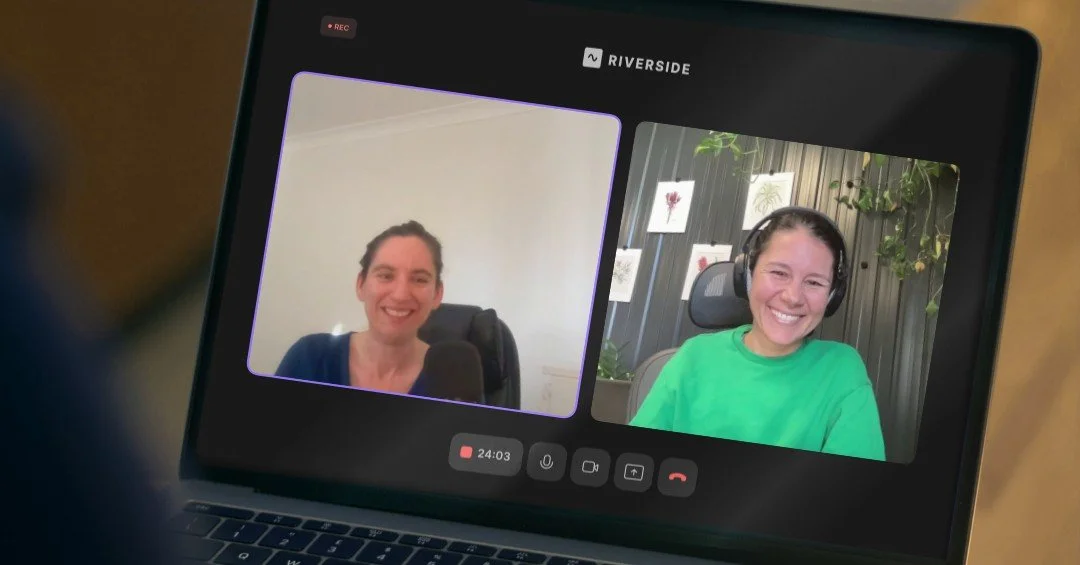
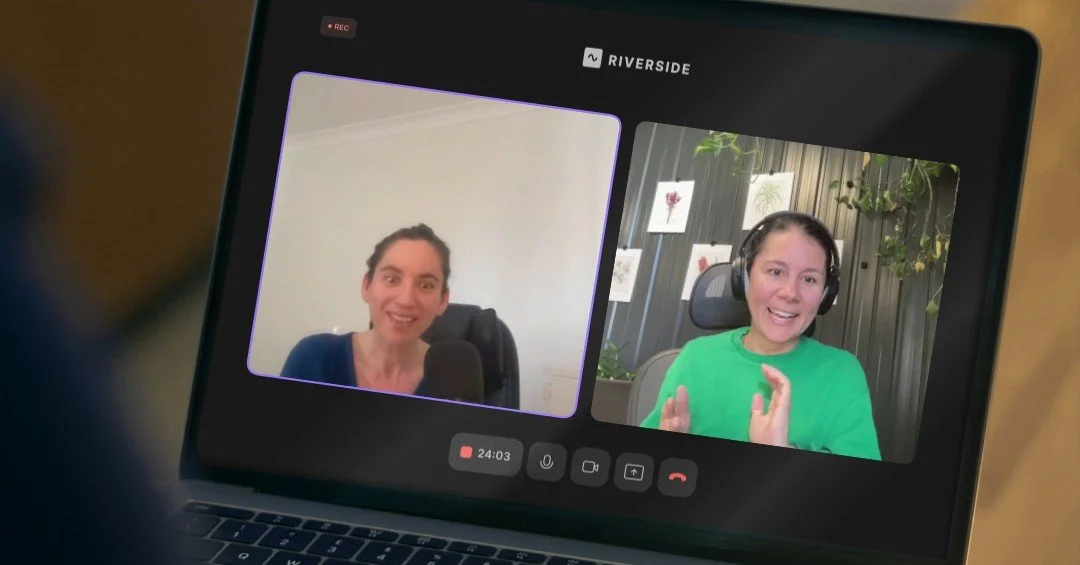
Abbey Pantano is a founder, strategist, and community architect helping impact-led businesses scale with heart. She is the Founder of The Impact Collab, an intimate digital community for impact-led founders working at the intersection of profit and purpose, and a Coach at The Community Collective, where she designs custom community ecosystems for brands and founders around the world.
With more than twelve years' experience across brand, marketing, and partnerships — including leadership roles in retail, startups, and social enterprise — Abbey has seen firsthand how genuine connection drives growth, loyalty, and lasting impact. Her career began in retail marketing before an unlikely pivot: selling wheat-stem drinking straws led her to co-found Seed Spaces, a Sydney coworking space for impact-led entrepreneurs, launched in the middle of the 2020 lockdowns. That community outgrew its physical walls, and in 2023, Abbey sold the coworking space to focus fully on The Impact Collab, a digital-first community built around co-design, values alignment, and sustainable growth for founders and community builders alike.
Listen to the entire conversation on this website, Apple Podcasts, Spotify, or most major podcast platforms.
Episode Breakdown
(Timestamps approximate — confirm against final edit before publishing)
00:00 — Introductions and Abbey's path into community building
00:17 — The wheat-stem straw business and why traditional business meetups didn't fit
02:29 — Starting a coworking space in the middle of COVID lockdowns
04:00 — The "movie Up" moment: throwing ideas out to see what sticks
07:11 — From coworking space to digital community: The Impact Collab today
08:50 — How to gauge real demand without a sales pitch
10:04 — Why sales calls disguised as research break trust
12:41 — The "goodwill wheel": giving first as a networking philosophy
19:11 — Designing the community ecosystem: five pillars and Dunbar's number (capped at 150)
24:54 — Tom's story: turning membership into sponsorship instead of volunteering
27:08 — The COVA Project and the case for sustainable, not disposable, giving
29:33 — The World Vision "Grow" story: regenerating land in Niger
37:38 — Book recommendation: Glimpses of Utopia by Jess Scully
41:18 — Systems, repetition, and rituals that prevent burnout
45:14 — Finding aligned team members through community and referrals
46:24 — Using AI with intentional boundaries (and why Abbey caps her Claude usage)
50:15 — Why context matters more than prompting, and building a "second brain"
53:52 — Designing work around energy cycles, not a one-size-fits-all schedule
57:26 — Abbey's biggest tip: build with community, not for it
Key Insights
"Don't build for community, build with community." Co-design — talking to your niche before you build anything — is the foundation of Abbey's entire approach.
Validating demand shouldn't look like a sales call. Asking genuine questions about someone's challenges, without a pitch attached, builds far more trust than a disguised sales conversation.
The "goodwill wheel" — connecting people generously with no expectation of return — compounds into real business opportunity over time.
Community size has a natural ceiling. Abbey caps The Impact Collab at 150 members based on Dunbar's number, protecting intimacy and quality over growth for growth's sake.
Sponsorship can replace volunteering as a scalable form of impact — Abbey's "buy one, give one" membership model lets paying members fund access for mission-aligned organisations without adding to their own time burden.
Sustainable solutions often already exist — they just need scale, not reinvention, illustrated by the World Vision Grow story of land regeneration in Niger.
Sustainability messaging lands better through small, joyful, practical actions (worm farms, reused jars, community gardens) than through guilt or abstraction.
Systems and repetition protect against burnout. Abbey's five-pillar structure and blueprinted rituals let her delegate consistently without losing quality.
AI is most powerful with strong context, not just a strong prompt — Abbey's "second brain," built with her team's AI expert, tracks her values, financial targets, and energy cycles to help prioritise work in a way that reflects reality, not just output targets.
Working with, rather than against, natural energy cycles — building in space for high- and low-capacity weeks — was reframed by Abbey as a business tool, not just a personal one.
Guest & Community Links
The Impact Collab: impactcollab.com.au
The Community Collective (coaching): thecommunitycollective.co/coaching
Abbey's LinkedIn: linkedin.com/in/abbeypantano
Book mentioned: Glimpses of Utopia by Jess Scully
Organisation mentioned: The COVA Project (Gina Dunn)
Organisation mentioned: World Vision — Grow initiative
🌿 Join The Motivate Collective community for more conversations, events, and resources built around growth, wellness, and conscious living: www.motivatecollective.com
The Motivate Collective — Episode Transcript
Guest: Abbey Pantano Episode number: 96
Note: Grammar, false starts, filler words, and duplicated words have been cleaned up for readability. No wording or meaning has been altered from the original recording. Timestamps below are drawn from the source file and should be treated as approximate until confirmed against the final edit.
Melanie Suzanne Wilson (00:00): Abbey Pantano, welcome to the podcast. It's nice to have someone in Sydney. How are you doing?
Abbey Pantano (00:05): So nice to meet you. I'm great. How are you doing?
Melanie (00:07): Pretty good. We were just talking about how you started your business life, and it's an interesting story — let's dive in with that.
Abbey (00:17): Yeah, sure. Maybe I'll land us in the now and then take you back. As far as what I do now — I'm a community builder. I've built my own digital community membership called The Impact Collab, an intimate community for impact-led founders, and I'm also a coach for community builders. I basically run my business three days a week, working with community builders and people building businesses at the intersection of making money and making a positive impact on our planet and our society.
My journey started with a straw. In 2018 I was working in retail marketing and partnerships, and I came across this humble little wheat-stem drinking straw. You know the very first straws are called "straws" because they're made of straw — basically the husk of wheat. You pull out the grain, strip the outer layer, bake it, and that's how people would drink their drinks. It's going all the way back to the original design. I was so excited — I went and bought my first two hundred thousand units of straws, and I was out peddling them to bars, building up my courage, going to traditional business meetups. But I found the conversations really lacking — people were building these multi-million-dollar businesses, wanting Lamborghinis, and I was like, I sell straws. But to me, I felt like I was selling more than a straw — I was selling a conversation, a solution. I wanted there to be talking points, so that rather than shaking a finger at someone with a plastic straw, they'd have a different straw, and you'd go, "What's the story with this?" and create conversation around it. There was so much more to it, but I felt so out of place in those traditional business meetups, because all they saw was the face-value product.
Then COVID happened. We went into lockdown, and I was made redundant from my role — I'd already gone down to part-time while peddling my straws the other part-time, figuring out how much you have to sell to make a living and survive in Sydney. It's a lot of straws.
Melanie (02:27): That's so funny.
Abbey (02:29): And with the lockdowns — it's such a strange thing. A lot of times when I say I became a co-owner in a coworking space, people ask, "What year did you start?" I say 2020, and they go, "Oh no, I'm so sorry." And I go, no — we started in the middle of it. We made an educated decision — well, it was a rash decision, but an educated one — in the thick of it, to say, let's do this, because it's a really great time to negotiate on rent. We negotiated great terms and said, let's build for the next six months, because no one's going to be able to come in anyway, so let's go and build this thing.
When the COVID lockdown happened, my partners said, "We want you to take community — who do you want this to be for?" Each time I went to those traditional business meetups, I'd meet someone who saw an inefficiency or inadequacy in the world and believed they could make money and help fix that issue — whether it's building a maternal hospital in Sierra Leone, or providing menstrual cups to women so they can get an education. All these different pieces, and I realized it doesn't have to be a not-for-profit approach — I discovered the joy of social enterprise. I thought, my gosh, this is the future. So it was these people creating social enterprises, and I said, I've got a space for us, let's all come together and work here.
There was one point where I looked around — we had a monthly cowork day every second Friday, and the space was full, and I thought, I can't believe we've done this. It was a little quieter on the days in between, but it demonstrated to me how much people needed connection, and how much that was lacking within our sector. Then the second lockdown happened, and I'm sitting in my empty coworking space, crying, talking to — I had joined a community called The Community Collective, a community for community builders that had just started during lockdown. We were all commiserating with each other, saying, we're so used to being in the thick of it, and now we've got these empty spaces, what are we going to do? I essentially thought, okay, I've got the community, but we can't come into this physical space — there's got to be a way to build off this.
I'm not sure if you know the reference — the movie Up, with the little boy who goes up to the old man, like a boy scout. At the start he's this grumpy old man, and the boy goes, "Excuse me sir, can I help you cross the street?" and he says no. "Can I help you cross your yard?" No. "Can I help you cross your porch?" No. And the boy says, "Well, they've got to help you cross something." I remember that being like my journey — I was just going to throw things out, see what sticks. That worked kind of well, so I kept building on it. People would say they needed something, and I'd go build it. It was such a weird time, because we thought we knew what we wanted, but digital community memberships didn't really exist then, so it was really "shoot and see what happens." A real test of resilience and of failure.
But I was lucky — I had a safe container, because I'd already found these cool, amazing humans. I thought, you're the average of the five people around you, and I wanted to be with these people — I'd chosen them for my adventure. I built that, and the community kept referring other people from around the country, regional areas, Southeast Asia, New Zealand, because they felt, "she's created a space just for us, designed with us." A lot of times we design spaces forpeople, not with them — so co-design was at its core. Even when the physical space reopened, the community had taken on a life of its own, so I decided to sell the coworking space in 2023 and go all in on the digital community membership, supporting members from across the country.
Today I run The Impact Collab. I've got an amazing team of four, all contractors who support me in supporting the members. And then, that same community I mentioned, where we all sat in a room commiserating with each other — I really leaned into that experience, and throughout the journey, they started running cohorts, two a year, supporting community builders to build community, and I recently became their head coach. So now I have this beautiful ecosystem of different offers — consulting or coaching community builders, and then my impact really comes from The Impact Collab, which is my legacy business. That's how I survive on a three-day week.
Melanie (07:11): That's amazing. It sounds like the focus on The Impact Collab is on impact, as the name says, which is a beautiful similarity but different to how this podcast emerged, through a focus on self-care. I'm so glad I'm hearing your story, especially because you were throwing things at the wall to see what sticks — I'm very encouraged by that, because some people go out with an idea, kind of like how you started with straws — you had a thing, then found someone who wanted it. With this, you're seeing what people want, what people need. I'd love to explore your perspective on what people should do when they're gauging that demand — I'm asking because this podcast emerged through a similar experimentation. I went on Threads and asked who wants a training, who wants a talk, who wants an episode, who wants a podcast — and all these people responded. I did not set out to make a podcast, and you're episode ninety-six.
Abbey (08:16): Amazing — so close to a hundred, congratulations.
Melanie (08:19): Yeah, I know. I gave you the link, and anyone in Sydney can come to the hundredth episode celebration for the first year. What were some of the things to navigate when asking people what they want? Do you ever think of something and people didn't realize they needed it? Or was it all conversations — did you go online? I think traditionally large businesses would have done a survey, that sort of thing — was it all simply conversations?
Abbey (08:50): Yeah, it's a great question. In the community we have five "impact architects," who are kind of like senior heads for different impact pillars within the community — one of our impact architects is focused on product design, and we're actually running her foundation session this month. She has an exercise where you pretty much post, "I'm thinking about..." and it's a matter of putting out into the world something like, "I'm thinking about creating a community for founders of businesses who are solopreneurs, who don't want to scale through big teams, who want to work three days a week and scale through partnerships, collaborations, systems, AI, and maybe a couple of part-timers, and I want to design a space where they can share skills with other people who have that same format." Then you just see what rolls in — people say, "my gosh, I feel like you're speaking to me." Part of that process is going, I'm looking to chat with a couple of people willing to sit down, and it's so important for it not to be a sales call.
Melanie (10:04): Why?
Abbey (10:04): Because the thing is, it ruins it — it can feel disingenuous. If you're building something new, and someone says, "I'm willing to sit down and tell you what my challenges are right now within my sector, for my specific profile" — I'm running a cohort right now with Community Collective on how to build a new community, and it's the same process: identifying our "niche cubed." If you talk about a niche, you might say "impact-led founders" — that's a big group. Think about superheroes: bringing superheroes together is amazing, but imagine a room where it's only Spider-Man — that's such a specific person, and everyone at that table can relate on a much deeper level. So being willing to go, I want to work with this type of person, and I want to understand their problems more deeply — that's a really generous thing for them to be willing to show up on a call for, just to say, "I want to know how I can better support impact-led solo founders, and I'm just looking to get this information." And at the end, it's a matter of saying, "when I build something, do you want me to let you know about it?" If they say no, that's fine too. But if you've been sitting there listening, and they've said, "I really struggle to find my people, I really want to do a co-working day and get out of my office one day a month" — and you're writing notes, it's amazing to have a scribe on the other side who says, "ask and I will deliver, I'm going to go find some other people who share that vision." That's a real gift. But if you go in and say, "how about you pay $99.99 and I'll build it for you right now?" — they think, whoa, I thought we were just coming on as friends to chat. It can break trust very early if people feel like you're going to bait-and-switch and sell them live on the call.
So I believe in — I love building what I call the goodwill wheel. I spent the first few years of my career, and even now, holding a really firm principle around giving first. I know that connecting someone to someone else who's valuable for them, and just seeing what magic pops up — it's so easy to think of who in my network could help you with this. People did it for me at the start, and I was so grateful. So I love to just be like, I'm here to help, no strings attached, I'll connect you with this person and you go make the magic. It means there are all these lovely little bits of fairy dust sprinkled out, and then maybe when you need to call in that fairy dust and say, "okay guys, it's time, I'm doing this thing," the goodwill wheel has been built up, and it's strong and robust and ready to roll in your favor.
Melanie (12:41): Absolutely. It's so generous when people are willing to give something, knowing that you will help them as well — it's a different form of exchange.
Abbey (12:53): Yeah, there was a quote I saw: "I used to think networking was putting on a name badge, going into a room, and pitching myself five times fast. But what I've realized is going out and doing a series of nice things for other people, and knowing those nice things come back in turn." That's just a philosophy I run personally and in my business, because I have faith that kindness comes back.
Melanie (13:18): I agree with you so much on the networking thing. I want to be very kind to those who enjoy traditional networking gatherings — to each their own, and I've met a few who host them — but I'm with you so much on knowing there's more to it than putting on a badge. I grew up wearing a lot of name badges at various groups.
Abbey (13:40): They're very important.
Melanie (13:42): Well, yes — and there are two things I want to pick at for a second. Firstly, there's a point where you'll know each other's names, but you feel like you have to wear a badge. But also, when there are new people, it's very helpful to wear one, so you're not saying your name again and again. The clips — if a group has badges, everybody has an opinion about the pin that punctures the clothes, all that stuff. But going beyond the details — you need genuine connections. Sometimes at these events, whether it's basic free networking or something higher-level, there's a big difference between going around for thirty seconds to each person, saying, "what do you do, that's awesome, I need to get going," and then saying the same thing to the next person — we've all experienced that. It's very quick, very surface. The contrast is probably what you've seen, where when you're having very real conversations with people, the collaborations that emerge — it's partly what people can do to help each other, and also, you get ideas you wouldn't have thought of.
Abbey (14:57): Yeah, I haven't brought anything into this world without a partnership, a collaboration, some other person alongside me helping hold me accountable, being a sounding board. Those rooms are important, but they're not the be-all and end-all — if people are bouncing between networking events expecting results, and the name badges are very important, especially for pronouns as well — it removes the load of remembering names, and removes the load of everyone having to share their pronouns, so people who are non-binary or identify otherwise can still proudly wear those pieces without having to announce it every time. I saw a really cool thing, I think with Atrium, where they put "my name is Abbey" and a tagline underneath saying, "talk to me, let's chat about ecosystem building." They put it right onto my name badge, and I actually kept that — I now bring my own name badge to most of my events. No disrespect to the name badge at all — but I think it's a space to do a bit of a vibe check, get to know some new people, and then decide who you want to go deeper with.
I think there's power in finding an aligned community that reflects your values, that filters in the people you're like, that creates that psychosocial safety and trust. I remember going to one group — I won't say which — where right off the bat there were KPIs on how many referrals you had to make, and I thought, why should I refer John just because John paid his membership fees? I don't even know John — it takes time to get to know someone. I will always work with someone before I refer them on for work, as opposed to partnerships, where I might say, "you two are in the same sector, you need to talk to each other, magic might come from it." I think it's about acknowledging that meaningful, productive relationships require depth, complexity, time, and nurturing. If we go straight into "productive," it becomes extractive — and that creates a disconnect. That's why I love community building — let's all each find — I mean, the whole community's been designed off referrals, because it feels like a safe container. When we find someone who's out on their own feeling lonely, wanting to find other people who want to make a better world and an income, we say, come on, I've got a place for you. And I'll get a message from them saying, "I want to connect you with Susie — Susie's doing a really cool thing with ADHD coaching, she's a registered nurse, we really connected, I want you to have a chat." But I filter people before they come into the community as well. Anyway, I've gone on a tangent, but yes, I could talk about it all day.
Melanie (17:58): I like tangents a lot — it's a great thing to explore, a great thing to acknowledge.
Abbey (18:10): Okay.
Melanie (18:11): I think you need to basically be human about it — that's what we're saying, be human about it. Having people who can help each other, the referral — because you genuinely know they're going to help someone instead of just for the sake of it — that's crucial. I find that values need to align as well. Have you seen situations where some people are only profit-focused, while others are ultra into sustainability? I've had to find a fine line — you started with a sustainable product, let's look at that for a second, because you're still looking to make a change in the world. It's interesting trying to interact with other business spaces, other organizations, anywhere that they're not on that journey, and there's this sort of negotiation between your values and their values — knowing you need to meet them where they are, but still hold true to what you believe. Has that happened for you?
Abbey (19:11): Yeah, absolutely. I design the community around people being either "impact curious" or "impact led." The design is an ecosystem, capped at 150, based on Dunbar's number — the theory that we can only authentically know 150 people at one time before we lose intimacy, based on the concept of tribes: once tribes grew beyond 150, they splintered. That's as much for the community as it is for me — I like to be supportive, I like to be able to check on the members, and if there were more than 150, I think I'd start to lose that quality.
The ecosystem design has five pillars: systems, product design, visibility, impact, and well-being. I have experts underneath each pillar. So if someone says, "I don't have impact embedded, but I'd like to, and I don't know what that looks like," we go, great — if we have the expertise within that ecosystem, or a vacancy, because we don't want a room full of people who all do SEO. Once I have one person doing SEO, I don't bring in anyone else — we have a waitlist for some sections, because that role is already filled. Their contribution is to host small-group mentoring sessions twice a year, teaching other founders in the community how to do SEO. Our SEO expert, Tom, from SEO Growth — he's a legend. He doesn't have impact embedded in his business, but he's a really good guy who wants to give back, so twice a year he hosts small-group mentoring sessions. He's doing one on AI visibility — building your AI visibility into your business, super valuable.
Melanie (21:08): Visibility, as in using AI to be more visible?
Abbey (21:11): Using SEO to make sure you're visible on AI.
Melanie (21:16): So if someone searches — in the search bar, or the chat in Claude or whatever they use —
Abbey (21:24): Mm-hmm.
Melanie (21:26): — how you're going to appear.
Abbey (21:28): Exactly. Or if someone searches in Google, and now the default is the AI answer at the top. Before, it used to be, if you're past page one, you're dead — now it's, you've got to be in that first piece, because a lot of times people don't even move past the AI answer when they search in Google. So we have to keep learning and optimizing.
His contribution is teaching others in the membership, and the benefit for him is exclusivity — if anyone's ready and in a position to pay, they go and work with Tom directly. The other design piece is that our community is a social enterprise — we're a buy-one-give-one model, kind of like TOMS Shoes, buy a pair, give a pair away, which turned into a whole problematic thing in itself — we could do a separate podcast on that. But the design here was that we have organizations contributing — we use the UN Global Goals for Sustainable Development as a framework for impact — organizations making direct contributions to those goals, who can't necessarily afford the monthly membership, whereas Tom can. So when Tom came into the community, we helped map him back to which UN Global Goal he's passionate about, feels aligned with, feels authentic for him.
Rather than him going out and causing more harm by volunteering, or taking his eye off the ball while trying to get his business off the ground by putting in days somewhere else, we said, how about you nominate an organization doing the work on the ground, and give them access to The Impact Collab? So they open the door, come on in, and get access to all the benefits of being part of the community that they wouldn't otherwise have had. That ends up being his impact, in tandem. We also have opportunities where, say, one of the expert pods this month is charity partnerships — Kierley, who runs Dovetail Social Enterprises, creates powerful partnerships between small businesses and not-for-profits. So if someone was ready to formalize this and put more money behind it — but it's also acknowledging, and I did this myself, sometimes when you're at a stage of growing, if you can't put food — I remember when I started my business, I said to my husband, "I just want to give away fifty percent of profits," and he said, "can we just pay the mortgage first?" I see it all the time with impact-led founders, because we think, this is why I wanted to start a business, I wanted to give away fifty percent of my profits — but we need to make sure you can put your own oxygen mask on before you help others. So there's a stepping stone: you're impact-curious, you come in, teach, and sponsor, and I make that nice and easy. Then once you're in a place where you've got money, you can nominate a charity, and that's a partnership. And maybe later, if they decide they want to build a social enterprise, there are other people in the community who can guide them through that process. It's a matter of empowering those who know what their community needs most, rather than going in and trying to fix it for them. I think all the solutions we need already exist — they just need help scaling. So how can we prop those people up and create the infrastructure for them to succeed, rather than reinventing the wheel over and over? Unless it's our community directly — then I'm like, dive in, let's do it.
Melanie (24:54): Absolutely — help those who are already doing something. I'm so glad you brought up the oxygen mask, that's an important one. Starting with Tom's switch from volunteering — is he basically paying for someone's membership?
Abbey (25:12): Yeah, and it doesn't cost him anything extra, because of that TOMS piece — buy a pair of shoes, give a pair away. All he does is pay his normal monthly membership — it doesn't cost him any more or less, but we've designed the community model so his paid space creates space for another. We do it a bit like microlending — people apply, fill in a form, there's a directory, and we go out to find people. So say I've got the COVA Project, which provides menstrual products to remove period poverty over in — quite a few different nations overseas —
Melanie (25:50): We'll come back to that in a second.
Abbey (25:51): They're amazing. If he picks "no poverty," and the COVA Project is helping address no poverty in communities but really could do with some extra support, he just nominates them, and we bring them in — it's a buddy system, so if he leaves, they lose their membership. That keeps people sticky, but it also means that if he wants to check in or offer extra support, he can. It's designed for inclusivity.
Melanie (26:20): Absolutely — it's giving him an alternative to giving away a lot of his time. I adore that, because I came from a space of volunteering, and people gained a lot from that, but you only have so many minutes and hours in the day — you can't give away half your money when you're sorting yourself out, and you can't give away loads of your time either.
Abbey (26:44): Yes. Yeah.
Melanie (26:46): That's a great concept. I like how so many of the things you're describing fall under the very broad umbrella I have on the podcast of self-care, since the focus of the show is self-care when you're doing great work — and I wanted to broaden that a tiny bit. The period organization you mentioned — sorry, what were they called?
Abbey (27:08): It's called the COVA Project — C-O-V-A. Run by Gina Dunn, an absolute powerhouse of a woman doing really amazing things. I think they've given away over ten thousand menstrual cups to women in developing nations — incredible.
Melanie (27:22): Are they only doing cups, or other products too?
Abbey (27:26): No, it's a whole big conversation — I can connect you with Gina if you want her on the podcast.
Melanie (27:31): Yeah, yeah.
Abbey (27:31): She's awesome. There are some intricacies around import tax and things with other products, so they found that — with a menstrual cup, if it's taken care of well, it lasts a really long time. It's about teaching them how to use it, how to keep it clean, how to manage it, as opposed to having to go through single-use items. We also had a whole conversation about period underwear — that's another one, because it's classified as a non-sanitary item, an odd classification. She jumps through very interesting hoops. She was hosting a panel called "It's Just Not Sexy" at the Global Impact Summit last week, about how you sell the things that aren't — that make older white men in a boardroom say, "we'll give you the money, but please don't ever say 'period' in the room," when it's fifty percent of the population, every month.
Melanie (28:30): It would be so good to talk to her about that. It got my attention, because I went to Rotary years ago and they described maybe the same organization or a similar concept. What got my attention for those products early on is that it's sustainable but also cost-effective. I have particular opinions about charities here that mean well but get people to donate a lot of disposable things — and look, I'm not shaming that, it's good if people get anything — but of course anyone receiving disposable products uses it once and needs more help a moment later. I worry that if you bring this up with Aussies sometimes, they say, "ease up on your eco-preaching," but it's also about the angle of wanting someone to be more self-sufficient. The cups, those sorts of things — it's great when you can help people in a way that's more ongoing instead of a quick fix.
Abbey (29:33): Yes, absolutely. I have to share one thing I learned at the Global Impact Summit last week that blew my mind — I think it really speaks to the power of the UN Global Goals. I started in sustainability, and then you realize you can't be more sustainable if you're living in poverty, and you can't get out of poverty without quality education — these are all different goals, connected. I remember circulating through all the goals and landing on number seventeen, "partnerships for the goals," and thinking, great, I'll circle that one — my job is just creating partnerships to support people contributing to the goals.
At the Global Impact Summit, one of the key players was World Vision — do you remember them?
Melanie (30:17): Of course, absolutely, they're huge.
Abbey (30:19): They're huge. Have you heard about their new initiative — not brand new, they've been working on it in the background? I always remember the "a dollar a day to sponsor a child in Africa" thing — I remember thinking, they're going to ask me to donate a dollar a day for food, but it's constantly needed, it's not fixing the issue, just helping them get more food. I was already sponsoring families in Palestine, thinking, that feels like an endless piece — how much money can I give them when they can't grow their own? Anyway, that's a whole other conversation.
But what they're doing now with World Vision is something called Grow. There's this amazing older gentleman who went out into Niger, where because of farming and climate change, the land had become barren. He thought, what are we going to do, the land's no longer productive — and what he discovered was that trees had been cut down, but the root systems were still there, and little shoots would pop up. With the right treatment, pruning them back, they'd grow again, and the land would turn green. At first he thought, I'm going to have to plant all these trees, it'll cost so much, where will we get the manpower — and then he realized, no, we have everything we need. It was about tending to those little shoots until they became bushes, then trees, and the growth and life came back. I thought, wow, this is something I want to send my money to — I don't have much, but I will. It was about regeneration, about climate action, because people were walking so far to get to wells for water, going to bed hungry — and once they were able to regenerate the land, food production came back, they weren't going to bed hungry, they didn't have to walk so far for water, because water was coming back to the land too. It was so beautiful, seeing that interconnectivity, and the organization recognizing, we can't just keep putting money into something that isn't creating a snowball effect toward something more sustainable.
A friend of mine, one of our members, wrote a book called Redundant Charities, about going in with your exit in mind — that charities built to run forever shouldn't have to be that way. What does the solution actually look like, and how do we work toward self-determination and self-sustainment, so we can move on to the next problem, rather than staying in one place forever? I recommend that book — it's always a great conversation starter, because people have strong feelings on either side. Sorry, I went on another tangent, but yeah — that's what World Vision is doing now, realizing that to feed people, we have to care for the land — it doesn't have to be separated into "the greens" and "the humanities," it's all interconnected. That's why The Impact Collab is about people across all the UN Global Goals, not just sustainability.
Melanie (33:21): Don't apologize.
Abbey (33:23): Some are directly thinking about sustainability, and others are considering long-term solutions for people — the trees are a great example. I appreciate how inclusive that is, because even socially, politically, in anything, I know some people are just focused on other things more than sustainability. But my angle on this — without going into what David Attenborough says, that's a whole different conversation — is, why would I want to contribute loads of extra rubbish to the planet when I don't need to? That's my angle.
Melanie (34:21): Exactly, exactly. It's good to see some are directly thinking about sustainability and others are considering what's a long-term solution for people. The trees are a great example. I appreciate how inclusive that is, because even socially, politically, in anything, I know some people are just focused on other things more than sustainability. But my angle on this — why would you want to make the planet worse? Regardless of the theories around — without going into what David Attenborough says — that's a whole different conversation — but why would I want to contribute loads of extra rubbish to the planet when I don't need to? That's my angle.
Abbey (34:34): Yeah, totally. One day, when I've got time and money, I want to get together with a group of people and do a campaign — there's a meme along the lines of, "yeah, sex is cool, but have you ever gotten to your bus stop right at the moment your bus arrived?" — all these little moments of pleasure. I'm thinking, "yeah, saving the planet's cool, but have you ever gotten to the point where you take your red rubbish bin out and it's just one little bag at the bottom?" Or put your food scraps into your worm farm, turn the soil, and see all these happy worms eating your food scraps — these micro-moments of pleasure that happen to also be better for the planet, but also bring a lot of joy to ourselves. When we just think about saving ourselves from climate doom, it becomes really overwhelming. But when it's, "hey, we're going to start a community garden, figure out how to grow veggies locally, connect with your neighbours, and reduce grocery costs by picking things from the garden" — what a beautiful thing. If the worst thing that happens is we get a beautiful community garden, connect with our neighbours, eat healthier food, and understand how much goes into growing just one apple, that's pretty great, right?
Melanie (36:04): The community garden example appeals to, I'd say, a bunch of conservatives, people with a totally different angle on the environment — because they often don't want to be eating produce from the supermarket that's been sprayed, with who-knows-what in it, GMOs, all that stuff. They want to feel healthy. I really enjoy appealing to the health angle and also the money angle. One thing I can't understand — to each their own — is when people throw away clean jars. I reuse my glass jars so much, and I like that we're going into the small lifestyle things, because most of — once you get to the big macro things, like how our nation's spending money, that's a whole different thing. There's a version of the conversation about the planet where people mention politicians, and then there's the version where we say, you won't have to spend as much money on containers if you wash your peanut butter jar and put something else in it.
Abbey (36:55): Yeah, you can do overnight oats in there — you don't even have to clean the jar, just start putting the oats in. So good.
Melanie (37:28): I saw that hack so much later in life, so you do that too — the peanut butter can be mostly finished and still there, and you just toss the oats in.
Abbey (37:38): Amazing, I love it. I was going to mention another book on that piece — about the power of catalysts in local communities, rather than expecting a top-down approach from federal government — Glimpses of Utopia by Jess Scully. Are you familiar with it? It's so good. Jess Scully used to be the Deputy Lord Mayor of the City of Sydney — sadly no longer, but she's doing really cool things now with a group called Radical X Change. If anyone wants to get into local civic-ship and solving gnarly problems, highly recommend checking it out. The book is full of real-life examples of change that's happened within small communities where people came together around a problem or issue and solved it. I always come back to — all the solutions we need already exist, we just have to spread awareness and scale them. I don't think it's about scale, I think it's about duplication, because each market is slightly different. I remember being so uplifted by that book — I think she's brought out an update, since it first came out in 2020. This is someone who was sitting in office, who could see all the things we can do — interestingly, she's no longer there, because she realized she could make more of an impact outside government than inside, which is another wild thing.
Melanie (39:02): Yes, look, that's true.
Abbey (39:06): Clover Moore's done incredible stuff too — I think all of us will feel a very sad day the moment she chooses to retire. But yeah, Glimpses of Utopia — so many amazing examples of communities coming together to address wicked problems and getting amazing outcomes.
Melanie (39:22): You really can make a difference outside of the government space. I actually just remembered — there was a right-wing politician who asked me how to consume fewer microplastics. I'm so inspired by what you've said about people sharing ideas in groups — it's going to inspire how I shape the community I'm gradually, gradually setting up and rebuilding behind this podcast, because I've seen that it's the very simple solutions people are wondering about — we all need the simple things. I think that's actually a good place to go with this. Have you seen that sometimes the solution to anything isn't as complicated as we think it is?
Abbey (40:18): Well, that Grow example — there's a photo of him going out on this completely barren land, with a couple of plantings in the back of his truck, thinking, how am I going to do this, how am I going to get the manpower, this is bigger than I can manage. And then he says, "look closer, look closer" — showing these little bushes, saying, those bushes are off tree stumps, and when I dug down, I realized I had the solution the whole time, I just wasn't looking at it the right way. It's the spark of an idea. Exactly — sometimes the simplest solution is right in front of us, we just make it complex.
Melanie (40:57): We do, we overcomplicate things. How do you keep things simple when you're running your business? Do you have any routines, or operational ways you make sure it doesn't get overcomplicated?
Abbey (41:18): Great question. When it comes to community building, it's around creating repetition and rituals. The coworking day I mentioned still happens — we now do it at the Greenhouse Climate Tech Hub in the CBD, second Friday of every month. I now have a co-host, so if I'm slow to get out of the house because I have to get my toddler to daycare, or I'm sick, or I want to go away, I have someone who says, "it's fine, I'll run the coffee meetup." Because it's rinse and repeat, and there are enough regulars, when someone's new, they say, "hi, welcome, who can I connect you with?" I've created a culture of inclusivity, not one where they're expecting Abbey to go around and hold everyone's hand.
I designed the small-group mentoring sessions the same way, around the five pillars — visibility, product design, systems, impact, and well-being — I have representation across each pillar, so it's easy to say, I just need one more well-being session, one more systems session, and so on. It makes it easy to know when people ask, "can I host in September?" — well, we only have one well-being spot, and it happens on the first and third Thursday. Everything I've done has a blueprint, and once I could create the blueprint, I was able to bring in part-timers, hand it over, and say, here's the blueprint. Taking that off my plate meant I could think much bigger picture — doing cool stuff around outcomes mapping, impact mapping, what our contributions are, how we're going to measure them, what partnerships we need to bring in to make the community thrive. I couldn't do that when I was in the weeds — it was really important to simplify what I had so I could pass it on to the team.
It's a monthly membership, rinse and repeat every month except January, which we take off — the team only works a handful of hours each, because I'm not bringing in a huge amount of cash, but enough to pay them consistently through monthly memberships. We start planning small-group mentoring sessions ten weeks in advance, so rather than a big rush where members are like, "you want me to submit my topic in December? It's August" — we work in quarters now, so if someone's sick, there's plenty of time to catch up. It's about designing in huge buffers, because you can anticipate what December's going to look like.
Designing in systems, repetitive and easy, and then bringing in — there's a huge opportunity to work with other entrepreneurs and founders building something amazing, who need what I call a "side stable." That's what's gotten me to this point. Throughout this journey, my own side stable was being Community Lead for a community called OneRoof, for female entrepreneurs — I started with them three days a week, and as my business grew, went down to one day a week, and two months ago decided I could stand on my own two feet and step away. But there's a really amazing opportunity to work with people who are smart, hungry, building something of their own, who understand the challenges of building a business and need consistency of income. If you can offer, say, $150 a week for three hours, you get incredible people who bring systems they've built in their own businesses — so much better than me in so many things, and they've taught me so much. I think that's part of what makes this community great — having really good help. So those would probably be my main things: help and systems.
Melanie (45:11): Where do you find the help?
Abbey (45:14): I just shared it within the communities I was part of — said I've got a fully remote, flexible, part-time role, and shared it on LinkedIn too, asking people to tag anyone relevant. I was blown away — I originally planned to hire one person, ended up hiring three, because they had three distinct skill sets, and I split the role between them. They're all really happy, because it's a bit of extra pocket money helping them breathe while they set up their own businesses. So it's been a matter of going through my networks and getting referrals.
Melanie (45:53): That's a good way to do it — finding people who understand what you're about, who align with your priorities and values.
Abbey (46:03): Mm-hmm. And align with values as well.
Melanie (46:03): You're also okay with getting people with different specialties. I'm wondering — how are all of you keeping up with how technology is evolving, especially with AI? Aside from SEO, I think it's worth exploring AI for a second.
Abbey (46:24): Yeah, absolutely. I have my own executive assistant that I've designed using Claude Code. I have a cap at Claude Pro — I will not go above it, for two reasons. One is sustainability — I struggle with AI, knowing there can be benefits and downsides, and how do we work with it responsibly, so I decided I'll never go above Claude Pro. The other reason is that when I run out of credits, it gives me space to breathe, to take a break sometimes. I think it's good to have those boundaries, to go and dive into something else — if you have limitless credits, you just end up using it constantly, kind of like loosening your belt buckle to lose weight, you just feel it.
So I do use AI, and what I do is the understanding work locally on my system, then create a prompt that the team uses in Claude Projects on the same account. That makes it much easier, because sometimes as a manager it's about making sure people stay on the yellow brick road and don't end up in the bushes — if you've given a really thoughtful, thorough prompt for them to start with, and then said, now work within the realms of these parameters, the output is so much more aligned to the brief, because there's less chance of drift, and since they only have a limited number of hours, I need to give them every tool they need — it's a much more comprehensive brief than I could ever give verbally. That's been really helpful. Also, two of our members speak English as a second language — Natalia, over in Venezuela, works with Joe on my team, a digital nomad who spends time in Australia, and Paki, who I met through The Community Collective, also works with them — really amazing entrepreneurial women looking to make money while building their own businesses. It makes it more accessible for them with written English — making sure things translate well — they do a lot of my comms. It's nice to collaborate with people around the world who make incredible contributions to what we design, and if we open another chapter in another country, they're closer to those time zones for support.
We're leveraging AI to work smarter as a team, stay together, and share learnings, because it's easy to go into Projects and just update the tweaks as we iterate the recipe. I always call it "first pancake out of the pan," and I keep on making pancakes — I don't go pancake, then waffle, then soufflé. If the base is already set — the coworking day happens each month, same location, same caps — it's just a matter of making small tweaks along the way rather than creating whole new things. That makes it easier from that perspective too.
Melanie (49:42): Okay, keep it consistent, definitely. If there are any hacks for the prompts, it'd be great to hear about that. I like to tell AI to think like the people I learn from on social media — there are a few very big personalities teaching a lot on YouTube, and I tell it, think like those people, since they have so much content out there that it knows how they'd approach something. That's another thing anyone can try. Are there any other hacks the listeners need to know for a good prompt?
Abbey (50:15): Yeah, the biggest piece is that in the past it was all about how good your prompt was — now it's how good your context is. The work I'm doing now — I had one point where I was consulting on a big project with The Community Collective, supporting the OneRoof community as Community Lead, plus running The Impact Collab, while working a three-day week, because I was committed to keeping Wednesdays and Fridays with my son while he's really little. I reached out to Sam, our AI expert — the catalyst was that I'd had a partnership I'd been nurturing along that just fell off my radar, and I lost that partnership, and I was really sad about it. I adored this person — there's still a lot of mutual respect, and I completely respect her decision to say, this isn't moving at the pace I need, I need to go elsewhere. I was really upset about it, and I reached out to Sam and said, I'm dropping balls, I can't hold all of this — if I sit down in the morning and write a to-do list, things fall off, and I go for the shiny objects too, because I'm so values-led, I lead with impact before finances, and if we think of money as energy, if I bring more energy in, I can put more good energy out, and I need to prioritize that.
I said to Sam, I think I need a second brain — something with enough context to know my "enough number." I'd done a whole bunch of work to understand how much I need to bring in to breathe, take a holiday, see my family in New Zealand and my husband's family in the UK — it was $140k. I said, I need to give that number to a machine, and have it help me identify which opportunities to focus on more, so I could triage more things. He said, leave this with me, went away, came back, and designed an infrastructure where I could build in my values, my enough number — it builds all this context into little folders that link up to each other. Each time I talk about a new person, it creates a new folder — say, for Paki, understanding her skills. Elaine is our head of impact, so there'll be times I'll say, let's do this, and it reminds me, remember, we have to get this to Elaine as head of impact for approval — it catches me on things when I'm busy with so many balls in the air.
Each day I run a "daily," and it gives me my top three priorities — kind of like "eat the frog," doing the thing you want to do least first, so it's just done, and then afterward you know the quadrant of important/urgent, important/not urgent, not important/urgent, not important/not urgent. I've also programmed it to understand my cycle — rather than being on a masculine schedule of sell, sell, sell, promotions, promotions, promotions, I wanted it to acknowledge what phase I'm in — building, selling, speaking — and optimize based on that, saying, it's okay for you to take some time here rather than doing a whole bunch of outreach, because this is an introspective time. And another time it says, "alright sister, we've got four days, go out and do this thing." I love that.
Melanie (53:52): Okay, let's translate that for the blokes listening, or the women who haven't thought about it — the cycle. We're not getting all feminist here, this is just physical reality — let me know if it's like this for you — you'll have one week where you're just full of energy and could do everything, and then weeks where you have half the energy, perhaps.
Abbey (54:26): Yeah, exactly that.
Melanie (54:31): Ha ha ha.
Abbey (54:32): It's not about where the moon is or any of that — it's literally about mapping where you're going to have the energy for something, because some days you just need to be in a dark room, and if you have a machine telling you to go out and get more sales opportunities and learn more things when it's just not aligned with reality, that doesn't help. So yeah, I'm working now with Sam on creating a community-powered executive assistant — he built it for a couple of our members, and we thought, should we do a show-and-tell, because I realized each of us uses it differently. I use it to prioritize my work based on a three-day work week and earning enough, and there's other bits — someone else, a social media strategist, uses it his way, another, a bookkeeper, uses it her way — and we're all using it so differently, and you realize we only know what we know. So we're working on building a community brain, where people say, I've built something cool, happy to push that up, and if anyone else wants to share that skill, it's available — so we get to learn as a collective, and a rising tide raises all boats. I'm really excited about that, because this executive assistant is really changing my output — it means I go from working with my advisors and mentors and the leaders in the community to learn, to it being the connective tissue for me to take action. That's been a huge hack.
Melanie (55:55): A collective shared executive assistant that has a virtual brain, or in other words, knowledge about the context of more organizations, to achieve more.
Abbey (56:08): More that your context stays on your local device, and it's the skills you build that get shared. The cycle piece I built wouldn't be available to everyone automatically — I'd say, I built something kind of cool, happy to send it up to The Impact Collab "brain," and maybe two or three other women in the community want it too, so they nominate it. It isn't automatically shared — things stay private, and IP importantly stays private, that doesn't go up. It's more a back-connection — I'm happy to pass this on, what can I share here so we learn as a collective. It means, on the time piece — if people are constantly needing help with SEO, and Tom only has so much time, hosting two expert pods a year, if you miss it, you wait another six months, and some people don't have six months. But if he becomes part of the shared brain, with a tool people can pay for access to, it becomes another part of his impact strategy, helping others on that journey.
Melanie (57:17): That's amazing. As we wind up, I want to ask — any other tips for anyone considering building a community?
Abbey (57:26): Yeah, absolutely — my biggest tip is: don't build for community, build with community. I'll say that one more time: don't build for community, build with community. What that means is co-design — going out and talking, right from the very start of our conversation, identifying who your "niche cubed" is. For me, it was the solo founder who believed they could exist at the intersection of making money and making an impact. Just have conversations, understand what the blocks are right now, what's missing, do a bit of landscape mapping. And if anyone wants support, I do offer ad hoc coaching too — you can go to thecommunitycollective.co/coaching, buy hours up front, and there's an amazing cohort that runs twice a year, Paz is a whiz. It doesn't have to be — I remember hearing the line, "is it caretaking or care-giving?" If you think of caretaking as an extraction of self, versus, "here's my heart, here it is" — it's a matter of asking, what does it mean to give from a full cup, with space to give? It's about creating the infrastructure so we can thrive as community builders, so it doesn't have to be an extractive process where we burn ourselves into the ground. Design member roles to help you — if someone at a party says, "I'll go do the dishes," let them do the dishes — it's shared ownership. If someone wants to bring a dish, let them bring a dish. If they want to pat the dog, let them pat the dog. All of us have different roles we can play within that space. If you treat it like an audience, you'll burn yourself into the ground — if you treat it like an ecosystem, a collaborative space for co-design, and build with people, the things that have come into my life because of this journey — I'm so grateful.
Melanie (59:31): Thank you so much for telling everybody, sharing how collaboration can happen.
Abbey (59:38): My pleasure. Thank you so much for having me.
Melanie (59:40): Thanks.
[FINAL TIMESTAMPS TO BE CONFIRMED AGAINST FINAL EDIT]