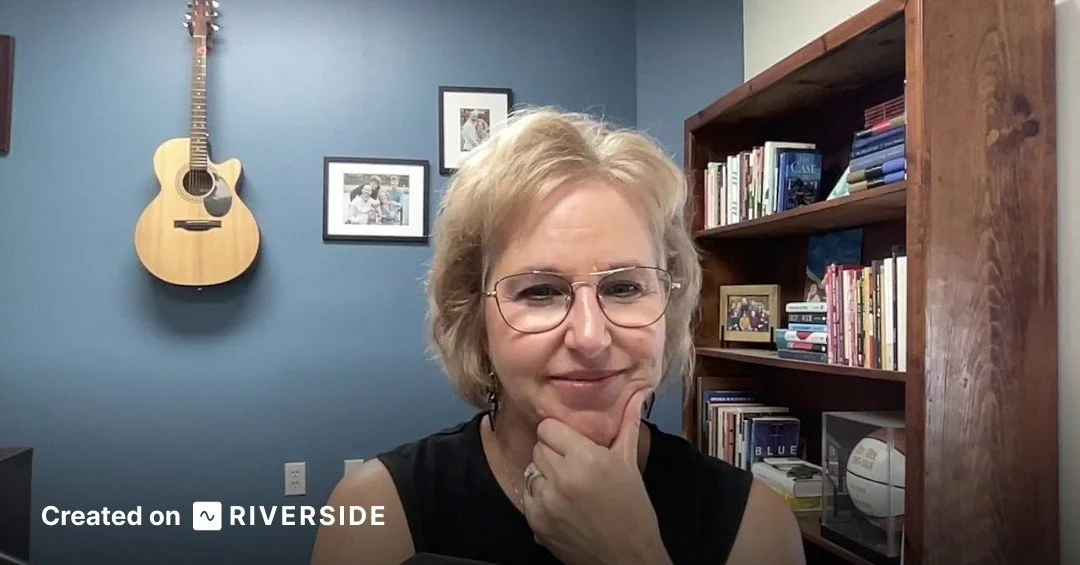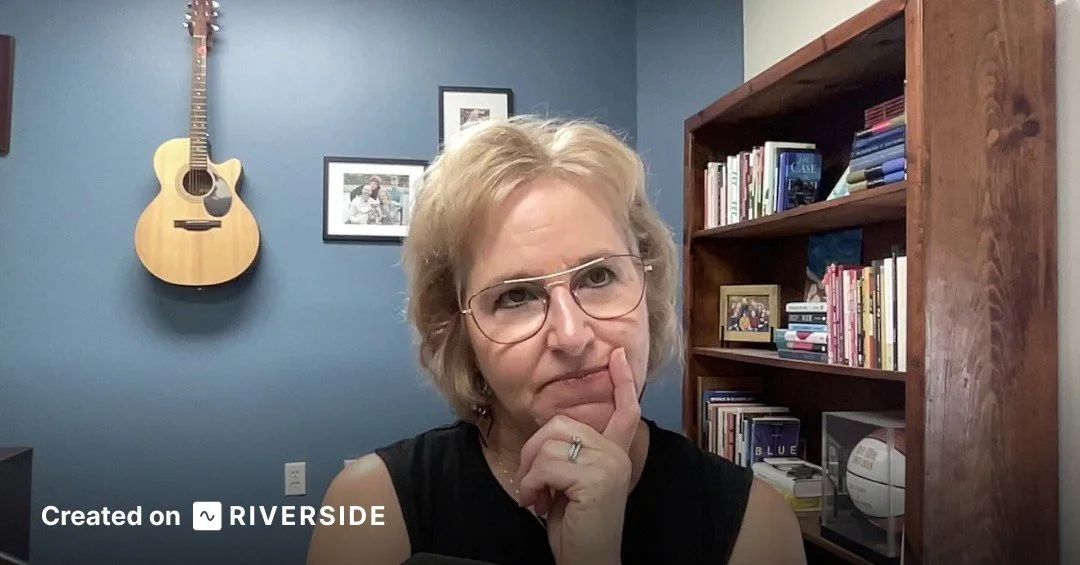
Jen Allee (Faith Leader) on Waiting, Unmet Expectations, and Surrendering to Opportunities.
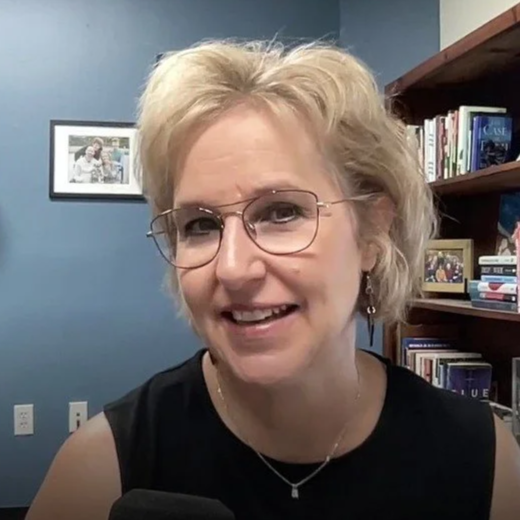
In this episode, Melanie Suzanne Wilson speaks with author and speaker Jen Allee about the emotional and spiritual weight of waiting, why unmet expectations can feel so painful, and how surrender, gratitude, and hope can help us move through seasons that feel out of our control. The conversation is compelling because it turns a deeply personal struggle into a relatable story, which helps listeners feel seen and lowers resistance to the message.
Listen to the entire episode on this website, Spotify, Apple Podcasts, or wherever you access podcasts.
Show Notes
Key topics
Waiting, surrender, unmet expectations
Why long seasons can feel like withholding
Faith, hope, and trusting God in uncertainty
Perfectionism, shame, and self-criticism
Forgiveness and letting go of burdens
Finding purpose in unexpected detours
Writing, speaking, and following a calling over time
Episode summary
Jen shares the long path that led to her book, When Waiting Feels Like Withholding, and explains how what felt like a delay was actually shaping her message. She talks about feeling blocked for years, writing magazine articles that later became chapters in her book, and realizing that her season of waiting was not wasted. Melanie explores the emotional side of waiting, including discouragement, fear, and the tendency to judge ourselves harshly when life does not unfold as planned. Together, they discuss how surrender does not mean giving up; it means releasing rigid expectations and trusting that what we need may differ from what we want. They also cover forgiveness, the pressure of perfectionism, and how gratitude can help shift our mindset during hard seasons.
Notable takeaways
Waiting is often where growth happens.
Unmet expectations can be more painful than the waiting itself.
Perfectionism can make us overly critical of ourselves.
Forgiveness is about releasing the burden, not excusing the hurt.
Purpose can be revealed slowly, in ways we do not expect.
Gratitude helps reduce disappointment and refocus on what is good now.
Quotes / ideas to highlight
“Waiting, unmet expectations and surrender.”
“I don’t think he’s withholding from us.”
“We often have our own expectations.”
“I needed to learn how to wait well.”
“What we need can be better than what we want.”
“I’m a child of God and I’m loved by him.”
Guest
Jen Allee
— author, speaker, and teacher
Mentioned work
When Waiting Feels Like Withholding
Companion study guide with reflection questions and journaling prompts
Suggested call to action
If this episode resonated with you, reflect on what you may be holding onto too tightly and write down one thing you can surrender today.
Transcript
Melanie Suzanne Wilson (00:00)
Jen, welcome to the podcast.
Jen Allee (00:03)
Thank you so much.
Melanie Suzanne Wilson (00:04)
How do you explain to everybody what you do?
Jen Allee (00:07)
Well, I am an author. I have recently written a book that's come out in March. And so my book is on waiting. And so what I thought maybe we could discuss today was how people are doing with waiting. Like what are they waiting on right now and how are they doing with it?
Melanie Suzanne Wilson (00:23)
What sorts of things do we wait for?
Jen Allee (00:26)
Well, I think we're all waiting for something, you know; it might be something small like a package in the mail or a text from a friend. But I think if we're honest, I think a lot of us are waiting for something bigger or deeper, you know, on a regular basis. And that might be, you know, something in your marriage; it might be something like a financial provision; it might be a health diagnosis, something with your kids, and you're just waiting. It might be a season that you want to end or a season that you're hoping will begin.
You know, so I think we're all kind of waiting on different levels a lot in our lives.
Melanie Suzanne Wilson (01:00)
Waiting for anything, which things did you wait for in your life the most?
Jen Allee (01:08)
Well, my story, which kind of re the book kind of revolves around, is I was waiting for about twenty-five years for, you know, k a dream kind of a career to be realised. And so, as I kind of walked through that season, I experienced all kinds of emotions, you know, whether that would be confusion or frustration, disappointment, discouragement, sadness, and so I feel like no matter what we're waiting on.
It can be different for everybody, but we all kind of have those same emotions, and so the question is, well, how do we manage those emotions? What does that look like? For me, I was wanting to be a public speaker and a writer. So originally, that was about twenty-five years ago was kind of when that was birthed in my heart. And that's really what I wanted to do. And I just felt like all the doors were closed one after another. Anytime I would try something, it was just doors would be closed, and I'm a Christian, and so my faith is really important to me. And so during that season, I kept turning to God and asking him to fulfil this dream in my heart, you know, of something that I wanted to do. And again, I felt like doors were closed one after the other. And every once in a while a door would open up. But for the most time it was closed. So I felt like I wondered, is God withholding from me? So the title of my book is When Waiting Feels Like Withholding. And that's kind of where that title comes from, is I felt like, was God just withholding it from me? You know, why wouldn't he want this good thing in my life? You know, and that's kind of where that started.
Melanie Suzanne Wilson (02:40)
What do you think the answer is?
Jen Allee (02:41)
Well, there's a whole book about it. But I think to sum it up, I would say no, I don't think he's withholding from us, but I had to learn a lot in the process. And I know that public speaking is for most people like their greatest fear. And so you may think, gosh, well, I don't relate to that at all because I don't have any desire to do public speaking, but I think no matter what it is, I think we all kind of feel the same way about it. We have these periods of discouragement or frustration, confusion, and whatnot. And so as I would turn to God for that and say, God, what you know, why wouldn't you want me to teach? Because I wanted to be a Bible teacher. You know, I wanted to write, you know, along those lines. And so I would think, well, God, why wouldn't you want this for me? You know, and so I can say now, fast-forwarding 25 years later.
I think he wanted me to go through this season of waiting so I could write a book about waiting. You know, but at the time I didn't understand that, you know, and so I kind of had to just walk through these seasons one by one and try to connect with him and figure that out. And so there's just a lot of little stories along the way. But I think the short answer is I don't think he withholds from us. I think we have expectations. You know, we live in a very instant society, and so we're used to getting everything we want super fast. You know, you can turn to your phone and hit a button, and you can get whatever you want to eat or whatever you want to watch or whoever you want to communicate with. And so I think that has translated often into our spiritual lives. And so we kind of turn to God and we're like, Okay, God, I'm asking for this. I'm pushing the button. Why won't you let me have that? You know? And so I think as a Christian, where we get into trouble with that is we end up saying that we're God.
You know, but w if we wanna push a button and say, God, I need you to do this in my life, then we're essentially telling him what to do. You know, and I think for Christians you're constantly coming back to that place of remembering he's God and we're not, and we're following his lead in our lives. And so sometimes that lead can be frustrating or disappointing, but in the end, I do believe he is good, and he's leading us into things that are for our good.
Melanie Suzanne Wilson (04:47)
Interesting. And for those who have other beliefs, we all trust in fate or the universe or a version of God of some sort. Or at least we tend to trust that the surroundings around us are going to stack up in our favour in some way to help us out, to get us to our destination. We put in did you find the issue is that you put in your effort on your end, and you're saying, Come on, world, here I am. What's going on? Is that what was
Jen Allee (05:25)
Yeah.
Melanie Suzanne Wilson (05:26)
happening?
Jen Allee (05:27)
For sure. Yeah. And I think that also falls along the lines of like, God, I'm doing my part. You need to do your part. You know, and essentially that's saying that I know what's best for me, you know. And looking back on it, I'm like, you know, I learned so many lessons through waiting that now I was able to write a book about it. And I would never have been able to do that if I hadn't been through those seasons. And I think for me personally also, like I didn't become a Christian till I was in college, you know, so I didn't grow up with that. You know, it was a very
radical experience for me in college that really changed me for the rest of my life. And so I can remember living life before and after having a relationship with God and how I dealt with things differently, you know, depending on what the situation was. So for me now, I'm like when I'm in that season of waiting, I'm like, that's the tools that I'm turning to is I'm turning to him.
Melanie Suzanne Wilson (06:18)
I see, I see. And for those who don't know, what sorts of work were you doing after college before you decided you wanted to become a speaker?
Jen Allee (06:27)
Well, actually, it's kind of a funny story. The desire to become a speaker actually happened when I was in high school before I even became a Christian. my mom worked for a hotel chain and sh they would have speakers come and do conferences and she was just worked for the hotel and would like make the coffee and sell the books and do registration and I would just tag along in the summertimes just to make some extra cash and and so I would watch these speakers on stage and I thought, Well, that would be so fun to travel around and you know deliver some message or write a book. And so kind of the seed of that was planted early on in high school. And then I became a Christian in college. And after that happened, I honestly, everything kind of took a back seat. I majored in speech communication because of what I experienced in high school. And I thought, ooh, well, that's what I want to do. And so I majored in it. But then I became a Christian my freshman year in college. And I just spent the rest of my college years just trying to learn more about God. And I joined every Bible study I could and got really involved. So when graduation came, all of a sudden I was like, now I have to think about a job again. I hadn't been thinking about that. And so I decided to just do a one-year internship in college ministry. And so I did that for one year, and I absolutely loved it. And so then I decided to go to seminary, got my master's, and became a college minister. And it was in college ministry that I started teaching. And so my major and the speaking, all of that kind of came back years later.
But now I didn't want to just be a public speaker that was travelling around the country on for s any random message. I knew what I wanted my message to be. I wanted it to be faith-based. And so that's kind of when I started pursuing it again.
Melanie Suzanne Wilson (08:06)
Interesting, interesting. So the teaching shows as well that you do talk and you are comfortable talking to groups. What I'm sensing here is there was a broad intention to talk to audiences about faith, but within that we all want to inspire audiences. When we are a speaker, we want to inspire something, and we want to give people hope.
But I'm wondering if your adversity of this journey taking longer, it was sadly the thing that was given to you so you have to hold on to hope. Because in my experience, sometimes when I'm missing something, then all you have left is hope.
Jen Allee (08:58)
Mm-hmm. Yeah, you're absolutely right. You're absolutely right. And yeah, that's really the message of the book: helping people to find hope while they're in the seasons of waiting so that they don't have to sit in those emotions of fear or confusion or disappointment. You know, it's because I feel like the thing about waiting, no matter what you're waiting on, I think the one thing we all have in common is that waiting is out of our control. You know, I mean, we can try to manipulate things or speed things up, but in all honesty, like it the healing is gonna happen in its own way in time, right? You know, it's not gonna be anything we've pushed a button to make it happen. And same with, like, a marriage issue or, you know, a financial provision; it isn't because we've pushed a button to make it happen, you know, and so waiting really is out of our control. And so for me, I had to ask myself the question, well, if I'm in that season of waiting and I I'm out it's out of my control, then I'm gonna need something that's bigger than me to be able to help me get out of it because if I'm feeling confused or discouraged or disappointed, if it was up to me, I would just not feel that way. Right. But in my own strength, I can't get rid of those feelings, you know. And so I have to, so for me I turned to God and say, Help me with this, you know. And so for that long season, I felt like, you know, where is he? Why isn't he answering and giving me this one thing I want, you know.
And I had opportunities to speak here and there for sure as the years have gone on. But like and I but I I didn't have the career that I was looking for, you know, and I wanted to write a book, and those doors were just closing left and right. And so anyway, it just felt like the door was just cracked open just enough to keep me interested, but not enough to make it what I was wanting.
Melanie Suzanne Wilson (10:35)
The door was open a little bit, but not enough. Did you ever reach that destination, or are you still on that journey?
Jen Allee (10:44)
Think I'm still on that journey. One of the things that I've learned along the way in waiting is we often have our own expectations, you know, and so unmet expectations can be devastating, you know. And so learning how to look at your expectations and say, is this, is this really what for me? Is this what God has for me? You know, and knowing that if it's not, then he has something better and learning to trust him in that. The subtitle of my book is Trusting God When You Doubt His Goodness.
And so that's really the crux of it is like, man, when my circumstances don't look good, am I still gonna trust him? You know, and that's the wrestling that's happened.
Melanie Suzanne Wilson (11:21)
Absolutely. Having worked in a college, you would have met a lot of people who have other beliefs. I'm curious: how do you support and guide people who maybe are not completely dedicated to the same beliefs you are, but they still need that sense of hope?
Jen Allee (11:44)
Yeah. well, I think, you know, I feel strongly that, you know, the that God can give them hope, you know, and so what I usually try to do is kind of explain who he is, you know, and explain what the Bible says, you know, and and help them to to learn what I know, you know, what because what I've come to see is what I've seen in scripture has happened in my own life, you know, and I'm able to take what I read and and say, Wow, that's really that's happened for me. And so
Instead of forcing someone to believe a certain thing, instead I would rather just lay out This has been my experience, and I don't know how to find hope other than through him, you know. And so I know that people have different beliefs and different paths that they take, but this is what I have to offer. And so I teach that and let them experiment on their own, you know, and I feel like they can test it for themselves.
Melanie Suzanne Wilson (12:32)
Amazing, amazing. And so are you still working in colleges now?
Jen Allee (12:39)
No, I did college ministry for about ten years, and then I got married, and I started having kids. And that's when I really started trying to pursue the speaking career, was, you know, I'd stepped out of college ministry and was just trying to do speaking. And so I've just done little things in women's ministry all throughout the years. And then this opportunity came up. It's kind of a neat story. So when I we lived in Houston for twenty years in America.
And then we moved to Louisiana in 2020, right in the middle of the pandemic. It was a crazy time to move. And so when we moved here, I reached out to I just reached out to a bunch of churches and women's directors and was going to introduce myself and introduce myself to tons of people and got zero response. And so I thought, you know, maybe it's time to just hang this dream up. I'm not going to do this anymore. And so I right around, right around.
Time I got an email from an organisation saying, Do you have a book idea but you don't know what to do with it? And I'd had this book idea on the waiting, but I really wasn't sure what to do with it. And so I very tentatively wrote back and was like, I think I might. So I entered the contest for this book. It was called a book proposal boot camp. And so anyway, I did the book proposal boot camp. It was a 10-week experience, and I learned all about, like, writing a book and getting it published and marketing. I learned all these things. And at the end of the ten weeks, the coach that I had told me to get just gave me some really negative feedback that she just didn't think my book would be interesting, that it just wasn't ready, and just enough negative feedback that I decided, I'm done. I'm not gonna pursue this anymore. No more speaking, no more writing. I'm done. I hung out my hat. It's over. And so a few months went by and I just had this, I was sitting on my couch. I distinctly remember sitting on my couch and just having this random thought: what if I wrote for magazines? Because magazines don't require social media followers, they don't require an agent. You know, you can just submit an article. And so I Googled how to do that and submitted an article, and it got accepted. And I was thrilled. And so for the next five years, I just started writing for magazines, and I was totally content. And I just would apply send in an article, and if it got accepted, great. If it didn't, no problem. And I was just in a great place. And so for five years I started writing these articles. Well, right around tw 2025, that February, I ran into someone that I had met when I first moved to Louisiana five years before, but I hadn't seen her for five years. Like I'd met her, and then I didn't see her again. And she said, Hey, how did that book proposal thing go? Did you ever write that book?
And I said, gosh, no, gosh, that was five years ago. I'm not doing that. That didn't work out. And she's like, Well, what are you doing with it now? And I was like, I just write for magazines. And she's like, Well, you should you should write that book. I was No, I just write for magazines. And I kept putting her off. And she said, Well, why don't you come this Friday? I'm having a little coffee thing at one of the coffee shops in local in town. And she's like, I'm inviting a bunch of writers, and everyone's gonna come and talk about the books that they're writing. And I said, Well, again, I'm not writing a book. I write for magazines.
But she just kept inviting me over and over again. So I said, Okay, that's so random. So I decided to go. And so I went on Friday. And sure enough, there was like eight women, and they were all around a table, and they all shared what they were working on. And it came to me at the end, and I said, Well, I'm not writing a book, you know, but thank you so much for inviting me, you know. But this woman was like, Well, tell them what you were thinking about writing about. And so I said, Well, I'd started this book called When Waiting Feels Like Withholding, but you know.
I'm not doing anything with it now. And all of a sudden everyone around the table just started talking all at once. And they were like, one woman was like, I've been trying to sell my house, and it hasn't been selling. And I'm like, why is why isn't that happening? Or my friend's trying to get pregnant, and she can't get pregnant. Why isn't that happening? And they all just erupted in conversation, and it surprised me. And I just kind of sat back and one of the women at the table said, I'm actually a writer and a publisher. And I think I would be interested in that. Could I meet with you separately?
And so I met with her separately a couple weeks later, and she offered me a book contract. And I could not have been more surprised. I just thought this book idea was long over. But the fun, the best part about the story is as I started writing it, I kind of started back over with it. And as I was writing it, I thought, ooh, I've written a magazine article on that. And I would pull that up and expand it, turn it into a chapter. And then when I went to the next chapter, I was like, ooh, I've written a magazine article on that and I realised out of the 13 chapters, nine of them are magazine articles that I had already written. And so I realised I'd been writing this book for five years. I just didn't know it. It was like literally right underneath my nose. And I didn't realise it. And so what that showed me was God has been with me in this weight the whole time. You know, He hasn't been withholding from me. He's just been teaching me things so that I could write the book.
Melanie Suzanne Wilson (17:43)
I was so inspired by that. Your content was getting written just in another form and bit by bit in the articles. What you are teaching everybody is that we can still be working towards our goals, but in a different way.
Jen Allee (18:02)
Right, and not know it.
Melanie Suzanne Wilson (18:04)
No, to know it. No, absolutely. And I can relate to that so much because for me the podcast was accidental. I was chucking ideas out into the internet. Who wants a keynote? Who wants a training? Who wants anything? And then who wants to be on a podcast? So many people said they wanted that. I thought, sure, okay. I was used to talking to small little community groups, and the idea of
Frankly, I hated seeing myself on video. I didn't like
Jen Allee (18:35)
Yeah.
Melanie Suzanne Wilson (18:36)
the sound of my voice at all. I didn't want to hear myself in, say, hearing back a voicemail, that sort of thing. Not keen at all. I was just
Jen Allee (18:45)
Mm.
Melanie Suzanne Wilson (18:46)
The talk-in-the-moment type. But people wanted to talk, and we have all these conversations. So it seems like the opportunities just flow.
In a way that we can't predict? And is that perhaps part of the faith that there is something in the world that we can't see?
Jen Allee (19:07)
absolutely. I mean, the Bible says yes, you're walking by faith, not by sight, for sure. And so yes, and that's to me, I'm like, God has this already has my life planned out, you know, and I want to walk in the path that He has for me, you know, but the problem is when I get in my head what I the expectations of what I think it should be. But what I'm learning, you know, is gosh, these twenty-five years I've grown and learned so much and I was accomplishing so much and just didn't know it, you know.
Melanie Suzanne Wilson (19:33)
You
were. Because storytelling or content is it transcends platforms. It transcends
Jen Allee (19:42)
Mm.
Melanie Suzanne Wilson (19:44)
the medium that it is on. And of course it's so fascinating. I mean, did you say you were doing magazines after COVID?
Jen Allee (19:53)
Yes. I started in twenty twenty is when I started writing. Or twenty twenty-one.
Melanie Suzanne Wilson (19:57)
That's amazing.
That's something in itself, because in this day and age with how the media is, who out there thinks I'm going to get into magazines now? really.
Jen Allee (20:08)
I know, I know.
But if I and what's funny is all of these magazine articles were not about waiting. They were about fear. They were about surrender. They were about disappointment. But when I kind of weaved the theme of waiting through all of them, they all fit. But like I wasn't writing about waiting consciously. You know, I was just writing about random topics. But all of the topics fit under this umbrella once I've thought about it, you know? So it was really beautiful.
Melanie Suzanne Wilson (20:34)
You are heading in the right direction. I can tell you, someone will hear you talking in this, talking in other shows, and then realise what you are about. I can tell you, I had people approaching me about wellness and diversity, partly after the podcast was putting more content out there. You are showing the world this is what you are about.
The great thing about a podcast is you can elaborate, and you can get into more detail about what exactly your message is. I'll detour a little bit, and I'm curious, what sort of denomination are you? What sort of church are you in?
Jen Allee (21:17)
I go to a non-denominational church. So, it's kind of a we've got a mix of Baptist, Catholic, Presbyterian, you know, kind of a melting pot, you know, of people that have come from different places. but it's it's actually a non-denominational church.
Melanie Suzanne Wilson (21:32)
How do people bring all their different styles together in something like that?
Jen Allee (21:37)
Great question. I think they just maybe they just that's what they were raised with, you know, like their parents were Catholic, their parents were Presbyterian, you know, and when they became adults, they just kind of, you know, moved in from another city and they liked, you know, this church. And so, yeah, it's just kind of a melting pot of people, but it's a really beautiful church.
Melanie Suzanne Wilson (21:58)
That's great. That's great. I'm curious. We talked a little bit about what you do if someone doesn't believe what you believe, but I wanted to explore that a little bit more because I'm not going to say on the podcast what I believe, because it's not about me, but often at the moment people are asking questions and trying to figure out, okay, what's the point of
Life, people ask that. People are trying to find something to centre them when the world is getting a bit weird. I feel like the last few years the world has been a bit extra weird. So, in all of that, when people are just slightly curious about considering believing in something, where do they normally begin?
Jen Allee (22:49)
That's a great question. So the Bible's broken up into the Old Testament and the New Testament. Old Testament is before Jesus came, New Testament is afterwards. And so I normally direct people to Matthew, Mark, Luke, and John are the four stories, four books of the Bible that talk about the life of Jesus. And I normally point people to the book of John and ask them just to read it and write down what do you learn about Jesus. Like what are just his characteristics? What do you learn about him? And let people discover for themselves, you know, that he's a g he's good, you know, and that, you know, we believe that Jesus died on the cross for our sins so we could have a relationship with God. And so I let them read it for themselves and try to just I just ask them, just read it and see what you learn. What does it tell you about Jesus yourself? and you know, just and just see where the journey goes with them reading it for themselves. And so I do believe, you know, the world changes and it goes up and down and things, you know, are helter-skelter a lot. But I feel like the Bible is a very consistent kind of pointing north, you know, of like it doesn't change. And the principles that I have found in my own life, the principles that I read about in scriptures, they don't change, you know? And so no matter what's going on in the world, there is a you can find peace, you can find hope, you can find encouragement through that.
Melanie Suzanne Wilson (24:11)
The core principles are timeless, at least at least some of the concepts that we are familiar with, like the Good Samaritan concept, and there's so much we could be exploring there for sure.
Okay.
Jen Allee (24:28)
Yeah, and
And I think sometimes, you know, I think in any religion, you know, I with Christians, sometimes they can get a bad rap for not being loving. You know, you the story of the good Samaritan, and then you meet someone that's not loving and they call themselves a Christian, and then now all of a you're like, well, Christians aren't loving, you know, and so I think that's where we kind of get into trouble is don't look at the Christians in your life, look at what the Bible says, you know, and say that's that's what this is about. And examine it for yourself, you know, and see
Melanie Suzanne Wilson (24:54)
Actually
Jen Allee (24:55)
what you find to be true.
Melanie Suzanne Wilson (24:57)
I apologise; I'm diving in; I'm too excited. That got my attention a lot because, regardless of what I believe, I have met some very kind religious people, and it surprised me.
Jen Allee (25:13)
Mm-hmm. Mm-hmm.
Melanie Suzanne Wilson (25:16)
And you're saying that there are religious people who could be kind or not kind, nice or not nice.
Is your explanation for that simply that we're all still flawed human beings and nobody is going to be perfect? Is that where that's coming from?
Jen Allee (25:35)
Absolutely. I think that we are all flawed and we all make mistakes and we hurt people, and you know that's just it's just human nature. I think that's the world that we live in. But I think, you know, for me, I'm always trying to- I look at what the Bible says about Jesus, and I'm like, I want to live my life like that. And so I'm aiming to live my life like him, not like another Christian, because then there's- I've met wonderful, beautiful Christians, you know, but they're flawed too.
You know, and so if we are, if we're all pointing to live our lives as Christians, if we're trying to live our life with what Jesus says, then he's the plumb line, you know. But I have also met and had people that have been deeply hurt by people, and they put a label on that religion because of that person, and I'm like, you can't do that. You know, that's 'cause we're all flawed. You know, we're all trying to make ourselves better.
Melanie Suzanne Wilson (26:31)
We are, we are. And by the way, I'll let you know that I lost my voice recently, and so I like just muting this when you're talking so I can clean my voice a lot. Love the mute
Jen Allee (26:42)
That's fine.
Melanie Suzanne Wilson (26:43)
button. But we are all flawed. And have you seen some people who generally have a good intention but just make a few mistakes here or there? And then we need to see the good and
People as well.
Jen Allee (27:01)
Absolutely. Absolutely. I mean, I hope people would give me that grace as well. You know, I'm trying to do my best, but I certainly make mistakes and hurt people's feelings or say something I regret, you know, but you know, the Bible teaches us to forgive one another. And I think that's why. You know, like we're all gonna make mistakes, you know, but let's forgive one another and not hold on to it, not become bitter, you know, and give grace to one another. So I hope people would extend that to me as well.
Melanie Suzanne Wilson (27:29)
That's a universal theme that everybody deals with, whatever they believe. We all end up considering whether we can and should forgive someone at some point. We all have that dynamic eventually. And I've been really exploring that question lately for myself. It's great that you brought it up because that's perhaps forgiveness is even a part of waiting or a form of waiting. Because I don't know if for you it's a decision you make and then it's done, or if sometimes you need to journey towards forgiving someone if something was really crossing a line. Because deep down we know some people say that forgiveness only affects you. Often the other person has moved on, and it doesn't affect them. So you're just holding on to these feelings and emotions yourself when you're not forgiving. So people do with forgiveness?
Jen Allee (28:42)
That's a great question. I think forgiveness, the other kind of religious term, is repentance that we hear about a lot in faith is, you know, you're asking for forgiveness and you're giving someone forgiveness, you know, that kind of goes both ways, right? And I think it's the biggest gift that God gives us because otherwise I see unforgiveness as like putting on a backpack and just adding another brick, you know, and when you don't forgive, you just put another brick, and you're going through life, and it's just beating you down, right? But forgiveness gives you the ability to say, you know, I'm letting go of that, and I'm moving on. And I do think you can forgive someone and then the hurt kind of comes, creeps back in, and you have to remind yourself, you know, I've made that decision and I'm gonna forgive that person because I want to be forgiven. You know, at the end of the day, I've done things to hurt people, and I really want to be forgiven. And especially in my relationship with God, I've done things to offend him, right?
And I wanna be in a right relationship with him. And so I'm so grateful that he forgives me. So I wanna forgive others, you know. And I think if we lived in a world where we were forgiving one another, it would be a different place.
Melanie Suzanne Wilson (29:48)
Would be a different place if we would. That's something to keep in mind, especially. I just saw that in the world in general, it feels like people are a bit more anxious right now sometimes. Or I can tell you a couple of weeks ago I was recording and there was a political theme. I mean, one person was a bit more involved in politics or a lot more, but then someone else was talking about politics because it was in the air.
And of course, people are feeling very passionate about what they want at the moment in the world. But within all of that, it seems like whether it's those big issues or individually with someone you know, someone who affects you more directly, I love the backpack. I really like how you put it that way because you do carry it, and there's almost a sense of mindfulness in that of it rents space in your head when you haven't forgiven someone. And I'm curious about what forgiveness even means to you, because for me, the best I can come up with is I'm not going to give energy and attention to resenting a fellow human.
Even though I still don't like what happened, and that's the fine line. People want to find peace after something happened without necessarily approving.
Jen Allee (31:24)
Well, I think that when I think if we're all honest, it comes down to justice, right? We're like, I've been hurt, you've hurt me, and I want you I want there to be justice. You know, I want you to be hurt because you hurt me, right? And so forgiveness is saying, God, I'm gonna let God be the judge, and I'm giving up my rights to that. And so it's saying I'm g I'm forgiving you and I'm letting him deal with that. And so it
It doesn't let that person off the hook. It's not like saying, I forgive you and what you did was okay. Cause it maybe it was really painful. Maybe it was really wrong and hurtful. You know, but according to the Christian faith, when you're forgiving someone, you're saying, I'm gonna give that to God. I'm gonna let him deal with the justice of it, and I'm gonna let go of the burden of it. But I also think the two-sided coin, you know, forgiveness is forgiving someone else. But I also think it's a huge thing for us to be carrying the things that we've done wrong.
I mean, how many people, myself included, have walked through seasons where you're like, I so regret that, you know? And so to be able to say, God, forgive me for this, like I s I did this, and I am so sorry, and then being able to let go of it and not have to carry it anymore. I mean, what a gift.
When my kids were little,
Like, so there's a verse in the Bible that says, if you confess your sins, he's faithful and just to forgive you. It's cause and effect. You confess it, he's gonna forgive you. And so when my kids were little and they would, you know, do something to hurt each other. And so I we would have them talk to each other and say, I'm sorry for hitting you or whatever. and then they would we would have them at you, or if they did something during the day, we would just say, you know.
Tell God you're sorry and He forgives you. And so we would teach them to pray, God, forgive me for being mean to my brother today and thank you for forgiving me. And we would teach them to say, Thank you for forgiving me, to remind them that once you ask for it, it's done. You don't have to carry it anymore. So whatever painful thing you've done to someone else, you can go to God and say, Will you, will you forgive me of this? And it says He, it's done. He forgives you. And I just think that's the greatest gift to not have to carry around your own shame and guilt, let alone the pain and hurts that other people have done to you. You know what I'm saying?
Melanie Suzanne Wilson (33:39)
I hear that. I hear that. It sounds like if something beyond ourselves isn't holding on to what we did. Okay. Now I know how to word my interpretation of what you said. It seems like we are sometimes our greatest judge, our biggest judge.
Jen Allee (34:00)
Yes. Yes. And by asking for forgiveness, you're letting him be the judge. And you're saying, Okay, I've made a mistake, I'm sorry, and he says, Okay, you're forgiven. And then you don't have to carry that shame or that guilt or whatever it is. You can move on. And I just it's the greatest gift, I think.
Melanie Suzanne Wilson (34:18)
We can. I would like to put the phrase out there of this is not my role to continue evaluating myself on this anymore. Something like
Jen Allee (34:33)
Yes.
Melanie Suzanne Wilson (34:33)
that.
Jen Allee (34:34)
Yes. I no longer have to judge myself. I no longer have to punish myself. Sometimes we want to punish ourselves for I've done something wrong. Therefore, I must inflict pain on myself. And that's not true. That is not what the Bible teaches, and that's not what God wants for us. He knows we're gonna make mistakes, but he's there to say, Let me take that from you. You know, let me hold that for you. And you walk, you're done with it. And I just think it's a beautiful gift.
Melanie Suzanne Wilson (35:00)
Stunned at how often I get the guest on the podcast that I personally need in the particular moment. Seriously.
Jen Allee (35:11)
Ha.
Melanie Suzanne Wilson (35:14)
And I trust that this will resonate with anyone who is listening. One second. I apologise. Literally everybody over here is getting sick right now.
Jen Allee (35:24)
You're fine. Well, I do hope that message is meaningful to you personally. And if there's something that you're carrying, let it go. Let God have it. You know, and for any of those listeners out there, if you've been carrying something that you feel ashamed or guilty about, God can forgive you for that. It's first John chapter one, verse nine. If anybody wants to look it up in the Bible.
Melanie Suzanne Wilson (35:45)
People can look that up. And we are talking about big things and little things to let go of. I can share with you, look, I can have some skeletons in the closet that won't emerge in this podcast episode. But also, for me, a few months ago, a couple of months ago, my thing I could not forgive myself for is that I left a bag in some accommodation and then it was stolen. And it had just a bunch of good basics.
You know, those t-shirts that are not the cheap t-shirt, that sort of thing. And I could
Jen Allee (36:21)
Mm-hmm.
Melanie Suzanne Wilson (36:23)
not forgive myself. I couldn't. Of course, it had a few other things as well, but for some reason I just held on to that. So we all probably have something that we hold on to. Maybe it's something kind of small, but big because I know I should have just I know what I could have done. But we all have those things, either where we know I should have done this. Or we didn't know what to do in the moment. We were doing the best we could with the information we had, but also this is aligning with perfectionism, of course, as well.
Even for speakers, I'll be very kind and general in saying just this morning, I happened to be looking at Instagram. I woke up really early. I was looking at Instagram sometime after 3 a.m. This was before 4 a.m. And yeah, it was that early. And I had a past guest who is not.
Not very, very experienced doing this sort of thing. I guess saying, can we just redo this one that we did months ago? And I had to say, look, I don't think it really works that way. It's already in the world, and the world has accepted it for a while and lived with it for a while. So I know that, I know that perfectionism speakers of any sort, whether they are talking to groups or on podcasts, wherever- every single speaker, let me know if you do this- every single speaker will sit down after a talk and say, I should have also mentioned this.
Jen Allee (38:19)
yes.
Yes, I'm a perfectionist for sure. That is my vice. I mean, it can, in some ways, it's good because it y pushes me towards excellence and makes me want to work hard. But then the downside of it is I can be so hard on myself and so critical, you know, and set unmet expectations, you know, that you get disappointed, you know, because I've set these expectations to be so high and they're they're never gonna be met, you know, and so you're disappointed.
Melanie Suzanne Wilson (38:47)
Absolutely, absolutely. So, so the perfectionism, did you, when you were writing in magazines, what sort of mindset helped you? Were you feeling the perfectionism, or did you just go for it and write?
Jen Allee (39:02)
I think yes and no. I pr I think maybe the good part of the perfectionism came out. because I've I've done some little job quizzes out there, and like people that are perfectionists are good editors and writers because they catch little details and they notice grammar and all that kind of thing. And so yeah, I think when I was writing at that point, I was just enjoying the writing. I wasn't trying to do it for a career. I wasn't trying to, you know, make it my identity, you know, and if they didn't like my article, I just let it roll off my back. And so I think in that season of my life, my perfectionism was probably a good thing because it helped me just write and rewrite and tweak it and get it in a good form to send it in. But I wasn't feeling plagued by, I'm not good enough. I'm critical, you know. And so I definitely have those seasons in my life. But the times of writing the magazines, it was just a free season of just fun writing. And I enjoyed it.
Melanie Suzanne Wilson (39:57)
That is so good.
It sounds like freeing yourself from the identity of your work helped you to just do the work.
Jen Allee (40:07)
Yeah, just no expectations. I'm just writing for the fun of it. And I think some of my best writing came out that way. And so 'cause I w I didn't have those expectations for myself.
Melanie Suzanne Wilson (40:17)
I think people should speak the way you write. And the reason is that the pressure is half the issue. I saw so many speakers when I was younger, and people starting off, people starting to speak for the first time, well, speak in public, you know what I mean? And half of that mindset issue was sort of the perfectionism, but also they don't want to look a particular way. They want to look like the finished product, or there's some form of pressure. And do you find that you don't have that pressure, perhaps because also you are working in education and you're just used to talking to groups? Do you think people hype it up too much of I have to be something when they are writing or talking?
Jen Allee (41:15)
Sure. And I'm I'm not I I'm not uncomfortable on stage. You know, people ask me, do I get nervous? And, you know, because they're like, I would never want to do that. That is like the worst thing ever. You know, why do you ever want to do that? You know, but I just love teaching, you know, and so I enjoy getting the opportunity to do that. And so I don't know. So I think the expectations are different because I really just enjoy doing it. You know, I don't know if that answers your question, but I think if you enjoy teaching, then you don't mind that kind of thing. So when I learn something new, I'm excited to tell somebody about it, you know. And so it doesn't matter for me if it's on a stage or if I'm in a smaller setting. Like, I'm just excited to teach what I've learned.
Melanie Suzanne Wilson (42:00)
Bring the fun into it.
Jen Allee (42:02)
Yeah, for sure. And so I actually
Melanie Suzanne Wilson (42:04)
Right.
Jen Allee (42:05)
Did a like so here's the this is the book that I wrote when Waiting Feels Like Withholding. And then I also wrote a teaching, like a study guide that goes with it. So for people that are wanting to learn more about waiting, and like there's journaling sections, there's questions and whatnot. So this can't be; it's a reading companion that's more of the teaching. And so you can do both. You can read it, you can do some study with it if that, you know, if you're wanting to go a little bit deeper with it.
Melanie Suzanne Wilson (42:32)
What in the companion does it create space for reflection on the reader's own life?
Jen Allee (42:40)
Yeah, so it has each so there's 13 chapters in the book. So then there's 13 chapters in this, and each chapter starts with a 10-minute teaching video that you can use a QR code for, and then there's a couple of pages of just reflection and questions that come from the chapter. And then in the end, at the end of each week, I do a journal prompt. So I give them a little prompt, and then I give them a bunch of space to write. And then at the end, I have a little box for being thankful.
'Cause I feel like when you're in a season of waiting, it's so easy to lose gratitude. And when we are thankful, it just changes our mindset and reminds us, okay, I may not have the thing that I'm wanting, but here's what I do have. And it's really good. And so at the end of each week I have them write out the things that they're thankful for just to kind of help them through their season of waiting to be grateful.
Melanie Suzanne Wilson (43:31)
Gratitude and journaling. That is something that we need in the waiting.
Jen Allee (43:39)
Yes. Cause I find for me, I know s I love to journal. I know some people don't aren't don't really like that, but sometimes when I'm journaling, I'll discover what I'm thinking deep in my heart as I'm writing. And it's the process of writing it that I'm like, this is how I'm feeling. You know, and the writing process is what brings that out.
Melanie Suzanne Wilson (44:00)
Absolutely. I adore how you have a book of questions and a guided process for the journaling. For me personally, when I was young, I tried journaling, but I'd get a plain book and just write, this happened today. That happened today. But what you have, it seems more structured, and it leads people on a path in a particular direction.
Jen Allee (44:25)
Yes. So each so the chapter titles, like in the book, some of the chapter titles are the questions that we ask, like, God, have you forgotten me? Do you still care? Are you punishing me? And so each one of these in the study guide, we're unpacking those questions, you know, and r they're reflecting on themselves, you know, so they can discover it for themselves.
Melanie Suzanne Wilson (44:48)
The Are You Punishing Me question that's a big one. Do you
Jen Allee (44:55)
For sure.
Melanie Suzanne Wilson (44:56)
Do you see people wondering that a lot for themselves?
Jen Allee (45:00)
Yes. Whenever I talk to people about waiting, the majority of them will say, I just feel like God is punishing me. Like I must have done something wrong, or I'm not doing something good enough. Like somehow I'm not measuring up, or I didn't measure up. And so that's why God is withholding this thing from me. And it's such a false belief, you know? And I think one of the things I try to encourage people with is to think about the thoughts that they're telling themselves, like I'm worthless, I'm not good enough, you know, I messed up, you know. If those are the things that you're telling yourself, those thoughts are not from God. Because God speaks in love and he's kind and he's good, you know, and so if that's the w the stuff you're telling yourself, that's not from him. And so if that's what you're basing on whether or not you're getting punished by, that's not from him, and so I try to help people distinguish what are the voice the the voices that you're or the tapes that you're replaying in your mind over and over again. And listen to those tapes. What are you telling yourself? And it's very clear what you can tell. Is this from God or is it not from God? And so you can't say God's punishing you if these are not his words. Does that make sense? So I try to help people to distinguish what they're thinking over and over again in their head.
Melanie Suzanne Wilson (46:14)
You're giving us a chance to catch ourselves on our negative internal self-talk, essentially.
Jen Allee (46:22)
Yes.
Absolutely. Yeah. And I mean the Bible says that God is l is, you know, love is patient. It's kind. It doesn't keep a record of wrongs. It's not self-seeking. You know, it's it's it has this list of what love is. And so if those if the if the words that you're telling yourself are not patient, they're not kind, if they are self-seeking, if they are if they are keeping a record of wrongs, then that's not love, right? And the Bible clearly says God is love. So he's only going to speak words that are love.
And so if you're playing that negative self-talk in your mind over and over again, then you're inflicting that on yourself, you know, and it's but how do we fix that? Yeah, that's a big question I get from people is, well, now what do I do? Like I've recognised that I'm giving up myself all this negative self-talk. And I feel like you have to replace it with something different. You can't just say I'm not gonna think those things, right? You have to take that negative thought, this is I'm not good enough, and replace it with, I'm a child of God, and I'm loved by him.
You know, and I'm forgiven by him, you know, and you just have to replace it with another thought that's truthful, you know, but is kind and stop yourself from the negative.
Melanie Suzanne Wilson (47:32)
We have to value ourselves.
Jen Allee (47:36)
Yes. Absolutely. And we don't value ourselves, especially perfectionists. They're very we're very hard on ourselves. And so we have to stop that negative self-talk. And I replace it with What does the Bible say about me? It says that I'm loved and I'm his child and he has good plans for me, you know, and that I'm forgiven. And so I focus on that versus I'm not good enough, I've messed up. He's punishing me.
Melanie Suzanne Wilson (47:58)
To look at the overarching theme that you started with of waiting for ideally something that we are hoping for, the main takeaway that I'm seeing there is that we still need to put in the effort, whether we believe in lark, God, anything, and I do want to work with the tools that you have. We can't, of course, just
Sit on the couch and say, I want this to happen. Of course, we have to do the things as well. And what we're talking about is when we are doing the things and taking the steps, we need to forgive ourselves, yes, for the mistakes, but also for not reaching a destination instantly, because we're not actually in an instant world, even though the internet teaches us.
To have instant gratification. But
Jen Allee (49:00)
Yes.
Melanie Suzanne Wilson (49:01)
The inspiration from your life experience is that we are going to reach our destination more if we are open to more opportunities. I mean, your magazine path.
Frankly, in this day and age, that's the road not taken, or whatever the saying is. It's the unusual route. And so
Jen Allee (49:26)
Right. Mm-hmm.
Melanie Suzanne Wilson (49:29)
Yes, we can
I'm saying that along with valuing ourselves that you're talking about, it's about being open. Do you agree that being open to perhaps the blessings and the opportunities, being willing to receive, is partly about not limiting ourselves to just our preferred options in life.
Jen Allee (49:54)
Yeah, no, I th I I totally agree. I think the word I would probably use for that is surrender. And so, you know, we have these expectations, right? We live in this instant culture, and the culture tells us all the time, you should do what you want to do, when you wanna do it, the way you wanna do it, and you have rights and it everything should be the way you want it, you know. But I d I just don't think that's the way. I don't know anyone whose life has worked out that way. Even though that's the message we keep hearing, I don't
That's not that's not life, you know? And so for me, I think it's surrender. It's saying, okay, what, what God, what do you have for me? And so there's I love there's this verse in the Bible in Hebrews, which is a book in the New Testament, and it says, approach the throne of grace with confidence, and he will give you what you give you what you need. And so what I love about that is it says, approach him with confidence. Like come to God and say, This is what I'm longing for. But remember, you're approaching a throne and you're saying, okay.
So I'm gonna surrender. I'm gonna say, here's what I- here's what I would love, God, but I'm gonna give it to you, and I'm gonna let go of it. And if it's really good, if it's what's best for me, I know that it will happen. And if it's not, it won't. You know, but I think when I learn to surrender, it takes away the unmet expectations that are so disappointing. And it's me saying, Here's what I would love, and I'm approaching you with confidence, and I'm asking you for that. But I'm trusting that what you have for me is best. And that's what's happened in my life over and over again: when I finally let it go.
He provides exactly what I needed. And it may not be what I originally wanted, but it's exactly what I needed. You know, it's different between needs and wants.
Melanie Suzanne Wilson (51:28)
That old line when you get what you want but not what you need, that's
Jen Allee (51:33)
Yes. And
I think it comes down to surrender, is saying I'm surrendering my expectations and I'm trusting that you're going to open up the opportunities that are best.
Melanie Suzanne Wilson (51:42)
Are you saying that what we need can be better than what we want at times?
Jen Allee (51:47)
What we need can be better. Yes. Yes.
Melanie Suzanne Wilson (51:49)
Than what we want.
Jen Allee (51:51)
I had to think about that for a second. Yes. Sometimes what we feel like we need and it but it's sometimes, well no, it's what we need; sometimes what we want is yes, I'm sorry, I'm confusing myself. You're right. You can delete all of that. Yes.
Melanie Suzanne Wilson (52:04)
I it's
okay. I think that I've maybe I should have worded that differently because it can be the same thing: what we need and what we want, but sometimes it's not. And it
Jen Allee (52:13)
Yeah. But sometimes they're different. Yes.
Melanie Suzanne Wilson (52:15)
Can be as simple as sometimes we want something. And okay, this is getting so deep, but we can go deep for a few more minutes. What we
Jen Allee (52:28)
I'll try.
Melanie Suzanne Wilson (52:30)
want can be
Obviously not great. Like I want to eat loads of cake, but I'm not going to because I like being a size 10. Or what we want could be a bit of a grey area, like holding on to the wish for a particular job, not realising, not realising that a better job is right nearby. And just knowing, I want this one, I want this one. So sometimes it's that grey area. But also
Let's go with that part.
Jen Allee (53:04)
Yeah, I mean, I think w when we look at what we want, like let's take my story for example. I wanted to be a writer and a speaker, you know. There wasn't anything inherently wrong with that. You know, it wasn't like I was trying to want something that was bad, right? But what I needed was I needed to learn how to depend on him. I needed to learn how to wait well. I needed to learn how to get rid of my expectations and trust him, you know, and that that's what brought me peace. So those are the things that I needed, you know; I needed to live a life that was open to what he wanted for me. You know, and so that's what I want. And now I'm circling back 25 years later, and now I have this book, and it's a beautiful thing, but I wouldn't have had it if I hadn't experienced all that leading up to it. And so I think distinguishing between needs and wants. And I also think our wants we can get fixated on them. And we can get so much tunnel vision that we're like, if I don't get that, I will not be happy. And we tell ourselves, I have to have that, that particular thing. And then we close off everything else that could be out there, you know, because we're so tunnel visioned on this. And the culture, I think, the culture encourages us to be fixated. It encourages us to think, you go for what you want and you deserve it and you should get it instantly. And so we're fed that message all the time, you know, but it only hurts us in the end because we're, we're our eyes are down looking at this one thing.
And we're missing the great thing that's right here. Does that make sense?
Melanie Suzanne Wilson (54:35)
It totally does. What I'm identifying in that is culture tells us what we want is the way to go. And it's okay to want things, but part of this is we are taught that there is our inner wisdom. And sure, I mean, you have the spirit within you, that sort of thing, and various belief systems have a form of there's an inner knowing within us.
But we're limiting ourselves if we say, I'm only going to go with what I cognitively know within and not what might be beyond me that I haven't thought of or
Jen Allee (55:16)
Yes. I think our logic sometimes gets in our own way. You know, 'cause A plus B equals C in some form or fashion, and we're just fixated on C, you know, and we're like, I just gotta have that. And we don't see that, gosh, there's so much more. I mean, I think about things in my life that if I had gotten every single thing I wanted, you know, I would not be in a good place. You
Melanie Suzanne Wilson (55:40)
Really?
Jen Allee (55:41)
know. Yeah, I mean, you know, I think of like
I, you know, I've been married for twenty-four years. Our anniversary was actually this week, and I have a wonderful husband, you know, but I dated other people before him, you know, and I'm so glad I'm not married to them. You know, but at the time I wanted I thought, well, that's what I want to marry, you know? And so I'm so glad that my logic didn't determine. And so for me, that's why I t I turned to God because I'm like, well, he knows everything, and he's all-knowing. And so I would much rather put my wisdom, get wisdom from him, than try to figure out my own logic and make my own decisions because I don't trust myself. You know? Like I may not know what's best down the line.
Melanie Suzanne Wilson (56:20)
And we can get a bit extra serious here. And you identified as well that we need to hand over our fate sometimes. I personally have had moments, especially this year, frankly, where I look honestly, to be real with you, I've been on and off over the years with what I believed, and have mentioned I won't tell the audience where I lean right now. Just because I don't want the focus to be on that. But I had moments this year of just looking up to the sky and wondering what the hell is going on at this point? None of this makes sense, but all I can do is roll with it because I give up trying to understand what is happening at this point. I think we all have a moment of that in some form. Maybe maybe we try for a job, and we don't get it. And you think, but that fits me like a glove. How could I not get that job? Or the exam result.
Jen Allee (57:30)
Mm-hmm.
Melanie Suzanne Wilson (57:31)
Someone puts everything into an exam result. Whatever it might be, people try to get a health result, anything. And you put everything in, you're like, I did the things. I did the things.
Or whether it's that or just, you know, someone loses someone they care about who is totally healthy, you know, anything happens, and we just go, hold on.
You know, race
Jen Allee (57:59)
It just doesn't make sense.
Melanie Suzanne Wilson (58:00)
It just doesn't make sense.
Jen Allee (58:03)
Mm-hmm. I have recently had a friend, a dear friend here, whose son was in a car accident and passed away, and it was just a fluke car accident, and he was 17 years old, you know. But I have watched her take that that have that exact same reaction, like, why in the world would this happen? This doesn't make any sense. Like he was a good kid, like he was getting ready to be a senior in high school. Why in the world would this happen to him? But it's now been two year, almost two years, since he passed away.
And I have seen her just be able to make sense of it in the sense of like God is using it in her life to help other people, you know, and it has truly transformed her life. And she would say, I would never, I don't wish this on anyone, you know, but I can s I'm seeing how God is using it in my life. And so it does give her that sense of, okay, I don't
It's painful the way this has happened, but I see what you're doing with it, and that gives her peace. There's something about hard situations that happen that don't make sense at all that are so unsettling. But when you have some when you go through something difficult and you're able to start to make some sense of it, it gives you that sense of peace. And so for her, she's watching God use her.
To help so many other people now that she would never have known or come in contact or had any reason to be in relationship with if her son had not passed away. You know, and so it gives her peace in his passing, knowing that there's purpose and that she's able to do good things from it. Does that make sense?
Melanie Suzanne Wilson (59:39)
It does. It does. And I want to nudge against that so lightly because I agree, but I want to voice that thought that some people will have of, yes, I want the divine to use me for a purpose. We all want to have a purpose, but did it have to be this? And I know I completely agree that your friend is.
connecting with people and making a difference through this experience, what do you say to those who are saying, But did it have to be this thing that I have to be a vessel through?
Jen Allee (1:00:22)
Absolutely, because it's so painful. It's so hard. And nobody wants to be that vessel. They want to be used for a divine purpose, but with happy circumstances, you know. But I look at how Jesus died on the cross, and I'm like, did it have to be that? And God said yes. Like it had to it had to be him sending his son to die on the cross. And it was a super painful death. And so when I look at look at her situation through that lens, I'm like, well.
Man, sometimes it does have to be the hard things, but he uses them. And so yeah, it's it's not a satisfying answer because nobody likes pain. But it's, I think for me, through my own painful circumstances, that's where I've learned the most. That's where I've grown the most. It's shaped my character the most for the good has been my suffering. You know, and we live in a society that wants to say no to suffering. We do everything we can to avoid suffering on every level, but it's through our difficulties that we grow.
You know, and we become better people. And so, yes, sometimes we have to go through really hard things, but I do believe good comes from it.
Melanie Suzanne Wilson (1:01:30)
Yeah, absolutely. Comparing it to someone who thousands of years ago went through something, that's putting it in perspective. You've really done something there in putting it in perspective because it can all look really pretty seeing the jewellery and the symbolism of the cross, but let's be real, we're talking about a human being in ancient times who did not have an aesthetic, whatever, who was essentially getting what publicly tortured naked. Didn't
Jen Allee (1:02:08)
Right. It's like us walking around with an electric chair around our neck instead of a cross. Like we would be horrified to see someone with an electric chair around their neck, you know? But that's what the cross symbolises. Is it was a it was a torturous death. But that was the only way that God could reconcile us to him was through that. And so yes, the difficult, difficult things in our lives are so hard, and we don't like them. But they can be used for good.
Melanie Suzanne Wilson (1:02:35)
It can, it can. So to end on a lighter note, and I do want to add that whatever someone believes, we can acknowledge that this person back then did not prefer it. No one out there says, I'll pick this instead of a walk along the beach. No,
Jen Allee (1:02:54)
Right.
Melanie Suzanne Wilson (1:02:54)
No, absolutely. But we'll lean on a lighter note to wind up, yeah, because we're not going to end with talk about ancient torture. So
Yeah. So
Jen Allee (1:03:07)
But it does
end on a lighter note because now we're reconciled to God. That would be the lighter
Melanie Suzanne Wilson (1:03:10)
Yeah, yeah, yeah.
Jen Allee (1:03:11)
note.
Melanie Suzanne Wilson (1:03:12)
Official speakers.
It's this is an opportunity for everybody to keep in mind that we can pursue, yes, the speaking goal and other goals by broadening our horizons for how we are going to get there. Whether someone wants to do magazines like you did or podcasts like I'm doing or something else, we can encourage everybody to.
Broaden our horizons and don't expect everything to happen in one day.
Jen Allee (1:03:46)
Mm. Yeah, yeah, that's great advice. Yeah. Kind of have an open-hands posture, you know, of it doesn't have to be exactly, you know, point A to point B; most people's journeys don't go from point A to point B. There's a lot of zigzagging.
Melanie Suzanne Wilson (1:04:02)
True, journeys are not linear. Absolutely. Any final thoughts for everybody on how we can handle any waiting?
Jen Allee (1:04:13)
Yeah, I just would encourage I would encourage your listeners, you know, if you're in a season of waiting, and you're looking for tools outside of yourself, you know, to manage that, you know, that's you can you can turn to the Lord. I really believe that He can do that. And I believe He's with you in the wait, you know, and I think we can find him there in that. So I just would encourage people to find gratitude, you know, to start a little gratitude list of what they can be thankful for every day and help that to curb.
the disappointment or the unmet expectations in their life too.
Melanie Suzanne Wilson (1:04:45)
Absolutely. Jen, thank you so much for talking on the podcast.
Jen Allee (1:04:49)
Yeah, thank you for having me. I really appreciate it.