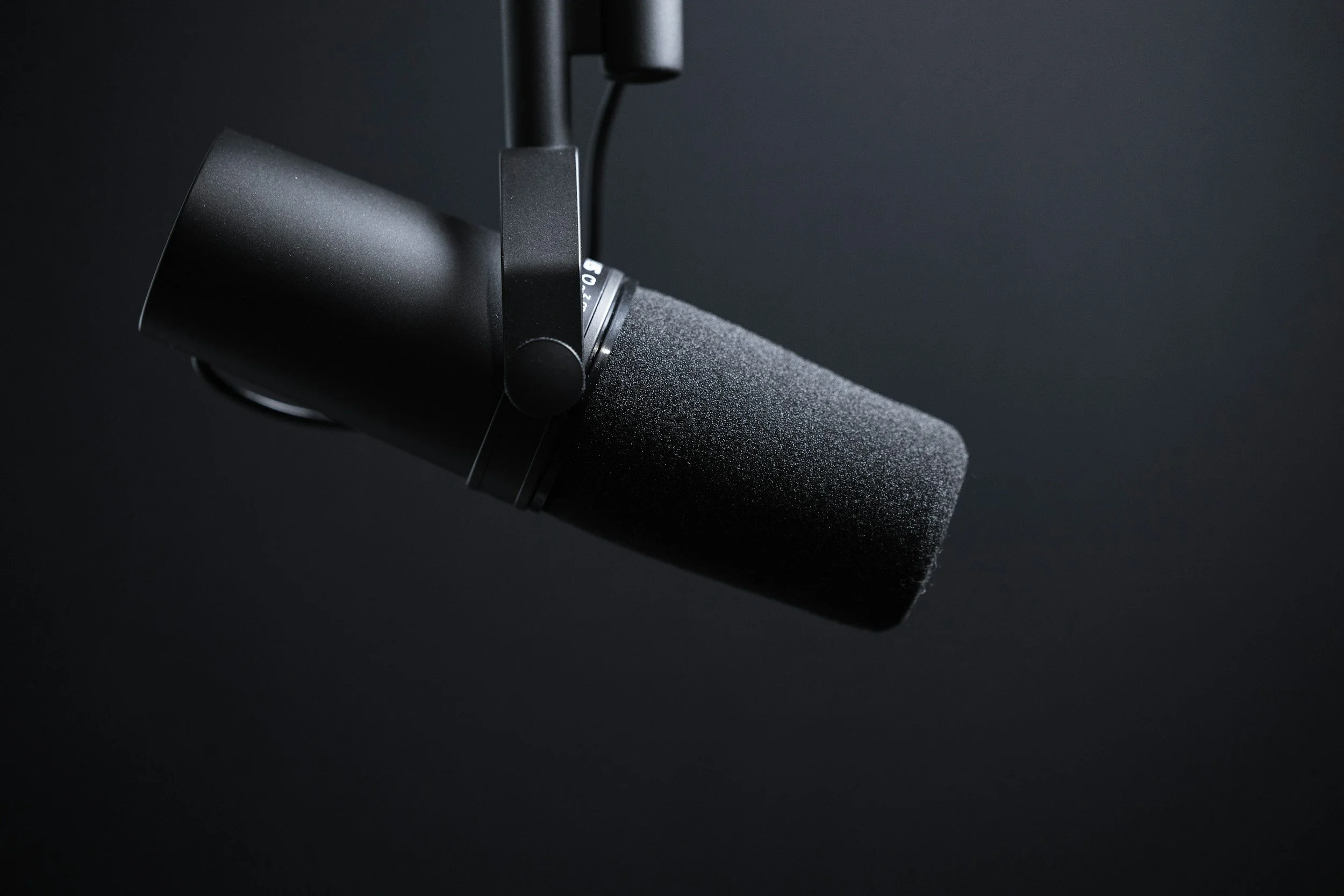
Storytelling, Brand Strategy & the Truth About Podcasting | Madeline Sargent
Listen to the entire episode at this website, on Spotify, Apple Podcasts, or wherever you get your podcasts.
About Madeline Sargent
Madeline Sargent is a brand strategist and the host of She Says It, a podcast dedicated to giving women space to share their stories. She also mentions Madly Creative in connection with her content and strategy work, though its exact scope wasn't detailed in this conversation [to confirm with Madeline]. Through her strategy work, Madeline helps founders and small business owners uncover the values and personal narrative at the heart of their brand, translating that story into messaging that builds trust, loyalty, and long-term business growth.
Her career began with an internship at Alaska Airlines magazine, where her love of travel and writing first converged. She studied at Northern Arizona University and spent six years in Phoenix, including time at the W.P. Carey School of Business at Arizona State University — an experience that shaped her love of interviewing people and drew out the throughline that would eventually become her podcast. Madeline is based in Seattle, where she records, edits, and produces She Says It independently, alongside her brand strategy client work.
[Guest links — website, social handles, and She Says It podcast URL to be added once confirmed]
Content Note: This episode briefly references assault (unspecified nature, not described in detail) and includes a personal story about a fainting/health scare during a recording. Listener discretion advised.
If this brings anything up for you, support is available: 🇦🇺 1800RESPECT: 1800 737 732 | Lifeline: 13 11 14 | Beyond Blue: 1300 22 4636 | Blue Knot Foundation: 1300 657 380 🌍 RAINN: rainn.org | Crisis Text Line: text HOME to 741741 | findahelpline.com
Episode Breakdown
00:00 — Welcome and introduction
00:12 — What Madeline actually does: brand strategy rooted in storytelling
01:36 — Why values are a non-negotiable ingredient in brand trust
02:25 — Case study: rebranding a baker as a community builder and educator
04:16 — Personal origin stories and building a brand without a public "face"
05:37 — Playing to your strengths instead of forcing yourself into social media's rules
08:09 — How Madeline landed on brand strategy and podcasting
10:26 — Common threads across different stories, cultures, and countries
13:29 — Serendipity: meeting podcast guests in real life
16:24 — The real (minimal) cost of starting a podcast
19:23 — What collaboration with other creatives looks like in practice
20:28 — From Alaska Airlines magazine to ASU's W.P. Carey School of Business
22:36 — Repurposing podcast transcripts into written content
24:23 — Editing with care: knowing what to cut when a guest shares something sensitive
29:58 — Building a personal "brand guidebook" to avoid buzzwords
31:17 — Helping multifaceted people answer "what do you do?"
34:47 — Self-care, burnout, and recording in seasons
38:05 — Why Madeline edits her own show, and when to hand content off to someone else
40:17 — What actually goes into producing a podcast, start to finish
46:19 — Balancing AI-generated content with personal creative standards
47:32 — How Madeline uses Claude and Canva in her workflow
50:12 — Second-guessing yourself and finding the balance between AI and your own voice
51:03 — Advice for first-time podcast guests
52:48 — Visibility as a muscle you have to build
56:33 — Melanie's fainting story and the reminder to look after yourself
1:04:23 — Letting go of vanity metrics and valuing real connection over numbers
1:06:42 — Madeline's advice: just start, and tell someone you trust
Key Insights
Brand strategy is fundamentally about storytelling — articulating who someone is and what they stand for in a way that builds real business results.
Values aren't a soft add-on to branding; they're what create trust, longevity, and reputation in a landscape where audiences are increasingly skeptical.
A brand doesn't need a public-facing person to work — it needs to be authentic to the owner's actual strengths, whether that's video, voiceover, writing, or long-form conversation.
Podcasting has a low barrier to entry; meaningful conversations matter more than expensive equipment.
Editing a podcast is as much a human judgment call as a technical one — knowing what serves the story and protects both the guest and the audience is a skill in itself.
Sharing sensitive material on a podcast requires ongoing discernment: what helps the story, what respects the guest's comfort, and what the audience can hold without being overwhelmed.
Recording and editing in seasons — with built-in breaks — is one practical way to avoid burnout as an independent podcast producer.
AI tools can be a useful thought partner for captions and descriptions, but the most resonant content still requires the creator's own voice and judgment to filter and edit what the tool produces.
Visibility is a muscle. Confidence as a host or guest is built through repetition, not innate talent.
Real audience connection — a message from someone who was moved by an episode — matters more in the long run than surface-level engagement metrics.
Resources Mentioned
She Says It — Madeline Sargent's podcast
Madly Creative — Madeline's brand strategy practice
Riverside — podcast recording and AI-assisted editing platform
Transcript
Melanie Suzanne Wilson (00:00)
Madeline, welcome to the podcast.
Madeline Sargent (00:03)
Thank you so much for having me. I'm so excited to chat with you today.
Melanie Suzanne Wilson (00:07)
I'm so excited as well. How do you explain to everybody what exactly you do?
Madeline Sargent (00:12)
That's a great question. I am a brand strategist, and at the core of that I really care about telling people's stories and articulating that in a way that makes sense for the brand and of course, ultimately leads to more business.
Melanie Suzanne Wilson (00:29)
Amazing. It's about storytelling. That is something everybody needs to know because when people think about marketing, advertising, branding, people think of all these other things, right? A logo or the money they spend, something else. How do you guide people to see that storytelling is a crucial part of this?
Madeline Sargent (00:55)
Yeah, that's a great question. I think what I've been coming back to lately is a project that I worked on earlier in the year with a really good friend of mine, right? So I had this huge scope of knowledge about this woman and I knew, like, what a great person she was and all of the things. And I think when you're able to take the message that that person really stands for and who she is and her story and her unique experiences and put that into her business, it showcases a brand that is really unique and special, and people are able to buy into that.
Melanie Suzanne Wilson (01:36)
Something special. Part of this is about telling people what you do differently and what you stand for. Are you saying that values are an essential ingredient?
Madeline Sargent (01:49)
Values are huge. I think especially in today's landscape, right, where social media is a place where we're not sure who to trust, right? It's important to have values and articulate those values to your audience. And I think it's really about building trust and longevity of a brand and their reputation as well.
Melanie Suzanne Wilson (02:14)
Trust, longevity, and reputation. Okay. What are some of the do's and don'ts for all of this, especially for something to be lasting in a good way?
Madeline Sargent (02:25)
Yeah, I think it's when you're building a brand, right? You think about where you started, and then you think about where you're going. And I think part of it is talking to people that have been your clients in the past and pulling patterns from them, too. Like, what do they think about? In this case, she was a baker, so pulling from, you know, your audience and asking them what they like about my baked goods, what they like about working with me and integrating that into the story as well. So it's this whole ecosystem that's built on her values and how customers see her values as well.
Melanie Suzanne Wilson (03:07)
What were some of her values that made her different?
Madeline Sargent (03:13)
Yeah. If you know this person, right, she is someone who builds community. And so that was one of our core positions with her is she's not just a baker, she's a community builder. And she's not just, you know, someone who bakes delicious baked goods, which she totally does, but she's also someone who has a story, right? She is a Jewish baker and her heritage is so important to her. So, also playing that educator was a key component of building this brand and articulating that to her audience. And those are things that make her different, you know, those are things that she really does well and infusing joy into everything. So it was a great case study, you know, in a brand that does things different. And in my opinion, most brands have those secret sauces that make them a little bit different than their competitors.
Melanie Suzanne Wilson (04:16)
The personal origin story, be it family or how someone got to where they are, that is becoming an important way to connect with the humans who are going to buy something, especially in this technological age. However, we still see some people trying to create a brand that doesn't have a face to it.
Madeline Sargent (04:16)
No worries.
Melanie Suzanne Wilson (04:40)
Do you ever see that working where a brand doesn't have a person publicly associated with it? Or how do you see that all working these days?
Madeline Sargent (04:54)
Yeah, that's such a great point. I think that there are so many different ways to tell a story. Just from my perspective of things, what I'm doing with She Says It and Madly Creative, I don't necessarily love to be creating reels in the traditional sense, but I'll do voiceovers or, you know, I'll have my podcast right where I can really connect with an audience.
And it doesn't necessarily have to be video for every episode. So I think it's really going back to the brand owner's values and thinking, hey, like, how can I connect with people and build trust in a way that's really authentic to me and my personal values?
Melanie Suzanne Wilson (05:37)
Are you saying go with our strengths?
Madeline Sargent (05:40)
Yeah, I think it's I don't know about you, but everybody has different strengths and weaknesses. And I think sometimes we can force ourselves into the rules that, you know, social media places on us. So yeah, going with our strengths, I think is super important. And there's ways to test out, you know, content on the internet and seeing how things perform. And I think that's an important part of being a strategist, right? But I think when you're authentic to yourself, and you're doing things in a way and showing up in a way that makes sense to you, you don't have to be on every platform, but being on the platforms that make sense to you, I think, is really important.
Melanie Suzanne Wilson (06:26)
I completely agree. The way I relate to this is that I know I should sometimes talk to my phone for a video because everybody is doing that now. But I don't feel that connection, and the message doesn't flow from me as much as if I was talking to someone. And so I get a lot of content from
Madeline Sargent (06:39)
Mm-hmm.
Melanie Suzanne Wilson (06:53)
The podcast because I'm talking to somebody, and there's also inspiration as well. The voiceover, I want to get inspired by that idea and do more voiceovers. That would help so many brands where maybe some people don't feel comfortable being on a video and they don't see that changing. Do you see that some people simply know they are built differently?
Madeline Sargent (07:19)
Yeah, I totally think so. And I think it's like such a personal thing, right? The way you show up online and the way that you're comfortable online is different than other people, right? And we all have our own strengths and weaknesses, like you said. And I think trying to fit into the box of, my gosh, like I love being front and centre of the camera, I don't think that's realistic for everyone. And
I think it does a disservice to ourselves to try to connect in a way that feels forced.
Melanie Suzanne Wilson (07:55)
Exactly. It has to feel natural. I want to really delve in after this long and find out how did you choose to end up focusing on this specialty? What led you to do what you do?
Madeline Sargent (08:09)
Yeah, so I've always loved to write, and I've always loved to talk to people and I would say that I've never been the loudest person in the room. So creating a podcast wasn't the most natural next step for me, but I've always loved to interview people, and I worked at the W.P. Carey School of Business at Arizona State University and for your listeners, it was
Just a university in Arizona and in the States. And I really loved that experience and talking with really, you know, captivating, smart, talented people. And so when I had the idea to have a podcast, I was like, you know what? Even though I'm not necessarily comfortable being on camera right now, this is such a growth moment because I do feel like women's stories
are so important to highlight. So it wasn't necessarily about me, but it was about, hey, how can I do this project in a way that is true to me and grow and help people hear other people's stories? And I'm sure you relate a lot to that, having a podcast too.
Melanie Suzanne Wilson (09:22)
Yes, I have the same motivation because I barely mention my story. I share my story a bit, but I love giving other people the opportunity to share their truth. It's encouraging. Do you see there's such joy when firstly somebody realises that their story matters?
And also how easy it is to speak up and share what they want everybody to know.
Madeline Sargent (09:53)
Yeah, definitely. And it's so cool too being an interviewer, right? And creating space for people to share their stories. And I would say, like the ethos of my show, right? It's to have, you know, people from so many different backgrounds, so many different experiences, share their story because I think they're all valid. And I think that a lot of people can relate to their stories, and I just think that there's power in that and there's power in having a conversation.
Melanie Suzanne Wilson (10:26)
Yes, I've seen that so much. I'll definitely want to know if you get people from all over the world or locally. I find that wherever we are, we can relate to each other's stories so much.
Madeline Sargent (10:42)
Yes, I agree. I so I've had women from all over the world. I'd love to have a woman, you know, from every continent. I think that would be so cool, right? But it's so encouraging, I think, for me too, because, you know, the internet is a lot of things, right? But this interconnectedness that we have these days is so amazing. I mean, I didn't go to I didn't
go to Europe until I was like twenty-one or twenty-two, but I spent all of my childhood dreaming about other countries and wanting to travel and all of the things and being able to connect and meet people from different places. It's really made me realise how similar we all are and how we just want to chat and talk and all the things that make up the human experience.
Melanie Suzanne Wilson (11:31)
It is such a shared experience everywhere, especially the personal experiences. And we'll look at that in a second. But even professionally, I'm amazed because wherever we are, for example, you are on the other side of the world and you have a different personal and professional story than mine, because we all have a slightly different professional experience.
In the sense that we're all individuals, and yet there's that common thread. I was so glad to hear early on in our conversation how you prioritise storytelling, and probably with a very different context than what I do. But we all have these shared things that bring us together. I'm clinging to that as a key lesson from you because people are so focused on our differences these days. And
Have you seen that there's an opportunity to see what we all have in common to bring everybody to t sorry, to bring everybody together a bit more?
Madeline Sargent (12:37)
Yeah, definitely. I think these women that I'm interviewing on my podcast, everybody's story is different, right? But everybody comes into the conversation like leading with kindness and wanting to have a really deep, thoughtful conversation. And it's really cool because at the end of these conversations, you know, most of these women, or you know, all of these women I keep in touch with, and some of them I've become friends with and started to collaborate with, and a lot of these women aren't in Seattle, right? Like they're I've had a woman from Italy and Mexico, and it's just so it's so cool these days, I think, to be able to do those collaborations from afar and learn about other people, like you were saying, and just kind of see that there are common threads that bring us together.
Melanie Suzanne Wilson (13:29)
We do have the common threads, and you mentioned you're a local people. Sorry. I was nearly losing my voice, but it's okay. You mentioned you mentioned you're a local people. I can relate to that because I was surprised by how my podcast connected me with locals, and it encouraged conversation. In my earliest season, I recorded with Hannah.
Madeline Sargent (13:37)
no.
Melanie Suzanne Wilson (13:58)
And maybe she mentioned she was in the same area. Possibly I knew she was on the coast. And then I went to a meetup, and Hannah was there. I thought, hang on, that's Hannah from the podcast. Those things happen. And it also goes the other way, where I met someone socially, and then she was on the podcast. How does it work for you? Do you ever meet people in real life and say, come on my podcast? Or is it normally the other way around?
Madeline Sargent (14:08)
Ha ha ha
It's both. It's both for sure. I meet women all the time, and we just start talking, and then I'll mention, I have a podcast called She Says It, like I'd love to have you on. And a lot of their reactions are, me? Like, you want me to come on the show? Like, I don't have anything to say. And I'm like, no, like you do have something to say. And that's, I think, a huge part of what I want to foster is that, you know, you don't have to be famous to have something to say. You can just be living your life and have something so valuable to say. I think we all do, right? Like, it doesn't have to be so many podcasts these days, you know, have the celebrity aspect or the influencer aspect to things. And I think that's great. But what I've discovered too is that there are so many indie shows that are so amazing, and the hosts are so talented and the quality is of the conversation is so great, and I just think it's such a cool time to be alive and be able to start a podcast and connect with women in your same area or across the world. It's just so cool.
Melanie Suzanne Wilson (15:41)
It's an opportunity people should be leaping at, in my opinion. And it's so accessible. I will, there are so many questions emerging from all of this. The first one I'll get to in a second is how you run your podcast. Because for mine, I started just because I tracked ideas out there. Who wants training, who wants this, who wants that, who wants a podcast? And I thought, okay, fine, people want this, sure. So I had.
a microphone like this and a MacBook just rolled with it. But how did you set it up, and how accessible is it for you? Because this could inspire people who are considering making their own.
Madeline Sargent (16:24)
One hundred per cent. I think people think that you need to spend a good investment for podcasting, but for me it has been pretty minimal as far as technology. I use my laptop to record. I do have a microphone. It was about thirty dollars on Amazon. It, you know, wasn't anything crazy. And of course, like paying for scoops, sorry, subscription for like Riverside or D script or something like that. But I have recorded an episode right after going on a run and just sat on my bed and used, you know, my laptop to record. And so I think people can put as much money as they want into podcasting, and it doesn't have to be crazy if that's not something that you want to do or can do in the moment, you know? But I think the barrier to entry to podcasting is something that is so great, and it makes it so accessible because I think so many people have stories to tell, like we've been talking about. So it's something that's been amazing, you know. I started my podcast on a little bit of a whim, and it's been great to see what it's turned into with, you know, minimal investment.
Melanie Suzanne Wilson (17:48)
Absolutely. It takes so little to then connect with people from everywhere. And it feels obvious. We've been connecting with the world through the internet for a long time, but the conversations that you get in a podcast, because you're spending an hour or maybe more with someone, you really get to know people.
Madeline Sargent (18:09)
Yes, it's honestly so cool. It's made my life so much richer, I think, being able to connect with people and have conversations, and then you just sort of feel comfortable to talk to them after the recording. I don't know if you've had that experience too, where you just become friends with people, and it's so lovely.
Melanie Suzanne Wilson (18:30)
It is. I have definitely formed friendships on the podcast. And also, it's fun having the off-camera chat. I even recorded remotely with a beloved dear friend who I have seen in person recently and many years ago, to the point where I feel old. It's so many years ago. But even chatting with that person, it was great having those off-camera moments, just being a little bit more candid. And with the new people, though, do you find so, where did that all lead? You mentioned collaborations. I'm curious about that because I have explored collaborations for me; it's not even about where someone is, it's how busy they are and what they want to do, what they want to create. What sort of collaborations have worked for you?
Madeline Sargent (19:23)
Yeah, that's a great question. One collaboration was a workshop on messaging and branding. I worked with a girl named Emily who is a brand designer, and she lives in Mexico, and I'm in Seattle. So our schedules were pretty aligned as far as time zone, which was helpful, but we did a workshop on messaging and branding, and that was really, really a cool collaboration because we got to bring both of our skill sets together to, you know, bring women together, teach people, and I loved that collaboration with her. I think there's so much value of just putting your heads together, working on something and learning from each other.
Melanie Suzanne Wilson (20:08)
Learning from each other, absolutely. And when those specialties complement each other, it's perfect. It really is. So do you want to talk more about the work you were doing before the podcast and how that has informed what you do now?
Madeline Sargent (20:27)
Yeah, definitely. So I started my career off interning for Alaska Airlines magazine, and that merged my love of travel and writing together in just like a perfect way. After that, I moved to Phoenix. I went to school at Northern Arizona University, and I worked for six years in Phoenix and really enjoyed my time there. One of the places I worked was the School of Business at ASU. And I think that was where I really discovered my love and passion for interviewing people and learning about their stories. And, you know, life is so funny, I think, because that job, you know, was four years before, four or five years before the podcast, right? And so I just didn't even think about connecting those dots. But when I finally had the idea for the podcast, I was like, this really, really makes sense. And I think there were so many moments in my life that led to a butterfly effect or were a butterfly effect of creating the podcast.
Melanie Suzanne Wilson (21:39)
What sorts of interviewing were you doing back then?
Madeline Sargent (21:43)
Yeah, there was a range. There was alumni interviews, there was student interviews, there was faculty interviews, and then writing stories. So most of the interviews weren't turned into audio conversation. So definitely a bit of a different approach than podcast interviewing, but I think I had a really solid foundation from that experience.
Melanie Suzanne Wilson (22:09)
Absolutely. And a couple of things from there. I'll be curious about the journalism angle in a second, but it's worth noting that so you use River Aside as well. We do get written content from podcasts, and that is a value add that people need to keep in mind. Whether they use River Aside or something else, I'm not currently paid by Riverside at all to say this, but
Madeline Sargent (22:34)
Yeah.
Melanie Suzanne Wilson (22:36)
Because the AI and various tech can give you the transcript and then the summary and other things, and you instantly have these quotes, that is content beyond sharing a video and the audio.
Madeline Sargent (22:49)
One hundred per cent. It's so nice to be able to have that. And I'd love to like dive into your editing process too. Sorry, I'm asking you a question. But the editing process of podcasting is so interesting. And I feel like I've been able to pull from my experience at WP Carrie, right, with like making like decisions on editing and stuff or thinking about what I want to cut and what I want to not cut. And I feel like everyone has a different process with this. So I just think having the tools and technology within Riverside or D script or whatever editing service you're using is so helpful these days.
Melanie Suzanne Wilson (23:30)
It is for the editing. Look, I see a club potential that I could do with someone who understands how to tell stories with other people. And the reason is that there are some sensitivities. Look, the technology will take out the gaps, the pauses.
It can even remove the filler awards with a click of a button. That blows my mind. That's great. I mean the accuracy, but there's a bit more to the edit and the content selection. Personally, I barely chop anything. Sometimes I'll just chuck a conversation on how it is. However, let me know if you've seen as well; we're dealing with people who sometimes share very personal and sensitive topics.
Madeline Sargent (24:00)
Yeah.
Melanie Suzanne Wilson (24:23)
And very occasionally I'll have someone saying, ⁓ look, I really shouldn't have talked about my kids. This went too far. I had someone who talked about her parenthood and then decided, okay, this shouldn't go to the world. Or people talk about trauma. And of course, there's the old disclaimer we can put onto things, but also it's about being delicate with that.
Or knowing what to share about someone's work. Did you find that with your communications background, you had a bit of a sixth sense, an inner knowing for, okay, what needs to get cut, firstly, for the guest to feel comfortable, or even with how you shape the conversations, but also then with the audience?
If there's anything you know the audience just won't quite understand, or it could be going a bit too far for the audience, does that ever happen?
Madeline Sargent (25:23)
Hundred per cent. I up until probably about a month ago, all of the conversations I felt were not surface level, of course, but we were talking a little bit more about business types of discussions. But because I've slightly shifted, you know, the show and where I want it to go, and I'm sure you can relate to this too, but season by season I kind of have different themes for things.
But within the last month, I've had some really, really compelling, amazing women with wonderful stories on the podcast. And one of them brought up a sensitive issue with assault and whatnot. And within the recording, she mentioned, you know, I don't know if you want to share this with your audience. And I said to her, you know, I don't need to do that. I don't think it's gonna, you know, move the story along. So I'm constantly thinking, will this add to the story or will it take away from the story? And since I'm not, you know, talking about those types of topics every week, I don't want my audience to necessarily have a my gosh moment. So if there's something that is a little bit delicate, right? It's a conversation with my guest and
Before she even mentioned something, I was thinking, you know, I don't know if this needs to be in there. So I think I do have a little bit of a sixth sense with this kind of stuff, but it's hard, right? And I also think that as a podcaster, I'm not a journalist, you know. And I think there's been moments in my career where I have been a journalist, but I'm not trying to come at these episodes with any sort of angle, right? Like, I want the guests to feel comfortable to come on and share. And if there's anything that they don't want to have, you know, be shared, then that's okay with me too.
Melanie Suzanne Wilson (27:20)
I love how we are digging into the big questions here. I can tell you, I learned from some journalists years ago at a time in history when people were wondering globally what's going to happen to that profession or that function of journalism. But also, I don't think everybody knew that podcasting would become what it became now.
So that has gone in an interesting direction. And where that leads with what you are saying, is that I believe that people need to learn that intuition that you and I have learned in some form. It's partly about holding space. So you learned that within the academic space and within the journalistic space, I'm seeing such a parallel between holding space in a podcast.
And supporting a community. And this is where people need to learn from what we know. Because I just I guided countless and supported countless people presenting a speech. And then every so often it's the same sort of thing, whether it's a group in a community or a podcaster or something else, occasionally someone will be. I don't know if you've ever seen this. I guess in that example you gave where someone is outright completely.
Telling it how it was in great detail. And you need that discernment to say, " Is this going to force the audience to live through your trauma to the point where they will need to recover? What is that doing for them? There's such an angle to that. So, beyond nurturing the guest, making sure they are comfortable, they need to keep in mind what it does for the audience. I was so lucky that I recorded with a former presenter, a TV presenter, who talked about her trauma. She barely described the trauma, but you can get what she's saying. You can do you agree, you can say a lot without saying much.
Madeline Sargent (29:26)
Really can, and I think that goes back to right being a guest on a podcast. I think those are different muscles than being an interviewer, and it's important to be able to communicate your story effectively, which I think you can, and I have this new conversation segment that I'm gonna have on my podcast called Say It Simply, and I think that there is an art to saying things simply, getting the
point across and not diluting the message too.
Melanie Suzanne Wilson (29:57)
Not diluting it. Okay. I hope you're enjoying going with the flow because we're flowing in all directions here.
Madeline Sargent (30:05)
I love
it.
Melanie Suzanne Wilson (30:07)
Getting the point across without diluting it, the thing I'm keen to ask about is how people give a very simple phrase, very short phrase or explanation of something without it becoming buzzwords?
Madeline Sargent (30:21)
That's a great question. I just recorded an episode about this that's gonna be out on Sunday, and it's focused on having a brand guidebook, right? So every time you go on a podcast, every time you create a piece of content, every time you have to say something simply, you know who you are and what you stand for, and you can pull out those words, and it's less about buzzwords but more about aligning those words to who you actually are and your values.
Melanie Suzanne Wilson (31:00)
Who you are and your values, and also what you give, what you provide. I wanted to know if you've seen people needing to figure out how to answer the essential questions, like what do you do?
Madeline Sargent (31:17)
Yes, that is a great question. I think people struggle with it. They struggle with it a lot, right? A lot of the women that I work with, right, they're multifaceted, they're so capable, they have so many different things that they can do, right? But I think you have to look at who you're talking to in the moment to be able to describe yourself in a way that makes sense for that audience.
Melanie Suzanne Wilson (31:42)
Translate it. Absolutely. And I wanted to know how you sum up what you do so we can inspire others. The comparison I have in my head is that people ask what I do. And I could mention my day job. I could mention that I love to implement content. And that's a whole separate thing because AI is taking over that stuff. And it's and I'm not the best at it, but I enjoy it. But the podcast becomes the thing people cling to. And so there's an identity thing we're exploring here. And I'd love to know how you handle that. Because I'm wondering if you do something else or only the podcast now. Do you tell people I am a podcaster to say it American? I'm a podcaster, or do you say I may this, I may that? People don't want to know, do you say people don't just want to know what you do, but what you are?
Madeline Sargent (32:29)
Yeah.
Yeah, yeah, yeah, yeah. I do more than the podcast, and not more than, I do the podcast and other things. struggled, you know, coming up with what my identity is, but at the end of the day, it's telling people stories and translating that into words that audiences understand and connect with. And that can be through a podcast. That can be through client work. And so I think it's hard for people to think about themselves in those simple terms, but I think there always is a theme over someone's life about what they're really good at and what they do, but also who they are.
Melanie Suzanne Wilson (33:26)
What you do and who you are. Absolutely. Absolutely. It's about what you provide. I like how you explain what you provide for people, but also how you do it. Because I've seen, I got a lot of insight into this when people were pitching to be on this podcast. And very, very rarely, you'll see that someone will say, I help people to transform their lives, find their confidence. Okay, but what do you actually do? Do you see there's a need for a bit of a balance there?
Madeline Sargent (34:03)
Yeah, there's definitely a need for a balance there. I think that it's really about the impact, right? It's about the impact of the work and how that is articulated, and then how it's completed, I think.
Melanie Suzanne Wilson (34:18)
Absolutely. Absolutely. So I like asking about self-care on my podcast. Good, good. And I'm curious, do you find yourself juggling a lot? Do you find yourself preventing burnout in various ways? And even running a podcast, we can explore the specifics here. Often I'm talking about people or with people who do totally different...
Madeline Sargent (34:25)
I love that.
Melanie Suzanne Wilson (34:47)
Work, but with the podcast, do you batch loads of recordings at once? Do you record one hour a week? What do you do for even recording? How do you pace out your time?
Madeline Sargent (35:00)
Yeah, it is such an important topic, I think, to talk about the backstory and like the behind-the-scenes effort it takes to create a podcast because I don't know when I started if I knew how difficult it would be to balance all of it. And I don't know about you, but creating this podcast, there isn't a day that goes by where I'm not thinking about how I could do it better, right? Or how I could make it better for the audience. And so my process has been to have seasons where I'm recording, ⁓ have seasons where I'm editing, and then have a season where I'm like taking, you know, a month break from the podcast and not, you know, putting out any new content. And I think that allows me to have creative space. It allows me to not get burnt out. And it also kind of allows me to think in seasons, and like I was talking about earlier, just like themes that I want to explore on each season.
Melanie Suzanne Wilson (36:10)
How many episodes have you done now?
Madeline Sargent (36:13)
I am at 35, but I have about forty-three; I have ones that are drafted out to about forty-five. So yeah.
Melanie Suzanne Wilson (36:25)
Nice. As in, they've been recorded, and they're awaiting to get processed.
Madeline Sargent (36:32)
Yep, waiting to get processed, and I'll move things around based on my schedule, or you know if I'm taking a little bit of a vacation and stuff like that and just kind of making sure that the order makes sense and all that.
Melanie Suzanne Wilson (36:47)
Absolutely. It would be I trust it would be easier for you to do your own edits and so on. And we'll explore that in a moment so people understand finally what actually goes into a podcast. However, do you work with people? So do you do content work outside of this? And do you see some people who benefit from getting someone else beyond themselves to handle the content?
Madeline Sargent (37:18)
Yeah, definitely. I do everything for the show by myself, which can be a lot, but I love it. And I think that I know some podcasters producers and all of the things, and eventually I would love to have help with that stuff, but I think as an indie podcaster, it takes a while to get to that point. And I don't know how you feel about this, too, but
There is like a love of editing my own show because I do feel like I kind of know what I want to say and what I want the audience to hear, and I care about the community and the listeners. So I'm kind of always thinking, How can I, how can I, you know, protect that relationship too?
Melanie Suzanne Wilson (38:05)
Protect the relationship. Absolutely. You have that care, and you want to express that care by doing the work directly. The people who you work with though with so the client work is the client work content.
Madeline Sargent (38:25)
Yeah, the client work is content, it's rebranding, it's messaging and identity work.
Melanie Suzanne Wilson (38:31)
Absolutely. And do you see those people needing to take the leap and trust someone else to handle their brand, their baby, their thing that they have grown instead of trying to handle it all themselves?
Madeline Sargent (38:48)
Yeah, that is such a good question. I've never really thought about it that way. I love that so much. I think that they just have a different sort of brain with things. You know what I mean? Like I like I've said before, I think that I just love this type of work and am so passionate about the story and having it be articulated in such a way that makes sense for the brand and to make the brand better, and to bring in new clients and all of the things. So when I talk to clients about this and my process and all of the things, I think that they can see that passion and that strategy mindset, and they're okay with handing it off.
Melanie Suzanne Wilson (39:31)
That is so good. That's great. The strategy is a part of what's needed for sure. In the podcast space, the reason I asked it that way is because I know that some people like to talk and they're happy to. I see people posting on social who are curious about setting up a podcast, but the back end on some of these things would be an extra thing. And I do trust that.
Some people out there could turn to someone like you to say, okay, I want to have the conversations without having to do the back end. Or we can also branch off and talk about how there's a perception with podcasting that you just talk and then it's magically online tomorrow. So let's actually tell people the reality. What do you actually do to get a podcast from the recording to the world?
Madeline Sargent (40:17)
Yeah.
Yeah.
Yeah, my goodness, great question. ⁓ so much research. So much from like, the time of getting a guest on the show and having those conversations and booking the guests to having them come on, lots of research and just making sure I have questions that I want to ask them, understanding their story, and I think just making sure that I'm prepared. But I also think that different hosts have different personalities, right? Like, we don't all do this the same way. And I would say that my personality is a little bit less like talker and more listening, more just like having those conversations and kind of guiding the conversation.
Melanie Suzanne Wilson (41:18)
Just guiding it, guiding it, absolutely. So the editing afterwards- how does that take more of your time? What does that side of it look like for you?
Madeline Sargent (41:32)
Yeah, I will use Riverside to kind of do like a first pass edit, but I listen to the podcast all the way through and do it manually to make sure that the story arc or that I'm just not cutting things that don't need to be cut because I think sometimes the technology will cut certain things out that don't need to be cut out. I just like to I like to just listen to it with my own ears and kind of make decisions first. And I probably spend a little bit too much time before publishing to make sure that it's where I want it to be, but I always try to keep the integrity of the story and the conversation that was had.
Melanie Suzanne Wilson (42:20)
Interesting. You find that the technology chops more than it needs to.
Madeline Sargent (42:26)
Yeah, sometimes I think that I just have like a very specific vision and goal for some of these episodes. And so I just maybe want to make sure that I'm giving it a listen first.
Melanie Suzanne Wilson (42:40)
Absolutely, absolutely. The lesson there is even if AI is doing a lot for us, we can still give our human opinion into the output, and we can still use our human discernment in all of this. We don't have to just say, well, the AI decided this, and that's that.
Madeline Sargent (43:05)
Hundred per cent. I love that point. I think it does a lot of things well, right? But also, I like to just give that one pass of listening to make sure that what I'm hearing makes sense and all of that.
Melanie Suzanne Wilson (43:20)
Absolutely. I found that sometimes the AI was enhancing the sound too much. So for those who haven't seen it, there's a simple button and a sliding bar to control their audio edit, which is amazing because I did years ago do edits like that on Adobe. I don't know if you did that as well from scratch. And that's so different.
But on Riverside, it's that simple, but sometimes it over-edits. And then it's just a matter of taking it back a little bit. So we can tell the AI, okay, steady here, let's do a little bit less.
Madeline Sargent (43:47)
Yeah.
Yes, it's fascinating. It it really is cool too. Like, like you were saying, sometimes you think the sound is gonna be perfect when you use AI and gosh, sometimes it really it it makes it it over edits it for sure.
Melanie Suzanne Wilson (44:20)
It does, it does.
And for the reels, I know we're getting so technical here, but why not? I have a feeling you like the technical side. And that's the thing. I believe we can enjoy getting nerdy with some of these technical things. And it's not even about being the best to add it. I don't identify as being the best at content, but
Madeline Sargent (44:27)
I love it.
Yeah.
Melanie Suzanne Wilson (44:46)
Content flows when you have conversations, when you're talking with people. And for you, do you have a specific type of social content that you want to make, or do you let the technology do its thing? And, just because, for those who don't know, you literally click a button and the tech will give you a whole bunch of reels and everything else you need. How do you balance that and the things you want to make?
Madeline Sargent (45:06)
One hundred
One hundred per cent. I don't know about you, but I am such a long-form content girl. Like I love a I love editing the podcast. I love all of that. But when it comes to reels or clips, it's hard. And it's not like a skill set that I have explored as much. I let the ki I let the tech do its thing, but it's something that I would love to get better at and explore, like more of the aesthetics of that. But also, it's like when you're I think this is important for the audience to understand when you're doing it on your own, there's only so much time in the day. And you can't make everything perfect, right? And you can only allot a certain amount of time to each of these tasks. So it's a hard balance because, in my perfectionist brain, I would love for some of the content that I'm producing to be just a little bit better, right? But it's hard to do it all perfectly. And I think that's where you have to give yourself grace and just allow for it to be imperfect.
Melanie Suzanne Wilson (46:19)
Absolutely have compassion for yourself because there are only so many hours in the day. And with the content, with the social content as well, I'm curious about whether you use any other AI because I'm sharing some of my tricks. Why not? I feel old-fashioned with how I do it now, but I can tell Claude to draft a whole lot of written content, whether it's pulling verbatim quotes, and I have to tell the AI, verbatim quotes do not change it; otherwise, it may paraphrase. But I can tell it to do that. And then, if it's understanding and connecting well, then it can put something into a Canva template. That can happen. But I'd love to figure out one day how some people get the robots to outright write it, put the writing into a design and then push that onto the internet without anyone having to do anything. So I don't, I'm not quite there, but I'm halfway there. I'm curious, do you do anything like that? What other tech do you experiment with beyond the podcast app?
Madeline Sargent (47:32)
Yeah, I use Claude in a way where I'll write what I want to write for captions or podcast descriptions, episode descriptions, and I'll just I I use it as a thought partner in that sense and just try to edit anything down that I don't agree with or all of that. Yeah, it's just helpful to have it that way in my opinion. I'm a big Canva girly, so I use that a lot. Yeah, I would say that I resist a little bit of doing too much with AI, but I definitely do use it.
Melanie Suzanne Wilson (48:13)
Okay, you balance it.
Madeline Sargent (48:15)
I try to, I try to.
Melanie Suzanne Wilson (48:17)
And especially as a storyteller in various professions, you know what you want and how you want to tell a story. Do you see that most people would be able to tap into their storytelling instinct, even if they haven't done the career that you have done? Or do you see some people who really need the help and need to just hand it over to the tech?
Madeline Sargent (48:44)
Yeah, I think a topic that I've been exploring lately, and I love this question, is how we all do second-guess and kind of filter ourselves sometimes, and how that can be like a hard thing to do, right? When you're trying to tell a story, and maybe you are a small business owner, and you have your own brand, and you don't have my background necessarily, and you're sort of trying to do
Melanie Suzanne Wilson (48:56)
Mm.
Madeline Sargent (49:12)
All of this by yourself, I think it can be really hard. And what I've seen working with clients is, and I don't know if this is because of using more AI or not, but maybe leaning on the tech to create a good caption and then second-guessing that caption and maybe reaching out to me for help, I think.
I think it's really hard because there's so much information coming at us, right? And s when you use, like, Claude or something and you say you prompt it and ask, hey, like, how can I make this caption better, or how can I write this caption as a small business owner or as a baker or whatever you are, right? It's hard because you're getting that opinion.
And you're maybe not listening to what you would say. And I try to help clients with the balance of that.
Melanie Suzanne Wilson (50:12)
Balance both. Absolutely. That's a key lesson we are getting from this conversation. Balance the tech and the human discernment.
Madeline Sargent (50:22)
Definitely. I think it's so important. I it's a conversation I'm constantly having. So I think it's good to it's good to think about.
Melanie Suzanne Wilson (50:33)
Absolutely. Let's spend the last five or ten minutes of the episode exploring if someone wants to talk on a podcast and they haven't done that before, maybe they haven't done a lot of speaking in other forms, as in speaking to audiences, then what can someone do to feel comfortable, feel prepared, and
Just dive in before they feel ready, even.
Madeline Sargent (51:03)
Yeah, I love this question because, to be honest, I am not someone who has extensive podcast speaking experience. This is probably my third or fourth podcast that I've ⁓ guested on, and it's a skill that I'm exploring. And I think with starting she says it right, I made a promise to myself to start doing things that are uncomfortable, and I think that's the best way to learn and you don't have to be perfect, but I try and you know, I I wouldn't say that I'm like an expert in speaking whatsoever, but to just have a couple of talking points that I want to articulate and that I know the audience will connect with and I think it's it's hard, right? Because speaking and talking about your message is very, very close to being a podcast host, but
It's different. These are all different things, right?
Melanie Suzanne Wilson (52:03)
Absolutely. I found that as a host I have to stop and listen a lot more than being a guest; it's your time to talk. And so it's about saying less, but still saying the right thing, having those questions. Being a guest, it's your time to shine. Absolutely.
Madeline Sargent (52:27)
Definitely. And I think that there is a conversation that is important to be had here because I don't know if when you're first starting off doing these things that are new, right? The ability to want to be visible is a muscle that also has to be flexed.
Melanie Suzanne Wilson (52:48)
Ooh, good one, good one. I keep overlooking this, and I'm glad you brought it up. For my context, and I'm curious, I'll ask you whether you did anything public in your early life. For me, I was I learned public speaking a tiny bit when I was a teenager and 19. By the time I was 21, it was routine.
Every other week, I go and present something, and it's what you do. Just like every other day of the week, you have to put the garbage bin out. And on this day I do a speech. It was just what I did. But along with that, very quickly was the social media side. Of course, in a very different technological era, but I often take for granted that other people didn't make that a routine.
Madeline Sargent (53:24)
Yeah.
Melanie Suzanne Wilson (53:45)
I make my coffee, make my toast and then I do a talk. So how do you guide people to be comfortable being public?
Madeline Sargent (53:53)
Yeah, that's a great question. I have been thinking about ways, right, to expand my services. And one of the things I think is so important is having the women that, you know, are getting a rebrand or working with me to come on the podcast, right? And share their stories. And in turn, that helps them with having, you know.
A bunch of different content and also like becoming more comfortable being visible. And one of the most amazing transformations I've seen is working with that same client, who is just my case study for this type of work, because we worked together. We started with a workbook. I asked her questions about her brand, her business and her values, and all of the things.
And by the time we were done working together after seven months, I saw just the biggest transformation in her and her confidence. And that culminated in her coming on the podcast and just seeing how she was more comfortable talking about her story and her business, and you know the journey that she started five years ago before she rebranded was really cool. And I think none of this can be done alone, right? Like, we have to have
Especially as women, like other women who believe in us, I think that can help so much.
Melanie Suzanne Wilson (55:17)
Yes, women, and I wanted to broaden this. This podcast is for anybody who is looking to look after themselves and do great work. I agree so much with your point that you need someone to believe in you.
Madeline Sargent (55:32)
Yeah, I don't think that I would be, you know, where I am with this podcast if I didn't meet people along the way who were like, I love what you're doing. And I don't know if you relate to this at all, but before I started the podcast, like an hour before I pressed, you know, publish, I was like sweating. I was like, my goodness, I don't know if I can do this. I don't know if people are gonna like it.
And that goes back to me, as you know, a kid. I was always someone who didn't like public speaking, who got very nervous when she had to read in class. And so this process has been such a cool transformation in a way of confidence. And of course, you know, as humans, we're never all the way there. And there's so much to learn. But I think, yeah, just having people alongside you while you're doing things that are out of your comfort zone is really important.
Melanie Suzanne Wilson (56:34)
Yes, yes. It is so normal and common for people to feel scared of putting themselves out there. I'll tell you what. For so many years, until sometime last year, I told people speaking to an audience won't kill you. And I still believe that in itself is true. I mean, I heard stories that once or twice over the decades.
Someone would feel physically sick and throw up, vomit. But I think that's so rare. I don't think that happens a lot, but that's the inner anxiety. But I want to add this on that I didn't years ago. Okay. Talking and putting yourself out there won't kill you, but other things could. And I wanted to know if any of this resonates for you. Firstly, for me.
I was convincing myself that I didn't need to. Okay, I'll say this very carefully. I was in a moment in my life, very shortly, where, because of life or whatever happened, I fainted during a podcast recording. I take so much responsibility to say.
Food is a priority for me, but also I don't know if maybe there was a hormonal moment. Who knows what was going on? But literally, I was recording, and I haven't fainted since then. It's been months. I hadn't fainted in years. This just happened. I also my MacBook on a shelf higher because I liked the angles. I was standing instead of sitting. I was talking with a Texan philanthropist.
And then, because it was recording, I have a video of me going white and passing out. So yeah, look, putting yourself out there won't kill you, but if you don't look after yourself, then something could happen. And also, to be honest with you, and it's hilarious I'm saying this on camera, I do get scared of personality politics when I know I have a good intention and I just want to share everybody else's truth.
Madeline Sargent (58:29)
Ha ha.
Melanie Suzanne Wilson (58:51)
We've all heard at least of a story where someone got trolls, whatever. And so, look, things will happen, but do the things to let me know if you agree. We can do things to look after ourselves. But in a way, talking publicly, especially when we have a good intention, do you think that's in some ways the easier part?
Madeline Sargent (59:12)
Yeah, I think so. I think so. It's like because I know that I'm not doing this in any sort of like negative or nefarious way or to like get more famous, which I mean, obviously if that's your goal, that's not a bad thing. But because it's so aligned with my vision and my values and how I want to help women, I'm like, okay, like
I can do this, right? Like this is what I feel like I'm meant to do at the moment. And I think that helps so much. If I was just, you know, going on podcasts to talk about myself and there wasn't really a purpose, I think I would have a harder time. But even now, it's like I feel like I've gotten, you know, less nervous as the time goes on. But it's a vulnerable thing to be on a podcast and to share your story. And I think
I give so many people credit for that. And in that moment, I'm sure when you were on the podcast too, like it was probably just like, no, but I think most people or hosts handle that, you know, in a really respectful way. So
Melanie Suzanne Wilson (1:00:21)
Absolutely. People have compassion. And that's something we can see on both sides. Whether with self-care, even I did a guest swap with someone last year where we both talked on each other's shows. And I was able to say, look, I think I need some pasta for a moment. And we just took a bit more time before the next recording. When you're collabing with the right people, when you collaborate with the right people or record with the right people.
You and I know, okay, we're human beings, we're doing what we can. So the audience has compassion. And do you find that compassion from the right audience will add to someone's confidence?
Madeline Sargent (1:01:01)
A hundred per cent. Again, great question because the women that I'm talking to on my show, I think we share that same level of compassion. I think normally, and I'd love to know your thoughts too, like the guests or the host, I feel like sets the stage for the audience and kind of is helpful in like
Hey, this is how I want my show to be, right? So I think that that's so important. And I loved your question earlier about, you know, self-care while you're doing all of this stuff. I think it's so important to have moments where, you know, you step away from this work and you're not thinking about it because I think it can get really overwhelming if you don't take care of yourself.
Melanie Suzanne Wilson (1:01:51)
Absolutely. What type of stepping away, which parts do you step away from to have a breathing moment from it? Is it the technical side? Is it the overload of having a lot of conversations? What part is it for you?
Madeline Sargent (1:02:05)
Yeah, I think it's social media. I think social media, if I'm on it for too long, if I'm posting, you know, every day, or a lot of the conversations that I have with women are through Threads or through Instagram. And I love talking to them, but then I'll find myself like scrolling for a bit too long and just overthinking like how everything is going. And I'm like, no, this isn't healthy. It's summertime in Seattle, and I need to get outside and go on a walk or go on a run or something like that to get, you know, my head right.
Melanie Suzanne Wilson (1:02:41)
Absolutely. Social media, that's something we need to keep in mind. And everybody can relate to that, whether they will talk on a podcast or not. And it's just how humans are and how we get addicted to devices, and we get absorbed in what other people are saying. I find myself looking at things: this person saw this, that person saw this, and I am reminded through what you are saying. Honestly, you are reminding me of something I need to do to step back and remember what other people are doing at a distance doesn't always matter in a way that should affect your peace. That's a great way to put it, I think.
Madeline Sargent (1:03:25)
Yeah, it's such an important point. And I would love to just be really real and honest for a second, right? I think that's an important part of and a responsibility too of coming on podcasts. I think that there can be when you're building something publicly and you post something on social media and you don't get as much interaction on a post or, you know, on a story or something, a real like, ooh.
Did I do something wrong here? Is this a personal thing? But I think that is just being way too hard on yourself. And I think that's something that I want to help women with, or at least have conversations about, because I think that there's a lot of comparison that goes on on social media and a lot of like metrics-based thinking. And
I don't think that, you know, we have, you know, the algorithm is such a beast, right?
Melanie Suzanne Wilson (1:04:23)
It is, it is. And I truly think we need to do a part two sometime. What I wanted to say about that is goodness. Internet, internet, internet. What have we all done to each other, honestly? People are going to okay, you're talking about the numbers. The internet has trained us to believe that particular numbers are great. And look, you want to reach people. You're putting a message out there. That's great.
I like the posts I see from other people where it shows someone saying, I only got 200 views on this, and then what 200 people in a room would look like. We take it for granted. And I can tell you, look, I have some content that will get hundreds looking at it, and then other content that will get low numbers, but then I'll have some people telling me they loved this episode. I connected with this. And do you find as well that you need to appreciate the individuals who are impacted by what you are doing instead of just the numbers and the masses?
Madeline Sargent (1:05:35)
Yeah, that is something that just sparked something in me, right? Because it's like you look at inboxes, right? And you look at the people you're talking to and the conversations they're having with you, or I've never met you, but I really enjoyed this episode. And
How cool is it to take the time as a human to reach out to someone who is spending all this time creating a show and being like, " Ooh, I love what you're doing. Like, that is so kind. They didn't have to do that, you know? And so that's, I think, a great paradigm shift when you're feeling like, ooh, is is this is this doing anything? Or like, gosh, social media today has not been doing how I wanted it to do. And
It's so much more rewarding to think about the relationships that you're building and not, you know, the likes you're getting on a post.
Melanie Suzanne Wilson (1:06:30)
for everybody who is listening, if you are wanting to put yourself out there or you know that you need to put yourself out there, what is one thing everybody can do to take the lead?
Madeline Sargent (1:06:42)
This is something that I've been saying so much lately. It's just just start. And in the starting, you learn so much. And have someone that you can talk to about this idea that you want to start. When I first started the podcast, my two best friends that I've had for 20 years, I had them listen to some of the episodes.
And without their friendship and kindness, I don't think that I would have started it. So say it, start it, do the thing, and also ask the people that are important to you to to help.
Melanie Suzanne Wilson (1:07:17)
Madeline, thank you so much for the insights and thank you for being on the podcast.
Madeline Sargent (1:07:24)
Thank you so much for having me. It was amazing to talk to you.
Melanie Suzanne Wilson (1:07:27)
Thanks.