
Podcast Episode: Janeen Sonsie on Reinvention, Corporate Training, Personal Relationships, and Building a Life From Scratch in France
Episode Overview
Janeen Sonsie talks with Melanie Suzanne Wilson for a wide-ranging, unusually candid conversation that moves from the practical logistics of relocating a household across the world, through a run of profound personal loss, into relationships, self-worth, and the "masks" we wear — before landing on Janeen's real professional focus: people dynamics, communication, and why teams and relationships function the way they do. Along the way, Janeen shares a near-fatal cardiac diagnosis, the business failure that preceded it, and the corporate gender dynamics that shaped much of her career.
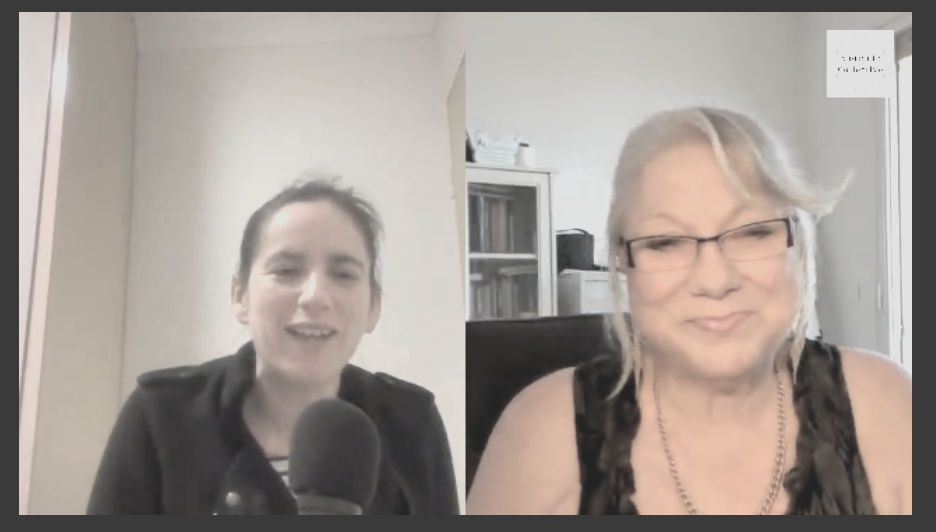
Listen to the entire conversation on this website, Spotify, Apple Podcasts, or most major podcast platforms.
Show Notes
⚠️ Content note: This episode includes candid discussion of parental death (dementia and stroke-related decline), pet loss, a near-fatal cardiac event, relationship endings, and workplace gender discrimination. Support resources are included below
Table of Contents
Guest Bio
Janeen Sonsie is an Australian-born breakthrough coach, corporate trainer, and community builder based on the French Riviera. After a long career spanning IT, sales, marketing, and corporate training — including delivering strategic selling and business relationship training across Asia-Pacific to companies like Cisco, HP, Microsoft, and Oracle — Janeen relocated to France in 2018 to pursue a lifelong dream. She founded and administers the Expat Women in France Facebook group, a free community of over twenty-one thousand members, alongside a paid Entrepreneur Club for expat solopreneurs. She is the creator of The Reinvention Journey, a twelve-month coaching program for women navigating major life transitions, and now works primarily in leadership and communication training within the yachting industry on the French Riviera, including with Blue Water Yachting in Antibes.
[Placeholder — please confirm current program names/branding (Entrepreneur Club vs. any earlier naming), and preferred bio wording, before publishing.]
Episode Overview
Janeen Sonsie joins Melanie for a wide-ranging, unusually candid conversation that moves from the practical logistics of relocating a household across the world, through a run of profound personal loss, into relationships, self-worth, and the "masks" we wear — before landing on Janeen's real professional focus: people dynamics, communication, and why teams and relationships function the way they do. Along the way, Janeen shares a near-fatal cardiac diagnosis, the business failure that preceded it, and the corporate gender dynamics that shaped much of her career.
Episode Breakdown
Timestamps are approximate and should be confirmed against the final edit before publishing.
[00:00] Introduction to Janeen Sonsie
[00:15] Building the Expat Women in France Facebook group and the Entrepreneur Club
[02:21] Using the Skool platform for community building
[03:53] Is it easier to build a business in other countries?
[06:12] The logistics and cost of relocating an entire household to France
[10:33] The real story behind the decision to move: a channelling session and a turning point
[13:20] Racing the clock: knee surgery, visas, and moving at 57
[16:33] Arriving in France just before COVID
[17:48] Losing her cat, mother, and father within the same year
[18:33] Her relationship with a partner twenty-seven years younger, and its ending
[20:55] Reframing relationships: commitment without assuming "forever"
[26:44] Reflecting on whether she has ever felt truly, deeply loved
[28:28] Why some men take longer to grow emotionally — and the "male loneliness" gap
[31:47] The masks we wear, and why women dominate personal development spaces
[34:00] Janeen's own criteria for a future partner
[38:23] Melanie on choosing what to share about her own past relationships
[43:15] Authenticity, vulnerability, and standing out in the age of AI
[47:39] Career background: computer science, IT, and an unplanned path into training
[50:12] Workplace gender discrimination and being underestimated
[53:04] Being told she's "too harsh" — and the difference between intent and impact
[58:27] A difficult childhood memory and its echo in Melanie's own life
[1:01:00] Career path from corporate training to founding a business in France
[1:03:17] Three failed attempts and roughly 40,000 euros lost building a membership platform
[1:04:59] A near-fatal cardiac diagnosis: the "widow-maker" artery
[1:08:42] Letting go of a business that was costing her health
[1:11:00] Pivoting into leadership and communication training for the yachting industry
[1:16:26] Janeen's "people dynamics" framework, explained
[1:20:25] Closing reflections
Key Insights
On relationships and commitment Rather than assuming every relationship should last "forever," Janeen advocates for committing to a relationship for as long as it's mutually enjoyed and actively worked on — an approach she credits with the honesty of her most recent relationship, despite its ending.
On masks and authenticity Janeen argues that everyone adapts a "mask" shaped by upbringing and experience, and that women disproportionately do the work of removing theirs — attending personal development spaces (which she estimates run 70–80% female) — while many men do not, contributing to what's sometimes called the "male loneliness" gap.
On intent versus impact When told she comes across as "harsh" or "spiky," Janeen distinguishes between her intent (rarely negative) and the impact her words can have depending on the listener's own emotional state and life experience — a distinction she says has helped her take feedback without abandoning her directness.
On letting go of a failing business After investing roughly 40,000 euros and years of effort into a membership platform that ultimately didn't sustain itself, Janeen experienced burnout and a near-fatal cardiac event — leading her to conclude the business was costing her her health, and to walk away.
On people dynamics Janeen's professional framework treats a team like a machine, with each person as a component bringing their own attributes, and communication as the "oil" that reduces friction between them — arguing that visible conflict or underperformance almost always has a root cause worth investigating rather than treating at the surface.
Support Resources
Included due to this episode's discussion of parental death, pet loss, and a near-fatal health event.
Australia
Lifeline — 13 11 14
Beyond Blue — 1300 22 4636
Blue Knot Foundation (support for complex trauma) — 1300 657 380
International
Crisis Text Line — text HOME to 741741 (US/Canada)
findahelpline.com — for support lines outside the above regions
Connect with Janeen Sonsie
Blog/personal brand: janeensonsie.com
Business/coaching site: getrealcommunication.com
Expat Women in France Facebook Group: facebook.com/groups/expatwomenfrance
Entrepreneur Club: hosted via Skool [link — placeholder, confirm before publishing]
More from The Motivate Collective
Join The Motivate Collective community for more conversations, events, and resources built around growth, wellness, and conscious living: www.motivatecollective.com
🎧 Listen on Spotify and on Apple Podcasts
📺 Watch on YouTube: coming soon
Transcript
Melanie Suzanne Wilson (00:00) Janeen, welcome to the podcast.
Janeen Sonsie (00:03) Hi, Melanie. Thanks for having me.
Melanie Suzanne Wilson (00:06) We were just talking about how you have a school group, and you have a Facebook group with actually a lot of people in it.
Janeen Sonsie (00:15) Yeah, so when I came to France, I had this fabulous idea of creating a paid membership community for expat women in France, or really English-speaking women. So I started the Facebook group to build up my reputation, my credibility, and to get to know people. It's called Expat Women in France, and we have twenty-one thousand women in it. I have never done any advertising — it's all organic — and I've made a real point of making it a very positive, supportive group, so that women can ask questions without fear of getting trolled or put down for "what a stupid question," because I've seen that in other groups. I went, no, so we don't have that.
So yeah, that's working well. And then, as a subset of that, and in my attempt to get some return on my investment, I created what I've called the Entrepreneur Club. That's a subgroup of expat women who are basically solopreneurs, and they pay a subscription fee. We've put the community onto Skool — spelled with a K — and that's a separate thing. We provide support for business, and I have a monthly mastermind that's really focused on ways to grow your business — promotion, marketing, that sort of thing — and also a monthly open forum, where the women can just get together, feel supported, not alone, and ask any questions they like. That's what I've got on at 2 pm today, since I'm in France.
Melanie Suzanne Wilson (02:21) That's amazing. The Skool platform is one of the good ones — there are so many membership platforms, but this one is supported and at least partly owned by Alex Hormozi. So it's—
Janeen Sonsie (02:36) Run out—
Melanie Suzanne Wilson (02:37) —it's with someone who really wants people to create businesses. That's encouraging, I think.
Janeen Sonsie (02:44) Yeah, and it's run by — I'm looking under my desk — is it Sam Evans, or Owens, something like that? What's really interesting, I think he was originally Australian or New Zealand — I think Australian. He started up a marketing/sales coaching consultancy for coaches years ago, and I actually bought one of his initial programs. I have to say I never actually went through and did it all, which I've done with so many online programs, and I'm sure many other people will relate to that. But he's running it — I think it's Sam Evans — and I'm quite impressed with where he's got to in the last, let's call it, ten years. He's done very well for himself because he was really, really young when he started, about early twenties, and started off in his parents' garage, then moved over to the States. Interesting character.
Melanie Suzanne Wilson (03:53) It seems to be easier for people to create businesses in other countries — I know that's quite a generalisation, but quite a few Aussies now are saying there are all these challenges to making a business over here. Have you found it easier to grow the dream you want in another country?
Janeen Sonsie (04:19) I think it might be easier in the US, especially for the sort of things we do — coaching, possibly training, speaking. There's a lot more speaking engagements available in the US. Let me position that better: I think it has been a lot more easy to grow in the US — who knows what's going to happen there in the future now, it seems to be a lot of stresses and pressures there. I haven't found it easy in France, partly because where I live is on the French Riviera, so I'm not in Paris, not in one of the main cities. Even though we have big towns, small cities here, and there is a lot of business here, it's just different — I have not found it as easy. Whereas starting up a free group on Facebook was easy, as long as you get the right mix. Building up coaching, training, speaking, everything else has been much more of a challenge for me.
Melanie Suzanne Wilson (05:37) I see — was it easier to provide something for free where you live?
Janeen Sonsie (05:42) It's always easier to provide something for free.
Melanie Suzanne Wilson (05:45) Yeah, fair.
Janeen Sonsie (05:48) People are quite happy to take it for free from me.
Melanie Suzanne Wilson (05:52) Totally, totally. There'll be quite some common ground around all of this, because Aussies have been talking about how the taxes have changed, and there are more taxes on businesses, with the cost of living over here. I don't know what the costs of things would be like where you live.
Janeen Sonsie (06:12) It's not as high as Australia. I left Australia seven and a half years ago — at the end of 2019, I moved to France, lock, stock, and barrel. I went through my whole household — sold it before I left, went through everything, and had a little routine: "Do I love it? If I love it, I'll take it with me. If I don't love it, I get rid of it." And once I decided to get rid of something, it was, "Can I sell it? Can I give it to someone I know?" I sold lots on Facebook Marketplace, or it went in the bin, or could be recycled — lots of little choices. But if I loved it — and I was planning on buying a rural property, a large rural property that I could convert into a retreat and event centre, that was my plan — so I decided to bring my furniture with me. I ended up having a 28-foot container shipped across, which people have said is expensive. Probably the worst thing for me was having everything in storage for 12 months between moving out of my house and actually coming over here — there was a lot to organise, a lot I'd planned in between. It might have been expensive, but I tell you what — when I got this apartment, and luckily everything fitted in (it's just an apartment, but a big one), it was just so pleasing to get the delivery guys to deliver everything, unpack it, set it up, and have my household — everything I'd collected in my life. I used to love buying nice things for the house, and in recent years I maybe haven't had the impetus, or the space, or the money to buy things as nice as when I was working in IT in my twenties and thirties. Plus, I don't think they even make things as nice as they used to — many things like that. So I was really pleased to have my belongings in my space, and it made a big difference to settling in, because I didn't have to race around trying to buy everything at once. I brought my bed, my sofa, my dining table and chairs, all the little bits and pieces. I didn't plan it thinking "I've got to have my sofa" — but I'd paid about five thousand for it, it was only seven years old, in good nick, and I probably would have only got two or three hundred dollars for it. So I thought, nah, bugger that, I'm taking it — that was my Aussie bit — I may as well take it rather than waste that money. And it fits beautifully. Yay.
Melanie Suzanne Wilson (09:38) I'm so keen to know — are you willing to reveal what you spent to send your things across the world?
Janeen Sonsie (09:48) If I remember rightly, I think in total, with storage for a year, it was about eleven thousand dollars.
Melanie Suzanne Wilson (09:59) Interesting.
Janeen Sonsie (10:00) But when you consider that my sofa alone had cost five thousand — I have a French-polished antique reproduction dining table and chairs that cost a few thousand, and some beautiful china that cost a few thousand — if you looked at replacing it, it would have cost a lot more than that.
Melanie Suzanne Wilson (10:27) It would. That's quite a choice. So, looking beyond the move itself—
Janeen Sonsie (10:33) No, I want to tell you about what made me decide to move, because that's a really—
Melanie Suzanne Wilson (10:38) Yes.
Janeen Sonsie (10:38) —interesting part of my story, and it's quite—
Melanie Suzanne Wilson (10:41) Okay.
Janeen Sonsie (10:41) —significant. I have loved France — I first came here when I was 25, and I've always felt at home here, even though I didn't speak the language. I did move over here when I got married at 27 — we went to the UK and lived there for three years on two-year working holiday visas, and we bought an apartment with a 95% mortgage, wouldn't get away with that these days. But I just fell in love with France, and I had a friend tell me — when I made the decision to come here, she said, "Yes, I remember you talking about wanting to live in France, back when we worked together in your late twenties." So it had always been there. When I went back to Australia, bought and renovated a house, hoped to have children but didn't, and the marriage ended — life just happened, and I kept putting it off, also because both my parents were unwell and were in an aged-care facility. Mum had Lewy body dementia, which was just awful. Dad had had a stroke at fifty-eight, and by this stage was in a wheelchair, quite disabled, with brain damage as well. So there was part of me — and this is going to sound weird — that was waiting for them to die, in the nicest way possible, because I wanted to be there with them. So I kept putting it off and putting it off. And then I went to see a channeller — someone who channels messages. Business wasn't going great, I wasn't earning enough to live on — I was doing corporate training, and it just wasn't regular enough work.
Melanie Suzanne Wilson (12:51) I'm keen to ask about that after this story, by the way.
Janeen Sonsie (12:55) Yeah, we can talk about my career and business evolution. So anyhow, I went to him and said, "What's my block?" He said, "Well, what do you want to do?" I said, "Help people — women — live a more fulfilling life." He said, "How well are you doing that yourself?" I said, "Pretty crappily, at the moment." And he went on to say, well, our purpose in life is not to help others. I went, what? I'd just spent 20 years in personal development learning that it's all about serving others. He said, no, our purpose in life is to live the happiest life we can for ourselves, and when we do that, we'll have the right energy and vibration that attracts others to us, wanting to hear our story. I came out of that — or maybe while I was still in it — and just went, well, if that's the case, I may as well move to France, because that's what I really want to do. I was 57 at the time. I had a boyfriend. I never had kids, so that wasn't a hold in Australia. And then I went through — that was May — clearing my house out, got it ready to sell, put it on the market at the end of August. I went to my knee surgeon and said, right, I need a knee replacement — I knew I did, he'd already done four operations on the knee — and I need it at the end of August, because that's when my house goes on the market. He said, "We orthopods don't just give you a knee replacement because you're going to France."
Melanie Suzanne Wilson (14:46) Yeah.
Janeen Sonsie (14:47) And then he had a plan — he said, okay, I'll do it, I can do it on the 29th or 30th of August. I went, perfect, because the house was open for inspection from the first. So that all fitted together. Then I got a two-month settlement, and it was all just working together. I put everything in storage, then came over to France for three months — this must have been the beginning of 2019 — to learn French. All the French I knew, really, apart from "bonjour" and "parlez-vous anglais," was what I'd call recipe-book French, what I'd learned from cooking French recipes — I knew all about food names, that was good. And I thought, yeah, three months intense, I could get to conversational. No, no way — it was much, much harder. Still not conversational, seven years later. But it all sort of fitted together, and then I went back to Australia, got my visa, and came over here — and getting a visa was a huge effort too, a lot of work. My portfolio was about this thick, just the papers I had to submit for the visa. So that was my story of moving to France, and at the very end of 2018, I actually moved here.
Melanie Suzanne Wilson (16:33) And of course you were lucky to make such a big shift before COVID happened.
Janeen Sonsie (16:39) Yes and no. Yes, I was glad to be here in France and not in Victoria. And, relating back to what you were saying about what's going on there — the tax laws, the fines, the restrictions, everything I saw going on — I didn't like it. It was moving away from the Australia I'd grown up in and loved, and I didn't like what was happening to it, so that was also part of why I didn't feel at home in Australia anymore. So yes, it was good to be here when COVID happened. But it was a tough year — my 16-year-old cat died in January, two weeks after I left. I like to think she just didn't want to live without me — if that makes me happy, that's what I'll believe. Then my mother died in April, and my father died in October — both in the same year, that first year here in France. So I had two unplanned trips back to Australia, which added to the expense a lot. My boyfriend at the time was Mauritian, so he was fluent in French, and he decided he would come to France with me — but I said to him, this is your decision, I'm happy for you to come, but I'm not influencing you to, because it was important that he was responsible for that choice, not me. So he came, but it didn't work for him — he was going to go to uni, but that didn't work out, and he left in March, two weeks—
Melanie Suzanne Wilson (18:33) How old was he?
Janeen Sonsie (18:36) He was a lot younger than me.
Melanie Suzanne Wilson (18:39) I'm so keen to know — how young was he?
Janeen Sonsie (18:43) He was twenty-seven years younger than me.
Melanie Suzanne Wilson (18:48) Nice.
Janeen Sonsie (18:49) Yeah — he was twenty-one when I first met him, just about to turn twenty-two. But he wasn't your average twenty-one-year-old, he was a very mature guy. So we hadn't planned a whole future together — we agreed from the beginning that we'd be together for as long as we enjoyed each other's company. I think that's a great way to approach any relationship — once you stop enjoying each other's company, what's the point of being together? So he came over, then left just before the lockdown. So in fifteen months, I lost basically the four loves of my life, and then—
Melanie Suzanne Wilson (19:37) Wow.
Janeen Sonsie (19:38) —went straight into lockdown and had to deal with that — living on my own, being alone, though I luckily had a couple of friends nearby I could visit. But it wasn't easy at all. I did get two kittens just before he left, so I'd have company when he was gone.
Melanie Suzanne Wilson (20:04) Did you see it coming?
Janeen Sonsie (20:07) Well, it was planned — the course hadn't worked out, which meant his visa ran out, since he no longer had a student visa. He went back to Mauritius, then came back here for the three months you're allowed within the Schengen states, then had to go back. But it was also what he wanted to do — it was time for him to go and live his life on his own. For four years since, we've stayed best friends and communicated all the time, shared everything, just by video calls. But it was time for him to start making decisions on his own.
Melanie Suzanne Wilson (20:55) I will definitely ask about the training in a bit, but you brought up relationships in a way I didn't expect, and this is something to explore. You're living the single life, but you also made an interesting decision — you both agreed you weren't necessarily committing to forever. I see great honesty in both of you deciding — I shouldn't say "just" — you're going to live a happy life, and it works until it doesn't. That's an honesty compared to those who say something's forever when it's not. That's a decision in itself. But how do you perceive relationships now, especially having had a marriage and then a boyfriend? How do you approach relationships at this stage of life?
Janeen Sonsie (21:50) Well, I'd just love to have a relationship to approach, to start! But I'd go in with the same attitude I did with Dovik — because I've been married, I've done the "forever," and it lasted eleven years, though it was a twenty-year relationship. We were seventeen — high school sweethearts — when we first started going out, twenty-seven when we got married (we didn't rush into it), and thirty-seven when we separated. So that was twenty years. I'm just being pragmatic and realistic that we can't go into any relationship — even business relationships — with the expectation it's forever. We might go in with a desire and a yearning for it to be forever, and we might be so in love with that person, and they with us, that we make a commitment. But really, we can only commit to being together for as long as we enjoy the relationship. That doesn't mean you don't do any work on the relationship, on being together — you still do that, you still make it work for as long as you want to make it work. But I just think that's a much healthier way to approach things.
Melanie Suzanne Wilson (23:21) It seems like the realistic angle here is that even though people hope something could last, sometimes it doesn't anyway.
Janeen Sonsie (23:32) Yeah — the reality is every relationship will end, either because someone leaves the relationship, or through death. There will always be an end to a relationship — unless you're in The Notebook and manage to go out together at the end. Do you remember the movie The Notebook?
Melanie Suzanne Wilson (23:55) Didn't watch it actually — I should.
Janeen Sonsie (23:58) It was so sweet, really lovely. But now I've told you the ending — shock, horror, I've told everyone the ending. God, most people who are going to see it have probably already seen it.
Melanie Suzanne Wilson (24:08) But it's a fair point.
Janeen Sonsie (24:10) Yeah — it will. I think what happens to us so much in life is that we don't prepare ourselves for the realities of life, and death is part of life. We just want to make sure we live life first, live to the fullest — but there will be death, and there'll be deaths along the way. Losing my cat was devastating, even though I'd already moved away from her. With my parents, it was expected — we were effectively waiting for it, anticipating it, because they were both so unwell — so there was part of me that was relieved as well, for them, in the end, because they were both suffering. You can be sad and relieved at the same time in situations like that, especially with elderly parents. But with a relationship, I would absolutely go into it positively — I mean, this is going to sound a bit strange, I'm 66, and I don't feel like I've ever been truly, truly in love and loved. I can look back on my other two relationships, and there was always something holding back there. My intention is that I want to be in a truly deep and loving relationship, and I know I'm capable—
Melanie Suzanne Wilson (25:56) Yes.
Janeen Sonsie (25:57) —of it, and I'll find a man who's also capable of it.
Melanie Suzanne Wilson (26:00) I can relate to that so much. This is interesting, because we got into this talking about business, but these things — relationships — affect our whole lives.
Janeen Sonsie (26:14) Mm-hmm.
Melanie Suzanne Wilson (26:15) It affects everything. And what you said, honestly — you said something very courageous, because it does give an opinion about the people you were with in the past. I see so many parallels — I saw parallels before, when you were talking about your parents, with my grandmother, who died in 2021, tail end of COVID. And now you're saying you never really felt loved — I relate to that.
Janeen Sonsie (26:44) I'm not — no, I'm not saying I never felt loved, there's a difference. That's actually really interesting what you say, because I was sitting in my car the other day and thought — I felt loved by my parents, let's put that aside, that was a happy family, it had its issues, every family does — but I was sitting in my car the other day and thought, when was the last time I felt truly loved? I think it was my wedding day.
Melanie Suzanne Wilson (27:20) Wow.
Janeen Sonsie (27:22) That was a long time ago — like 40 years ago. Because I was thinking about it — this relationship with the younger guy, nothing against the personalities of my ex-husband and my ex-boyfriend—
Melanie Suzanne Wilson (27:43) Yeah, ex-husband, ex-boyfriend, easy way to differentiate.
Janeen Sonsie (27:44) Yeah, they were lovely guys, of course, or I wouldn't have been with them for so long. But they were both sort of a bit emotionally stunted in showing love. So you're sort of right that I never felt truly loved and supported by them.
Melanie Suzanne Wilson (28:08) That feels very familiar. "Emotionally stunted" is a fascinating way to put it, because a lot of men seem emotionally reserved — but look, you're clearly older than me — do you find that men just take longer to grow up? What do you think is going on with all this?
Janeen Sonsie (28:28) Well, isn't this an interesting question, considering I was with a guy twenty-seven years my junior — he was only twenty-two — but he was, in many ways, mature. My ex-husband and I grew up together, and we just never grew enough as people. I was ready to grow, and that was, for me, one of the reasons my marriage needed to end — not that I ended it, he went off with another woman, but I could see why it needed to happen. I think some guys just never grow up. Have you ever done any personal development work, workshops, that sort of thing?
Melanie Suzanne Wilson (29:27) Professional development, of course — I came from the public speaking world — but I haven't done the personal development things, personality types, that sort of thing.
Janeen Sonsie (29:36) Well, for me personal development is about exploring who you are, why you are, and how you are in this world, and really getting to the source of it — because we put on so many masks and layers as we grow up, adapting to the life and experiences we have. If those are really awful and traumatic, then we'll have different sorts of masks than someone who — like my mother, I felt I needed to be perfect for her to notice me and give me positive feedback, because she was very critical. We all have these different ways of adapting to our world, and personal development is about digging through, removing those layers, delving through to find out who we truly are at the source. I have a coaching program for women called the Reinvention Journey, which is about doing exactly that — over a twelve-month period, though most of the heavy work is in the first six months, and then it's maintenance from there. It's a lot of work. The reason I asked about personal development courses is that whenever you go to any of these personal-growth, self-growth, spiritual things, you'll find it's like seventy or eighty percent women. That tells you it's women who are really looking to grow and improve themselves, not as many men. That's why they don't increase their emotional intelligence, don't mature emotionally, and still hold on to dysfunctional behaviours and patterns.
Melanie Suzanne Wilson (31:47) Yes — the mask. You talked about the mask, look, we're going—
Janeen Sonsie (31:49) You didn't expect to go there, did you?
Melanie Suzanne Wilson (31:53) —everywhere today, I'm loving this. Sometimes I get talks that are a bit more structured, where someone mainly focuses on their work, but sometimes there's something extra, a bit uncensored, where it feels like you're talking to a best friend, and I love those episodes. The mask — that's a big one, because you talked about how we all have a mask, and now you're also saying it's mostly women who are going to these personal development things. I'm joining some dots here, because I'd say that quite a few of the men I've been involved with were wearing a mask. And everybody does.
Janeen Sonsie (32:39) Everyone does. We all do, everybody.
Melanie Suzanne Wilson (32:43) We all do.
Janeen Sonsie (32:44) Yeah, it's natural human behaviour, natural human evolution to do that. But the men — this is, I think, where the "male loneliness syndrome" is coming from — women are evolving, learning more about themselves, learning to be more functional and higher in emotional intelligence. If the men aren't doing that, then they're just not there with us — we're going up like this, and the men are staying here, and then they go, why can't I find a woman? And so many of these women are mature, successful, independent, and single.
Melanie Suzanne Wilson (33:30) It is happening so much. This is encouraging and comforting, knowing it's happening to quite a bunch of us. We ask the questions — really?
Janeen Sonsie (33:41) I know so many here. Yeah.
Melanie Suzanne Wilson (33:45) Other women feeling successful but not finding someone ready to match their depth.
Janeen Sonsie (33:53) Yeah, that's a good summary of it.
Melanie Suzanne Wilson (33:58) It's the—
Janeen Sonsie (34:00) —and I'm looking for — okay, I'm going to really bare my all here — the sort of man I'm looking for, this is my criteria: ambitious in life. Not necessarily corporate-ambitious, but ambitious to make a difference in this world. Intelligent, of course. Passionate and romantic — I'll put those together. Active, keeping fit and healthy. A good lover, of course, has to be that.
Melanie Suzanne Wilson (34:37) You need that.
Janeen Sonsie (34:39) Yeah — and there's something else as well, I can't remember, doesn't matter. Even financially stable, or at least independent — you just put that together, and it's like, how many men are there? Of course, the most important one I just mentioned: conscious and aware of themselves and others. And I know I'm fishing in a very small pool.
Melanie Suzanne Wilson (35:14) Yes, and we're not looking for a Ken doll or Zoolander here — they don't have to be completely perfect, or have a billion dollars, but—
Janeen Sonsie (35:24) —yeah, no, I'm not looking for a man to support me — might be nice every now and then, but no, I'm not looking for a man who's got the right car and the right house and the right bank account and the right job. Those aren't the important things in life.
Melanie Suzanne Wilson (35:44) I hope the men will actually listen to this conversation, because I'd say a lot of men assume they're only suitable once they have the correct car, house, and job. But in this day and age, with how the economy is, with how the world is running, I'd say most of us are missing something we want or need, really.
Janeen Sonsie (36:05) Yes. And I'll go back to the younger ex — when I met him, he was pretty much a poor, starving student, just come across from Mauritius a year before, struggling to earn enough money working in a nightclub on weekend nights to live on and pay his bills. So I definitely don't just go for money.
Melanie Suzanne Wilson (36:33) Absolutely — but it's about having the goals. I like all that criteria you said, but it's important to me that someone is taking action towards goals, because people can hope and dream, and I get concerned if someone is saying, "eventually, years from now, I want to become this, become that" — well, okay, what are you doing to make it happen?
Janeen Sonsie (36:59) Yeah, well, at my age I think we've run out of "eventually" — it's now or never.
Melanie Suzanne Wilson (37:07) Feeling that way at thirty-seven, honestly.
Janeen Sonsie (37:09) Well, okay, you've still got a lot of years to go.
Melanie Suzanne Wilson (37:13) Thanks.
Janeen Sonsie (37:15) But yeah, now my preference would be for a mature man, probably in his fifties, established — but age isn't the issue to me, it's the connection I feel with someone, for a friendship—
Melanie Suzanne Wilson (37:33) Yes.
Janeen Sonsie (37:34) —or relationship, or business.
Melanie Suzanne Wilson (37:40) It's a maturity thing — I've met guys in their 40s and 50s who are still behaving like they're 25. It's absolutely about the mindset, about the person. But look, I wanted to pivot, because at this point—
Janeen Sonsie (37:53) I call it—
Melanie Suzanne Wilson (37:54) —I feel like I've talked for half a podcast episode about boys and men, this is hilarious, but yes.
Janeen Sonsie (38:00) Well, we haven't — we've talked about my life — but we can pivot.
Melanie Suzanne Wilson (38:06) We can pivot. As fun as this is, I feel like I could talk for hours with you about men, but a pivot feels right — the training—
Janeen Sonsie (38:13) Well, I did mention business — I gave you the segue. Relationships — connection in intimate relationships, friendships, and business. Let's move on.
Melanie Suzanne Wilson (38:23) You know what — the reason this has got my attention so much is I don't talk about it much on the podcast. Someone actually asked me a day or two ago whether I'd talk about relationships on the podcast. I'm so careful, I barely hint in the slightest about the past relationships I've had, because you don't know who's going to listen — this is going out to the world, and I don't want to embarrass anybody, but at the same time it's my life and my journey. It's almost convenient when someone else — a guest like you — opens up about their stories, and then I can say, "ooh, this feels so relatable," and I don't have to figure out where that line is I'm going to draw — especially because some of the people I've been involved with are a little bit public, and some aren't. But anyway.
Janeen Sonsie (39:14) Just a point on that — I think as long as we're always honest and respectful and—
Melanie Suzanne Wilson (39:20) No—
Janeen Sonsie (39:21) —speak with integrity, then that's okay.
Melanie Suzanne Wilson (39:23) Then it's okay.
Janeen Sonsie (39:24) You know, if we're not going to say anything that's demeaning to our relationship or that person — which we can't, online, that would be stupid—
Melanie Suzanne Wilson (39:35) Yeah.
Janeen Sonsie (39:35) —then we're okay. I think it's okay to be open and honest.
Melanie Suzanne Wilson (39:39) I appreciate that a lot. I'd say it opens up extra compassion when we're setting that standard — you have to be extra kind when talking about people online. The thing I wanted to say, and I was a little hesitant about — in something I was in quite recently, it felt like I was in Downton Abbey.
Janeen Sonsie (40:08) Really?
Melanie Suzanne Wilson (40:10) Yeah, really, really. It ended up—
Janeen Sonsie (40:10) Come on, tell me more.
Melanie Suzanne Wilson (40:14) Okay. So much of the time together was around other people, and there was this expectation to tick a box, fulfil requirements, and just look correct — not even totally proper, I wasn't going around with a string of pearls all day long — but there was this expectation, a standard that nobody else holds me to. And I've met people from all walks of life, but there was no chance to just privately, quietly be an unfiltered, raw human and curl up with a cup of tea, that sort of thing — that wasn't happening. It was all shake-hands-and-be-around-everybody-else, to the point where — of course the "talking properly" happened anyway, because I talk a particular way — but I swear to you, there were moments where I was thinking, this has to be a scene out of the bloody Downton Abbey. So that was something.
Janeen Sonsie (41:28) God, okay. So what you've talked about is having to wear a mask all the time, and never—
Melanie Suzanne Wilson (41:37) All the time.
Janeen Sonsie (41:38) —being able to just pull that off and go, "I just want to be me tonight." I love my — I love living on my own, and I love my nights where I just have my trackie daks and a wind-cheater on, lie on the couch, and watch whatever I want on Netflix — no makeup, hair not done — and it's lovely. We all need that downtime, that time to just be whoever the hell we want to be, which is us, naturally and authentically.
Melanie Suzanne Wilson (42:17) We do — you're identifying something everyone needs. We all need that, but especially when we're public-facing in some way, needing the downtime — what you've identified is the need to not be on show. To some extent, everybody has that extra mask now — so many of us are on social media, or people wear a mask for their jobs, that sort of thing. But you're a coach with a big community on social media, and I'm doing the podcast and other things, I was hosting a conference a couple of months ago — when you're facing people so much, do you find there's an extra desire to just not have to be on show, and do you need those moments where you're just being a person instead of a character?
Janeen Sonsie (43:15) Well, if you haven't worked this out about me yet, I'm pretty much who I am on show. I've given up trying to be anyone else, because as someone said, the only way you can be perfect is to do "you" perfectly. So I am just me. I also believe that, especially in this age of AI, people want to see real, authentic people — and real authentic people show vulnerability, because we're human, and we always have some things we're vulnerable about. I think it's actually even more important these days, when AI is showing everything perfectly, and we can just be the perfect speakers and say the perfect thing — but it's the mistakes, the vulnerability, the "yes, this happened to me, yes, I was crushed, yes, I was depressed" — being able to say that, but also, for business in particular, to position it as "this is what I learned, this is what I got out of it, and this is where I've come to now." I don't just — although I have posted on Facebook, I have posted my most vulnerable moments — sometimes because I needed to feel supported, because living alone and being alone, I needed support out there. So I just think it's important to be authentically yourself these days.
Melanie Suzanne Wilson (45:04) That is so true. People want to connect with a person more than a brand these days.
Janeen Sonsie (45:10) Mm. Yeah, and they want to know you're real, because there's so much fake — fakicity, I just made that word up, it's a very good word.
Melanie Suzanne Wilson (45:22) There's a lot of fakeness. I was actually telling someone earlier today — I won't name names — when I was comparing myself to someone else, because to each their own, but there are some speakers out there who do their hair up, put on a whole layer of makeup, and—
Janeen Sonsie (45:41) Yeah.
Melanie Suzanne Wilson (45:42) —just tell people how to make money. That's all—
Janeen Sonsie (45:45) Yeah.
Melanie Suzanne Wilson (45:45) —great, making money sounds awesome, I would love to make more money, I'll put that out there to the universe, by the way.
Janeen Sonsie (45:51) So would I. Thank you, Universe—
Melanie Suzanne Wilson (45:52) Yes.
Janeen Sonsie (45:53) —for more money coming in. And I did already do—
Melanie Suzanne Wilson (45:55) Yes.
Janeen Sonsie (45:56) —a plug on the Reinvention Journey, so—
Melanie Suzanne Wilson (45:58) You did. However, to each their own — but I was able to explain to someone today that what I do is a bit more raw, and it keeps bringing people in. Can you believe I've had more than 90 of these podcast episodes, and it's just—
Janeen Sonsie (46:21) It's huge.
Melanie Suzanne Wilson (46:22) —me at a MacBook with this microphone. I need to just wrap my head around this with you for a second. I've talked with someone who had been a journalist in DC during the Obama era, someone recently who did campaigns from the White House, an Olympic ski coach, an Emmy winner. Earlier today I was talking with an orthopaedic doctor — I've chatted with most types of medical specialists—
Janeen Sonsie (46:57) Wow.
Melanie Suzanne Wilson (46:58) —and a whole bunch of yogis as well. But the point being — and you have all this training background we'll get to in a sentence or two — I've talked with so many people, and there's something about this raw conversation everybody is drawn to. No matter who someone is, we just want to have a chat.
Janeen Sonsie (47:18) People want real, they just want real. And real stories are more interesting than the orchestrated ones.
Melanie Suzanne Wilson (47:30) They are. So now we're ready for the pivot and the training. What were you teaching people when you were training?
Janeen Sonsie (47:39) Okay, I'll do a quick rundown so people understand my background. I studied a Bachelor of Science in Computer Science, Stats, and Maths — God only knows why, another lifetime ago. I did mention to you the other day, and you said this was interesting, that I studied psychology in first year, but because I was so good at maths, I didn't continue it — I really loved it, and I sort of tossed it up. I wish I'd known more about my personality type at the time, because I would have continued psychology and even made it my major. But I didn't. I finished uni, came out of a programming degree, and I didn't want to be a programmer — I knew that.
Melanie Suzanne Wilson (48:29) Can't imagine you being a programmer.
Janeen Sonsie (48:31) No, I was good, but — okay, interesting story: we had four programmers, I was sitting in a room with them, working away, and I'd look up and they'd all be working, and I'd have this need to speak to a person. So I'd get up — we actually worked in a factory manufacturing computers — and I'd walk around the offices, even the factory, just to talk to people. That was my—
Melanie Suzanne Wilson (49:07) You need conversation.
Janeen Sonsie (49:09) —that was my need, I needed people contact, that's the sort of person I am. My boss saw this and said, okay, I'll make her the customer service manager. So I created a whole customer service group from scratch for this computer company, then moved into pre-sales and sales — I was in pre-sales when I was working in the UK, then sales — and I did a graduate diploma in marketing, and then a master's of business in marketing, so I did both, and recognised I enjoyed the sales and marketing side much more. So I spent a lot of time in the IT industry, evolving from technical but mostly onto the sales side. And I've also been made redundant five times, which I think is significant, because I'm a bit forward, I'm not backward in coming forward, and I'm one of those "what if" type people — I can look at something and say, "that could be done better if—" and I found a lot of my male bosses didn't appreciate that coming from me. In the IT industry I had a lot of sexual discrimination — they'd look at me and think, "attractive blonde, big boobs, doesn't know what she's talking about" — until they started talking to me. No, seriously, they did — and then they'd start talking to me and go, "you actually are intelligent and know what you're talking about," and men would struggle with that, like, "no, but I had this image of her" — it didn't compute. So yeah, I was restructured out of jobs and everything, and not because—
Melanie Suzanne Wilson (51:05) Let's look at that for a second.
Janeen Sonsie (51:08) Yeah, sure.
Melanie Suzanne Wilson (51:10) That's big — and I'm wondering, have you seen other women being treated differently because they fit a different stereotype?
Janeen Sonsie (51:26) Yes, I have, and I've seen women profit from it because they really played the game. I was at uni with a woman who did this — very driven, very ambitious, knew what she wanted to achieve, was tall, attractive, blonde, dressed beautifully, and played that to go from job to job to get what she needed. I think sometimes the men just appreciate it more if you play the role — I wasn't that good at playing that role, I'm too pragmatic for it. I'd use it to get what I wanted when appropriate, but other times it was, "no, you take me as I am, and I know what I'm talking about." I really hope it's changed in this century, because I'm talking about the eighties and nineties, last century, which makes it sound—
Melanie Suzanne Wilson (52:41) Honestly.
Janeen Sonsie (52:42) —so long ago, doesn't it?
Melanie Suzanne Wilson (52:44) Yeah. Okay, perspective — I'm not shy saying this, I was born in '89, my first year after school was — I feel comforted, I feel like I can see myself in you a little bit. It seems like what you're saying — let me know if I'm getting this right — is that you tell it how it is, a bit or a lot.
Janeen Sonsie (53:04) Yeah, exactly, exactly.
Melanie Suzanne Wilson (53:06) And that right there, when we're wired and built to tell it how it is, the world is a lot quicker to shrug us off as rude, mean, whatever, when we're just—
Janeen Sonsie (53:21) Arrogant.
Melanie Suzanne Wilson (53:21) —being honest.
Janeen Sonsie (53:23) Yes.
Melanie Suzanne Wilson (53:23) Arrogant.
Janeen Sonsie (53:24) Yeah. And I have — I've been told I'm too harsh, and with this particular person I was like, I was just being nice to you—
Melanie Suzanne Wilson (53:36) Yeah.
Janeen Sonsie (53:37) —but also we need to take into account — and this is what I go into in communication, this gets into what I train — we have our communication, we decide what our message is, our intent in the message, we put it into words, send it out there. The receiver receives it, and puts it through their perception of the world, so they interpret it in a way that meets their view of themselves and the world. If someone's feeling a lack of self-confidence and is very sensitive, they'd prefer a much softer, gentler message, and it can be taken as rude. I've also been called spiky, and—
Melanie Suzanne Wilson (54:44) Nice.
Janeen Sonsie (54:45) —harsh. I've got to the stage now where I can go, well, okay, I recognise that sometimes that's how my words can appear, even though it's not my intent. I use ChatGPT as a counsellor as well, for my business and everything else, and I asked it about this with a particular conversation, and it said, well, let's look at the difference between intent and impact — your intent was not negative at all, but the impact, because of where this person was, has been very negative. She's taken everything you've said in the most negative way she could.
Melanie Suzanne Wilson (55:35) Yeah.
Janeen Sonsie (55:36) And I looked at my words and thought, I don't see how — but I can appreciate that we all have our way of being in the world, and that's the lens through which we interpret the world around us, people, and their communication.
Melanie Suzanne Wilson (55:58) I was dealing with some people that I do have to tread carefully with — I was dealing with someone a year ago who comes from a big Catholic background and had a very quiet, cute personality — not a physically small person, but a very cute personality. I'd say some people who are more inclined to be conforming don't want to rock the boat — it's perhaps easier for them to be one of the "cute ones," and it's partly cultural too, for sure. I get—
Janeen Sonsie (56:39) Mm-hmm.
Melanie Suzanne Wilson (56:39) —so concerned that people just want women to be adorable, instead of a rounded person. And then I'm severely concerned that there are fellow women out there who decide that if someone isn't adorable and reserved like they are, there must be something wrong with—
Janeen Sonsie (57:04) Yeah. God, we could do a whole podcast on this — this is one of my—
Melanie Suzanne Wilson (57:09) Happily.
Janeen Sonsie (57:11) —one of my subjects. And it's part of where the Reinvention Journey coaching program came from — helping women break through their limiting self-beliefs. Because we grow up being told, you know, "little girls are sugar and spice and all things nice," and little boys are — I don't know, rough and nasty, whatever it is — I forget. But there are these societal norms placed on us, part of the masks we adopt: women shouldn't speak out, women shouldn't rock the boat, women shouldn't take risks, shouldn't be too loud, shouldn't be too different. There are so many things placed on us, and I don't fit those norms — I'm just—
Melanie Suzanne Wilson (58:12) Doesn't make you a bad person.
Janeen Sonsie (58:15) No — it makes me a great person, because I'm unique, and you will always know exactly where you stand with me, unless you interpret it negatively when I actually didn't mean it that way.
Melanie Suzanne Wilson (58:27) Exactly. I feel so encouraged tonight — this is probably the one episode I needed. As much as all of them have taught me something, I've felt like I'm on the outside of things. I can tell you — within the last bunch of weeks or months, I got an email from my grandfather, who's elderly and not having the best health. We don't correspond a lot, and he sent this nostalgic email about the time we went to Disneyland, when I was about ten, give or take. He wrote — I can't remember the whole thing — that back then, he wished I would shut up. This is the person who got me into public speaking. I just can't even.
Janeen Sonsie (59:25) Wow, isn't that interesting?
Melanie Suzanne Wilson (59:27) Yeah, because here's the thing — I was brought into the public speaking space in my early twenties, but there was this assumption I would just be talking when it was my turn, never revealing something I shouldn't reveal about my life. At one point in my twenties I was told, "shove those skeletons back in the closet" — I absolutely heard that sort of thing. There was this expectation—
Janeen Sonsie (59:51) Wow.
Melanie Suzanne Wilson (59:52) —that I was meant to play a role. But I very much grew up being the person who "talked too much" — I used to hear phrases like "you really like the sound of your own voice."
Janeen Sonsie (1:00:09) Yeah.
Melanie Suzanne Wilson (1:00:10) I've had to break free from all of that, to say, yeah, okay, I talk — let's do something with that. So it's very crushing to say — I know my grandfather cares about me deeply, but of course there were the cultural norms, and there were people around me over the years with this attitude. It means so much that I'm finding people who don't mind that I talk a lot.
Janeen Sonsie (1:00:40) Hey, you've made a business out of it with your podcast — although you probably let most of your guests do most of the speaking anyway.
Melanie Suzanne Wilson (1:00:49) Yeah, well, I've chimed in a lot with you, but we both have so much to say.
Janeen Sonsie (1:00:53) Shared.
Melanie Suzanne Wilson (1:00:54) Yeah, absolutely. So, getting to the workplace again—
Janeen Sonsie (1:01:00) Yeah, we've really — this is a perfect segue now, because what I was just talking about, communication, is one of my passion subjects. So, going from working in the IT industry, I then went into training — facilitating workshops in strategic selling and business partner relationship management. I travelled all around Asia-Pacific delivering those to the likes of Cisco, HP, Microsoft, Oracle — I loved it, they were really good times, I got paid a lot of money, got to travel business class sometimes, stay in five-star hotels, and stand up in front of a room of twenty people, mostly men, and help them see things a different way, which is one of the things I love doing. After that disappeared, sadly — I was working for a company called Siebel, they got bought out by Oracle, and Oracle dropped the programs I was training in, so that disappeared — I got into more general corporate training, again focused on sales, communication, the soft skills of management — supervisory skills, management skills, giving feedback, difficult conversations, all of those sorts of things. That's what I was doing before I left Australia. Then I came to France, and as I said, I wanted to start up this paid membership community, which was going to be my future income — what do we call it, not necessarily "not doing anything," but passive—
Melanie Suzanne Wilson (1:02:55) So it's like passive.
Janeen Sonsie (1:02:55) —closer to passive income. And that didn't work — I tried three different times to have a platform developed for this community, and it cost me a lot of money. The first time cost eight and a half thousand US dollars, and they—
Melanie Suzanne Wilson (1:03:17) Wow.
Janeen Sonsie (1:03:17) —did nothing, I was completely ripped off. The second time I got someone local to do the development — he perfectly understood everything I needed and wanted, the functionality, and was really good at designing the front end, but he wasn't a web developer, he was a web designer, and he did the development too, so the back end was like spaghetti. Then I had to develop it again, and this time I created my own development team from India and the Philippines — again spent a lot of money — and created this fabulous platform that did everything I wanted, looked great. But by the time we went live in September, I realised I was at burnout by October — this must have been 2022, maybe, I've lost track. Twenty-two, yeah.
Melanie Suzanne Wilson (1:04:23) Sometime after COVID.
Janeen Sonsie (1:04:25) Yeah, just at the tail end of COVID, 2022. Realised I was at burnout in October, got COVID in November, which was actually perfect for me, because I had no choice but to lie on the couch and do nothing — I couldn't work, my brain wasn't capable of it, so I had to take about four weeks off, I think. Then in December I dropped a drawer on my big toe and broke it.
Melanie Suzanne Wilson (1:04:57) Yeah.
Janeen Sonsie (1:04:59) Then in January, I was having these issues — whenever I walked outside, I couldn't breathe, and I was getting this tightness in my chest. I'd had a full heart test a few months before and everything was fine. I finally went back to my doctor and said, I can't live like this, it's debilitating. She said, I think we need to get back to the cardiologist — go and have this test. It was about four o'clock on a Friday, so I went and got the test. At half past midnight I got a call from Dr. Giordano — and you know, when you see your doctor's name on your phone at half past midnight on a Friday night, you know it's not good news. She said, you need to go to the hospital immediately — do not pass go, do not collect $200, just go straight to hospital. So I did, and when I walked in and showed the sister the test, she went, "ooh," and they whipped tests on me everywhere. They had to send me — they wanted to keep me in for an angiogram, but had to send me to a different hospital, so at 4:30 in the morning I'm in an ambulance, blue lights flashing, going through the streets of Nice to a hospital on the other side. That was another interesting experience. Anyhow, on the Monday they did an angiogram, and I'm talking to the cardiac surgeon, and he's saying, well, we've found the blockage already. I said, which artery? He said, the main one in your heart — your artery's 99% blocked. I've since found out it's called the widow-maker artery, because usually when something goes wrong with that, you just drop dead on the spot. And — I'd known the weekend before that I'd been looking for my car and hadn't been able to find it, another story we don't have time for now — but I remember thinking, I feel like I could die. I'm okay to go another 15 minutes, if that's okay—
Melanie Suzanne Wilson (1:07:16) It sounds good.
Janeen Sonsie (1:07:19) —I felt like I could die, but I didn't think I would — but when I got home, 40 minutes later after driving, and took my blood pressure, it was something like 180 over 120, and my heart rate — this is after sitting in the car for 40 minutes — was a hundred, going crazy. So I was on this operating table thinking, wow, I was actually that close to dying. I'm ever grateful — I've obviously got a very strong heart, and that works in both ways, physically and emotionally. I realised after that, that this business I was trying to make work but wasn't working was literally killing me — it was causing so much stress. I had to let it go — I'd invested something like 40,000 euros in total, and I had to let it go. That's a really big lesson — you know, the song, "you've got to know when to hold 'em, know when to—"
Melanie Suzanne Wilson (1:08:42) Hold and fold.
Janeen Sonsie (1:08:43) Yeah, know when to fold 'em. So that's what I did. I then decided to focus on coaching women in this Reinvention Journey, breaking through their limiting beliefs, and spent a year promoting that, doing all I could. The women who did go through it absolutely loved it — totally changed their lives, within the first couple of months they could see an incredible difference in themselves, in the way they were thinking, believing, and behaving. But I couldn't get enough clients to make it a sustainable business — I think that's partly because the whole coaching world is now so saturated, it's really hard to break through. So about a year ago I started thinking, maybe I should go back to corporate training, because I love doing that — I love being in front of a group, facilitating, helping them have the "aha's," like, "wow, never thought of it that way." I'd found out that here, I started looking at the yachting industry, and it's in desperate need of leadership and communication training. So from about September last year, I started focusing on leadership and communication training in the yachting industry — everything's just been an evolution, not a dramatic stop-start trajectory. Well, sort of, yeah. Anyhow, that's where I'm at now, producing programs and working with a yacht company, Blue Water Yachting — really well known here on the Riviera, in Antibes — delivering their management training, and also coming up with programs of my own, focused on crew communication, team dynamics, and maybe support for captains. And also something else, but we're running out of time. I've identified that what I really do is people dynamics — I'm an expert in the dynamics that occur between people, and I've got a whole story to explain that, but we're running out of time.
Melanie Suzanne Wilson (1:11:35) Are you feeling like you need a part two, another time?
Janeen Sonsie (1:11:39) Actually, no — I could go another ten minutes, I can do this. Do you want me to?
Melanie Suzanne Wilson (1:11:45) Yeah, I keep seeing so many insights in what you're saying. I wanted to chime in with a one-liner — back then you'd spend forty thousand to create a membership space, and now you're using Skool, where I've heard people can sign up for nine dollars or whatever it is — barely anything.
Janeen Sonsie (1:12:05) Yeah, costs me nine dollars a month.
Melanie Suzanne Wilson (1:12:07) Yeah, so these tools are so cheap now. I'm using Riverside for the podcast — I'm on the yearly deal, but these tools are so cheap now, it's so cheap to make something.
Janeen Sonsie (1:12:23) It's a really good point, because I developed mine with WordPress — not quite from scratch, but with lots of plugins, which just made it more complicated. But yes, it's so much easier to get the resources and tools we need to support ourselves in business today. And I might start up another Skool community for the captains.
Melanie Suzanne Wilson (1:12:49) Absolutely. And if you need a website, I've been doing websites with Claude Code, and I'm obsessed with how good it is.
Janeen Sonsie (1:12:54) Really? Okay.
Melanie Suzanne Wilson (1:12:56) Yeah, absolutely — I moved two of my websites, my portfolio and my Melanie site, onto Claude Code, because it uses a space that hosts it for free, and then Claude Code does the rest of it. So I'm literally not spending any—
Janeen Sonsie (1:13:13) Well.
Melanie Suzanne Wilson (1:13:13) —money at all on those websites anymore.
Janeen Sonsie (1:13:15) Wow, that's amazing — and you've got the maintenance—
Melanie Suzanne Wilson (1:13:17) It is, no more subscriptions.
Janeen Sonsie (1:13:19) —and support happening as well, which—
Melanie Suzanne Wilson (1:13:21) Well, it's just the AI that handles it. I'm still using Squarespace for the podcast, but—
Janeen Sonsie (1:13:25) Yeah, okay.
Melanie Suzanne Wilson (1:13:27) —for the others, that's because Squarespace has a few features — if I want a store in it, I don't — it's like I could add stores to Claude Code, but—
Janeen Sonsie (1:13:33) Yeah.
Melanie Suzanne Wilson (1:13:36) —basically—
Janeen Sonsie (1:13:37) I've always used WordPress and had my websites developed in WordPress. I have a few — while we're talking about websites, GetRealCommunication.com—
Melanie Suzanne Wilson (1:13:47) Okay.
Janeen Sonsie (1:13:49) —is the one that currently talks about my women's coaching and Reinvention Journey, and another one called Unlock Your Next Chapter, a short one-month program. But I also have JaneenSonsie.com, which is my blog site for my journey of moving to France. What I have to do now is move the women's coaching under JaneenSonsie.com, as more of my personal brand, and have GetRealCommunication focus on people dynamics, leadership, communication for the business world and yachting. So I have to—
Melanie Suzanne Wilson (1:14:31) Have a feeling—
Janeen Sonsie (1:14:32) —recreate.
Melanie Suzanne Wilson (1:14:34) We'll chat about that sometime, trust me. But I was keen to ask you—
Janeen Sonsie (1:14:36) Okay, yes.
Melanie Suzanne Wilson (1:14:39) —how did you get those deals, so to speak, as a corporate trainer? So many people want to share their wisdom with corporate teams — how did you enter that market?
Janeen Sonsie (1:14:54) I entered it by subcontracting to training companies — I did not get deals myself, and I'll totally agree it is very difficult. At the beginning of this year I was also trying to find training companies over here, but it is difficult — location made it difficult, too. Even though Nice has an international airport and I can fly anywhere, it just makes it harder, because that's not what's going on in Paris and London, not on the Riviera. But I can't help people with getting their corporate training deals, I'd love to have the answer to that.
Melanie Suzanne Wilson (1:15:36) Find companies that are — well, you do have the answer — find companies that are already doing it.
Janeen Sonsie (1:15:41) Yes. And try to get in as an associate trainer with them, that's the easiest way—
Melanie Suzanne Wilson (1:15:49) I've heard.
Janeen Sonsie (1:15:50) —in. Because otherwise, I think people who leave a job and have all the contacts, it's easier for them to go in — but when you don't have the contacts and network in the corporate world, particularly with HR managers or sales managers, or managers who'd want the training, it's difficult to get in. So can I just talk—
Melanie Suzanne Wilson (1:16:15) Fair enough.
Janeen Sonsie (1:16:16) —a little bit about people dynamics?
Melanie Suzanne Wilson (1:16:19) Yes, I'll just let you talk about anything for the last five or ten minutes, or whatever you have left, and I won't chime in at all.
Janeen Sonsie (1:16:26) No, this will be quick. This is the concept I've come up with — people dynamics — and I think it's best illustrated if you think of a team as a machine, and every machine has lots of components and cogs in it. Each person in your team is a component of the machine, and every component has its own attributes and characteristics. So if we look at people, they have their personality, attitude, experience, background, culture, belief, emotional and mental wellbeing, belief in themselves, and the way they communicate — everyone has their own communication style, to name a few. So we've got all of these attributes brought into the machine, and they have to work together, don't they, like cogs going round. It's up to the leader to make sure that machine keeps working to its potential. Now, the oil for that machine is the communication — because by oiling the machine with the right communication, you can reduce risk. But if you don't have the right communication within the team, you'll increase the friction, and that will reduce the performance of the machine — the performance of the team. So that's what people dynamics is — looking at the whole picture of how the team works together, how individuals play out. One of my skills is being able to see below the surface, I'm very intuitive, and I can talk to people and get an insight into what's going on for them, what's playing out, because there's always a reason. Someone might be behaving badly, or aggressive at work — there's something going on there, you don't just treat the aggression. Same with conflict — okay, there's conflict occurring, my question is, well, why? Let's talk to the individuals, find out what's going on for them, why do they perceive the situation the way they do, and then get together and work out a compromise. I don't work at that surface level — I help people understand themselves, which is where I bring in the personal development, my history, and experience.
Melanie Suzanne Wilson (1:19:06) Get to the depth below the surface.
Janeen Sonsie (1:19:09) Yeah — and help make the people dynamics positive rather than negative.
Melanie Suzanne Wilson (1:19:17) That's needed everywhere — corporate workplaces, community groups — it's human nature.
Janeen Sonsie (1:19:26) Families — I'm not going to get into families.
Melanie Suzanne Wilson (1:19:29) Totally, I won't go there, but I agree, totally — it's human nature, is a lot of this—
Janeen Sonsie (1:19:35) Yes.
Melanie Suzanne Wilson (1:19:36) —relatively universal, because it's all dealing with people.
Janeen Sonsie (1:19:41) Yeah — so that's what I wanted to say, thank you.
Melanie Suzanne Wilson (1:19:47) Absolutely — everybody needs to learn what you're teaching, because we're all dealing with people. That's where I was going with that — whether we're corporate or not, I know you specialise in corporate training, but we can all learn something about other people, how to make it work.
Janeen Sonsie (1:20:05) Yeah, I think we all need to try to understand other people better, understand that not everyone sees the world, or what happens, the same way we do, and have compassion, empathy, and respect for that.
Melanie Suzanne Wilson (1:20:25) Janeen, thank you so much for talking on the podcast.
Janeen Sonsie (1:20:29) Thank you so much for having me — it's been an absolute delight.
Melanie Suzanne Wilson (1:20:32) I'm glad.