
Robbie Mattei, fitness trainer and AI business owner, on using tech for healthy habits and career success
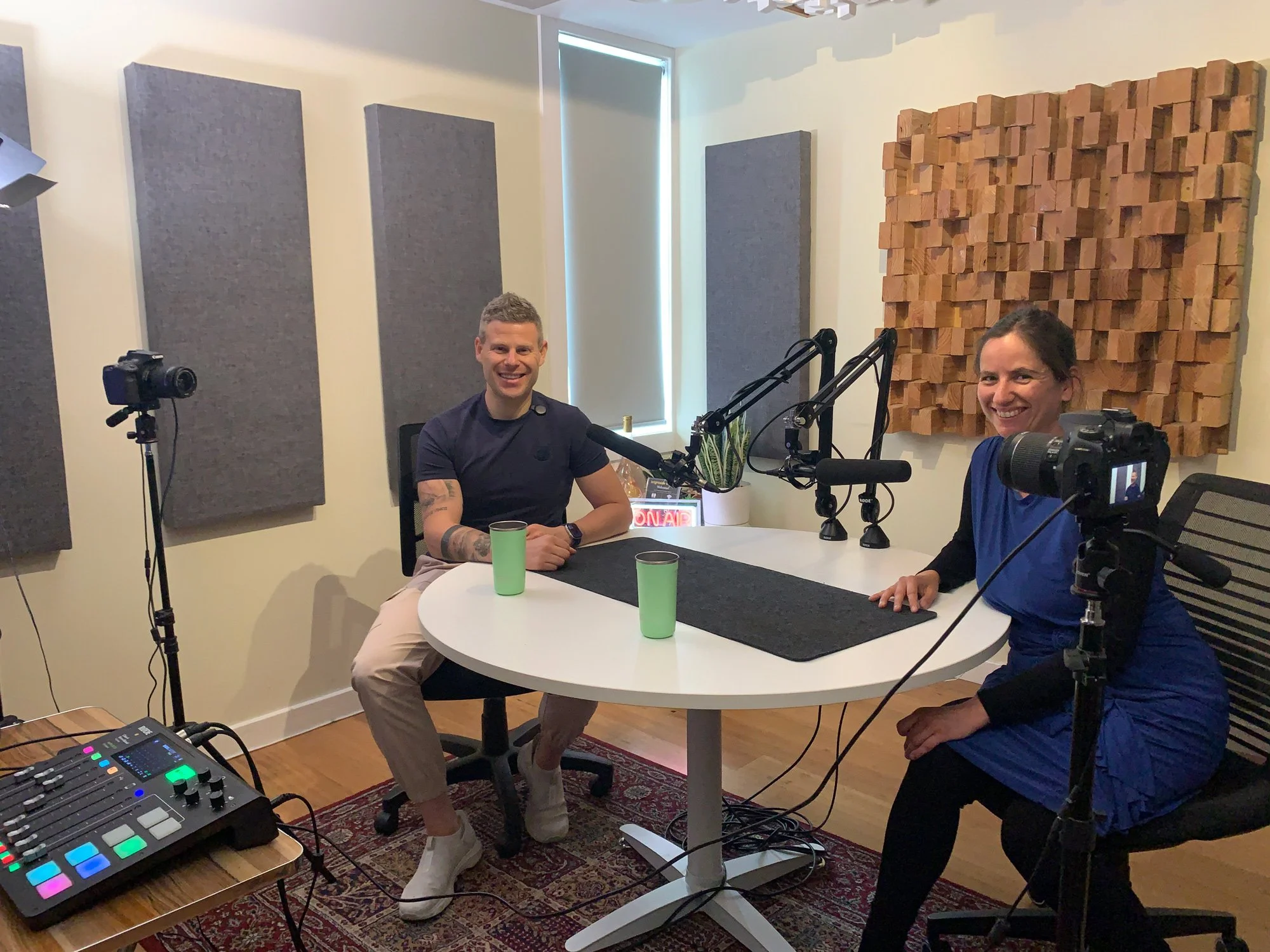
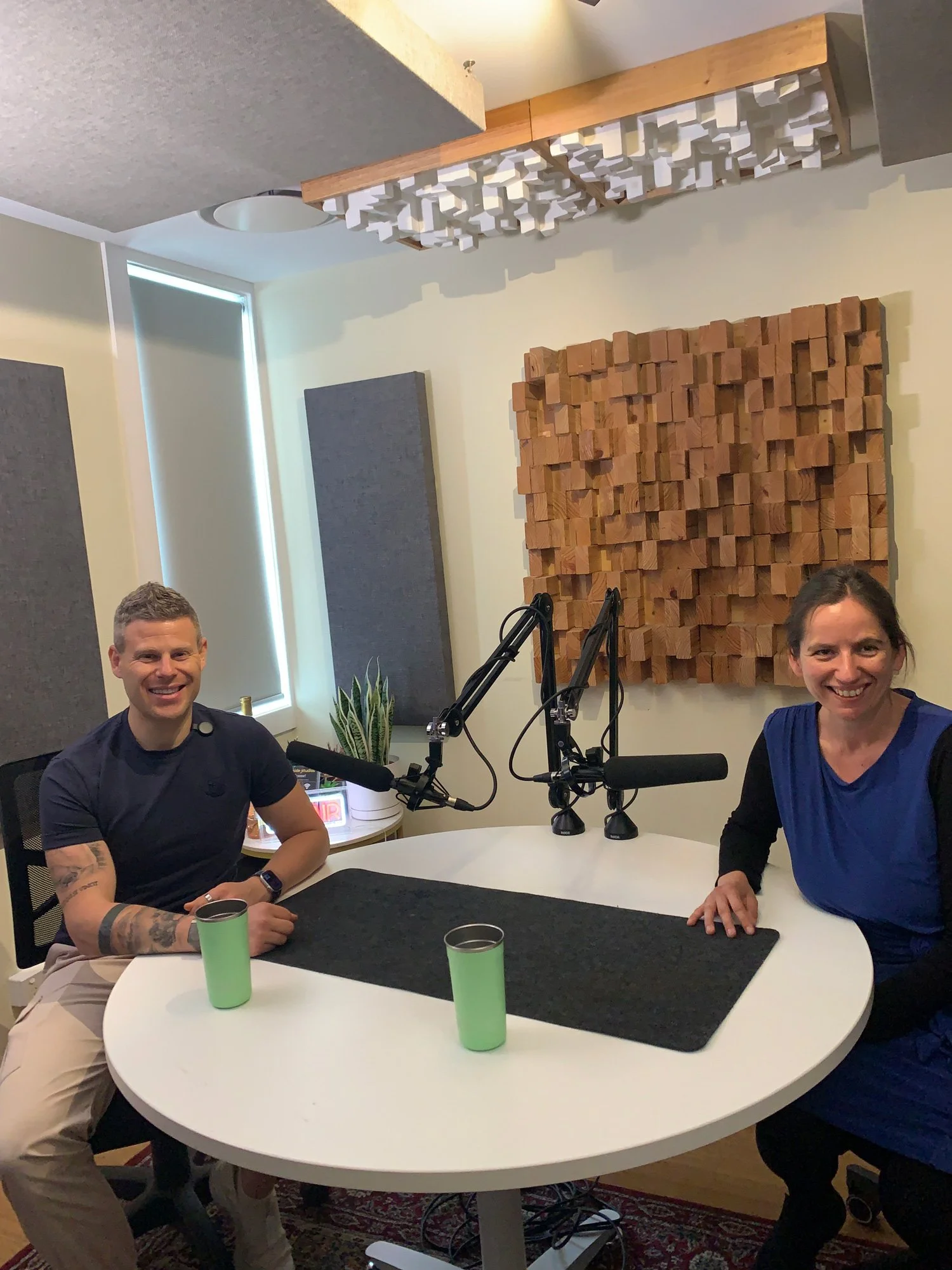
Listen to the conversation
See the conversation in the YouTube video
The Motivate Collective Podcast — Show Notes
Episode: Robbie Mattei — From Italy to Australia: Fitness, Better Leadership, and Using AI to Level Up
Host: Melanie Suzanne Wilson
Guest: Robbie Mattei (fitness trainer + business owner)
Episode summary
In this first in-person recording of The Motivate Collective Podcast, Melanie Suzanne Wilson sits down with fitness trainer and entrepreneur Robbie Mattei. Robbie shares the story of arriving in Australia from Italy on a one-way ticket, the mentor who changed his life, and why his mission now is to create opportunities for others through employment and ethical leadership.
The conversation also explores the reality of “tall poppy syndrome,” how to find people who push you forward, and why AI is becoming a must-have skill for anyone who wants to stay competitive or build a business. Along the way, Robbie breaks down practical health fundamentals — from accountability and sleep routines to nutrition basics and reading labels — plus simple ways to stay consistent even while travelling.
In this episode, you’ll hear about
Robbie’s leap from Italy to Australia (and why he calls it a “rebirth”)
The employer who sponsored him — and inspired his leadership values
Why Robbie wanted to become the boss, he wished he had
Workplace trauma and how it shaped his commitment to treat people better
Why AI won’t replace you… But people who use AI might
The shift from “typing prompts” to speaking outcomes (and where AI is heading)
Creating a “master prompt” so AI understands your goals and context
Fitness fundamentals: accountability, training, nutrition, and sleep
Understanding body types (ectomorph / mesomorph / endomorph) and what that means
Simple habits that move the needle: moving more, cutting refined sugar, and reading labels
How AI can help you assess supermarket meals and ingredients in real time
Supporting employee wellbeing: body scans, nutrition check-ins, and role modelling
Staying healthy while travelling: choices, routines, and using what’s available
Starting a business with minimal cost — and why trying beats waiting
Why tough coaching (and tough love) can create real growth
Navigating “tall poppy syndrome” and choosing better circles
Key takeaways
1) Your environment can change your life.
Robbie’s story is a reminder that one bold decision — and one supportive mentor — can shift everything.
2) Be the leader you needed.
Robbie’s business goal isn’t just success; it’s creating stability, opportunity, and growth for others.
3) AI is a lever — not a threat.
If you learn the basics, you’ll be harder to replace and better equipped to create new opportunities.
4) Health is fundamentals + consistency.
Sleep, movement, nutrition, and accountability matter more than complex plans.
5) Find your people.
Get closer to those who are “more for you” — and distance yourself from those who drain or diminish you.
Quote-worthy moments (for socials)
“My biggest motivation is to employ people and give them the opportunity to thrive.”
“You can’t be replaced by AI if you know how to use it.”
“Set your alarm not when you need to wake up — but when you need to go to sleep.”
“Separate yourself from the people who want more from you, and get closer to the people who are more for you.”
“Work 5 to 9 — build your future outside the 9 to 5.”
(If you want, I can tighten these into exact-word quotes and polish them.)
Resources mentioned / themes
AI tools for productivity, automation, and content creation
Creating a “master prompt” for better AI results
Nutrition basics: refined sugar reduction, label reading, macro awareness
Habit-building: accountability, trainers/coaches, sleep routines
Leadership: tough love, role modelling, employee wellbeing
Business growth mindset and coaching culture (incl. Dan Martell reference)
Connect with Robbie
Robbie invites listeners to connect via Instagram: @RobbieMattei (as stated in the transcript).
He also mentions he’s open to team members, collaborators, and potential partners as he grows.
Connect with Melanie / The Motivate Collective
Want to share your story or be a guest on the podcast? Reach out to The Motivate Collective.
MSW (Melanie Suzanne Wilson):
It’s a pleasure to be here. For those listening, my name is Melanie Suzanne Wilson, and this is the first in-person recording of the podcast. Robbie, we met a week ago, and I learned you’ve been a fitness trainer for a long time — and you have a thriving business. Can you share where you came from and how you began doing what you do?
Robbie:
It’s a long story, but I’ll keep it short. I’m originally from Italy — the middle-north of Italy. I came to Australia 12 years ago, in 2013, exactly on my 28th birthday, because I wanted to be “reborn,” to restart fresh. And it was an incredible success. I regret absolutely nothing.
Looking back, I think it was the best decision of my life because Australia is such a lucky country. Every day when I wake up, and I see Sydney, it reminds me how lucky I am to be here. Within six months, I got sponsorship on the old 457 visa as a swimming coach, because my background is exercise and sports science.
In July 2013, I completed my Bachelor’s degree in exercise and sports science in Italy and came to Sydney on a one-way ticket. I landed in September and found my first job within two or three days at a large aquatic centre. My boss at the time was incredibly kind to me — he sponsored me and trusted me, which helped me get permanent residency and eventually citizenship. I remember he even helped with bills and rent.
That experience inspires what I do today. My biggest motivation is to employ people and give them opportunities to thrive in Australia — whether they’re Australian or from overseas. I want people to get opportunities based on their work ethic and how hard they work.
MSW:
That’s amazing, because as much as we’ll talk about health and wellness, you’re also looking after people by giving them opportunities. Someone gave you a chance and supported you. What led you to start your own business and employ others?
Robbie:
Number one: I really don’t like being told what to do. I always wanted to be an employer — partly because of past trauma with former employers in Italy. Before university, I worked for a few years and had bad experiences. I used to think, “Do employers need to be so awful? Why can’t employers be good?”
Over time, I realised I’d had a very bad experience — and I also met many good employers. I thought, “Australia is the right place for me. I want to become an employer eventually.” Then it’s funny how things happen — I met my boss, Todd, and he proved what I believed was true: you can be a good employer.
To me, being a good employer means looking after people — developing their skills, their personality, and their bank account. If they can provide for themselves or their families and build something for themselves, I’ll feel fulfilled.
MSW:
That’s such a great intention — it’s not just about what your business can get. It’s about wanting families to be okay. Are you comfortable sharing a hint of what happened that made you decide you never wanted to be “that” kind of boss?
Robbie:
Absolutely. For anyone listening, here’s what you don’t want to go through. I was young, around 18 to 22. I finished high school in graphics, which I didn’t choose — my dad chose it for me. I wasn’t in the right headspace and hadn’t fully developed my personality.
I started working in graphics factories. In those environments, employers want production — fast — and they don’t care about your life outside work. If you bring up personal needs, you get screamed at, insulted, and humiliated in front of other people. That’s what happened to me.
MSW:
So you were 18 or 19 — really young.
Robbie:
Yes.
MSW:
I had something similar happen. A boss once outed a diagnosis I had in front of a group in a meeting — it felt so illegal. Experiences like that can either crush you or inspire you. Do you think people listening should consider starting even a small business and hiring one or two people, to become the boss they wish they had?
Robbie:
Absolutely. Starting a business has never been easier, especially now with AI. If you want to learn AI, you can learn the basics in 24 hours. You can even use AI to teach you how to use AI. You can create a one-person business and grow it — start with a mate — with little or no cost. Running an AI-based business might cost around $300 to $500 a month.
MSW:
What are you spending that on?
Robbie:
Tools — the tools you need to create what you need. If someone wants to start a business but doesn’t know where to begin, they can message me on Instagram (Robbie Mattei) and I can show them how simple it is.
MSW:
I used to have the assumption a lot of people have — that AI will “take over,” replace jobs, and make life worse. But I don’t think that’s true. I think it’s already empowering us. People can get more creative and connect more — without drowning in emails and boring tasks. How has AI made your work easier and more meaningful?
Robbie:
People worried about being replaced by AI aren’t entirely wrong — if they don’t take steps now. You can’t be replaced by AI if you know how to use it, but you can be replaced by someone who does. If you learn AI, you’ll have an advantage in your job — and if you want to change careers, you can leverage AI with little to no cost.
Soon, things we do today won’t be needed. For example: typing. You can already talk to AI, and it transcribes and responds. Over time, we may not need keyboards at all — transcription tools are getting better and better.
Another shift: instead of prompting AI step-by-step, you’ll prompt the outcome you want, and AI will work out the prompts it needs to reach that outcome.
Right now, we’re in the era of ANI — Artificial Narrow Intelligence. You give it a prompt, and it gives you an outcome. Later, we’ll move toward AGI — Artificial General Intelligence — where you’ll tell it what you want, and it won’t need to ask many questions because it will have more context and “memory” about you.
MSW:
So right now, do we need to give AI more context? Sometimes I ask it to do something fun like “write a chapter about me,” and it’s close, but it has gaps — because it only has what’s public unless I add more.
If people feel disappointed with AI, is it because they need to give it more information?
Robbie:
Yes. People need a “master prompt.” It’s what you tell AI about yourself — who you are, your background, and what you want to achieve in the next five or ten years. You can put that in a file (Word, PDF, text, CSV) and upload it. Then AI will understand you and give advice aligned with your goals.
MSW:
That takes us beyond the robots. We need to know where we want to go. Life didn’t feel stable enough for long-term planning during COVID, but now it feels like we can build something five or ten years ahead. What do you recommend to people who need to start thinking about their future more?
Robbie:
Learn the basics — it can be done in under 24 hours depending on how focused you are. “Lock in”: go somewhere quiet, put on instrumental music, and learn. Ask AI what you need to learn for what you want to do. One of the biggest leverage points is automation — for businesses, or even for your personal routine, so things can run while you sleep and support you when you wake up.
MSW:
That leads into wellness habits. You’ve been in fitness a long time. Many people struggle with weight, eating, and knowing where to start. What basics should people know — and what should they ask technology to help with?
Robbie:
It depends on whether you can hold yourself accountable. If you always say “tomorrow I’ll go to the gym / walk / swim / eat clean” and never do it, you need real help — personal trainers, fitness coaches, nutritionists, or dietitians.
If you’re self-motivated, you can use AI to write training and nutrition programs. You can upload a body scan and ask it to build a plan for two, three, or five days per week — plus a meal plan because you can’t out-train a bad diet.
MSW:
So people can’t eat junk food and run it off.
Robbie:
It simply won’t work. Two major components for a healthier routine:
Set an alarm not for waking up — but for going to sleep.
Understand your body type.
There are three main body types: ectomorph, mesomorph, endomorph. Ectomorphs are naturally thin, struggle to build muscle, and are more prone to injury because they have less muscle support around joints. Mesomorphs are more naturally athletic. Endomorphs tend to gain weight more easily and can be more prone to issues like diabetes — but they can also be naturally strong.
Understanding body type helps guide macros: carbohydrates, protein, and fats.
MSW:
Why are naturally thin people more prone to injury?
Robbie:
Because their muscle mass is lighter — there’s less support for joints, tendons, cartilage, and the skeletal system.
MSW:
And for people prone to weight gain or diabetes — what do you recommend?
Robbie:
Move more, especially if you sit all day at work and then sit on the couch at home. It slows metabolism and affects body composition. And reduce refined sugar — it’s everywhere. Start with the obvious: cut soft drinks.
Also, use AI: take a photo of the nutrition panel and ingredients list on a pre-made meal and ask AI if it’s a good choice — it can explain pros and cons, even if you don’t have a nutritionist.
MSW:
Sauces catch people out — sugar hides everywhere.
Robbie:
100%. For something like a burrito bowl, why not add extra virgin olive oil? Simple, raw, natural.
MSW:
Next: supporting worker wellbeing. Do you mainly hire trainers?
Robbie:
Trainers, sales, admin.
MSW:
Do you do anything to support employee wellbeing so they feel good and stay longer?
Robbie:
We do regular body scans every nine weeks for trainers and staff. We promote macros. I want to create a “macronutrient fridge” where staff can buy macro-friendly pre-made meals at half price — inspired by Dan Martell’s “Martell Macros.” We also do regular check-ins, goal sessions, nutrition sessions, and training.
We use an “8 Rs” framework, and the first R is “Role Model.” If you’re a trainer, you need to be an example.
MSW:
If you’re going to inspire people to feel good, you need to feel good.
Robbie:
Exactly. If a nutritionist is 25–30 kilos overweight, people may struggle to trust them. I believe your body shows how much you care about yourself — so if you don’t look after your body, how can I trust you to look after my business?
MSW:
Do you work with people who travel? Travel can disrupt routines — I even ask AI to find yoga in specific suburbs.
Robbie:
We always have a choice. If you can’t choose good food, it might be better to skip a meal than eat poorly. Separate yourself from people who drag you into unhealthy habits and stay around people who support your health.
If you’re travelling and you have internet, you can run, use a nearby gym, or use the hotel gym. In 2026 we really don’t have excuses not to move. Many gyms have free trials — try a few and choose what works. If there’s nothing else, go for a walk or run. If the internet drops, ask a local — even SIM cards are cheap now.
MSW:
Let’s talk about business. If someone’s thinking, “I should start a business but I don’t know enough,” what would you say?
Robbie:
Start. Just start with what you enjoy. If you like gaming, record yourself and post it on YouTube. That can become a business. Or create something that adds value to what people already track — connect trackers and build something new. Be creative. Worst case, you spend $300 a month and it fails — but you learn. Doing something and failing is better than doing nothing.
Winners lose more than losers because they try more.
MSW:
Did you start with a couple of tools or go all in?
Robbie:
You can do courses, diplomas, university — but I think university will change massively in the next five to ten years. If you want to learn AI, you don’t need a diploma. Learn by trying and failing. Paying for a membership like ChatGPT Plus is tiny compared to an $80,000 loan.
After three months of trying every day, I learned how to build things — and I didn’t know how to code. I’ll likely need technical support or a technical business partner because I’m more sales/marketing/creative — but I know how to prompt and create.
That’s my course. That’s my diploma.
MSW:
That comparison is huge — people carry HECS debt here. I learned Illustrator and audio editing manually, but now tools can do so much with a click. Storytelling still matters though — your unique perspective can’t be replaced.
Robbie:
Exactly. If you don’t know what to do with your life, talk to someone you trust — or ask ChatGPT. Ask it to be a tough coach: “Help me set goals for one year, five years, ten years. Ask me questions until we find clarity, then break it down into months and weeks.”
MSW:
That’s a light bulb moment. Australians often don’t want to offend friends — mates may not push you, or they may not have all the information. So yes, AI can be honest if you prompt it.
Robbie:
Asking parents or best friends for advice can be flawed, because they don’t want you to suffer. If you want to succeed, you need people who are tough but genuinely care about your future.
That’s why I invested in coaching — it’s not spending, it’s investing. Same with AI. A tough coach won’t just congratulate you — they’ll ask what’s next.
MSW:
Australians don’t always like to talk about money, and tall poppy syndrome is real.
Robbie:
I discovered it this year. As soon as I had a bit of success, I heard things said behind my back — not friends, but other business owners. I felt upset at first, then realised it’s tall poppy syndrome. It’s crazy, because we should cheer for each other. If someone is ahead of me, I ask: “How did you do it?” I don’t tear them down.
I separated myself from those people. I love them from afar, but I stick with people who push me — tough love helps you grow.
Separate yourself from people who want more from you, and get closer to people who are more for you.
MSW:
That’s powerful. We need more conversations like this — and people can reach out to you or to me if they’re ready to level up and feel proud of it.
Robbie:
Being a tough coach is tough love. If you care about someone, you don’t always make them comfortable. Discomfort takes you to the next level. Some employees left my company simply because they didn’t share my values — many people prefer comfort.
Tall poppy syndrome happens because when people see you moving forward, it forces them to face where they’re staying. Instead of moving forward, they try to pull you back.
Seeing someone more successful should be an opportunity.
MSW:
As we wrap up: Robbie, what should listeners do if they’re ready to step up and improve their lives?
Robbie:
Dive in. Start. If you have a regular job, work “five to nine” — use that time to learn and try. Worst case, you stop and go back to your normal job.
If you want to level up, reach out to me. I’m looking for employees, partners, and opportunities to grow. My dream is to have ten companies in the next ten years — I have three now, seven to go. There are plenty of opportunities for people to work with me and potentially become partners.
MSW:
Amazing. And if anyone wants to share their story, reach out — there’s space on The Motivate Collective Podcast. Robbie, thank you so much for being on the show.
Robbie:
Thank you, Mel. It was a pleasure. You’re doing a great job.