
Menaka Iyengar Cooke OAM, psychotherapist and Human Resources Leader, Supporting Accessible Inclusion and Recovery
Listen to the entire conversation
The Motivate Collective Podcast
Show Notes
## 🎙 Episode Overview
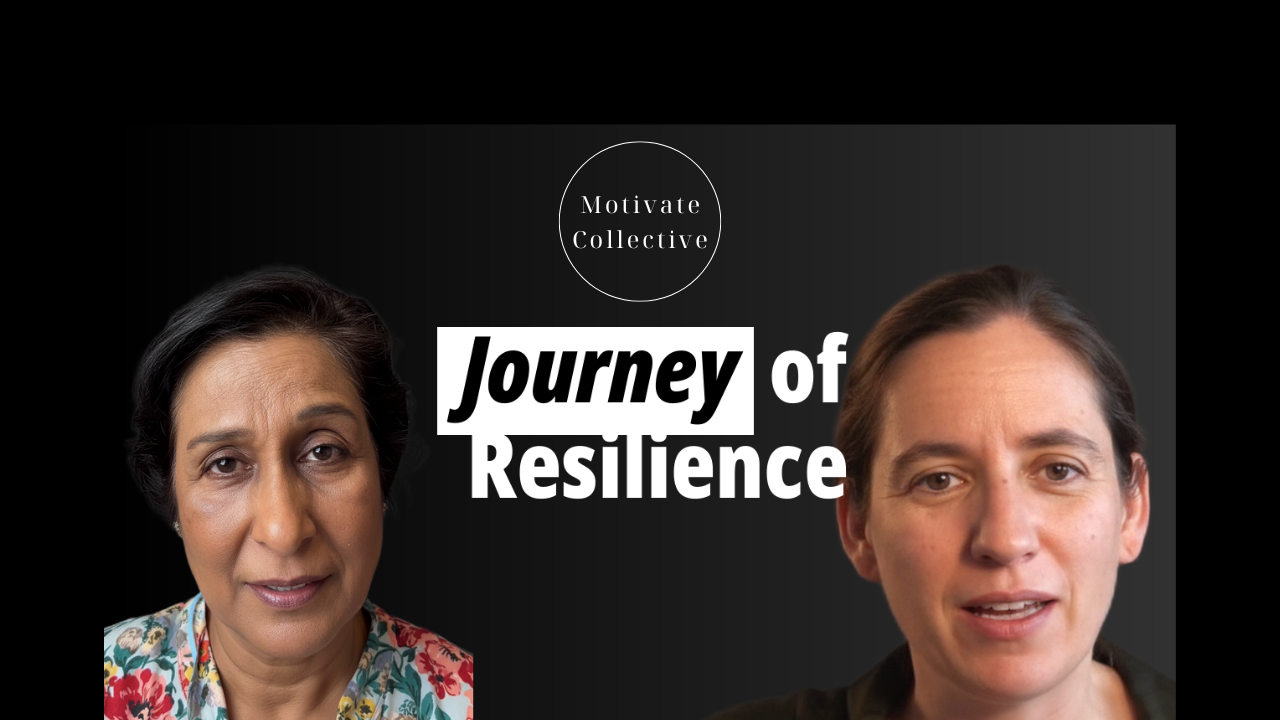
In this deeply reflective and wide-ranging conversation, **Melanie Suzanne Wilson** is joined by **Menaka Iyengar Cooke**, a former HR Director, psychotherapist, educator, radio host, and community advocate. Menaka shares her extraordinary life journey—from fleeing domestic violence as a migrant mother, to reshaping workplace culture in Australia, to dedicating her later years to psychotherapy and multicultural mental health support.
Together, they explore how **kindness, justice, feminism, intersectionality, trauma-informed care, and storytelling** can help individuals, organisations, and societies move toward greater understanding, inclusion, and healing.
This episode is a powerful reminder that while we cannot change people, we *can* open doors, guide conversations, and model compassion.
---
## 👤 Guest Bio
**Menaka Iyengar Cooke** is a South Asian Australian psychotherapist, former HR Director for multinational organisations, university educator, volunteer radio presenter, and community writer. Her work focuses on mental health, trauma, intersectionality, and supporting multicultural communities to better navigate Australian systems. She brings together decades of experience in organisational change, counselling, and advocacy—grounded in values of fairness, justice, and compassion.
---
## 🧭 Key Topics Covered
* Migrating to Australia and rebuilding life after domestic violence
* The evolution of HR from compliance to compassion
* Feminism in Australia: from early waves to intersectionality
* Cultural bias and opacity in bureaucratic systems
* Trauma, disability, and “unfinished business” in the nervous system
* Psychodynamic therapy and understanding life narratives
* Multicultural mental health and community education
* Spiritual philosophy, Stoicism, and eudaimonia
* Storytelling as a bridge for empathy and social cohesion
* Practical ways communities can foster inclusion and dialogue
---
## ⏱ Chapter Timestamps & Discussion Highlights
**00:01 – 09:16 | From HR to Psychotherapy**
Menaka shares her early life story, escaping domestic violence, entering the workforce as a migrant woman, and pursuing organisational development to bring fairness and justice into workplaces—long before inclusive HR practices were mainstream.
**09:16 – 13:33 | Feminism & Intersectionality**
A reflection on feminism’s impact in Australia, the importance of fifth-wave feminism, and why women of colour experience systems, violence, and health very differently.
**13:33 – 18:40 | Cultural Bias & Bureaucratic Systems**
Why systems like Centrelink, healthcare, and licensing can unintentionally exclude multicultural communities—and how education, not judgment, changes outcomes.
**18:40 – 22:56 | Bias, Self-Awareness & Social Healing**
Exploring unconscious bias, triggers, and how self-reflection can prevent division and violence.
**22:56 – 26:15 | Spiritual Philosophy & Living Freely**
Menaka discusses Stoicism, contentment, and her belief in living freely without harming others—finding meaning in small, everyday joys.
**26:15 – 33:26 | Trauma, Disability & the Unfinished Story**
A powerful explanation of trauma across the lifespan, psychodynamics, dreams, and how unresolved experiences shape adult fears and behaviours.
**33:26 – 37:18 | Community Inclusion in Practice**
Why replacing “but” with “and” matters in conversation, and how curiosity creates connection rather than conflict.
**37:18 – 40:07 | Religion, Culture & Shared Ethics**
Observations from experiencing multiple religions—highlighting shared ethical foundations over doctrinal differences.
**40:07 – 43:04 | Storytelling & Change**
Menaka reflects on her radio work and why helping even *one* person reframe their story is meaningful social change.
**43:04 – 46:00 | Three Life Lessons**
1. Kindness—with boundaries
2. Shared humanity
3. Connection with animals and nature
**46:00 – 49:13 | Seeing Humanity in a Broken World**
A nuanced discussion on acknowledging goodness without excusing harm, and choosing the “road less travelled” in daily life.
---
## ✨ Memorable Quotes
* *“We are dealing with human lives—kindness must be part of every system.”*
* *“Intersectionality reminds us that not all women stand on the same ground.”*
* *“Trauma is often an unfinished story in the nervous system.”*
* *“We can’t change people, but we can open doors.”*
* *“Replace ‘but’ with ‘and’—it changes everything.”*
---
## 🧠 Key Takeaways for Listeners
* Compassion can coexist with structure—in HR, therapy, and leadership
* Cultural understanding requires education, not assumptions
* Trauma awareness improves relationships, workplaces, and communities
* Inclusion begins with curiosity and respectful dialogue
* Small acts of kindness and understanding ripple outward
---
## 📚 Resources & References
* Stoic philosophy & Marcus Aurelius
* The concept of eudaimonia (human flourishing)
* The Road Less Traveled (mentioned in discussion)
---
## 🌱 Who This Episode Is For
* Leaders and HR professionals
* Therapists, coaches, and wellbeing practitioners
* Multicultural advocates and community organisers
* Anyone navigating trauma, identity, or belonging
* Listeners interested in social justice, feminism, and human connection
---
## 🔗 Connect & Continue the Conversation
Follow **The Motivate Collective Podcast** for more conversations on wellbeing, leadership, storytelling, and conscious community building.
If this episode resonated with you, consider sharing it with someone who values empathy, reflection, and growth.
Transcript
Here are the words.
Melanie Suzanne Wilson (00:01)
I saw online that you have done very diverse work going from HR to psychotherapy and then helping crisis support. How did you, what made you decide to switch from focusing on HR to helping people in other ways?
Menaka Iyengar Cooke (00:22)
Okay?
Is aligned, if not aligned, but related to my life story. Okay, so are you okay if I give you a thumbnail sketch of what happened and how? I came to Australia about 53, almost 53 years ago and I...
Melanie Suzanne Wilson (00:39)
Yes, yes.
Menaka Iyengar Cooke (00:50)
I had a lot of domestic violence happen, which made me leave my home with my four-year-old daughter. And in those days, there weren't any refuges or no one helped you. And there was really no help. So with the help of friends and my own brain power, I managed to get a home with a woman and went into an admin job, even though my first degree had been in political science and sociology. But in those days, this was just at the end of the white Australia policy. No one was willing to a punt on you. You had to prove yourself. So I did this admin work and while I was doing admin work, I thought, this is boring. I did it very well. So I started studying at night. And one of the key motivators, two key motivators were the influence of my grandfather in India who had been an HR manager for a group of companies. And the really beneficial things he did for the workers over there, including crèches, educating the people, teaching them different sorts of, if not arts and crafts, giving them out of, you know, work hours, sort of social opportunities.
And I worked in a company where the personnel manager or HR manager was one of the worst people I could ever think of who terrorized union workers and kept the women down. So I thought this doesn't align. So, and I'm talking about 50 odd years ago. So that's why I went back to uni at night and I needed special permission from the lecturers at the uni whether I'd be able to fit in, which I did. And that's what started my journey. I know you're looking at me with big eyes, but, and I was the only woman in a class of 21 white men who then, I think, ripped me and carried on at me. I was also learning feminism at that time. So I was reading Betty Friedan and Germaine Greer and Simone de Beauvoir and using their words to fight back with these men until one of the lectures pointed out that they were actually ribbing me and they would be good, you know, compadres. But that started my journey. What is real HR? What should people be doing? What is the true role? And this started in 1982 or something or the other, and I finished about 1985. But my role was for organisational development and change. Then the MD of the organisation, a lovely, sorry to say, white man, gave me an opportunity. He said, " We're having an organisation development review, the first of its kind in Australia. We belonged to Rio Tinto Zinc at that time. Do you want to go on the team? And I said, yes. I almost fell on his feet. I hey, let me go. And that was the start of my journey.
I'm now going back to what I first started with. It's to do with my values of justice, okay? And equality and kindness and fairness. And I had a lot of that inbuilt into me by my parents and grandparents who really believed in fairness and social justice, even though themselves were fairly well-to-do people. And that created my journey. So when I got into HR and then after organization development, I went into real HR roles like recruitment and training and you know, workers comp and safety. I began to understand how we needed to put that into the policies and processes. And I'm talking about the late 80s, early 90s, you know, that was still, I'm the managing director and I'm quoting you words from a managing director. I'm the managing director and I can do what I like.
No, the law now says the Racial Discrimination Act in 1975 and then the Sex Discrimination Act in the early 80s. This is what the law says. So we really have to follow it. That then I began with the help of, and I worked out, I'm also a gluey creature.
Which of the managers were champions of change? So, getting them on board, we began to change policies and procedures and how to get this happening. Now, I'm going to say to you, Melanie, it was not easy peasy. It was a real uphill battle, but we actually won awards from the Business Review Weekly at that time for employing people with disabilities. This is the early nineties at the prime minister's award for, you know,
Employing people with disabilities when there wasn't, you know, we could have just carried on like other companies by involving people in our strategy and decision-making. So that gave me a lot of hope. But I go back to my values of fairness and decency. I began to get people from the organisation into my office who started talking to me, and it was almost like counselling sessions. And then I thought, one day, one of the managers teased me, ⁓ this is your surgery. You should, you know, go to your next client. And that made me start thinking. That's how, while I was an HR manager, I began to study psychotherapy and counselling. So that's the long story of the link between HR and therapy and counselling, because they are based on my personal values of compassion, kindness, justice, fairness, and it became actually a great help because I continued till 2010 when I retired and I was HR director for a multinational at that time. But I brought those same values into each organisation. I'm very, at least I can look back on my life and say, I did good things. I wasn't just your HR manager who sat and cycled on the spot on a particular, you know, just keep peddling, get people to fill in forms and do this and do that, but actually do something to enhance the way women and men are treated in this organisation. Be fair, be just, give them a proper process on how to handle a grievance. Or if we are breaking rules, let's do something to mend these rules. Okay? There's no point waiting, I am going to do what I like. Because what's the point? We are dealing with human lives. And so that brought me to start pulling in various bits of what I call psychotherapy and counselling, even when we were letting people go. We had to do it. But do it with kindness. Get people in to support them. Get people in to help them put new CVs together, send them to places where they might get a new job. And so that was the big link, the road to psychotherapy and counselling. And when I retired, I finished a master's in psychotherapy and counselling, actually taught for a while business studies, psychology and counselling. And now I have discovered my niche in life because I am a South Asian woman that
There is a lot of need for mental health support in the South Asian community. So that's the brief story of the last 50 years of my life.
Melanie Suzanne Wilson (09:16)
That's amazing. And you've done so much. There are so many questions emerging from this. Firstly, you mentioned feminism, and everybody has an opinion on feminism. So you have seen a long history in Australia, more than I have. I'm wondering where would we be without feminism?
Menaka Iyengar Cooke (09:23)
Okay, go for it.
I think it's a wonderful opportunity, and I have belonged to the Women's Electoral Lobby, where they were the first ones to bring it to the attention of Bob Whitlam and the government at that time. And over the years, Women's Electoral Lobby and others like them have plugged away so that feminist principles are now almost becoming part of the way we look at policies and strategies going forward. And there has been a big shift, and I'm going to say that to you. Feminism has had not many faces, but tranches, people, it's, if you want to call it, not escalating, but moving forward. So we've had the first, second, third, fourth waves of feminism. And now we are into the fifth wave, which I feel is enormously important. And I will tell you why, Melanie. And that's to do with intersectionality. Now, you know that word intersectionality? All of us who are there, you know, 51 % of Australia's females, all right? But 30 % of them come from people from other countries. Okay.
Menaka Iyengar Cooke (11:08)
and their needs and what they need from policies and systems are different. I'll give you a small example, and I use this example quite a lot. And this has been very helpful to women. Okay, domestic violence is one. So white women, and I'll say Australian women, may know now that you go to some of the DV organisations, and they'll find you a refuge, and they'll help you get away, and they'll help you get into Centrelink, blah, blah. But brown and black women don't know that. They are afraid, actually afraid. And part of their culture says, " Don't leave your husband. So they need more support to get them to do something because their safety and that of their children is very important. So we are not telling them, don't give your husband a slap on the head and run away. We are actually telling them if your life is in danger and those of your children, these are some things that can help you. And sometimes that's a lot of guidance and counselling and support. I call it socio-psychological education. That's another, you know, you don't have to work. So that's one bit. Here's another bit about health. Lot of we have heard recently that ⁓ menopause, which is going to affect each one of us, is
Not well understood, or you know, women just say it's the pause, it's the change, blah blah blah, carry on and only recently we have had government health and others saying, you know, we need to look at the after effects of it, the side effects, what can you do, you don't have to endure it. There are ways of getting through it, but in multicultural societies, it is known by a different name. It's the same thing is continuing.
It's an affliction. In some societies, they say that's when you stop having children. Another multicultural society says it is the desperate age. Now, we know we need to have some ways of educating these societies. All right. What? It's not a desperate age. It's just part of your life and growing older.
Melanie Suzanne Wilson (13:17)
The disparate age.
Menaka Iyengar Cooke (13:33)
Just like, you know, getting menstruation was a part of your life's history. So let's understand it, and we need to give them education in that. And this is something I talk about, intersectionality. right? Everything is not an equal playing field for women of all colours and ethnicities. The other part is with the huge multicultural society, most and a lot of my time goes into that. Most do not understand the systems. Say of Centrelink or MyGovAgeCare. I don't know what to do. I don't know what to do. So you literally need to take them by the hand. This is how you apply. This is what you need to do. Because otherwise these are people who are getting left thrown by the wayside. We can't afford to lose even one woman, child, or man, for that matter. We need to explain to them and some things are not easily understood. I give you one example of a male who did not, who's doing his driving test and failed four times on the online. What did he fail? Because he didn't understand what it meant to, you know, a camper van or, you know, one of those caravans.
He thought it was like a camel caravan, okay?
This is a cultural difference. So you have to explain to him and show him a picture. You know, when you tow a very large vehicle behind you, you need to know a few things about it. ⁓ and when he got it, he passed the exam. He was not going to tow caravans, but he needed to know that there are some rules that go with that. So this is what I mean by systems. If the systems are opaque, are going to fall over it.
And I could continue on and on, I'm sorry, about bullying, about harassment. know, it's sometimes it's one step at a time journey. And the reason why the culture is different, let's call it South Asian and even various countries of Africa, their culture is be respectful. But sometimes you just have to ask. I don't understand what that means. Tell me. But that almost says to people, ⁓
Melanie Suzanne Wilson (15:42)
Good for it! Good for it!
Menaka Iyengar Cooke (16:07)
Then people will think that you're an idiot because you say you don't understand. No, you just don't understand the system here So ask respectfully but kindly so these are some of the things I'm trying to this is what I'm engaged in and writing in and I bring my therapy into it because I think That gives me an underlying Basis of kindness and compassion and I'm here to help you Okay, go and ask more questions
Sorry, I don't need to babble too much, know, but tell me.
Melanie Suzanne Wilson (16:37)
That's amazing. I'm letting you go.
No, it's great, it's great.
I think what's really amazing is suddenly realising just how culturally shaped the systems are, the bureaucratic system. So do you think that there's a cultural bias in our bureaucratic systems?
Menaka Iyengar Cooke (16:58)
Correct.
Cultural bias in what? In our country?
Melanie Suzanne Wilson (17:07)
in our
bureaucratic systems.
Menaka Iyengar Cooke (17:10)
Yes, and I think a lot of it is unconscious. You know, you don't know what you don't know. But sometimes I need to bring it to your attention. You know, this is quite opaque or un-understandable to these people. Let's make it more open. I think governments are getting better, but then there is also an overwhelming work burden on many of our bureaucrats.
So then they go to the first thing that occurs to them. No, I don't understand it. Go somewhere else. Which, for a person of multicultural origin, is like, he told me that he doesn't know what this is, and I should run away, you know? So I think there is an educational issue making our systems. And I think there are, you know, places like Centrelink and others are trying to bring more multicultural and multilingual people into the arena, which is good. But then there are delays which may act to frustrate people of multicultural origin. But I'm not saying that there is, but I think we need to check the biases we have. And to say that we have no biases is not the truth. Even I can tell you about my own biases. I'm not telling you that I have.
But I need to keep on top of them, you know? I could have biases about all sorts of things, you know? yeah. That's so...
Melanie Suzanne Wilson (18:40)
Do you think that we all have biases and we don't know what our biases are?
Menaka Iyengar Cooke (18:45)
We
don't know what our biases are. But there's, you know, not ways of checking, but I call it the self-awareness thing. Why did I suddenly get triggered today? You know, that sort of thing. So and so sort of that multicultural origin passed me in the car, and I felt angry. Yeah, you know, work it out. What was it? Because a person of another colour or somebody who was, you know, wearing a different type of dress, pushed past you, got suddenly angry. So work out what your triggers are, okay? Because I think as good people, we all want to be, I think, kind and fair to everyone around us.
Melanie Suzanne Wilson (19:30)
Yes. And looking at multiculturalism, that's a very sensitive topic after what happened in Bondi. I want to ask you about how Australia can move forward. You have worked in organisations to really try to make sure that people are okay at work. You have helped people's well-being in psychotherapy.
Menaka Iyengar Cooke (19:42)
Correct.
Melanie Suzanne Wilson (19:59)
And through all this, you've seen that people have biases that can impact the peace and respect between Australians. What can Australia do?
Menaka Iyengar Cooke (20:14)
I go back to self-awareness, but it's not the domain of most people. I take that point. It needs to be, but it's not, you know. So many of us are brought up in cultures or households which are very narrow-minded, okay? And part of it is due to wanting our own personal and psychological safety. But we are all part of a whole organism. I can't attack my leg or my arm without hurting myself. And that's how I see. In Australia, are people of an eye. While there are some who sort of just stop and lick their wounds because I got attacked on the road, because I was wearing a certain head covering. I sort of think to myself, why was I attacked? You know, and how do I build a bridge?
With even one or two people, because that is the start. That is the start of understanding on all sides, which is why I write on LinkedIn and Facebook and whatever else it is, so that we build understanding. We're all part of the one organism. You remember that old verse from John Donne, a poet from the 17th or 18th century, who said, no man is an island, but of the continent a whole.
And that's what we are. are part of one whole continent, whether it's Australia or Europe or whatever, or a whole world. And what hurts me will hurt you. So if you came along and shot me and my brothers and sisters, somebody from my brothers and sisters is going to come along and shoot you and your brothers and sisters. So that is the knowledge and understanding we need to have. We are all part of each other. You don't have to be best friends with me, but you can be respectful of me. You can be respectful of my customs. If you don't want to share in them, that's fine by me. If I'm celebrating Hanukkah or Christmas or Diwali or whatever, just give me some respect, say hi from a distance, but then keep walking because you've done enough to just show that you accept me into this country.
Melanie Suzanne Wilson (22:32)
Yes, we can allow space for anyone to believe and celebrate. Everyone.
Menaka Iyengar Cooke (22:38)
everyone to be. Everyone.
This world is so huge, this continent, this whole globe. Why are we attacking it for the space? Why are we attacking each other for the space? You know, for the lot of, you know, 10 square feet? You know, we don't need to do that, you know.
Melanie Suzanne Wilson (22:56)
Are you saying that part of the problem is that people see differences instead of the one organism that we all have in common?
Menaka Iyengar Cooke (23:11)
Say that again, Melanie. Part of the problem is what?
Melanie Suzanne Wilson (23:13)
Sorry, do you think the problem is that people are seeing the differences and separation between each other instead of seeing a collective whole?
Menaka Iyengar Cooke (23:22)
Yes.
Yeah, rather than seeing a collective whole, rather than seeing our humanity, our collective humanity, they see the differences, and they think those differences are somehow in opposition to them. And they're not, they're all part of the same thing. You and I may like to eat different foods, but we still eat food, and we like it. You like roast beef and veg and I like something else, you so it doesn't mean that we hate one another.
We're just ordering our own stuff at a restaurant, you know.
Melanie Suzanne Wilson (24:01)
I don't eat meat, and so because I don't eat meat, I have seen people reacting to that, but so what if I want tofu instead of chicken, so what?
Menaka Iyengar Cooke (24:14)
Exactly. So what you know so what it's just fine that's what is filling not just your belly but nourishing you as an organism why am i worried you know i have something different that nourishes me as a person you know but we are not here in opposition to one another that's i believe in the live and let live philosophy even if you don't like me it doesn't matter you live in your space i'll live in my space we don't have to sort of
live next door to each other or know in each other's whatever you know next rooms next to each other.
Melanie Suzanne Wilson (24:52)
Do you have a philosophy or a spiritual belief that influences this?
Menaka Iyengar Cooke (24:59)
I am not a religious person. I am very much a spiritual and philosophical person. Philosophy? Only recently I begun to understand the meaning of stoicism and eudaimonia. I don't expect big deals of happiness in life because I wasn't put on this earth, but I find happiness in all sorts of little things.
Mostly it's contentment, know, and having food to eat and a place to live and that's good for me. So my philosophy is very much, and you can look up Marcus Aurelius and Stoicism and eudaemonia. That's what I believe in, and living other people, letting other people live their lives, just as I want freedom to live my life, which is I'll take it down to why I'm glad to live in Australia, not in an extremist society. I don't want to live there. I want to be allowed to do whatever I like as long as I'm not hurting anyone else. I'm just pleasing myself and finding joy for myself in this life.
Melanie Suzanne Wilson (26:15)
Yes, definitely. We should all be able to live how we want to live. I'm wondering if you have seen similar issues with disabilities and people overcoming trauma. Have you seen a learning curve with organisations or communities trying to understand what people need with trauma and disabilities?
Menaka Iyengar Cooke (26:40)
There is, I tell you, there is so much trauma in this life. There is, and part of my work when I deal with clients is also understanding where that trauma comes from. Some of the trauma is almost like in their non-verbal years. Some of it, what has come through over the last few years, but they don't recognise it as trauma.
And that is why part of my, I won't say brand, but my mode of psychotherapy includes psychodynamics, which is understanding how you were brought up, what happened to you, why you are on this particular journey, which I take back to my thing we first started. I was brought up with values of fairness and justice. And so they continue this refrain in my life. So I think, yes, there is trauma, some of it, in going back to your disabilities, some of it is physical disability, which is birth-related or genetic-related or whatever. Okay. Or you've had accidents or something that has helped you, but which has taken you on that path. Trauma is a very big issue. And so in therapy, I like to understand.
What are the traumas this person has been through? Let me tell you a very, very interesting thing that I'm now following through. I often get people relating to me their dreams, and they want to know what it means. Now, there is not a particular meaning to a dream, but often a theme will appear, a theme that they keep sort of re-dreaming about, but it appears in many of their dreams. And recently I read that nightmares can be a diagnostic signal and they can be clues that there is an unfinished story in your nervous system. Okay, it's unfinished. I sometimes think about my own dreams, which I can classify. won't say nightmares, but... And so what's the theme? Sometimes...
It is often unfinished business. I didn't finish that properly. Now, life experiences or missing someone, and I didn't do enough when that person was alive. So those are the sorts of things that can be traumatic, which our unconscious self keeps visiting and wanting to make an end, a nice finished end to it. Maybe never, it never happens, but during therapy, it can begin to help the person to understand. I had a person six months ago who came to me for hypnotherapy. And I said, before we go in there, let's understand what your story is. And because she was afraid of different things. And then it turns out that she had a brother who had a profound disability.
She happened to drop him. The child died at seven. Her mother then left shortly thereafter. The father brought her up, and she has... Those are unfinished businesses in her life. And when I helped her to connect all those together, she understood that her being afraid of needles or this or that was just a small thing. It was just part of the bigger trauma. So...
I say that to you, we need to understand all our lives threads are connected and the thread is leading us somewhere.
Melanie Suzanne Wilson (30:42)
Okay, I'll get to this gradually as...
Menaka Iyengar Cooke (30:43)
I hope you are, I'm
not overwhelming you with all this talk.
Melanie Suzanne Wilson (30:47)
No,
Sometimes, I hear the thing that I personally need to hear from a podcast guest, and it's amazing. With the unfinished business, what was your path forward for this person after identifying that the unfinished business exists?
Menaka Iyengar Cooke (31:10)
You know, when you bring some unfinished business into the open, then the story starts about finishing it. And when I linked it to some of the things that had happened in her life, post the seven, eight, 10 years old, she began to understand that there was a link or a story all the way through down to the present day. She's in her seventies now. Huh? So, and why she behaves in certain ways, et cetera.
So it wasn't like giving her, here is the finished conclusion and stick it on your wall. She began to then understand her own story. That's why I've been like this, and that's why I've been like that. And part of the fear of some of these other things, whether it was, I don't know, I can't remember, it was fear of needles or fear of doctors. Where does it come from? It comes from this. And you really need to understand that you have had so much of, you know, unhappiness when you were... because she was never told why her mother left, and she always felt my mother left because I was a bad person, or my brother died because of me or my father dragged me around because I was an idiot. No, none of those. If somebody had sat down and worked with you.
One of the other things she told me, it gave me so much sadness. When she got her period, her father took away all her toys and threw them in the bin. Now you don't need these anymore. Now that's a very tragic, I call it, very abrupt way of telling her your childhood is over. You know, there is always a gradual change from one thing into another.
So then she, yeah. And there are bits of you which will always remain a child. There are bits of you that are grown up. There are bits of you that, you know, still in their 20s. And that's okay. That's part of the journey for each one of us. Yeah.
Melanie Suzanne Wilson (33:26)
Yes, I can't see your video, but there it is. You have a word back. But I could hear you.
Menaka Iyengar Cooke (33:29)
You can hear me, okay. So does that give you some clues? It's just part of one's story, you know? And once you make sense of the story and you say, yeah, that's part of me, there's nothing wrong with it. There's lots of us who are like that. Life becomes easier. You sleep easier. You interact with others easier. It's just saying I'm human like the rest. It's part of the same story we talked about, you know, Bondi and others. We're all human, okay?
Melanie Suzanne Wilson (34:04)
We're all human. are. and looking forward now, I know that you're working with communities. I'm wondering other community groups that you're not serving that, that might be on a learning curve. There is so many organisations and membership groups out there. What can everybody else do as communities to encourage a culture of inclusion and recovery?
Menaka Iyengar Cooke (34:42)
Very small. Now I start with a very small thing. When anyone says anything to you, don't start your sentence with a but. Start it with and. When you say but, you're pushing the person away. But, which means your opinion is not that worthwhile. Accepting what they're saying and saying, this is the way, I'm just telling you how I do it.
That's an interesting way of looking at it. You don't have to say that I agree with what you're saying. You may not, but at least you're opening your mind and saying, that's an interesting way to look at it. I must think some more about it or tell me more. And that way, you open up the conversation in communities. You don't divide, you include by saying, and tell me more how things going. You know, I love those words my one of my bosses, an engineer, taught me the values, and I'll talk about it some other day. What 5W1H which is who, what, where, why and how. One of those W's I don't like, which is why, and I say to you, don't use it too much. Why? You just then make the person you know, come up with some specious reasoning, you know, why puts us into the left part of our brain when we have to come up with some, ⁓ why do I do it? Because my mummy taught me, or my granny used to say that to me. But if you say, how does this work out? It's much more, you know, calm and soft. How does this work out for you? You told me you celebrate eggs every whatever March. How does this happen?
What do you guys do? Where do you do it? Can I come there too? That sort of thing is much more beneficial than saying why is this and then they go, " Because our religion says so or " My culture tells me to do so. Leave that alone. Just ask them as people how they experience it. And if I can also come and experience part of it. That is if you're interested. Don't be a shallow person.
You know, just getting in there, ⁓ you know, no, can I also experience it? Can anyone else experience it? You know, those are the ways we can be more inclusive. And I'm just giving you practical hints.
Melanie Suzanne Wilson (37:18)
Are you saying there's potential for people to experience other people's cultures more directly?
Menaka Iyengar Cooke (37:27)
Absolutely, I've been to, you know, I have been to, you know, people when they are doing the end of Ramadan, and there is a big feast. been to a few of them. I've been to Diwali. I have been to many Christian churches, many, actually, and this goes back to my childhood. My father was a Hindu. My mother was a Christian. And they decided that their kids had to learn about all religions before they chose.
Okay, so lots and lots of churches. Okay, my brothers and sisters have, you know, at least once, a couple of my sisters have decided to follow Christianity. My brother is more like me, though he's much more Christian in beliefs, whereas I think there's good in every religion. Okay, so we were all allowed to think for ourselves and follow our own dreams.
Melanie Suzanne Wilson (38:19)
Yes.
Yes. Have you seen in all of those religious experiences, have you seen a spectrum in which everybody expresses their beliefs differently?
Menaka Iyengar Cooke (38:34)
Look, have seen ethics are the same in every religion. Honesty, courage, caring, compassion, etc., while I don't know how to put this, but I will say one of the Indian sages, I think it was Vivekananda over 130, 140 years ago, said, all religions are paths leading to the same destination. What we are trying to do is live good lives, and we are hoping in the other world that we will find some kind of relief or merging with a God who loves us. I think that's okay for me. Each one to remain kind and compassionate, and helping your fellow man is just it's a great way of being. not going to, I will express my sorrow that if you go to one of the extreme brands of religion, which say you got to kill this sort or that sort of person, then that's not on. That to me has become a terrorist brand of that religion. And that can happen in Christian religions, Middle Eastern religions, and Eastern religions. So don't go there. But most of the brands that have grown up, they are of the live-and-let-live variety, and I believe in that.
Melanie Suzanne Wilson (40:07)
I understand, I understand so much. I'm curious, your LinkedIn profile mentioned radio as well. Are you still doing that?
Menaka Iyengar Cooke (40:18)
Yeah.
Yep. I do volunteer radio on our pH, and I read the New Yorker once a month because there's another person who reads it on the alternate fortnight, and I also do newspaper reading from time to time, and that's on one of the Saturdays of the month. So yeah. Yeah. And at one stage, I was doing daily newspaper reading. So I'm not doing that at the moment. And I did a podcast on that radio station called Colours of Australia, similar to what you're doing, where I took people of other nationalities and talked to them about their life history and how they came to Australia and the barriers they faced and how they overcame them and what led them into doing what they're doing.
There were very fascinating interviews, very fascinating.
Melanie Suzanne Wilson (41:19)
They would be. I personally believe that storytelling can bring everybody together. Do you think so?
Menaka Iyengar Cooke (41:25)
Absolutely, yeah,
yeah I agree with you, I agree, yeah.
Melanie Suzanne Wilson (41:32)
What difference have you seen? What benefit have you seen in helping people to share their stories?
Menaka Iyengar Cooke (41:41)
I tell you, even one person changes makes me so excited. Just, you know, the person I was telling you about, who had all the trauma from six, seven years old onwards, had an email recently, and she's so grateful. Just six or seven months ago, she started discovering this bit, and it has helped us so much. Just the understanding and the discovery. And for me, just one person changing is a huge thing. And for me, wherever I've brought that change into one or two or three people's lives, just a little, little change, because we can't change somebody entirely. They have to take it up and run with it. But if I have been a helper to open a door, that's good enough for me.
Melanie Suzanne Wilson (42:34)
That's a reminder for everybody, do you believe we can't change people, but we can guide them?
Menaka Iyengar Cooke (42:41)
No, we can guide them. We can guide them. We can open a door or two or three doors and say, " Have a look inside, " " Have a look inside. It's something that's wonderful. It's beneficial rather than allowing them, and allowing is a bad word, rather than letting them stay in the belief that there is no outlet or nothing outside this for me, but we can show there is, you can.
Melanie Suzanne Wilson (43:04)
You can. like to wind up the, the episodes with three lessons. I, I see that so many cultures see something in having three of something. They see the benefit in the number three. And I'm wondering what are three lessons, wise lessons that everybody can learn from that can be universal to help everybody to.
understand each other to help everybody to be okay.
Menaka Iyengar Cooke (43:38)
Three lessons that I might have learned, is that what you're saying, in my life that have guided me? ⁓ One of my earliest lessons was the value of kindness. Even as a child, I was known by people up and down the street where we lived as one of the kindest persons in my family, and I lived in a household of very kind people, and I also saw their role modelling. that kindness has stayed with me. But my therapeutic knowledge helped me to also understand that sometimes my quality of kindness can be a way for people to manipulate me. Okay. Because people who have known me to be very kind have manipulated me to get money out of me or some other thing. So.
It's also knowing that you need to have some boundaries as well. Okay. You can be very, very kind, but you don't have to give away the station. You don't have to give away your cattle station or whatever it is. So that's the one big lesson I've learned in life. The other one that there is goodness in so many, in everyone. We just need to look for it and come at that basis from the common humanity each of us shares.
We have a common humanity. We can appeal to people about, you know, how to behave in a nice and kind way. Third lesson, ⁓ I don't know. Third lesson, third lesson, what can she... I came to it late in life, is loving animals and how much they add to my life. I don't know why I only got a couple of cats, but...
15 years ago, and they have brought so much joy to my life. Now, animals do give us something back. So those are some of the lessons of life, my humanity, being in touch with the animal kingdom. I get great joy from just watching birds from my veranda, seeing them fly away, and, you know, come and pick whatever seeds on the ground and being a kind person.
Melanie Suzanne Wilson (46:00)
Yes. I just wanted to ask about one of those things as we get near the end. You said there's kindness in everybody, and some, some people do seriously bad things. I'm wondering how can we see the goodness in everybody, knowing that some people are going to do seriously bad things.
Menaka Iyengar Cooke (46:04)
Yeah.
Mm.
Yep, very good question, very good question. How do I see something? I'll just use Hitler. How do I see the humanity in him? I don't know. Maybe that was a small part of him. He loved his dog and he loved his girlfriend, but he lost the way. So these are people who have lost the way to stay in touch with their humanity.
can't do anything for them. But for ordinary people that I meet in my journey, I can extend my humanity to them. It's up to them to take hold of my helping hand that I give them. And if they don't want to, then that's their independence. That's their, you know, whatever road that they're choosing to go on. You know, and that's okay for them.
That's okay for them. I look, and I extend a helping hand. Do not sort of say to them, you're okay. Because if they're not doing okay things, then they're not okay. But I'd say to them, you know, there's a better way than this, rather than being like that. But if that's what they want to do, then I'll let them go. You go in peace, do what you like. And here, I don't know, you can use it as the ending of my own story is I learned a long time ago and I think it's from a book by a very famous author F Scott Peck I don't know if you know the road less traveled so we come to a fork in the road and sometimes it's easy to go down that road if you want to you know just be things for yourself and do things for yourself or you want to hit and beat and squeal and carry on. Well, that's all right. But I have chosen the road less travelled. And for me, that road less travelled is also to look at what I'm doing every day. Am I doing something that's good for me and good for my community? I can't influence the world, but I can influence the people around me. If they give me, I would say badness, but they give me anger or rage or know snipey comments. I don't have to reply in the same way. I can just say okay you're in a bad mood today and walk away from there until I find them in a better way. But I don't hold that grudge against them. I just walk away in a different direction.
Melanie Suzanne Wilson (49:13)
Thank you for the wisdom. I wanted to make sure I'm pronouncing your name correctly. Is it Menica? Am I saying this right?
Menaka Iyengar Cooke (49:21)
Manneka,
Manneka, Iyengar and Cook is an ex-maridame, but you know that's what it is.
Melanie Suzanne Wilson (49:29)
It is what it is. Meneka, Meneka Iyengar Cook. Thank you so much for sharing your knowledge, wisdom and expertise into your personal story. I appreciate this so much.
Menaka Iyengar Cooke (49:43)
appreciate it too. Thank you for choosing me. Thank you. Okay, see ya.
Melanie Suzanne Wilson (49:47)
Thank you.
Bye.