Michael Sawan, stroke survivor, on persevering in a marketing career after illness
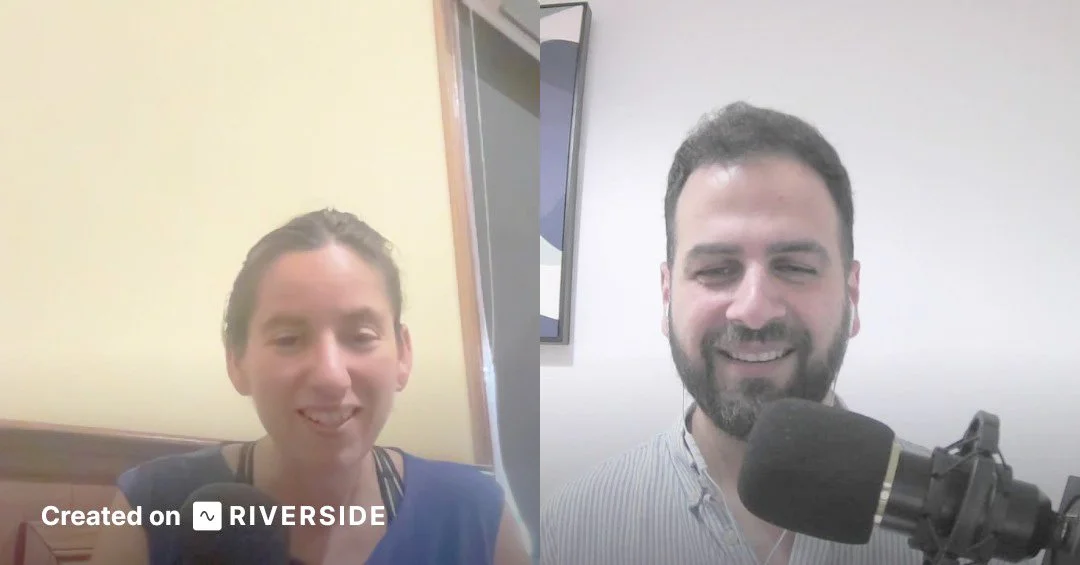
“When I had my heart attack and stroke in 2012, I was only about a year and a half into marketing.
You can imagine what it's like where you spent like three years learning it at uni, then you get into it, then you have a heart attack, then you have to learn it all over again.” - Michael Sawan
Listen to the episode
## The Motivate Collective Podcast — Show Notes
**Episode: Michael Sawan (The Comeback Blueprint Podcast) with Melanie Suzanne Wilson**
**Guest:** Michael Sawan (pronounced “Sa-wan”)
**Host:** Melanie Suzanne Wilson
### Episode Summary
In this deeply human and hopeful conversation, Melanie Suzanne Wilson sits down with marketer and new podcaster **Michael Sawan**, who shares the extraordinary story behind his upcoming show, **The Comeback Blueprint Podcast**. What began as a thriving new marketing role in late 2011 became a life-altering medical journey: an urgent heart diagnosis, open-heart surgery, ICU complications, cardiac arrest, a coma, and a stroke—followed by years of rebuilding memory, vision, confidence, and identity.
Together, Melanie and Michael explore what it means to survive the unimaginable, recover in a world that can’t *see* your disability, and redefine success without a “perfect” timeline. Michael’s story is a powerful reminder that purpose can be born from disruption—and that your comeback can become your blueprint.
### What You’ll Hear In This Episode
* Why this is Michael’s **first-ever podcast guest appearance** (and why he felt excited, not nervous)
* The origin of **The Comeback Blueprint Podcast** and why Michael is focused on *real, everyday comeback stories*
* A behind-the-scenes look at marketing in the early 2010s (magazines, newsletters, early YouTube)
* The warning signs Michael dismissed: night sweats, heart palpitations, and “pushing through”
* The moment an echo test changed everything: **aortic valve replacement and urgent surgery**
* Recovery complications that escalated fast: fluid around the heart, ICU return, and how hospital became “home”
* The Friday the 13th twist: standing up for a coffee… then **cardiac arrest and flatlining**
* A seven-day coma, trauma triggers, and Michael’s reflections on memory, faith, and near-death moments
* Stroke impacts no one could see: vision loss, memory disruption, and relearning daily tasks
* Returning to work at 25: forgetting instructions, struggling with basics, and rebuilding capability over time
* The big takeaway: **there’s no universal life timeline**—only purpose, resilience, and evolution
### Key Themes
**Resilience • Recovery • Invisible disability • Purpose after disruption • Identity • Trauma • Reinvention • Faith & meaning • Work and wellbeing**
### Memorable Moments
* “I didn’t even know I was going to be a guest on a podcast.”
* Standing up for a walk and a coffee… then learning his heart had stopped.
* Relearning everyday steps—like making a cup of tea—and what that revealed about recovery.
* The reminder that you can look “fine” and still be surviving something enormous.
### About Michael Sawan
Michael Sawan is a marketer with 15 years’ experience who is preparing to launch **The Comeback Blueprint Podcast**, focused on honest, raw conversations with people who faced a major life disruptor and had to reinvent themselves. His mission is to turn real recovery stories into real hope—and help others find their own way forward.
### About The Motivate Collective Podcast
Hosted by **Melanie Suzanne Wilson**, The Motivate Collective Podcast shares conversations that support growth, wellbeing, personal development, and the power of real stories—especially in a world that’s moving faster than ever.
### Call to Action
If this episode moved you, **share it with someone who’s rebuilding**—quietly or loudly. And keep an eye out for **The Comeback Blueprint Podcast** launching next year, where more comeback stories (including Melanie’s) will be shared.
Transcript
The Comeback Blueprint Podcast (00:00)
First time hosting me, I've never been a guest before. So I've been so excited, I'm so excited about this, yeah.
Melanie Suzanne Wilson (00:03)
Really?
Okay. So let's talk about that first. How do you pronounce your last name so that I get this right?
The Comeback Blueprint Podcast (00:12)
Actually, someone finally asked me so.
Melanie Suzanne Wilson (00:16)
So one, Michael, so one, welcome to the Motivate Collective Podcast.
The Comeback Blueprint Podcast (00:22)
Thank you for having me.
Melanie Suzanne Wilson (00:24)
And this is your first time being a guest on a podcast. How are you feeling?
The Comeback Blueprint Podcast (00:29)
Yeah, I'm actually okay. Yeah, I'm not nervous or anything. I think because I started podcasting three weeks ago, and I'm so used to talking to strangers via this channel, that when you offered me the opportunity, I was actually excited about it. I just want to jump on, see what we can talk about.
Melanie Suzanne Wilson (00:49)
Where I normally start is letting the listeners know what exactly you do. If they don't know who you are, what's your background? What do you do?
The Comeback Blueprint Podcast (00:59)
Well, when do you want to start? I mean, I don't know what I do half the time. That's why I just decided to do this podcast, because I am between work at the moment. So my profession is marketing. So been doing that for 15 odd years. When I had my heart attack and stroke in 2012, I was only about a year and a half into marketing. So you can imagine what it's like where you spent like three years learning it at uni, then you get into it, then you have a heart attack, then you have to learn it all over again.
Melanie Suzanne Wilson (01:28)
Wow.
The Comeback Blueprint Podcast (01:28)
And people joking, couldn't you have an easy profession, so if you had a stroke, you wouldn't have to remember so much? But I'm like, well, I also had a heart attack, so it's not like I could be a bricklayer, it's not really gonna work out for me. But that's what I do, I'm a marketer, I'm in between jobs at the moment, I just finished up a previous contract, so finally decided, I've always wanted to use my spare time to just connect with people who are going through stories like yours now.
And so I'm slowly launching a podcast on my own. Hence, you've got me linked up as the comeback group in the podcast, but that's me in a nutshell. So that's what I do.
Melanie Suzanne Wilson (02:07)
So when did your podcast start?
The Comeback Blueprint Podcast (02:09)
So I haven't actually launched it, it'll be launching next year. I've just been recording for the last three weeks. I've been blessed; I've had a lot of people say yes. I think everyone just wants to be real and raw, and maybe it is the fact that it sort of resonates with my story being so raw in terms of what I went through. I'm not looking for any Hollywood stories. I just wanna meet people who just live the life normally, and then just something happened, a big disruptor, and they had to change tack and change course and reinvent themselves.
You know, like you obviously with your motivational professional public speaking and all that, and that's the kind of people resonate with, and I think people just go, you know what, you have to help with that. I'll get on board. I'll tell my story, and it's been more interesting than keeping up with the Kardashians, but that's just me. Everyone says their own taste.
Melanie Suzanne Wilson (02:54)
I won't complain about the Kardashians, although I did not follow them as closely as other people did. But I agree that we all have a story. And there's a value in this story, especially now in an era where technology is automating things and efficiency is now more accessible. But what does set someone apart is the unique human experience. So
The Comeback Blueprint Podcast (03:00)
You
Melanie Suzanne Wilson (03:21)
So I'm really keen to share more of your story because you are doing something. You are creating the podcast, your podcast and talking on this one. And so the heart attack, let's talk about that. Had you been working in marketing when that happened? Were you about to start? What happened?
The Comeback Blueprint Podcast (03:42)
Actually, I'm glad you mentioned that. I just came back from a little bit of a hiatus. I'd gone to America, took a little temporary visa and travelled there for something. can't remember now, but it was probably like four months to six months, maybe somewhere in between. That was the summer of 2010, 2011. So, of course, I got a bit of winter. Smart idea. But you, hey, look, I enjoyed it. I enjoyed a meal on Christmas. So that was pretty good. Why not? Right? Home Alone 2, if you guys know the movie. So did that, and when I came back, I was looking for a marketing role. I'd been in a marketing role prior to that. I was looking for a marketing role and spent a lot of time trying to get into it, given that I had very little experience, and everyone was very picky. I did a bit of sales in between just to keep the money coming in. I think it was around October of 2011 that I got a marketing role, and it was for what it was in 2011, where you know, the advent of social media hadn't kicked off, and everything, it was a beautiful role.
You know, we were doing, I was working for a manufacturer, but we were doing beautiful storytelling type campaigns when it was like, you know, getting to a magazine, magazine back then, they were a thing. Feature our products on magazines and newsletters, write a monthly newsletter and send out this and that. It was all like old school, below the line, a little bit above the line marketing. You know, we were gonna, this is before YouTube kicked off, we were launching a YouTube channel. So in the three months leading up to my surgery, I was having a blast with this job.
I was so ensconced in it, it's all I thought about. And I loved it so much. I loved it, I truly love marketing because of it, and I had a boss that was so encouraging, and he was just raw. He was just like, if I was doing a bad nut job or if I was doing a good job or a bad job, he was honest about it, but he's never gonna do it even better, and I really loved that relationship. And so I was so busy with myself that I didn't pay attention to the science of my heart. But there were other people in my life who were paying attention.
My grandma, Rista Sol, was living with us at the time, or should I say we were living with her. And she'd always walk by my room after I went to work, and she'd say to me, she said this in Arabic, I know your tongue, she'd say, Michael, every time I go by your room, it stinks. And I thought she was having a go at me, being 25 and all, whatever, it stinks. Sometimes I go up, and sometimes I have to take your bed sheets out and wash them; they are just drenched in sweat.
And I would just dismiss it. I'd like, oh, just let it go, would you? know, God love her. Things like that would pop up. And then there'd be situations where it's in the middle of the night. I'm not stressing about anything, but I'd wake up, and I'd be in a sweat. I'm drenched. And I'm lazy in terms of looking after myself. I go to the gym, but I'm not going to change my bed sheet. So I just slip through it. I was pretty spoiled, to be honest. Now that's a lesson learned. But things like that, she picked up on it. Even my mom picked up on it.
And there were days where I'd be sitting in my job, and I'd be just writing like the most drawn out, you know, story about, you know, about products? There's nothing stressful. And I started in heart palpitations. You know, my heart would just start to go boom like this, and it'd move me. And again, I made nothing of it. I thought to myself, I work out a lot. I'm bench pressing something like 120, 130 kilos, which is a lot for me. I'm a small guy, well, I think I am. And it just, to me, I just thought, oh, that's nothing.
There's nothing in it; it's all good. It's just me being, you know, me being active and all that. And I'm in the car one day with my mom, I forgot where we're going, and I'm telling her about certain things like the sweats and all that and the heart palpitations. And she's like, Mikey, I'm not really comfortable with what you're telling me. Could you just give me a phone and go see a GP? I said, Yeah, okay. So I walk into my GP, we haven't seen each other in like two or three years, and she put the thermometer on me. I go, can you just test this out and just give one piece of mine? She's from the old world as well, she's from the you know, school like, I would think she's just melodramatic and everything.
Melanie Suzanne Wilson (07:38)
Sorry, what does that mean? So, being old school. Okay, what does that mean?
The Comeback Blueprint Podcast (07:42)
So let's go back a bit. So I mean by old school is growing up with this doctor, she was a family doctor, growing up with this doctor, I'm not going to mention names because it could get me in trouble, but growing up with this doctor, play down, us in our culture, in Lebanese culture, we can be a bit hypochondriac-like, if you know what I mean. You've got a cold, all of a dying, that kind of thing. And so she played everything down. You've got a cold, relax, it's not a big deal.
You know, I went to her once, and I had a throbbing in my ear. And I said, I think I've got tinnitus. And he's like, No, you're just blasting the radio in your car. You need to stop. And she, and it was true after like three months, it just, the throbbing went away. So I expected to go there, and everything was downplayed. Like that's what, that was my expectation. So she put the stethoscope on me, and she started to blurt out a bunch of words in half English, half Arabic. And she was saying something like, know, arrhythmia, an irregular heartbeat. Like she's saying all these things, and she's quite like, she's trying to hold back her panic. She goes, I'm gonna recommend you to this cardiologist. I need you to see him straight away. And so that was December of 2011, just to give you a timeline. So I'd only just started this marketing job, like two months, three months prior in October. And you can see my mind is that I'm like, no, no, I'm doing well in this job. I'm finally getting a career off the ground. This is important to me, sure, whatever.
I remember taking, for some reason, I had the referral for the cardiologist. I made the booking, but then I left the referral on my desk at the office. And I remember one Sunday driving home, and a friend at the time was in the car with me. We were talking about something, and this came up. And I said, oh, we've got to go back to the office. I've got to get this referral. forgot about it. And the referral is, I don't know how we know, Sydney, but I'm in the Cronulla area, and it's up in the North Shore. That's where I was working.
Melanie Suzanne Wilson (09:32)
So for those who are listening from anywhere in the world and for those who are trying to remember what a commute is like, how long would you take to get from Crenola in the south of Sydney, the coastal side of Sydney, over to the northern, where was it, to the northern beaches?
The Comeback Blueprint Podcast (09:47)
It was actually, it was North Shore, I think it's North Shore, St. Leonard. So it's a North Shore, Northern, like Northern, about an hour and 20 minutes, you gotta catch two trains. And that's just one way. And it's like, you know, it's to me, like that's supposed to be like a suburban trip. It's not like anything regional, it's just supposed to be very basic. But I decided to get on the train. I didn't wanna drive into the city at that time. So I got on the train.
Melanie Suzanne Wilson (09:51)
Oh, so how long would that take?
The Comeback Blueprint Podcast (10:14)
Thankfully, my boss trusts me enough to give me keys to the office after a week. That's pretty good So I was able to get in and get my referral I knew I had the keys so I like I could do all this got the referral went to the cardiologist on the Monday and He he did his test he put the skeptics go and again, so this guy I had never met him before but he was referred he was a local cardiologist as in like local to our live Maybe you know 10 minutes from the 10 minutes from around. It's all local, and he put the stethoscope on me, and he also started to blurt out all the technical terms and all that. And he actually, like, already sort of said, you might need an operation on your heart, but I'm just going to get that checked properly. So he did what was called an echo test, where, now, we'd get the sonographer, and they start doing sort of scans and everything. And I remember something I'll never forget. I remember going into the, and so I like to think I like to play everything down with it jokes if it even gets too serious. It could be something I'm shielding, I don't know, but I always play things down with a joke. That's what I do. So when I went in, yeah, it's my shield. So I remember going into the testing room, X-ray room, whatever they're doing there, they're echoing, and I would just start making jokes with the, is it the sonographer or whatever you call it? And she kind of just ignored me the entire time. And I was getting a bit shitty with her going, come on, like, and I have a laugh, blah, blah, blah. I didn't know what the jokes were, I just remember like,
Melanie Suzanne Wilson (11:19)
Don't worry about the jokes. So what really wasn't real?
The Comeback Blueprint Podcast (11:42)
They're probably that bad, but anyway. I just remember that she started to press further and further on my chest, and I could actually feel my palpitations grow as she was doing that. And then she blurted something which I don't remember, but it was like she just dropped everything as if she heard an alarm bell and she just ran to another office, which I now presume was the cardiologist. And she comes back and goes, You need to come with me.
And then I get pulled into his room, and he goes, yeah, look, he's just looking at his papers, the scan and everything. And he's just going, yeah, look, it says, suspected you're gonna have to have an aortic valve replacement. Your aortic valve is dilated quite rapidly, and you're just gonna have to have that replaced. And I'm processing all this stuff. And just because maybe he was just saying in a very calm way, not alarming, but I took that for what it is, and I also played it down. I didn't take it that seriously. So I was like, okay, that's fine. We'll do it when we get a chance. And I, everything sort of after that happened really fast. My mom got wind of what happened, so did my dad. And they pressed me to hurry up and go see the heart surgeon, just to find out how bad this thing was. And the heart surgeon is looking at it, going, he's the same thing. He's looking at me, I'm 25. He's like, yeah, it's not, it's like.
It's not uncommon, but I don't really see anyone 25 needing heart surgery. This one's pretty serious. What I liked about him was he actually laughed at my jokes as bad as they were, because I was just trying to protect myself. He says, What we'll do is we're going to have to do a bit of a replacement in that we'll take out your aorta, and the aorta is the valve that pumps blood into your heart. We'll clean that up, we'll get it replaced with, we'll wrap it around with some synthetic tubing, and then we'll have to replace the valve itself, and you'll have to go all mechanical, which means that you'll be on a blood thinner for the rest of your life. This is a lot for me to take in. Again, this is sort of middle December, and I kind of played it out, and my mom was in the whole time, and I could tell she was processing a lot, and I said, Well, can we do this in January? Can we do it after Christmas? I just wanna get through this job. And back then jobs are like three months probation, not six months like they are these days. So I was like, I'm about to pass probation. Let me just do this and blah, blah.
So he goes, you know what, that's fine, I can do that. We can probably do it mid-gen, you know? And I think we had a date for mid-gen, which was about the 14th to the 15th of January.
Melanie Suzanne Wilson (14:12)
So, had you actually set a date for a later thinking just to do this when it gets done? My goodness. I'm guessing this is going to get worse.
The Comeback Blueprint Podcast (14:18)
Yeah, yeah.
It gets worse before it gets better. So I think it was around the 13th, 14th, 15th of January was the day. And it was the next day, this is all happening during the working week, it was the next day that I'm with my boss and we were doing some sort of production, trying to get YouTube off the ground and doing the filming. And it was actually at my house, we were doing some experimental stuff. So was a lot of fun down there.
And I remember my mom calling me halfway through the day, going, Hey, Mikey, I just want you to know I spoke to the doctor. Oh yeah, he goes, he can actually move your operation forward. We're gonna do it tomorrow. I think it was tomorrow, the day after, but I'm gonna go from memory, it was like the next day.
Melanie Suzanne Wilson (15:05)
Do you think that was their calm way of rushing you?
The Comeback Blueprint Podcast (15:10)
I mean, like, yeah, possibly, possibly. Well, you're going to learn very soon why I think everything worked out the way it did. But I go, okay, that's fine. I tell my boss he's cool with his like, not gonna send out a heart surgery. You got to have a heart surgery in this life. You know, like, actually, I have to say he was excellent during this period. I wish I had some supportive bosses like him. We're actually always in good touch. And that's like 15 years now. He was very supportive. But of course, you know, got ready the next day. To cut the long story short, they had the operation. It was a success. It was a long operation. I think it was something like eight to 10 hours. It was a success. They put me in ICU, recovered a few days. They've replaced my valve. I've got a nice, gorgeous-looking scar on my chest. I feel fine. Everything's good. I'm home just in time for Christmas. I think I got home on the 22nd or 23rd, just in time for Christmas.
And again, they told me some amazing things when they go, oh, look, your heart, for example, was three times bigger than its normal size. So you're on the verge of collapsing. Someone else said to me, one of the guys that was monitoring my heart goes, mate, if you waited until January, you'd be dead. You wouldn't have made Christmas. So you're lucky you did when you did. And someone else said to me, the anesthesiologist said to me, we saw the aorta. The average aorta can grow up to about four to five centimetres before you operate. Yours was nine centimetres. I've never seen a nine-centimetre aorta.
Like, just these things that you hear, and I'm like, wow, I'm pretty awesome to survive all that. And I mean, I was bench pressing every day. I was out, you know, having an active life. wasn't sitting there with you.
Melanie Suzanne Wilson (16:43)
very curious.
So you were doing a lot of exercise. Do you think that your diet could have been done differently, looking back at it?
The Comeback Blueprint Podcast (16:54)
I think the strenuous exercise was something that aggravated this. think it was inevitable that, look, the doctors say it was inevitable you're always going to have this surgery. But for certain, bench pressing 120 kilos a day certainly amplified a lot of things and rushed the event. I mean, I probably would have had this operation in my 40s had I been quite sedentary. But you know, I was an intense workout kind of guy, been doing it since I was 20. Not a lot of time, when you put five years together, that's a lot, you know.
Melanie Suzanne Wilson (17:29)
I'm curious there.
So I'm wondering if the workload of your job had possibly combined with the exercise. Do you think that you were physically working hard, just rushing around, burning yourself out? It is.
The Comeback Blueprint Podcast (17:46)
Marketing is a demanding job.
And like I said, it's not like, look, don't downplay things like bricks laying, right? Like it's strenuous, but you lay those bricks and you go home and you switch off. And I actually envy that. You might not switch off from having to support your family, but as far as the job goes, you go, but it's raining or whatever, I'll do it the next day. Marketing, it's like it goes home with you. It's in your brain while you're sleeping. So having the outlet of going to the gym was very helpful. And the gym was great during university as well.
Melanie Suzanne Wilson (17:53)
you
Thank
The Comeback Blueprint Podcast (18:15)
And again, I know there are more complicated degrees, but you find your outlet; I found mine. So, think about putting it all together, kind of like I've created things. So circling back to the recovery, I came home around the 23rd or 27th 23rd of Christmas, I had a nice mechanical ticking sound now that I recorded on my phone. I loved the sound of my valve. I thought it was cool. Even to this day, I might be sitting there in a quiet room, and someone's like, Are you wearing a watch? I'm like, does it look like I'm wearing a watch? And I have to explain what it is, which is a nice way to introduce myself, or at least tell the story. But.
Melanie Suzanne Wilson (18:49)
haha
Well, actually, that's really making light of something that is not something everybody experiences. You're able to find the right side of that.
The Comeback Blueprint Podcast (19:04)
Yeah, you have to.
You've got to. As I said, it could have been, well, technically, I could have been dead, and there's a story to go there. When I think it was, so I got through Christmas, and everything was fine, everything's good. I'm moving around, I'm not moving around a lot. I'm told to sit down, but I have to get up and walk once in a while. You and you've got the compression socks on and all that stuff. Like you've got to do everything right in your recovery. And.
Now this is where it gets funny because this is where my memory goes hazy, and I only remember so much, and it's obviously in effect with stroke because everything for the next few weeks just went very quickly. I think it was definitely Boxing Day. There was an instance where I had gone to the fridge to get cherries because I wanted something refreshing. As I went to the fridge, and then this is where it gets funny. I went to the fridge, and then everything blacked out. I woke up in the foyer, and I had people surrounding me, including my grandmother, my dad, and my mom. Someone was on the phone calling an ambulance. I wasn't responding, but I could just see everyone looking at me and people like, Mikey, Mikey, can you hear me? Can you hear me? And I'm just looking at people like, it's like, I just can't hear anyone. just might've been saying something. I just don't remember saying anything, but I've completely blacked out or something. I wouldn't say I blacked out because I could still see, but I just could not respond to anybody. Then they end up taking me to the hospital, and then I think I've passed out at that point because it all becomes a blur. What's happened was a lot of fluid built around my heart during the operation that was a draining time. And so my heart had been three times one size, had shrunk into its normal size, and all this fluid was pressing down on it, and I just wasn't beating enough.
So I stuck tubes into my stomach, at least four tubes to drain out all the fluid. So I had more scars to add. Then I think I was in ICU again for a few days, and then sort of woke up, and I was again in the same hospital and everything. And they explained what happened. And I was a bit more responsive now. I was talking again, everything's fine. It's like, you know, it's complications of the surgery. We don't expect it, but if it happens, it happens. And you know, we have to deal with it. And they'll just tell me these things.
I get through New Year's in the hospital. I'm now spending the next two weeks in the hospital. I'm getting to know my crew around me. There's another guy that had stomach cancer removed from him. Someone else had a cancer removed. It's like, you know what? Yeah, we're all going there together. It did, it did. And it would eventually become my own way of home for some time. Yeah, yeah, stay tuned. But I love to tell this story because now it's just a catalyst for my podcast. So I think...
Melanie Suzanne Wilson (21:30)
So hospital, hang on, so hospital became a home away from home.
Really?
The Comeback Blueprint Podcast (21:48)
We get through New Year's, I'm still there. And then I get, I can't remember, this is where it gets funny, I can't remember what day, but it was somewhere like first to the, like somewhere into the first or second week of January. I'm gonna say the first week, I get sent home, everything's fine. And I only stayed for one day. And then apparently I was feeling just a lot of pain around my heart again. But this time I was responsive.
I could just feel pain, and they're like, well, we're not taking chances. We're calling the ambulance. taking you back. So I get sent back. And then they left me there for about, let's say, three or four days just for observation. And then it, and just to clarify something that's important to the story, is this a different world, 2011, 2012? Like, you know, we're not all on socials and everything. People texted a lot back then. I texted everybody I knew on my roller, my Rolodex of numbers. Just saying, hey guys, haven't heard from you in a while, I'm about to have surgery, keep me in your prayers, your thoughts, would love to have some visitors, you know, I just sent everything out that I wanted, I just liked the hell with it.
Melanie Suzanne Wilson (22:54)
So that was how to reach people. weren't going to be able to give people an update on social media. So at that point, to even some people listening to this might have not even been online back more than a decade ago. So, for context, I'm trying to remember, was 2011 the era when you would write on Facebook, I am eating lunch today. Mellon feels happy. Third person was very...
The Comeback Blueprint Podcast (23:00)
We weren't doing that.
Melanie Suzanne Wilson (23:24)
There was nothing on social media, really. It was just a toy back then.
The Comeback Blueprint Podcast (23:28)
I thought, and so I didn't do it on socials. Actually, I got my first ever iPhone, I think it was the iPhone 3, and did it on my phone. I just texted everybody. I just did like a blanket text. And remarkable to get some of the lovely responses I got, and people did visit for sure. People I hadn't seen in years. But on the day I was to be discharged, and just for bit of fun, the date was January the 13th, and it was a Friday, Friday the 13th.
The day I was to be discharged to go home, I had a friend who I hadn't seen in about five years said she's gonna come pay me a visit. I was like, That's lovely, come say hi. Told my mom about this, and my mum says, Yeah, that's fine, Then we're gonna go home and get the home ready for you, and we'll come back and pick you up at whatever time is meant to be. So this girl who I had not seen in five years, not even a text, pops up. And she's a lovely girl. I knew her because we worked together in a previous job, and we always stayed in touch. Again, I didn't expect her to pop up. She goes, Oh, look, I'm in the area. I'll pop by and say hi. She sat down with me. We had a nice chat. We had a laugh. And then I sort of encouraged her to get up, and I said, Let's go get a coffee outside. I just really want to get out of the room. And I was in, and when they sent me back for those three days of opposition, I was in my own room. saying no. I said, Let's just get out. Let's just go. I just want to go for a walk. She goes, That's fine. And then she kind of goes, Are you sure though? Are you feeling it? And I go, yeah, yeah, I just want to get up. just want to go.
And apparently I was, so this is now, this is her recollection of what I was saying. Apparently, I was joking the whole time, which is what I do. And when we got to leave the actual room, I said up, again, I'm going on what she said, because, oh, I'm not feeling good. I'm probably having a heart attack, like I was joking at first. And then I go, okay, no, I'm not really feeling good at all. My chest is hurting, but she thought I was still joking. And then I said, No, no, no, I'm in a lot of pain. And then I actually like apparently myself back to the bed, sat down, and I'm like, okay, I don't know what's going on. And then, apparently, at that point, I stopped communicating to her, and she didn't know what to do. So she pressed the emergency button on top of my bed. And from then, apparently, I was swarmed with doctors and nurses to a point where she got drowned out of the room. I got into cardiac arrest.
From the cardiac arrest, my heart had stopped for about three minutes, they reckon.
Melanie Suzanne Wilson (25:52)
Gosh, and keep in mind that you just stood up to go for a wander.
The Comeback Blueprint Podcast (25:55)
I just stood up. I was about to go for a walk and have a coffee outside downstairs, wherever it was. Probably even in the garden of the hospital if I could get out. But I was-
Melanie Suzanne Wilson (26:04)
So for those
listening, you could get up for a coffee and end up having your heart stop for a minute. Chop of a hat.
The Comeback Blueprint Podcast (26:10)
Yeah, yeah, and I mean, fancy that I'm trying to get a coffee while I've had a heart operation. Like, good logic on my part,
Melanie Suzanne Wilson (26:17)
Well, but you're still a person, and that's the mindset of a patient that you're still a human being, and you would have been cooped up, and you try to, I think, whenever there's a crisis, whenever something extreme happens to us, we try to find a sense of normal life or existence. You try to still feel like a person, whatever is happening. I think that's very common. It's understandable. So what happened to that?
The Comeback Blueprint Podcast (26:18)
Ahem.
Yeah.
Yeah.
Yeah, absolutely. Because keep in mind,
I'm 25. I'm like, this shouldn't be happening to me. I shouldn't be in a hospital. If I ever gonna be in hospital, I'll be 80. Like this is my brain, right? Like I'll be 80. So I'm like, no, no, no. Can we get out? Can we just have some fun? Like this is my brain's at, right? I'm not thinking about self-preservation at this stage. I'm just thinking about, you know, like the next best time. And so I go into cardiac arrest, I'm swarmed by doctors, then apparently I come to...
Melanie Suzanne Wilson (26:44)
Yeah.
The Comeback Blueprint Podcast (27:06)
for I don't know how long, and then I've gone in again for cardiac arrest. I don't know how long the second one was but they did say that one of them was, one of them had me flatlined for three minutes. You've gone dead. So three minutes apparently. I'm presuming that's when the stroke kicked in because that's when the brain damage starts to happen. And you know, some of the other things that come into play.
Melanie Suzanne Wilson (27:16)
What's that flatlined? As in the heart rate.
The Comeback Blueprint Podcast (27:31)
So two heart attacks and a stroke and another gap in between, and it's combined three minutes of flatlining. And yeah, then they just cut me open a second time. Again, this is just, obviously, I know that because I got disgusted to prove it, but it's cut me open a second time. They've had to attend to my heart, to my aorta, get a big check. And then I guess from all the pain and the fact that I've now been cut open twice in a dream, they've forced me, they've induced me into a coma until I'm able to wake up again, from memory took seven days. So I was out for seven days. I mean, this boyfriend, whom I hadn't seen in five years, if she wasn't there to press the button, I probably wouldn't be in that coma. I would have just like, yeah.
Melanie Suzanne Wilson (28:16)
Okay, that's a lesson in itself. Do you feel like sometimes things just line up?
The Comeback Blueprint Podcast (28:22)
I believe in that. believe in, I'm quite religious myself. I'm not afraid to talk about it. I believe in intervention from the divine, from God. And I reckon he set her off seeing me that day because she could have easily just ignored it like any other text and said, It wouldn't be for you. I haven't seen you in five years. Why didn't you tell me about a heart problem before? She showed up that day at that time. And it's funny, I always think back to what that doctor said. It's kind of like,
For me, it felt like life was catching up with me because he said to me, Had you waited until the middle of January, you would have died. And I'm like, well, I kind of died in the middle of January anyway. So it was kind of like, the story is right in itself. It was a different way of dying because it actually came back this time. He said to me, If you waited until January to have the operation, you would have died by Christmas.
Melanie Suzanne Wilson (29:07)
So do you think?
Right, right.
The Comeback Blueprint Podcast (29:16)
But I had the operation before Christmas, and then I still got to a point where I technically was on a flat line and died anyway in the middle of January, except this time I was able to be saved because I wasn't walking around at home or something. Because I reckon if, yeah, you think about it, like had I been walking around in January at home and no one knew about my heart condition, I would have dropped dead and they wouldn't know what to do about it.
Melanie Suzanne Wilson (29:35)
What we're exploring here is even larger than a heart attack because, like I was mentioning before, I think sometimes, very occasionally, something happens to us that is so big and so unimaginable that our minds, I'm not a psychologist, but I've had weird stuff happening to me, seriously. And your mind can end up just trying to normalise the new reality to just get through it. can't, I wonder if maybe we can't be in a state of shock and extreme trauma constantly because that would just kill us that much stress.
The Comeback Blueprint Podcast (30:21)
It's just interesting you say that. I was doing an episode with someone the other day about trauma and how it stays with you. There are certain sounds in the hospital that trigger me so much. One of them is the machine that checks all your vitals and makes that beeping sound. So whenever I hear that, I just freeze. Because apparently that was the only sound I heard in the coma, clearly. So the seven days, I had all these existential moments where I was out of body, and I'd seen people in my past who passed away, and I was having conversations with them like my grandparents. I remember telling, like, I saw my granddad, who died like two or three years prior, and he was kind of hinting to me, like, you're not supposed to be here, you should go back, and go back to where? What are you talking about? Meanwhile, I'm hearing this content like through this whole thing. Also, my grandma on my dad's side, who passed away a year after that same thing. I hadn't seen, I didn't see, she was in another country, but I hadn't seen her in, you know, since I think 10 years prior to that. And she was looking at me like, like she looked fine, but she's like, kind of like didn't say, but like don't be here, be someone else. And so I think that all comes together because it's like, I heard the beep, I think a beep of my past. I was out the whole time. I always see darkness. And yeah, like I freeze up when I'm in a hospital now and, you know, don't get me wrong, I've been to the hospital for good reasons. There's other things to do to go to the hospital for like births of babies and stuff like that. But when it comes to just like if you're in the emergency room like now, a lot of people in my life, a lot of the generation before me, they're all on their final tether and you're going to see them in their last days and just hear all their sounds and like, oh, like how did I get through it? Like, you know, like.
Melanie Suzanne Wilson (32:10)
You were so young, and keep in mind that, so you were 25. That's really significant because we live for a long time. And personally, for myself, I had multiple great-grandparents who lived to a hundred. And so you're looking at seriously a quarter of a life, a quarter of the way through a lifetime, when you're wondering if you are going to survive and in this scheme of things, that young, but I remember when I was 25, I felt like I'd lived so much. So you're not, you're not 18, but still, there's so much left to do, so much left to live in. So let's continue the story and find out what happened next.
The Comeback Blueprint Podcast (32:15)
25.
Wow.
Yeah.
The Comeback Blueprint Podcast (32:45)
Ugh.
Well, the recovery after that was a bit tough. So when I woke up, they had done a lot of scans in me while I was in my coma, because that was to see how much damage was done. They found a few things, like, you know, it's what it is, like, memory loss was going to be an issue, but they didn't know how much. They just said like, there was a part of his brain that retains memory. Again, I don't know the science behind it, but there's a of his brain that retains memory that's going to be affected. We don't know how much.
Melanie Suzanne Wilson (33:23)
Was it?
The Comeback Blueprint Podcast (33:25)
I know how much because I tell this story a lot, but I remember like waking up, and I see like in a year I start to open, and I saw an Asian nurse. I was like, Oh, how did I end up in Beijing? Um, like that's my brain, not to be racist, but like that's just where my brain was because I didn't know any better. And just to add to that, you know, my mom walks in in scrubs, she's wearing scrubs, and I just said to her nurse, Do you mind getting me some water? And she's like, I'm your mom. Like, you know, like she was broken when she heard it.
Melanie Suzanne Wilson (33:26)
What's the difference?
But you're cheating.
The Comeback Blueprint Podcast (33:54)
But it was just like, you know, I'm there down to her, oh, okay, if you're my mom, can you just not leave? In my brain, I can't process what's going on. Another thing that was affected was my vision. I had, think they call it the hemianopia, so just parts of your vision are affecting us. have a lot of black spots, which it's kind of, it's better now, but there were points where I would get up and I would just bump a table in front of me because I couldn't see it, but I could see like what's in front of the table.
Melanie Suzanne Wilson (33:55)
Gosh.
The Comeback Blueprint Podcast (34:24)
And it affects parts of my periphery, so like I could just get up right now and hit a wall that's next to me, not notice it's next to me. It's better now, like we're talking 15 years of training the eyes to be able to see better. I actually had the guide docs send a lady come assist me. Like, when I went back to work, she caught the train with me, as I mentioned the two trains. She kept the train with me, helped me to learn to get off and get on. Just simple things, too.
Melanie Suzanne Wilson (34:50)
And keep in mind, hang
The Comeback Blueprint Podcast (34:52)
Yeah, so.
Melanie Suzanne Wilson (34:52)
On, and for those who need to be reminded, this is the train in Sydney where it is crowded. I remember back then, it would be normal to not even get a seat on a train. You would have got some compassion from the people around you, I hope, because you had medical needs. But the Sydney trains, it's, it's intense, and it can be a long trip.
The Comeback Blueprint Podcast (35:04)
No.
And no one looks at… he's got medical issues. I look healthy to everyone. I'm dressed normally. I don't have anything visible to go, oh, he's got blindness issues or anything, or he's out of heart. It's not like I'm walking around with my scar showing. So I'm not gonna ask anyone to get up for me, and that's fine. But it's interesting, because then it made me think about all the other people that are hiding their recovery stories and everything. And I guess that's what led to the podcast, but it's like, yeah, I'm catching that train.
And I've got a woman that's around my age too. And we've actually stayed in touch. Mean, she came, know, like she's been part of my life forever. You know, she came to my wedding. Yeah, so there's a good story to come out of that. But she, you know, she would be with me, and she'd be holding my hand, in kind of like the way, like a nurse holds an old person's arm, you know, and it's kind of like, looked at myself going, what's wrong with me? Why am I walking like, you know, this?
It's it will be able to look at me and go what's wrong with that guy like, you know, but it was it like if I didn't have that guidance I would have just been hit by a bus and not known until eventually I learned to train my eyes to just always scan and be mindful and be conscious and you know once in a while occasionally bump into something but I'm at a point now where I'm moving around quite fine.
Melanie Suzanne Wilson (36:32)
But that's something that people need to hear for a second, because we need to really acknowledge that you had a lot of health challenges with seeing, with making sure your mind was doing what it needed. And we're not going to see that in someone from the outside. So the thing that everybody can learn from is when we are
The Comeback Blueprint Podcast (36:45)
memory.
Melanie Suzanne Wilson (37:00)
When we are interacting with anyone, be it just out in public generally or at work, if someone says I need something, they don't always have the chance to tell you, Okay, this is the whole big picture of why. And so just because you don't know what's going on with someone, it doesn't mean they don't need help.
The Comeback Blueprint Podcast (37:19)
and search for it. And again, it's not visible. It's not like, eventually, you know, I started to get home on my own. And, you know, I think from the trauma, like I would start to get tightness in my chest, and it was just the valve adjusting as a muscle, as a new muscle in my system. So there'd be stings and all that, and just the valve making its adjustments. But I'm there going, I think I'm having a heart attack. How do I tell someone? Do you know what I mean? Now I remember one time, it hurt so much.
I actually called the ambulance as I was on the train to get to my destination. said, Can you guys pick me up at, I was getting up, I think it was Kogarah or Rockdale. I got up at one of the earliest stops. Said, Can you come pick me up here? And they did. And then nothing was wrong. And they just said, yeah, look, it's just, it's a bit of trauma, it's a bit of your muscles around your heart adjusting to this new device. But you know, you have every right to be concerned because you've been through what you went through. So, you know, call the hospital. And again,
I kind of, I thank God a lot, like it happened to me back then. Could you imagine if that happened now with all the issues we have about hospitals, and if you want to give people context you can, but like waning times and everything post COVID, I wouldn't be scared to have what I have happen now, as opposed to back in 2012 where you could actually be afforded the time and the patients by AMBOs and by nurses and people actually gave you time. So in that regard, I'm happy.
Melanie Suzanne Wilson (38:29)
show.
Okay, okay, first of all, the ambulances. We'll translate that. Aussies love to shorten everything. We're talking about the ambulances and the hospitals, and also where, just for a sense of the journey again. So you were travelling from where to where when you ended up in Kogarah or Rockdale instead.
The Comeback Blueprint Podcast (38:49)
The end, but it was here.
Yes, I'm travelling from St. Leonards within the northern shore of Sydney. So it's close to the northern beaches. And I was going to Kogarah, which is about 20 minutes north of Cronulla. So I've already done about an hour's trek. Mind you, I've called this ambulance somewhere in the middle to say I'll be at Kogarah at this time. So I'm hoping everything lines up. And so again, the fact that they were patient enough to make that happen instead of like you're wasting our time.
I guess because they had me on record going, we're not going to muck around with this guy. I kind of had a VIP pass to hospitals whenever I had a problem. Yeah, then like we're not taking chances because we kind of sent you home and look what happened. yeah.
Melanie Suzanne Wilson (39:37)
Well, for sure, because of what had happened. And look...
Yeah, for sure. Actually, on your podcast, I'll tell you more about how I actually had a, I won't call it a horror story, but I had a dud paramedic in Cogra years ago. So I have my own stories of those areas. And even I tried continuing to live life with some moments in Cronulla. So, that was years afterwards you experienced. But the point being that you can't always assume that people will know what to do, but
The Comeback Blueprint Podcast (39:56)
Yeah.
Melanie Suzanne Wilson (40:13)
Because you had all these serious heart issues, they knew to dive in with this, and it's better to be cautious because you don't know. And the thing that I can really have compassion for in what you're saying is as a patient, you don't know completely, you don't completely know what is happening on the inside, and you don't know, is this feeling okay? Is it
The Comeback Blueprint Podcast (40:28)
Yeah.
Melanie Suzanne Wilson (40:41)
part of the recovery? I'm going downhill? It's partly because you're not a doctor and you don't have all of the insights. But also, I'm wondering if you've experienced that some doctors will do their best to explain how something could be experienced, but they haven't lived it, and it's going to be perhaps a different feeling, different
The Comeback Blueprint Podcast (40:49)
No.
Melanie Suzanne Wilson (41:09)
things happening on the inside for you that the doctors could only try to imagine.
The Comeback Blueprint Podcast (41:15)
I could only try to imagine you think of a heart surgeon. Mean, I'm assuming that they'd be on top of their own health from day one. My heart surgeon said to me, oh, look, I'm glad you had your heart attack when you did, like in a direct because he knew I was all about humour because he goes, I've got to get some varicose veins taken out now. I've been standing for too long on your operation. So yeah, he made light of it. But you know, they actually did have his varicose veins taken out. I'm pretty sure it wasn't due to me. But you know, it's interesting because a lot of these professionals, and I don't want to downplay any role, but even a salesperson or anything, or even a marketer, our careers are based on promoting a product or a service or offering that 99 % of the time we don't live ourselves, or we don't experience ourselves. As a marketer, whether I'm selling financial services or education, or at the time that I was there, it was a concreting company.
You know, you're selling it on the hope that people buy into it. And it's like, you just hope they don't ask you about your experience because you don't really have one. So yeah, I don't know, like how it goes for a heart surgeon. It's like, he can only tell you based on his success, how much he can guarantee that surgery is going to turn out, because he hasn't done it himself.
Melanie Suzanne Wilson (42:37)
And he can go by what the other patients have said about their experiences, but it could feel different.
The Comeback Blueprint Podcast (42:42)
And they're never gonna tell you the failures because
They're never going to sell their failures because surely not every surgery has been as successful as they'd like to make out. I would think that the surgery, in terms of what they had to do that day, from an administrative point of view, was successful. I wish they had done better in the monitoring process. Again, no regrets because I am where I am now, but it's like, surely I'm not the first person where fluid has built up around the heart and the lungs when you've come out of a heart surgery. Do you know what I mean? Like, just little things like that. Like, we should have kept him in for a couple more days of observation.
Melanie Suzanne Wilson (43:19)
for sure.
And that's the thing that people need to keep an eye out for. So, do you think that we need to balance compassion and trust with checking? Okay. Is this professional doing everything that can, sorry, is this professional doing everything that they can do? And it sounds like we need to take everything with a grain of salt and ask questions and trust they know things, but
We're all human and
The Comeback Blueprint Podcast (43:54)
We're not human. Mean, they have excellent bedside manner, excellent bedside manner, you know, and they answered every question. But again, they've got a process, and it was like keeping me for seven days, if there's no issue, send him home. So it was three days after that the issue happened, but you know, they're not going to know to keep you for 10 days or two weeks, because then that becomes a problem. Then you become, you know, what is it? You become institutionalised and used to hospitals. That's all you want to do.
Melanie Suzanne Wilson (43:57)
Right.
The Comeback Blueprint Podcast (44:21)
They don't want you to become used to hospitals. They want you out so that you can get on with life. So they took the measures. You'd think seven days is enough to monitor, but it just so happened that three days later was the issue. And the same thing again happened to me. I passed out, and I had to drain the fluids. They kept me for like two weeks. I mean, a little longer than seven days. Obviously doubled it this time. But again, sent me home. They're learning as well on the way. They're learning as they
Melanie Suzanne Wilson (44:21)
official.
Thank you.
The Comeback Blueprint Podcast (44:49)
because it's not every day that they have an operation where the guy passes out 10 days later, you know, and it was 10 days later, so yeah.
Melanie Suzanne Wilson (44:55)
So the lesson there is that exceptions happen, and we can't assume everything will be smooth sailing. We have to assume that exceptions could happen.
The Comeback Blueprint Podcast (45:05)
Yeah, and we have to be on the assurance that it is a tried and true method. And so we have to, you know, we've just got to go in knowing that, you know, they're going off what has been done before and that that should guarantee you some assurance, but things happen, and we kind of can't prove it. We're learning as we go. And I like to think my part of the gift to them was a lesson so that they could do better at what they're doing in their follow-ups. know, like they haven't had an episode like that before. So here's your case study, make something of it, you know, you won't have to say I'll tell you next time.
Melanie Suzanne Wilson (45:37)
Love that logic. We can be a case study if something serious, something abnormal has happened to us, then it will be a case study, and you can create value for other people by saying the practical reality is this.
The Comeback Blueprint Podcast (45:51)
Pay it forward.
Hmm. Yeah, absolutely. So, I mean, that's where are we up to now? I think we've had the stroke, but this, this, would you like to know next? So going back to work was not fun because I struggled to do a lot of basic things. In fact, one of the things I now really value and I didn't have time is when I was in recovery, because I was there for about three months or something in recovery. Now I went from what was supposed to be like a seven-day turnaround time to three months and four months in the hospital. If you include the times I was in and out, I was there for about three months. You know, I remember one of my tasks was to learn how to make a cup of tea. And I'd laugh at that until I realised I forgot where everything was in the tea room. And, you know, they took me up to a little room where you do a test, and I'm like, put the kettle on, and I'm like, I'm just waiting for the boil. And she's like, well, shouldn't you make the tea? I'm like, just have to wait for the boil.
And it's like, you know, like normally you put on a kettle, and you get the cup, and you put the tea bag and sugar, and I was like, you have to do that too? It's like just basic stuff. Like I've just, yeah, I'm just putting on the kettle, and I've done it now. I'm just waiting for the water to boil. So I get frustrated, going, how do I forget that basic process? Like anyone would have made a cup of tea and go, pick the water, you know, put the kettle on, get the cup, put the sugar in, the tea in, get the spoon in, you're ready, and then in a minute you're done.
Melanie Suzanne Wilson (47:00)
Were you forgetting the steps?
The Comeback Blueprint Podcast (47:19)
It's like me, I've just like hit the button, I'm just like there, I'm just holding the game. Okay, I'm just waiting now. So things like that. And so that kind of came back and haunted me, because like I would get to my new job, my job, sorry. I get to my job, and the day starts, and a basic thing is turning on the computer. It's like I have forgotten how to access my files, even just hit start on the Windows and go, oh yeah, can go, do you know what I mean? Like basically, so my boss.
He'd like to call me on my way in, he'd obviously say, Hey, I've been in the office for five minutes, do you mind getting XXX ready for me? And I wouldn't write it down, I would think, yeah, yeah, I've got this. And then he'd come in and then 10 minutes later he's walked in and he's like, so where's everything? And I'm like, oh, what? He's like, well, we just spoke about it on the phone for like five minutes. I'm like, oh, and I was like, I just forgot. And like, you know, and that level of frustration is just like, basic things is like, I used to take for granted, someone could just call me.
And I was really good with it, I could remember it to a T, and I'm like, got it. My boss would have come in, I would have handed it on a silver platter. Now it's like, he's called me, I've hung up. I didn't write any of it down. I haven't actioned it. So that's when they identified there was a problem. And then we got a, we, the hospital had recommended sort of one of those rural return to work helpers to come and sort of get me into, you know, the format and the rhythm of working again, you know, like just basic things of remembrance. guess it wasn't until I got to the office, and I started to do that, that we realised how bad a problem this was. You know, because I think everyone was just of the notion of, just got back, and he's settled in. It's like, well, if I can't even get a computer started, then I need more help than I think. And you can imagine as a 25-year-old, you brought it up before, it's like, I'm thinking life is a different trajectory, but here I'm like, like, how can I not even get a computer started or make a cup of tea? Like, what the heck is this?
Melanie Suzanne Wilson (48:55)
Exactly.
Okay, so I've got a question here.
I got a question. I'm wondering, did you journey back to the skills that you had, and how did that happen? Because we sort of have five or 10 more minutes, and I'm wondering, how did you get back to feeling more capable? Did you get there?
The Comeback Blueprint Podcast (49:31)
Um, nothing's colourful. I did get there, but I wanted to do even better. I wanted to double down. So to cut the, to, fast forward in life, you know, like I said, I've been my first few years getting back into it. And I mean, years were rocking, you know, like it was a hit and miss with certain jobs. And again, because I picked marketing, which is a job that requires you to remember everything. I'm blessed nowadays that we have so many devices and apps that help you remember stuff. But back then, you were writing everything down. Um, and because I wasn't used to that, it was in and out a lot with jobs, you know, and fair enough, I look back on it and go, well, that's just part of my growing up again and rebuilding. Yeah, there was a long period where I kind of lamented on who I was leading up to the surgery going, but I remember I was better. I remember that I was at it. It wasn't just the gym life, Mel, was like, I remember just like, I could remember all the projects I worked on in a job in a day, refine them to a T, and just execute and move on. I was just a go-getter. I had a million ideas in my head, and could execute them all. I just remember how effective I was, and I knew that because I would go through my old journals and desks, because I wrote everything down. I'd go through things, I did my job, going, I did that, I did that, I've done that, I know I did that, and that's that. I've done all these projects, and it wasn't even the last job; it was just everything else I've ever done. Even my uni report, I'd be like, I wrote that and again, this is 2012, right? No chat, you're writing this from your brain. I'm like, I know I can get back to that. So I've always believed that I wanted to go back to what that was and then be better. And I did, I pushed myself in certain ways. You know, I've had, you know, I stuck with marketing. I've had manager roles in marketing in recent years. So I really got into where I wanted to in terms of like, and I'm very happy with that. Like I'm in my late 30s now, before I do next year. And I think to myself, actually, I did pretty well because sure, I'm getting my first manager role now, but when I consider that my life will have to restart again at 25 and I didn't really take off to two or three years later, that's not a bad run when I think about it. Whereas everyone else, yeah, everyone else started life at a different age. yeah.
Melanie Suzanne Wilson (51:31)
Absolutely. You overcame something.
So part of it is that it's okay if something happens later in life. That's something people can learn because I think a lot of people might've had, yeah, so there's no set timeline for things.
The Comeback Blueprint Podcast (51:44)
It's that timeline. Yeah.
Oh, and growing up with, you know, my parents, like I said, my grandparents from the old world, right? So everything's linear, you know, you go to school, you get a job, you do well on the job, you buy a house, and you get married and all that. I did all that, a little bit later in life. And it wasn't by design, I just did it because I've met the person that I want to be with. And okay, I found the place that I want to live in. But it wasn't like there was no more checklist anymore. It's just, this is when it's going to happen, and this is when it's happening, and it's done now. And even now, like, you know, now I'm going to launch a podcast, right? Like everyone's already doing a podcast. I'm going to launch one now. I don't care. It's later than everyone else. I'm not going to be on top of the trend. I just want to do what actually means something to me. Um, and I can give back. So stay tuned for when Mel comes onto my podcast, but it's really that's what it's about. It's just everything I want to do now.
As long as it's not a waste of time, it's just going to have purpose. Whereas I think I wasted a lot of time in my 20s. Most of it was to do with recovery, but even before that, you know, as I said, I was living at an avid level, was just gym life and this and that. And, you know, I didn't really give it a purpose other than I just wanted to stay on top of everything. Now it's just like, I just want to evolve and always evolve. And I don't want to get to like 50 and feel like I've run out of ideas or cease. I just want to be constantly evolving. And how it looks is how it looks.
Melanie Suzanne Wilson (53:17)
Purpose-driven. This is very exciting. I look forward to hearing more. I look forward to talking with you more. And thank you so much for being on the show.
The Comeback Blueprint Podcast (53:19)
Yeah, very. Yeah.
Thanks for having me, Mel. Absolute pleasure. My first time as a guest. I'm very honoured.
Melanie Suzanne Wilson (53:34)
Awesome.