
Dr C S Wilson: Reflecting on His Doctorate in Theology and Growing a Tech Company After Freedom From a Wrongful Conviction
Listen to the entire audio
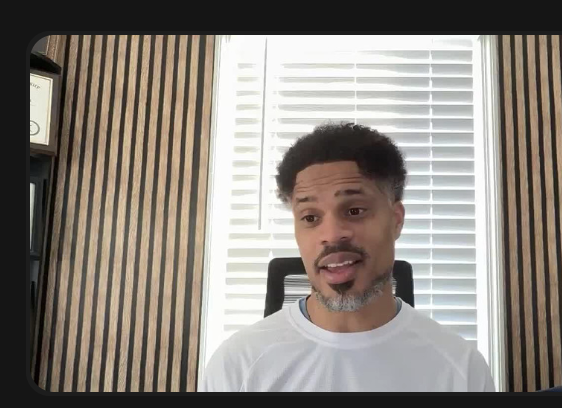
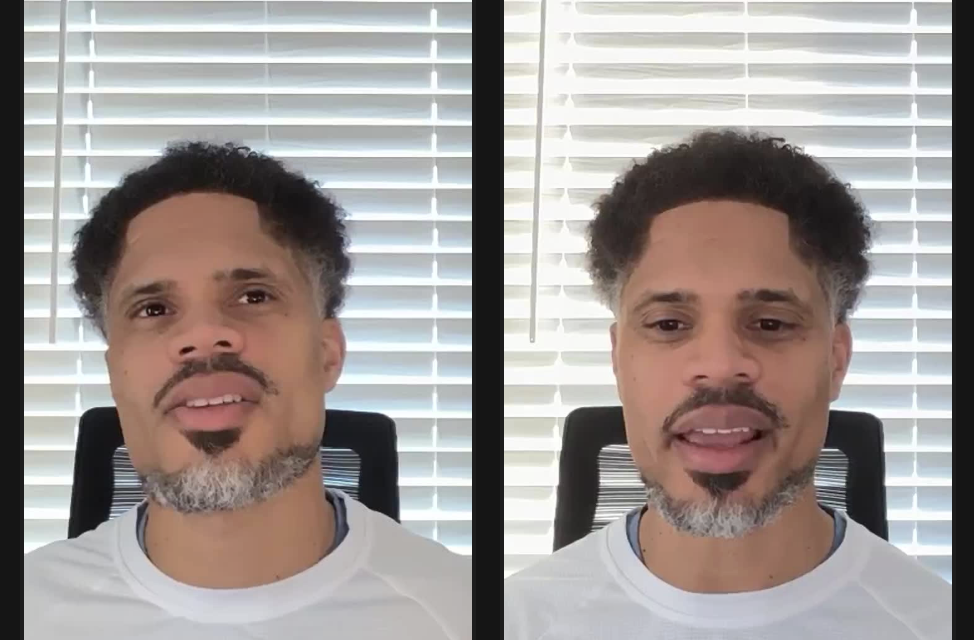
---
## 🎙️ Episode Summary
In this powerful and deeply human episode of **The Motivate Collective Podcast**, Melanie Suzanne Wilson sits down with **Dr C S Wilson** to explore resilience, injustice, faith, technology, and the inevitability of transformation.
Wrongfully sentenced as a teenager to nearly 30 years in prison for a crime he did not commit, Dr C S Wilson spent almost 18 years incarcerated before receiving an executive pardon. Instead of allowing bitterness to define him, he used that time to study, reflect, build faith, and sharpen his purpose.
Now a licensed minister, author, tech founder, and global speaker preparing for a TEDx talk, Dr Wilson shares profound insights on hope, optimal decision-making, lifelong learning, entrepreneurship, AI, and why quiet seasons are often where our greatest growth occurs.
This episode is a masterclass in **turning confinement into clarity** and trusting the long arc of transformation — the caterpillar stage before the butterfly.
---
## ⏱️ Chapters
* **00:00** – Introduction & meeting Dr C S Wilson
* **00:41** – Wrongful conviction at 17 and life sentence realities
* **03:20** – Nearly 18 years in prison and an executive pardon
* **05:30** – The “inevitability of the butterfly” metaphor
* **06:44** – Faith, identity, and maintaining self-belief in prison
* **08:08** – From incarceration to ministry to tech entrepreneurship
* **10:49** – Reading, education, and self-liberation through learning
* **11:06** – AI, technology, and building a global tech company
* **14:50** – Theology vs tech: calling vs occupation
* **16:05** – Mathematics, faith, and the fine-tuning of the universe
* **17:45** – Intuition, divine timing, and the moment everything changed
* **21:11** – Re-entering society after prison and adapting to change
* **23:32** – Fearlessness, resilience, and breaking self-imposed limits
* **25:39** – Quiet seasons, course correction, and personal recalibration
* **28:35** – Creativity, stillness, and the power of silence
* **28:55** – Optimal decision-making and helping the most people possible
* **31:10** – Food insecurity, Maslow’s hierarchy, and systemic solutions
* **34:25** – Knowing your strengths and “sharpening the axe”
* **36:25** – Where to find Dr C S Wilson & what’s next
---
## 🧠 Topics Covered
* Wrongful conviction and executive pardon
* Faith, forgiveness, and inner resilience
* Identity beyond circumstance
* The butterfly effect and personal transformation
* Entrepreneurship after incarceration
* AI tools, technology, and future-focused thinking
* Lifelong learning and self-education
* Quiet seasons, creativity, and reflection
* Optimal decision-making for societal impact
* Food insecurity and systemic solutions
* Knowing your strengths and sharpening your skills
---
## 💬 Memorable Quotes
> “You don’t judge a book by its cover — and you don’t know how the story ends.”
> “Purpose may be delayed, but purpose knows no postponement.”
> “The cocoon is necessary because the wings are being built.”
> “If you make optimal decisions, the maximum number of people benefit — and the least number of people suffer.”
> “You free yourself through learning before you ever walk free.”
---
## 🔗 Links & Resources
* Dr C S Wilson Website: **[www.drcswilson.com](http://www.drcswilson.com)**
* Follow Dr C S Wilson: **@drcswilson** (Instagram, LinkedIn, Facebook)
* Book: *Your Piece of the Pie: How to Operate at Greatness*
* Upcoming: TEDx Talk — *The Inevitability of the Butterfly*
---
## 🎧 Listen, Reflect & Share
If this episode moved you, challenged your thinking, or gave you hope during a quiet or difficult season, share it with someone who needs the reminder that **this is not the end of their story**.
Subscribe, leave a review, and follow **The Motivate Collective Podcast** for more conversations on resilience, purpose, wellness, and human potential.
---
Transcript
Dr C S Wilson (00:00)
Thank
Melanie Wilson (00:01)
Dr C S Wilson
Not related, clearly.
Dr C S Wilson (00:07)
Yeah, I'm doing just fine. How about yourself, man? I'm so happy. I'm excited enthusiastic, I'm elated to be here with you on the podcast
Melanie Wilson (00:09)
How are you doing?
Awesome. Look, you have had quite an experience, and one that a lot of people would not believe is even possible. So I'm really keen for you to share what happened in your life to let people know what goes on in the world.
Dr C S Wilson (00:41)
Sure, yeah. I'm right here in North Carolina. I was born in Virginia in the United States of America. And at 17 years old, I was at the scene of a crime where a guy's life was taken. So a guy was shot, single wound to the chest. And I didn't do it, didn't see the guy. I can't say I'm 100 % sure who done it. But I was 17 years old. I was going to be sentenced to 88 years with 58 suspended.
That's an active sentence of 30 years plus life on parole. So I was sentenced to more time in prison than I would be on Earth. That I had been on Earth at the time, me. And yeah, it just kind of shaped my life. So was actually three weeks before my 18th birthday and approximately three weeks before my high school graduation.
Melanie Wilson (01:32)
This is astonishing. This is just shocking. I mean, realising you were a teenager, you were a kid, and you just happened to be in that space when it happened. Let's talk about that.
Dr C S Wilson (01:36)
Yeah
Yeah.
Yeah, so it's kind of like I have an honest we get a few schools and churches and stuff like that and that's kind of what I tell people you kind of got a light Know your environment know who you with know who you're around on Because at the end of the day humans are responsible for carrying out justice So the system sometimes works is just people are flawed and people are flawed all around the world so it's like you got people with important jobs and
a lazy day on the job, you misinterpret information, or someone looks like someone else to you, and then a kid loses his life. So it's a sad story in that regard, but it didn't end there. So I would go on to be in prison, and then I did approximately 17 years, 11 months, three weeks and two days. I filed every petition for clemency, rid of mandamus, rid of actual innocence. Virginia Supreme Court, the United States of America Supreme Court, and I found no relief, but I actually had an affidavit saying I didn't do it, so was going to Ralph Northam in Virginia, who was the highest seat in the land at the time. He signed an executive order to release me from prison. So I was executively pardoned in light of an affidavit stating my innocence after doing almost 18 years.
Melanie Wilson (03:20)
nearly 18 years. So that's a lot of your adulthood that you spent in that place.
Dr C S Wilson (03:23)
Yeah.
Man.
Yeah, absolutely. So I'm only 41 now, so I've actually spent more time in prison as a man than I have as a man in society. Yeah, so it's like, you know, people get it wrong, and then I happen to be the face of one that, you know, when justice goes wrong. But I'm not bitter, you know, I travel a little bit and tell that it's kind of like beneath me to be. That's the power of human potential that you know what's inside you won't let what's around you stay the same so I just kind of I didn't think that something like that could happen to me so I just always kind of believe you know that I would be getting out that's that's why I'm doing a TED talk we're recording it later this year but it's on the butterfly effect so the title of it is does the caterpillar exist you know the inevitability of the butterfly because the caterpillar is just a stage in the life of the butterfly. If you believe things will change, know, you just focus on that and believe that it'll happen for you. And that's kind of what happened to me. So I had different lawyers to file petitions, and the petition for clemency that the governor actually signed. I actually filed that myself. In prisons here in Virginia, they got what's called law libraries. I went in there and filed it myself because it was inevitable, you know, you don't judge a book by its cover, and then you don't know how a story is going to end, so it looked like
I was a caterpillar. It looked like nothing beautiful would come out of my life. That's a message for a lot of people that don't judge and don't close the book too soon. You keep going. You're building resilience. You're building what you need for the next season of your life. So, it's kind of that perspective that I had. That's what kept me sane in there in a place that prisons are built for a reason.
So, like I was raised around these people, know, murderers and thieves and rapists. So, they should be in this place. And I just wasn't supposed to be, but the guards don't know you're not supposed to be. So, you get treated as them, you eat the same food as them. You get the same verbal treatment as them. So, you just gotta believe that your life is gonna turn out, and then decisions follow from that place. So if you refuse to let bitterness take root, you just continue to believe, then life changes for you. It's like how the world is designed. It works that way. Justice will prevail in some way or another. Yeah, you just gotta refuse to think anything otherwise. So it's like in that place, you need hope, and it's hope that continues to shape and bring your future closer so that the time there will be up, yeah.
Melanie Wilson (06:20)
The thing that stands out to me is that you were surrounded by people who perceived you in a particular way, and you didn't let it shape your perspective of yourself. You still knew who you were. How did you maintain that perspective? How did you keep that belief?
Dr C S Wilson (06:44)
Yeah, so I'm a licensed minister. I actually attribute it to God. It's like you got to believe in something that you can't see because in the natural I had done all I could do. The help of man was useless for me. So, in that place, I actually earned my doctorate. So, I earned my doctorate in theology. So, it was kind of like I kind of got it that I was going to need help outside of myself, that people didn't believe me. So in there, you're a number. You're not even a human. I was 10 39 28 1 and in maximum security prisons. had actually given that production was going in for the movie of my life. The years they couldn't take. because it's almost kind of like hard to believe, you you don't I remember I was we's in North Carolina. I was speaking. They brought some kids in. I like to tell my story in the third person for those who hadn't heard me before. Don't know the story. And I remember then I said, hey, that young man is me and a little kid in the back said, no, damn, he's lying. You know, it's hard to believe, because the smell of smoke isn't on me. I have the honour of having my own little tech company and just kind of work from home. Life is good now, so it's like the narrative has been turned. The inevitability of the butterfly is real.
Melanie Wilson (08:02)
That's amazing. You mentioned a tech company. Let's flick to that before flicking back to your story because there's so much to unpack here. How did you leap from being in prison to being a minister to having a tech company?
Dr C S Wilson (08:08)
Chill out.
Yeah, so I was just kind of like, a couple nights ago, I was up reading the script of the movie that's going to be produced in my life. And when I was in 10th grade, I actually got the highest on my geometry SOL. And it's kind of like, I recognise shapes and patterns. So the world makes sense to me in that regard. I never did homework in school. I was just competent, you know, and I was a natural leader. So, going to prison was like, the purpose would be, you know, delayed, but purpose knows no postponement. So when I actually got out of prison, I learned business inside that place. And then when I got here, the numbers was like, wait, if you're do business, this is the future. The technology is moving here. So our first app is actually gonna be TurtlePay, BuyFast, PaySlow, and it's in the buy now, pay later space. And so we able to help low-income, we'll be in more countries than America soon. It's like, homeland to be a part of that because numbers make sense to me and seeing where this is going, people buy more when it's, you know, that firm type of payment, so just like that makes sense to me. That's like fail safe. That's what you know. So it was in me to be an entrepreneur. It was in me to succeed. You know, in prison, I couldn't take that out of me. You know, it's just like a dark chapter. I describe prison as like The Walking Dead. You seen The Walking Dead in Austria? It's like The Walking Dead. It's kind of like you're numb to the pain of that place. It doesn't feel good, but there's nothing you can do to alleviate yourself from it. Nothing but freedom scratches that itch.
Melanie Wilson (10:04)
Freedom is what eases everything. So you were able to study a lot when you were over there.
Dr C S Wilson (10:13)
Yeah, yeah. Yeah, I had time to, and I just, it's the resolve, know, in America, only 50 % of the people in prison can actually read. So it's kinda, you take advantage of what you're able to have. Yeah, so I've ordered books. I used to read a book a week. I was ordering books every month from publishers and approved vendors. Cause it was like, I just to travel there is to do it in your mind, to acquire information. You can't apply it all, so you free yourself through reading before you can actually be free.
Melanie Wilson (10:49)
Absolutely. You read a lot. Okay. And the apps, I'm curious. You would be clearly seeing that it's easier now to get an app made than a few years ago. What has been your experience with the technology side, AI, all of that?
Dr C S Wilson (11:06)
Yeah, so that's an amazing question. don't think I've had that before, but AI has definitely changed the game. The speed at which a website can be done, the speed at which simple applications can be done. It's definitely a horse of a different colour. It's changing every day, you know. So it's kind of like exciting to be on this side. I was in Dubai in November. You're going to go back next month and just, you know, meeting with these different minds. We actually established a company over there. So we got to register the company.
Company in Dubai. Yeah, so it's kind of like technology can take you where other things can't it's like it's this you know AI is gonna be in everything like the utilization of it is what makes things efficiently done and so pretty soon everyone is it'll be the norm just like the internet you know everyone will be using it every day it'll be a part of everyday lives and people on the front end of you know, there's money to be made and others will just be on about it.
Melanie Wilson (12:07)
So is the AI simply intertwined into the work you do?
Dr C S Wilson (12:12)
Yeah, correct. So even my day-to-day life, now, my little AI subscriptions help me be efficient with note-taking, and I'm sure, you know, utilising the different platforms, content creation, so yeah.
Melanie Wilson (12:28)
Absolutely. Even the platform that I use for the podcast makes life so much easier, and it saves a lot of time.
So what sorts of tools? For one second, before we get back to the big questions, which tools help your everyday life and your work?
Dr C S Wilson (12:45)
Sure, so my own ChatGPT Plus account, they ain't paying me to say this, but it's kind of popular in America. So, you know, they incorporate Canva. with, you know, picture and video creation, PowerPoint creation, everything. It's just a matter of having the right prompts to utilise. Is it big in Sydney too?
Melanie Wilson (13:05)
Yes, a bit. I think people are getting into AI a bit more now. So it's getting there. I think there's sorry, I think there's quite a following. Because I've been following people who are in America and Canadians, and I'm just seeing people overseas who are using ChatGPT in particular and other tools.
Dr C S Wilson (13:08)
Okay.
And yeah.
Melanie Wilson (13:34)
And so, I'm experiencing the difference, and I found at least a subculture, if nothing else, a subculture in Sydney where some people are delving deeper than simply getting AI to perhaps write the social media posts. I think a lot of people get AI to just write something for them, write some content, but even in terms of calendar management, I think a lot of people don't realise what it can do for that.
Dr C S Wilson (13:41)
Yeah, yeah, absolutely. It's 100 % a part of the culture here. My little nieces in school had to ban the utilisation of it because they were just getting it to write the papers and stuff was kind of like, kids see they can do stuff with a touch of a button. And so it kind of like filtered down and watered down the education. Because now these kids aren't applying themselves because, you know, hit a button and chat GBT writing papers for them, you know? Yeah.
Melanie Wilson (14:32)
Yeah, so moving on from the tools, though, what made you decide to focus on tech and apps now? Because you were also looking at theology a while ago, what made you go from one to the other?
Dr C S Wilson (14:50)
Sure, so would say theology by calling, tech by occupation. So it's kind of the gifts and calls, I believe, without repentance. Like whatever you're called to do, you do that to the grave. It's just a matter of where you'll do it from. know, some people are in pool pits, some people in the marketplace, you know. So it's just, you take your belief system. If you believe you can enrich lives, you do that with whatever you have your hands to. So it's kind of like both.
So, remember when I was saying I did good in geometry? Numbers make sense to me. They have no opinion. And so those in this field, and you do things a certain way, then it brings, I believe, generational wealth. It's, you know, I'm trying to ascertain that and move in that manner, yeah.
Melanie Wilson (15:39)
Okay, here's a question about that. I've known so many people who had what I call a math brain, be it engineering or economics, something else, and they are very interested in theology. How and why do people who are very technical and mathematical and factual still end up with a very spiritual side?
Dr C S Wilson (16:05)
Wow, that's a really great question. Of course, I would have to answer that from my ideological side, but I believe it's because I think the creator can be proven. And the same way that I believe a painting is proof of a painter, a building is proof of a builder; these things are systematically done. And I believe creation is proof of a creator.
And the numbers bear it out as far as like the Earth on its, you know, axis. And if it were just slightly closer to the sun, we'd burn up. If it was any further away, you know, we would freeze and then we wouldn't have the seasons. If it didn't rotate, you know, to have the 24-hour period days, it's like this. The fine-tuning of the universe absolutely involves math. And those that can see that... I don't think you have to be a genius to see it, but it's like you get so close, it's usually two things. It's usually like so hard to believe that you go the other route. So it's like a line in the sand. But usually those that get close enough to see the numbers, it's like, it just kind of makes sense that the creator has built himself into this thing. Everything points to him.
Great question.
So you can see that there has to be a bigger picture.
Dr C S Wilson (17:35)
Yeah.
Melanie Wilson (17:36)
That brings us back to where you started in your adulthood, because are you saying some sort of bigger picture that brought purpose and meaning into where you ended up?
Dr C S Wilson (17:45)
Yeah, absolutely. Because it's kind of like, it's so bad what happened to me. Just don't wear it on my sleeves. It's almost unthinkable. And so when you talk about purpose, I believe in being purpose-driven and having an assignment. So the story was featured on the 700 Club. The TV didn't feature this particular part of my story as well, but was November 19, 2019. I was praying. I believe I heard two words, one name.
Birdie Jamison. Well, Birdie Jamison was a retired judge in Richmond, Virginia, during the time I had a petition for clemency and the only person that could release me was Governor Ralph Norden. So I had been petitioning since 2015. I didn't even think they was looking at these things. Less than 2 % of them get any investigation at all. So I heard his name, Birdie Jamison. I go and get on the phone. I call my mother. I said, mom, I don't know what it is. I think it's God, but I think you should reach out to Birdie Jamieson. I just want to see if she knows anyone in the governor's office. So my mother began to text me. She told me that I didn't know at the time. She hadn't talked to Birdie Jamieson in over 12 months. It was over a calendar year, the last time she even spoke with her. So my mother texted her while I was on the phone. 30 minutes later, she called my mother. She said, Ms. Terry, what made you call me then? It must have been God when you texted me. I was sitting in front of the governor, and the governor said, if what you said is true, we'll investigate those claims, and we'll get Christopher out of there. That was November the 19th, 2019. April the 2nd, 2020, I was released, pardoned by Governor Rob Norman.
Melanie Wilson (19:42)
Goodness. So your mom calls someone when that person is talking with a governor right at the moment when magic can happen.
Dr C S Wilson (19:47)
texture.
Stand in it for them.
Absolutely. Bigger than me. Yeah, I gotta believe in God. I'm here because of that encounter. I believe by her name. I tell my mom, she texts. She just so happened to be sitting in front of the government. We didn't know if she knew the government. Yeah.
Melanie Wilson (20:11)
Well, that right there, I think, is the magic story because I think most people have a moment eventually where things just line up. Sometimes that doesn't mean it started off; you're in the wrong place at the wrong time, but then something lined up. And do you think other people need to look out for those little moments of intuition that thought of
Dr C S Wilson (20:23)
Yeah.
Melanie Wilson (20:39)
I need to just follow this path. I don't know quite where it's leading, but I think this can get sorted out.
Dr C S Wilson (20:46)
Yeah, yeah, absolutely. You hit the nail on the head. I would say that you just gotta kind of follow, because life can drown out inner awareness and inner impressions. So, it's kind of like, you gotta get quiet enough to be led. And if you believe something's bigger than you out there, then it could get you to the life that you always was destined to have, yeah.
Melanie Wilson (21:11)
Right, right. So you need to believe in something greater than yourself. What were your first steps when you got your freedom back? How did you figure out how you were going to get back on your feet? How did you figure out how to connect with the world and community? What did you do next?
Dr C S Wilson (21:35)
Yeah, great question. I just remember one thing in particular when I got out, and you know, there was no such thing as a smartphone when I was incarcerated on May 16 2002. We wanted our phones to be as small as it could be. Yeah, 2002. And then when I was released April 2020, you know, you wanted the phone as big as it can be, you want a smartphone big as you can, you can get it so life was radically and drastically different. I think it was that gap in my life that kind of highlighted, wait, this is, if you go in this field, you know, things make sense. So business was always going to be the avenue. I kind of like got it, you know, being an entrepreneur, it was just a matter of what, you know, and so again, my relationship with God was that guiding, you know, light. And so being in this field is humbling. kind of like.
Like what I do, yeah. So it was just kind of like what was built in me there. Those seasons of quietness. And that's why I wrote my first book. I was laughing because in the script I told the story of how I was in prison and TBN, the largest Christian network in the world. I remember being on the phone with him. Because my sister who was my secretary at the time, by name.
They they was like the publishing company and said yeah, we wanted less, we'll talk to Dr. Wilson We want to talk to him, and they was trying to set up a time. She's like, okay, well, have Dr. Wilson calling you at that time, and so I called her, and then we called a public company on a three-way call. You know, got to do it within 15 minutes, you know 14 minutes, rather before the operator said you got 60 seconds left, and I'm so they but close the deal from prison. So as soon as I got out, I was on the path of having my book published by the Trinity Broadcasting that way. Yeah, via the phone in prison.
Melanie Wilson (23:32)
My goodness. So, part of finding your freedom and your voice is you dove in with a book. It's amazing to realise I think you are a lot more fearless than a lot of people who haven't gone through that. I'm wondering if perhaps we create our own limitations because you almost all the limitations in the world. You were literally confined, and yet other people have more freedom, and they have all these doubts about why they shouldn't do something.
Dr C S Wilson (23:57)
Yeah.
Yeah, I think that's so true, you know. So life is tough. It's kind of like it comes with it. But again, it goes to like the inevitability of the butterflies, like these seasons toughen you up. So the cocoon is necessary because wings are being built. So when you're in the cocoon, the strength that's built, you know, the inner fortitude, the fearlessness that you would mention, like this is needed and it's built in these seasons.
When it looks like it's dark, when it looks like God isn't there, I mean, it's those times that your wings actually being formed,
Melanie Wilson (24:41)
When it looks like there is nothing, that's actually when you are growing and building. So are you saying this sort of a hibernation? Is it okay to have a moment of hibernating away and rebuilding yourself to get stronger?
Dr C S Wilson (24:59)
Absolutely, I would say it's the greatest thing you can do is to level things, to get back centred as it were, know, and grounded, you know. So everyone needs a reset. It's a perspective gain, and you know, when a rocket ship goes to the moon, it's not a straight shot. It's perpetual changes, you know, it's constant course correction.
So it's that perpetual introspection to say, okay, we're going to the moon, but we gotta keep getting these degrees right. We gotta keep changing. So we gotta constantly look at ourselves to ensure we're on the right path.
Melanie Wilson (25:39)
Right, it has a course correction. I actually didn't know that. So we're not on a straight path.
Dr C S Wilson (25:44)
Yeah. You learn a lot of things when you're in prison, Melody. I had a lot of time, yeah.
Melanie Wilson (25:49)
You had time to read a lot.
During COVID, I learned everything about food because I was in my own little bubble and there wasn't much else to do. So, think one thing we're learning from this is if anyone has a quiet phase for whatever reason, use the time to learn.
Dr C S Wilson (26:03)
Mm-hmm.
Yeah, yeah, absolutely. So that is so like translucent. You see it all in there. It's like the place where crime is the worst are neighbourhoods. You go through a bad neighbourhood. When I mean by bad neighbourhoods, I mean a neighbourhood with low income and low credit scores. These places are noisy, nothing wrong with kids playing and stuff, but you go to a different neighbourhood. Like it's built for quietness. You’ve got to be able to think.
You know, it's not a lot of loud noise. I'm playing. Yeah, what is?
Melanie Wilson (26:49)
Right, so do you mean things like the physical noise in the surroundings?
Dr C S Wilson (26:57)
Absolutely. Yeah.
Melanie Wilson (26:58)
Okay, because honestly, personally, I was feeling a bit gaslit when I was in a space that was near a major road and I was always around noise. You're getting where I'm coming from. I'm trying to understand because then, in the peaceful, quiet spaces, you can hear yourself think more.
Dr C S Wilson (27:09)
Thank you very much.
Yeah, yeah.
Absolutely, absolutely. That's the place of creativity. That's where it comes from. The mind has the neurons got to connect, so you need that quietness as an incubator to put it together. Babies are born, and the stillness of the womb, that's the origin of life.
Melanie Wilson (27:46)
So, if you talk with people who are in a city, do you think it's good for them to get at least a moment out of the city or somewhere peaceful and quiet instead of always being around the rush and the noise?
Dr C S Wilson (28:01)
Yeah, I absolutely recommend it. And most people that I know, they make it their business to steal away, to get away, or create that quietness within the city. So creativity can be birthed.
Melanie Wilson (28:16)
I think that could be why the mindfulness physical spaces are so popular now, because I can go to a quiet room and just gather thoughts for a moment.
Dr C S Wilson (28:22)
Yeah
Absolutely, Yep. Great point.
Melanie Wilson (28:35)
So, looking forward and looking ahead, what is your message for everybody for the future? Because I was checking on that a bit before we started recording. I'm wondering, what do you wish everybody would be doing more to help themselves in the world?
Dr C S Wilson (28:55)
Yeah, yeah, no, that's a great question. I would answer that like this. So, my first book is called Your Piece of the Pie: How to Operate at Greatness. And essentially, the book is about making optimal decisions. So optimal decisions bear the most favourable, advantageous fruit. So it assures that the max amount of people are benefited and the least amount of people are sorrowed. So we don't have to be as smart as Bill Gates, or we've got to make optimal decisions like wealthy people. So more people in the world, the correctional officers, the police officers, those in government, if they make optimal decisions, decisions that take into effect the max amount of people to be benefited and the least amount of people in this hour, like our world would be a better place, but it requires a systematic change in a framework to make these optimal decisions. And they ought to be made from the perspective that you're gonna win, you don't lose, know, that human good will prevail. And so if there was one message to humankind is like, if that mindset prevailed, every area of life, you know, it's like, well, let's make optimal decisions. This could help more people, you know, then it's like, hey, you could cure the world. Like, world hunger wouldn't be a thing. There are enough businesses and nonprofits; they throw away enough food to feed people. But because of regulations, can't, you know, so that's just a matter of someone saying, hey,
Let's make a business. We'll have this non-proper. They signed the waiver. They can have the food. Yeah, we're hungry, kid.
Melanie Wilson (30:26)
If you can believe it, I had an idea about an app for food a few years ago. And after a few people turned it down, I just gave up, but you are bringing up food. And I think that's such a crucial issue because people need dollars. But food is a lot more abundant than we realise because of the issue you are talking about. So much of it was thrown away. There is.
Dr C S Wilson (30:39)
Mm.
Yeah.
Melanie Wilson (30:55)
So do you think that food is one of the top issues we need to sort out? I mean, you've seen disadvantaged areas, you've talked with communities. I'm wondering what you think people need right now?
Dr C S Wilson (31:10)
Yeah, no, that's definitely on the list. It's part of an old philosophical view that's called Maslow's Hierarchy of Needs. There's no self-actualisation until basic needs are met. know, food, shelter, clothing. And without these things, like kids can't learn in school, they can't be the best expression of themselves without being fed. Yeah, it's a real problem in the world.
Melanie Wilson (31:34)
Okay, I feel really inspired by what you're saying to get those things sorted out for more people. I'm wondering what other things do you think people need, especially do you talk with young people or people who have any background professionals? What do you find is missing? Are people not getting creative? Are people needing to be more entrepreneurial, or do they need to teach themselves more and continue learning?
Dr C S Wilson (32:06)
Yeah, that's a great question. I will go back to the optimal decision. So, it's being aware of how you're made and then how that'll be expressed to the world around me. So, if you are entrepreneurial, you stir that up on the inside, but everybody doesn't wanna manage. Everybody doesn't wanna lead. Some people just wanna be in the kitchen cooking the soup, know? So, it's like you have that and someone wants to build a kitchen for the soup to be cooked in, know. So, I fell on that side. I just kind of see, I believe you can help more people, but whatever it is that we can do, we want to do it, we want to do it optimally, so the maximum amount of people benefited and the least amount of people sorrowed.
Melanie Wilson (32:48)
Focus on how you are made. I hope we can translate that to those who believe in something, don't believe in something, wherever their beliefs may be. I hope we can all know that we are built a particular way. Have you found that everybody has an instinct to know that they are wired a particular way, or however it might be worded?
Dr C S Wilson (32:52)
Yeah, absolutely. I think it goes back to what you were saying earlier, you know, being able to get quiet enough to be aware of how you're actually wired, you know, and not how you're conditioned to be. Remember, we alluded to life being hard, and in prison, you see a lot of guys who come in one way, they leave another way, you know, it's because of how they were conditioned to be while they were in there, you know, on guard. They call it being institutionalised.
So a lot of guys haven't gone through that much time to actually get on what they call social security in America, because they feel like mentally they just can't adjust. They can't cope with living outside of that place that haven't been dependent on others for the meals and provision and shelter for so many years. It's kind of like you don't adjust properly, but it's because of how they've been conditioned. That place that that, it translates that, if you don't get quiet and see what's in you, what can you actually do, what skillset needs to be sharpened, then you don't grow, and you don't help as many people as you can.
Melanie Wilson (34:25)
The difference you had that others didn't, it's that you knew your strengths. And are you saying that people anywhere need to simply see their strengths, look within and see what they can do to value it.
Dr C S Wilson (34:42)
Absolutely. That's step one anyway, to see what it is that you bring to the table, to whatever that is, whether it's a relationship, your job, and then it's your responsibility to sharpen the axe.
Melanie Wilson (34:57)
Okay, sharpen the axe. What does that mean for you?
Dr C S Wilson (35:01)
So it's, know, whatever skill set it is, you make it better. So you read the books on that subject, or you take the class, you get a mentor, you study behind, you. Over here, it's really big. We watch YouTube a lot. You watch the YouTube videos, and you move in that direction, yeah.
Melanie Wilson (35:20)
Absolutely. The videos, the books, whatever works, but keep learning. So it seems like the lesson here is lifelong learning. We are busting the stereotype of the conditioning, actually, where a lot of people were told just go to school, then college, university, which I think is drifting a bit now. But do that, and then just do a job. And these days, though,
Melanie Wilson (35:50)
Do you think people are becoming more aware that we need to continue teaching ourselves throughout our entire lives?
Dr C S Wilson (35:56)
Absolutely. You hit it right on the head. So learning now is more circular than linear from the years past model. Because the world is fast-paced and moving. If people don't utilise AI and know anything about it, then they'll kind of be behind. So you're have to learn new stuff.
Melanie Wilson (36:19)
Totally, totally. We have to learn even because of where our technology is going. Where can people learn more about what you do?
Dr C S Wilson (36:25)
Absolutely.
Sure, yeah, so I'm DR C S Wilson. That's all my social media tags, LinkedIn, is it, Facebook, Instagram. My personal website is www.drcswilson.com, so just kinda doing my part to help as many people as possible, yeah.
Melanie Wilson (36:51)
as many people as possible. And you mentioned you're going to do a TED Talk.
Dr C S Wilson (36:57)
Yeah, yeah, that's exciting. That's something, you know, being where I've been and now to be, know, TEDx, that's the biggest stage in the world. So that's really humbling, yeah.
Melanie Wilson (37:09)
It is. Are you looking forward to talking to more groups and audiences anywhere?
Dr C S Wilson (37:16)
Yeah, absolutely. You just put it together, and I'm gonna come to Sydney, and you talk to them out there. Absolutely. Sure.
Melanie Wilson (37:24)
Okay, I'll send you something later because I'm collaborating with someone who moved from New York to Paris, and I think you have such a message. I mean, considering you have that theology and the tech, you have everything going on, this is going to be mad fun. I feel like I've learned a bit of everything from you, and I'm so grateful for your time.
Dr C S Wilson (37:33)
Nice.
Yeah
Praise God.
Yeah, yeah, absolutely. I thank you. I think you're doing a great job. It's been a great interview. And I know your listeners are being rich. Keep it up. Do 100 more episodes.
Melanie Wilson (38:00)
Thank you so much.