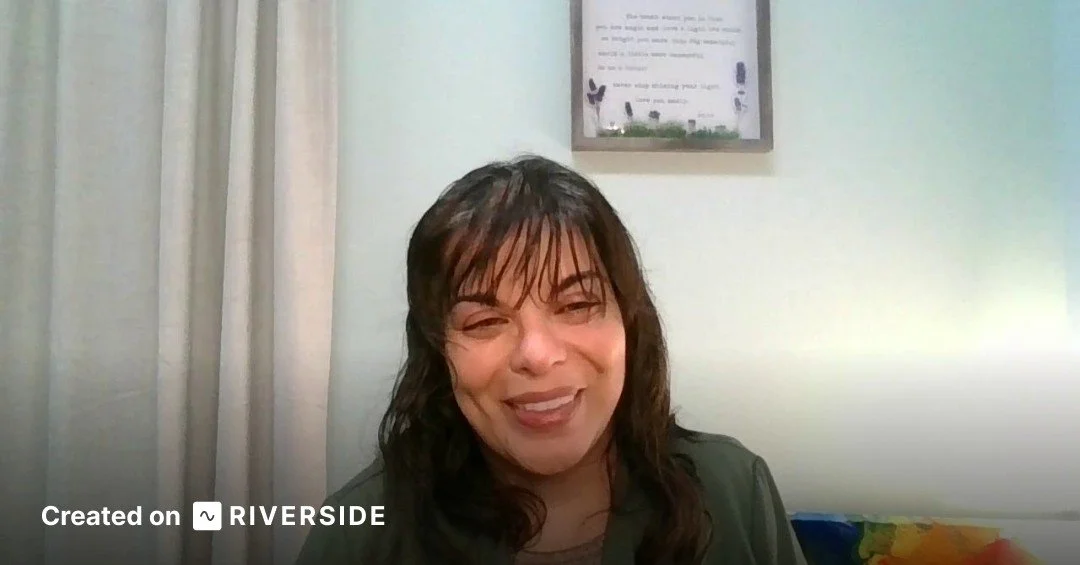
Victoria Duarte on Trauma Recovery, Lessons from Healing Veterans, and Emotionally Safe Spaces
Watch The Motivate Collective Podcast on YouTube
Show Notes
From Threat Response to Inner Safety: How to Make Brave Life Changes
Episode summary
In this episode, Melanie sits down with **Victoria Duarte**, a **Somatic (Semantic) and Mindfulness Coach** and co-founder of the **Healing Arts Center**. Victoria shares how the center was shaped by holistic modalities that supported her business partner, Mark—a 25-year military special operator—through the transition out of military service.
Together, they unpack the danger of “one-size-fits-all” wellness and the *marketing* of “the one cure,” why meditation isn’t always the answer (especially for complex trauma), and how avoidance can hide inside spiritual or mindful practices. Victoria explains the body’s **threat response**, what it looks like in real time (racing heart, shallow breath, fidgeting), and how building **internal safety** helps people take action—like setting boundaries—without their nervous system screaming “danger.”
They also dive into **self-compassion** as a core definition of healing, the impact of inner critic conditioning (family dynamics, achievement culture, social media comparison), and a refreshing take on **anger**: it belongs—and it can be used to create rather than destroy. The episode closes with practical tools anyone can use to regulate in the moment, including sensory grounding, “giving an object a job,” and compassionate truth-statements that bring you back to what’s real.
Key takeaways
There is no single “cure” modality—healing works best with **blended, personalised support**.
* Meditation can help, but **stillness isn’t safe for everyone**, especially those with complex trauma.
* Real change requires **mindset + action**, and action becomes possible when the body feels safer.
* The inner critic often drives behaviour more than we realise—**self-compassion changes the story**.
* Anger isn’t the enemy; it’s energy—what matters is whether we use it to **destroy or create**.
Chapters / Timestamps
* **00:01** Welcome + meet Victoria Duarte
* **00:18** What Victoria does + the origins of Healing Arts Center
* **00:56** Why “one path” wellness doesn’t work for everyone
* **03:14** The ethics of healing marketing + protecting people in pain
* **06:26** When “healing” becomes avoidance (and why that’s risky)
* **08:46** The threat response: why your body says “stop” even when you want change
* **11:28** Safe space, masking, and finally exhaling
* **12:54** “Is my whole career a trauma response?” + reclaiming your own voice
* **16:06** Military culture, belonging, structure, and unmet needs
* **20:34** The “Kool-Aid” trap: tribe, purpose, and putting faith in one system
* **21:58** Victoria’s definition of healing: **self-compassion**
* **26:45** Social media comparison + younger clients choosing to unplug
* **32:51** Anger as creative fuel: art, writing, poetry, expression
* **36:59** Anger + sadness together + releasing emotion safely
* **39:00** Singing as regulation + using creativity to get through pain
* **44:31** Why stillness isn’t always the answer (especially after trauma)
* **48:58** Three practical tools for self-compassion and nervous system safety
* **57:15** Closing gratitude + where to connect
Quotes
* “There’s no one cure for everything.”
* “If one thing isn’t working, it’s not that something is wrong with you.”
* “There’s no real change if you’re not willing to sit with yourself honestly.”
* “Healing is self-compassion.”
* “We are all storytellers—it’s just what story are we telling ourselves?”
* “Anger and sadness go together.”
* “There are only two energies: one to destroy and one to create.”
Topics covered
Holistic healing • Somatic (body-based) regulation • Mindfulness • Threat response • Boundaries • Emotional safety • Trauma & complex trauma • Avoidance patterns • Inner critic • Self-compassion • Social media comparison • Anger, grief & creative expression • Military transition & identity • Nervous system tools
Transcript
Melanie Wilson (00:01)
Victoria, welcome to the Motivate Collective podcast. How are you doing?
Victoria Duarte - Healing Arts Centre (00:06)
Thank you so much for having me. I really appreciate sharing space with you.
Melanie Wilson (00:10)
Definitely. Let's start with explaining to everybody what exactly you do.
Victoria Duarte - Healing Arts Centre (00:18)
So I'm a Semantic and Mindfulness Coach. I'm the co-founder of Healing Arts Centre, which is based on the different healing modalities that supported my business partner, Mark, while he was transitioning out of the military. He served for 25 years. He's a special operator. And so we brought together all the different types of holistic healing modalities that supported him during his military retirement.
Melanie Wilson (00:45)
Amazing. What did you find was the benefit of bringing in these modalities for people who have had that professional experience?
Victoria Duarte - Healing Arts Centre (00:56)
So I find that a lot of times people who are looking for support, additional support, holistic therapies, or they're just looking for a different way of dealing with their stress, we're kind of led down to this one path. Let's try this one thing that everyone's working out, and it might be everyone's got this idea that meditation is a cure of all cures, right?
And as a meditation teacher, I am one of the people that said, no, you know, it can benefit you definitely. But there are definitely different things that we can blend in. And what I love about the special operator community is that they get different types of holistic modalities to support them. And it's not this one path, one way. And I feel that so many of us are led to believe that there's one cure for everything. And so we're trying to move people away from this idea and open them up to, you're going through a stressful time. If you're grieving, if you are in a situation where you're leaving an abusive relationship, if you are going through a major transition, if you're going through a medical journey, there's no way that you can only lean into one support system. You're gonna need to be exposed at some point to different ways of dealing with it. And so that's kind of where we come from is this place of opening up and being a resource for people to see and be open. Nothing is forced upon. It's just, hey, we exist, we're here, we welcome you. We'd love to work with you and just show you that there's many different possibilities. And if one thing isn't working, it's not that there's something wrong with you; it's that you might need additional support or that modality might not be working for you. And so maybe there's some other ways of opening you up to different things, if that makes sense.
Melanie Wilson (02:59)
Really does. Have you found that even though we're such an individualistic culture and society, there's almost a one-size-fits-all assumption in a lot of their health and wellness spaces? Do you think so?
Victoria Duarte - Healing Arts Centre (03:14)
I definitely do. And I always say this, you know, the person that is in pain, you're also the person that's keeping their lights on. So, of course, someone out there is going to market themselves as we have the one way, we have the one cure, we have the one path. And I'm so protective of people because I've seen what people in pain go through. I've seen the other side of someone trying to gatekeep or you know try to force clients into different things that don't work for them that make no sense, but you know, if they're trying to keep their books and they're trying to keep their you know, they're trying to keep a client Keep coming in, you know someone on the other side of that the practitioner can definitely Force them to believe that you know, they're not trying enough. They're not doing enough, and like, really, people, you know, and unfortunately, we, I, we have seen it. It's one of the very reasons why we wanted Healing Art Centre to exist and to be here, because we've seen how people have been taken advantage of, and there's a lot of great marketing out there. You know, I've fallen for the marketing, going, really? That's going to cure me. That's going to fix all my problems. That's going to make this all disappear. I'll do it. And then I take a minute. Wait a minute. Really? Come on. That's great advertisement.
Good job, I'd love to hire the marketing person, and can we get ethics here? Can we have integrity? Because there's no one way of doing anything. You know, don't look at nutrition and go, you know, if I only eat this one food, I'm gonna heal my entire body. So why would we do that with healing modalities? And I get very passionate about this, as you can tell, because I've seen the other side of it.
Melanie Wilson (05:06)
It's great that you mentioned food because even before you said that, the phrase that came into my head was as part of a balanced diet. I think that we need a mental and emotional equivalent of that. And I think that phrase was normally used for the treats. Enjoy this as part of, but I think that should be used for almost everything because, like what you're saying, just as much as we wouldn't only eat kale and nothing else, even though it's good for us, you wouldn't only do one thing. And I think often we have to learn that the hard way. I'm wondering if you saw in other people, and it sounds like you saw that in your own experience, we have to learn the hard way that for so many reasons, we get the tunnel vision for one thing. Perhaps it feels good, and we want more of it.
Victoria Duarte - Healing Arts Center (05:40)
Mm-hmm.
Melanie Wilson (06:03)
But then, especially, I'm wondering if you've seen that people get into these mindful practices, and it's amazing. It can slow the mind down. It can do the things, but we also need to take action and take steps to change our lives as well. So, have you found that people just for so many reasons get tunnel vision for one thing?
Victoria Duarte - Healing Arts Centre (06:26)
I think there's a lot of ways that we can avoid doing things, you know, and there's some healing modalities that it can easily be a way of escaping. And not to put any type of modality in the hot seat and really criticise it. But if you have a, if you have someone coming into your office and you identify as an avoider, you know, and you're there hoping to have courage to avoid, but that healing modality matches, you know, just ignoring things and, you know, brushing things aside and, you know, maybe there's some toxic positivity mixed in there. It's really hard to take action. It's really hard to encourage the other person to, to make changes or have an honest conversation. You know, I think meditation is wonderful and great, but if it doesn't include mindfulness, if it doesn't include honest self-reflection, if it's about being mindful or I'm sorry, being in a meditation state all the time or kind of, you know, escaping from what's really going on and having, you know, being in universal life force energy, which is a wonderful feeling. You know, all of those are wonderful things. But if that's all that we're promoting, that's dangerous to someone who used to use, you know, if they had a childhood trauma where they would use their imagination to escape, you know, dealing with life, they're probably going to continue doing some form of that in their life, you know? And so if someone's numbing out, and now we can numb out by teaching them meditation, they're just finding a new way of avoiding conflict, avoiding hard conversations, avoiding making boundaries, and there's no real change in life if you're not willing to sit down with yourself and have an honest, hard conversation with why aren't things changing?
Melanie Wilson (08:28)
Yes. I'm keen to ask how people can change their lives beyond just their mindsets, because it sounds like we need the mindset and the action, but I'm wondering how does your centre explore all of those solutions or a variety?
Victoria Duarte - Healing Arts Centre (08:46)
So here at Healing Arts Centre, one of the things that we really do with people is sit down and have honest conversations, creating that, I know it's a buzzword, safe space, but really it's the client that decides if this is a safe space for them or not. But being able to sit down and having some self-reflective questions of, you know, how are you creating emotional safety? How's your partner creating emotional safety? What does that mean? How are we identifying that? And just really getting down into the depths of what is going on with people. But also one of the things that we do is we really look at the threat response in people. And so if they're sharing a life, lived experience, and they want to make a major change in their life, right? So they really want to go and have, they want to create a boundary with their mother. And they go to tell me about this boundary that they so desperately want to make with their mother. And as they're making, as they're talking about it, the heart rate's going up, they're getting fidgety, their breath is getting shallow. Everything in their body is saying stop. Right? Everything in their body is indicating, you know, their mind is already creating that narrative images of their mother being cruel and what is the dark consequence of this action, right? So everything in their body is saying, no, no, don't do this, don't do this. As much as they want to, everything in their body is responding to high stress, right? And so part of what we do is we teach clients how to decrease the internal symptoms so that they can have the inner courage to go, okay, so I get that my heart is racing, but I know that I can create internal safety so I can decrease the symptoms that I'm having in order for me to take action, right? So most of us don't go into the fire. Most of us try to avoid the fire, right? So if our heart is racing and it is screaming danger, we tend to do everything we can to skirt around, right? And so again, it's looking at decreasing the symptoms so that you can create safety so that your body can have a new association that yes, it's going to be an uncomfortable conversation with your mother. Yeah, it's going to be, and you will still survive. You will still get through it. We're still will return to safety, right? And so every time we can do that and have a new association, then there's more of a willingness to make that change.
Melanie Wilson (11:28)
The key phrase really was safe space. And you're right. It has been used a lot these days, but from my perspective, at least when we, I say this, not as an expert, when we grew up feeling scared, then that can become our default in any situation.
And we end up responding in the way that we learned that anyone responded in that sort of situation in other scared states. But then we might not know the difference, should I feel scared right now, or should I be taking a different response?
And so that's really crucial because the safe space is really the step one. So I think what you're doing is really crucial. I'm wondering if you've seen people coming through your door and realising they can finally, at least, breathe and let out their real emotions and their real perspectives after feeling like they had to just fake it until they made it, not in a dishonest way, but in an uncomfortable amount of high-functioning masking.
Victoria Duarte - Healing Arts Centre (12:54)
Yeah, you know, I see that every time a new client walks in and they have tears in their eyes, and they'll say, I don't know how I found you for the longest time. We didn't have a website. We were kind of like hidden under Google. So it was really a miracle when people found us. If you weren't a special operator in the military community. And so for them to be at a place to just sit with me and go come to their own realisations. I've even had people that go, I wonder if my entire career is a trauma response. Them wanting to be at the top of their career and then realising how exhausting it is and the costs and the sacrifices that they have made that don't actually match their values. Doesn't match what they desire in life. They actually deeply desire to have balance and to be home. But they can hear their critical mother saying, you know, you're not doing enough to keep going, keep going. You haven't made it. You haven't done enough. You haven't accomplished anything. And it's screaming at them. Every time they go to make a change, that's the voice that they hear. And so how do you start finding your own compassionate voice that is the motivator versus your mother who lives in your head, you know, and taking up space and making decisions for you that are costing you your own inner peace, you know, and we will see that, you know, we'll see that with the men, we'll see that with women, we'll see that with people at the top of their career, at the beginning of their career. And it's just giving people the space of going, what makes you happy? What brings you a sense of accomplishment? Not what everyone else wants from you, not what, you know, what you were raised by, but you and allowing there to be a voice for them, and it might mean that they don't make any changes for a little bit, but them actually going, I've never said that out loud. I've never even knew that I thought that or I wanted that, you know, cause we take the shame away and every time we can return to the body, which is what I love about somatic, it's that we are not only are we responding to the threat response, but we're also responding to that part of us that is filled with shame when we go to.
We want to say something, we want to express it to someone. And then we go, no, what are they going to think about me? And so it's always constantly returning back to the body and going, how's your body responding to this? Let's create safety right here. Let's not wait. Let's not wait until you leave the office space, and then you're sitting in your car, going, I don't know why I said that. Well, maybe I should take it back. You know, and it's, it's meeting the person in the moment, in the experience, so that we're decreasing any inner dialogue and any inner sensations that are conflicting, if that makes sense, right? And so allowing there to be space for your heart to speak, for your soul to speak to you, versus the inner critic to be at the centre stage at all times. And that can be scary.
Melanie Wilson (16:06)
Yes.
You mentioned how mothers had perhaps controlled their, well, the lives of their sons or daughters. I was going to say, “Offspring,” was picking my words. So basically, you said that mothers had controlled their families. And I'm going to assume that fathers and paternal figures could have been doing that as well.
And I got curious. So I've only known a few people in the military or who had been in the military previously. And I'm really wondering, do a lot of these people get involved in that work because part of what appeals to them is a higher purpose in some form and a collective belonging and also the structure, because you mentioned how families direct their lives and in the military it's safe to assume and believe that a lot of their everyday life would be guided by someone else. So do you find that a lot of those people had been just surrendering their choice and independence to these collective spaces for some sort of emotional reason?
Victoria Duarte - Healing Arts Centre (17:30)
That's a great, that is a great question. And yes, when I look at the majority of my clients, there's something that they were craving at a very young age that may have never been fulfilled until they got into the military. And in the military, some of them got that fulfillment and others are still craving it very much and still trying to find what that was that they are so desperately seeking. And it's a very complicated world. I think when you're 18, and you're joining the military, and it changes your life, it changes your family dynamic. If you later decide to get married and have kids and the whole nine yards, it's… I'm trying to keep some of my information private, so I'm struggling to answer that question because it is a complicated, complex question. You know, we do see a lot of military, both women and men who were just struggling as young people trying to get love from their family and may have not gotten that. And so they were seeking the brotherhood. They were seeking the sisterhood that often happens in the military, not always, but you know, there is this idea that it provides for that type of relationships. And it can be very complicated when you don't get that, and you're still seeking it at 40-some years of age, and you're still trying to figure out where you belong in the world and how you belong.
Melanie Wilson (19:18)
Yes, some of us spend our whole lives trying to figure out where are we fit and to really keep it general. And we're not delving into any one individual's life here. The way I described it in another episode is that it's the Kool-Aid. The more so, I've told a few people that I grew up in a suburban religious area and I haven't known the military as much as you would have heard about that space but between that and even some people drink the spiritual Kool-Aid not in some sort of cultish way but it's just, ‘I will have my tribe higher purpose and sanity and peace and everything if I just go to one specific form of modality.’ Whether it's that, whether it's this career is going to give me purpose, Ikigai, everything, whatever it might be, I wonder if there's a way for us to find the support that we need without putting too much faith in, pardon the phrase, one Kool-Aid.
Victoria Duarte - Healing Arts Center (20:34)
Right? I love that. I love that. You know, and I think we're all healing, you know, and sometimes I love that word. And sometimes I'm like, you know, that's the most vague word because as long as we're living, there's always a part of us that's healing. And then as part of us is healing, gosh, that's a lot of pressure because we can go into this wanting it to be perfect.
For me, it's like, did you make the decision today that you wouldn't have made three months ago, three days ago, three weeks ago, because you are looking at yourself from that lens of self-compassion? You're taking care of yourself. So, when I look at what really healing is, it is self-compassion.
Part of your human experience that you are having on a day-to-day experience. And I think a lot of us are lacking it or giving it away to everybody else, but not returning it back to us. And so if there's space for self-compassion, if there's space for us to be more loving towards yourself, you don't need me. You don't need another provider.
You can learn how to do that step by step by yourself, too.
Melanie Wilson (21:58)
There is so much there. I appreciate how you are digging into all these deep questions and answers because the self-compassion that just was a light bulb moment for me, because I think, I think that a lot of us, and that does derail from simply Kool-Aid, but I think so many of us will have compassion for anyone else before ourselves.
Victoria Duarte - Healing Arts Centre (22:26)
Yeah, you know, we can easily give it to our children, to our partners, to our boss, to whoever's standing at the corner of the street, you know, and to be able to give that back to ourselves. And that includes our inner dialogue. That includes how we're thinking and perceiving ourselves because the majority of us are walking around with this label of, I'm an idiot, or, you know, I'm a fool, or, you know, and we rarely talk about how intelligent we are or how brave we are or what great thing that we did today. It's so hard to look at ourselves from a lens of love, of self-love and being able to look at a mistake and not walk around with this huge label as if it's stitched on our forehead going, know, I made a mistake today. Yes, you may have made a mistake and you will also learn from that mistake. You will grow from that mistake. It's not this forever thing that you've got to carry around. It's this trophy that weighs 3,000 pounds that you're carrying into every human experience. But so much of what we do is we're constantly having this circulating conversations with ourselves that is of our disapproval of ourselves. And so if we're constantly disapproving of ourselves, there's very little room for us to be even motivated to do something different because we've convinced ourselves before we even started. What's the point? I'm going to screw it up, right? As opposed to going, well, what makes you think that, you if you compile all your mistakes that you made, what did you learn? How did that help you improve? How did that make you a better human or how did that change that experience for you? So that, you know, that made you feel a certain way or, you know, how did that change that dynamic in that relationship or whatever this is, you know, how did that help? And when we can move into that and be more loving towards ourselves, you know, it's just an incredible human space versus, you know, just how we drain ourselves. I mean, even before we get up and out of bed, you know, we're having in our dialogue with our inner critic telling us what a horrible human being we are before we even put our feet on the floor. It's really hard to see ourselves in the mirror and go, you know, we're gonna have a great day. We're gonna make a positive impact. You know, we are doing good things. You know, if we can have more of that loving, compassionate care, you know, we're more likely to make better choices, more likely not to make choices that are gonna numb us out and make us feel invisible.
Melanie Wilson (25:22)
It sounds like a part of this is having faith in ourselves as much as external people or groups.
Victoria Duarte - Healing Arts Centre (25:31)
Yeah.
Melanie Wilson (25:31)
Have faith in yourself, and this mentality of switching from our minuses to also seeing our pluses, is so crucial because in this culture, I trust you would have seen that firstly, most of us grew up with report cards in school and then workplaces where there was always a next benchmark. And of course, it's great to aim for excellence, but so many of us wondered if we were not enough. We were judged as individuals when we're on a learning curve, but also alongside that, there's, of course, a cultural mentality just from anywhere, from family, from Instagram. mean, who doesn't have you met anyone who hasn't got dragged into the mindset of this thing is on Instagram, whether it's happy family or buying a particular thing or a work success. I'm guessing we all do it at this point. Or have you seen some who get some freedom from it?
Victoria Duarte - Healing Arts Center (26:45)
I who is 20 some very early in his 20s. And he has been off social media since the day he realised he was just sitting there and comparing himself to people that he knew, people he didn't know, people that he had made up stories in his head because he barely knew them. And he was like, what am I doing to myself? And I was so I was like, could I get this in a recording?
We are made to believe that, you know, we've got to be on our phones. We got to catch up with people, and we got to do this and that. And I'm actually hearing from a couple of my 20-something-year-old clients that there is this knowing within themselves, they've got to get off of all social media. And a lot of them actually have, which I love; they're doing lock screens. They're doing everything to get off their screens. I mean, that's without my guidance. That's them just knowing this isn't healthy for me, that, you know, they're watching because part of what we do in my office is getting very clear on what's motivating this inner dialogue, what's motivating the inner critic to show up. And they're seeing it when they go on social media, and then they're like, I got to make a little change here. Right. And so, you know, making those healthy decisions to just love yourself a little more, you know, just even how we can get on social media, especially right now with everything that's going on and feel extremely stressed out within five minutes, and just feeling so overwhelmed. Well, you still have to go on through your day. You still have to get to work. You still have kids that need you. If you're starting your morning already overwhelmed and stressed out, and feeling like the walls are closing in on you because you opened up social media.
Maybe, you know, we do something that's much more healthier to ourselves to tend to that part of ourselves so that we can deal with our world. It's not, you know, I I don't believe in burying your head in the sand. I just believe in learning how much are you consuming that so overwhelming and overstimulating you and doing more harm than it's doing good. You know, if you're taking, I'm really big on, and it's a little controversial, but you know, I believe in being angry. You know, if you want to be angry, you have a right to be angry. And I get a lot of slack from meditation teachers who are like love and light. And I'm like love, and justice. That's how I speak my language. And for me, it's that, you know, but what are you doing with your anger? Are we using our anger to destroy and be destructive? Are we using our anger to fuel it with creative exploration, right? To do something that would be helpful, to do something that would bring more peace or more joy. And Mark says it well, my business partner, and he says this a lot about the military community, but I think it's applicable to everybody. There's only two energies. There's one to destroy and one to create. And with anger, we can destroy, we can create. And so, and we look at destroying. When we're angry, we go at the people that we love. When we are so angry, we go at that one little, you know, we go towards our children, or we go towards our partner, and we're mean, you know, we are short with them. Everything annoys us, we get frustrated. And if we can take a couple of minutes to go, okay, so what can I do to bring myself back to this place of centred peace, right?
And bring myself into that place so that I can deal with the people in front of me, and we're not just bleeding out with our anger. You know, I think that is extremely important. You know, and so if you're getting up in the morning and you notice that you're overstimulating yourself with anger, you know, the next person you might see if you're a mother or father is going to be probably your kids. And they're not the reason why you got overstimulated. But if they're loud and they're annoying, you're going to be short with them.
Why? Because you already overstimulated yourself. So being able to bring yourself back to some place of calm does help. And I still believe that anger has a place. We just have to find ways to use it that are useful.
Melanie Wilson (31:18)
I think there's a blurred line between the two, the destroying and the creating, because sometimes we can just feel overwhelmed or stressed. And at least in my experience, I'd be thinking, I want this to change, I want that to change. And that could overwhelm other people in a way that nudges them to switch off, and it destroys a connection, or they can say, yes, let's go for it. It can go in either direction. So I'm definitely curious. I'll flag the question of whether you think it can be one extreme or the other, and also somewhere in the middle. But also, I'm so curious about more suggestions of how the anger can positively constructively fuel us. can tell you, even though I don't want to identify as religious or not religious in this moment, but I grew up hearing about a story about someone who turned tables in a temple. didn't hurt anyone. It was just asking questions. And frankly, it wasn't someone happily just going along with what everybody else was doing. And yet, especially for me as a female, I was expected to shut up, not ask questions, basically everywhere in the world. And you'd have seen other people in that situation as well, where they're expected to just never ask questions. So I'm really curious to know.
How do you think we can these days channel our emotions to improve our lives and also the world?
Victoria Duarte - Healing Arts Centre (32:51)
That's a great question. So one of the things that we do here at Healing Arts Center is using grief and anger to tell our stories through art, tell our stories through writing, poetry, getting in touch with it through a creative lens. And so when we can do that, when we can allow there to be creative space, which I find to be important and helpful. It can just give us a place to go, okay, so I've taken all this anger, I've put it on a canvas. Okay, now I'm ready to go strategise in a different way that's healthy for me, right? So of course, you know, it's situational, know, whatever is creating that anger and whatever it is that you need to get it out of your body and out of yourself.
We just have a tendency, or at least this is what I find, a lot of people have a tendency to either be ashamed of their anger, as you said, women really have been taught, we're not allowed to be angry. We just, we can't go there. We've got to be poised and graceful and all of this. And it's like, And then what happens is women become volcanoes because they buried it and they buried it and they quietened it down and they.
You know, no, you, I don't want to upset anybody. I'm going to, I'm going to just, you know, I'm going to figure out a different way of handling this situation. Right. Because many of us weren't taught that anger is safe. It's a safe emotion. It's a real emotion. Right. It, but we've seen how what happens when we're explosive, and we've seen what happens when we bury it and what happens when we can meet it in between. So we don't get to that explosive place because we've done something with our energy to express it, right? And so I'm big on like, a lot of people don't like this idea because they think when they hear it, then I'm trying to silence them, but screaming in the shower while the water is running down your spine, it's very self-soothing. So it's not that you're screaming to silence your scream. You're just giving your, you're giving the space to scream while water is running down your back. You can do it in the rain if you want. can do it any which way you wanna do this. But it's just so self-soothing. So when clients look at me like, I've never screamed before. Why are you telling me to scream in the shower? It's because the water just helps to create a space for you to self-soothe. So even giving yourself a place to.
If you've never let your anger out, and I've met clients, I've met women from all different ages, all different groups of like, no, like if I got upset, I would get in trouble. Like, there was a huge consequence to know, maybe the belt would come out or some other form of cruel punishment. And so being angry was just not allowed.
Anger and sadness, they go together. You know, under anger is very grief and sadness, but we've got to access the anger too. We've got to be able to have safe space for it to be allowed to find its place. You know, and so many of us walk around with this identity, if I, or with this concept that if I'm angry, then I'm not kind.
No, they're not related. You're still kind and you can still be angry. We just got to find a place for you to feel comfortable so you can get it out and not lose yourself in it.
I don't know if I answered your question.
Melanie Wilson (36:51)
I feel like, seriously, the moment you said that anger and sadness go together, did I get that right? Anger and sadness. The moment you said that, I felt like my face was switching from an exaggerated, incorrect, but just a more amplified stage face to just the camera face of
Victoria Duarte - Healing Arts Center (36:59)
Yes.
Melanie Wilson (37:19)
I'm not going to try to influence what my face does because it just completely went to the core of everything when you said that anger and sadness go together. And before you said that, the voice in the shower idea, it spoke to me so much because I'll tell you something that I wish more people would have an opportunity to do. And I'm keen if you have some sort of ideas around this.
So one thing I was able to do in the times, more so when I was out in the suburbs, away from the bulk of the population, is to sing badly. Anyone who knew me as a teenager knew that I tried too much singing and I was never good at it. But, and I'm, I'm happy to say that in a recording because there's something therapeutic about away from the wider world, singing badly.
in a space where it doesn't matter. And I wish there was a space beyond karaoke, something different than that, where people can just let their voices out. I mean, I've found that generally presenting a speech has been freeing in some way, doing a podcast like this. We're both just letting the conversation flow, and every single conversation is therapeutic for
the people talking and the listeners, but I would love to just put rooms around the world where people can just sing badly and enjoy it without having to follow a teleprompter for Blue Dub a Die or a Britney, whoever else. What do you think?
Victoria Duarte - Healing Arts Center (39:00)
I love that, know, strangely enough, I'm talented in so many ways. Singing has never been my thing, but it is something that, as a child, I would turn to for comfort whenever I was scared, whenever I was terrified. I'd always sing. And I love, you know, having that space to, you know, let's just be like little kids again.
Little kids, they don't care if they can sing or not. They don't care if the words aren't great. They don't care if they pronounce it right or wrong. You know, they're just finding that creative space to be like, I have a voice, I'm taking up space and they don't ask for permission, right? And so I love that you even, you know, that you share that. Recently, I had this tiny little procedure done, and I knew going into it that it was gonna be before I would get relief, I was gonna go through pain, now, and my pain scale was a 10. I looked at the doctor, going, I had a med-free birth. How am I? I can't deal with this tiny little thing. And I, to get through the experience, I started singing in my head and she was like, are you okay? You haven't like, you haven't screamed, you haven't like notified me that you're in pain, are you good? And I was like,
Yeah, I'm singing a song. And she was like, okay. When she ended the procedure, she was like, you know, I've been doing this for 15 years. I've never heard anyone doing that. I'm like, yeah, well, I believe that you use your creative energy when you need it. And in that moment, I needed it. I needed to create song. I needed to get lost in the lyrics. I needed to get lost in the world of music because it was the very thing that was bringing me some sense of peace, instead of being focused on you're hurting me. And she's like, well, I think I'm going to pass that on to the next person, you know, and I'm like, please do. Because, you know, when we can return to a sense of using our creative, we can either, you know, in that situation, I could be like, you know, I could use my creative energy to be like, what is she doing? Why is she doing this? And using all of that to narrow right some horrible story, or I could tune into creating using that same amount of energy towards something that was going to bring me comfort and peace. And, you know, I think we're all, we're all storytellers. It's just what story are we telling ourselves?
Melanie Wilson (41:35)
You said the one line that almost should be one of the taglines for this show. We are all storytellers. I completely agree. And I have a feeling that I might have experienced what you experienced, which I'm going to guess that the mind really directs, creating mentally creating when we're actually generating music in our minds instead of just listening to something on Spotify. Now I'm not a music therapist, but I feel like whenever we're making something, then it has to be a different chunk of the brain or more focused than just consuming.
You think so?
Victoria Duarte - Healing Arts Centre (42:26)
And it's also how our entire body is responding to that. And so if we're moving away from the tension and the stress, I mean, when we're feeling stressed out, our shoulders are creeping up to our ears. When I look at someone, and I ask them, where are you feeling stressed right now like my neck and my back, and it all hurts, right? And when we can use our creative energy to create a sense of inner peace and inner calm, our body is responding to that and going, I can let go. And if we think about it, we spend so much time in our head. You know, we spend so much energy thinking of like, you know, I've got to go to the grocery store after this, and then it is. And then I got to make dinner, and then what are we going to make for dinner? And then I got to help my kids with their homework. And I wonder how they're going to react to this. And then we narrate all the time, and we've got flashes. Every time we do that, we've got flashes going through our head, and our body is responding to that. And if we're not taking care of that all the time, you know, we're living in high stress and half of the time it's not even real problems. This is stuff that we're narrating in our head.
Melanie Wilson (43:49)
When you look at mindful solutions or any other therapeutic solutions, do you find that the point of focus, the creative point of focus, will move our minds along to a better space more thoroughly than if we are trying to just switch off? As in, of course, there's the meditation where people think they should just think nothing, which of course they're going to end up thinking something, guaranteed as opposed to if we are doing a practice where we are putting something else into our minds, do you think that's the way to really move along the way from all those to-do lists and narratives?
Victoria Duarte - Healing Arts Centre (44:31)
think everything has a place. I just work with clients who have complex trauma. So sitting in silence and having no thought is like, they're gonna feel like they're gonna fail at it. It can also put them in threat response. It can also make them feel very extremely uncomfortable. And so instead of doing that, being able to have space for creativity so that you can even find stillness in the body. I went to Catholic school, and so sitting still was something that we were yelled at. They never hit us with rollers, but they loved to walk around with it and smack it on their hands and be like, still, sit still, sit still. And as a meditation teacher, I... don't invite stillness because that's the image that I get and that's the image that I feel when someone tells me to do that, versus if I can sit with someone and ask them, know, how can we make this into a dance? How can we move this anxiety? If this anxiety was sitting in front of you, what would it be? How would it move? How would it shake? How would it express through facial expressions how it expressed through sound? And when I do that, it's amazing how clients just have this way of, they've been imagining, they've been relationship-ing with their anxiety for a very, very long time. And to be able to kind of give it more of a tangible way of looking at it, it just helps them to not be so afraid of it it helps them to see it as like, okay, like this is just a moment. This is just an experience. This doesn't have to consume me. It doesn't have to take over. It can just be a way for me to see it and hold it and have compassion for it and have dignity, but also have dignity for myself. And I think when we move into this need for stillness as a cure for all, we forget that when we were children, and we were sitting in class, and we wanted to move our body, and our teacher was like, I don't know about you, but you're only allowed to move during break, or if it was gym class, you know, some special moment, you had to sit still. And when we need a creative energy, we need to be outside we needed to get it out of our body. So we just sat there as fidgety as possible. We just kept getting in trouble. that's why I really don't love meditation in the sense that it doesn't work all the time for everyone. It has a place, it has a beautiful place in people's lives.
But if you are coming from... if you're leaving an abusive relationship and you're having a lot of flashbacks and you're sitting in stillness, there is a huge possibility that you're going to have an experience in that moment that's going to overwhelm you and you're not going to know what to do with it versus if we can use movement and self-compassion and self-touch in a way to reassure ourselves and orient back to peace, then we're creating stillness but in a different way. So that has always been something that I find just really important to help people to know. think I get so many people that come into my office, have, you know, PhDs, and they've got these incredible careers. And they look at me, going, I feel like an idiot. I don't know how to meditate. It looks really simple, but I don't get it. And I'm like, well, you know, what's your interpretation?
How are you understanding meditation to be? And it's like no thought. I'm like, well, that's not gonna happen. But how can we be gentle with this? How can we make it so that it doesn't become this way of being cold with it, but being warm and inviting and curious and how it's supposed to be?
Melanie Wilson (48:58)
I believe everybody needs to learn this because, as much as the military and post-traumatic audiences need to hear this from you, I know that most people have experienced something that has felt like a trauma at some point. Everybody has lived through something that felt like either an extreme or a small trauma. And we've heard about big and little teeth traumas… totally understand the difference, but we've all overcome something, or we think we overcame it. So I would love to wind up with asking you what are three things that everybody can do if they are trying to find self-compassion, trying to sit with themselves that will include their past and present, and what's something everybody can do to basically build their lives more successfully?
Victoria Duarte - Healing Arts Centre (50:08)
So one of the things that I love doing, and I believe that it is extremely important, is using your senses to bring yourself back to safety. So when we are hyperventilate, we are using our senses to gather information of how unsafe and uncomfortable we are. So being able to tune back into our senses and using it mindfully to create a sense of like, okay.
That smell of eucalyptus brings me peace, or, you know, seeing something pretty in your space or being able to find a soft touch, finding something that makes me go, okay, okay, everything right here right now is okay. And so, orienting back through your senses with safety is something that I think everyone should learn how to do. It's fast, it's easy, it's quick.
It's not something you have to purchase. You're doing it in your space at this given time. If you are someone that's going through an experience, having access to a certain smell, carrying it in your purse, carrying it in your pocket, that brings you a sense of safety really quickly and really fast. Instead of denying yourself until you get to your perfect space, until you get into your perfect moment, stop denying yourself things. having them accessible. So if you are someone that tends to disassociate really fast and really like that's your default, you tend to disassociate, you know, even carrying something cold, like a stone that's kind of that's cold and it maybe has a little sharp edges so you can play with it in your pocket and just having access to it so that you can go, okay, I can come back.
I can come back and give it a job, right? So associating that if you touch that stone, you're gonna take three deep breaths and come back into your body or, you know, press your feet onto the ground or however, but giving it a job is how I say it, that you have given it. Like every time I touch this, I know this is what I'm gonna do to bring myself back into a centred place. And I think just being able to, I'm really big on not toxic positivity. I don't think that's helpful at all. I'm not really big on affirmations. I know people love them. I've used them in the past. It was a really great escape from reality for me. I know everyone else relationships with them differently. So that was just my experience. But telling yourself a truth, giving yourself some self compassionate touch while you're giving yourself a truth like this too shall pass.
I'm okay sitting in this space. I'm okay sitting in the space talking to you. Giving yourself some form of reality of, okay, I did, I'm breathing right now. I can feel my breath. What is true? What is real? And when we can give ourselves a little bit of self-compassionate touch and we kind of trace our vagus nerve, that just helps us to ground really quickly get back into our body and get more centered and allow our reptilian brain not to be as activated. And so, being more in the prefrontal lobe, where we can be more analytical, we can be more in our strategy thinking range. So just kind of moving into that space and that helps. And really, you know, when I look at anyone's success, it's, you taking care of yourself in the moment when there's stress in your body, are you ignoring it or are you attending to it? And it's not about these long ceremonies. It's not about creating these long rituals. It's not about having bubble baths and all the things. are all wonderful and great. It's being able to do it in the moment. My heart rate is going up. What can I do to feel a little bit more comfortable in my space? And that can be as you putting your feet on the floor and really feeling your feet on the floor and taking a deep breath and feeling your feet on the floor and exhaling and relaxing, know, doing some progressive relaxation, you know, going through your entire body and tensing the muscles up and then relaxing them because that lets your body know that you're right here, right now you're safe. Orienting to your space, looking around, finding something pretty to look at, finding something that's 20 feet away, and just looking at it and going, okay, I'm okay right now. And again, know, the more that we ignore when we're in stress, and we avoid addressing it, it doesn't go away. It doesn't escape. It stays in your body, and it gets louder and louder. And so finally you realise, you know, I've got to take care of myself, but sometimes we're waiting until the end of the day. Sometimes we're waiting until a couple of days later, or weeks, and now we're sick. And so if we can avoid that, know, if we can avoid having all this back pain because of the way that, you know, we're just creating all the stress in our body and learning how to go, okay, how do I roll my shoulders back and relax and open up my chest and, and breathe, you know, instead of the shallow breathing every time that this person, my husband walks in the room, I feel like I'm walking on eggshells. Well, can we change how we're breathing? Because, you know, maybe, maybe you're relationship-ing better, maybe you're going to therapy, and things are actually changing. But if your body is still responding, that there's still a problem, it's harder for you to recognise the reality. And that's really my, that's really what I ask people to do is, you know, if we can breathe differently and allow us to be in that place of orienting back into this moment, then we're not living through the lens of our past, where maybe we made a mistake in our relationship. And so we're not sitting there and looking at our partner going, do you forgive me? Do you forgive me? Do you forgive me about now? Or, know, or we're looking in the future, going, I hope one day he forgives me.
You're sitting in a space together, and he just wants to share space with you. It's not at the forefront of his mind, whatever happened, right? But if our entire body is constantly screaming at us this high stress, it's harder for us to recognise what's real. And so I hope that makes sense because I know we're living in it, and a lot of times we don't acknowledge that's what's happening.
Melanie Wilson (57:15)
Absolutely. Victoria, want to express gratitude for your insight, for your safe and insightful. I'm going to start that again. Victoria, I would like to share gratitude for your insights, for your calm and safe conversations and for your guidance on how people can look after themselves in this wild world. Thank you so much for the conversation.
Victoria Duarte - Healing Arts Centre (57:50)
Thank you, I appreciate it.
Melanie Wilson (57:53)
Thanks.