Anne Plummer — Flautist and CFO on Human-Centred Business, Personal Branding, and the Art of Performance
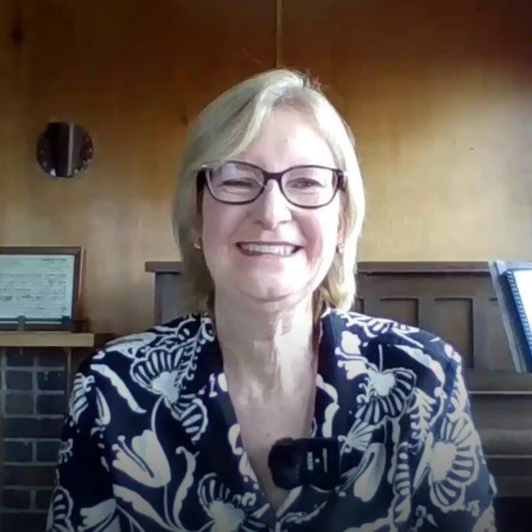
In this episode of the Motivate Collective podcast, Melanie Wilson interviews Anne Plummer, a fractional CFO with a background in peofessional music. Anne shares her journey from being a classical musician to navigating the world of finance, emphasising the importance of self-care and personal goals in business. She discusses the role of a fractional CFO in helping businesses look forward, the lessons learned from Beethoven's chaotic life, and the challenges of overcoming the tall poppy syndrome. The conversation highlights the significance of planning, the impact of self-doubt, and the necessity of having a support system in business.
Listen to the entire conversation
Listen to the entire conversation at The Motivate Collective Podcast on Spotify, Apple Podcasts, YouTube, or The Motivate Collective website.
Join as a member now to receive benefits and exclusive offers for upcoming events.
...
Special Opportunity for the Motivate Collective community
10% off your entire order at HumanCharger
Support your energy, circadian rhythm, and confidence
Code to be used at checkout: THEMOTIVATECOLLECTIVE
As seen on The Motivate Collective Podcast
Get your HumanCharger light therapy headset now.
https://humancharger.com/?dt_id=2858979
Show Notes:
keywords
CFO, business, music, self-care, planning, public speaking, Beethoven, finance, entrepreneurship, personal growth
takeaways
Anne Plummer's journey from music to finance showcases the importance of adaptability.
Self-care is crucial for business success and personal happiness.
Understanding financial metrics can empower business owners.
Fear of success can hinder growth more than fear of failure.
Planning is essential for navigating uncertainty in business.
Public speaking can be a powerful tool for marketing services.
Lessons from Beethoven illustrate the chaos of creativity and business.
It's important to question decisions made out of fear.
Having a support system can alleviate self-doubt.
Embracing imperfection can lead to growth and learning.
Titles
From Music to Money: Anne Plummer's Inspiring Journey
The CFO's Guide to Personal and Business Success
sound bites
"This is my very first podcast."
"Sleep isn't a really important metric."
"You need someone to help you through."
Chapters
00:00 Introduction to Anne's Journey
02:54 Transitioning from Music to Business
05:53 The Role of a Fractional CFO
08:17 Public Speaking and Overcoming Nerves
11:15 The Importance of Preparation
13:52 Breathing Techniques for Performance
16:33 Navigating Chaos: Lessons from Beethoven
19:30 Linking Music and Business
22:24 Understanding Financial Metrics
25:18 Cultural Attitudes Towards Business
28:37 The Tall Poppy Syndrome in Australia
33:29 Navigating the Pecking Order in Creative Fields
36:27 Overcoming Fear and Embracing Public Perception
40:07 The Dynamics of Community and Online Interactions
41:02 The Value of Self-Presentation in Different Professions
45:52 Understanding Debt: A Tool for Business Growth
47:54 The Importance of Planning in Business
51:46 Self-Doubt and the Journey of Entrepreneurship
57:30 Finding Reassurance in Vulnerability
01:04:12 Final Thoughts: Analysing Decisions and Embracing Growth
Transcript:
Melanie Suzanne Wilson (00:00)
And welcome to the Motivate Collective podcast. It is so good to talk with you. How are you doing?
Anne Plummer (00:07)
doing great. Thanks Melanie. Thanks so much for asking me on. This is my very first podcast.
Melanie Suzanne Wilson (00:14)
Is it really?
Anne Plummer (00:15)
Yes.
Melanie Suzanne Wilson (00:17)
You have been doing other speaking, so we met in a speaking group and not the one I'm known for, a different one. So let's tell everybody what you do with speaking, with other work, what exactly you do.
Anne Plummer (00:31)
Yeah, well, can I go back and just give a bit of background about where I'm from and what I do? It's all related to where I am today. So I started off, I grew up a little bit in the country in a one-room school or two-room school, actually and moved to the city when I was a young teenager and got involved in music and ended up quite quickly at the Conservatorium High School. And after that, I had a career in music, classical music. I was a freelance classical flute player, and I still play with the Penrith Symphony Orchestra, which I love very much. When I got to be, after a decade or so, a couple of decades, I, because of my rural background, I knew there was more things I wanted to explore with my life. So I did an MBA because I thought at that age I could, as they say, pivot and change career easier than starting off at the beginning and then working my way up in business. So I thought that'd be a nice thing to do.
It was really tough coming from a music background. Everyone else had actually there were quite a few doctors doing the course, which was interesting, but, you know, a lot of finance people, cetera, marketing people who were very comfortable in the business realm. And so I got through that and then worked in general management in music publishing.
And after a few years of that, I found it difficult because there's no particular one skill that you need for general management. So I decided to become an accountant. So I started off as a bookkeeper, then I became a CPA accountant. And then got broad experience, but with small companies, not with large multinational companies. And again, got restless. What do I want to do? So I became attracted to this becoming a fractional CFO. I had to Google it myself to see what a fractional CFO is not a well-known term, but a CFO is a Chief Financial Officer, and a fractional CFO means that I work for several different companies for a reduced amount of time. So spread across different clients. And a CFO really helps people in business look forward rather than backwards. So I help businesses, I try to get to the root of where they want to head. And I don't mean the business, I mean them personally, what their ultimate goal is, which, when it boils down to it, as happiness and peace basically, it might be covered and masked in a different... in different words, but basically that's what people want. And then do projections, and I help people sort of cut through the chaos of their lives. And it's really translating what the goals are into the language of business and what the business can do to move them forward to their ultimate goals. You know, a business can't do everything. It can't do all the heavy lifting.
And then we do meetings once a month. And what that does is that gives us space to just focus on those goals and make sure that every decision that's made moves them closer to their goals and not further away. And to rave on a bit more, I put the person first. So a lot of people talk about business people wanting to have great profits and all this amazing stuff, but neglecting themselves. I'm doing a talk in a few weeks at a convention, and the talk is going to be the metrics.
And one of the metrics is hours of sleep. It's not profit, it's not cash flow. Although we talk about that, and we talk about the effect on people of poor cash flow. You know, what's it doing to you? What are these business decisions doing to you personally? You might be making lots of money, and everything is fine, but you're just stressed out and...
I think sleep isn't a really important metric, but I've thought further about that, actually to take it further. It's not sleep because you might be worried about a whole bunch of things, and the business might be just one of those. So I've changed my slides for my presentation to look at how many hours are you worrying about your business every day? So that...
I think is something, you know, I don't expect you to quantify it exactly, but you know, that is probably cuts to the core of it much more effectively. And the reason I'm talking, speaking after performing in front of thousands of people over the decades, you'd think I'd be good at speaking, but actually, standing on stage and opening my mouth and words coming out, that's quite a different thing. So I've joined Toastmasters, and I've actually done okay with that. I only joined just over a year ago and won a little award already. That's for the best humorous, and so to promote my business, one of the things I'm not good at is marketing. So I've been advised speaking on stage is the way to go. That's the number one way to go for promoting my particular services, and I am so relieved, Melanie because that lets me off the hook from having to do Facebook ads and all this other stuff which just takes so much of my mental time, and I'm really bad at so I'm really happy to craft public speaking instead.
Melanie Suzanne Wilson (07:49)
I'll tell you what, that's why I love podcasts, because I never set out to just talk to a camera. It feels like I'm talking to myself. I had talked to groups for a long time, but I know that I need to do more of the social media. I know how it works now, but it's a whole extra thing. With a podcast, we're having a conversation, and then those little clips from the conversation will go onto social media. It's a great way to do the version of communicating that feels natural and still get something out of there.
Anne Plummer (08:23)
Yeah, I think it's terrific. Yeah, that's great. I've been watching, doing my research on your podcasts, and they're really terrific.
Melanie Suzanne Wilson (08:32)
That is so sweet. You've had such a journey. We have so much to talk about. So.
Okay, we did meet in an association as well. One thing I'm curious about, because of course, I grew up in groups where people were starting from scratch with speaking kind of like what you're doing. And then I saw you at an association. And I'm wondering what difference have you seen? We'll look at all the other career journey sections in a moment because I think there's so much to learn from all of it. But what has been the difference you've seen between that starting out stage or phase and the mindsets that you've seen in some of the professional speakers that you met?
Anne Plummer (09:17)
Yeah, so I guess for most people, getting on stage is terrifying. And for me, I think I've also got this to offer other people as well, because I've had such a long time performing music on stage. And to be honest, it's only been in the past five or six years that I've really conquered nerves.
And so it's been much easier for me to speak in public now and planning my first big presentation that's coming up because I know that I'm going to be nervous. That's just part of my brain protecting me. And I look confident, apparently, and that practising a lot is going to help train my brain so that when I got on stage, it will just flow smoothly. And the other technique I use when I'm coming up to a big performance, because I do some of the symphonies we play with Penrith Symphony Orchestra, are really demanding. So I know how to prepare really well for a big performance, a big scary performance. And what I do is I prepare so that I'm ready like two weeks before the actual performance. And then by the time the performance comes, my stress levels are going down all the time, and I'm planning for the day after the performance. How do I want to feel the day after the performance, not at the performance? Because once you get on stage for the performance, I let everything go and just let it happen because I've done all the preparation. If that makes sense.
So I don't have to worry when I'm actually doing it because I've done all the work beforehand. It sounds like I'm a real little goody two-shoes doing all this practice. But once I get on, you just let it go, and then it happens. Then, yeah, so that's my attitude.
Melanie Suzanne Wilson (11:36)
The letting it go, that reminds me of the flow state that people talk about, and I really believe once you get in front of people, you're just, you are in the moment to borrow that phrase from acting. I don't do that sort of thing, but borrowing that phrase, you're just doing the thing, and that's one of the things I love about any sort of performance, even if it's a talk. Have you experienced that in the orchestra and in talks where it's like your brain is switching off and you're just doing things, and you don't have to think as much once it's happening?
Anne Plummer (12:15)
I wish that was true all the time, but I've got a too-active brain. So my fear today with talking to you is that you'd ask me a question and I'd just freeze and not think of my brain would freeze, and I wouldn't be able to think of a thing. And so I'm still worried about that, but I'm trying to because, you know, just trying to be in the moment. Yeah, but it's hard.
Melanie Suzanne Wilson (12:41)
That is so sweet. Are you feeling nervous about being on a podcast?
Anne Plummer (12:45)
So but it's more like that I'll fail to say anything at all or answer the question properly or
Melanie Suzanne Wilson (12:56)
That's what I love about talking. You can't mess it up too much unless you say something outrageous or, you know, completely wrong. But I think you'd have to go to an extreme to really mess it up to some extent. And the main thing is I have learned, I learned in theory early on adapt to the audience. But in some ways, I was often in front of similar audiences, but it was only later on when I saw country groups, and coastal groups and city groups, corporates. You really do need the variety. So I think that that's the other thing that could maybe change. And for this setting with the podcast, we really do focus on looking after ourselves when we're doing great work. And that's where I think so much of your work can give people insight. So that's one way we can just make the most of the conversation. So even you had a long career doing woodwind music, sorry, how long were you... You're still doing that now, playing in an orchestra, but you're doing that for work for how long?
Anne Plummer (14:04)
Oh, well, I guess I started playing when I, mean, performing when I was 16, 17. And then by the time I was getting towards my thirties, I was really restless, and I had done everything I wanted to do. And all I could see in my future was more of the same. And teaching a lot of my friends, you know, they teach. So you perform and teach, but I never liked teaching much. And not that I wasn't good at it. It's just whenever I got it booked for something for a gig, I dumped the students to the gig instead. So I know not very good, is it. So, you know, playing was my main thing, but I really was bored, and you know I'd get these great long-running gigs, and I'd just be, I just couldn't do it. You know long runs of musicals and things like that. I was absolutely going up the wall after three months of Les Misérables. You know I just couldn't take you know eight shows a week. That was fine, but I was just bored.
Melanie Suzanne Wilson (15:23)
Was it?
So it's really intense having a career in music. And of course, everybody knows that music careers often don't pay that well either. So, but you were essentially having a decade and a half of a music career legitimately. But within that, something I wanted to ask about is you would have learned a lot about breathing doing that. And I think that people take for granted what everybody can learn from musicians about breathing because I basically really badly attempted to learn music when I was a teenager and I didn't end up as good as you were at all but I translated the breathing part to speaking where you need to slow down and doing a talk can have phrases just like in music you literally catch a breath at the end of a phrase I'm wondering did you find that taking the pace and the breathing, anything like that helped with your nervousness or keeping things steady when you were performing.
Melanie Suzanne Wilson (16:33)
I wish I could tell my younger self about that. Obviously, you know, I got through ⁓ quite demanding, physically demanding sonatas and things like that. But now I understand a bit and actually quite recently, I understand a bit more about the power of breathing to settle yourself down, settle down your brain.
Yeah, and I think that would have been extremely helpful when I was doing those big, scary performances of quite demanding solo works, because I would have understood that the nervousness that I felt would have been relieved a lot by deeper breathing and also planning, because my just to go off on a side note know my main huge recital at the end of my four-year degree I chose the biggest works and my teacher said to me are you sure you want to be doing that and I've got a very rusty recording of me performing and you can hear me just getting more and more exhausted like I got through I got a high mark and everything but you can hear me just going towards the end, you know, because I'd chosen such demanding pieces to play. So I think I know more now than I did back then.
Melanie Suzanne Wilson (18:08)
One of the lessons we can learn from that is if you overstretch yourself, you can end up exhausted doing anything.
Anne Plummer (18:16)
Yeah, that's right. And through the ambition, you're taking on too much, really. Yeah.
Melanie Suzanne Wilson (18:23)
I think I can relate to what you're describing because one of the things that I even saw in your career journey is you get the itch, you get restless. And I think there's something in those of us who are creative in some way or just fascinated by work, we want to try something else. And it sounds like even when you were doing one thing, music for a decade and a half, it was the challenge of a particular piece of work. And so it is that desire to push yourself, and then so going to finance, though, let's ask about that. Because that's polar opposites, you would think people say music is very mathematical, but you're essentially going from something creative to something very mathematical, even though you're now talking about how people can look after themselves in business.
I see a bit of a laugh. How did that leap match up, or how did that match with your personality?
Melanie Suzanne Wilson (19:30)
Well, it's interesting, Melanie, because for most of my post-MBA careers, I've tried to keep the two worlds very separate. And now at this stage, I'm bringing them together. So I'm talking about in this particular presentation I'm making, I'm talking about Beethoven. So just to, you know, let the cat out of the bag. And Beethoven's really interesting because the whole thing is about chaos and how to navigate through chaos in your life, and what the business can do to navigate through that chaos. And you think Beethoven, wow, what a genius. You think everything would have been easy for him.
And in fact, I've been reading about him. It's the opposite, absolute chaos of his life. And he started becoming deaf when he was in his late 20s. And by the time he was in his 30s, he was completely deaf. So how did he perform? How did he compose these amazing pieces?
And when you see what he went through, it's a lot of what we have to deal with in our lives as well. So he had, he was extremely messy with his, actually, you might be able to see in the background here, a framed picture. It's actually his handwriting on a score, and it's absolute mess. It's crossed out, it's scribbled out. He's digging through the paper, and you think, this is not going to sound any good. And so what I'm doing in my talks is then I'm then playing the piece that is shown on the picture, and it's this beautiful cello sonata. So how did he get through? I mean, he had probably ADHD. He was, he had irritable bowel syndrome. There's, know, you look back at the facts, and that's what he would probably was dealing with. He was had anxiety had depression. He was extremely his personal hygiene was terrible. And he was very untidy and messy. He had he was an orphan quite early on. And so he had a lot to deal with. And plus, the number one thing you think you'd need was his hearing, and that was taken from him. So how did he get through? Well, one thing was technical ability. He knew his scales, his chords, he knew how instruments combined together to make a great sound. He knew his harmony and melody. And he had templates to work with, you know, like sonata form or symphony form.
But the number one thing he could hear in his head, the music. So in a sense, when he became completely deaf, that was no barrier to him producing amazing masterpieces at all, because he could really just focus in. And so he knew what it was going to sound like pretty accurately. so after he became completely deaf, he wrote
his sixth, seventh, eighth, and ninth symphonies. So that's how amazing he is. So I will link that to my work of, know, in... So I'm a conduit between normal people and finance people. So the technical ability is just double-entry accounting, right? Debit SQL credits, that's...
It's that easy, I'm afraid. And then templates, we've got, you know, balance sheets, profits and loss. So it's my job to convert my client's vision into these financial templates and project forward into the future so that they can move towards their goals. But the forecasts I produce are linked. So the balance sheet and profit and loss is linked. And then from that, you put in these decisions you have to make, say, employing people, you put it into the model, and it projects forward what your cash flow is going to be, what your profits going to be, etc. So that gives the client a vision of the future, a graphical representation of what the future will look like, which is just like reading a piece of music. That's a great graphical representation of what it will sound like, if that makes sense. So I'm using the genius of Beethoven to inspire us to, you know, take action through our businesses.
Melanie Suzanne Wilson (25:05)
What I'm learning from that is you can simply map out the likely outcome based on what you're currently doing, and it doesn't have to be complicated.
Anne Plummer (25:18)
No, that's right. will. And part of what I do is telling you how to talk to your accountant or whoever this person is going to be that's actually doing the forecasts, because they are technically challenging, you know, to do these forecasts. And so, you know, you have to use software. People say, yeah, I'll just link together some Excel spreadsheets. But, you know, that's full of hazards. So it's helping convert those ideas into, and I use rolling forecasts, so as we meet once a month, we look at what's happened, the reality, so the culmination of all those big and little decisions that you make, and that shows up in your profit and loss, your cash flow and your balance sheet.
And then we adjust going forward. So we roll forward an extra month, and then we stand back, and this Beethoven did this as well. He'd write and write and write, and then he'd stand back and say, does this still make sense? Is my musical idea still making sense? And that's what we do in business as well with the forecast.
Melanie Suzanne Wilson (26:40)
This is really crucial because these days everybody has a creative idea, or people want to make something. It could be anything. And what we need to figure out is, okay, what do I need to do now? And also, you're saying that when things will get complicated, talk to an accountant, don't DIY. I'm getting the impression that it does help if people do find an accountant.
Anne Plummer (27:07)
Yep. But the thing is, Melanie, most accountants won't be able to do this work because their business is not really set up for this. I mean, you will find the odd one, so it's knowing what questions to ask the accountant and, you know, just to be very clear about what you want. I want this forecast going into the future. And then I'm going to teach just a couple of metrics for the people to go to their accountant and say, want you to I want to see the gross margin, for instance. Now, I'm going to teach what a gross margin is. And a gross margin is different from a net margin or gross profit percentage is different from a net profit percentage. So if I can get technical for a moment, net profit percentage is, all your income less all your expenses, right? And that gives you your net profit. But a gross profit is just your income from the essence of what you do. So, for instance, you're a lawyer. So it's the income you make from actually doing the law. It's not bank interest or anything else. It's just that. And putting that with the expenses that just relate to producing that outcome of law. So if you think of a, it's easier, I think, to think of a factory because a factory, you know, they produce an object. So what are the expenses that make that object directly? It's nothing else. It's not rent or anything else. So even though it's a service industry, I think it's a really helpful way of getting to the essence of what you do. And if you can get a gross margin happening, for that, that's appropriate for the industry, then you know that everything else can be fixed in a way. But if you can just get the appropriate amount of gross profit, that means you can scale your business much more easily. Just to explain gross profit once a little bit more. So say, you know, you're sole practitioner, and you're getting great sales, but you're taking, but your expenses, so your sales might be a million dollars, but your expenses relating to those sales are 999,000. You've got like an almost zero gross margin, and you're working 80 hours a week completely unsustainable, um so but if you can get
Anne Plummer (30:07)
People get like it's finances. You can get easily diverted away with other stuff, know, rental costs or just all this other stuff, know, staff Christmas party, lavish staff Christmas parties is one. But if you can get the essence of what you do right, then, in a sense, with some guidance, the rest really falls into… so it's a cultural thing as well because when I was a musician, well, professional musician, you know, there's great shame in doing businessy things. It, you know, it sort of meant that you weren't good at playing, and that's like completely untrue. But I think for service people, it can be the same thing as well.
that being a successful, you know, a business person.
You think, no, that's not me. No, no, I'm a lawyer. I'm this, I'm that. But what I'm saying is self-care is part of a successful business model.
Melanie Suzanne Wilson (31:18)
That is the mindset so many people are overcoming, and I'm glad that you addressed that. The performance side and how a lot of people who put on a show, it could be music, but I've heard this mentality from some people in the yoga world. Apparently, that space had this mindset a while ago, and I came from a speaking space where nobody told me at a young age I should value my performance in this way. There was none of that. I was doing so much for free. And I think that the right people will respect that you do have to look after yourself, and you do have to value what you do. So I think what you described with your experience in music, it translates to so many industries. And I have seen that it's worse perhaps in Australia, or at least there's a flavour of it in Australia with the tall poppy syndrome, and people want to... You think so?
Anne Plummer (32:25)
absolutely.
Melanie Suzanne Wilson (32:27)
Okay. I'm so curious then about what have you... I'm curious about what you've seen with the tall poppy syndrome, especially because you were around performers. And of course, you're playing an instrument, but whether it's that or other people in your shows were at the centre of the stage and still probably dealing with a tall poppy syndrome. So I'm wondering where Aussies have... been in spaces where they were public-facing and trying to not be tall poppies, and where do think it's heading now?
Anne Plummer (33:01)
I think people understand a lot more. And I guess in a way, for me, it's always been a little bit of water off a duck's back. And I think also trying to bring people down can be just people surviving, people, I'm not justifying it, but... I've kind of ignored it in a way. Yeah, and also there's a pecking order in every profession. Certainly in music, there's a pecking order. know, violinists think they're the best. Flute players think they're the best, so.
Melanie Suzanne Wilson (33:41)
Survive it.
Anne Plummer (33:58)
There's this thing, the violin, it's closest to the human voice. And then you hear flute. That's the closest to the, what's so great about being closest to the human voice. Yeah, there's picking orders everywhere. And I think this year, I'm like, have yearly projects. So this year is really cutting through fear, and it's a human instinct to worry about what people will think of you. And that's at the root of a lot of nervousness, know, especially public-facing. And just to jump in and do it anyway, cut through the fear, and people are gonna think what they're going to think. And just to realise that that's just part of being in public.
Melanie Suzanne Wilson (34:51)
It is, this is so reassuring, and I truly hope that a lot of performers, a lot of people with public personal brands can see this because we are really identifying that you need to let go of what people think of you, or everybody needs to let go of other people's opinions, but also just do the things. The pecking order, I think, is an encouraging lesson to learn from because it has been called different things. I described so many industries as political. And although I observed years ago, actual politics, I found that some other communities felt more political than politics. And in some ways, I think it's what it's what you're describing a little bit. The, this instrument is more my experience of it was
Maybe I was in the wrong space when I was... and I'll be careful and loving towards my upbringing, but... but when I was in my early 20s, there were people twice my age calling me too young, even though I'd learned so much and I'd basically done the learning then that they were doing it that age. There was a lot of that, but then now I'm not a 20-year-old TikToker, you know, you're always something and not something else. And we really have to make peace with knowing we do what we do really well. And it doesn't mean that someone else's specialty is more or less, right?
Anne Plummer (36:27)
Exactly. I think that's so interesting and correct because back then, I mean, it's what people's motivation is too. And a lot of it could be, as my mother would say, they're just jealous. And that's, yeah, that happens quite a bit. I mean, what's the motivation for trying to bring you down? It could be the envious that they weren't able to do that at that young age, like you were able to.
Melanie Suzanne Wilson (36:53)
My goodness, I think that's probably... I'm going to assume that that can describe why some people are trying to tear me down. I have to be so vague right now to be careful, but I think that in general, personally or professionally, someone can try to bring you down at any moment. And if you're saying in your diverse life experience that it's often that someone is feeling jealous or wishing they could be doing what you're doing,
I can actually pinpoint moments where that is really aligned with what you're describing. So we really have to make peace with knowing a lot of people who are public-facing say that if people are reacting to you, it means they're noticing you at all. You're not invisible.
Anne Plummer (37:44)
Yeah. And Melanie, I think, because I've lived through quite a few decades now and been through lots of technology changes. We talk about the online community. I tell you what, the real community that can be rugged, that can be, and that's been going on for millennia, right? Having to be part of a community. I tell you what, I live on the edge of Sydney. So, I live part of why we've got such poor connectivity today is that I live on the edge of a national park in a very small village. And I tell you what, those village meetings, they can be rough. You know, and I think it's just part of
Melanie Suzanne Wilson (38:30)
Hold on. You're in a village, you're in the mountains? Where abouts are
Anne Plummer (38:35)
Well, Linden, which is sort of mid-mountains.
Melanie Suzanne Wilson (38:46)
I was just going to add it's hard with the internet connection, but we need to explain to the people who are listening from somewhere else in the world. The way to explain where you are is people are going to have a holiday, go to Sydney and see perhaps Bondi Manly, CBD, city centre. This is not what we are describing. You go what an hour, hour and a half through Sydney, through all the and then you get to some mountains and villages.
That's what we are describing. It's the West of the West of the West out there. Is that how to say
Anne Plummer (39:20)
Correct. And there's some beautiful things up here. That's the thing. It's, you know, it's sort of a, come to see the amazing views up here. So, yeah. But I think this nastiness online, I think there's not too much difference between that and, you know, small English villages of, you know, a few hundred years ago. I think just got to build internal strength and not worry about it too much because they have a terrible negative effect on people.
Melanie Suzanne Wilson (40:07)
So, have you seen those sorts of village mentalities literally, where you are?
Anne Plummer (40:13)
I think it's everywhere. It can be anywhere, but yeah, I think it's just part of life, living in groups of people.
⁓ yeah.
Melanie Suzanne Wilson (40:28)
It's a-
Yeah.
Anne Plummer (40:31)
But it's interesting being in the financial world and being in the music world because people's attitudes to both is interesting. If I introduce myself as a musician, they go, how interesting. Tell me what you play. That's amazing. If I say, I'm an accountant, I've had people turn and walk away. So I think that's very funny.
⁓ dear.
Melanie Suzanne Wilson (41:04)
It's about how you frame yourself. It's interesting that you bring that up because we all have to learn about how to present ourselves and how to describe ourselves these days. I think I struggled with that a little bit as well because I had to almost bring together a few things I was interested in, basically.
I got known as just a speaker, but then it made it really hard to get involved in doing other things, being just only a speaker. And I think what you're describing could also show how people value your work monetarily to some extent. It's fascinating because they'll be interested in the creative things, but you're probably building more of a business doing the financial side.
And they might not see that there's a lot of putting a puzzle together, and there's a lot of creativity in having to promote yourself when you are a business, even if it's in a technical field. I think people take that for granted. didn't do a lot in marketing with finance, but I worked with technical industries. Like, I actually did some writing for software as a service for a marketing agency for a little bit, did things like that. And it was like, it sounds so technical. Also, many, many years ago, I did some marketing for people who made textbooks and courses for people who installed solar panels. So they were very ultra. I can't remember most of the tech side of any of that, but it was the story behind anything. And I
I adore what you're doing with your speaking and your storytelling because you're taking something very numbers based of business and finance, and you're bringing this self-care story into it because looking after yourself that's an end goal of any field, including the technical ones.
Anne Plummer (43:12)
Yeah, yeah, I think people are talking about it more and more and it's, I just wonder how many businesses fail because number one, people don't have a safe space to look at these forecasts and see what a good business decisions to make along the way. You know, the people that need it the most don't get it. Yeah, and I think there's this persona thing about being a successful business person. Look at how much money I've made without really seeing the effect that it's having on them. I don't care who you are, whether you're running a multimillion dollar business or you're just working for yourself. That has to be factored into any decisions. And I talk about, you know, a decision you make, typically employing a new person, of course, step one is that your cash flow will plummet. But if you know that it will take up to 10 months for that person to either bring in more income or release you from so many hours a week work, you can see the value starting to rise and that you've got short-term pain but the long-term gain is bigger. So that's what I help quantify. Is the long-term gain more than the short-term pain? And what your attitude to that is, because if you make that decision, when you see the cash plummet, you'll go, no, I won't take on a new person. But you will make a different decision because you know, like later on, if you can see the value is probably going to happen, then all you've got to deal with is the short-term cash deficit, which you've got lots of levers to solve that. You could get a short-term loan. You could borrow off family or friends or, you know, there's a myriad of ways to short to just get through that dip. But always thinking what's the effect on you? Because, yeah, like even if you take on debt, there's some people who just get stressed out no matter how little it is, the idea of debt is just not on. So that all has to be part of the model, really in a sense.
Melanie Suzanne Wilson(45:52)
That's something worth exploring for a second. I stumbled upon a whole lot of videos from Dave Ramsey and there are some people who never ever wanted to have any debt and I know that it's not good to drown in debt and struggle to sort it out but have you seen that a healthy debt can help some people?
Anne Plummer (46:13)
definitely. Yeah. Because if you've got it, and this is why the model is so fantastic, because, you know, if you can secure this amount of debt at four per cent or whatever it is, you can see that it makes sense. It makes sense to do it. Otherwise, you might miss out on the opportunity, for instance. But. Yes, because Dave Ramsey preaches no personal debt whatsoever.
But business debt is a different thing. It can be okay, for sure. But it has to be managed and planned for.
Melanie Suzanne Wilson (46:58)
Fair enough. It needs to be planned out. So whatever you're doing, do some planning. That's something we need to remind ourselves of in an era where there's of course a lot of instant gratification and hopefully anyone who's running a business will be planning ahead. I will assume that it's sometimes hard to plan in the very early stages. I know for me, I... was starting to do some speaking business last year and that's starting up again now. And I know it's so hard to look ahead and say, okay, how do I think this business is even going to look months from now? There is, have you seen, there is quite an element of guessing and is your advice to be in the moment and see, okay, what is there now? How do you, how do you cope with predicting something that feels unpredictable?
Anne Plummer (47:56)
That is so true. And I think part of it is making short term decisions out of fear and uncertainty or trying to resolve that uncertainty. And that may or may not be in your best interests long term. So that is the hard thing. I think planning is business planning is number one sounds really boring.
And number two, you can't do it by yourself. You need someone to help you through, even though it's not that, it's not really that hard, but you really need someone to hold your hand and step you through. And also that helps keep you accountable as well. So, yeah.
Melanie Suzanne Wilson (48:46)
You do. You need someone to be with you. It sounds like it's partly getting someone else's perspective and simply getting out of your own head, letting someone be a voice of reason for some of these decisions.
Anne Plummer (49:02)
Yeah, that helps or more show them. So what I love about forecasting is you can put in any wackadoodle idea that you might have as a business owner and see if it actually works, you know, and I think a lot of businesses would be saved or not even started if there was just that little bit of planning to see. I was just thinking of an experience about this, making decisions out of fear and uncertainty, which I do all the time and that this year I'm going to stop doing that as much as I possibly can. I was recently very lucky. spent a month in Europe, and I was in Switzerland. Sounds very glamorous, but it has been a long time coming planning for this trip. And I was on a train by myself heading west to the next town I was going to visit. And suddenly on the train it said, this train terminates in Hamburg and I absolutely froze because Hamburg's in northern Germany, right? And I love Germany, but I didn't want to go to Hamburg that day. And so I completely panicked, and I thought, oh no, like now I'm really not certain I'm on the right train. What do I do? Okay, I'm just going to get off the train at the next stop, which is silly really, isn't it? So I thought, right, I've got to get off, and that'll just, at least I'll be somewhere not heading to Germany. You know, I don't want to get off too late and end up, you know, eight hours away in Hamburg. So luckily, while my brain was whirring trying to solve this problem, the leaderboard listed all the stations between there and Hamburg, and of course, my station was there. So, like I'd gone through all this panic for nothing and if I'd got off the train, who knows where I'd be? I might be still stuck in Switzerland, which would be a terrible tragedy.
Melanie Suzanne Wilson(51:16)
They're really...
I love that story. I love that story so much. We all have a moment where we think, I think things are going to be this bad. And honestly, I'm seeing myself in you so much because, personally, I think part of it is that I have moments of just being a delicate, fragile woman. And I'm willing to say that.
We live in a culture where it's assumed everything we do will be rational, robotic, and utilitarian, but I don't think we really function like that. And it doesn't mean we're less intelligent because you do great work, I do the things I do, and yet, yes, you've done so much in music, you're guiding people's businesses, it's good.
Anne Plummer (52:06)
Great work.
Melanie Suzanne Wilson (52:14)
We're doing these things and yet we'll have moments of just this panic and especially when something is approaching of this destination is literally coming up then you will be wondering do I not have long to make a sensible decision I need to think and act quickly especially when there are unknowns I found that when I didn't know what was happening it was harder for me to make a decision so before you saw that leader of board you were just guessing that's such a metaphor for life. Hope you can put that story into a speech one day. Seriously. Because we all have a moment where we can't see the leaderboard and we're trying to figure out what's going to happen next. And we're doing the best we can. It seems like step one is to not panic. If we are setting up a business, then that is really crucial. Try to see the leaderboard somehow.
Think so?
Anne Plummer (53:13)
Absolutely. Yeah, definitely. And I think, well, we've got to balance when I mean, self-doubt. I don't know about you, like my self-doubt is ridiculous. And the amount of time I waste because I've set things up well. And then I think, is that right? No, that can't be right. And go back and check. I mean, it's ridiculous. And this has got to stop this year.
This year, Melanie. It's crazy, but also that studying a new business it's like a tragedy because you've got this, you know, you've got all the energy, you've got this fantastic idea, and you've got no way of mapping out the likelihood of what's going to possibly happen, and you pour everything into this.
Melanie Suzanne Wilson (53:42)
Yeah
Anne Plummer (54:10)
And all your creativity, and it can be a disaster because you know, doing business plans it's extremely boring and dull. So you do need someone to help you put your vision and keep you excited and motivated, and get excited when you see the plan. Oh yes, this is probably going to work, or how about we do this six months later rather than right now, and that's you're going to have a better outcome. Yeah, I think that's.
And then your self-doubt will go down because I think that can be a very number one time-consuming, anxiety-producing. And the thing I learned about travelling by myself is that, you know, we're really good at surviving, actually, let go and just go for it. You know, all the crazy things I worried about before the trip, none of them turned out to be an issue. So, you know, for instance, you know, I was in minus 17 degrees at one stage, and I'd bought this $89 coat from Anaconda, and I thought, this is not going to be good enough. And it was fine. My $89 coat was enough in minus 17, all these stupid things we worry about needlessly.
Melanie Suzanne Wilson (55:51)
You look ahead, and you think you won't be okay, and then somehow you are okay. I think that we need to surround ourselves with people who reassure each other. For me personally, I know that months ago I was in an environment where I was surrounded by uncertainty, and I wasn't, I think the podcast was the main place, whereas hearing things you are saying of just have some faith in yourself, and for you, with that travel, just doing it, getting out there, you did find peace. You didn't find reassurance from yourself, but it was, I think it's partly environmental. You were in a place where the solutions were in front of you, and you were okay. You're on a train. weren't in the middle of nowhere, not on a train. You had a way to get from A to B. You were okay enough. So that's a part of it. Put yourself in a situation where you have access to the solutions, but there's self-doubt. It's amazing how this is what we are coming back to seriously. And before doing this recording, was just having one of those days. I was curled up, thinking I'm just failing at everything. I...
This is why I sent you a link for the recording at the last second ride on 12, because I needed a moment to just feel sorry for myself and then get up and do another recording. So I don't know if anyone who performs or presents is like that. Give yourself a moment to feel terrible and then get on the damn stage.
Anne (57:30)
Yeah, that is absolutely brilliant, Melanie. I'm just so, I'm just so amazed by what you've just said. That's incredible. Yeah. Good for you.
Melanie Suzanne Wilson (57:39)
Why?
Anne Plummer (57:43)
Well, just feeling, were you feeling down? Like, just a bit down, or I'm hopeless at this. And someone said to me once, if something is worth doing, it's worth doing badly. And that's coming into this podcast today. You know, I was like pretty nervous and then right at, you know, one minute to 12, I thought, let's say I'm hopeless at it. Fine. We can all have a laugh later about it. You know, what's the worst thing that can happen? And that you were sort of having your own sort of moment before the podcast as well. That's really funny, actually, that we were both suffering.
Melanie Suzanne Wilson (58:30)
Now, we're both sorry for interrupting. We're both having our doubts at the same time and not telling each other. I don't get nervous about the podcast anymore. think I've done more than 55 of these since August last year. So it's been a bunch. felt sorry that it had been slowing down a little bit. It had been sort of weekly instead of daily, and I had to get over it and realise, okay, fine. I think some of the best podcasts started off weekly. It means I'm not
Anne Plummer (58:47)
Wow.
Melanie Suzanne Wilson (58:59)
an obsessed fanatic, but I can be if I need to. But, you know, I think that I was having all the worries about everything else in life. And I just, I just kept thinking I need my whole life to be perfect. I don't know. It's in my own head. And I think the best thing you can do, I, this is the addiction of the podcast for me. It gets me out of my head. think everybody should do a podcast. Everybody should get on a stage because
To some extent, you're at least, you're not pondering your whole life when you need to just focus on telling a story to other people. It's, it's brilliant. You just get past all of those things. So knowing that you felt nervous about doing the podcast itself. Look, they're great fun. I know you could go on so many more podcasts, and the value that you are bringing to really reassure that is, is that you've been guiding people on what to do when they're figuring out the basic finances, especially starting a business. I learned something from you that, okay, the accountant won't do everything that you're describing, but people need to know the right questions to ask an accountant. And hearing this from a creative who was a musician for years, it's reassuring because when we have a creative brain, it can be even more of a leap to look at all those numbers sides, and we need to just catch our breath. I think a lot of us feel nervous about the numbers, the ways that other people might feel nervous about speaking, and we need to just reassure ourselves and to do it anyway.
Anne Plummer (1:00:38)
Yeah, exactly right, Melanie. And the thing is, when you look, I'm in a unique position because I've come late to accounting. So most people do, you know, straight from school to university and into an accounting firm. Well, I've gone the opposite way. My journey's been the opposite. And I think that is in a unique position. And I've been thinking about this, pardon if this is a bit rambling, but trying to put together the slides for this talk I'm giving, I wanted people to really understand what I'm raving on about with talking about cash flow and margin percentages, right, gross margin. And I was trying to explain it in the slides from an accounting point of view. But no, I've got to be on the other side of the fence with the audience, not the accounting side. And I can make the bridge between normal people and accountants, if that makes sense. What do the figures actually mean? What's gross profit? Gross profit's a number, but it's a percentage of the essence of what you do, right? It's the thing you make, the main thing for you, it's the impact you have on your audiences and what money you get from speaking in front of audiences and also what you have to spend to get you onto that stage to talk to audiences, and that's the essence of what you do. So that's what gross margin means.
Melanie Suzanne Wilson (1:02:28)
Could actually use that as an example, and we'll wind up in five minutes. I gave it a little bit longer because the internet has been a bit funky, and I'll edit a couple of things out. But as a speaker, and I think a lot of people are forming something where they might be doing events, communities, retreats, all these things. So there are various forms of this. So my example would probably be that the gross, let me know if I'm getting this right, the gross would be that I will get the train to the location, and then the net might be that I used a website platform and so on to promote myself leading up to it. Is that the difference?
Anne Plummer (1:03:10)
That is exactly right, Melanie. So now you're good at numbers. That's great.
Melanie Suzanne Wilson (1:03:17)
The internet, the internet is going to see that you taught me numbers. Thanks.
Anne Plummer (1:03:24)
It's that straightforward.
Melanie Suzanne Wilson (1:03:25)
That's reassuring. And I like how literal it was because I heard a long time ago that someone explained net and gross to Richard Branson. And of course it was the old something about nets and fish and the ocean. And I think, okay, great story, but how does that translate? They could have said, okay, if Branson has a gym, the gross will be the dumbbells here, and the net is the other things. It could have been explained differently. I feel like the way you have explained this, you're going to be able to teach so many people because these are the practical things. And if everybody can know that we can handle the practical things, and that's how to put it. For those who like the practicalities more than pieces of paper, we will still be okay.
Anne Plummer (1:04:18)
Exactly right, Melanie.
Melanie Suzanne Wilson (1:04:19)
And thank you so much for your time and your courage. I'm wondering if there is anything else you would like to teach the listeners as we wind up.
Anne Plummer (1:04:30)
Ooh, I think the biggest thing is taking pause and analysing your decisions just generally in life and see which ones are stopping you doing things. I think actually just enclosing fear of success can be more powerful than fear of failure. Just quickly, I'll tell you what I mean fear of growing your business because you think gosh that'll mean I'm going to have to employ all these people, how am going to manage? I'm not an experienced manager; it's all too much, I won't grow my business. Rather than having a look at well, I'll employ people that support me in my business that will free me up with my time and my energy. Questioning those decisions you make out of fear that are stopping you from doing what you really want to do. I guess is my closing shot.
Melanie Suzanne Wilson (1:05:38)
And thank you so much for being on the show.
Anne Plummer (1:05:40)
Thanks Melanie, it's been really great. Thank you so